Mochi Pounding in Kyoto Shops and Traditional Experiences
Book a Kyoto mochi pounding workshop and swing the wooden mallet yourself. Learn the craft from a local home chef in a small group, then eat your warm mochi with matcha. Morning and afternoon sessions fit a day of temples.
"Such a lovely, authentic experience! The guide was enthusiastic and friendly, the artist skilled and warm. I learned so much about the techniques. Any manga or art lover visiting Kyoto shouldn't miss this!"
4.7★average rating70traveler reviews100%free cancellation15countries travelers came from
Mochi pounding in Kyoto at a glance
Kyoto has hands-on pounding classes, some paired with a tea ceremony, and one that starts with a professional demonstration. The difference that decides for you is how much time you spend swinging the mallet yourself versus watching and tasting. Small groups get more turns. Most sessions run about an hour, so they fit between temple visits.
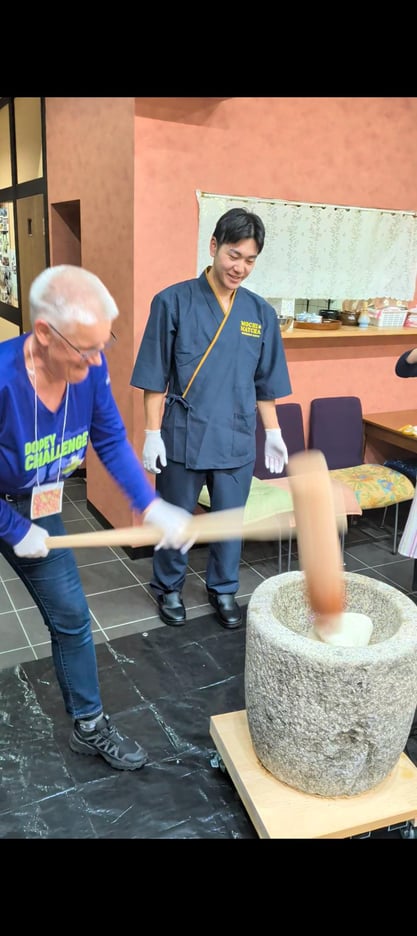
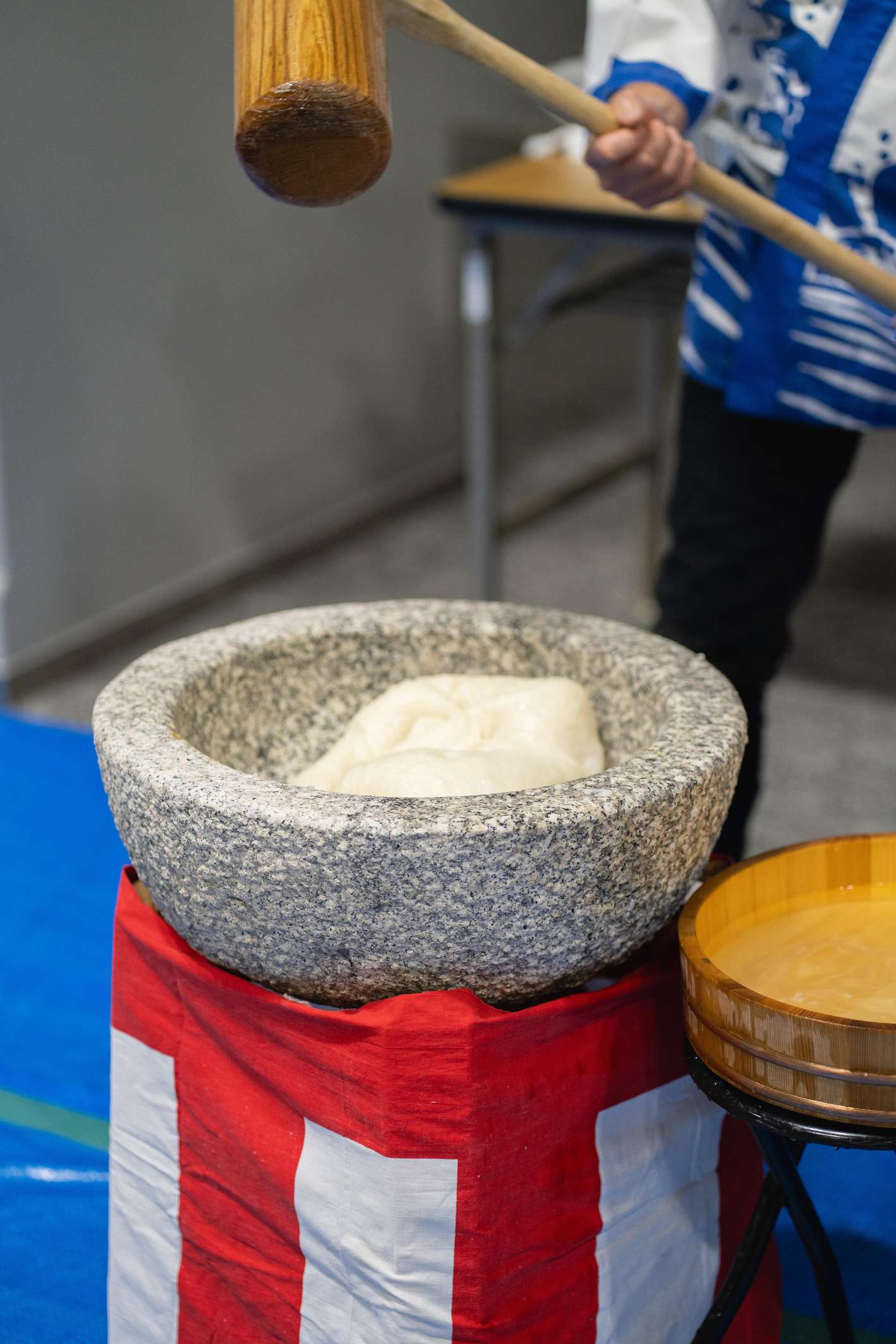
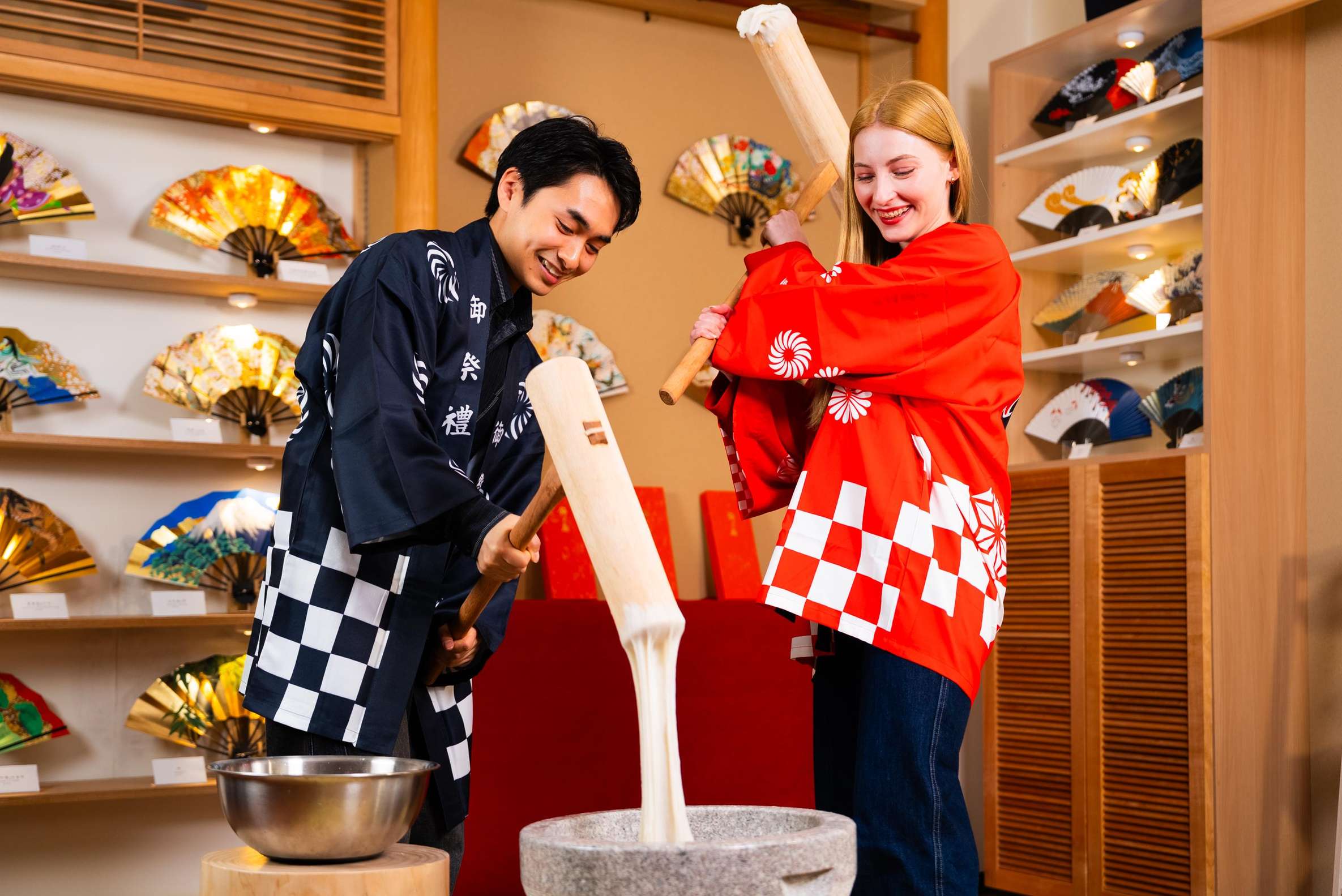
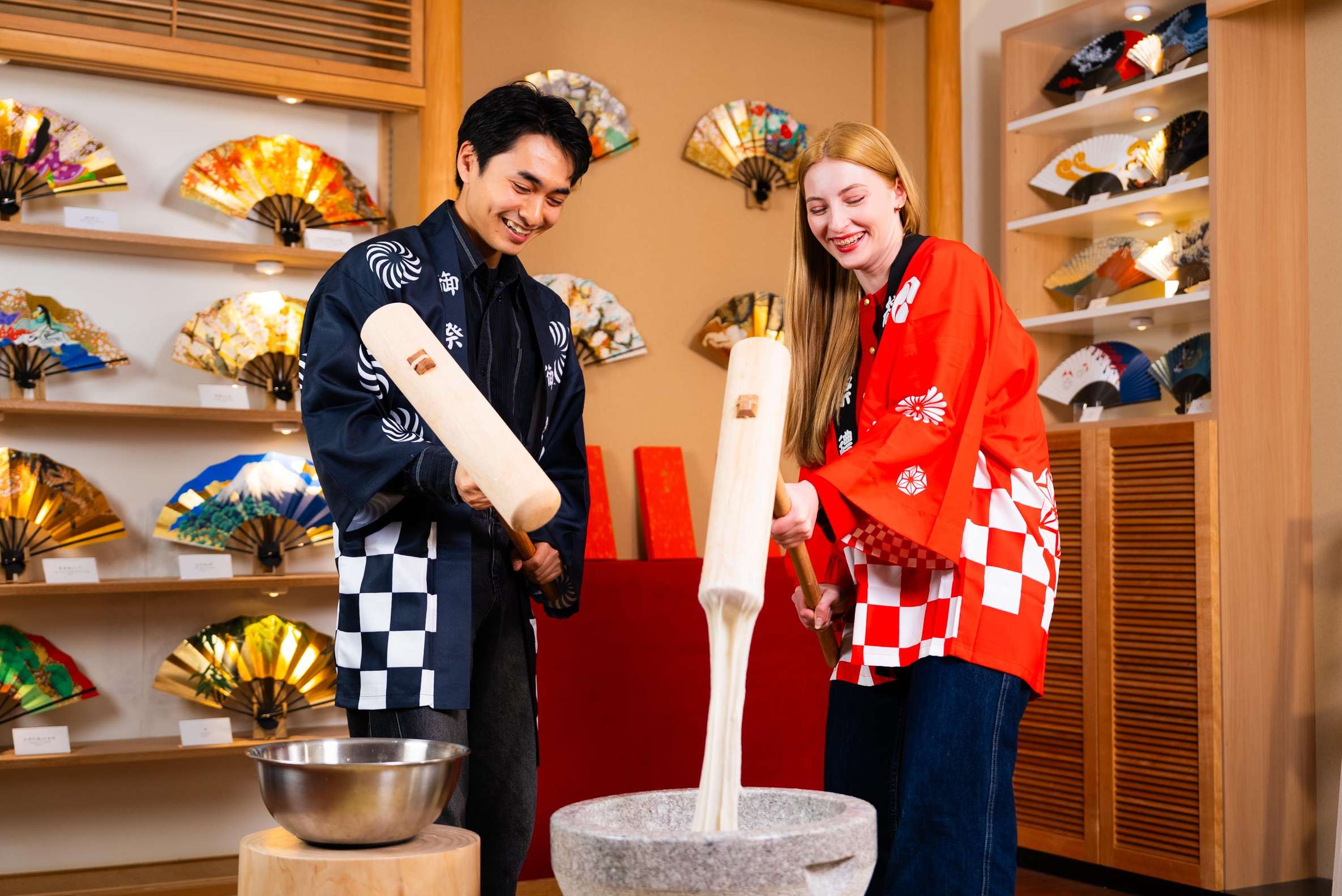
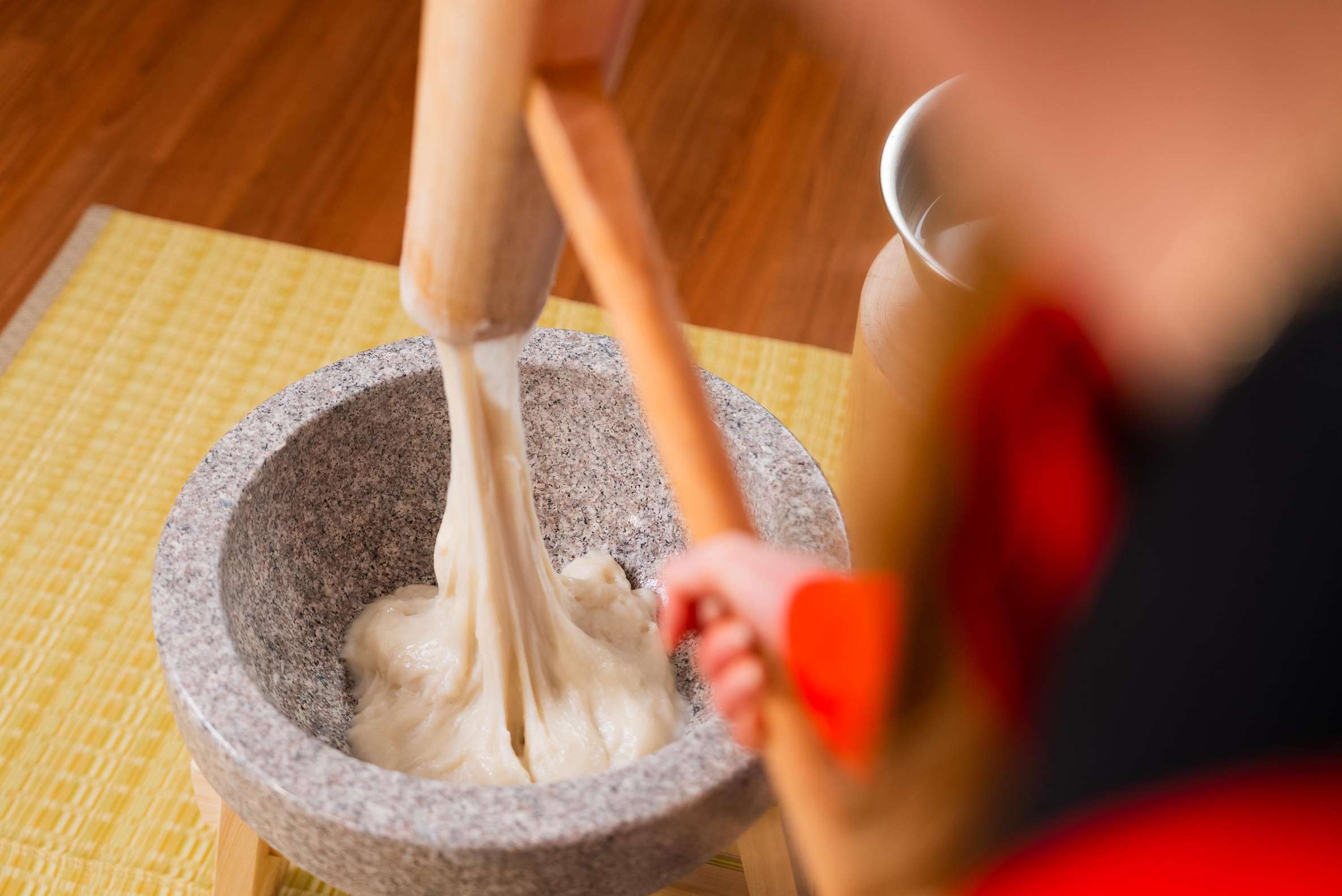
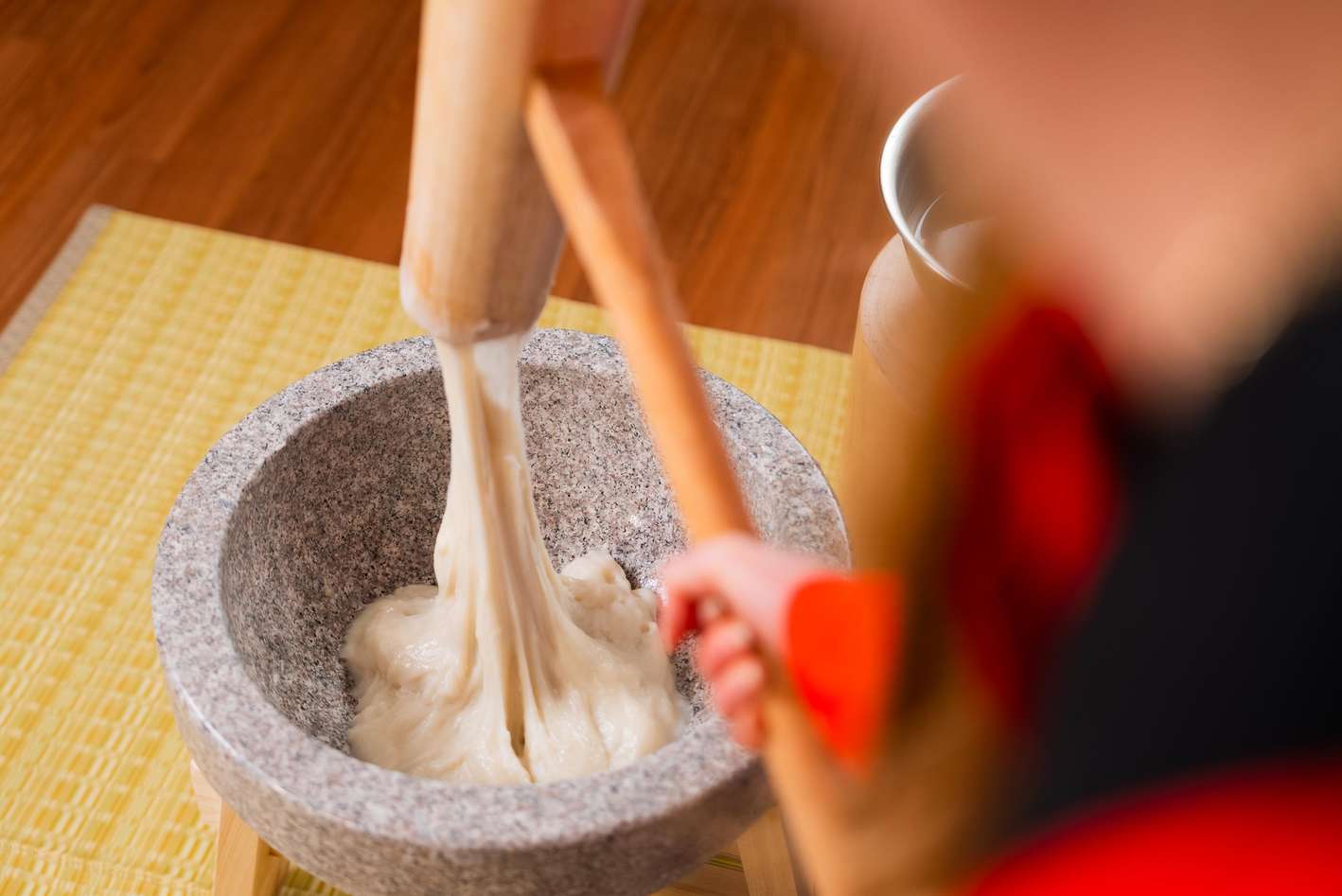
The rice arrives already steamed, hot and loose in the wooden usu mortar, and your hour begins there.
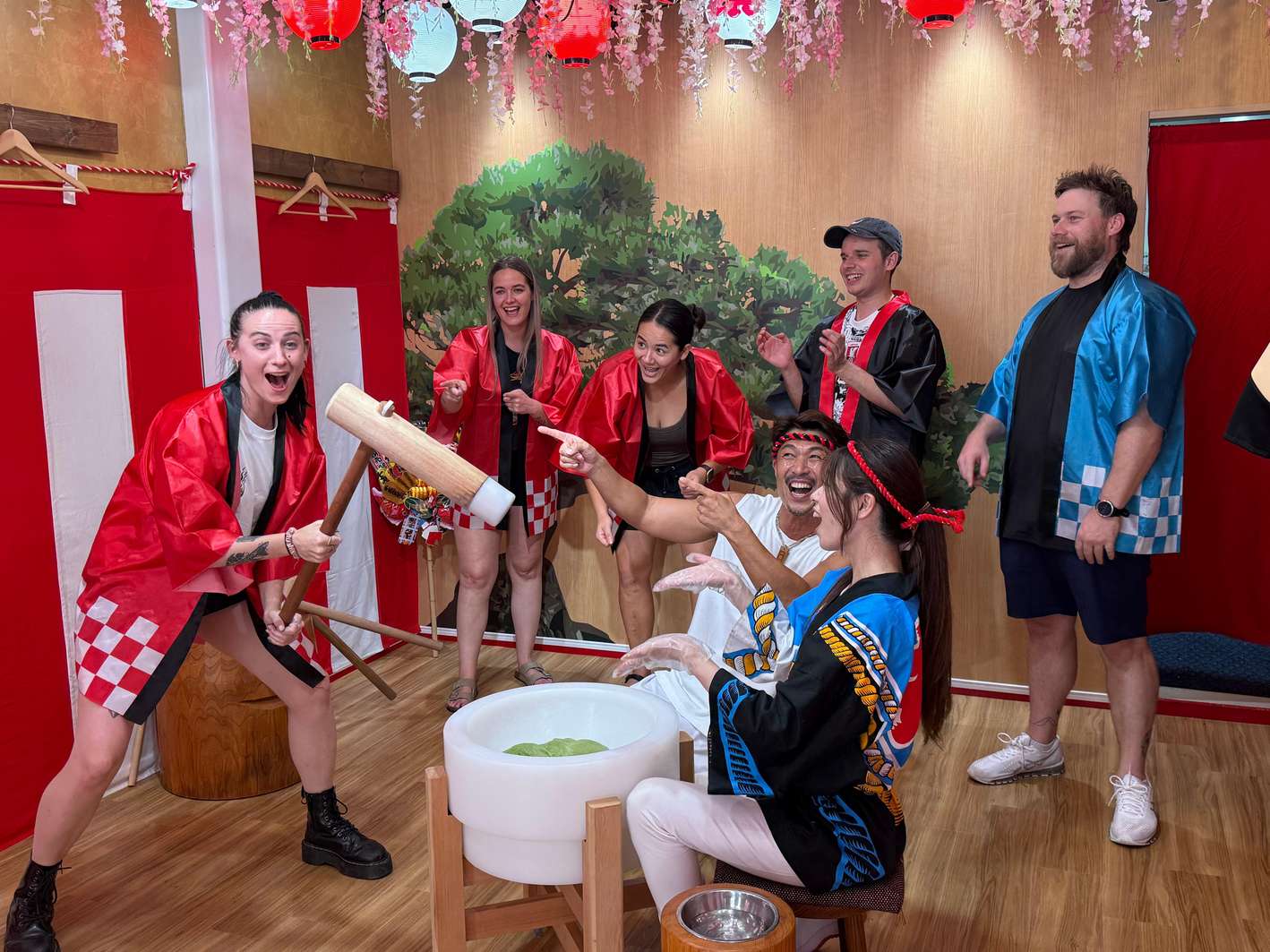
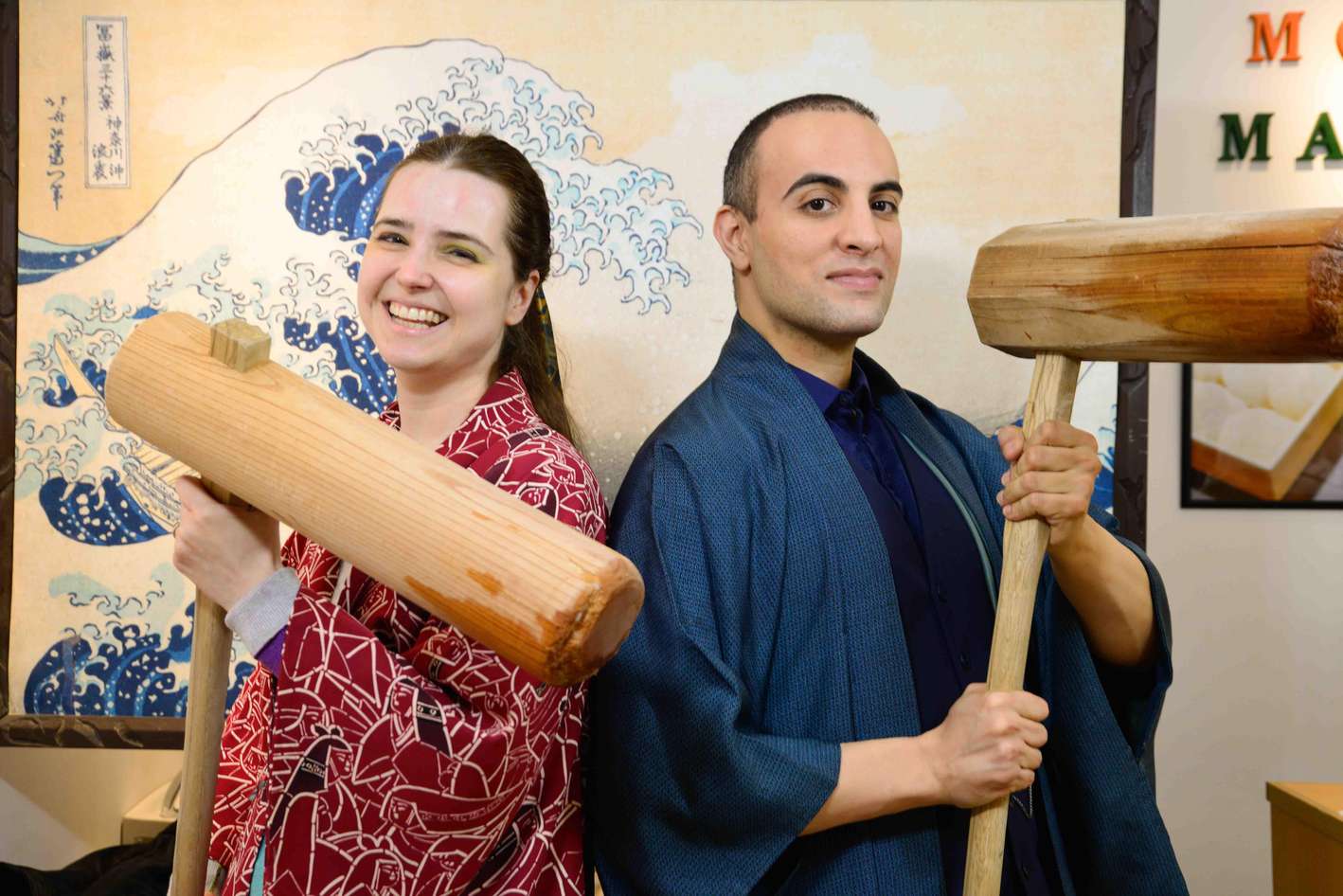
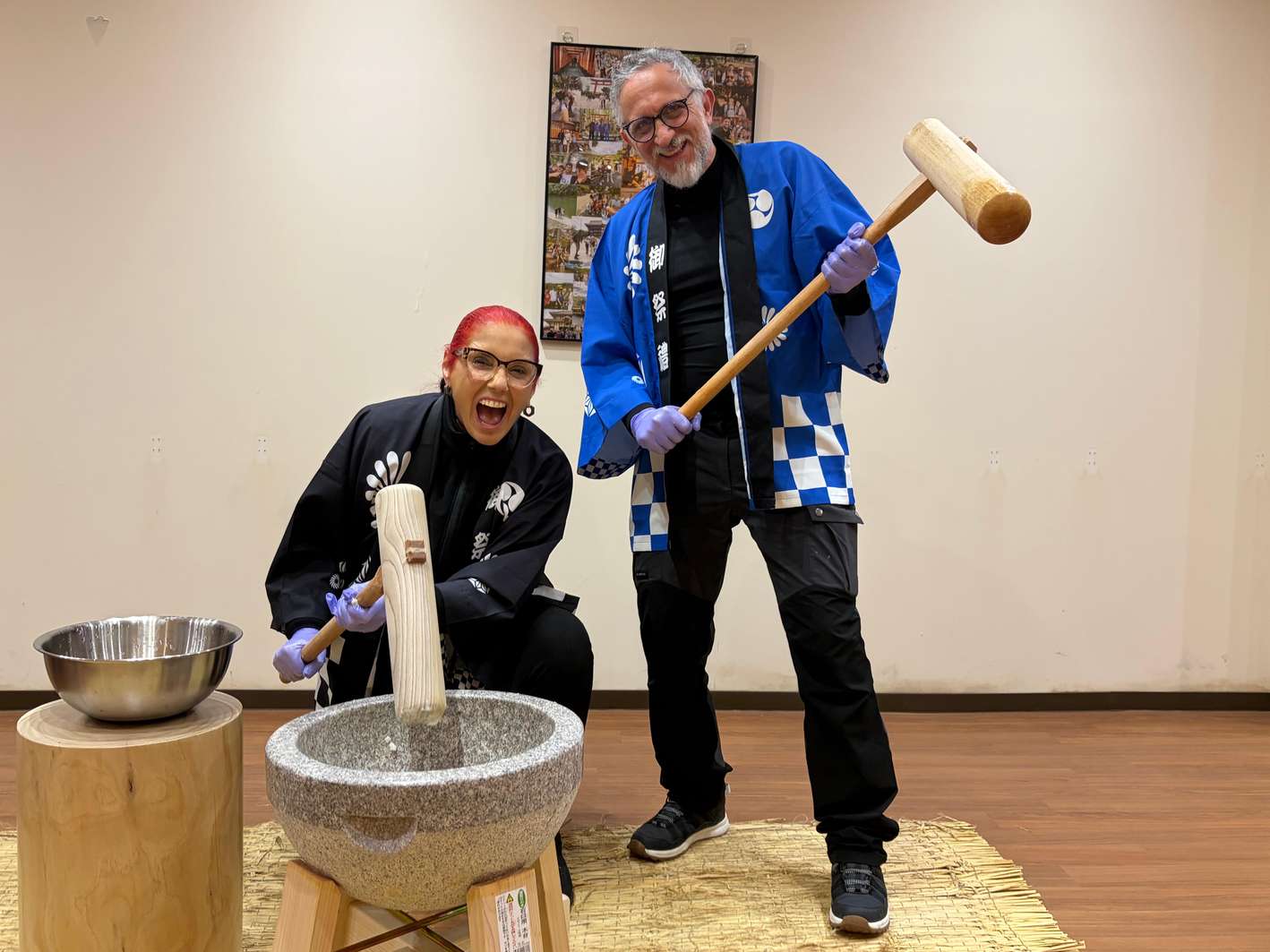
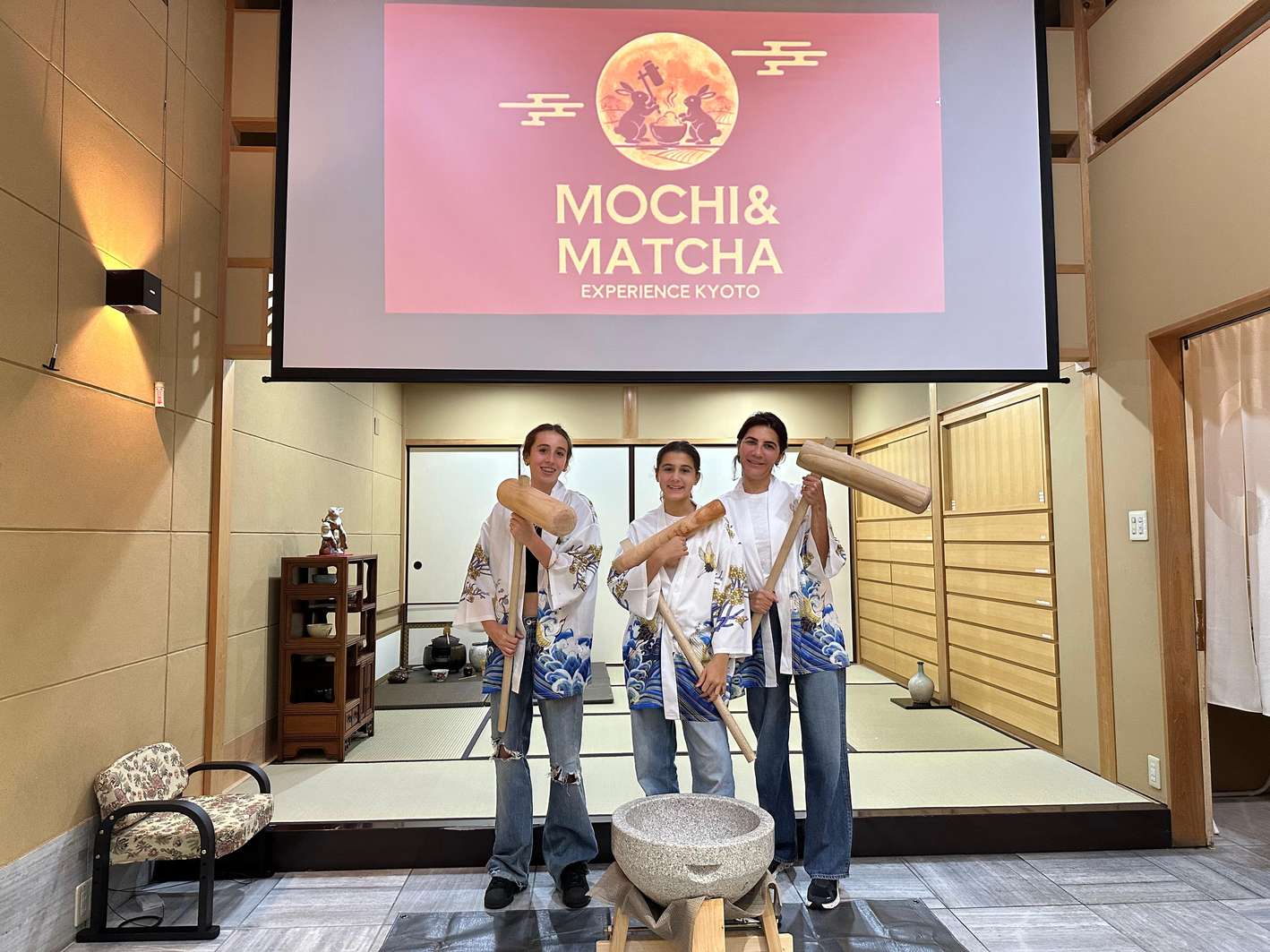
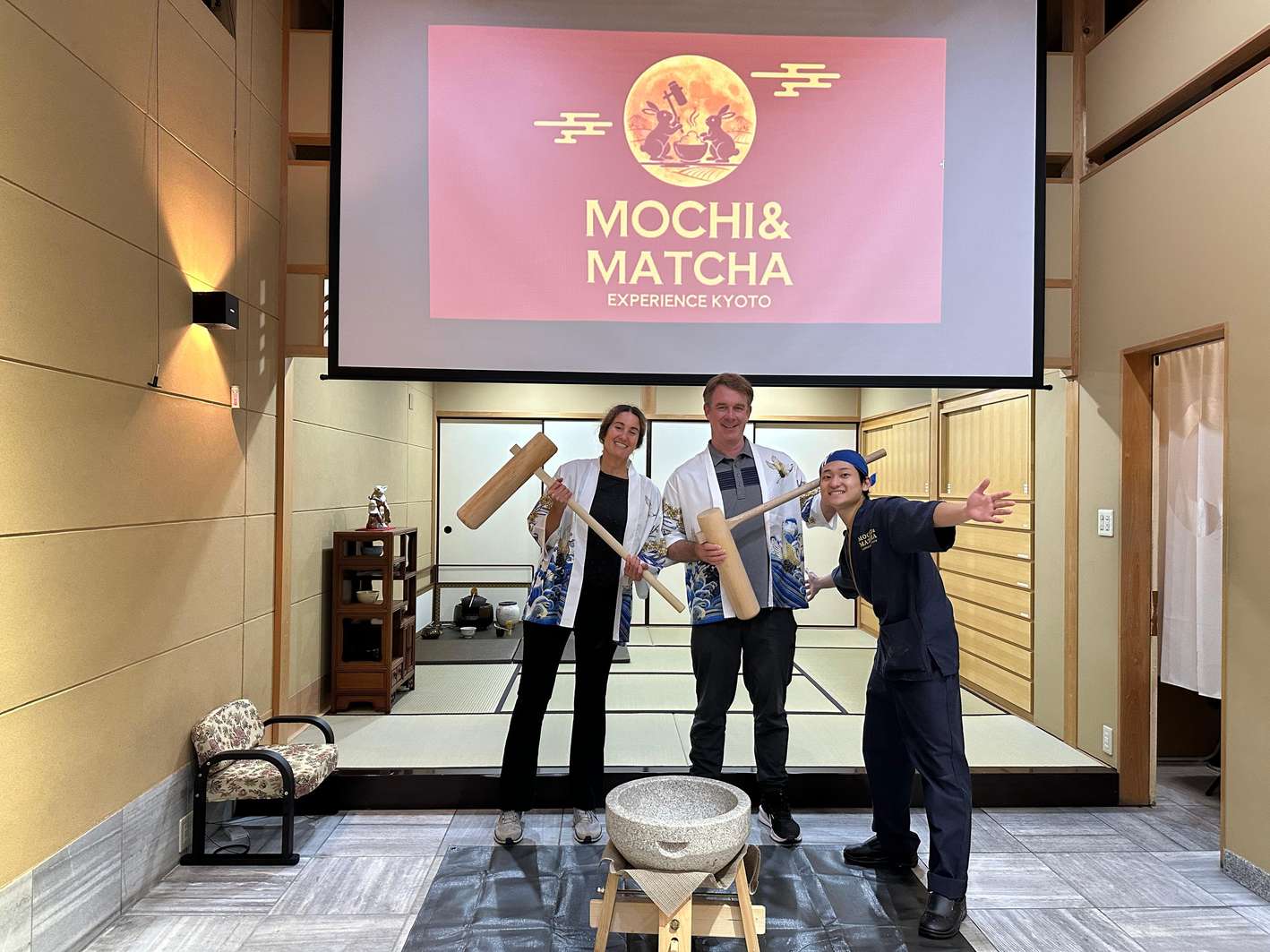
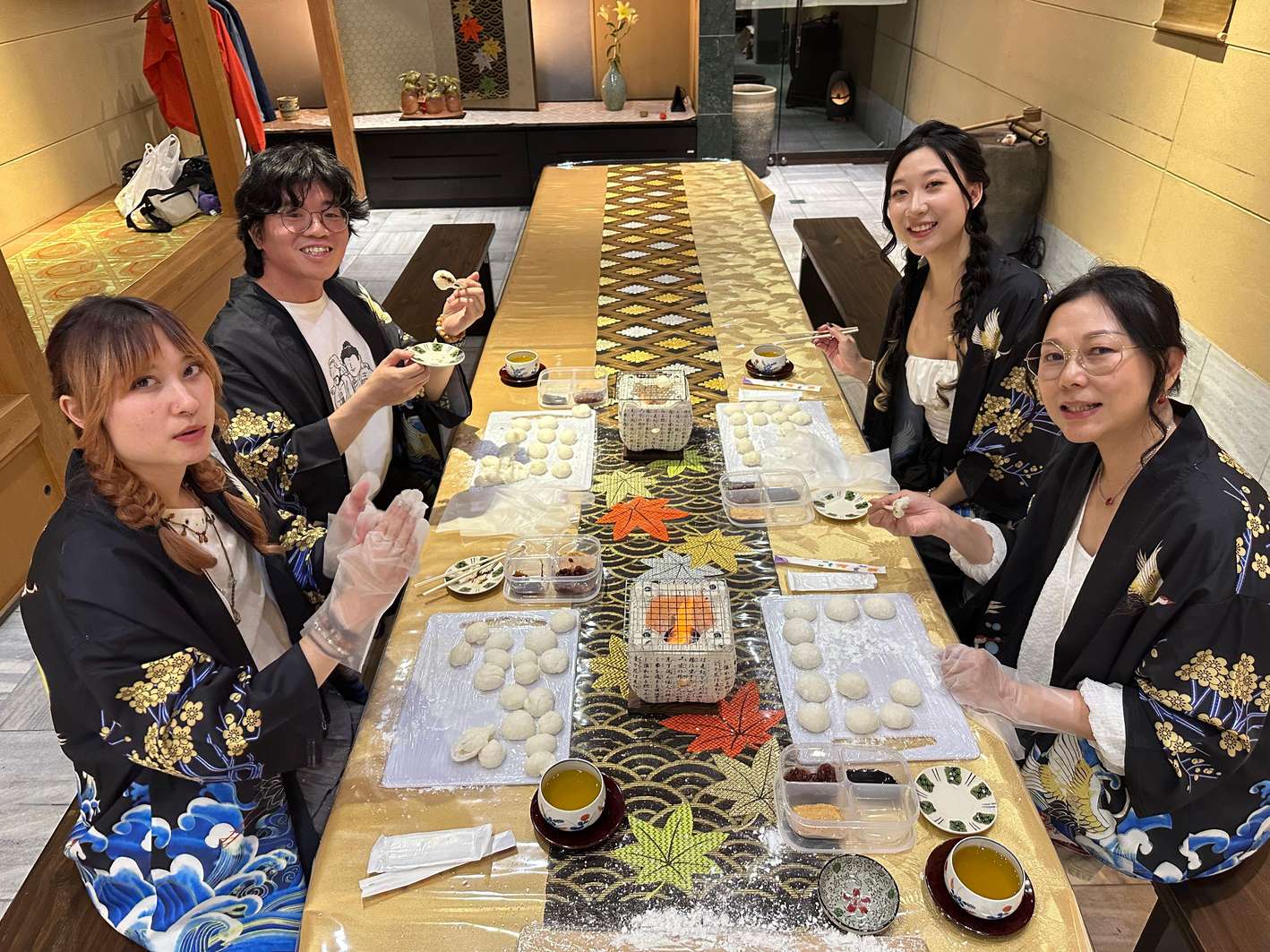
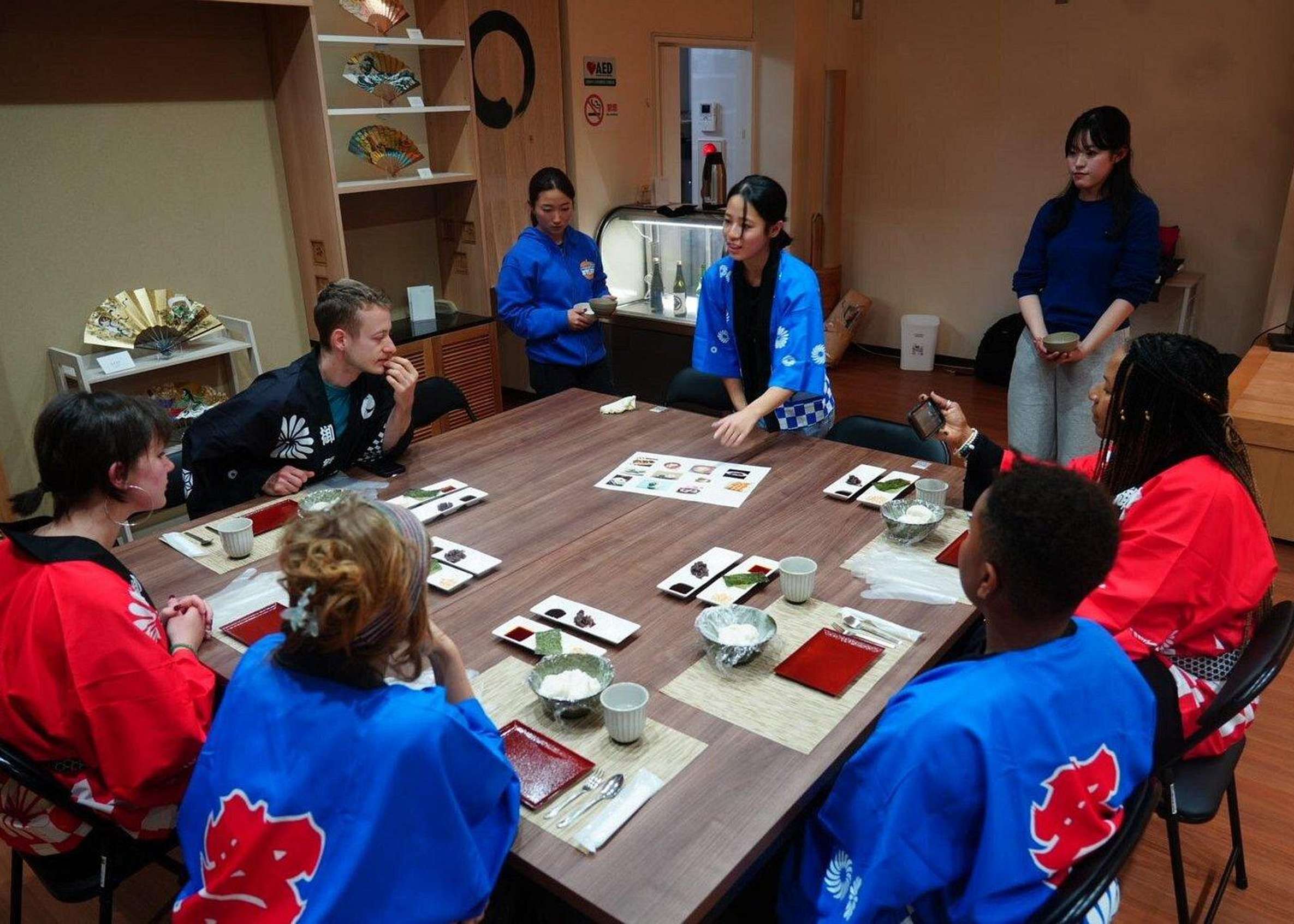
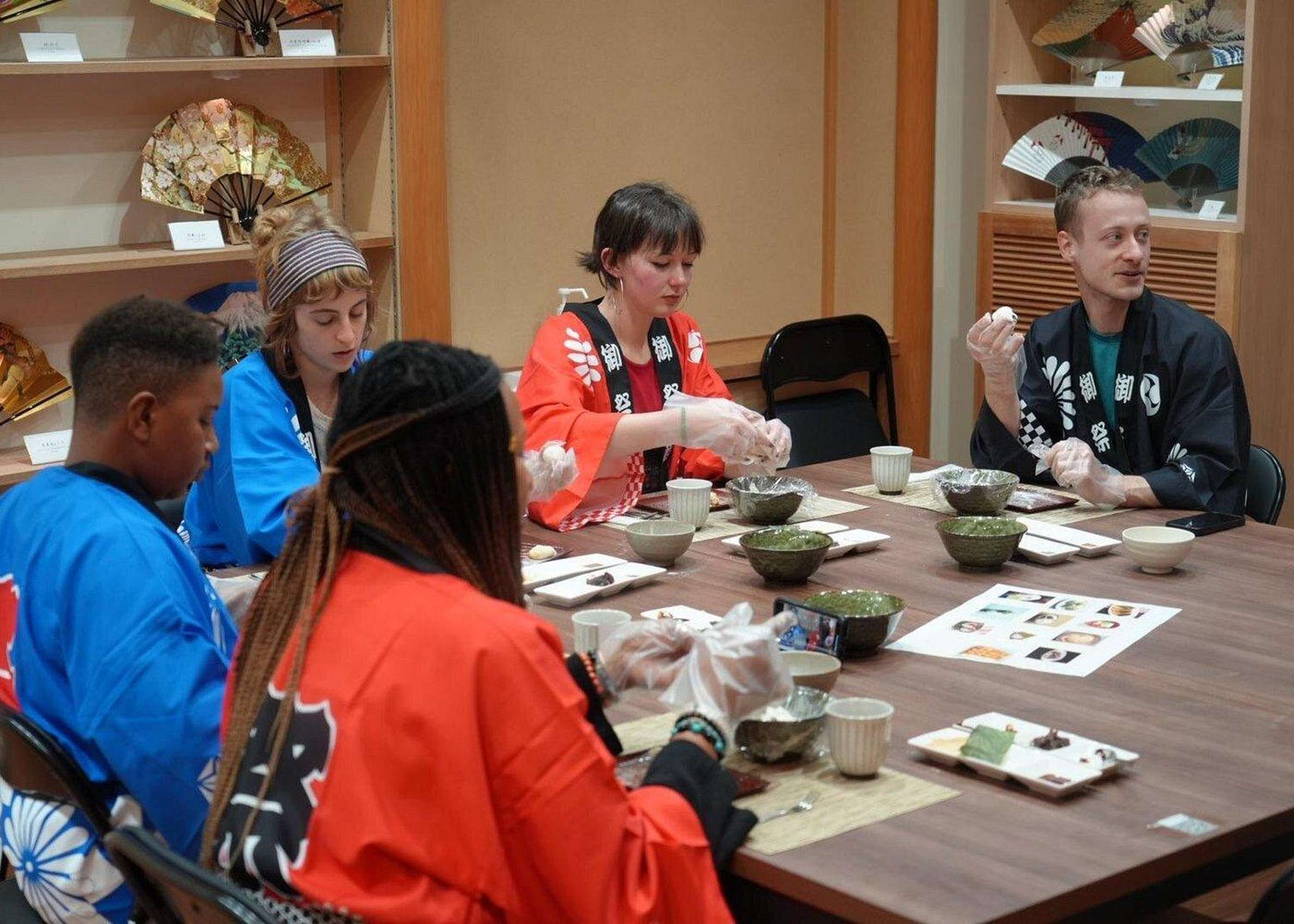
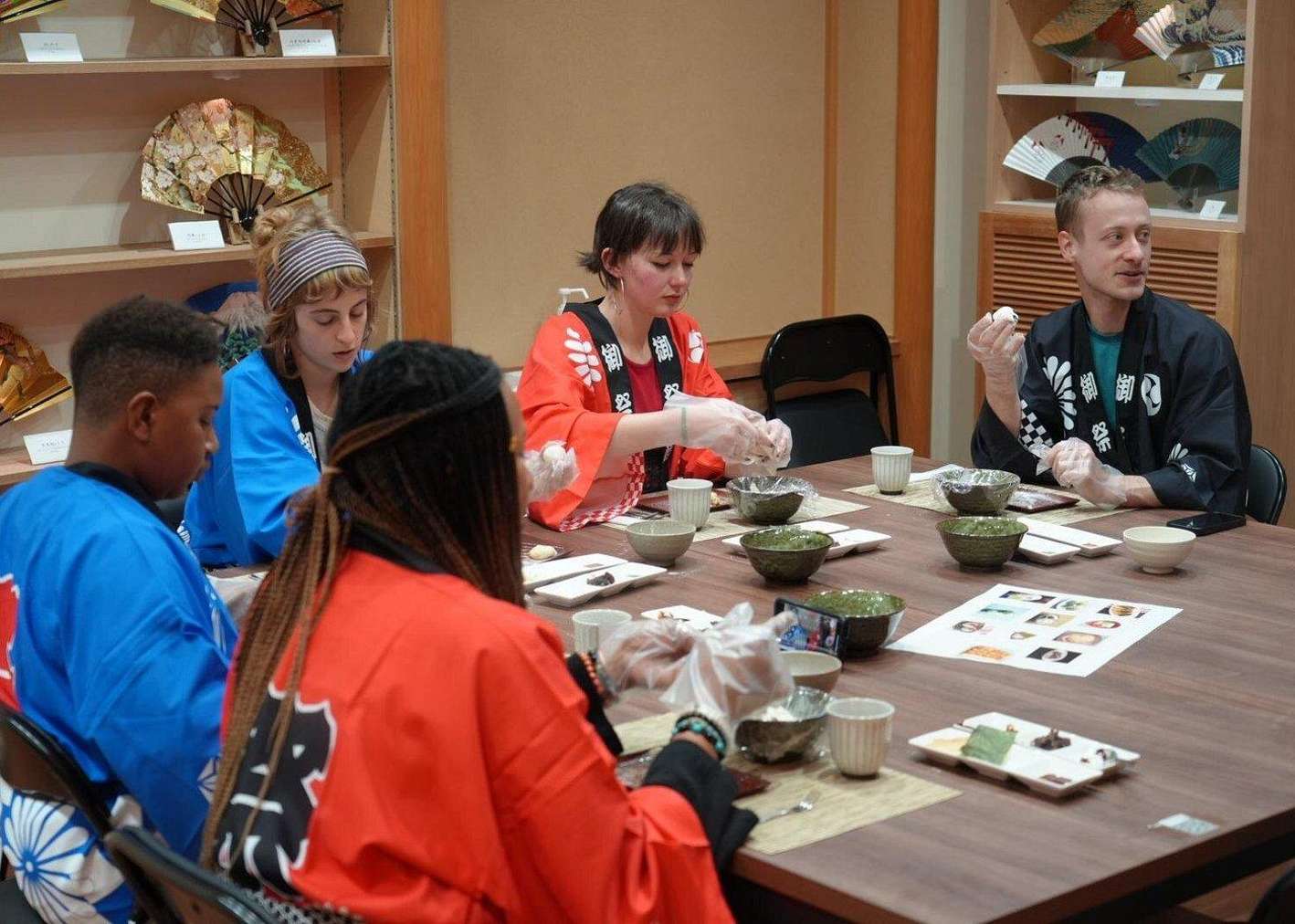
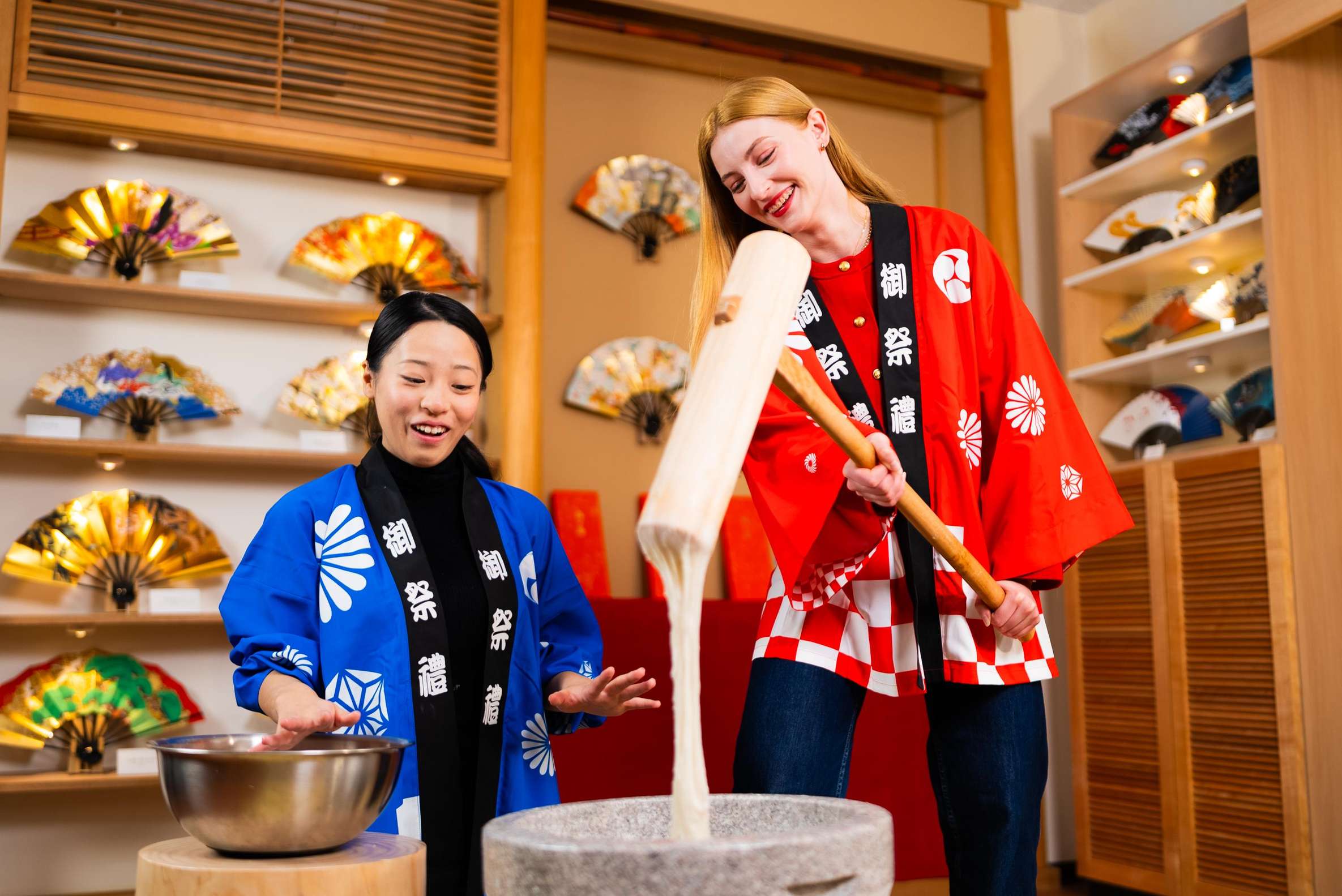
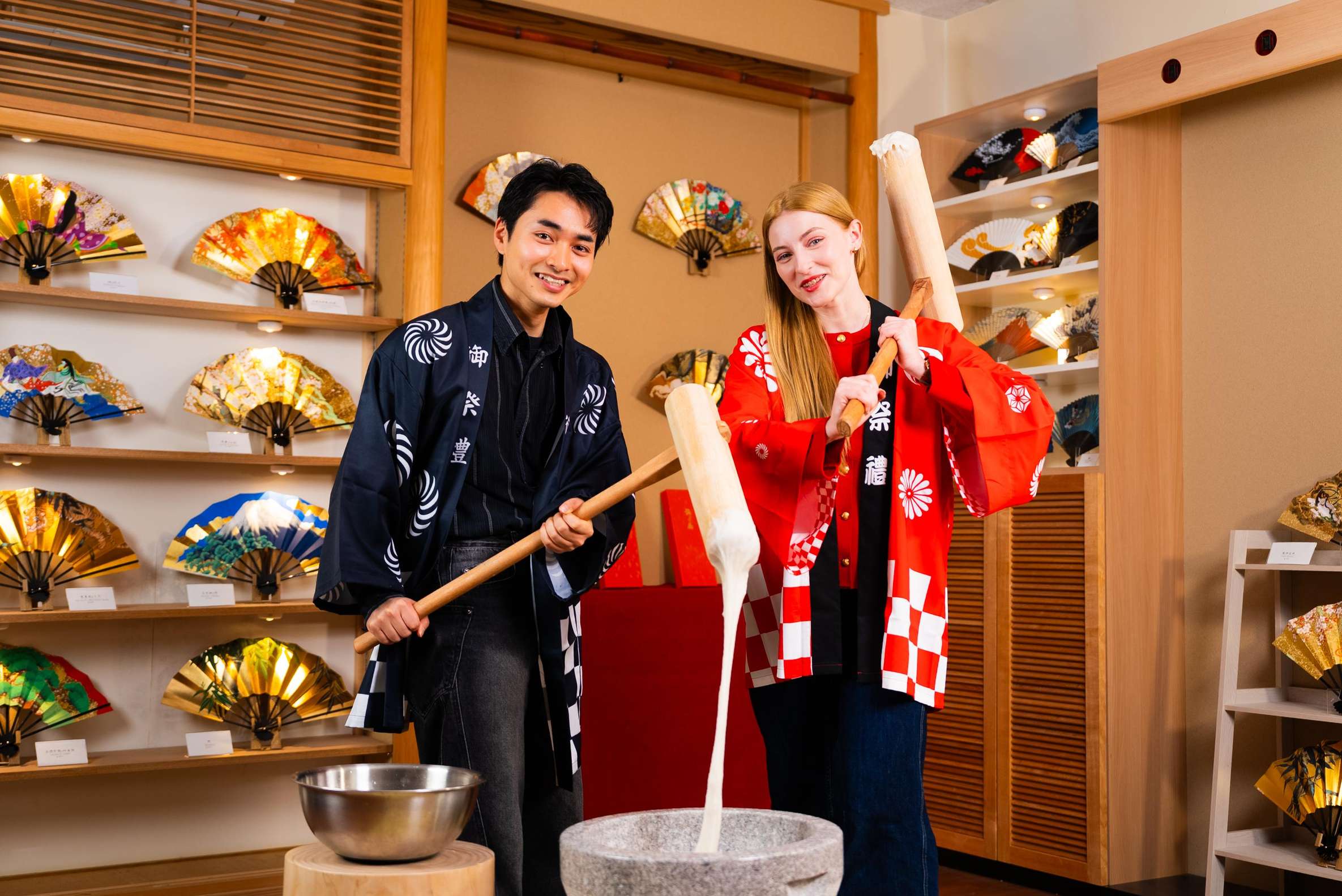
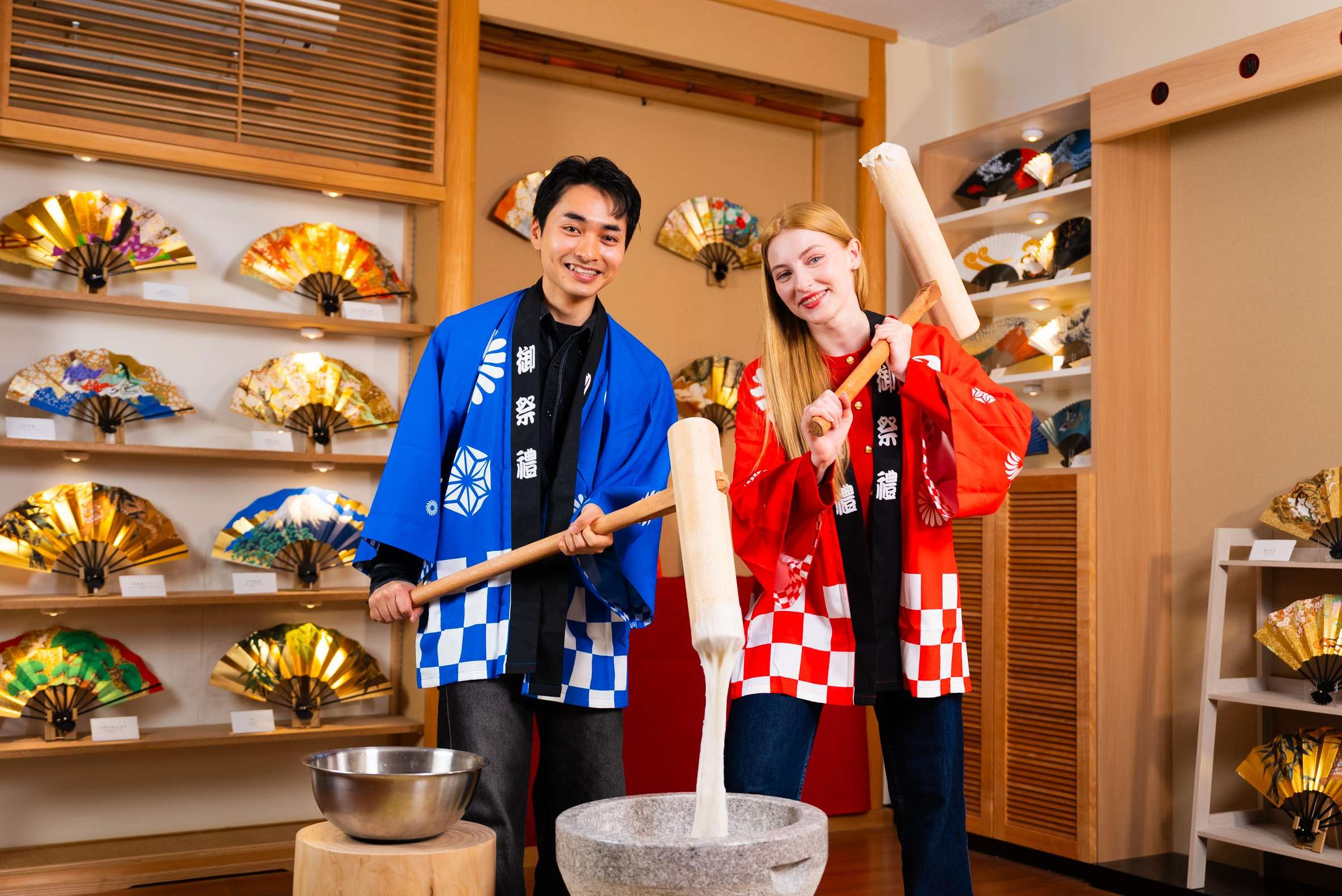
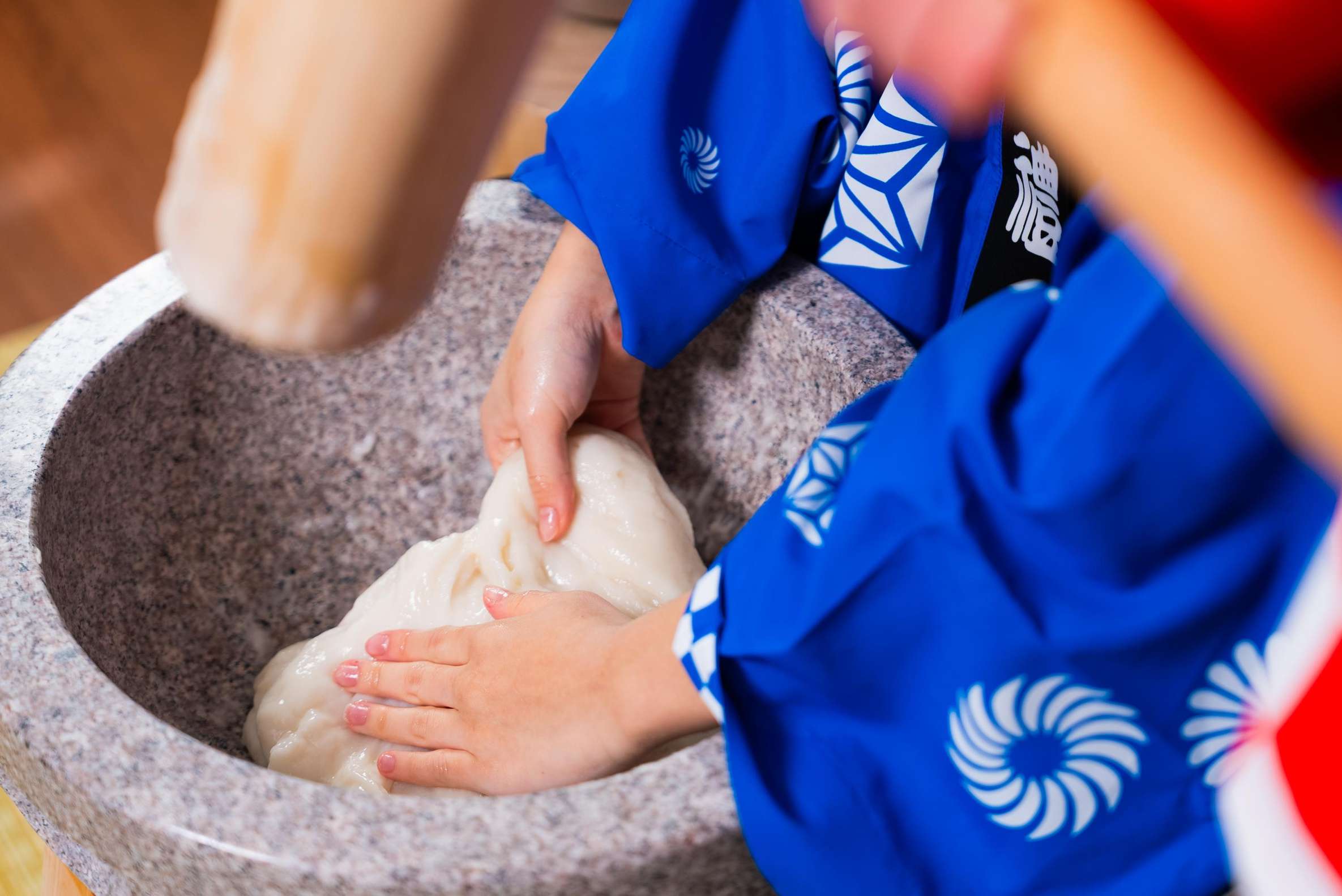
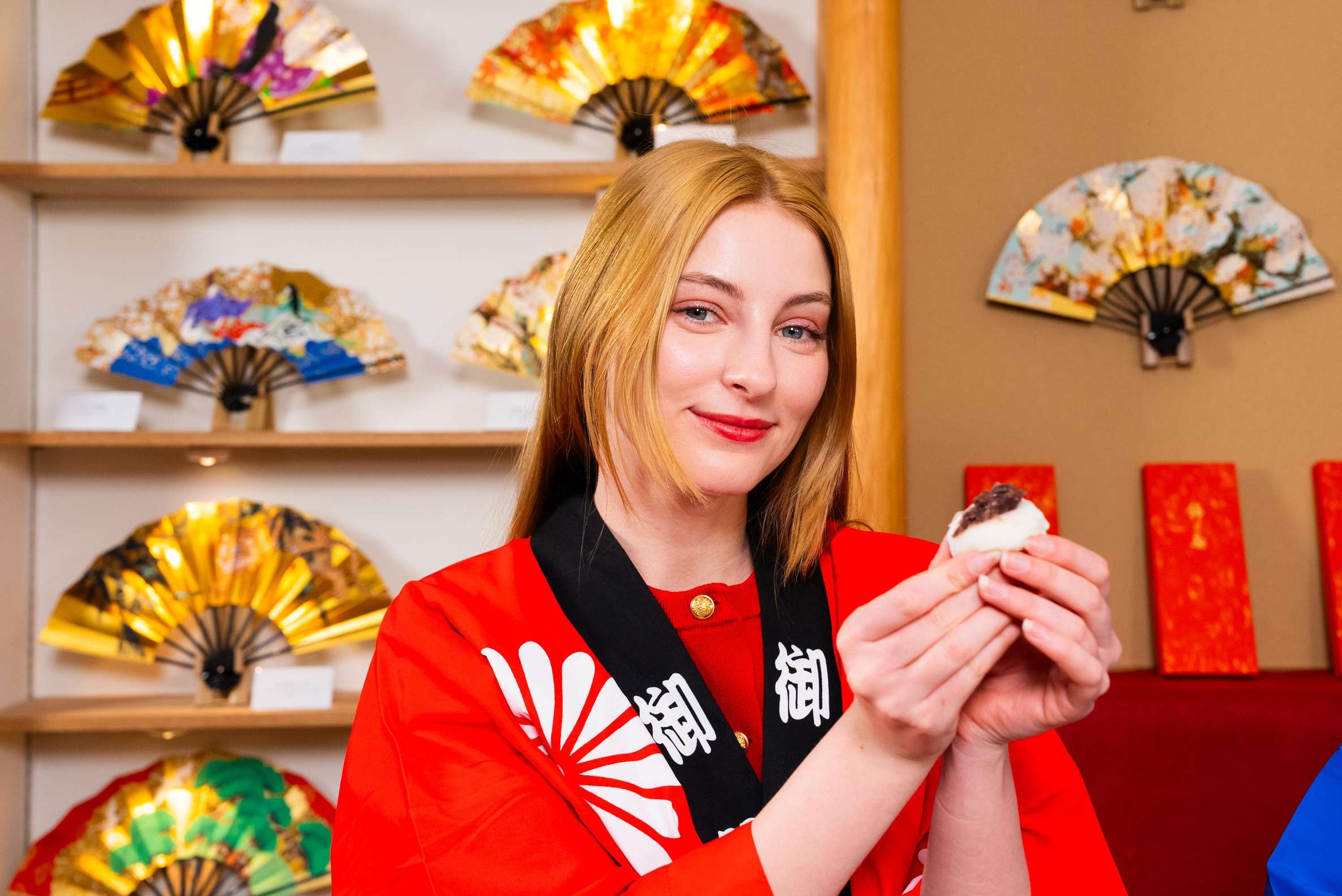
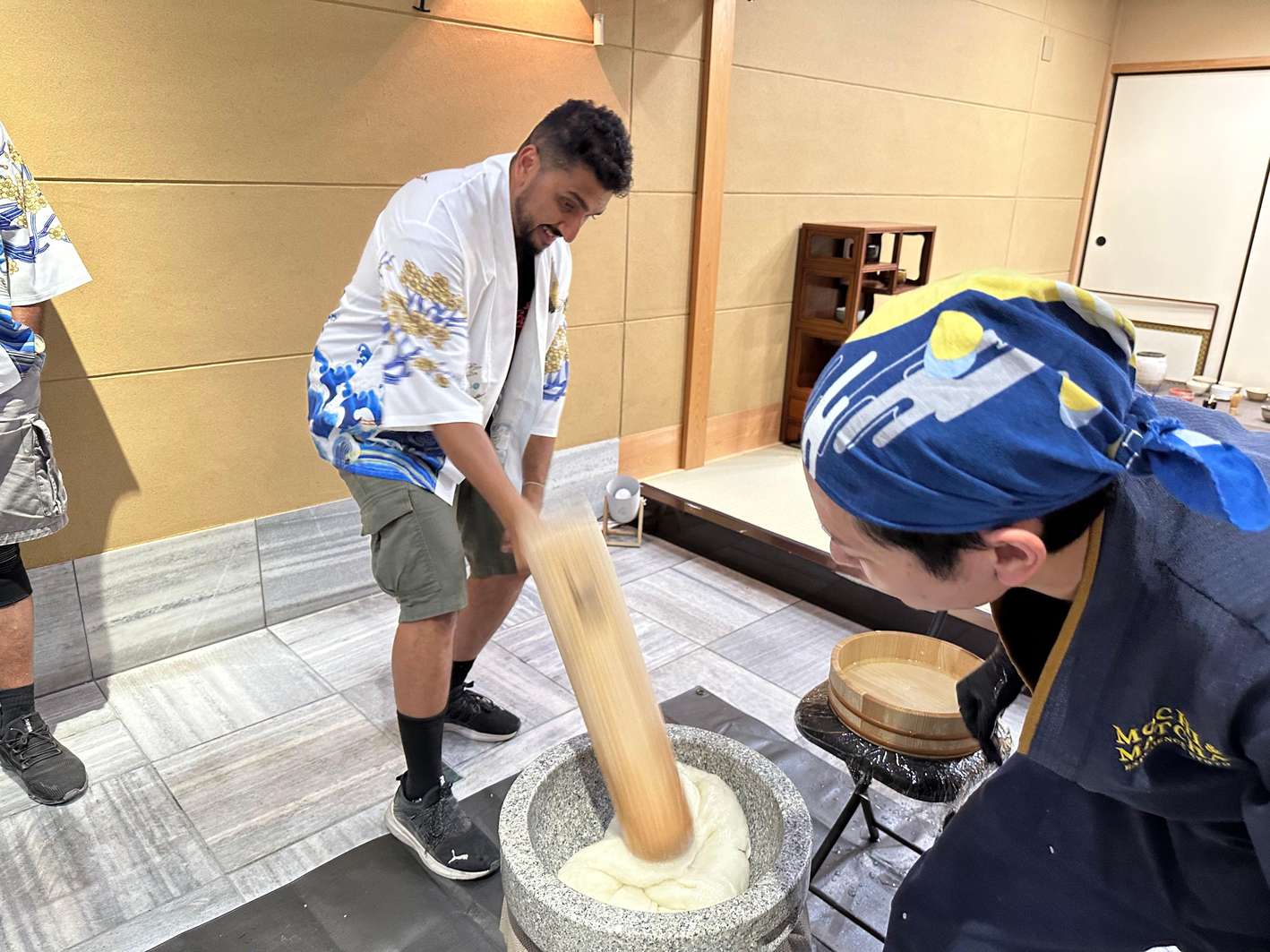
A local home chef leads a small group of no more than eight through the whole craft: you swing the mallet, turn and shape the sticky dough, and then fill and form several styles, from red bean mochi and mochi ice cream to mitarashi dango and candy-style wagashi.
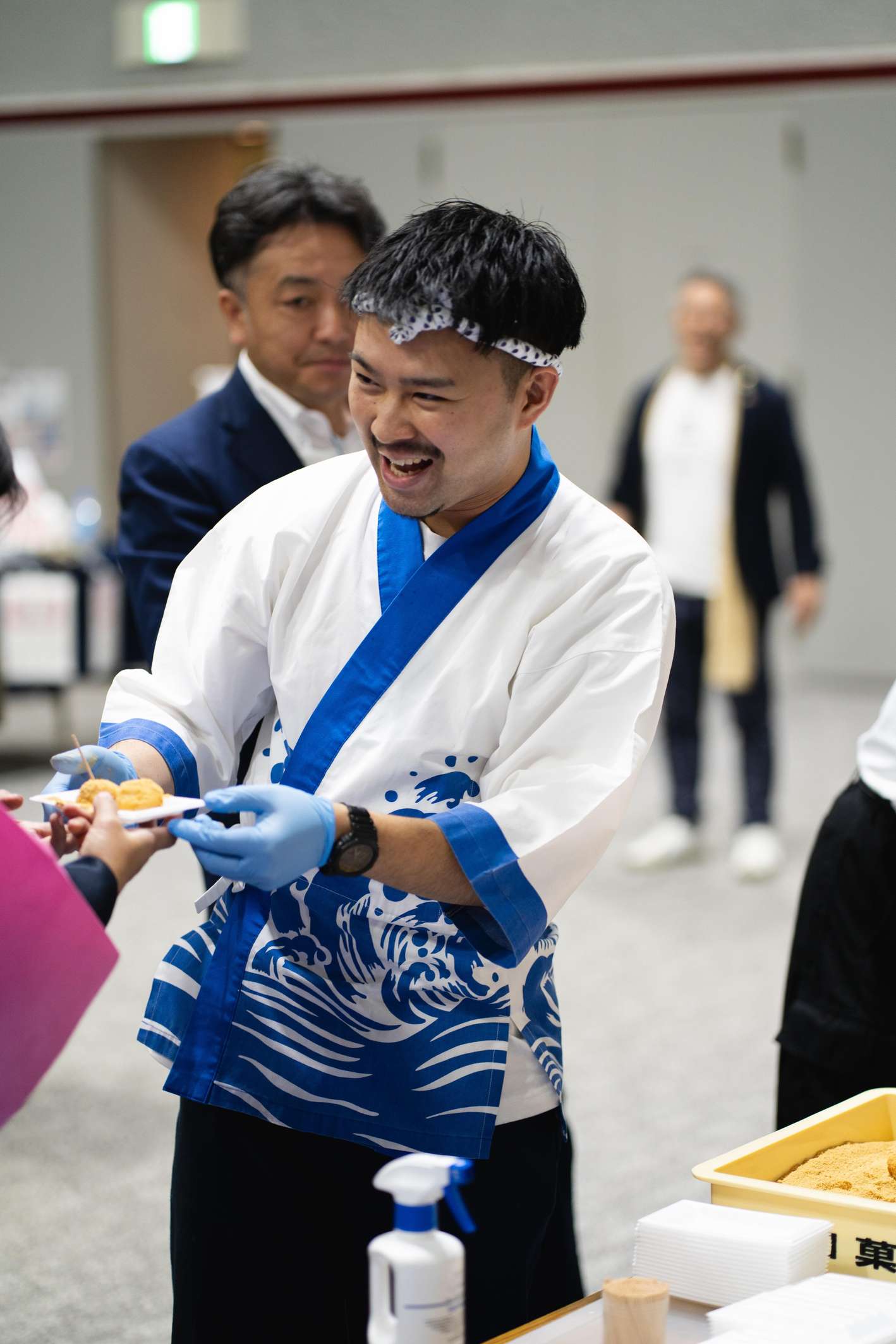
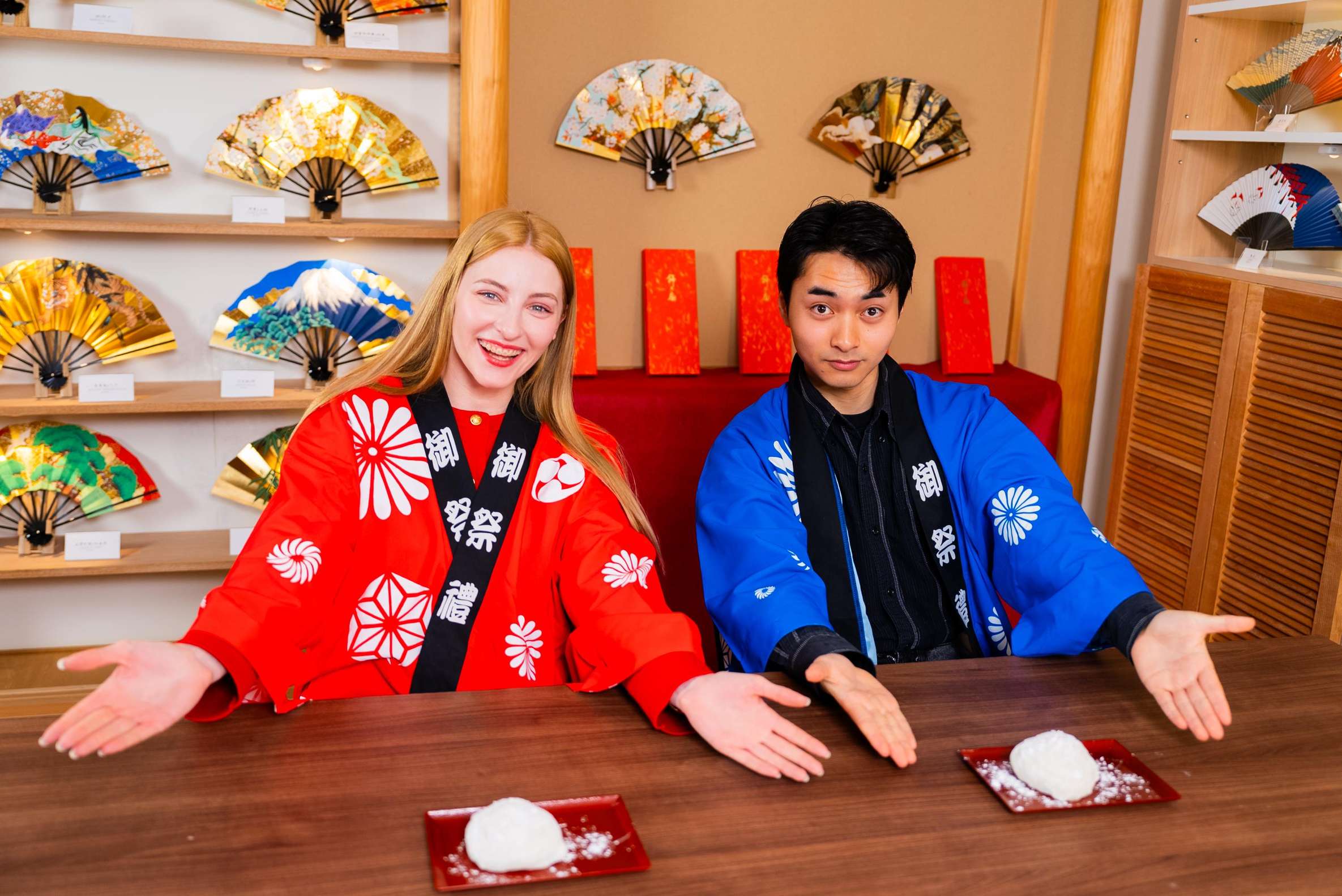
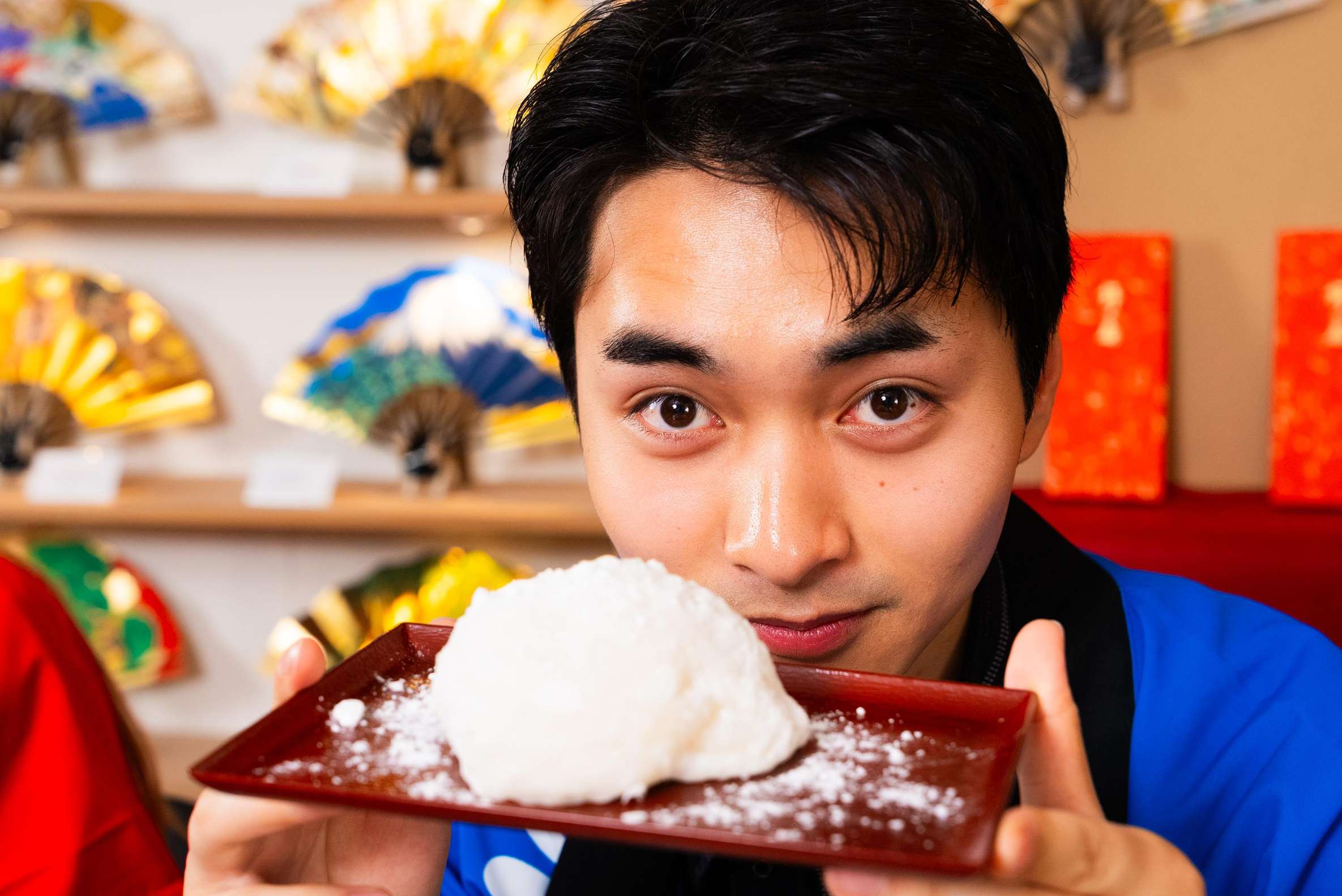
The tasting is the part people remember. Mochi eaten minutes after pounding is soft, gooey and stretchy, pulling into a long thread when you bite it, nothing like the firm squares in a shop box.
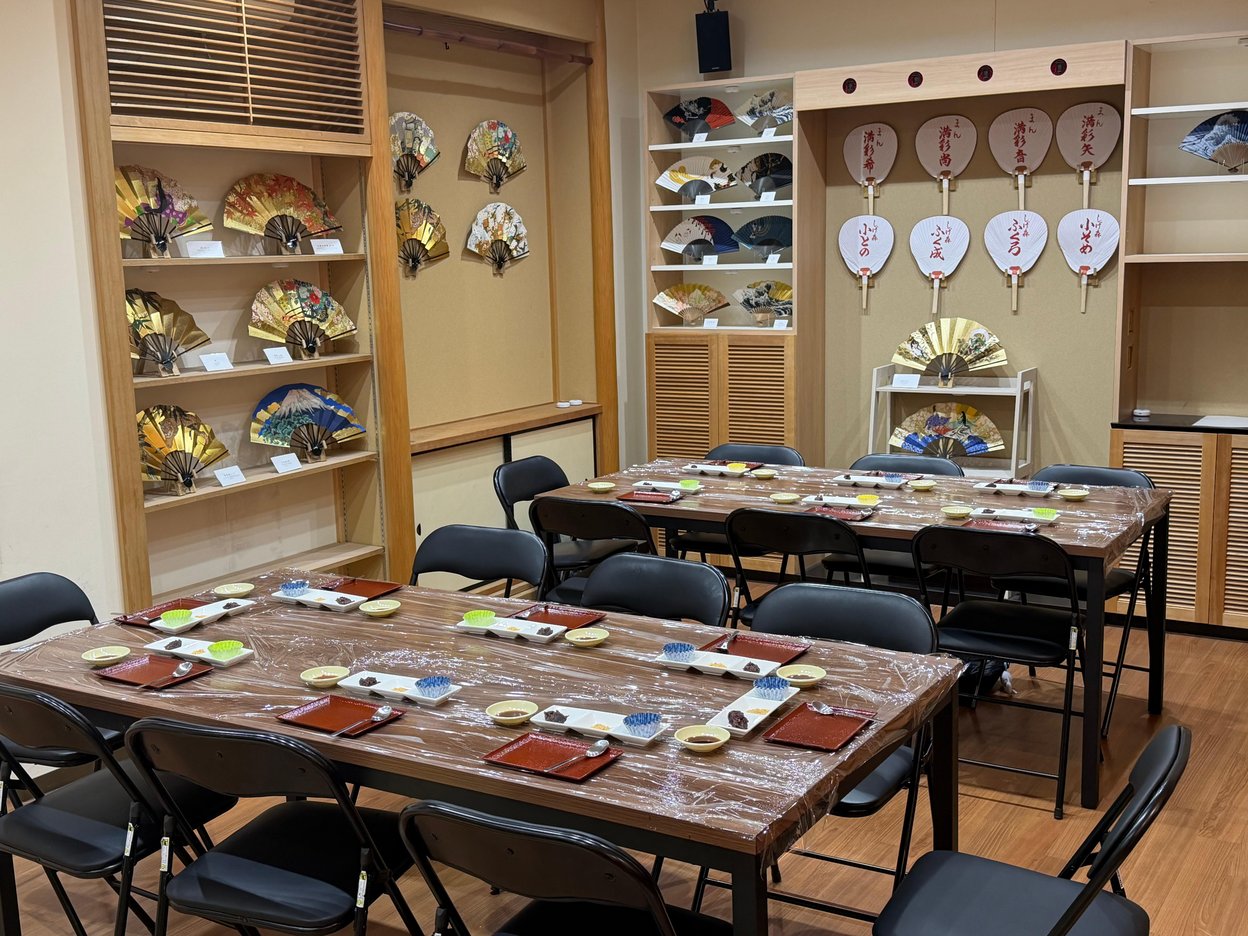
You finish seated with your own creations and a cup of matcha, with drinks included alongside the mochi. Morning and afternoon classes let you slot it between temples.
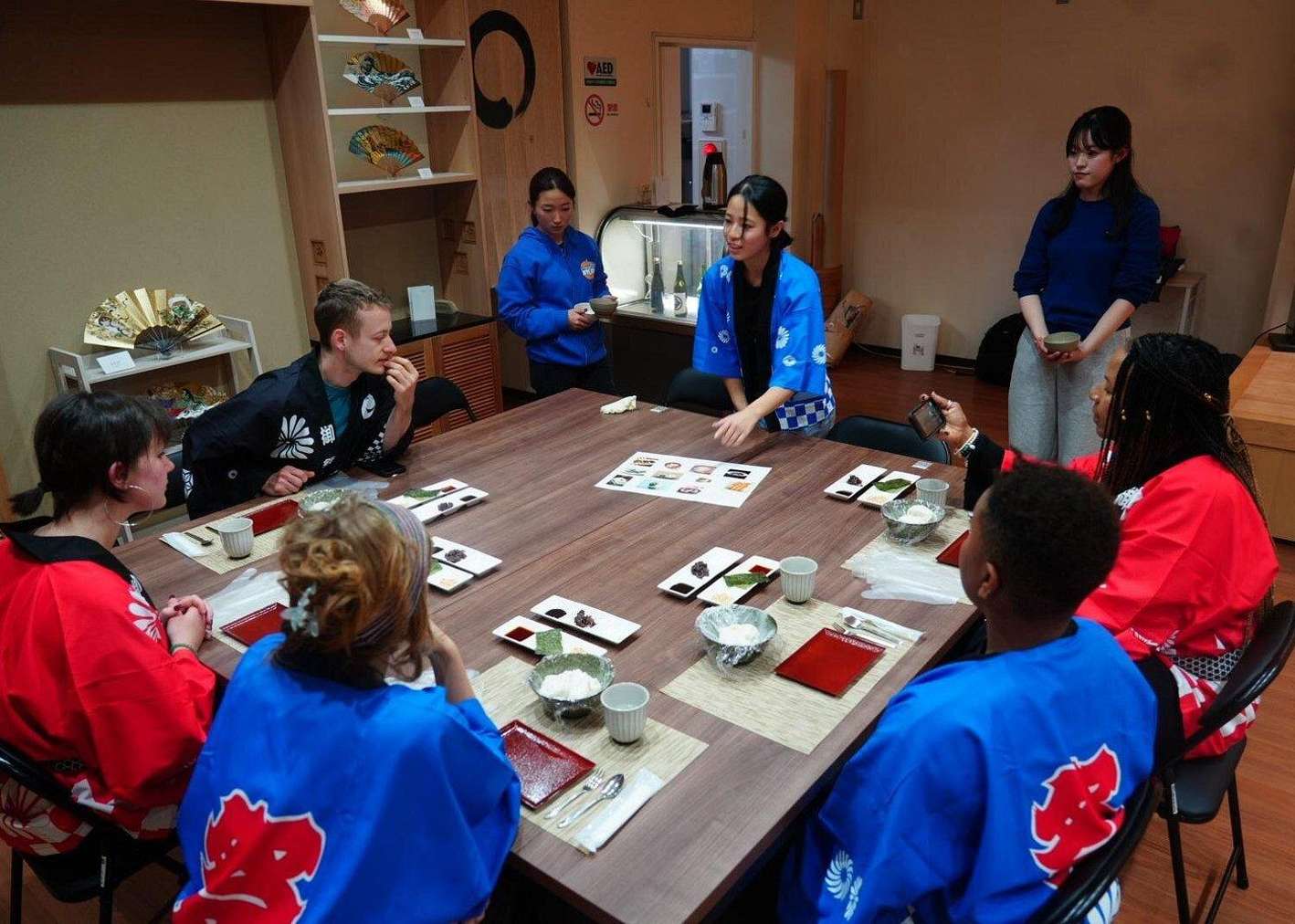
1Meeting your home chef· about 5 minYou join a small group, eight guests at most, and your English-speaking instructor walks you through what mochi making involves.2First swings at the mortar· about 15 minSteamed glutinous rice goes into the mortar and you pound it with the wooden mallet until it turns smooth, glossy and stretchy.3Shaping and filling several styles· about 20 minYou shape the warm dough and try multiple flavors and styles: red bean mochi, mochi ice cream, mitarashi dango and delicate wagashi.4Tasting with matcha· about 15 minYou sit down with the mochi you made, still warm, plus drinks, and savor it alongside a cup of traditional matcha tea.5Winding down and heading out· about 5 minTime to ask your last questions, finish the tea and step back out with an hour of Kyoto craft behind you.
Included
Various Types of MochiYoung English-Speaking InstructorDrinks to go with your Mochi
How to book mochi pounding in Kyoto
01
Pick your date and time slot
Choose a day that leaves room around it. The traditional tasting class runs about an hour and offers morning or afternoon starts, so it slots between temple visits. Book early in your trip in case you want a second go.
Pro tipPlan on 75 minutes door to door, since one listing asks you to arrive 15 minutes before the start
RecommendedA morning slot leaves your afternoon free for sightseeing
02
Choose the right experience
Compare the formats before you pay. There is a one-hour pounding and tasting class in a small group, a 90-minute session that adds a formal tea ceremony with Uji matcha, and a two-hour class where a professional craftsman performs first.
Common mistakeBooking the longest session thinking it is the standard one; most travelers are happy with the one-hour class
Pro tipSolo travelers are welcome, no two-person minimum
03
Read the suitability notes
Check the participation rules before checkout. One class is wheelchair and stroller accessible; the same class lists pregnant women and people with back or heart problems as unsuitable. If a health condition might apply, confirm with the operator first.
ImportantFree cancellation only works if you cancel up to 24 hours before the session
04
Book and check your confirmation
Pay through the marketplace and wait for the confirmation, which arrives by email with the venue address and any messages from the operator. None of the Kyoto sessions include hotel pickup, so plan your own route to the meeting point.
Common mistakeAssuming a guide collects you from your hotel; you travel to the venue yourself
05
Turn up ready to pound
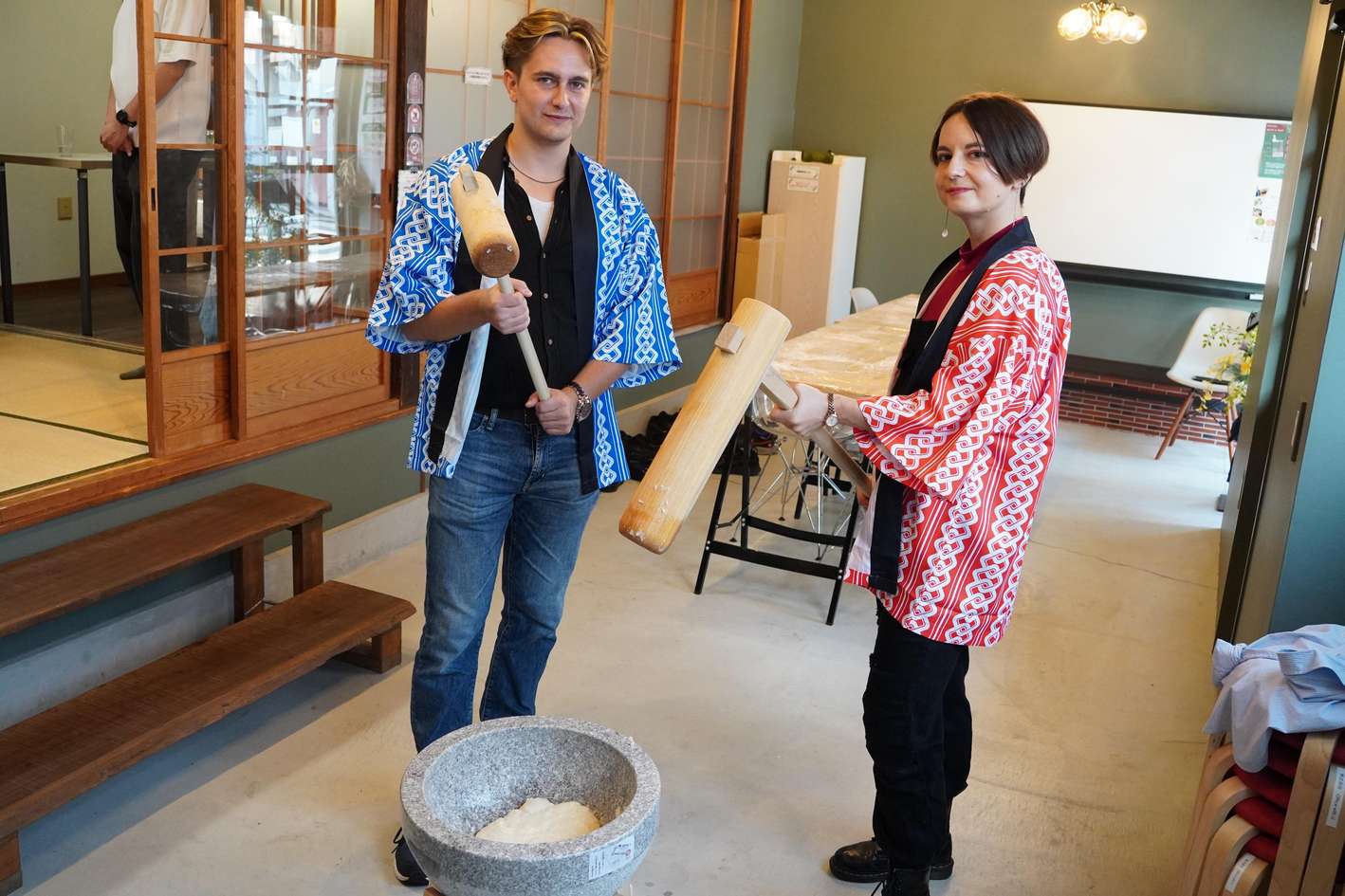
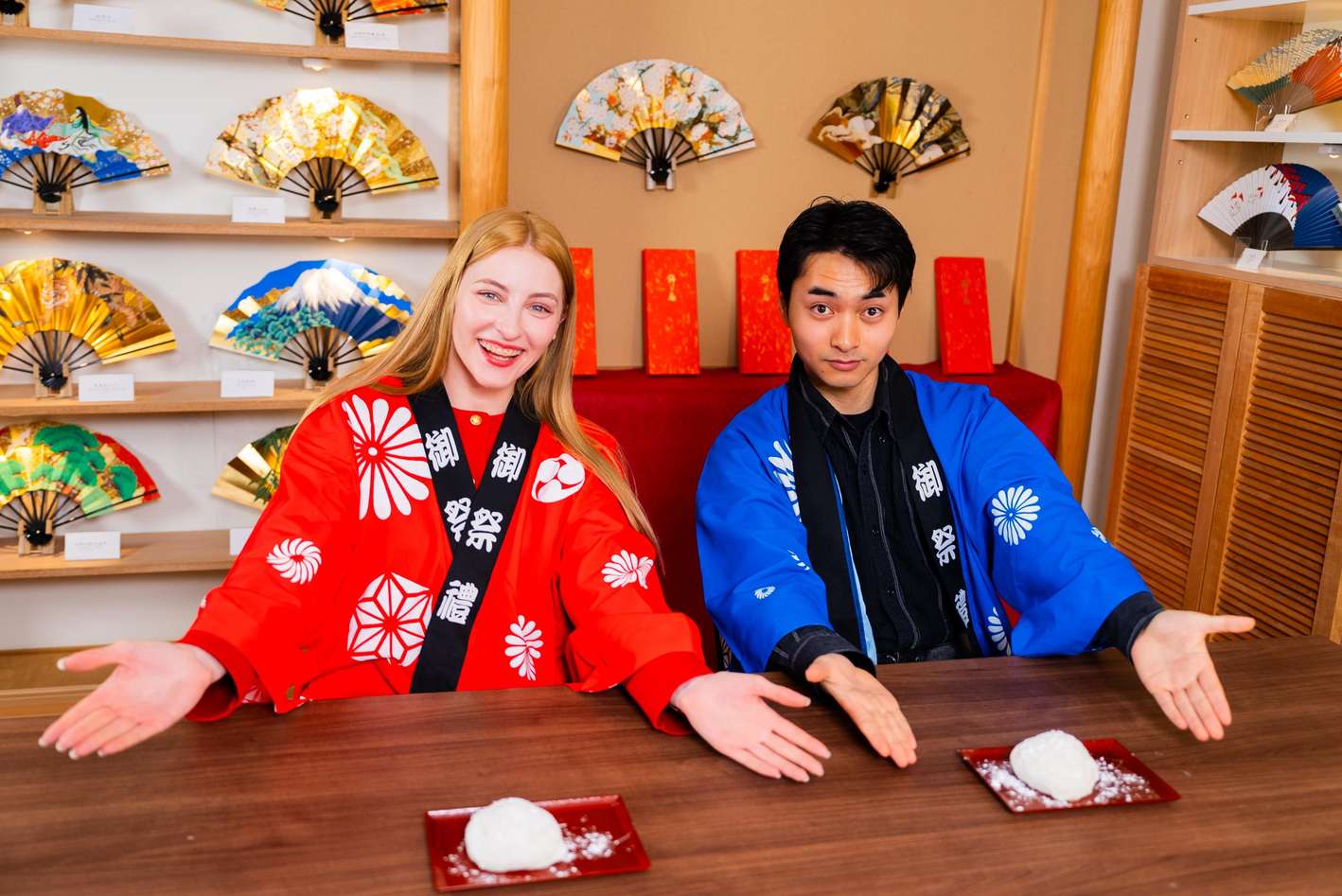
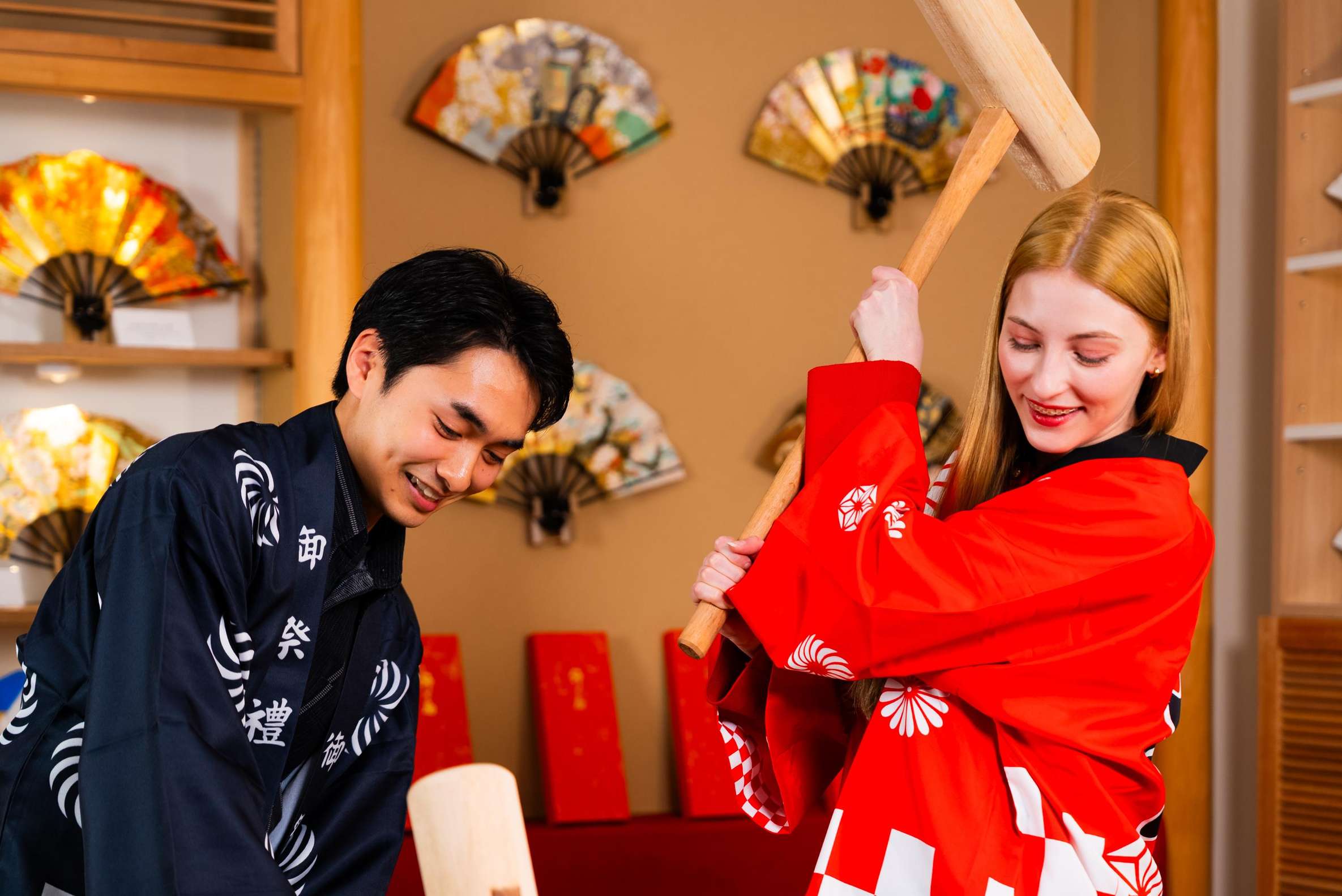
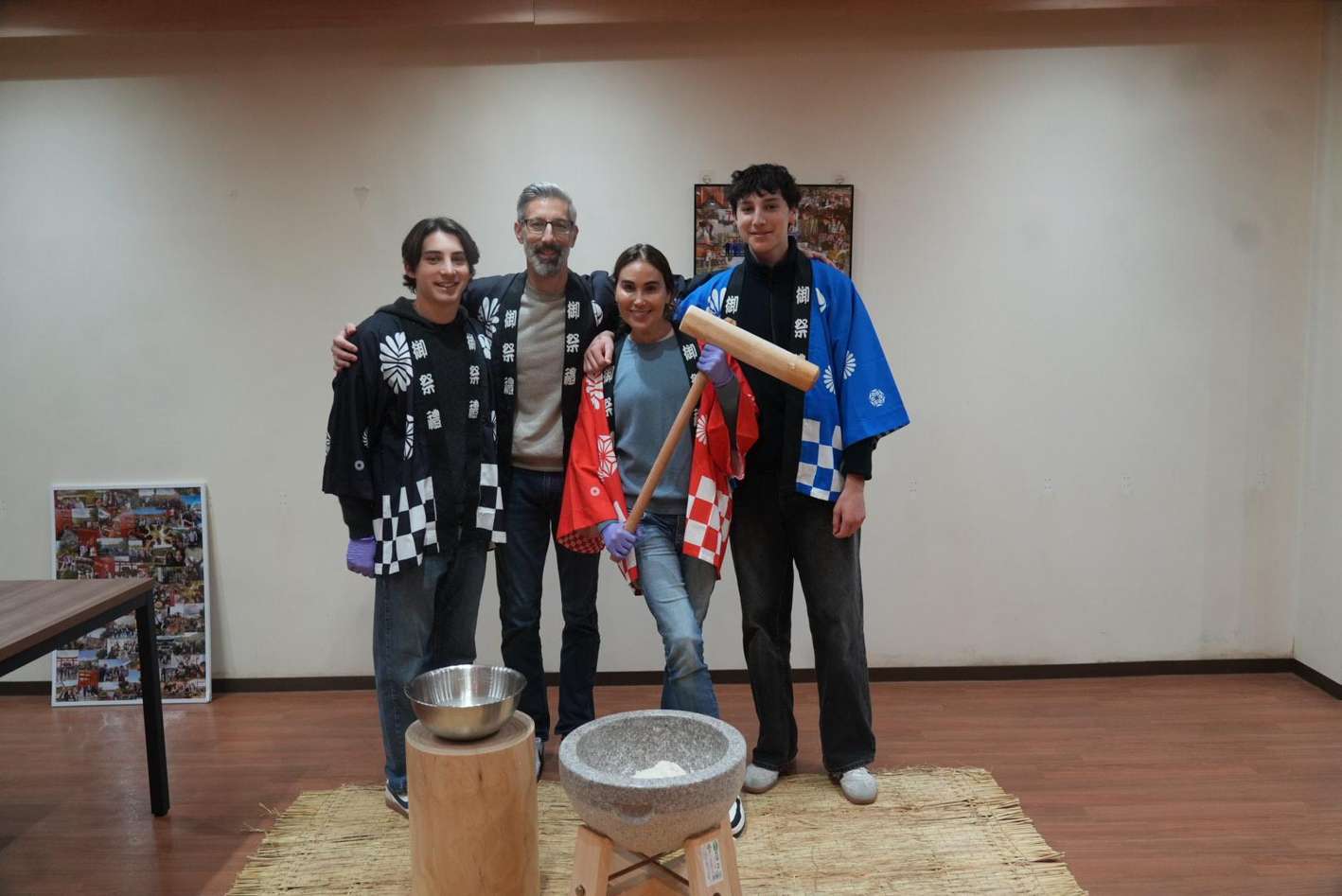
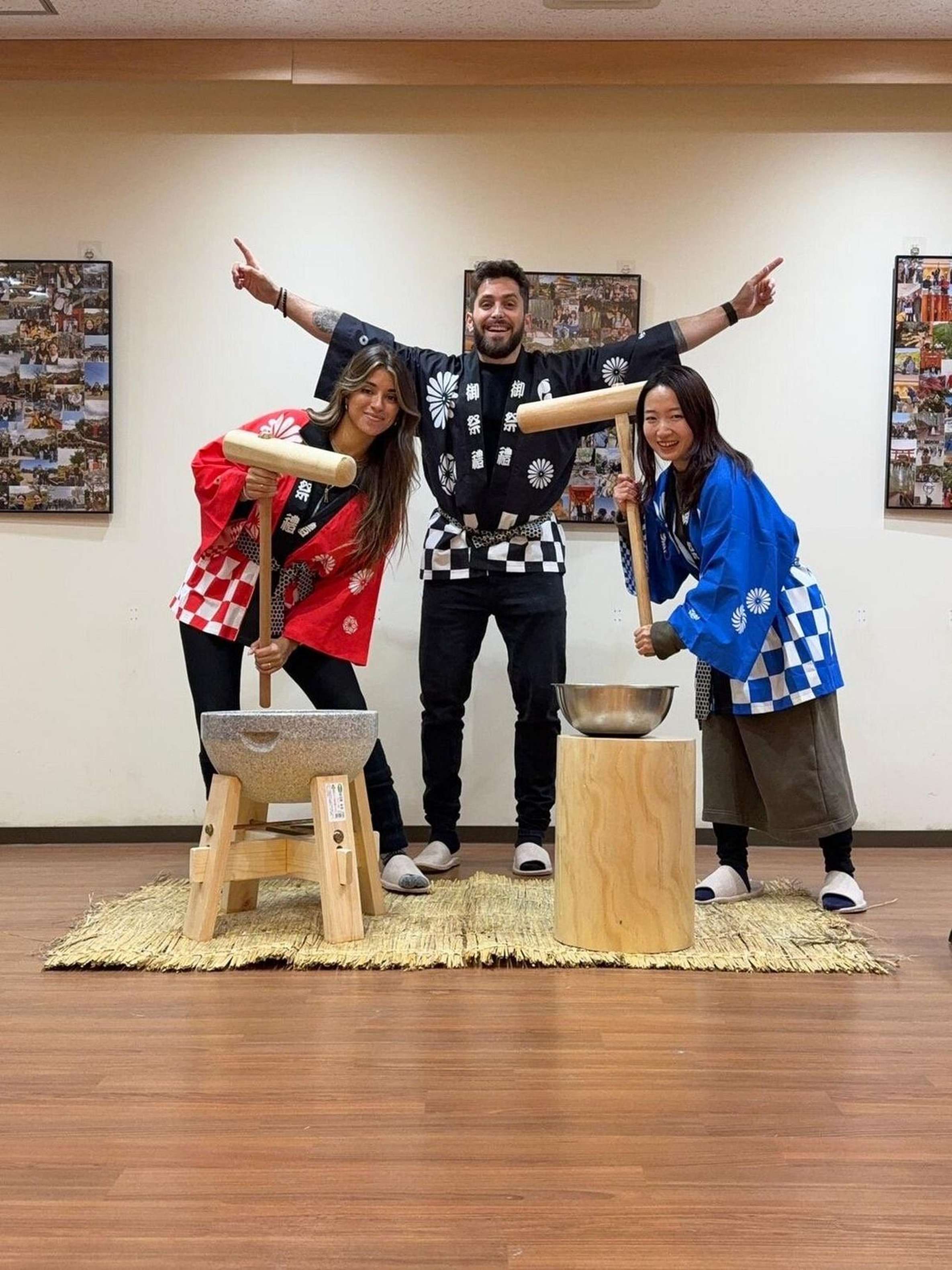
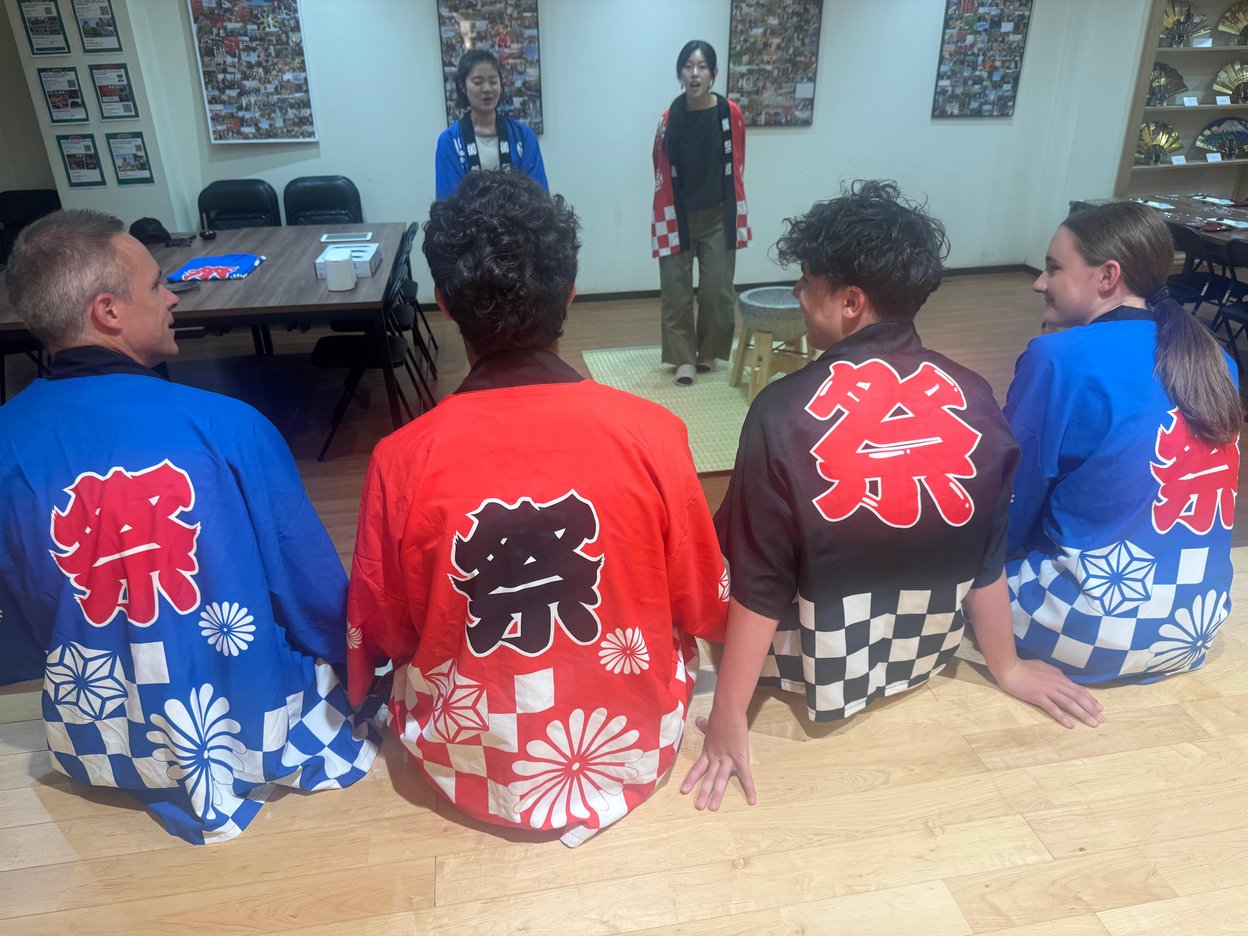
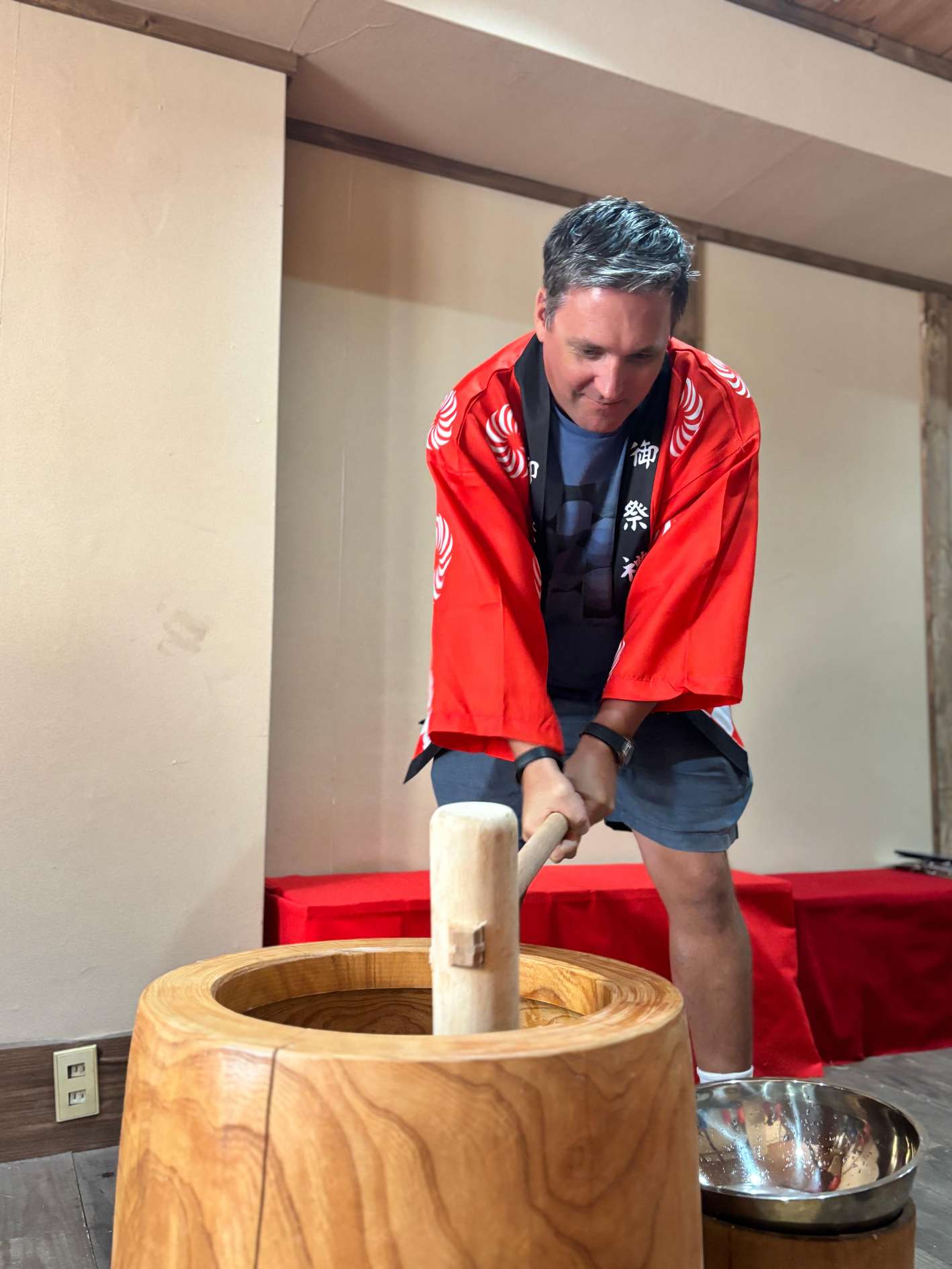
Arrive 15 minutes early in comfortable clothes and slip-on shoes, since you leave outdoor shoes at the entrance and the venue lends you a happi coat. Bring your phone; hosts often take photos and videos of the group for you.
RecommendedEat lightly beforehand, the tasting at the end can be generous
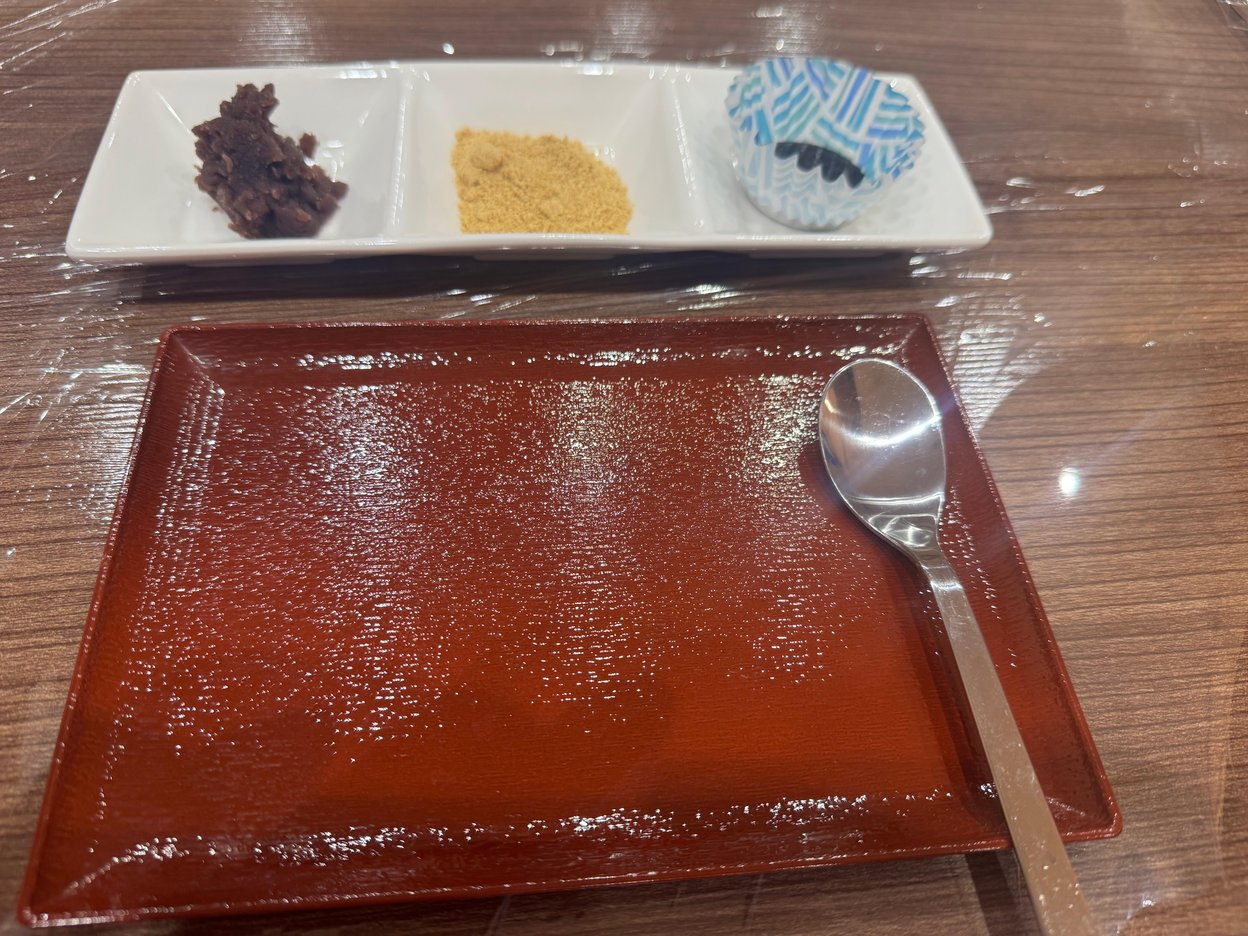
Pro tipCome hungry for toppings like kinako and anko, warm from the mortar
The friendly, English-speaking guides made the class, helping them pound and shape their own mochi.
Best surprise
Several families did not expect the range of mochi, finding far more flavors than the ice cream kind they knew.
Most common wish
Many wished they had more time at the mortar, taking turns with the mallet and sharing jokes between swings.
Pound mochi, then sit down to a real tea ceremony
This session splits its ninety minutes between two traditions. You pound steamed rice with a wooden pestle in a traditional mortar, then eat it warm, grilled on the spot.
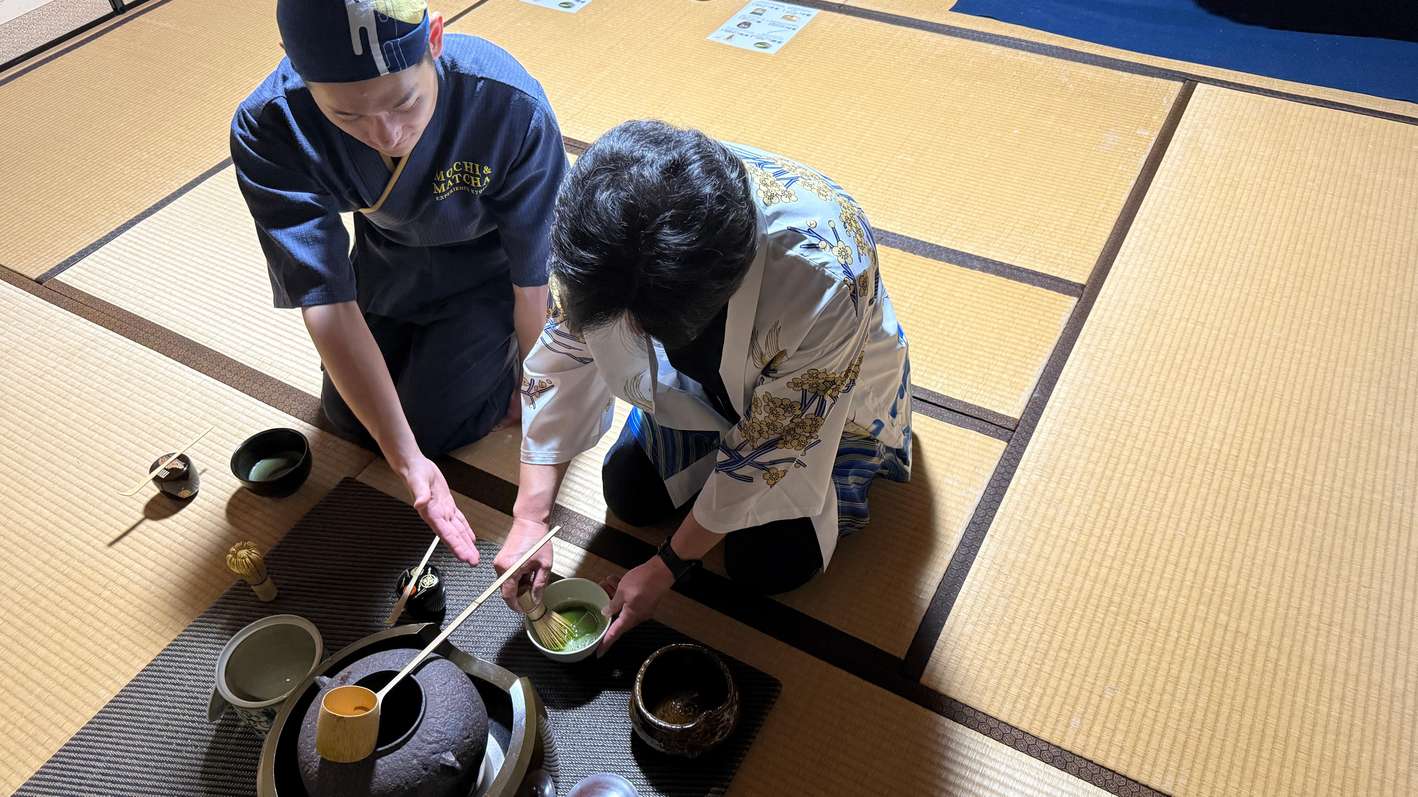
Afterwards comes the quiet half: a tea ceremony with Uji matcha, real utensils, and staff who explain the tools in English. Where the city's shorter classes end at the tasting, this one carries on into the ritual.
Two traditions in one visitPounding with traditional tools flows straight into an authentic tea ceremony, all in English, with a souvenir to take home.
Built for first-timersIt is listed as suitable for beginners, and the small-group format means teachers give each participant individual attention.
Plans can changeCancel up to 24 hours in advance for a full refund, so you can hold a date before your itinerary is settled.
Small-group sessions fill fast, and free cancellation means you can hold a spot risk-free today.
What to know before you book a mochi pounding session in Kyoto
Can stop the dayGood to knowGood news
01
ChoosingWhat it is, who it suits, when to go
4
Duration
A standard class runs about an hour, which makes it easy to slot between temple visits. Plan on 75 minutes door to door, since one operator asks guests to arrive 15 minutes early. The combined pounding and tea ceremony session takes around 90 minutes.
Group size
Everyone booked into a time slot shares one mortar in a single combined session, usually capped at about 12 guests. Turns rotate, so a full session means fewer swings per person and some guests get to pound or fold, with both sometimes open. Smaller classes give the instructor more time with each participant.
What's included
What you get depends on the class: Hotel transport and extra food or drink usually cost extra
Tools, ingredients, happi coat rental and tasting on most sessions
Toppings such as kinako, anko, chocolate and honey at one workshop
Matcha or other drinks to accompany your mochi
Photos and videos at some venues, emailed afterward
Leftovers
Mochi taken back to your hotel starts hardening within hours, and the refrigerator speeds that up. Eat leftovers the same day at room temperature, or revive them by grilling, boiling or microwaving. It's no loss: the first warm, gooey bite right off the mortar is the one worth planning around.
02
BookingHow far ahead, and what happens if plans change
1
Cancellation
You can cancel any Kyoto session up to 24 hours in advance for a full refund, so a change of weather or a shifted temple day costs you nothing. Booking a slot early in your trip leaves room to rebook if plans move.
03
Before you goPapers, health, what to bring
4
Health limitsCan stop the day
Two of the Kyoto classes are unsuitable for pregnant women and for people with back or heart problems. Pounding means swinging a heavy mallet with a wide stance, and it can leave you sweating. Check the restrictions on your chosen class before you confirm.
Children
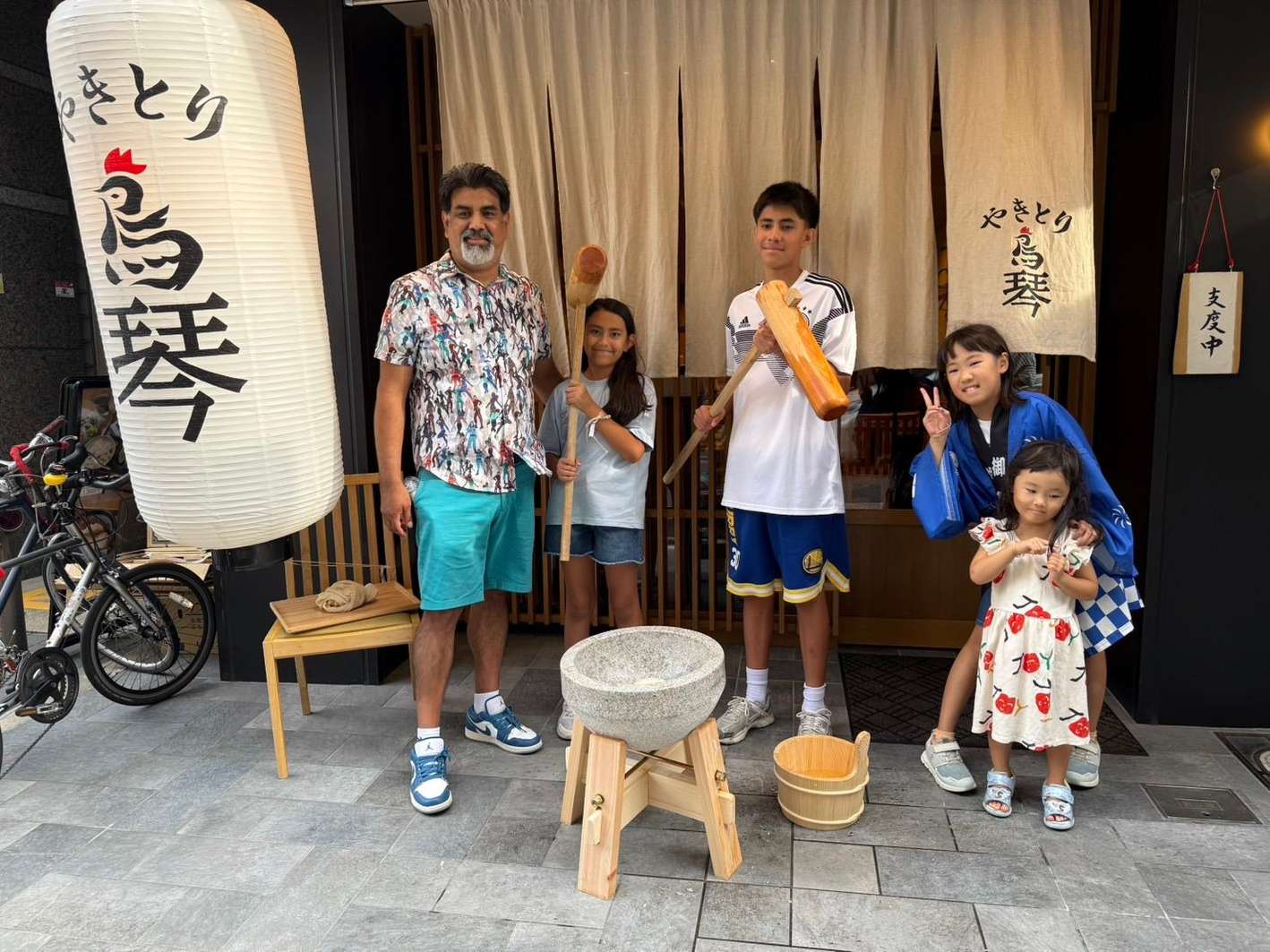
Minimum ages differ between Kyoto workshops: some welcome children from age 5, others start at 13. Kids use smaller mallets, and children always join with an adult. Families regularly report the pounding itself is the highlight for kids as much as for grown-ups.
What to wear
Wear loose, washable clothes with sleeves that roll up, plus flat closed-toe slip-on shoes and clean dark socks. Outdoor shoes come off at the entryway, and venues lend you a happi coat. Fine starch still drifts onto sleeves and trousers, so skip anything dry-clean-only.
Eating safely
Fresh mochi is soft, stretchy and sticky, so cut it into small bites and chew it slowly with tea at hand. Sip tea before your first piece to moisten the throat. This matters most for children, since cooled mochi hardens and gets harder to chew.
04
On the dayWhere to be, when, and how you get there
1
Meeting point
None of the Kyoto workshops include hotel pickup, so you make your way to the venue yourself. All four sit near public transport, and one takes place at the foot of Nijō Castle. Double-check the exact address on your booking before you plan the rest of the day.
05
During the tourWhat is expected of you
2
Turning the riceCan stop the day
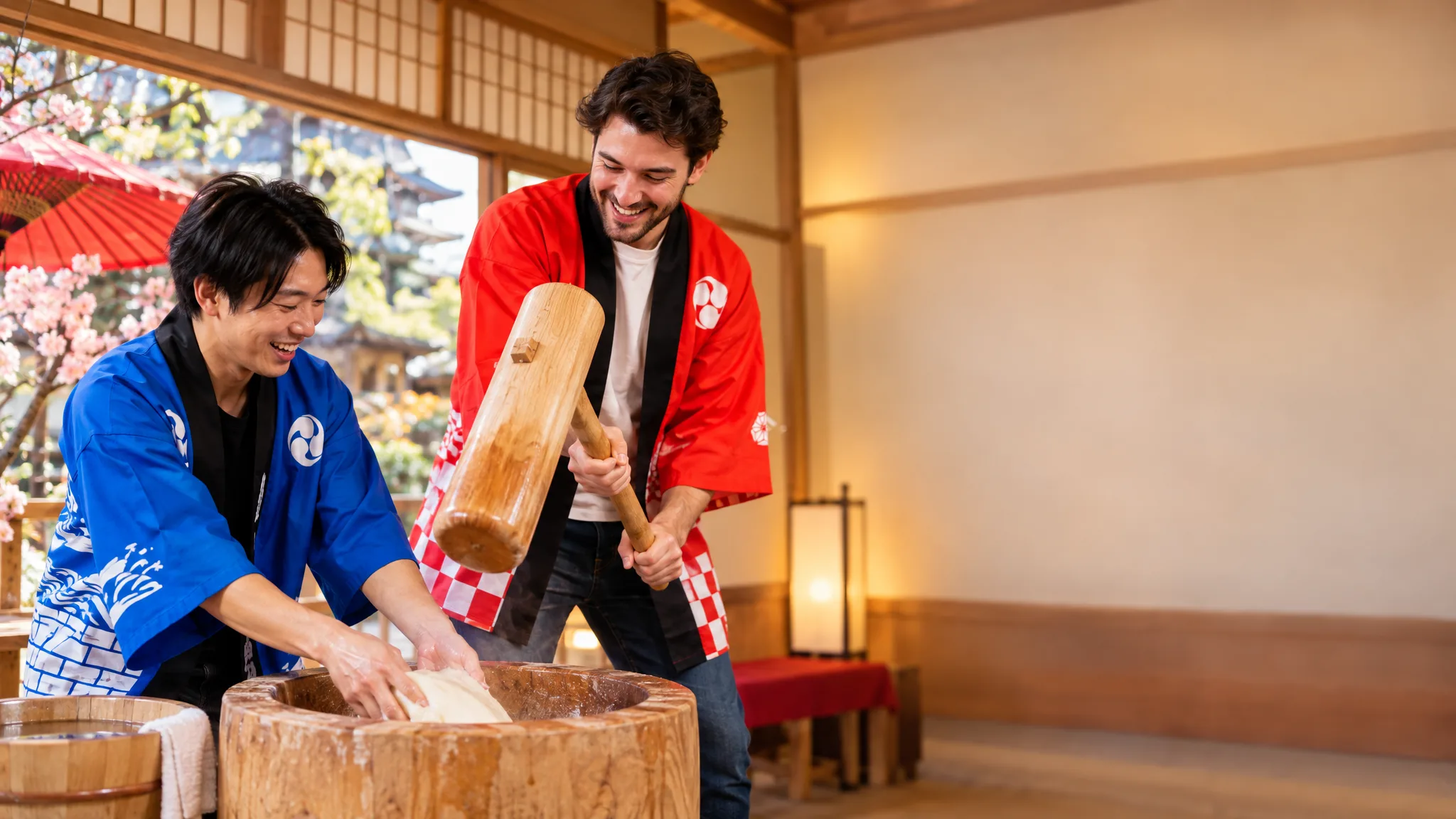
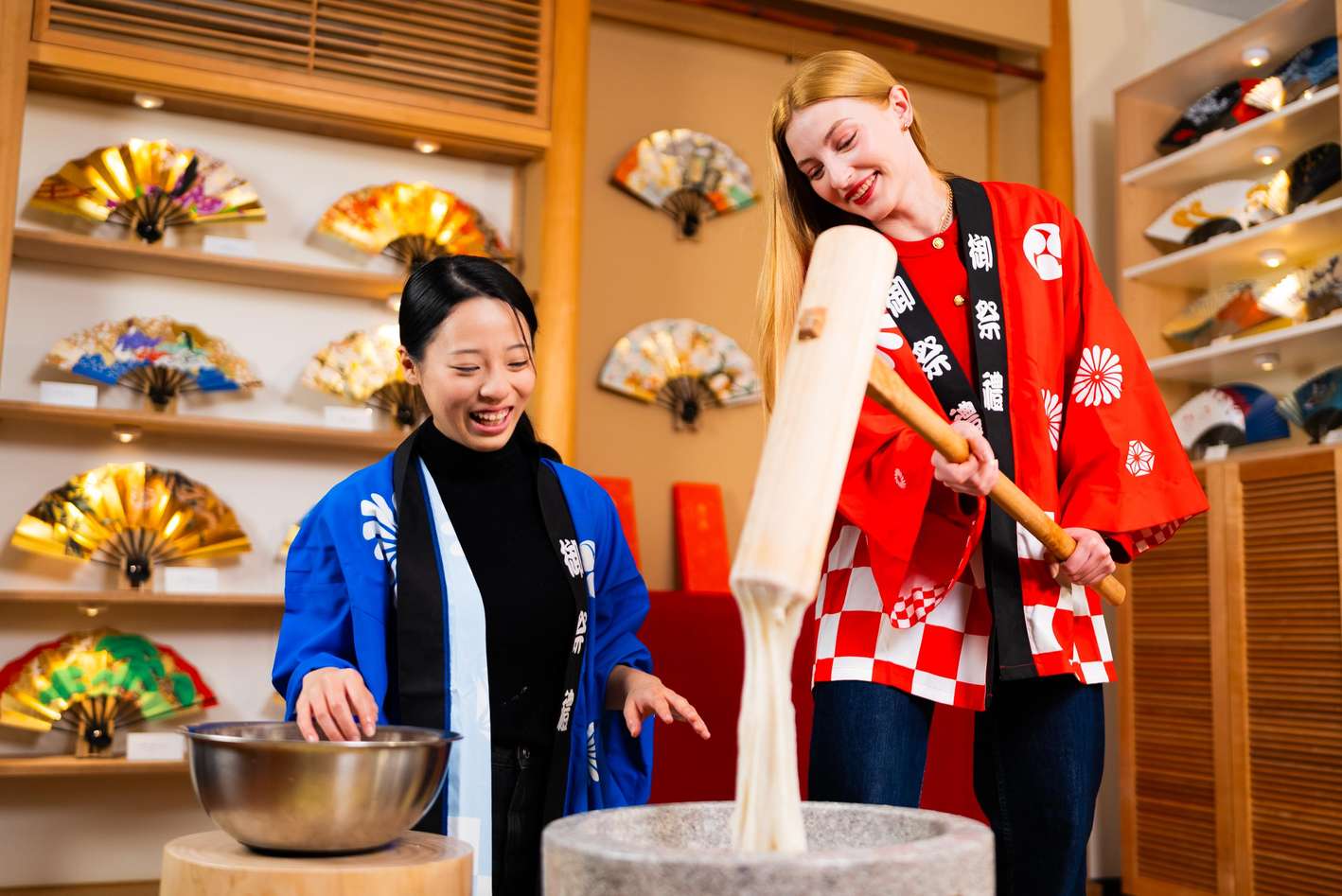
Between strikes, a partner reaches into the mortar with wet hands to fold and moisten the dough. Beginners never take the turning role, and with good reason: a mistimed move under the falling mallet can cause serious hand injuries. Follow the instructor's rhythm calls and let the pounder keep time.
Photos
Photography is welcome at the workshops, and one operator's staff shoot photos and videos of your group for free, sent by email afterward. Bring your phone anyway; hosts are usually happy to take a picture of everyone mid-swing.
Mochi pounding in Kyoto - the full guide to sessions, shops and seasons
The famous fast-pounding video everyone shares was filmed in Nara. Kyoto has its own workshops where you swing the mallet yourself, eat the mochi warm, and stay inside the city for the afternoon.
Kyoto· 34.99° N, 135.76° E
If you only remember three things
1
Book the one-hour session, arrive 15 minutes early, and plan about 75 minutes door to tasting.
2
Never touch the rice while the mallet is moving; the turner's job belongs to practiced hands only.
3
Eat your mochi the same day in small bites with tea; it hardens within hours and never goes in the fridge.
You don't need to go to Nara for this
The video everyone has seen, the one with the mallet striking three times a second, comes from a shop in Nara. Travelers do make the day trip for it. The show itself lasts two or three minutes, and once the crowd forms you watch from several rows back on an open pavement.
Kyoto runs its own hands-on sessions, and that changes the whole experience. Here you hold the mallet yourself, in a room, with an instructor walking you through each step. Pounding is real work; people come out of a session warm and a little sweaty.
So the choice comes down to this: a free street spectacle in Nara, brief and crowded, or an hour with your hands on the mallet inside a Kyoto workshop. The mochi tastes better when you pounded it.
Three beliefs travel with this search, and each one costs someone their morning. Look at them before you book.
What people wrongly assume
MythThe viral fast-pounding shop is in Kyoto
Reality
It is in Nara, about 40 minutes from Kyoto Station by train.
MythWatching a short show equals pounding it yourself
Reality
A street demonstration lasts two or three minutes; a class gives you the mallet, the mortar and an hour.
MythYou must day-trip to Nara to see mochi made
Reality
Kyoto has its own mochi-pounding classes and shops with live demonstrations.
Settle those and the plan writes itself: a booked Kyoto session for the doing, and the street show as an optional extra if you ever pass through Nara.
Tour for this
Kyoto: Traditional Mochi Pounding Experience with Tasting4.5★ (66) · 1 hour · Free cancellation
The rice has been soaked since the day before, then steamed in a cedar box called a seiro. Steaming matters: boiled glutinous rice goes gummy outside before the inside cooks, while steamed grains stay intact and pound into a dough with real stretch.
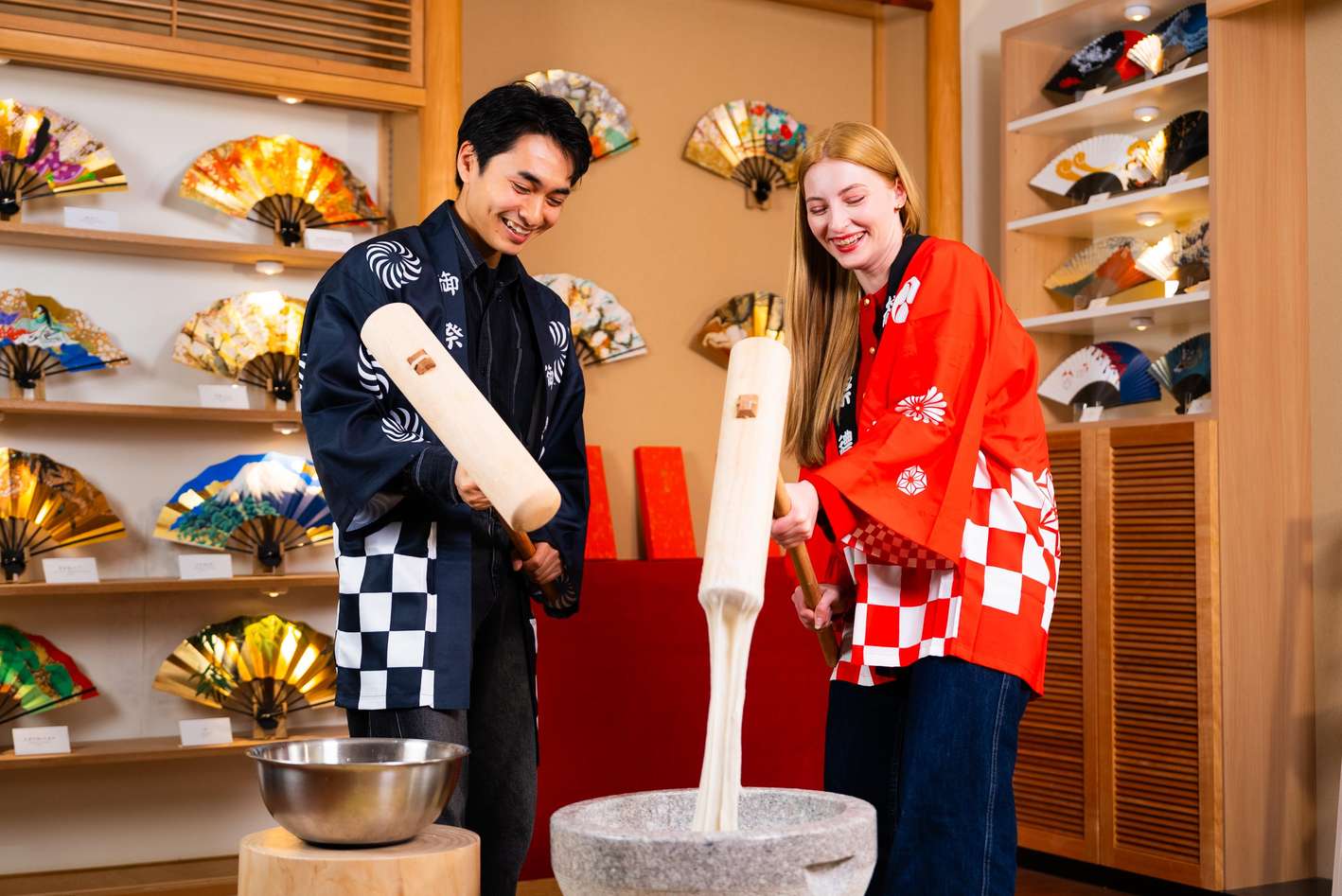
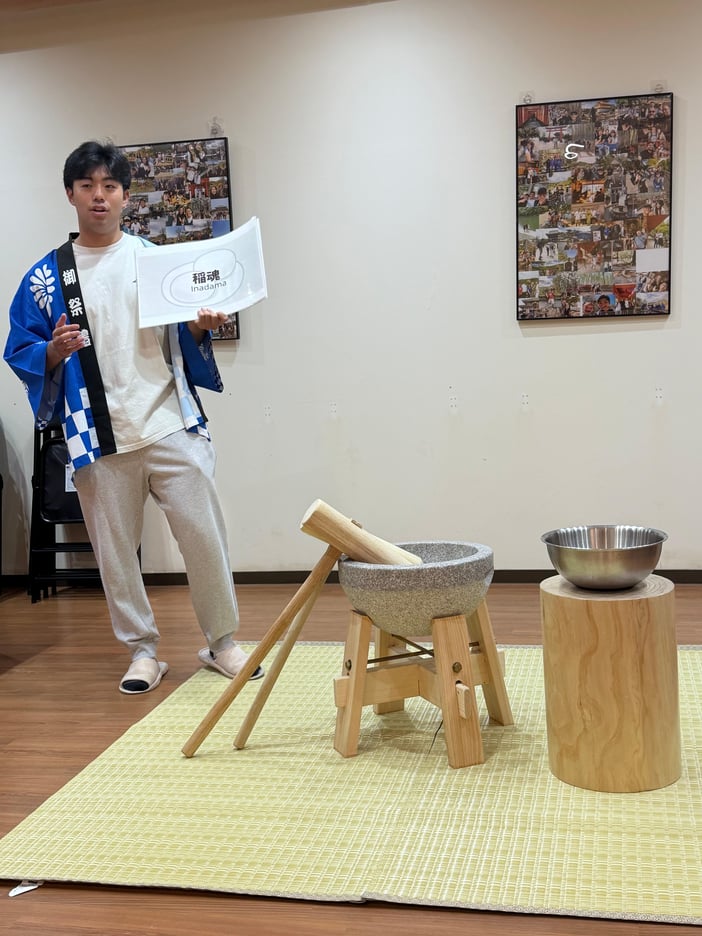
The hot rice goes into the usu, a mortar carved from zelkova wood, tough enough to take years of mallet blows. First comes the careful part. The mallet tip crushes and gathers the grains; no full swings yet.
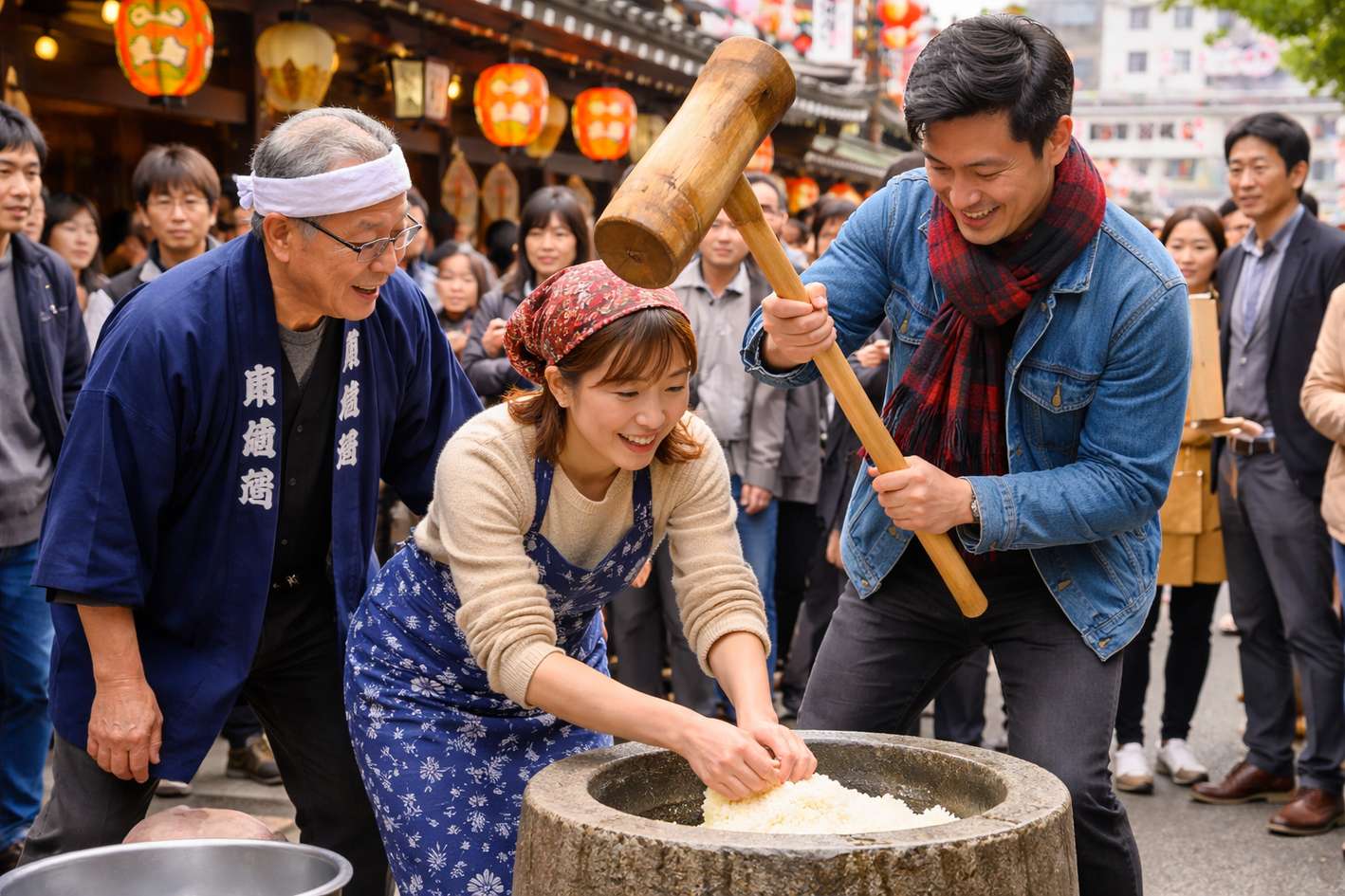
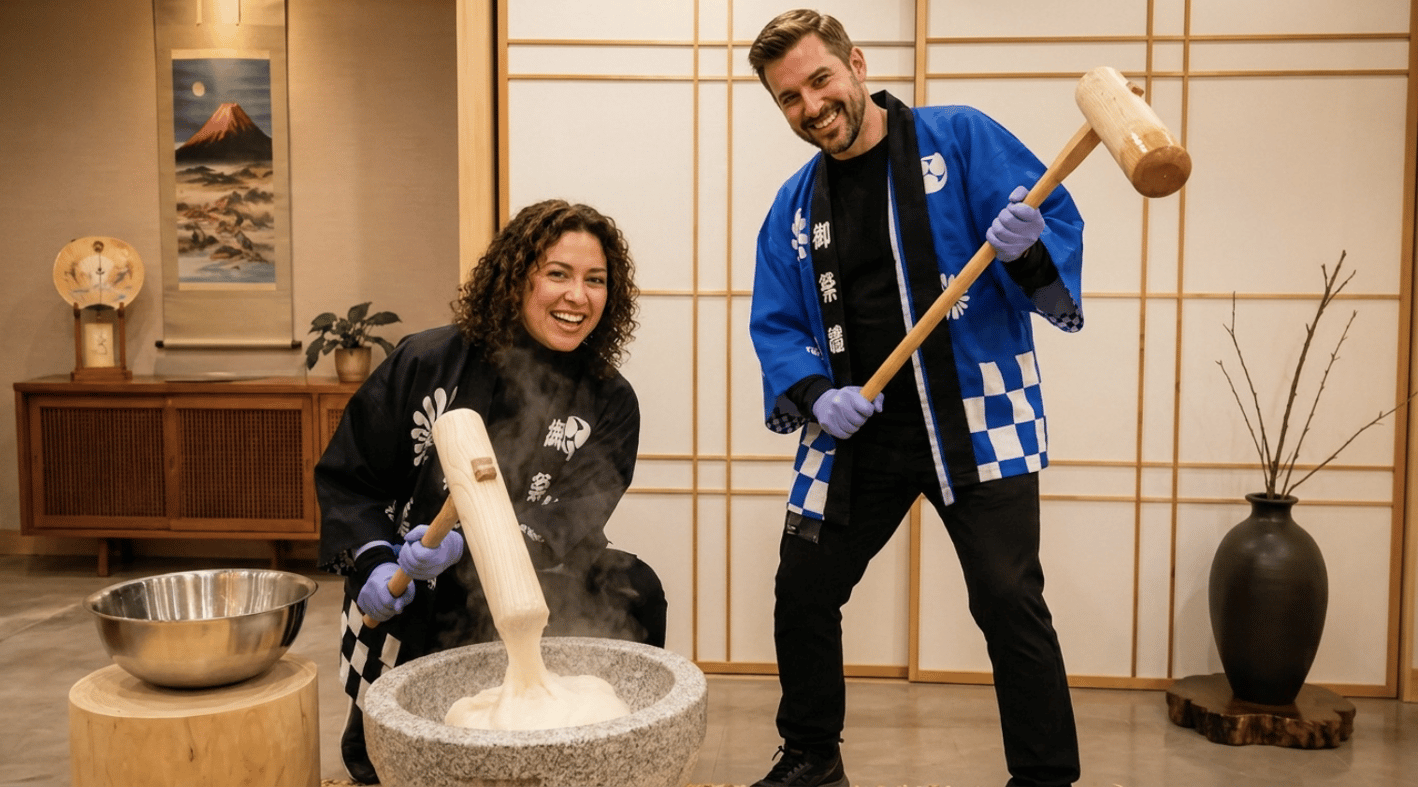
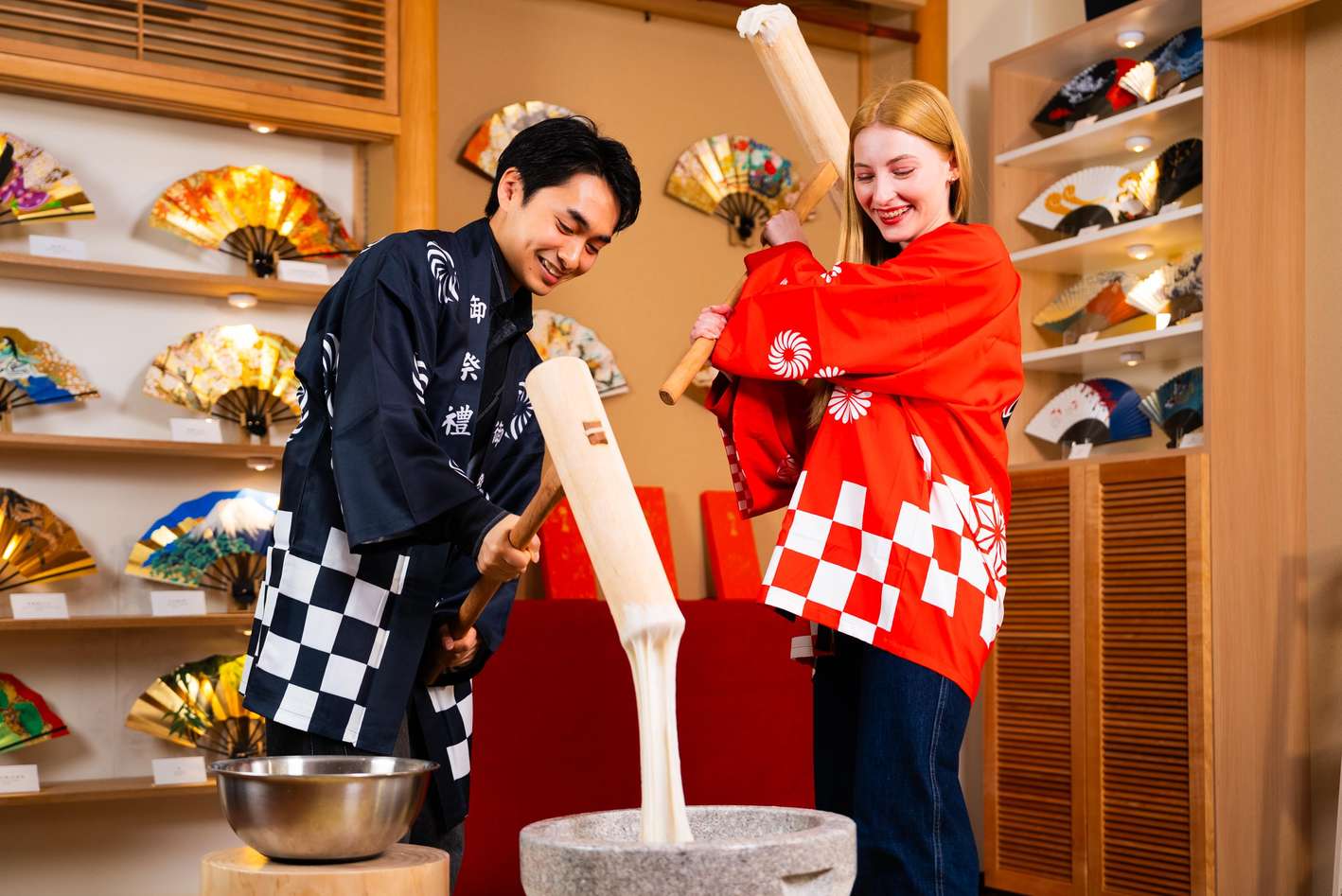
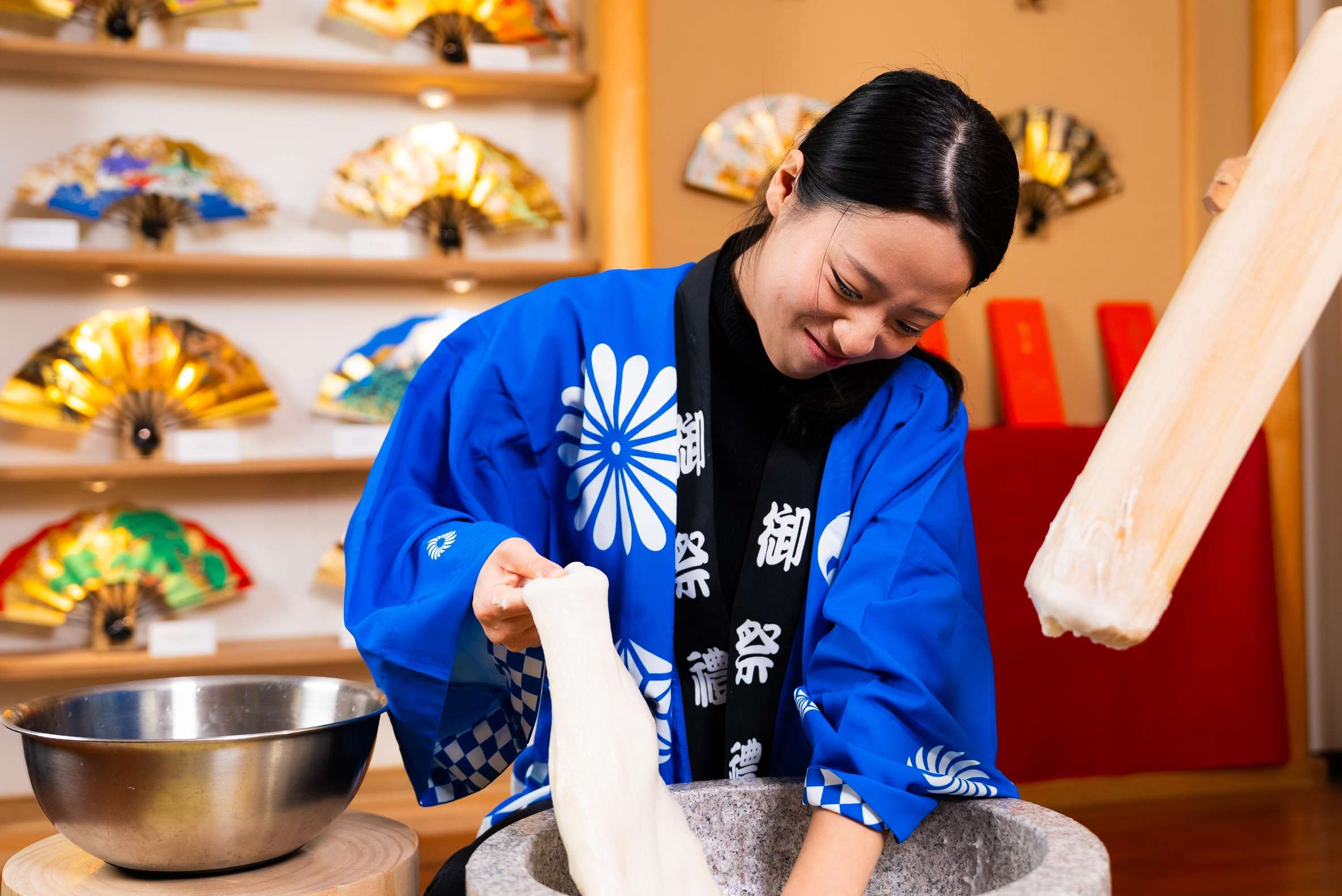
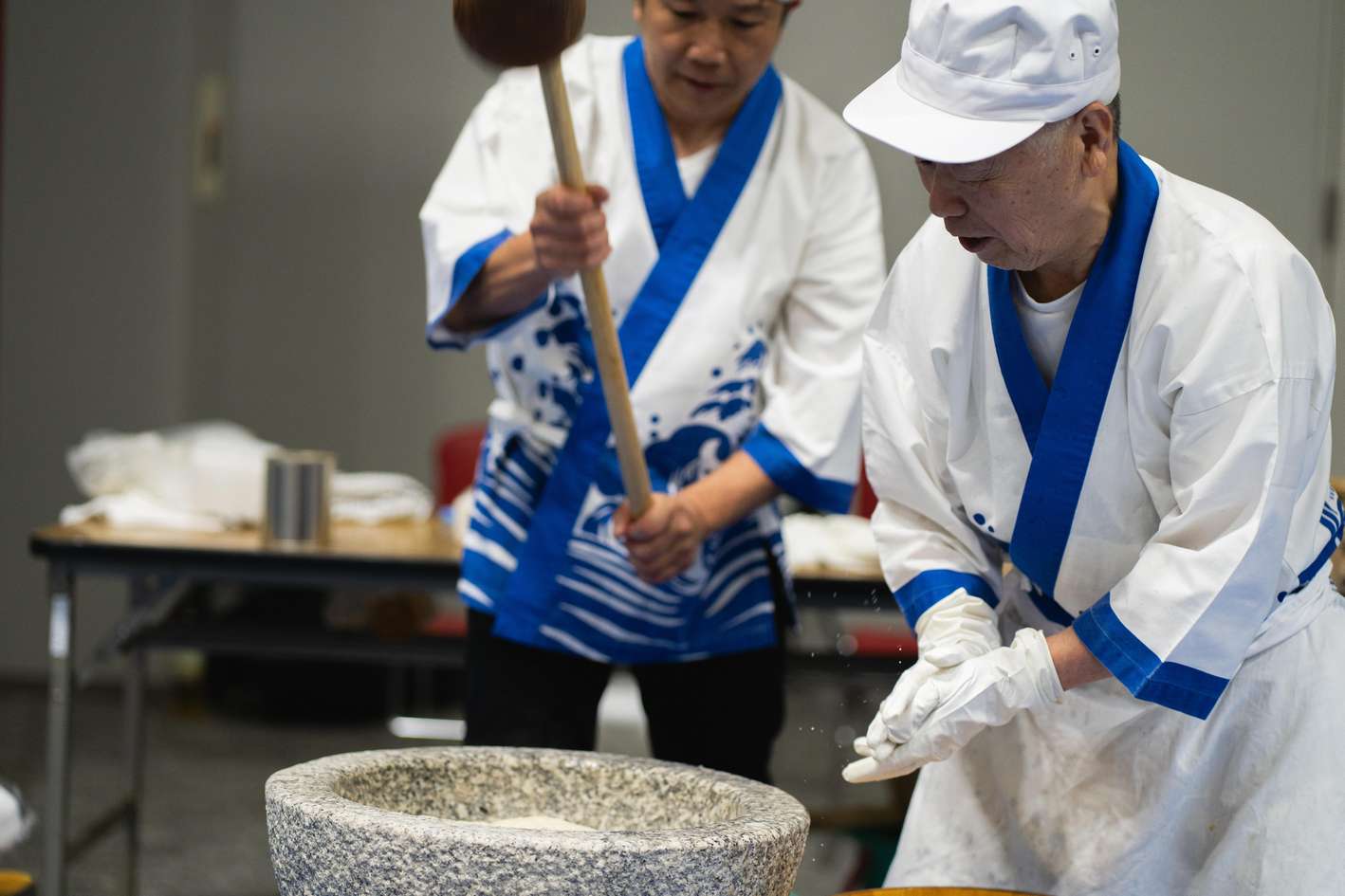
Then the rhythm starts. One person pounds, a partner reaches in with wet hands between strikes to turn and moisten the dough. The shouts of "Yoisho!" are not decoration; they time the two jobs so the mallet never lands on a hand.
Never try the turning role yourself; a mistimed move is how fingers get hurt. Your job is the mallet; keep it landing flat in the mortar so the wooden edge stays whole.
The whole session runs in a fixed order, from steamer to table. Here it is, step by step.
How a session unfolds
1
Steaming
The glutinous rice steams in a cedar seiro box
Soaked since the day before for even grain
2
Gathering
The mallet tip crushes and kneads the hot rice in the usu
Careful strokes before any real pounding
3
Pounding
You strike in rhythm while a partner turns the dough
Chants of "Yoisho!" keep the timing
4
Shaping
The dough is cut and formed on starch-dusted surfaces
Then it goes straight to the table
Knowing the order in advance helps you keep up: gather first, pound in rhythm, shape last, and never reach in while a mallet is moving.
This is the moment the whole session points at. Store-bought mochi is firm and cuts cleanly. Mochi eaten seconds after pounding is soft, gooey and so stretchy it pulls into a long thread when you bite it instead of tearing. The rice has to be worked before it cools; that is what keeps it tender.
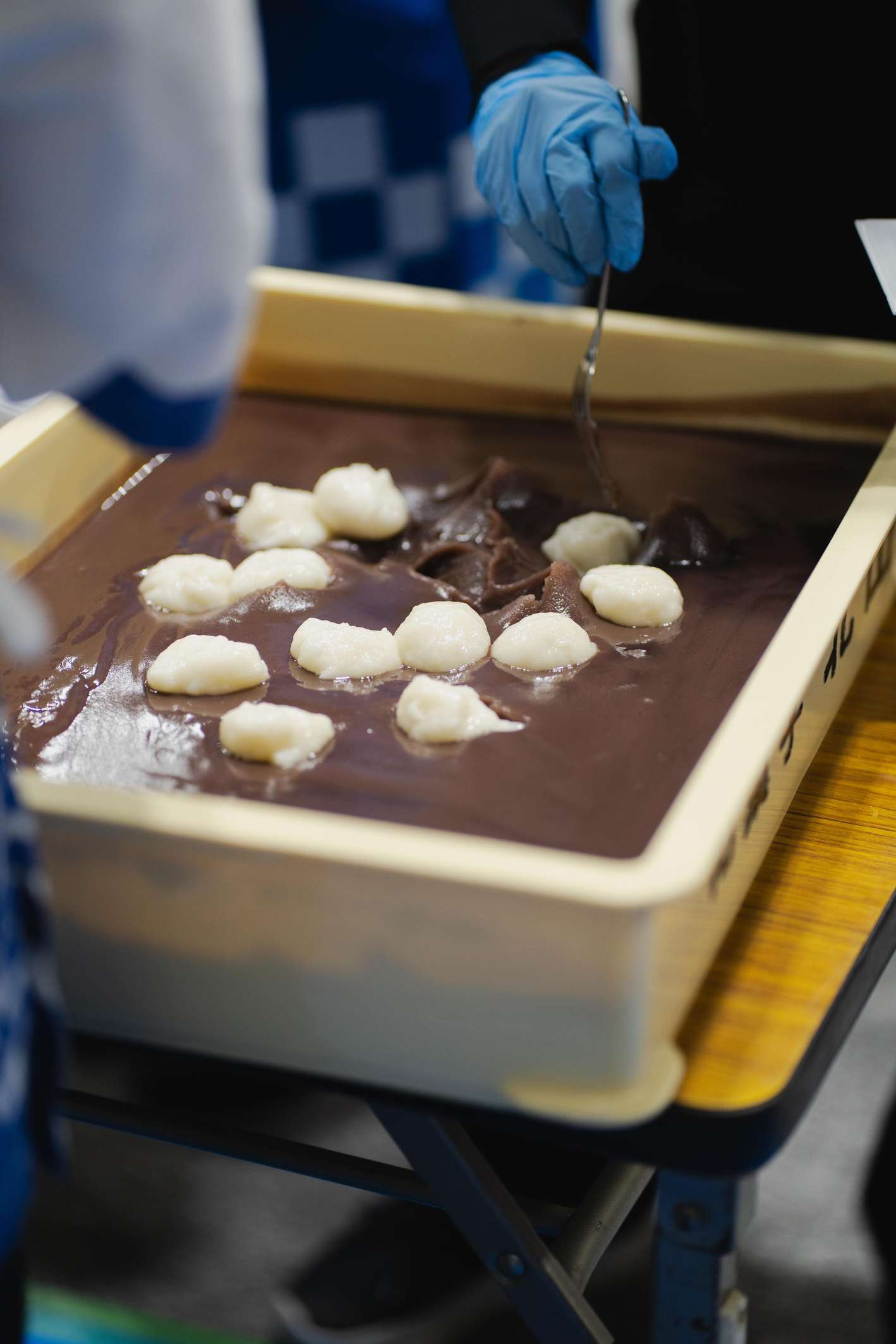
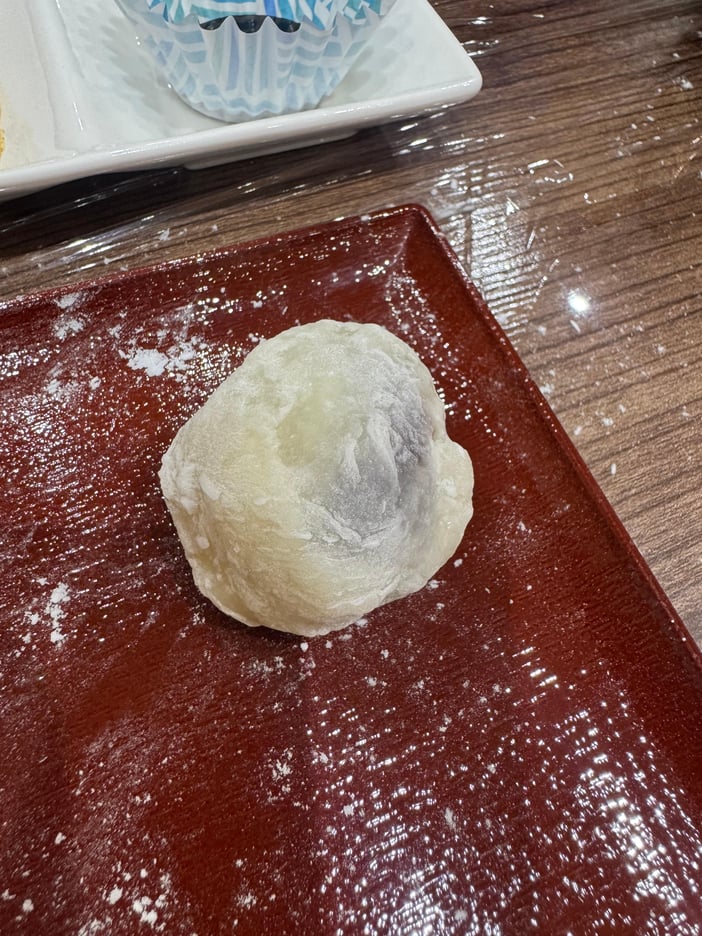
Plain mochi has a gentle rice flavor, all about texture. Daifuku is the filled version, a soft mochi shell around sweetened red bean paste or, in fruit season, a whole strawberry.
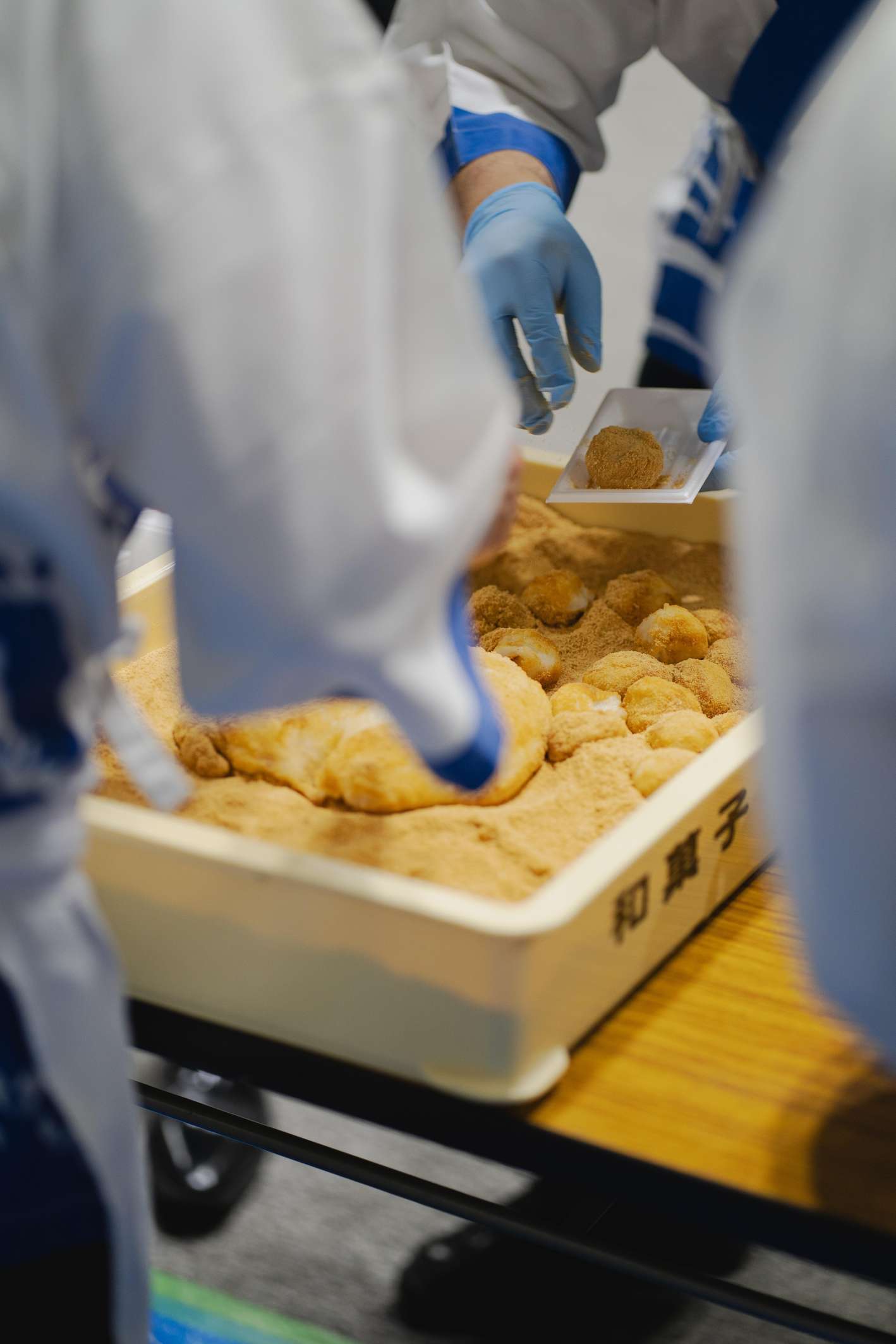
The toppings are where it gets interesting. Kinako, roasted soybean flour, is the classic dusting. Anko sweet red bean paste sits on the sweet side, soy sauce on the savory one, and mitarashi dango comes grilled over charcoal under a sweet soy glaze.
Come hungry; the tasting runs generous, with several pieces and plenty of toppings to try.
Travelers keep saying the same thing about that table.
A traveler's note
We loved it all: the Matcha Ceremony, the Sword, and of course the Mochi Making. New business, train station nearby, super friendly hosts who welcome you like family. After busy Kyoto, treat yourself.
Picking your session - pounding only, or pounding and tea
Three bookable formats cover most travelers. The one-hour pounding and tasting class keeps it simple: a small group with a local home chef and matcha alongside your mochi. The two-hour mochi-making class adds a professional demonstration before you try it yourself.
The fuller option is the 90-minute combination: pounding first, then a formal tea ceremony with Uji matcha, a short history video, and a group photo at the end. Solo travelers are welcome; no partner is required, and instructors take beginners through every step in English.
Side by side, the three differ most in time and in who they suit.
Choosing your Kyoto session
One-hour pounding and tasting
Two-hour class with a pro demo
90-minute pounding and tea ceremony
Time
1 hour
2 hours
About 90 minutes
What you do
Pound, shape and taste several styles with matcha
Watch a craftsman first, then pound and taste with kinako and anko
Pound, grill and eat, then a full tea ceremony with Uji matcha
Who it suits
Anyone fitting a session between temples
Travelers who want to see an expert first
Readers who want the full cultural arc
One-hour pounding and tasting
Time
1 hour
What you do
Pound, shape and taste several styles with matcha
Who it suits
Anyone fitting a session between temples
Two-hour class with a pro demo
Time
2 hours
What you do
Watch a craftsman first, then pound and taste with kinako and anko
Who it suits
Travelers who want to see an expert first
90-minute pounding and tea ceremony
Time
About 90 minutes
What you do
Pound, grill and eat, then a full tea ceremony with Uji matcha
Who it suits
Readers who want the full cultural arc
For that last group, the tour "Kyoto: Mochi Pounding Experience & Tea Ceremony Experience" carries the whole arc in one booking, from the first mallet strike to a souvenir and a commemorative photo at the end.
Here is the reassurance the itinerary-builders want. Plan about 75 minutes door to tasting: the hands-on session runs one hour, and listings recommend arriving 15 minutes early. That is short enough to sit between two temple visits, if you allow for the travel between them.
Time to make and taste mochi
60 minutessession duration
15 minutesrecommended early arrival
Those two numbers work together: the early arrival protects the full hour, so the session itself never gets cut short by a late check-in.
The rhythm differs between shops and classes. Traditional sweet shops pound several times a day with no fixed schedule, so arrive at opening for the freshest batch; Sawaya opens at 9 am, Nishiki Mochitsukiya at 11 am.
Shop days off fall on fixed weekdays, most often Tuesdays or Wednesdays, while booked workshops run sessions daily across the week.
One thing to know before you bring a crowd: everyone in a time slot shares a single mortar, typically capped at 12 guests around it. More people means fewer swings each, and large groups sometimes get to pound or fold but not both. Smaller groups feel more intimate and get more individual guidance.
Timing your trip changes what you taste. From winter into spring, March to May, fresh strawberry and mandarin orange daifuku appear, alongside sakura mochi wrapped in salted cherry leaves.
Seasonal mochi varieties in Kyoto by month
March: 5 out of 5 for seasonal mochi offerings. Strawberry daifuku and fresh yomogi mochi
HighestSep to Oct, Dec to Jun
In betweenJul to Aug, Nov
Darker: a higher seasonal mochi offerings score, out of 5
Tap a month to read it.
The calendar barely dips anywhere; even the quiet months carry three or four specialties, so no visit lands empty-handed.
The green mochi has a name and a story. Yomogi, Japanese mugwort, is kneaded into the dough to give kusa mochi its jade color and faint herbal taste; it is offered at the Doll's Festival in March to pray for girls' healthy growth.
May brings oak-leaf wrapped kashiwa mochi and June the azuki-topped minazuki, then chestnut mochi takes over in autumn, and January opens the cycle with hanabira mochi under sweet miso paste and candied burdock. Whatever month you land in, the counter has moved on since the last one.
Kyoto's sessions cluster in walkable districts. The Kiyamachi workshop sits near Honnō-ji, the Museum of Kyoto and Nishiki Tenmangū, all easy pairings.
The tea-ceremony venue is listed at the foot of Nijō Castle, which makes the castle the natural companion for the combined session; check your booking's venue address, since one listing points instead to Horikawa near the Imperial Palace.
For live demonstrations without booking, Mochi Mochi in Higashiyama Ward pounds mochi near Kiyomizu-dera, so a temple morning can end with a show. The traditional shops concentrate in Arashiyama, several of them specialists in hand-pounded mochi, with Gion also holding mochi-related sweets.
Anchor your day accordingly: Higashiyama for demonstrations, central Kyoto for a booked session, Arashiyama for shop-hopping between bamboo and river. None of it costs you a train ticket out of the city.
No formal dress code exists, but the practical rules matter. You will be given a happi coat, the short traditional jacket, to wear over your clothes. Fine potato starch still drifts onto sleeves, trousers and feet, so skip delicate or dry-clean-only fabrics and wear loose, washable things with sleeves that roll up.
Shoes come off at the entryway before the tatami, Japanese etiquette in any traditional room, so slip-on shoes and clean dark socks are the smart pick. Pounding takes a wide stance and full arm swings; flexible pants earn their keep.
The full packing list is short enough to check in a minute, and the seasonal lines matter more than people expect.
What to wear and bring to a Kyoto mochi workshop
Washable top with roll-up sleevesSwinging the heavy mallet requires full arm range, and rollable sleeves keep cuffs clear of water splashes and fine starch dust.
Comfortable, relaxed-fit pantsPounding requires a stable, wide stance over the wooden mortar, and flour dust easily settles around the waist and legs.
Clean, dark-colored socksOutdoor shoes must be removed before stepping onto tatami mats, and dark socks conceal fine white rice starch dust.
Flat, slip-on closed-toe shoesShoes must come off at traditional entryways and tatami borders, while closed toes offer safety around heavy wooden mallets.
Hair ties or clipsSecuring long hair keeps it out of your face while swinging the mallet and prevents strands from falling into the warm mochi dough.
Nov to Mar warm base layersKyoto winters average 8°C to 11°C by day; unheated historic machiya townhouses can feel chilly on bare feet and tatami.
Jun to Aug lightweight cottonsSummer highs reach 27°C to 33°C with heavy humidity; vigorous mochi pounding is physical work that warms you up quickly.
Winter sessions happen in unheated townhouses and summer pounding is sweaty work, so the base layers and cottons on that list earn their place on the itinerary too.
Most of the worries resolve easily. Minimum ages vary by operator: one Kyoto experience takes children from 5, another from 13, so check before booking for your family. Solo travelers book without a partner. One Kyoto experience is wheelchair accessible; another is not.
Two restrictions appear on some sessions: they are not suitable for pregnant women or people with back problems. Plain mochi itself is safe in pregnancy, provided the fillings are safe too; sweetened red bean paste, sesame or peanut paste and pasteurized ice cream are fine, while raw egg custard and unpasteurized cream are not.
Gluten questions come up often. Mochigome is entirely rice; "glutinous" points to its glue-like stickiness, and wheat never enters it. Plain mochi and plain anko are naturally gluten-free, but cross-contact decides celiac safety, not the main ingredients, so check for soy sauce toppings and shared equipment.
One rule stands above all the others, and it concerns the eating itself.
One rule that cannot bend
Freshly pounded mochi is a severe choking hazard, especially for small children and elderly guests Cut it into small bites, chew slowly with tea nearby, and never eat while walking, playing or talking
Sit down for the tasting, keep tea at hand, and that risk is handled; everything else on this page is a preference, this one is a practice.
If your day changes, and what to do with leftovers
Plans move; the mochi moves faster. Freshly pounded mochi starts hardening within hours at room temperature, and the hotel fridge makes it worse: cold recrystallizes the starch and turns it hard and grainy within a night.
Leftovers travel home covered at room temperature and get eaten the same day. If they last longer, grilling, boiling or microwaving brings the softness back.
Bookings shift too, and each change has a known outcome.
What happens if the day changes
If this happens
What happens then
The weather turns or the session cannot run
You rebook under the operator's terms, with cancellation up to 24 hours ahead for a full refund
Your plans shift a day
Booked workshop venues run sessions daily across the week, so another slot usually exists
A holiday falls on a shop's usual closing day
The shop stays open and moves its day off to the following weekday
You miss the start
The slot is lost; arriving 15 minutes early protects your full hour
Read those rows against your own schedule and nothing surprises you: the same-day rule applies to shop purchases too, since fresh mochi without preservatives is at its best, and softest, on the day it was made.
The booking made, the rest of the day builds around it. From the Kiyamachi workshop, Honnō-ji sits two minutes away, with the Museum of Kyoto at seven and Nishiki Tenmangū at nine; the Kyoto International Manga Museum makes a surprising ten-minute stop for families.
Those distances decide the shape of the day: everything within a short walk can follow the session without a transfer, and the drive-only sights fill a separate afternoon.
If you chose the combined session near Nijō Castle, the castle's gardens and palaces fill the hours before or after, and it pairs especially well there.
For a green finish, Kyoto Gyoen National Garden lies about seventeen minutes on foot from the workshop district, and Maruyama Park sits within nineteen. A morning of pounding, an afternoon of temples, and the day holds together without a single long transfer.
Doing it yourself beats watching any two-minute show. A one-hour Kyoto session with a small group gives you the mallet, the warm stretchy tasting and a story that outlasts any street video.
Book the combined pounding and tea ceremony if you want the full cultural arc, the plain class if the schedule is tight.
Go ifYou want to swing the mallet yourself and eat mochi warm, minutes after poundingYou are traveling with children old enough for the session's minimum ageYou have 75 minutes to spare between temple visits
Skip ifYou are pregnant or have back problems and cannot find a session that suits youYou only want to watch a spectacle; a short free show elsewhere may be enough
Our pick to book
Kyoto: Traditional Mochi Pounding Experience with Tasting4.5★ (66) · 1 hour · Free cancellation
Quick answers to the questions travelers ask before booking a session in Kyoto.
Kyoto2026
The mochi stretches in a long warm thread when you bite it, minutes after you pounded it yourself. Wear socks you like showing; shoes come off at the door.
Can you do mochi pounding in Kyoto itself, or do you have to go to Nara?
Kyoto has its own hands-on mochi pounding experiences, including a one-hour class with tasting and a session that adds a tea ceremony. Some travelers still day-trip to Nara for the street show, but you can swing the mallet without leaving the city.
Is the fast mochi pounding I saw on social media in Kyoto?
That video was filmed in Nara. Kyoto's experiences are hands-on workshops where you pound at a steadier pace with an instructor beside you.
Where can I watch mochi pounding being done in Kyoto?
A shop in Kyoto's Higashiyama Ward near Kiyomizu-dera holds live pounding demonstrations, and the hands-on workshops usually open with a demo by a professional maker before you take the mallet.
Does mochi have peanuts in it?
Plain mochi is just glutinous rice. Peanuts can turn up in some fillings and coatings, and kinako, the roasted soybean powder topping, is sometimes blended with roasted peanut powder. If you have an allergy, ask about the specific toppings at your session.
Is mochi safe to eat during pregnancy?
Plain rice mochi is safe when you are pregnant, as long as the fillings are pregnancy-safe. Sweetened red bean paste, sesame and peanut pastes and fruit purées are fine; raw egg custard or unpasteurized dairy fillings are not.
Cut it into small bites and chew slowly. Two of the Kyoto classes list pregnancy as a reason they are not suitable, so check before booking.
Is mochi gluten-free?
Plain mochi made from glutinous rice and plain anko red bean paste are naturally gluten-free. Gluten can sneak in through soy sauce glazes or wheat dusting flour, so with celiac disease you want to check the added ingredients and how the kitchen handles cross-contact.
How do you eat freshly pounded mochi safely?
Fresh mochi is soft, stretchy and sticky, so cut it into small bites and eat it with tea. Sip some tea or soup first to moisten your throat, chew each piece slowly and thoroughly, and skip the chatting until your mouth is empty.
How much of the pounding do you actually do in a group session?
Workshops share one mortar per time slot, usually with up to 12 guests around it, and everyone rotates through turns. A smaller class means more swings each, so book the small-group option if mallet time matters to you.
How long does a mochi pounding session take?
The standard hands-on class runs about an hour, and one listing suggests arriving 15 minutes early, so plan around 75 minutes door to door. That fits neatly between temple visits. The combined pounding and tea ceremony session runs about 90 minutes.
Can children take part?
Age minimums vary between Kyoto experiences: some welcome children from age 5 and others from 13. Children use smaller mallets, and an adult must accompany them.
Can I take leftover mochi back to my hotel?
Yes, but eat it the same day. Fresh mochi starts hardening within hours at room temperature, and a hotel fridge speeds that up. Keep it covered at room temperature and finish it before bedtime.
Pound your own mochi in a Kyoto kitchen
Learn from a local home chef, taste your mochi with matcha, and pick morning or afternoon. Cancel up to 24 hours ahead for a full refund.

 Your best match