25 minutes·Japanese, English
5.0(6)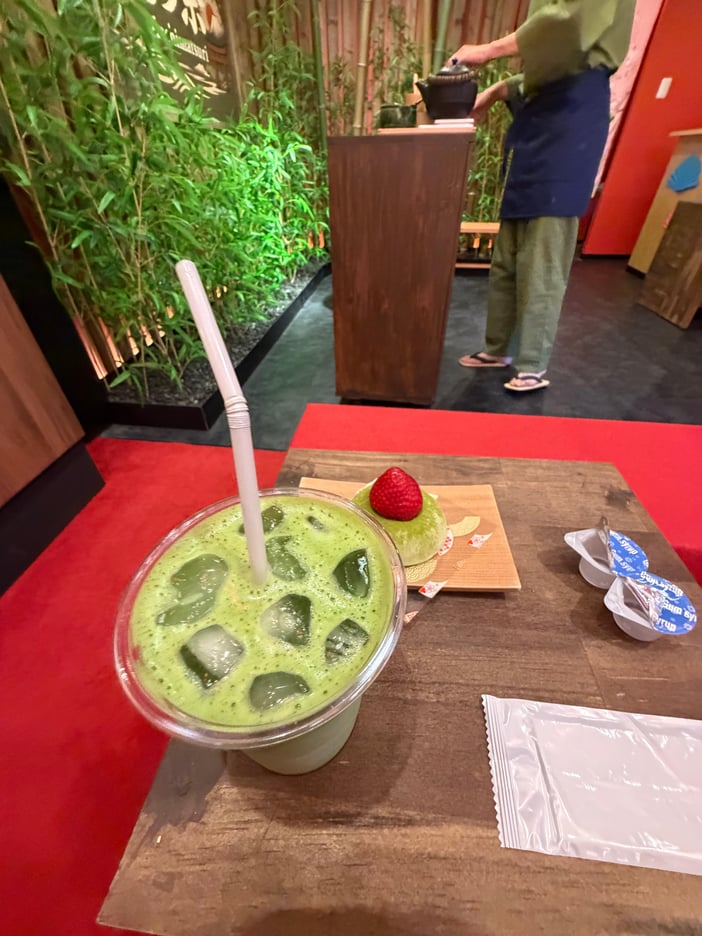
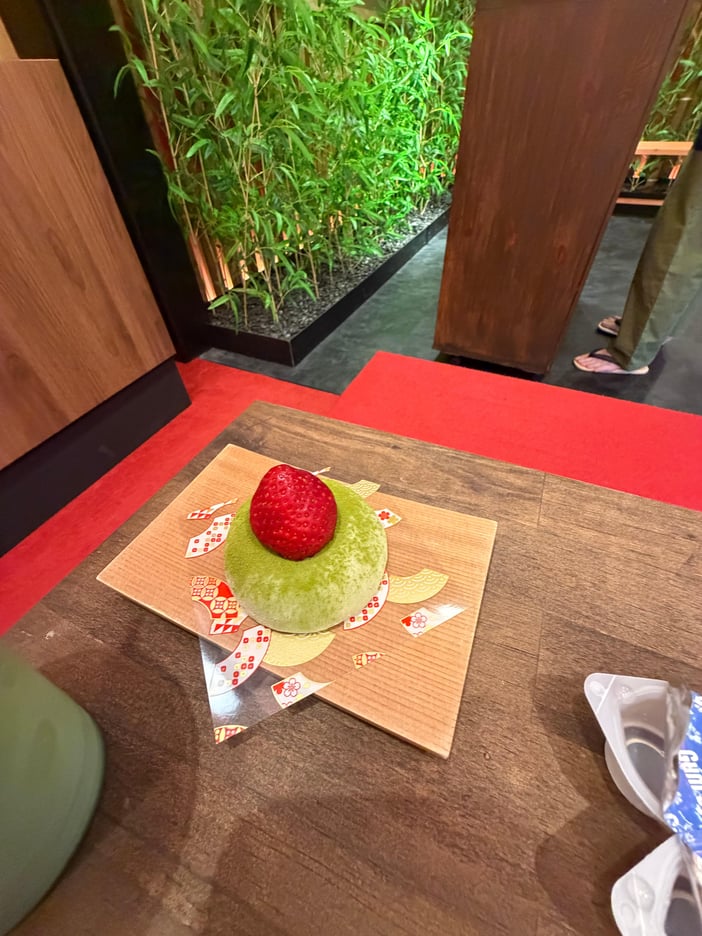
Osaka: Namba Live Mochi-Pounding Festival Experience
Free cancellationMochi-pounding experienceLive performance
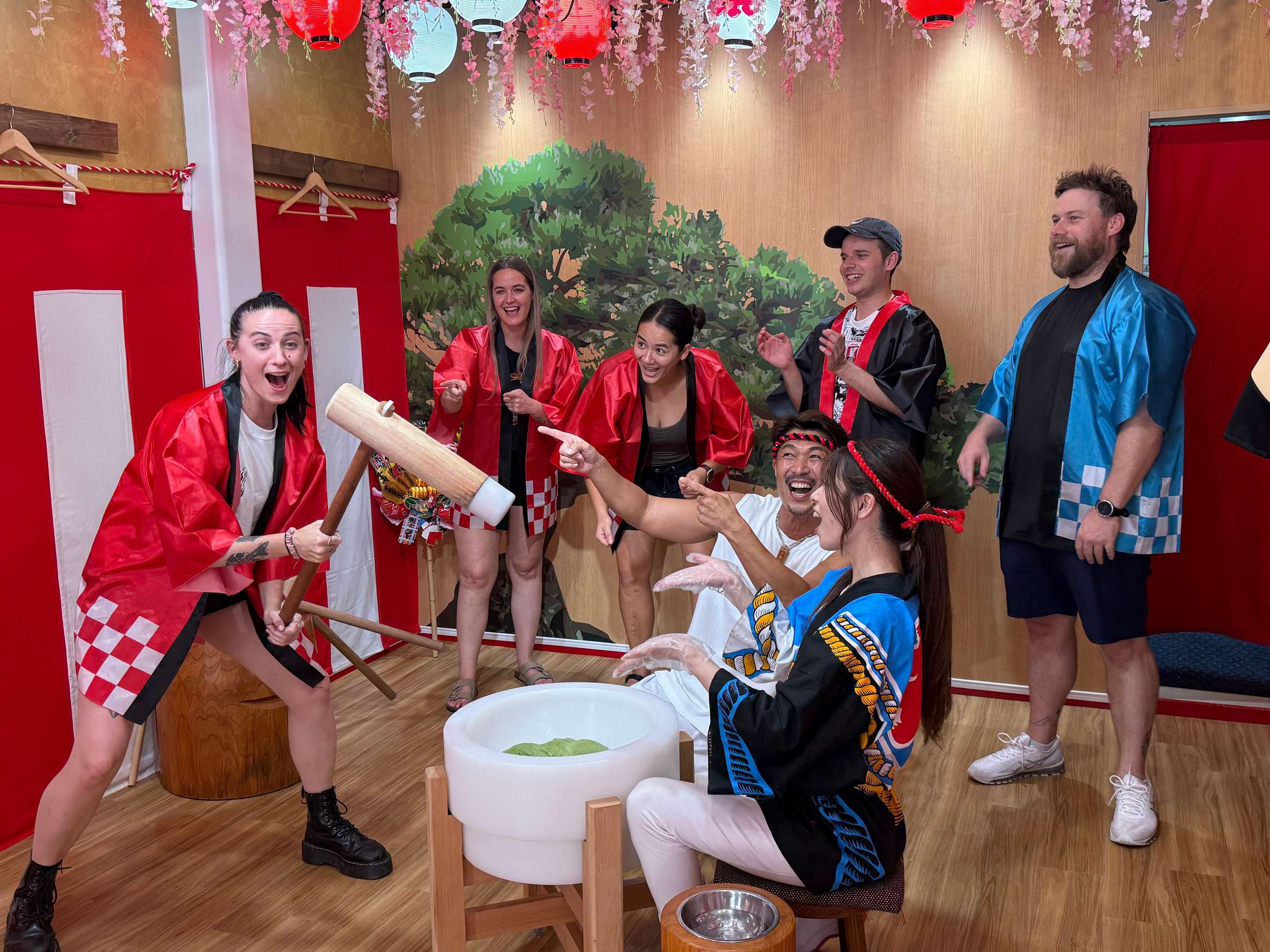
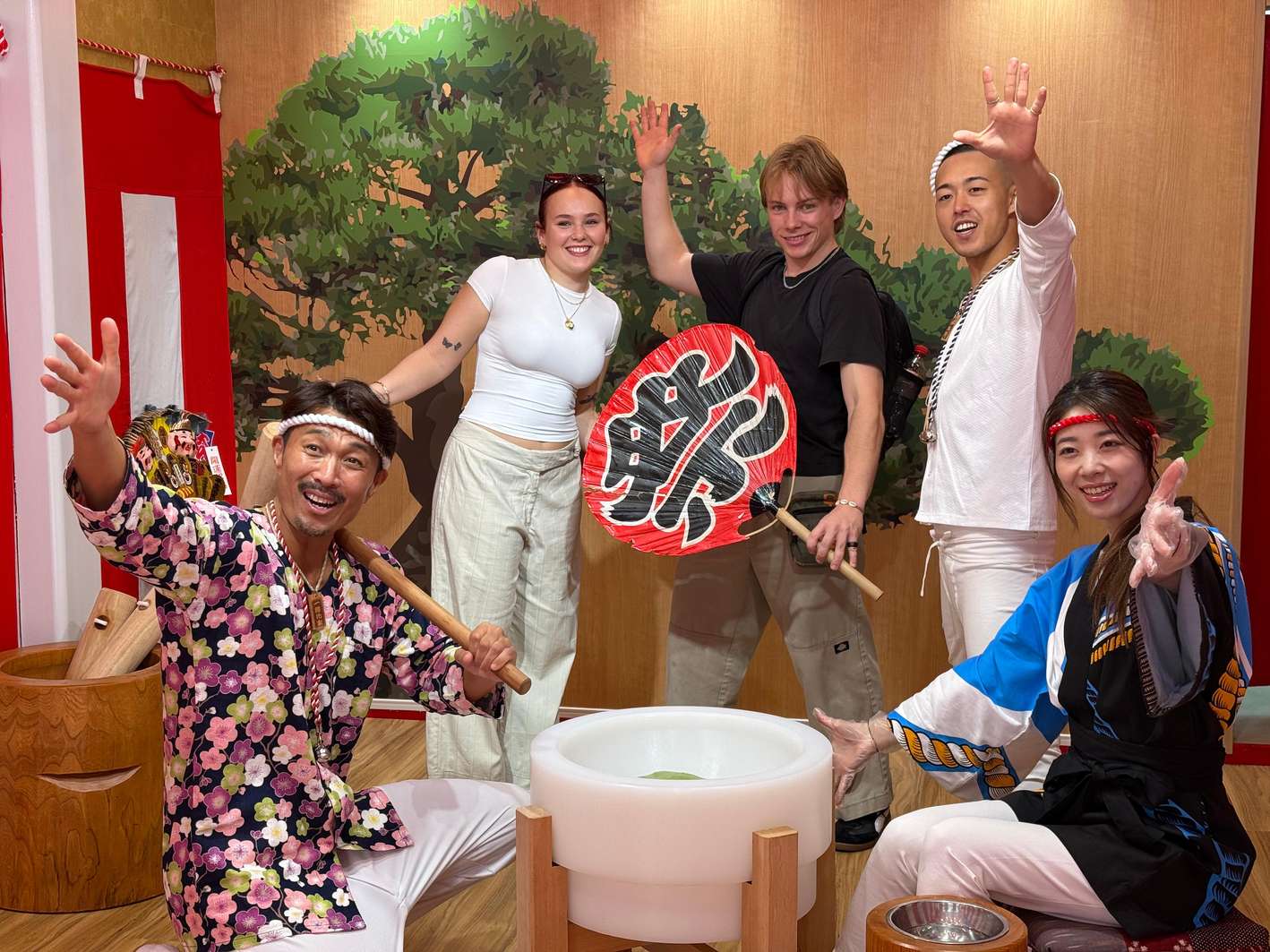
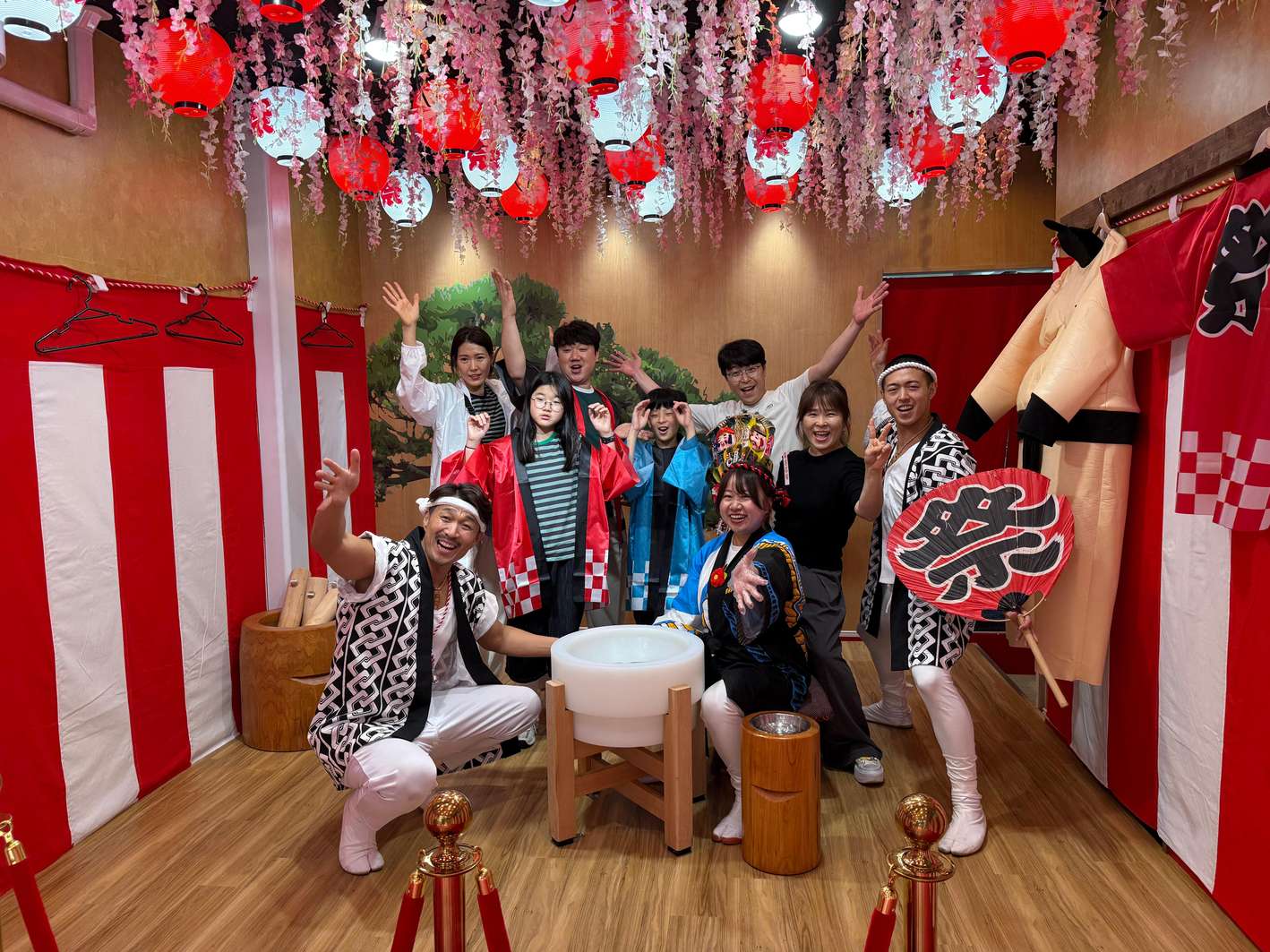
See mochi pounded live and grab the mallet yourself. One hour from Namba Station, the Kuromon Market show puts you in front of giant wooden mallets, festival chants, and homemade daifuku, with a booked timeslot so you never wait outside a shop that may not pound today.
"Fun, interactive mochi-pounding show, then a matcha demo and tasty matcha latte. Surprisingly, the mochi was the best we had in four weeks in Japan. Didn't expect that at all."
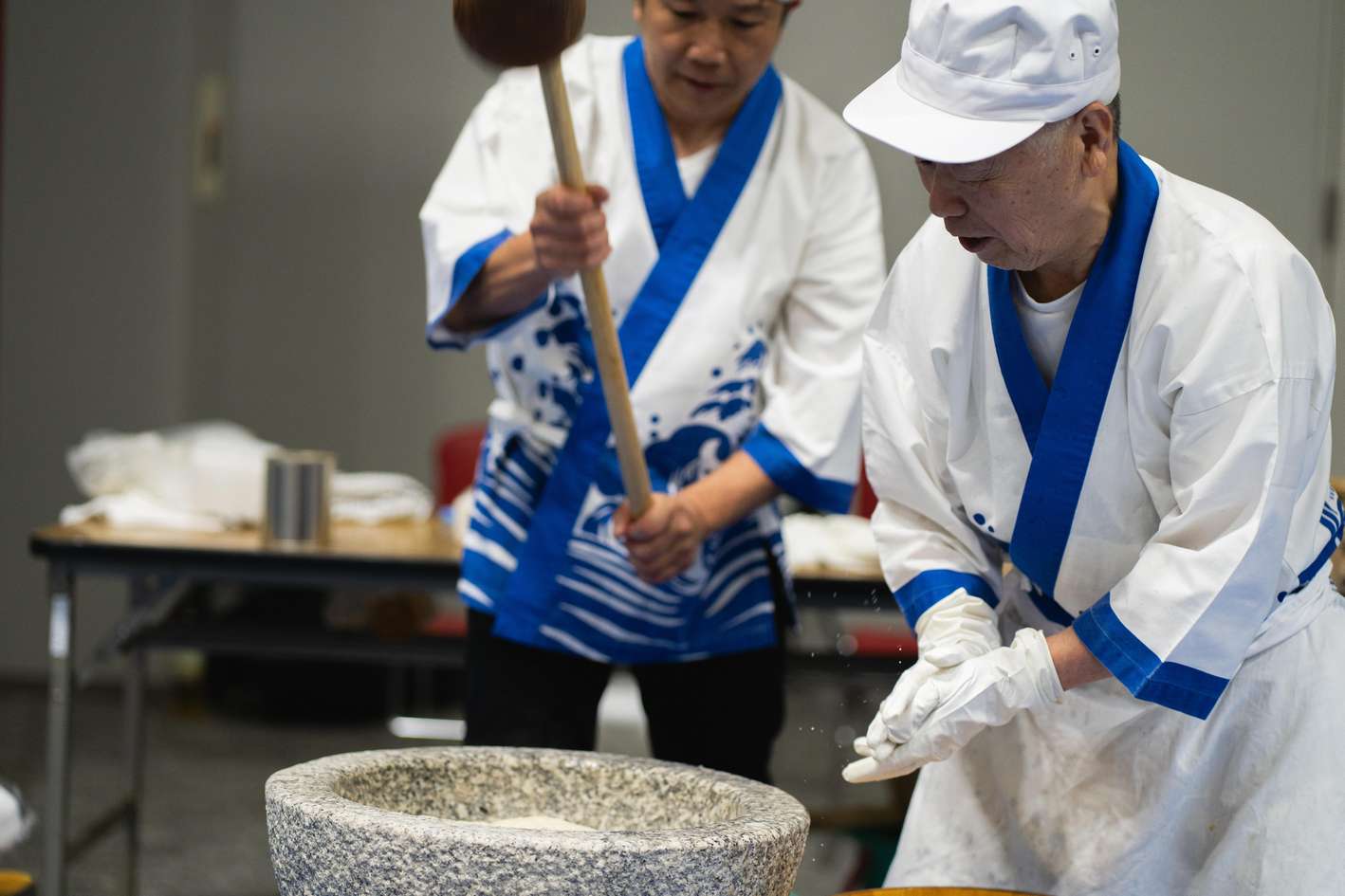
Kyoto runs reserved pounding sessions on a fixed schedule, with daytime slots at 11:00 and 12:30 pm and evening ones that add a tea ceremony.
Read the guide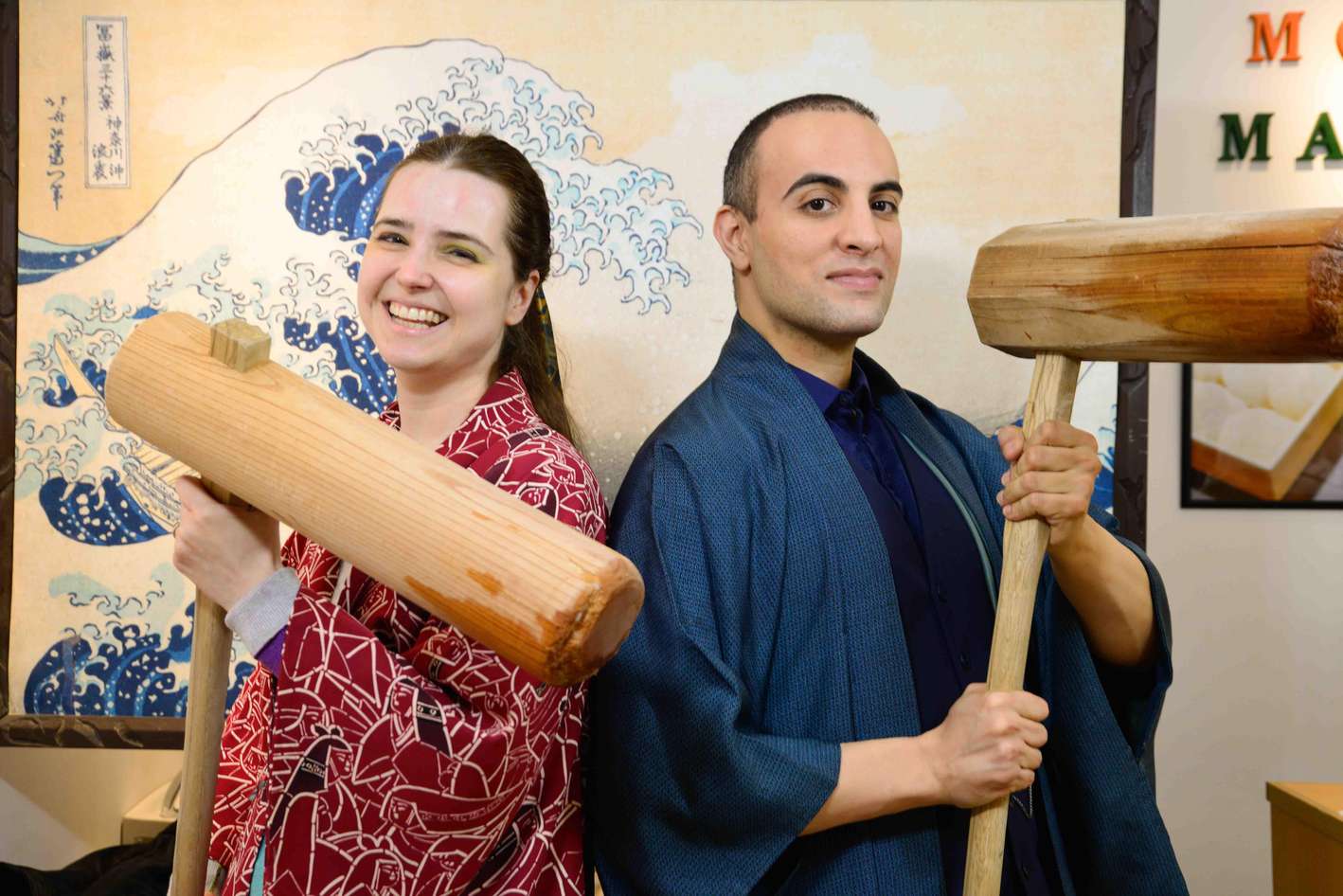
Tokyo has few street-front pounding shops, so the reliable way to watch is a booked studio class or a sumo show with set daily times.
Read the guide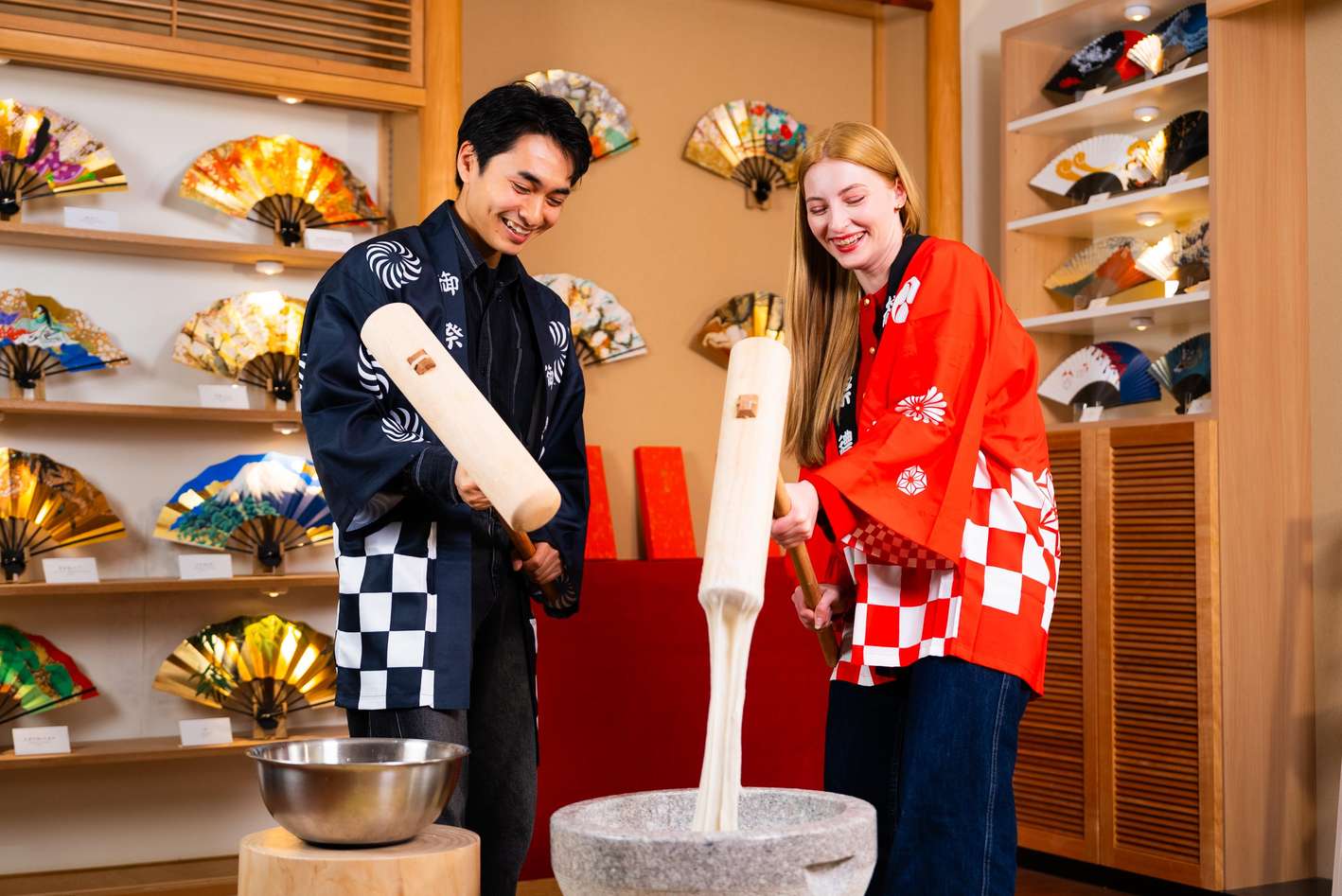
If your trip bends toward Kyoto or Tokyo instead of Osaka, both cities run booked pounding sessions on a set schedule.
Set session times in the city of temples, from daytime shows to evening tea ceremony pairings.
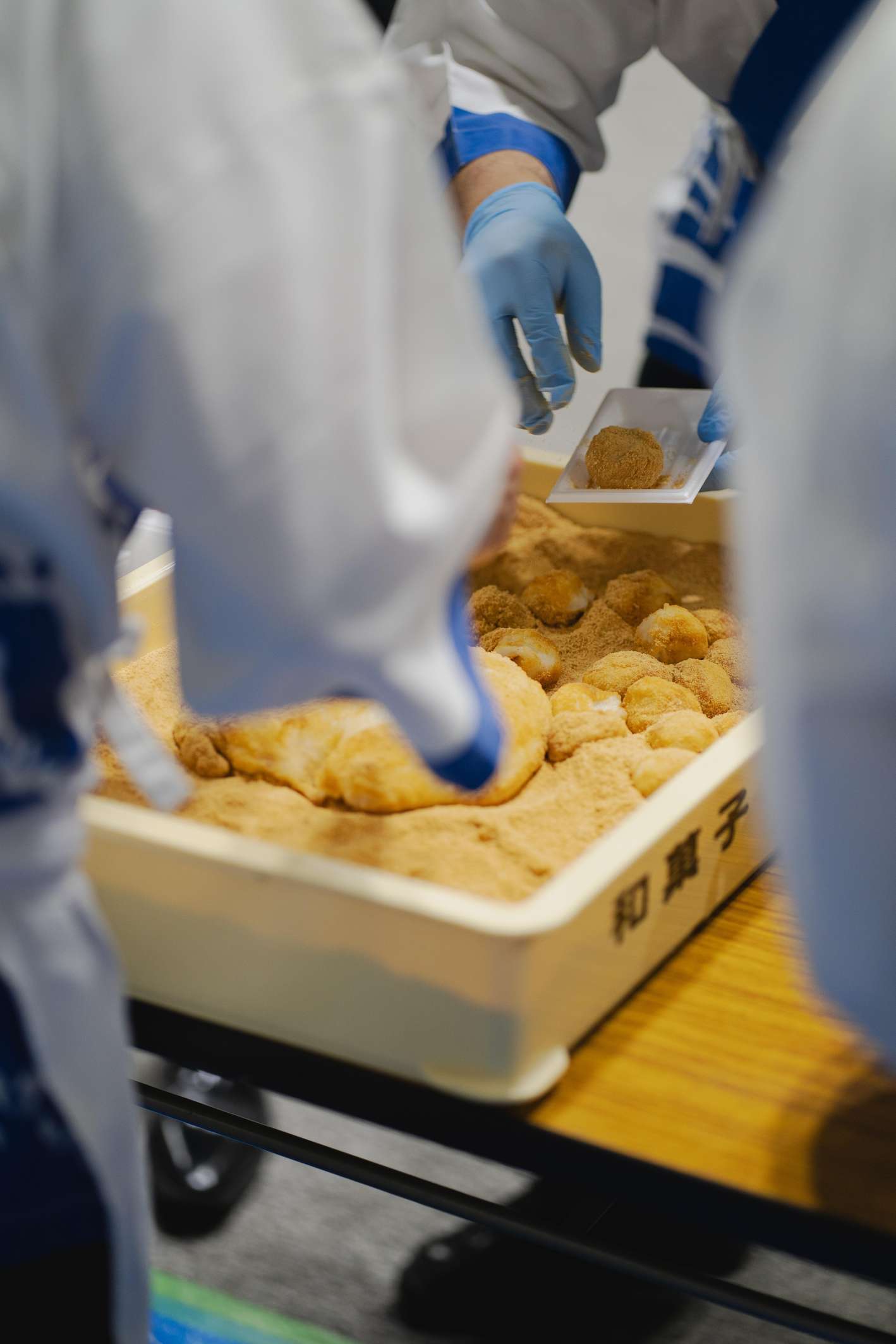
Kyoto answers the schedule problem the same way Osaka does: you reserve a session and a time slot is yours. Daytime pounding runs at 11:00 and 12:30 pm, and private sessions can be set for morning, afternoon or evening on request.
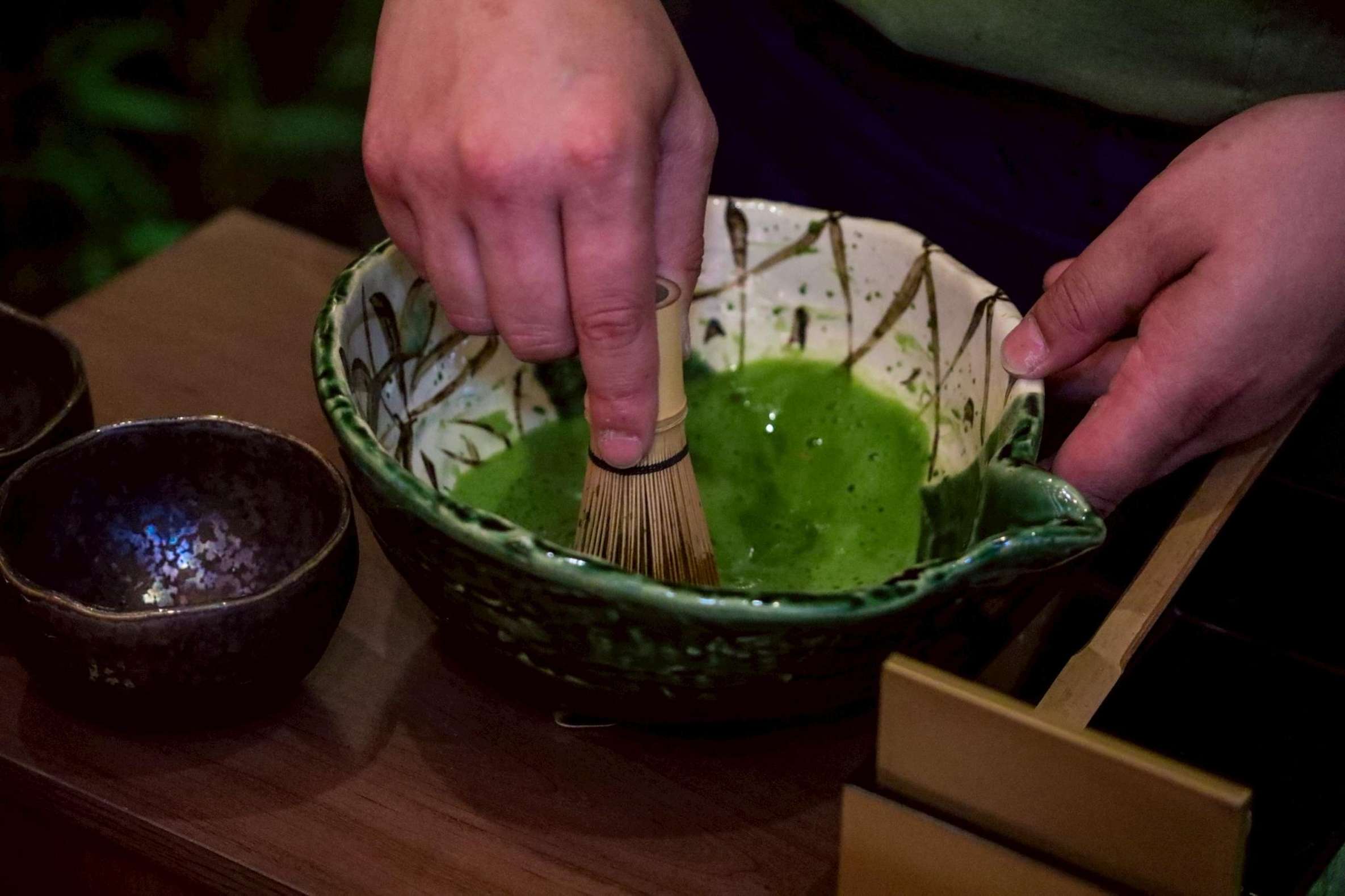
The evening slots pair the pounding with a tea ceremony, so you taste your mochi the way tea houses serve it, sweet first and then the bitter matcha.
Higashiyama near Kiyomizu-dera has shops with live pounding too, though their times can shift on short notice. If your itinerary puts you in Kyoto anyway, book a slot and skip the guesswork.
No street spectacle here, so pounding happens in studios and at sumo shows with four fixed times a day.
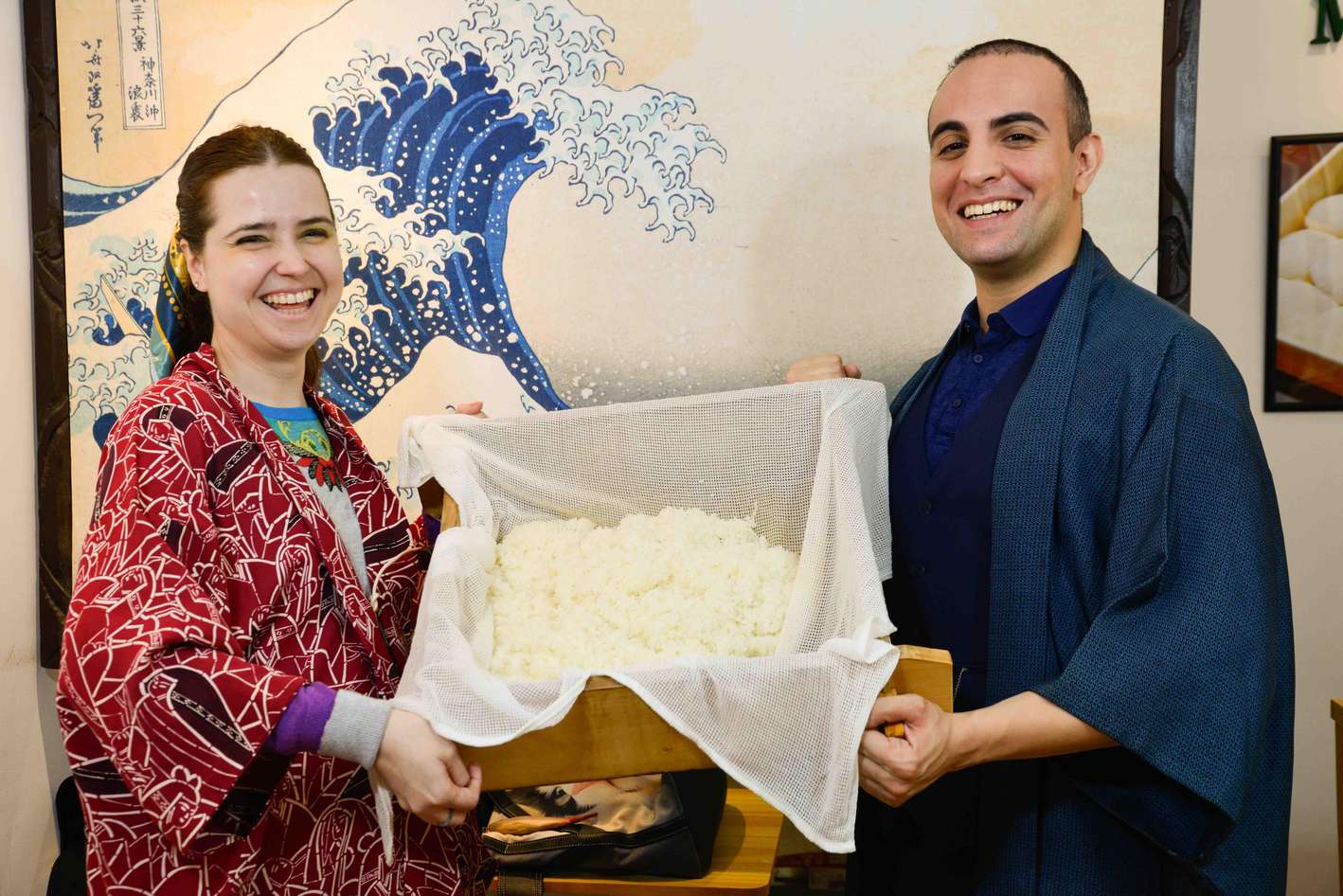
Tokyo surprises people: there is no continuous street spectacle here, the viral clips come from Nara. What the city does have is scheduled shows. At Tokyo Tower, sumo wrestlers pound mochi during shows at 11 am, 2 pm, 5 pm and 8 pm, and you can try the mallet yourself.
Studio classes in Asakusa and Shibuya cover the rest, with English instruction and happi coats to wear while you pound. Walk-in options exist in winter, when shrines hold mochitsuki events around New Year.
If your trip sits in eastern Japan, book a studio class or catch a sumo show and you will see the real thing.
The heavy mallet from the viral clips swings in Osaka too, on session times you can plan a day around. Whether you book a seat in Namba, eat the mochi warm minutes later, or still catch the train to Nara is what the next few chapters decide.
Osaka's live festival-style pounding show runs at Kuromon Market, a five-minute walk from Kintetsu Nippombashi Station.
The Dotonbori venue runs five sessions a day, starting at 10 am, 11:30 am, 2 pm, 3:30 pm and 5 pm, each about an hour.
Kyoto and Tokyo both run on bookings, and Kyoto adds evening slots that pair the pounding with a tea ceremony.
You eat the mochi warm, cut into small bites with tea, and leftovers harden within hours at room temperature.
Nara's famous street pounding is free but lasts two to three minutes behind a crowd several rows deep.
Book a session before you go, even if you only want to see the show. The Namba festival experience lets you reserve a spot, watch the live performance, then take a turn with the mallet yourself.
Kyoto answers the schedule problem the same way Osaka does: you reserve a session and the time slot is yours. Daytime pounding runs at 11 am and 12:30 pm, and private sessions can be set for morning, afternoon or evening on request.
The evening slots are the ones people remember, because they pair the pounding with a tea ceremony. You taste your mochi the way tea houses serve it, sweet first and then the bitter matcha, which settles the palate for the tea.
Higashiyama near Kiyomizu-dera has shops with live pounding too, though their times can shift on short notice. If your itinerary puts you in Kyoto anyway, book a slot and skip the guesswork. If you're based in Osaka, the case for the train gets weaker by the chapter.
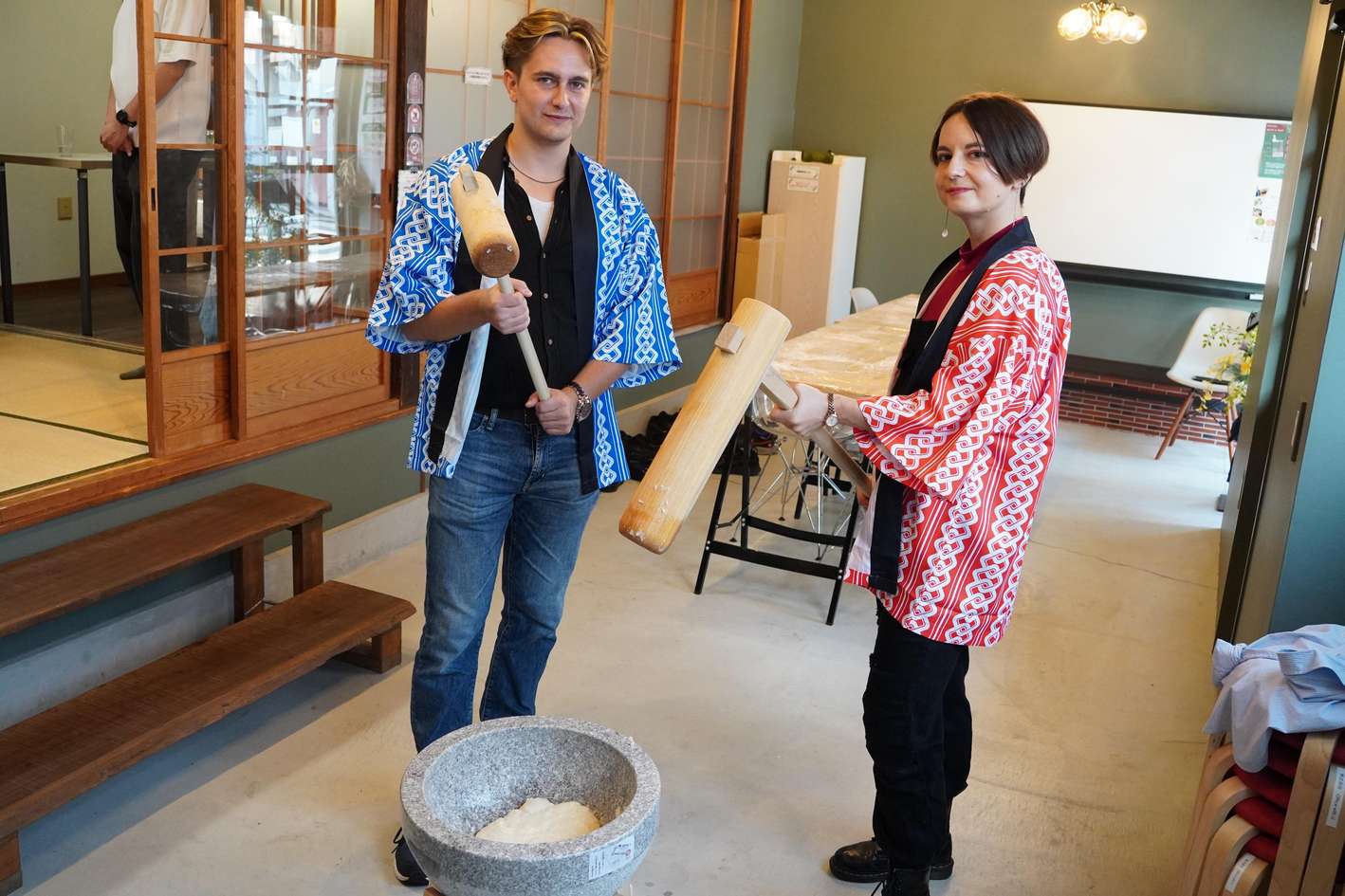
Tokyo surprises people who arrive expecting the viral clip. There is no continuous street spectacle there; those fast-paced videos come from Nara. What Tokyo has instead are scheduled shows, and some of them are excellent.
At Tokyo Tower, sumo wrestlers pound mochi during shows at 11 am, 2 pm, 5 pm and 8 pm, and you can try the mallet yourself. Walk-in guests get in provided seats are available. Studio classes in Asakusa and Shibuya cover the rest, with English instruction and happi coats to wear while you pound.
A few rules shape the day there: reservations must be made at least two days ahead for one traditional experience, entry purely to watch is not allowed for hygiene reasons, and a Takanawa event needs no reservation at all.
In winter, shrines hold walk-in mochitsuki around New Year. If your trip sits in eastern Japan, see where to watch in Tokyo. Otherwise, Osaka covers it.
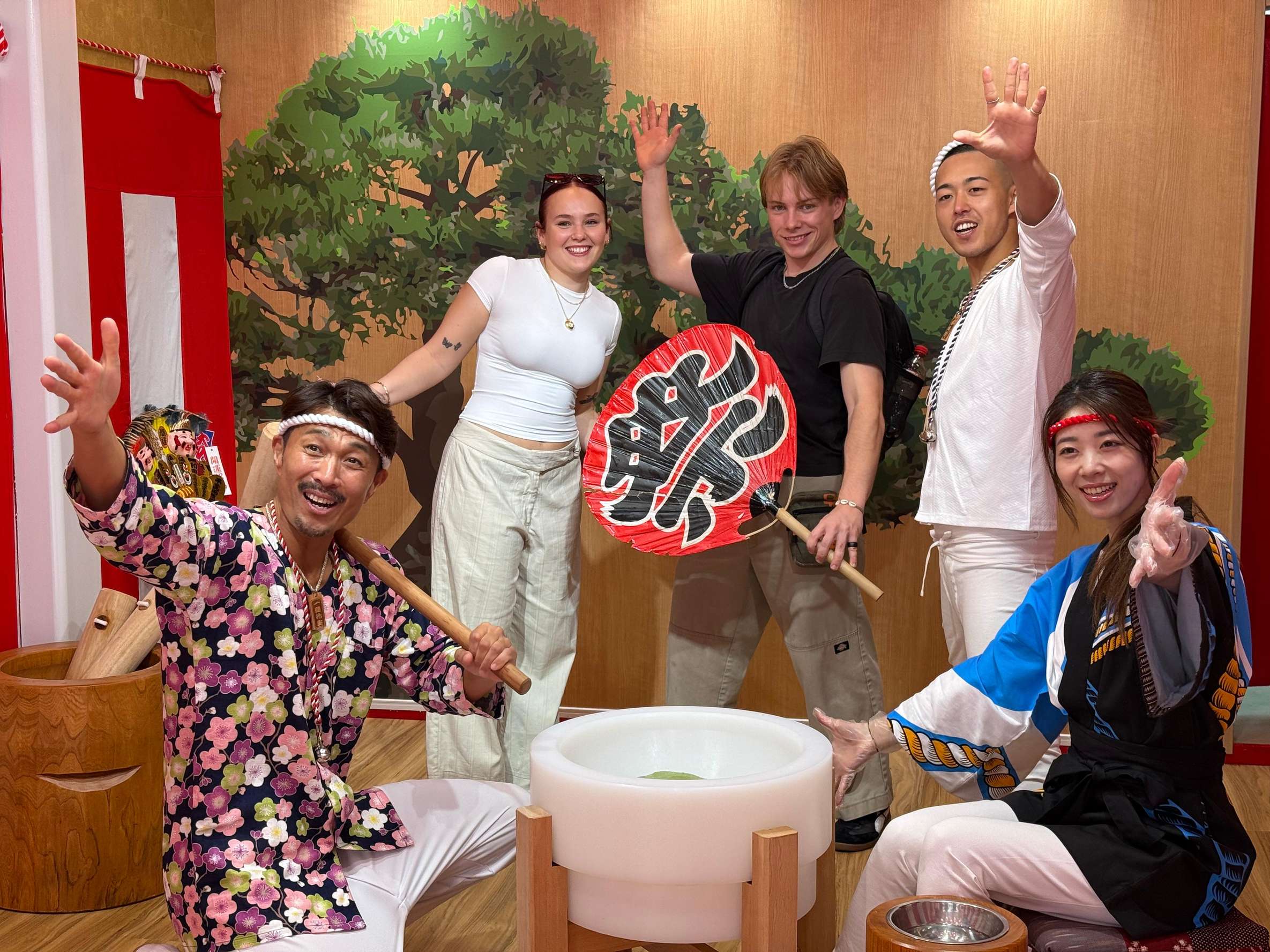
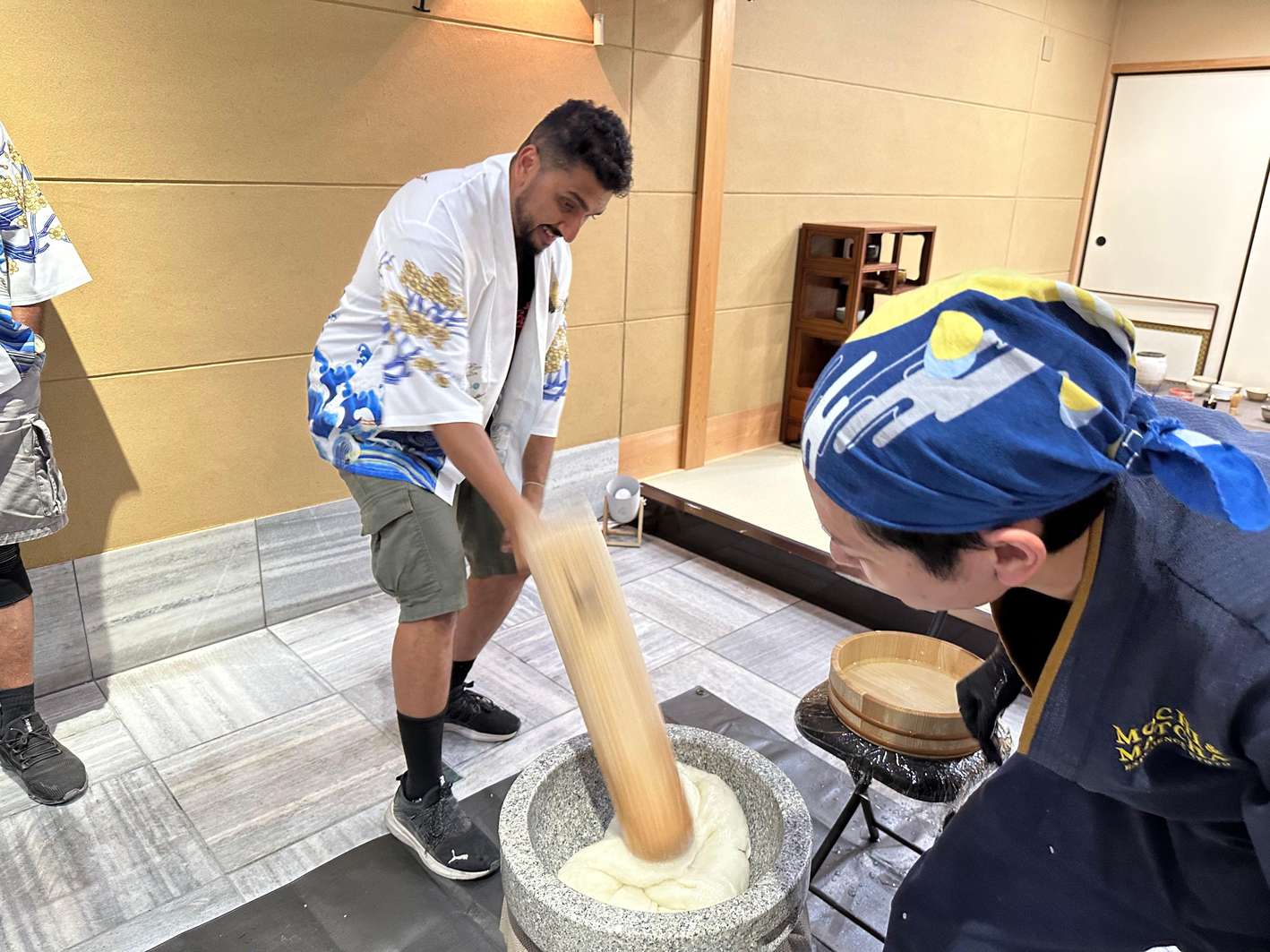
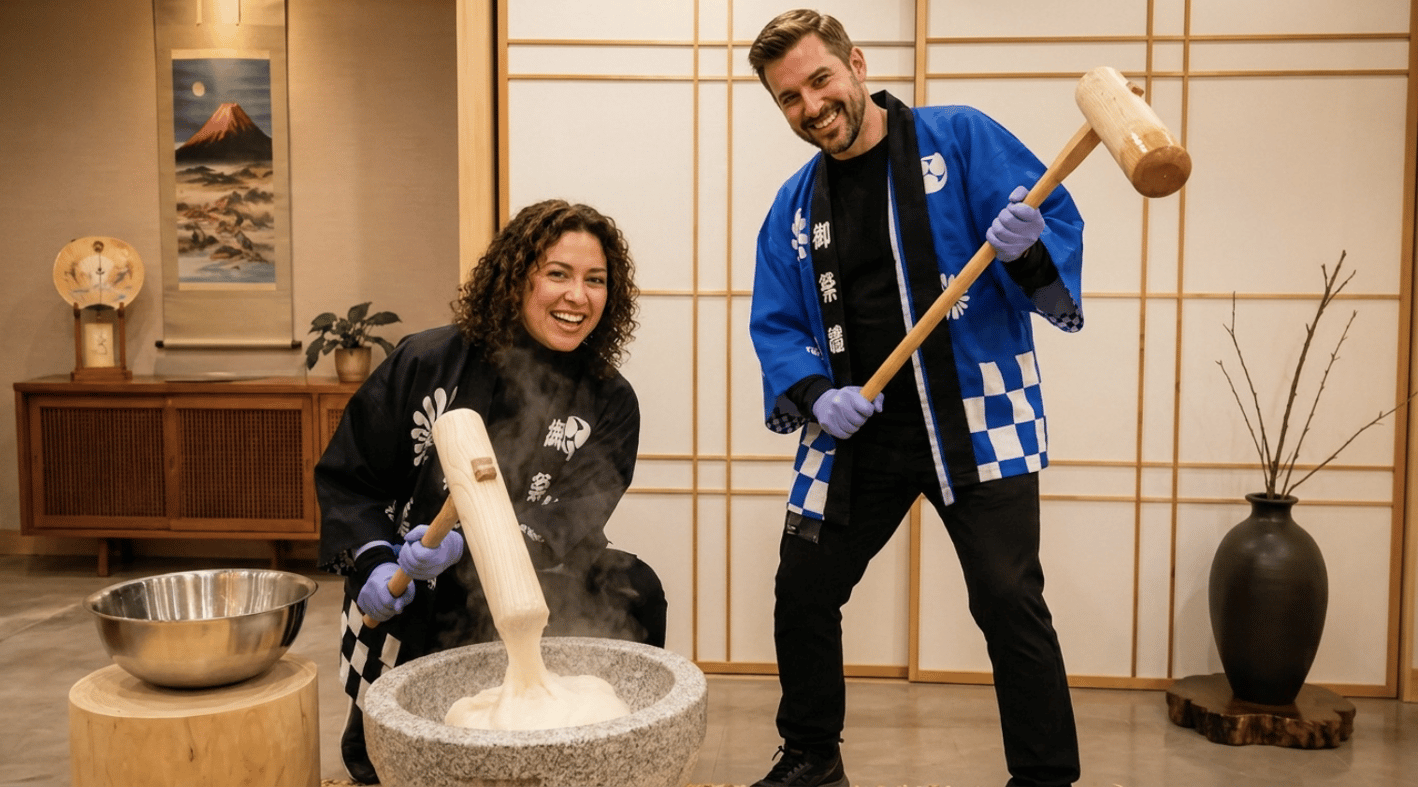
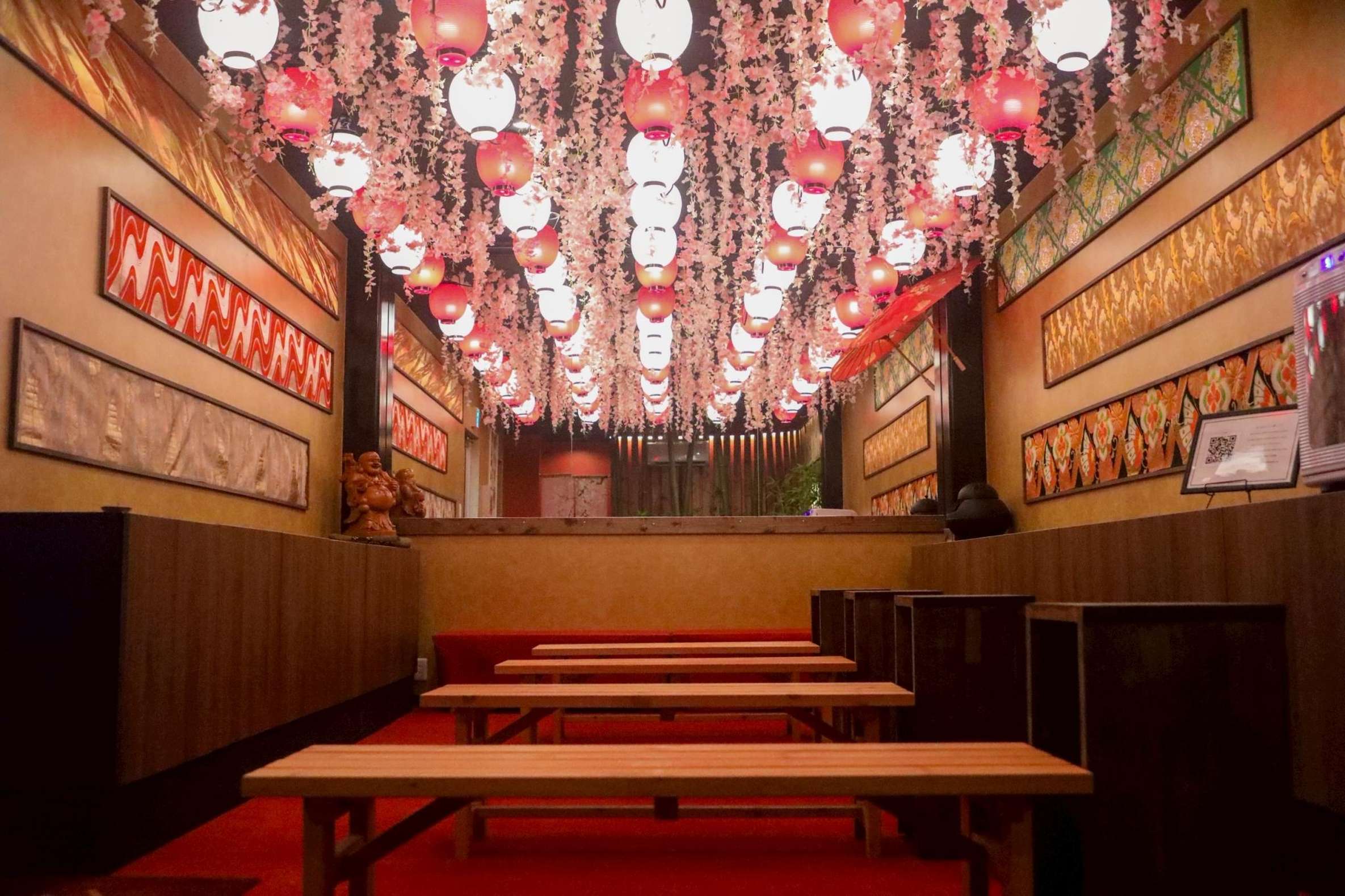
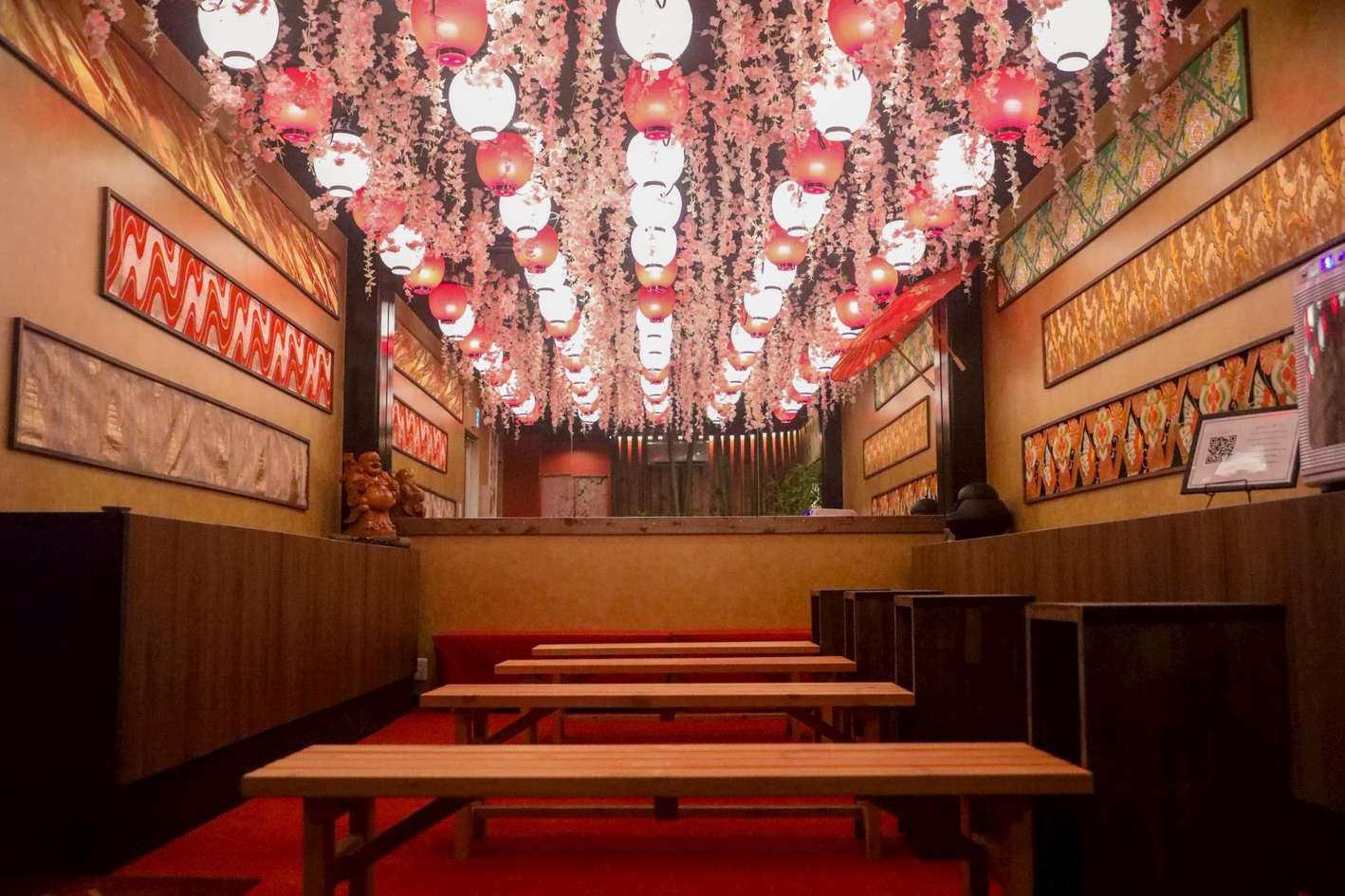
Start with the one that matches what you came for. The Kuromon Market venue sits a five-minute walk from Kintetsu Nippombashi Station, close enough to slot between breakfast stalls and shopping. Its show is a full festival-style performance, and you take a pounding turn yourself before tasting homemade daifuku in a traditional Japanese-inspired space.
Namba holds two more options. One tour begins at Namba Station and builds a whole evening around the workshop, pairing pounding with takoyaki, a canal cruise and the Glico sign.
Another runs a daytime workshop inside Tenjinbashisuji, Japan's longest shopping street, where local shop staff walk you through the neighborhood before the mallets come out. In Dotonbori, hands-on classes let you watch steamed rice pounded into mochi up close.
One rule holds everywhere: no Osaka venue lets you walk in and watch only. Every person through the door books an experience.
| Kuromon Market festival show | Namba evening tour | Tenjinbashisuji workshop | |
|---|---|---|---|
| Neighborhood | Kuromon Market, near Nippombashi | Starts at Namba Station | Tenjinbashisuji Shopping Street |
| Walk from the subway | 5 minutes from Kintetsu Nippombashi Station | Starts at the station itself | Inside the shopping street |
| Performance style | Live festival performance, then you pound | Workshop pounding plus Dotonbori cruise and takoyaki | Street walk with shop staff, then pounding and daifuku making |
| How you book | Reserve a session in advance | Private tour booking | Reserve ahead |
Pick by what surrounds the pounding as much as the pounding itself. Kuromon wins on market food, Namba on a full evening out, and Tenjinbashisuji on local color.
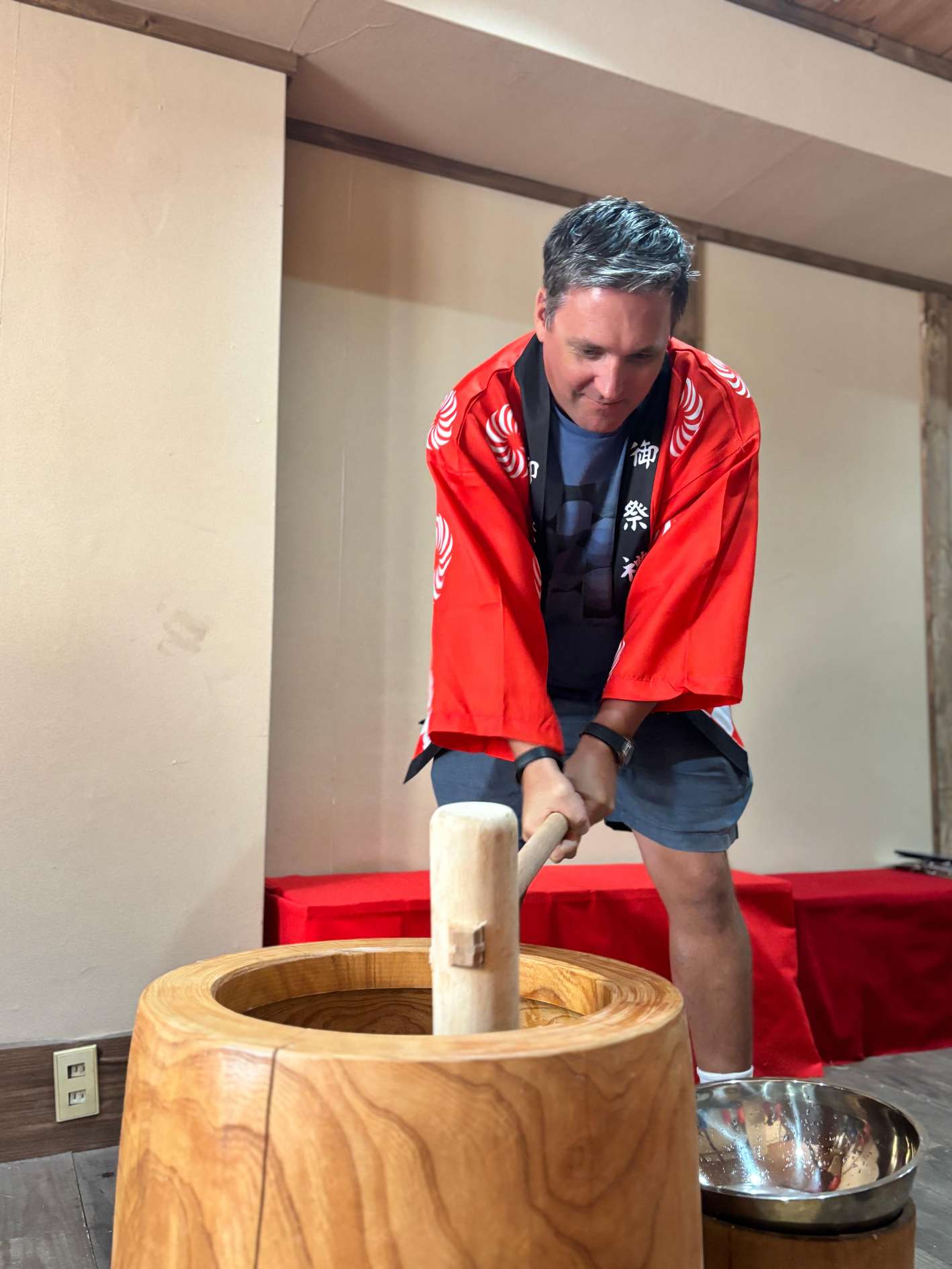
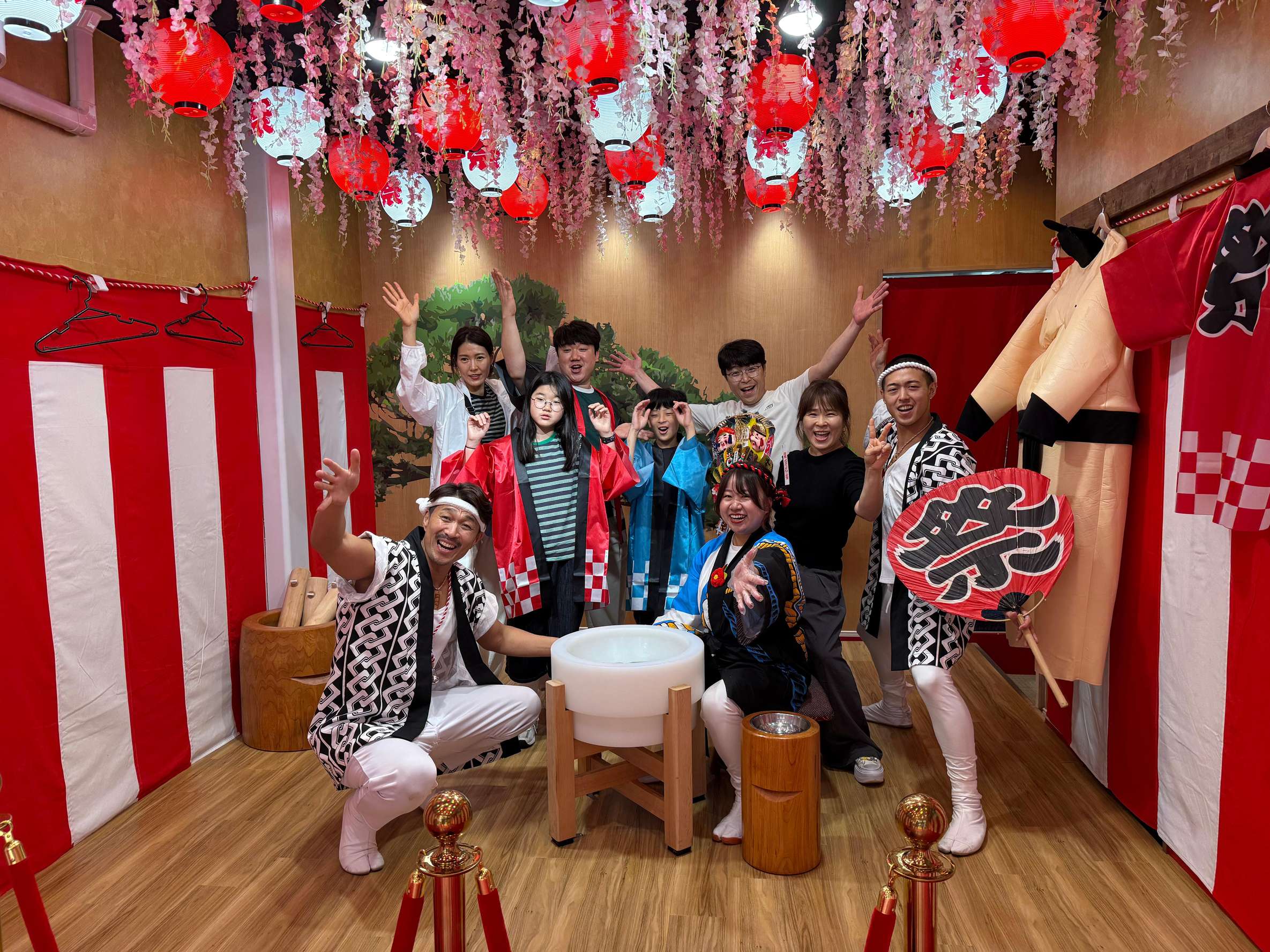
The Dotonbori venue keeps a timetable you can plan a whole Namba day around: sessions start at 10 am, 11:30 am, 2 pm, 3:30 pm and 5 pm, and each runs about an hour. That is five chances a day, which is more than any shop-demonstration schedule in this story.
The morning starts pair well with Kuromon Market grazing before the queues build, and the 2 pm slot leaves the whole morning free for Osaka Castle or a museum. The last session ends right as the neon comes on, which is the hour Dotonbori is worth seeing from the water.
A quiet room and fresh energy in the mortar
Pairs with a late market brunch either side
Good slot after a morning of sightseeing
Leaves the evening free for Dotonbori neon
Ends as the canal lights come on
Arrive early, since the hands-on part runs the full session and hosts appreciate groups already gathered. Winter is the busiest season for mochi-making, so check neighborhood announcements and public community centers for open events then, when pop-up pounding sessions appear beyond the booked venues.
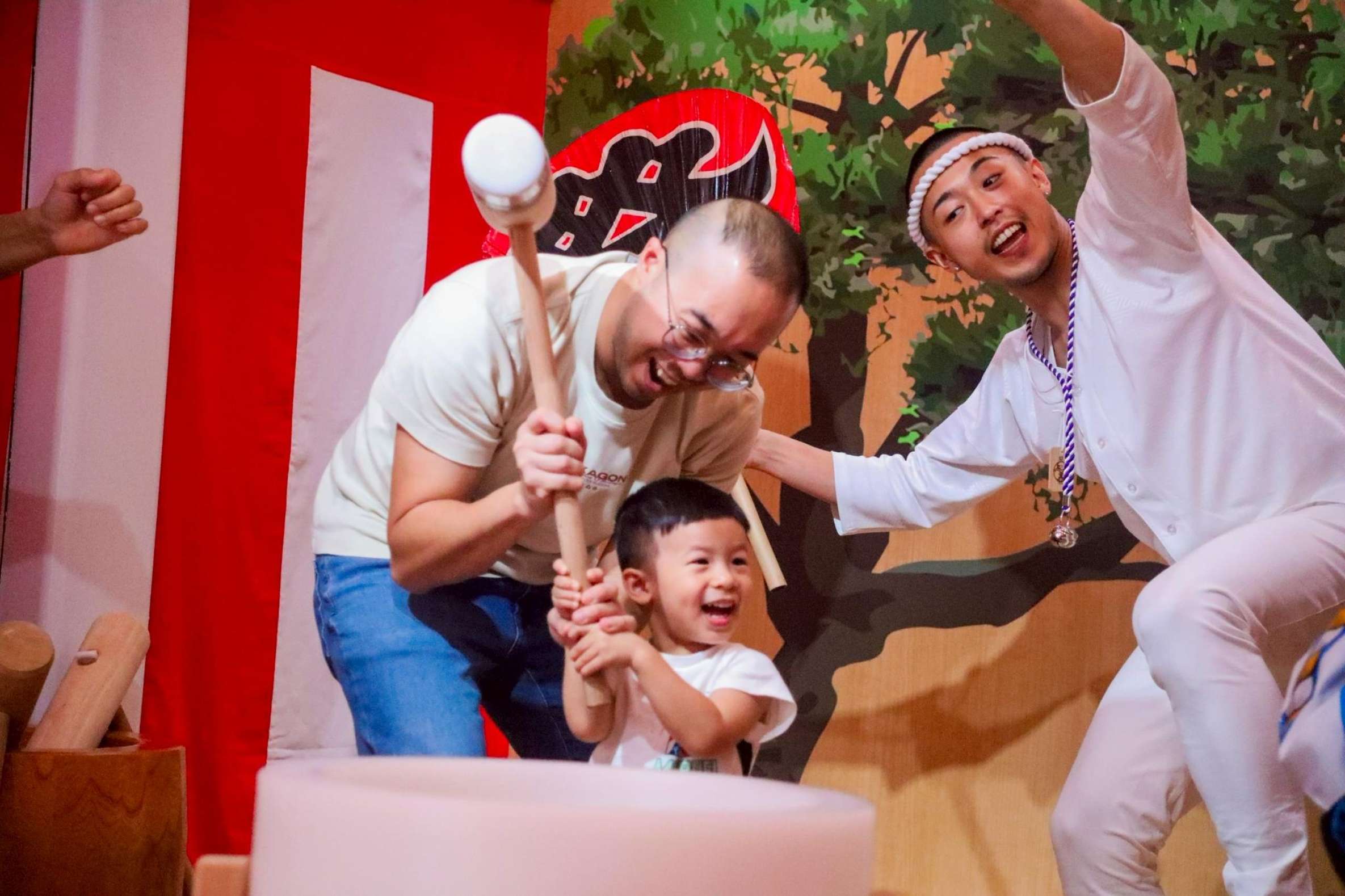
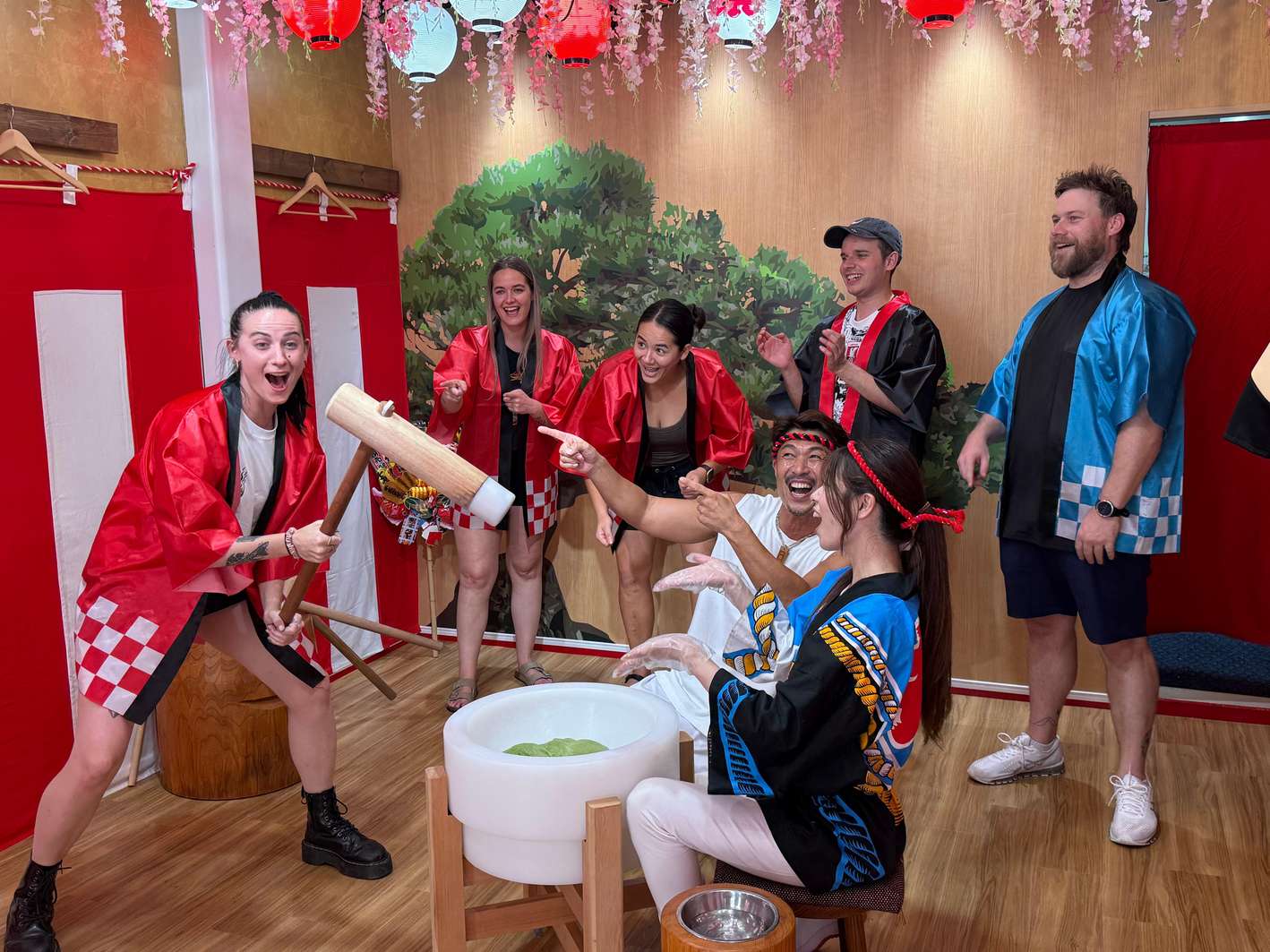
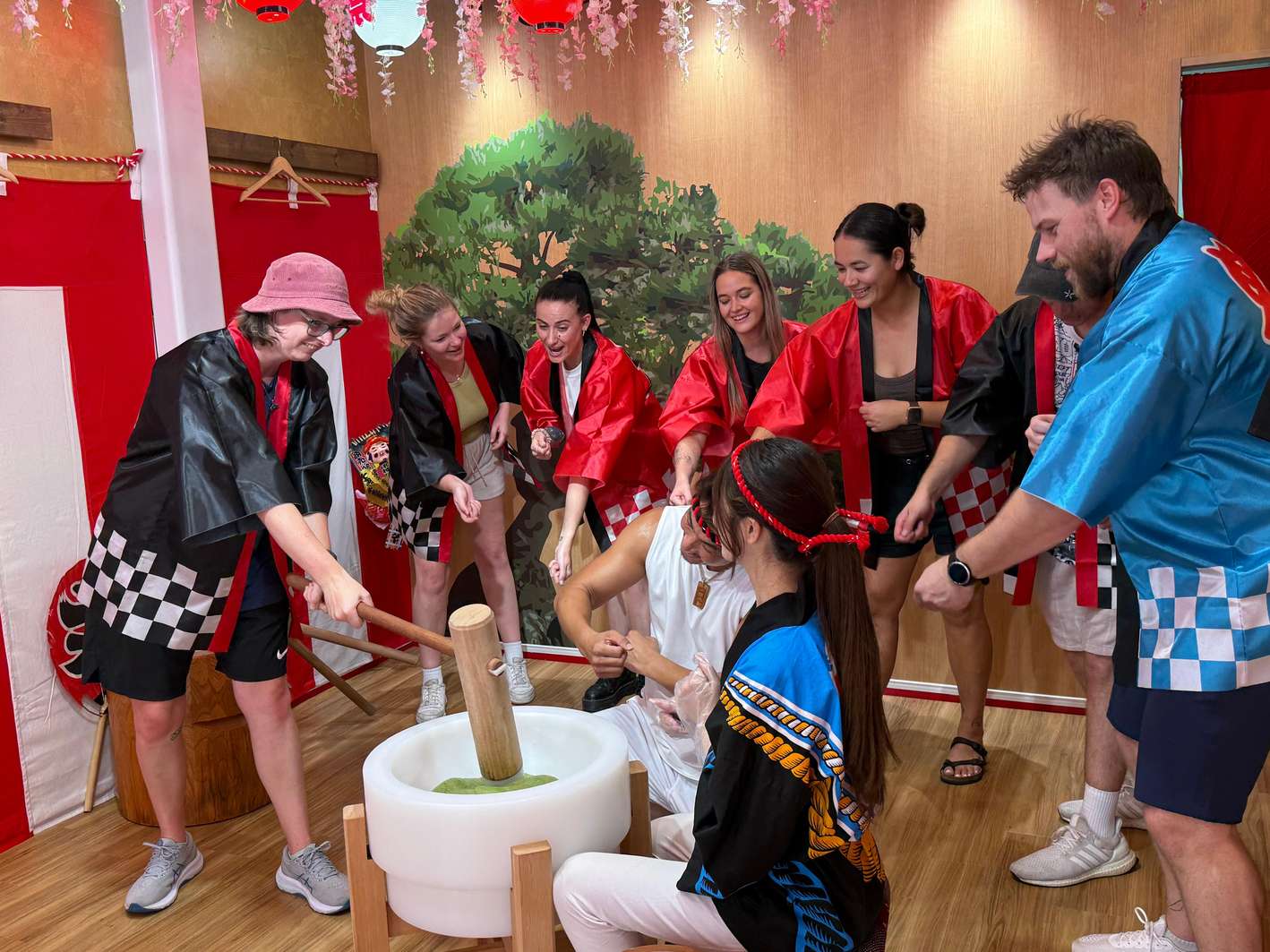
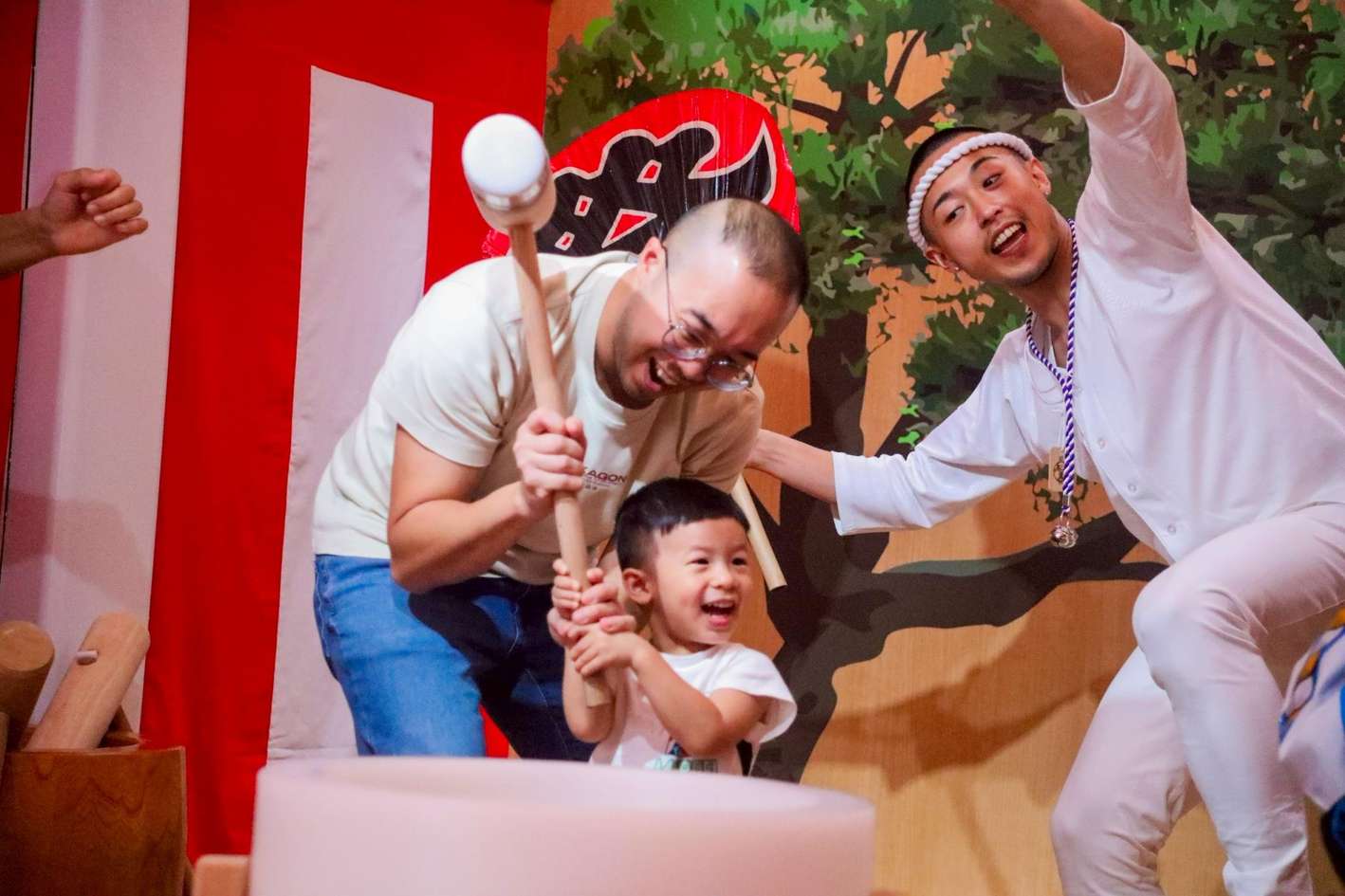
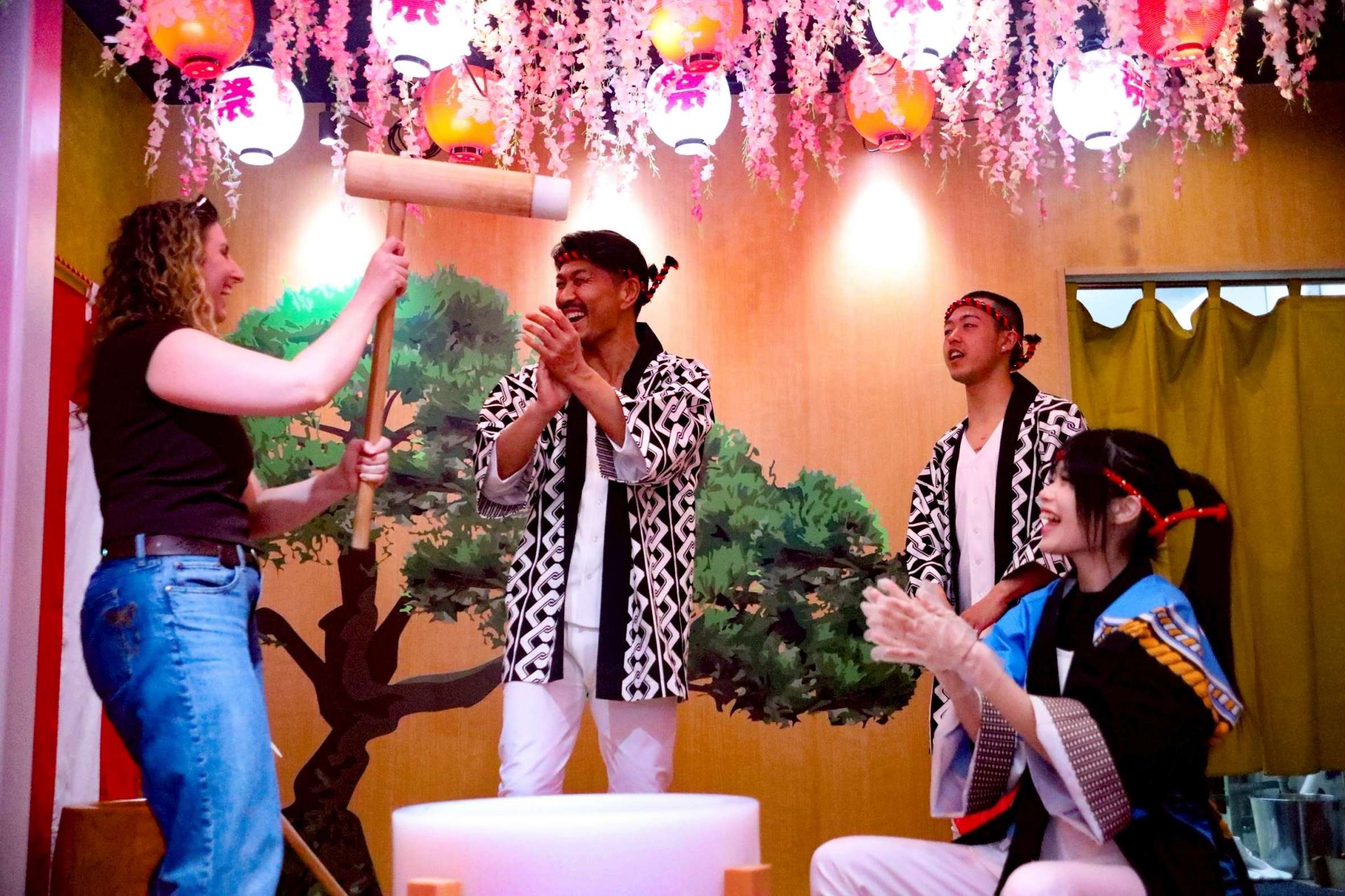
Yes, and that is the point. At the Kuromon Market festival experience, a live performance comes first: giant wooden mallets, the deep thud through the floor, the shouts rising. Then the host calls you up, hands you the mallet, and the crowd around you cheers.
The chants carry the whole scene. Shouts like "Yoisho!" mark each effort and, more importantly, let the pounder and the person turning the dough match their timing so no one's hands meet the mallet.
That turner reaches into the mortar with wet hands between strikes, moistening and folding the rice. Visitors never take the turner's role, because a mistimed movement can bring the mallet down on their fingers. Turners train for it; spectators pound.
Mochitsuki itself carries the wishes: it welcomes the New Year and brings good luck, longevity and good health, and the chants pull the crowd into the rhythm. Families note that kids often find the making as fun as the eating.
The tasting is the part people talk about afterwards. Freshly pounded mochi comes out warm and soft, served with the traditional line-up: kinako roasted soybean powder, sweet red bean paste, nori seaweed and sweet soy sauce. Savory and sweet sit side by side, and you try both.
One rule of eating matters more than any topping. Fresh mochi is dense and sticky, and swallowing it whole is a genuine hazard, so cut it into small bites and eat it with tea.
Chew slowly and mix it well before swallowing, and let the tea wash each piece down. Skipping that is why some visitors find fresh mochi sits heavily; swallowed unchewed it can harden in the stomach.
Pregnant travelers can eat plain rice mochi safely, provided the fillings are pregnancy-safe and the bites are small. Red bean paste, sesame and peanut pastes and fruit purées are all fine; raw egg custard and unpasteurized cream are not.
The Osaka: Traditional Mochi Pounding Experience with Tasting runs exactly this format, with a guided pounding and a topping spread served with tea.
Osaka splits into two booking cultures, and knowing which one you are standing in front of saves the day.
The Kuromon Market festival show and the Namba and Tenjinbashisuji workshops all run on reservations, and you cancel up to 24 hours ahead for a full refund, so booking costs you nothing if plans change. One January event at Suiken-ji Temple in Kaizuka City needs no reservation at all; you simply show up.
What no central venue allows is walking in to watch only. If you show up without a booking hoping to observe, the door stays shut. Book a seat, even a same-day one.
If you want mochi to go, buy it at the show and eat it the same day. Fresh mochi hardens within a few hours at room temperature, and the hotel refrigerator speeds that up even more.
An airtight container keeps it good for a few hours, so a takeaway box is an evening treat, and nothing more.
The Osaka: Mochi Workshop, Dotonbori Cruise, and Takoyaki Tour books as a private evening package, pounding included, if you want the whole night arranged for you.
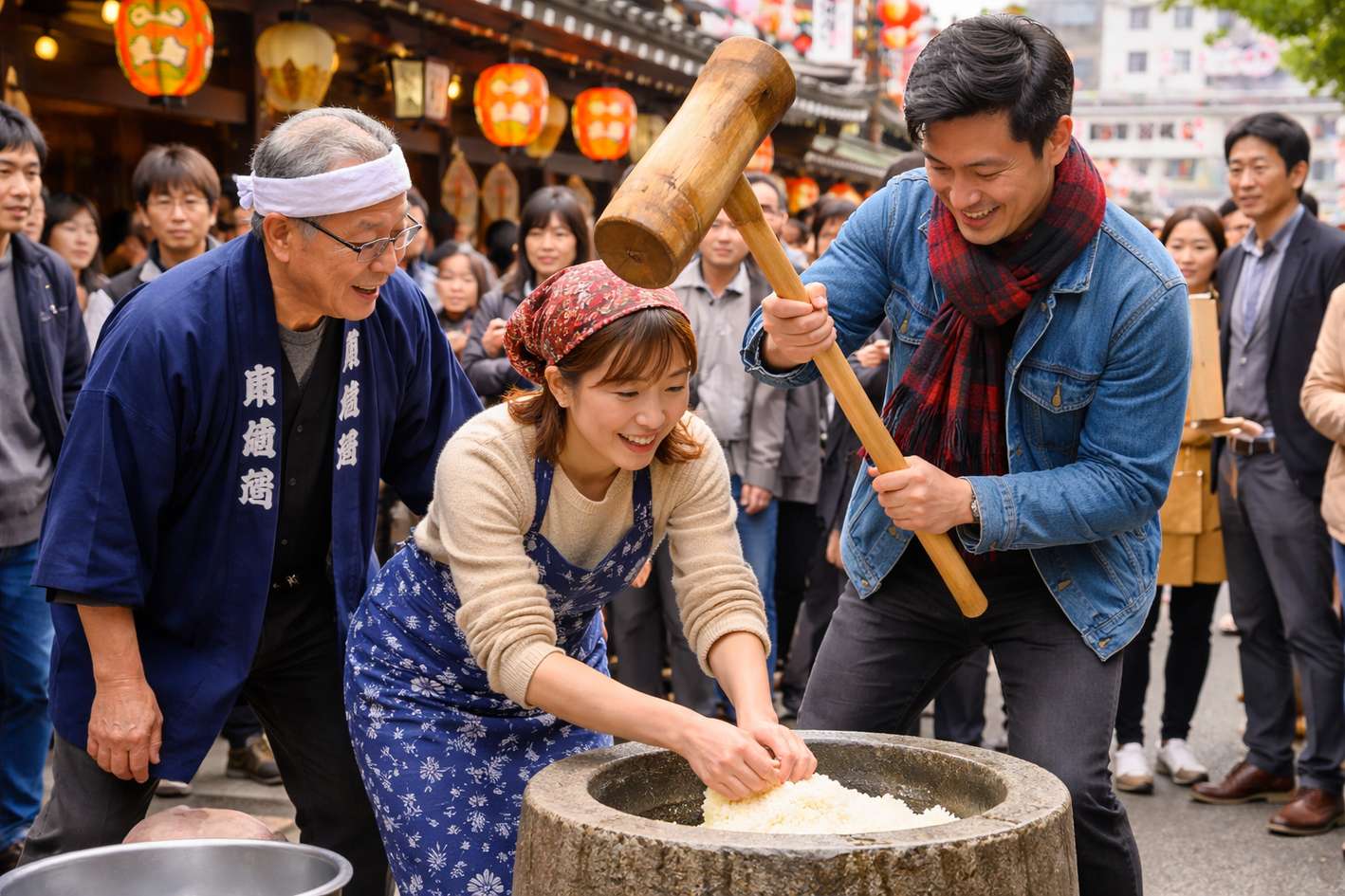
Honest answer: probably not, unless the shop itself is your destination. The famous storefront in Nara pounds mochi roughly every half hour, but the pounding is part of making the day's mochi, not a staged show, so it happens by sales and demand.
The spectacle lasts two to three minutes, through a window onto a public street, and once the crowd gathers several rows deep, anyone arriving late sees the backs of heads.
The Nara shop also takes cash only, no cards or IC cards, so carry yen for the mochi you buy after. What you get is free, authentic and genuinely fast, and forty-odd minutes from Kyoto Station by limited express.
An Osaka session trades the street charge for a guaranteed view: a stage, a scheduled start, a pounding turn of your own and daifuku afterwards. For a first-time visitor who wants to actually see the mallet work, the indoor show wins.
It is a shop making its daily mochi, timed by sales and demand
Several rows form within seconds and late arrivals see only backs
Osaka's booked sessions give you a front-row stage view and your own turn with the mallet
So use Nara as a bonus stop if it falls on your route anyway, and let Osaka carry the show itself. Your view, your turn and your warm tasting are all booked from a subway stop in Namba.
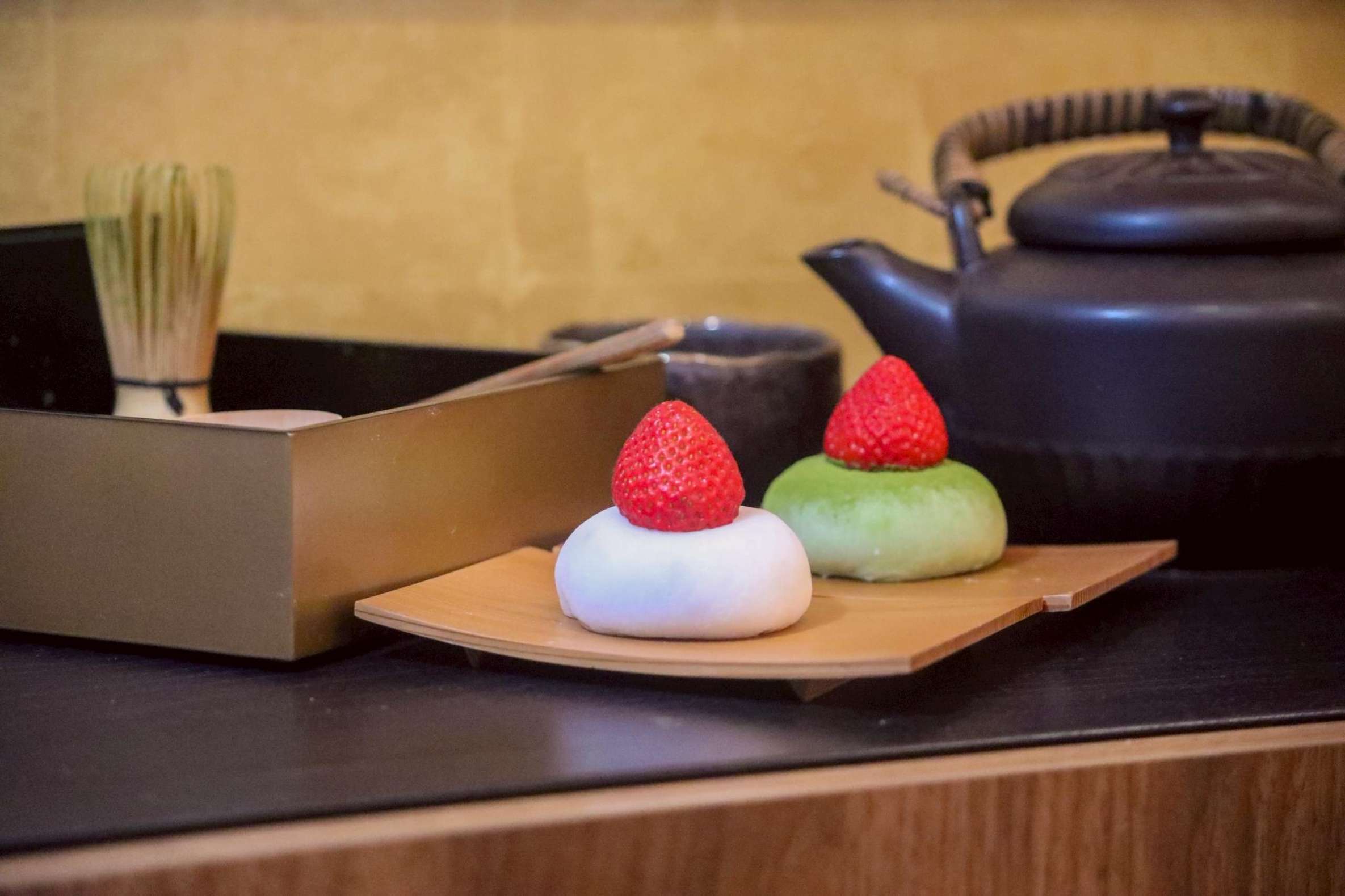
Mochigome, the glutinous rice, is naturally gluten-free, and the name points to its glue-like stickiness, so the word gluten misleads here.
Plain mochi and plain anko, the sweet red bean paste, contain no wheat, barley or rye. Osaka shops like one on Tenjinbashi print allergen information on the ingredient list, and most of their products are plant-based.
Where gluten sneaks in: soy-sauce toppings such as mitarashi glaze, wheat dusting flour used to keep the dough from sticking, and Kanto-style wrappers. In Osaka, toppings are usually kinako, red bean paste, nori and sweet soy sauce, so the savory ones are the ones to ask about.
Soy and sesame need attention too. Kinako is roasted soybean, some fillings contain sesame or peanuts, and some workshop kitchens are shared spaces, not dedicated allergen-free facilities.
If your allergies are severe, this is the one case where checking before booking is worth the message: confirm what the kitchen handles alongside the mochi. Mild gluten sensitivity can generally eat the plain pounded mochi without worry.
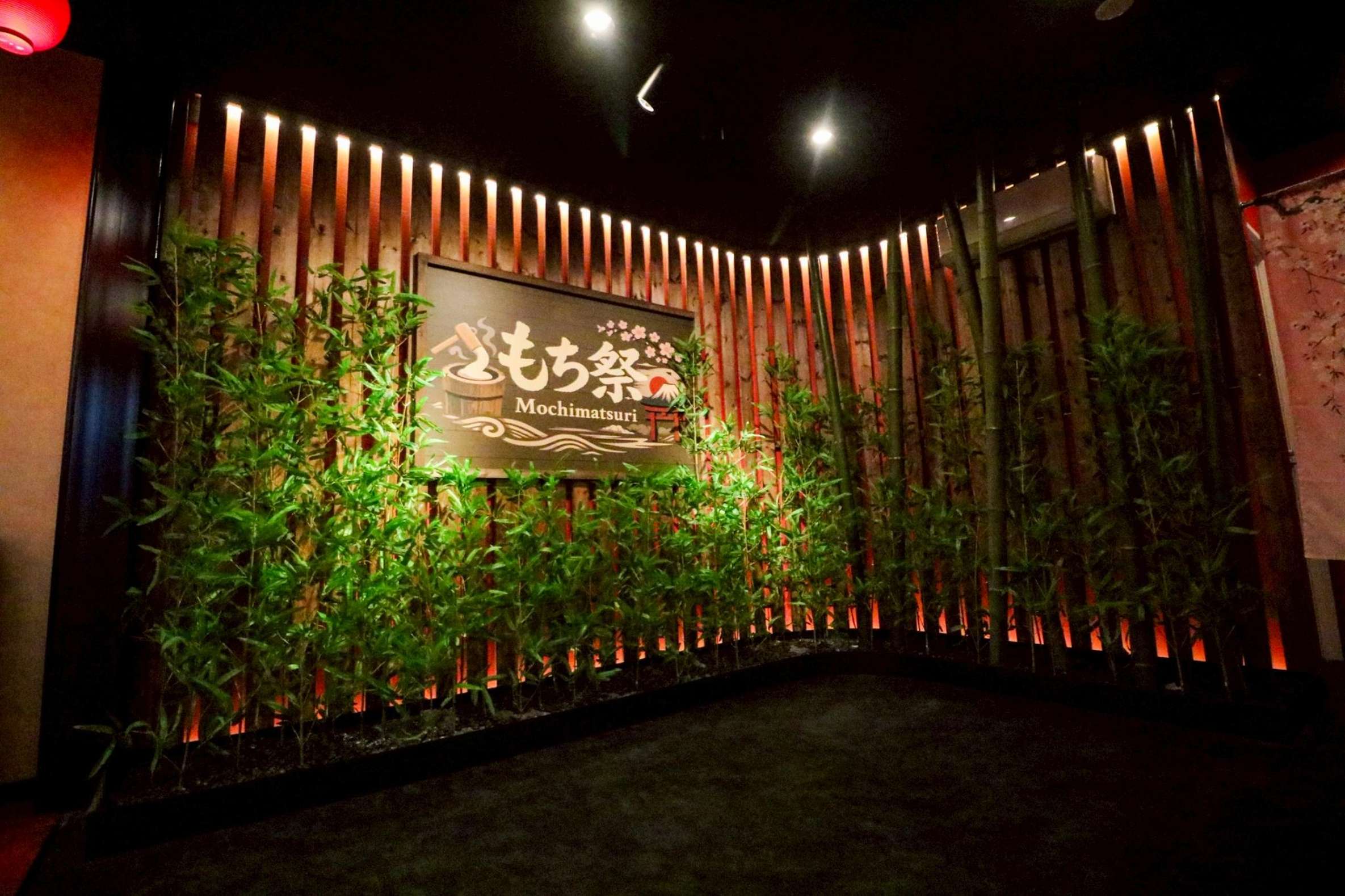
The pounding sits well inside a Namba day because everything worth seeing is close. Hōzen-ji's lantern-lined stone lane, with its moss-covered Fudo statue to splash for luck, is a five-minute walk from where the sessions start.
Two shrines and a temple sit within about twenty minutes on foot if you want more quiet before the noise of Dotonbori.
On foot, that is your afternoon sorted: temple, market stalls, show, neon. If you have wheels or patience for a short ride, Tennōji Park and the Osaka Contemporary Art Center both fall within about a quarter-hour drive, and Isshin-ji's bone-and-statue cemetery makes a detour people remember.
The neat version is the evening combo some tours run: pounding first, then a thirty-minute cruise along the Dotonbori Canal as the billboards flicker on, a photo with the Glico Running Man on Ebisubashi Bridge, and takoyaki after.
That ends the night on the water with the mochi still warm in your memory. The Kuromon version ends the morning with daifuku and a market still grazing to do.
For a guaranteed mallet spectacle in Osaka, the Kuromon Market festival show delivers: a live performance, your own pounding turn and warm daifuku, five minutes from the subway. If your evening is free and your budget stretches, the Dotonbori cruise combo turns it into a full night out.
Nara remains worth the train only if the shop itself is on your list, and go early with cash. Otherwise, Osaka gives you the show on a schedule.
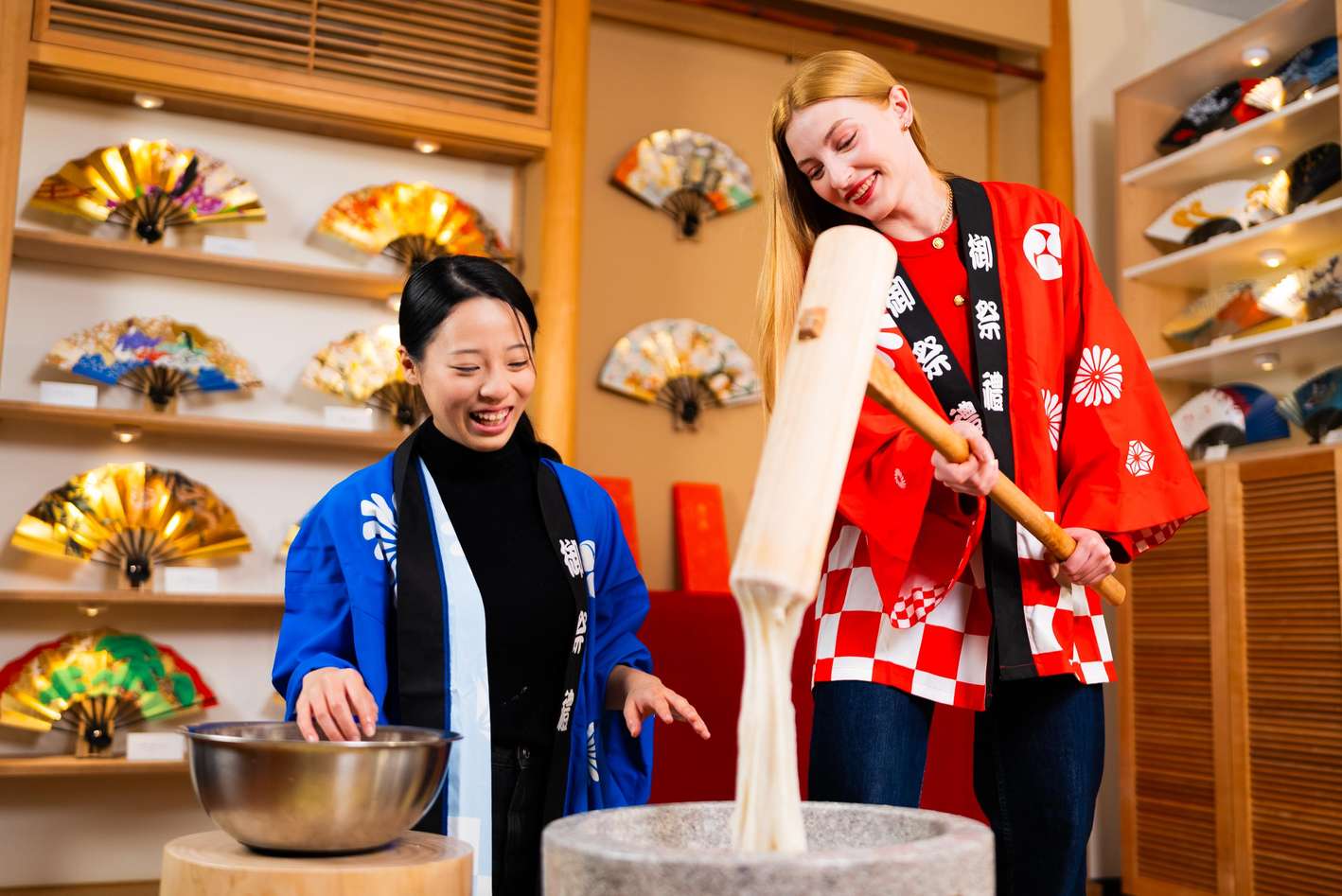
If watching makes you want a turn with the mallet, start here with the full range of hands-on classes.
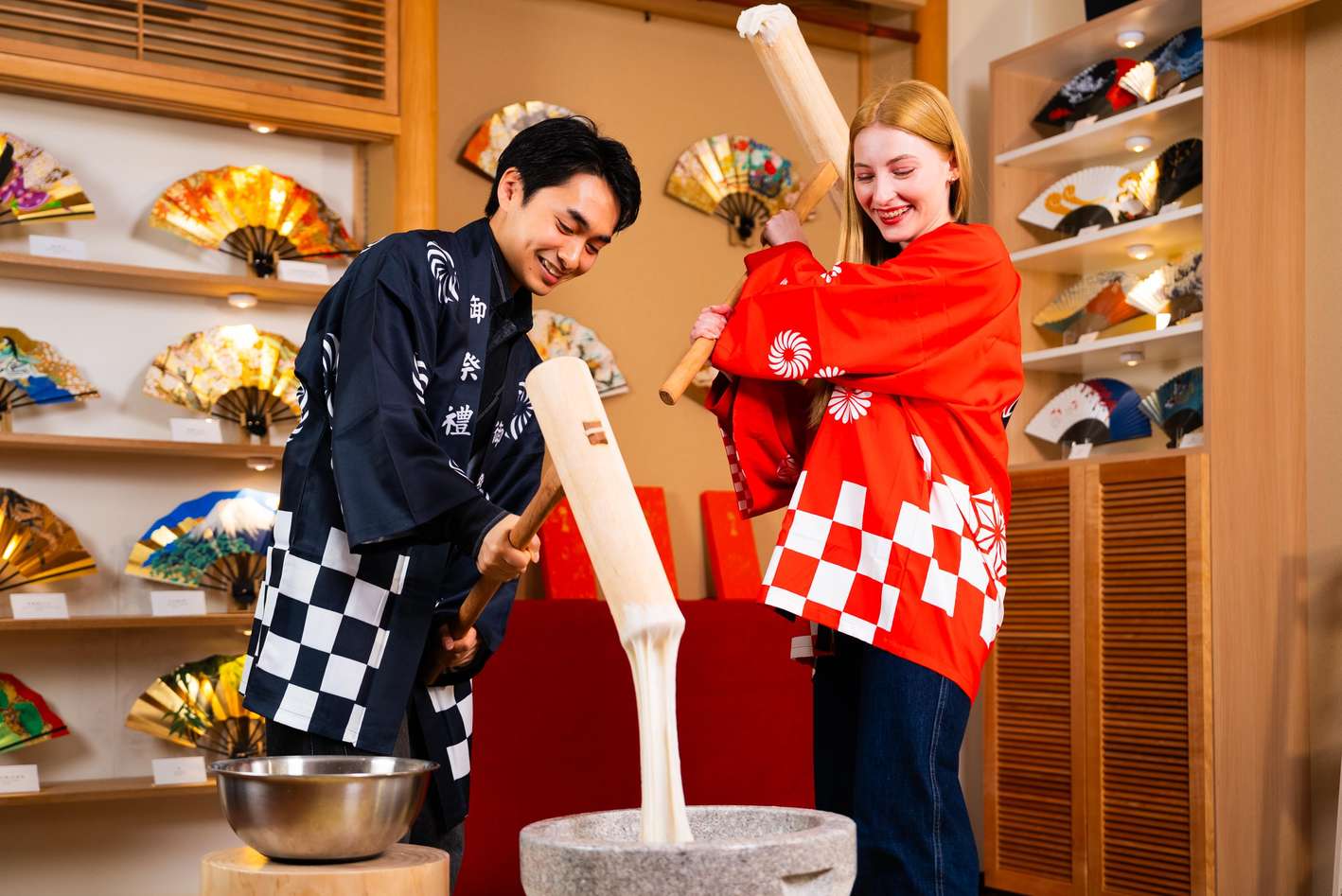
Planning to pound mochi in Kyoto? This page covers booking, group sizes, and what a session actually involves.
Tokyo workshop details, from English instruction to how far ahead you need to reserve a spot.
Short answers to the questions travelers ask before booking a mochi pounding show in Osaka.
 Osaka2026
There are scheduled indoor shows in central Osaka: one live festival-style experience runs near Kuromon Market, a five-minute walk from Kintetsu Nippombashi Station, and hands-on workshops with demonstrations take place in Namba and along Tenjinbashisuji Shopping Street. You book a spot rather than wander the streets hoping to stumble into one.
One Dotonbori venue runs sessions daily at 10 am, 11:30 am, 2 pm, 3:30 pm and 5 pm, and each session lasts about an hour. That range covers a morning slot before your temples and an early evening slot before dinner.
Generally no. At the main workshops in Osaka, every person entering needs a booking, and entry for watching only is not permitted, since all guests take part. Book a slot online, and you can watch the live performance as part of the session before you pound yourself.
The viral street shop in Nara pounds according to sales and demand, the display lasts two or three minutes, and crowds form so fast that late arrivals may see little. An Osaka booking gives you a fixed time, an indoor spot where everyone can see, and daifuku to taste afterwards.
The Osaka experiences walk you through how glutinous rice is steamed first and why that step sets up the pounding, then take you into the mortar work itself. You leave knowing the full process, from steamer to tasting.
The live festival experience in Kuromon Market is not suitable for children under 5 or people over 70, and its listed age bands run from 13 to 70. Younger children do better in family-friendly workshop plans, where they can join with smaller mallets.
Fresh mochi arrives with classic toppings: kinako roasted soybean powder, sweet red bean paste, nori seaweed and sweet soy sauce. One Kuromon Market session adds homemade daifuku, and a daifuku workshop along Tenjinbashisuji has you wrap your own around seasonal fruit and matcha ice cream.
Plain rice mochi is safe during pregnancy, and so are fillings like sweet red bean paste, sesame or fruit purées. Skip raw egg custard or anything with unpasteurized cream, cut the mochi into small bites, and sip tea alongside it, because fresh mochi is sticky and needs thorough chewing.
Yes, but eat it the same day. Fresh mochi hardens within a few hours at room temperature, and the fridge only speeds that up. Keep it covered, out of the sun, and plan to finish it the evening of the show.
You can, but eat it the same day. Fresh mochi hardens within a few hours at room temperature, and the hotel fridge speeds that up, so plan to finish your pieces the same evening.
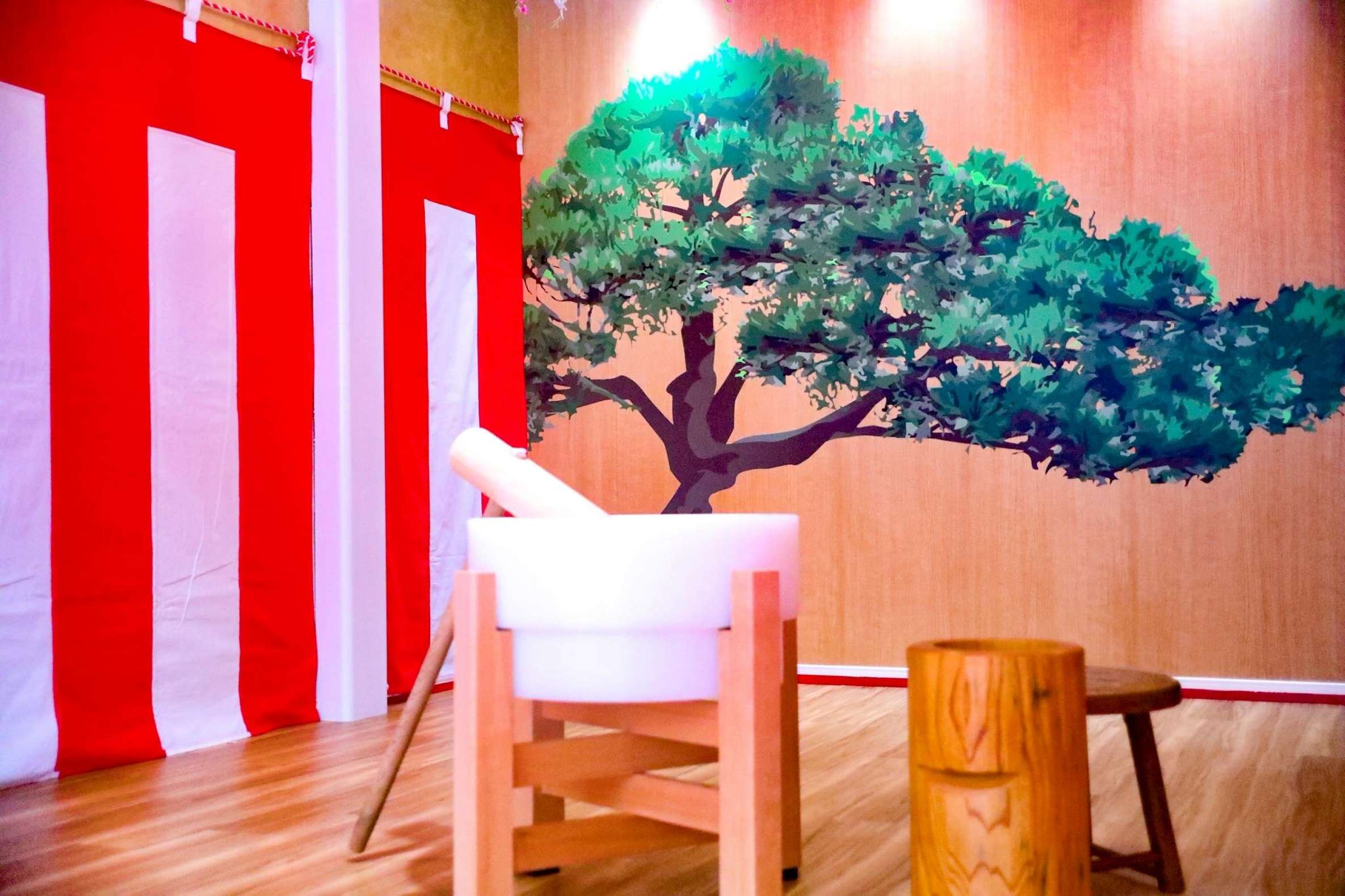
Grab a giant mallet, pound mochi to festival cheers in Kuromon Market, and taste homemade daifuku. Cancel up to 24 hours ahead for a full refund.