Likely to sell out
1 hour·English
5.0(19)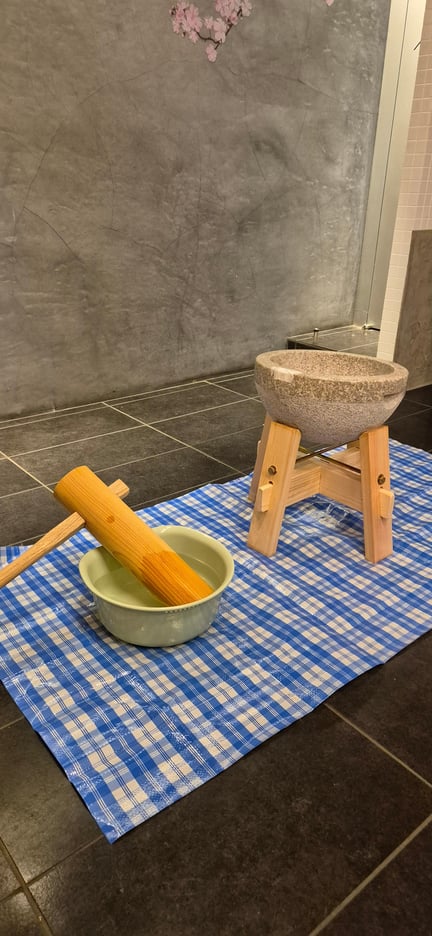
Tokyo: Traditional Mochi Pounding Experience & Tasting
Free cancellationMochi Pounding ExperienceEnglish-Speaking Host
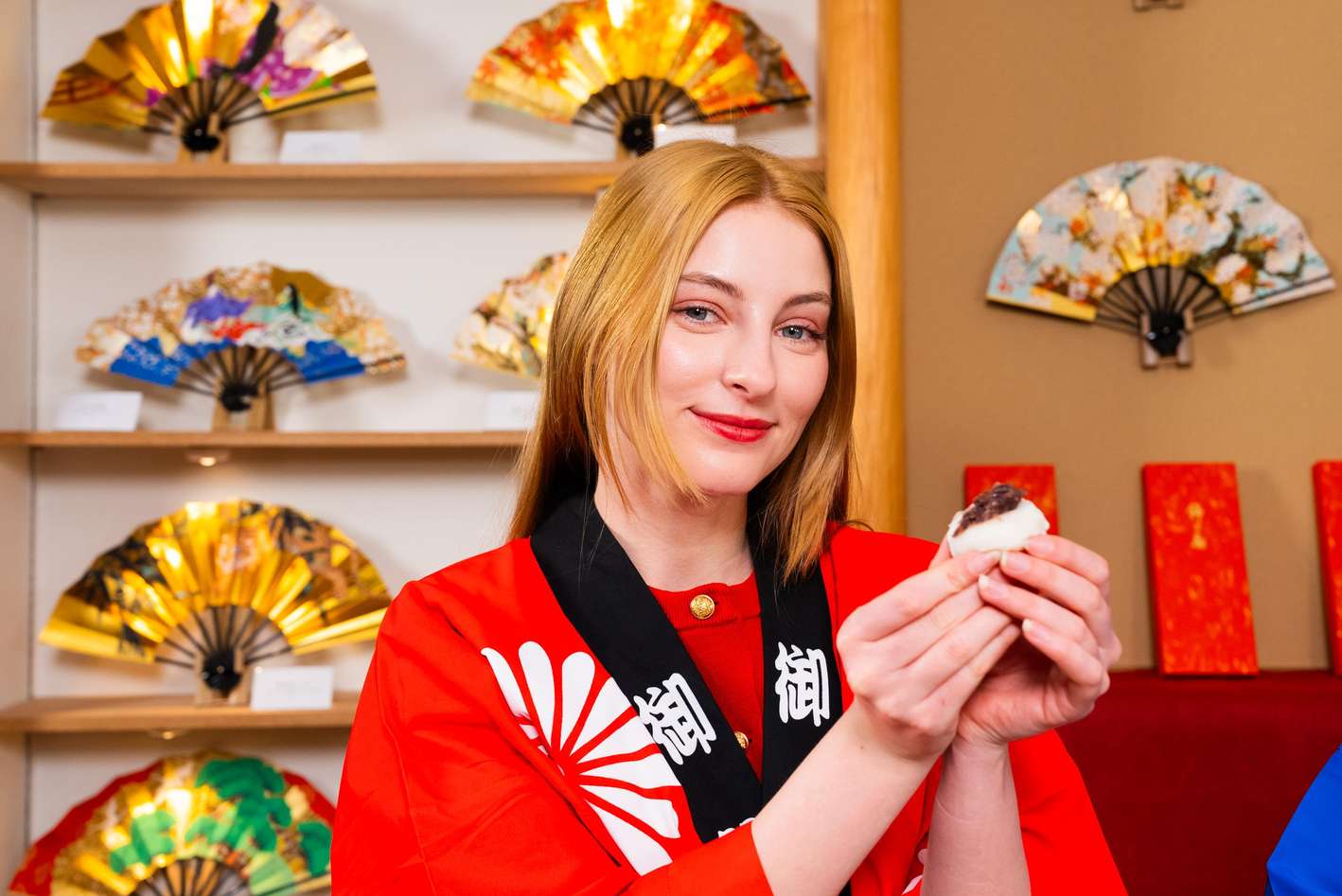
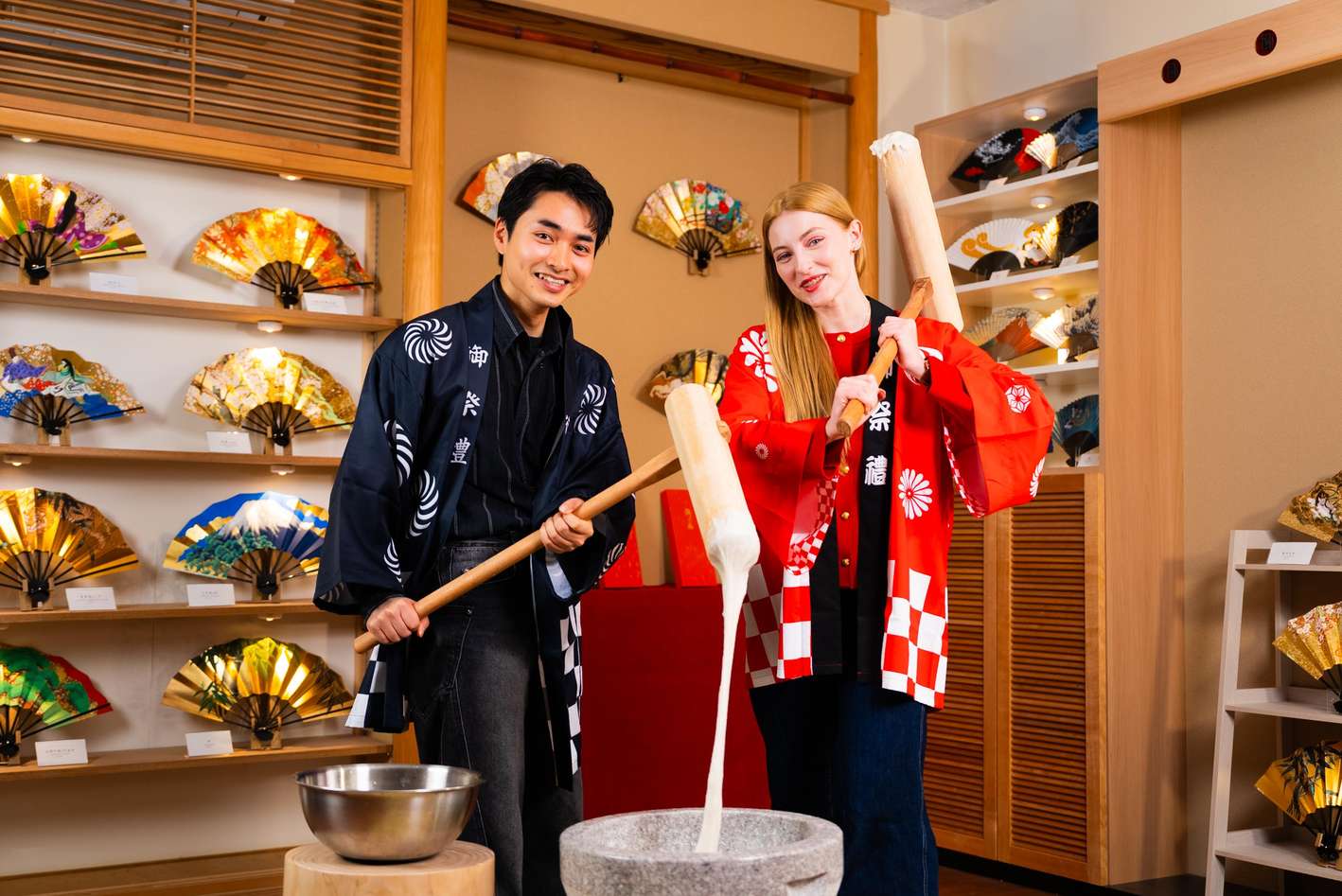
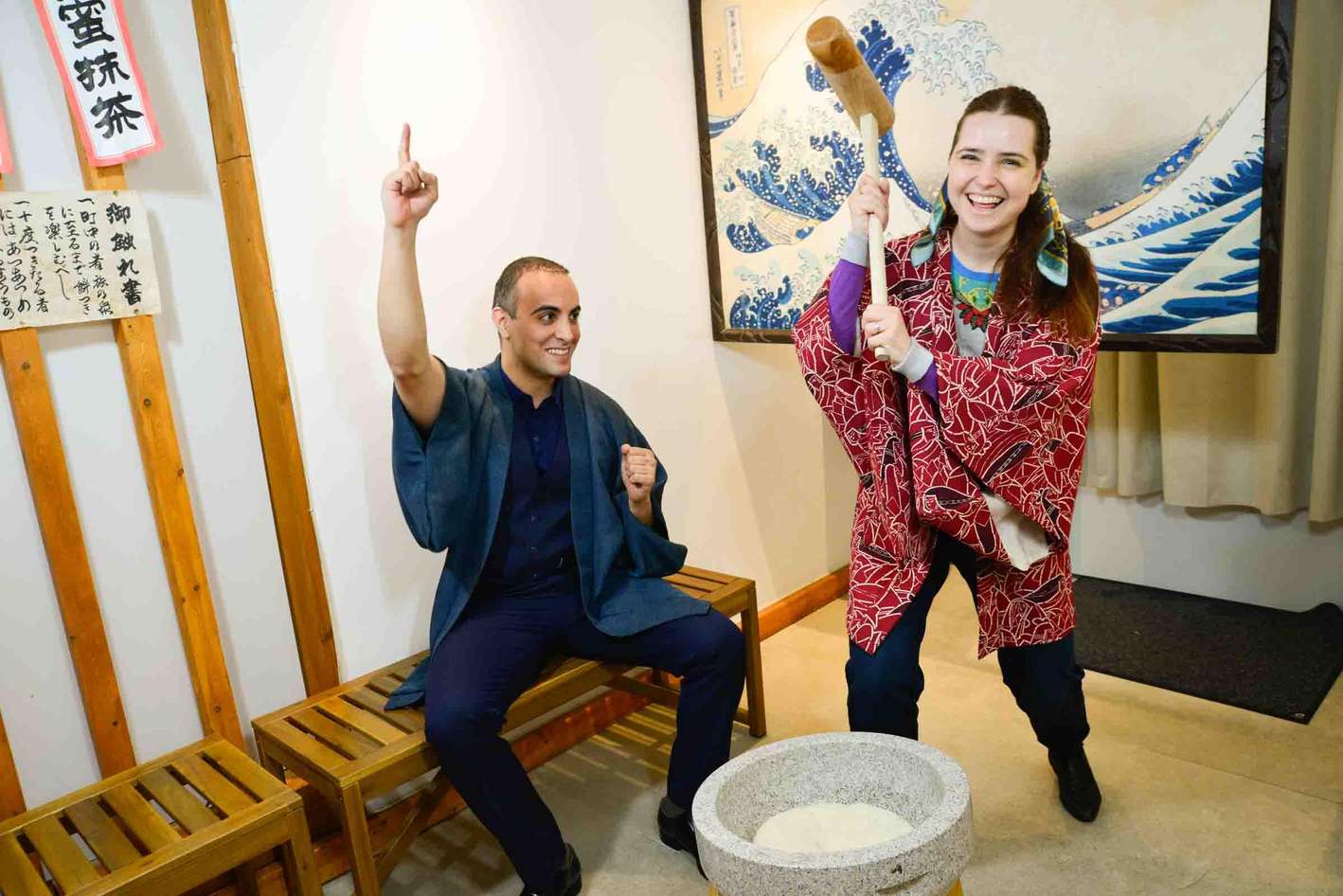
Book a mochi pounding workshop in Tokyo and lift the wooden kine yourself. Pound steamed rice in a stone usu, shout "Yoisho!" with every strike, and taste your warm mochi with ten sweet and savory toppings. Asakusa's wish-granting pounding puts the full ritual in your hands, no bullet train to Nara needed.
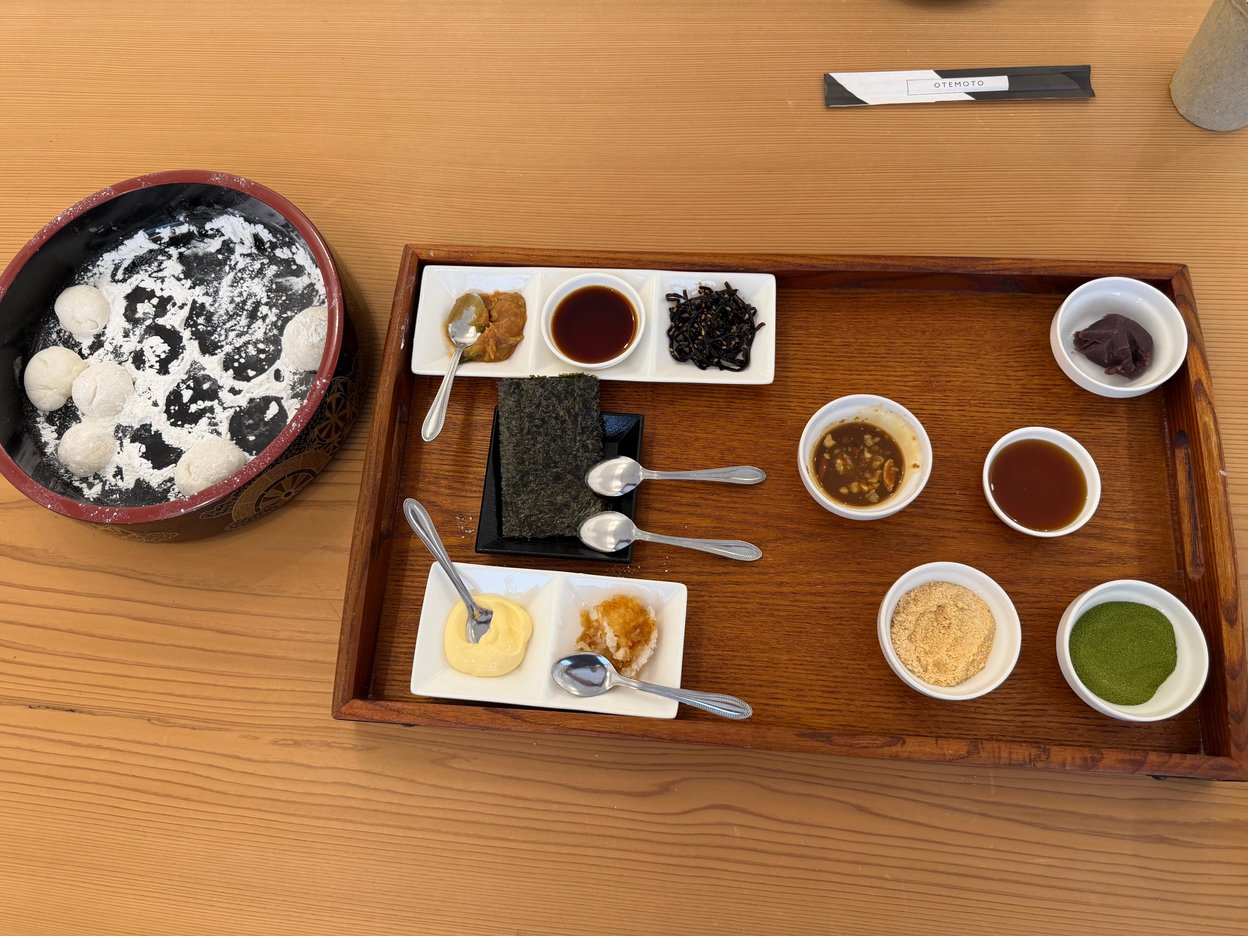
"Such a fun, eye-opening experience! Learned tons about mochi's history and how it's made. Our guides were super sweet and attentive. Tasting mochi we pounded ourselves was the best. Highly recommend!"
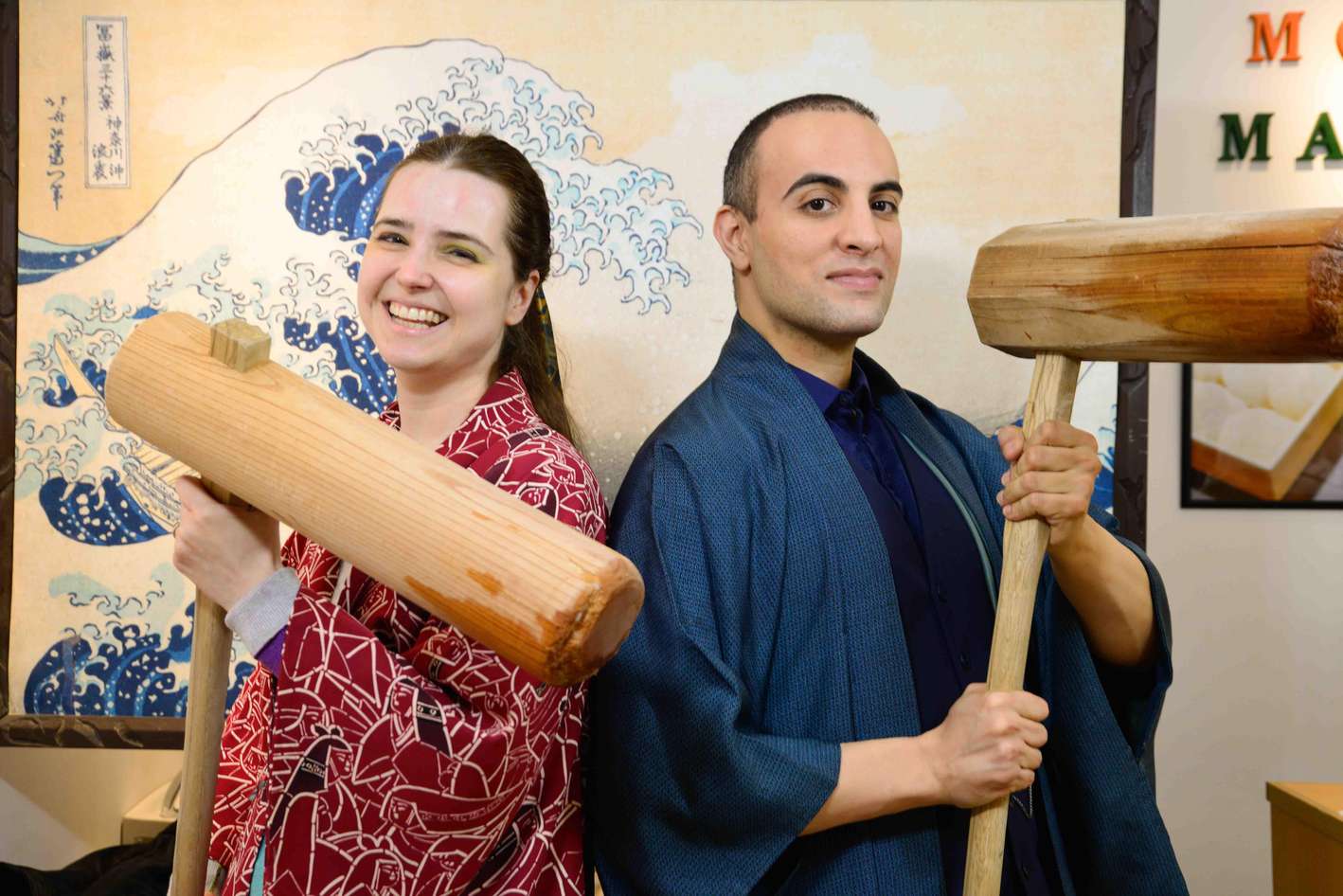
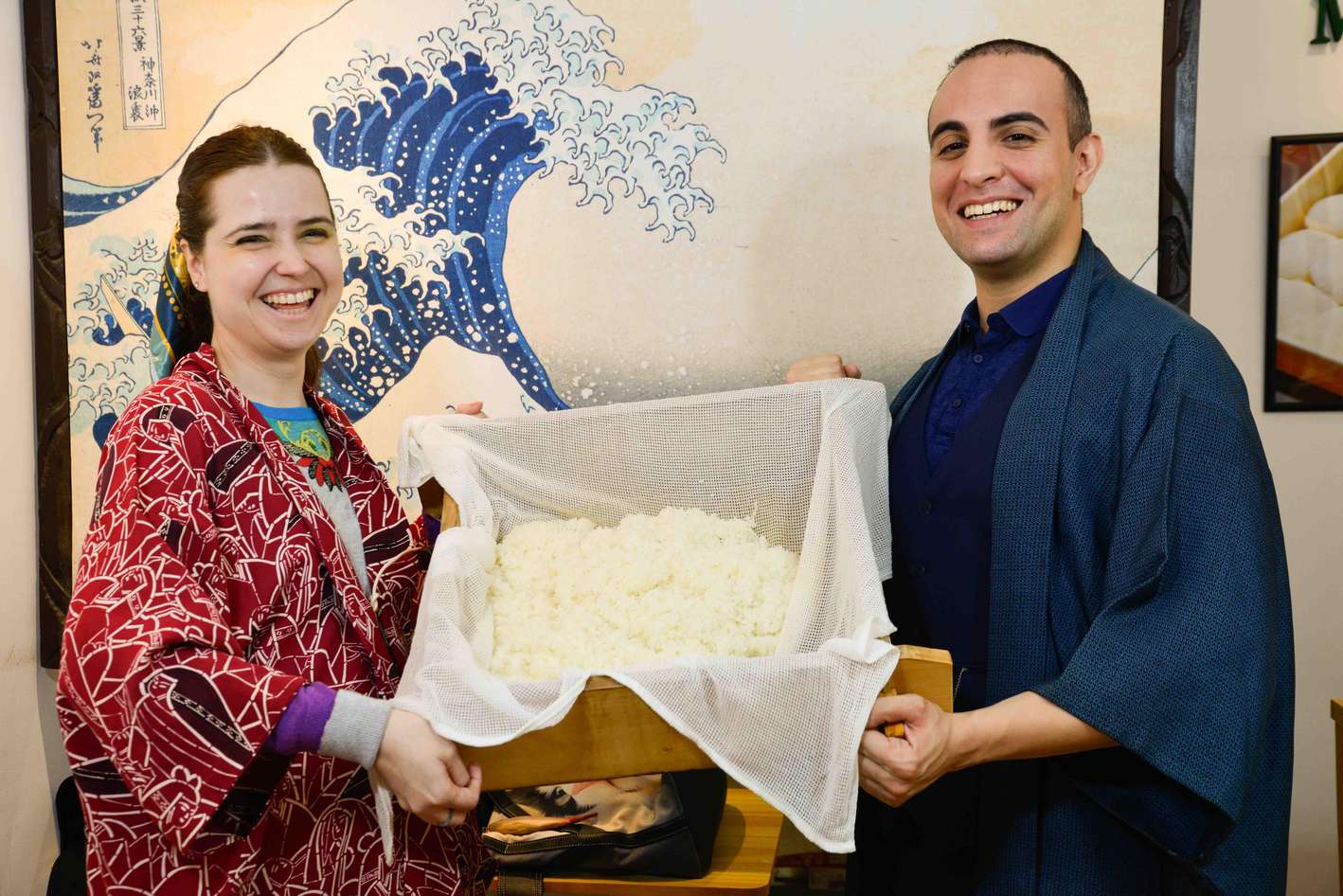
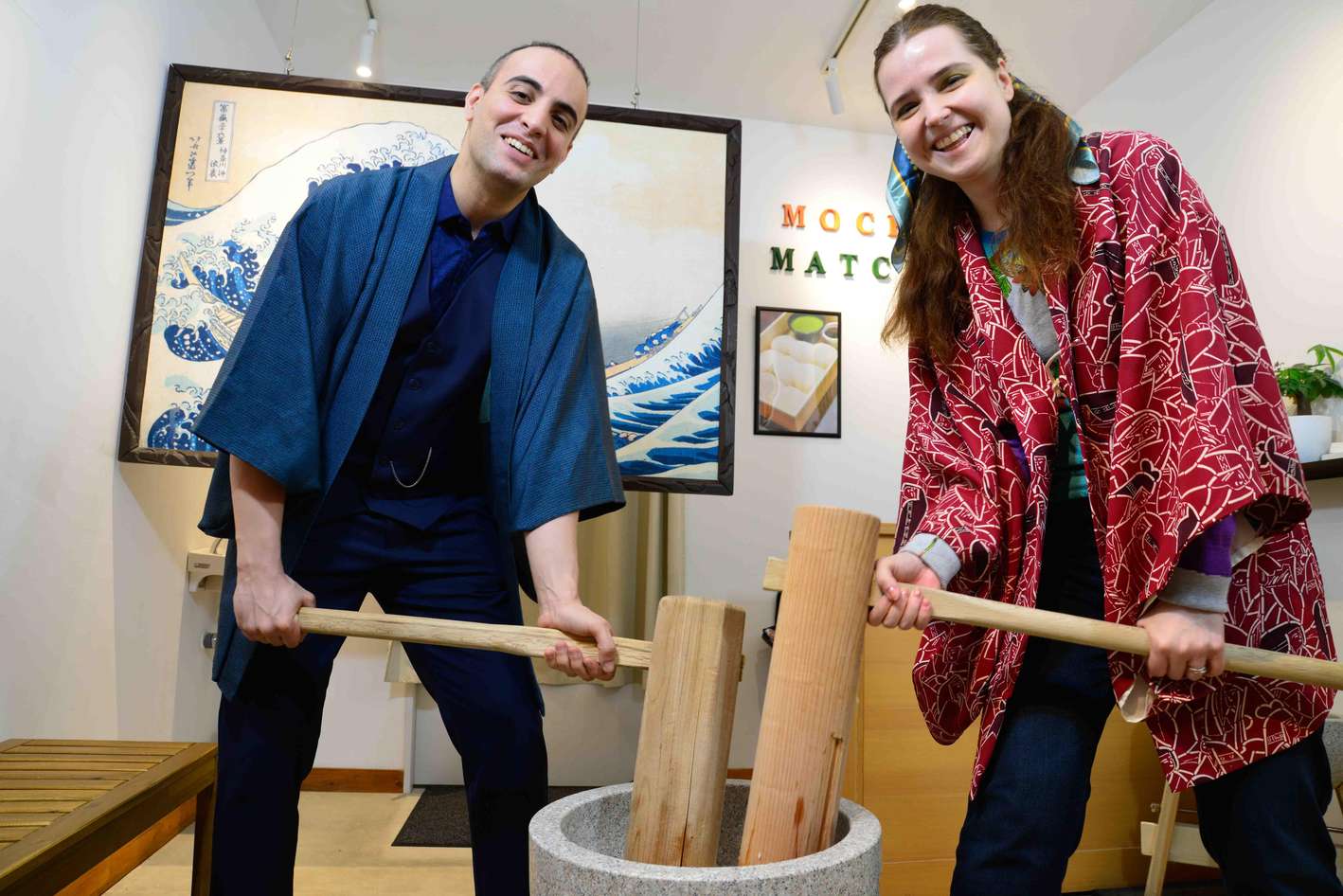
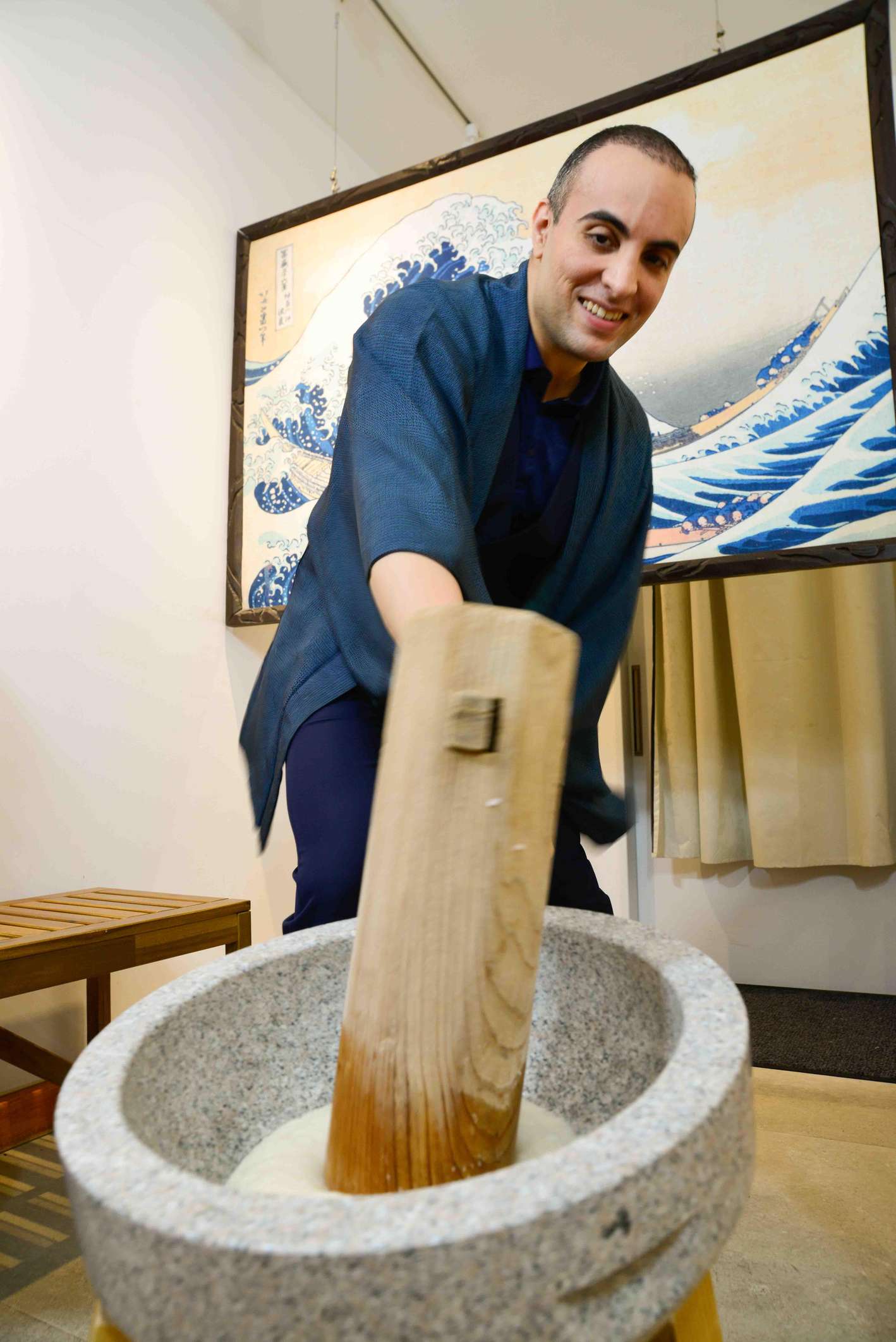
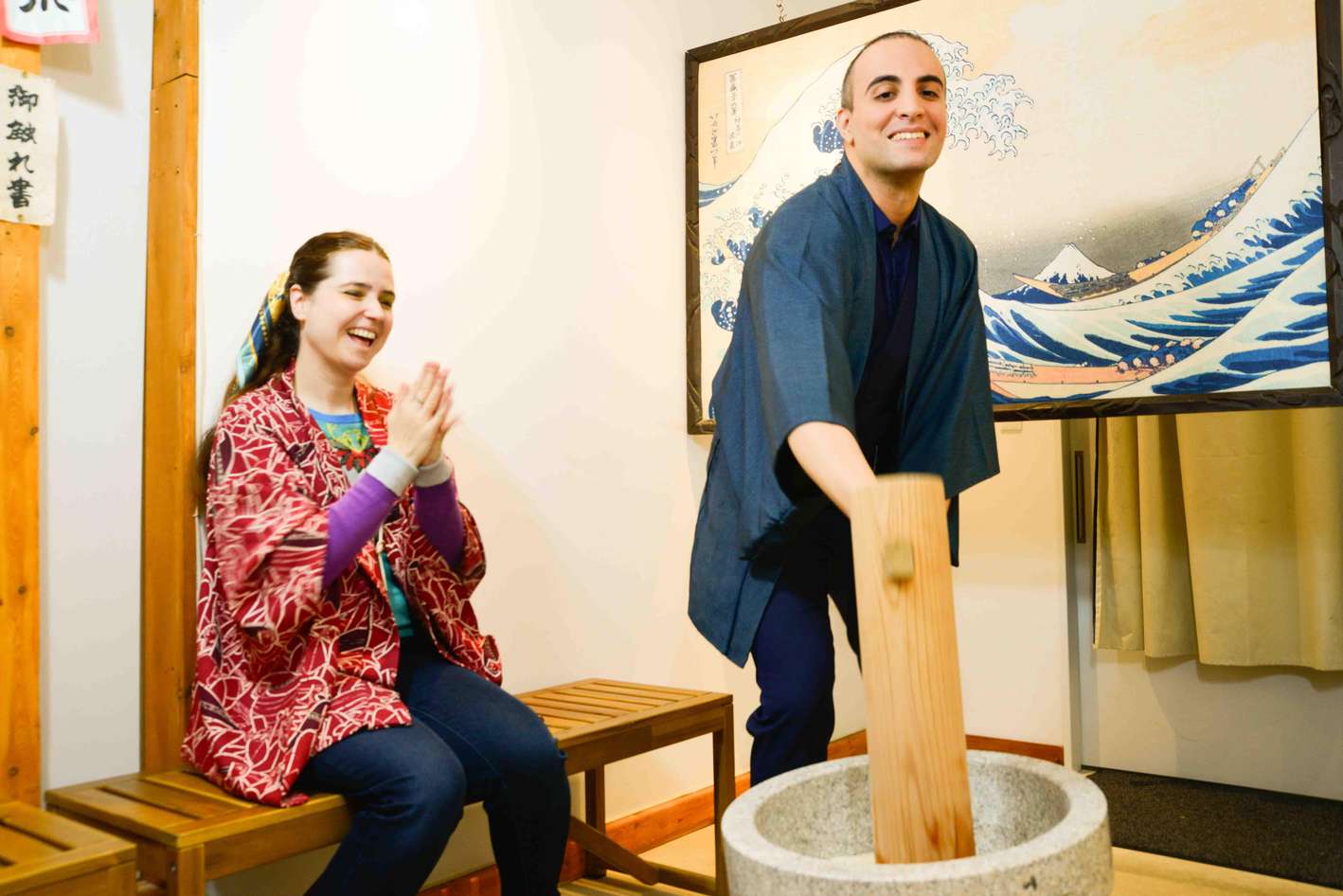
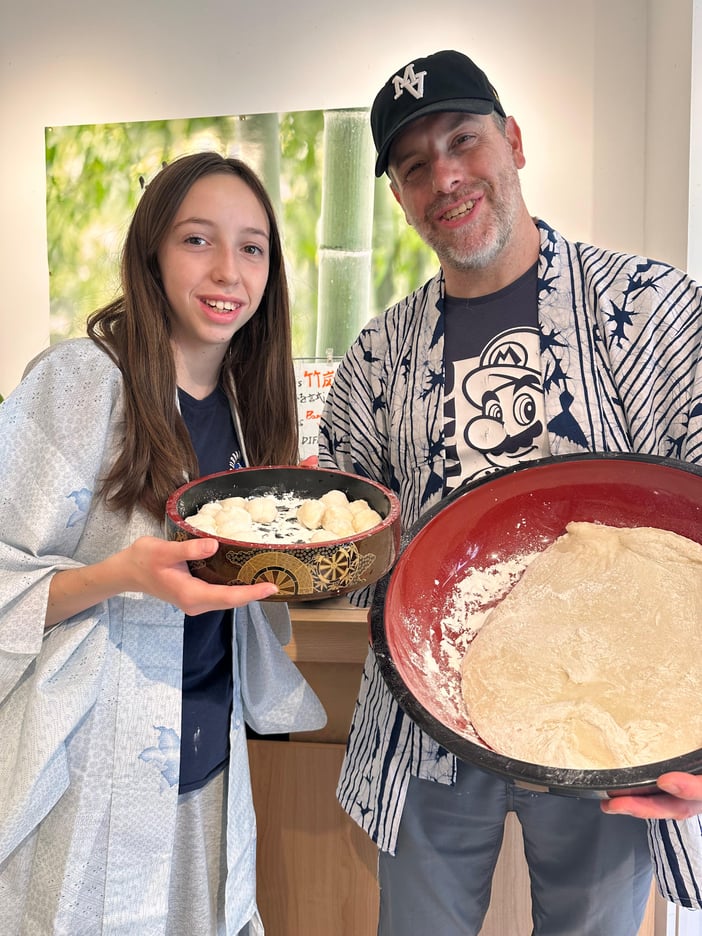
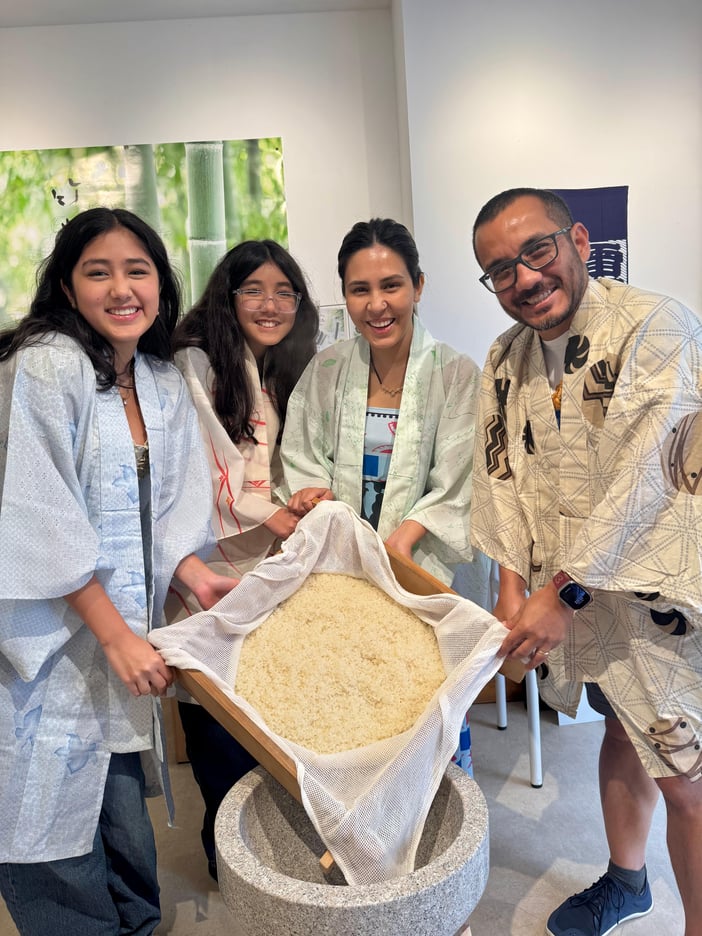
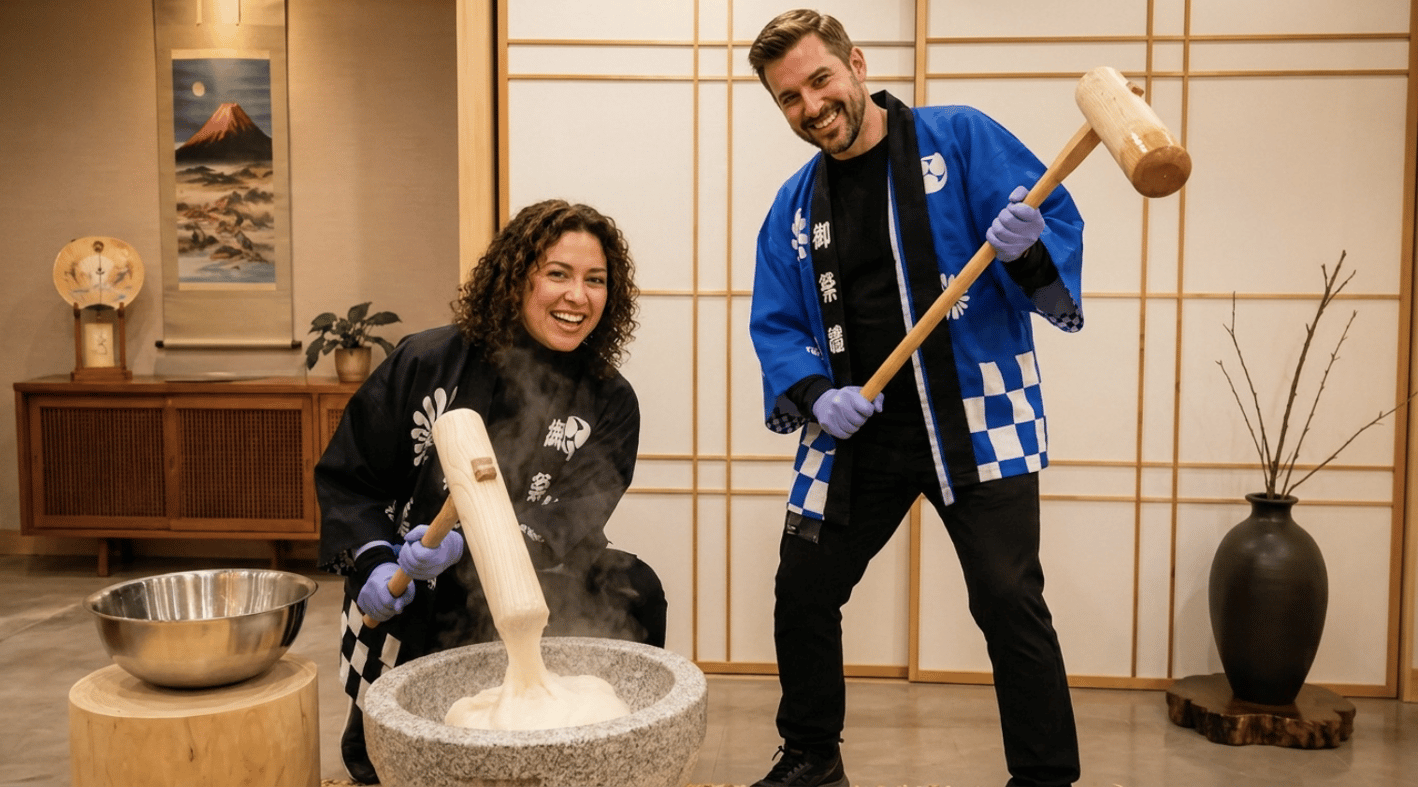
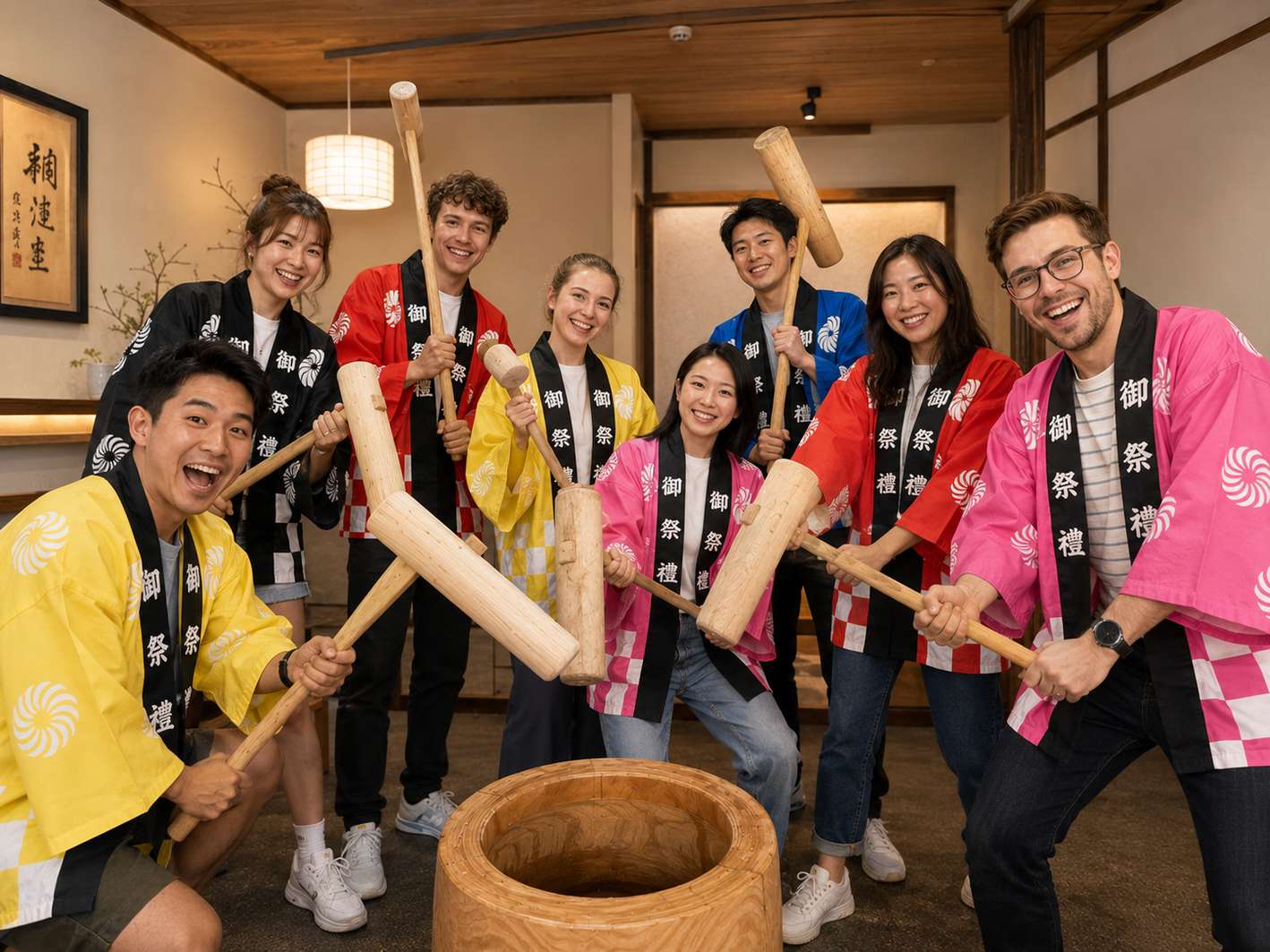
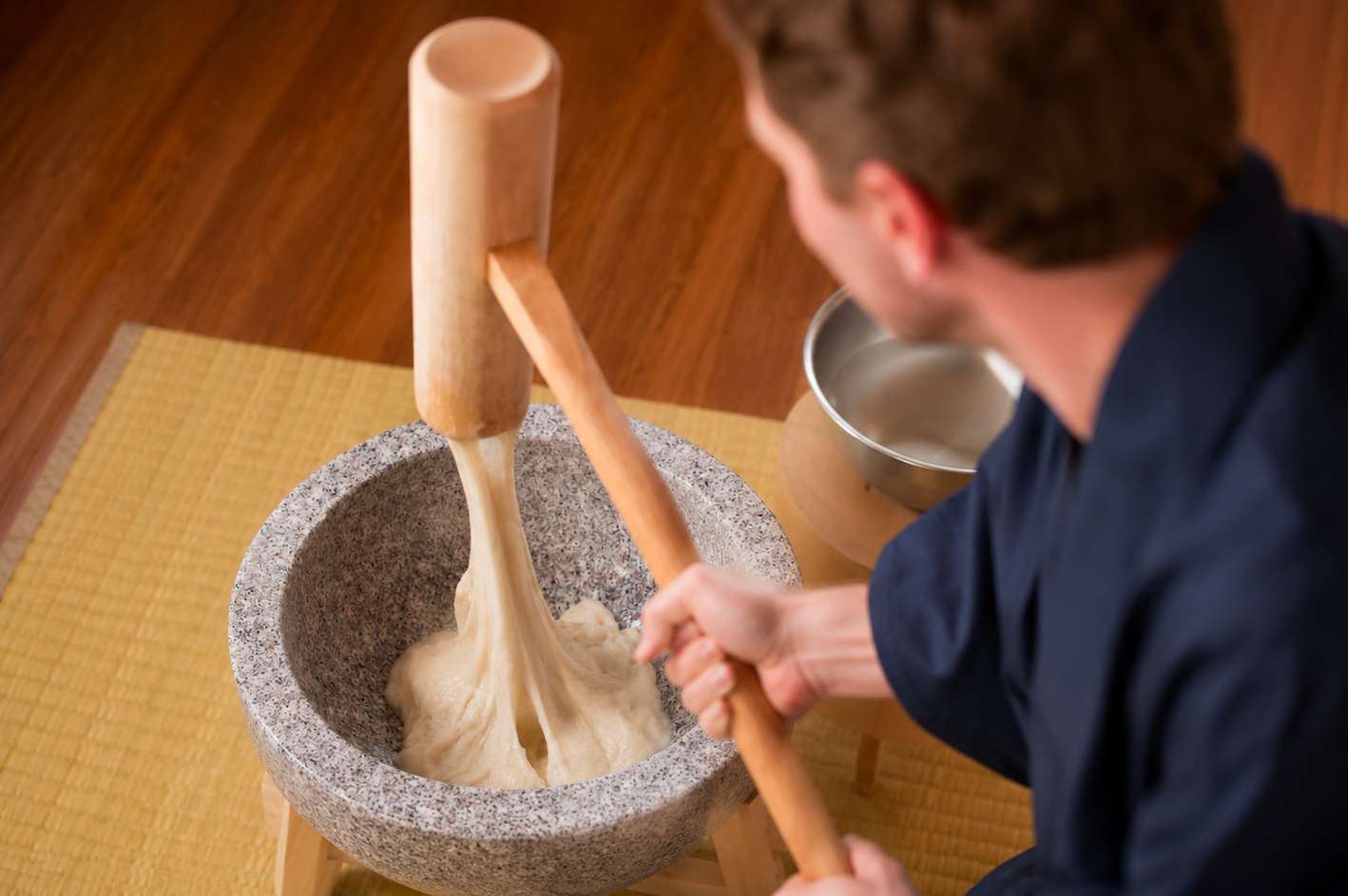
Tokyo's hands-on classes run about an hour and put you at the mortar, pounding steamed rice with a wooden kine.
Read the guideTokyo has few street-front pounding shops, so the reliable spectacles are scheduled shows with sumo wrestlers.
Read the guide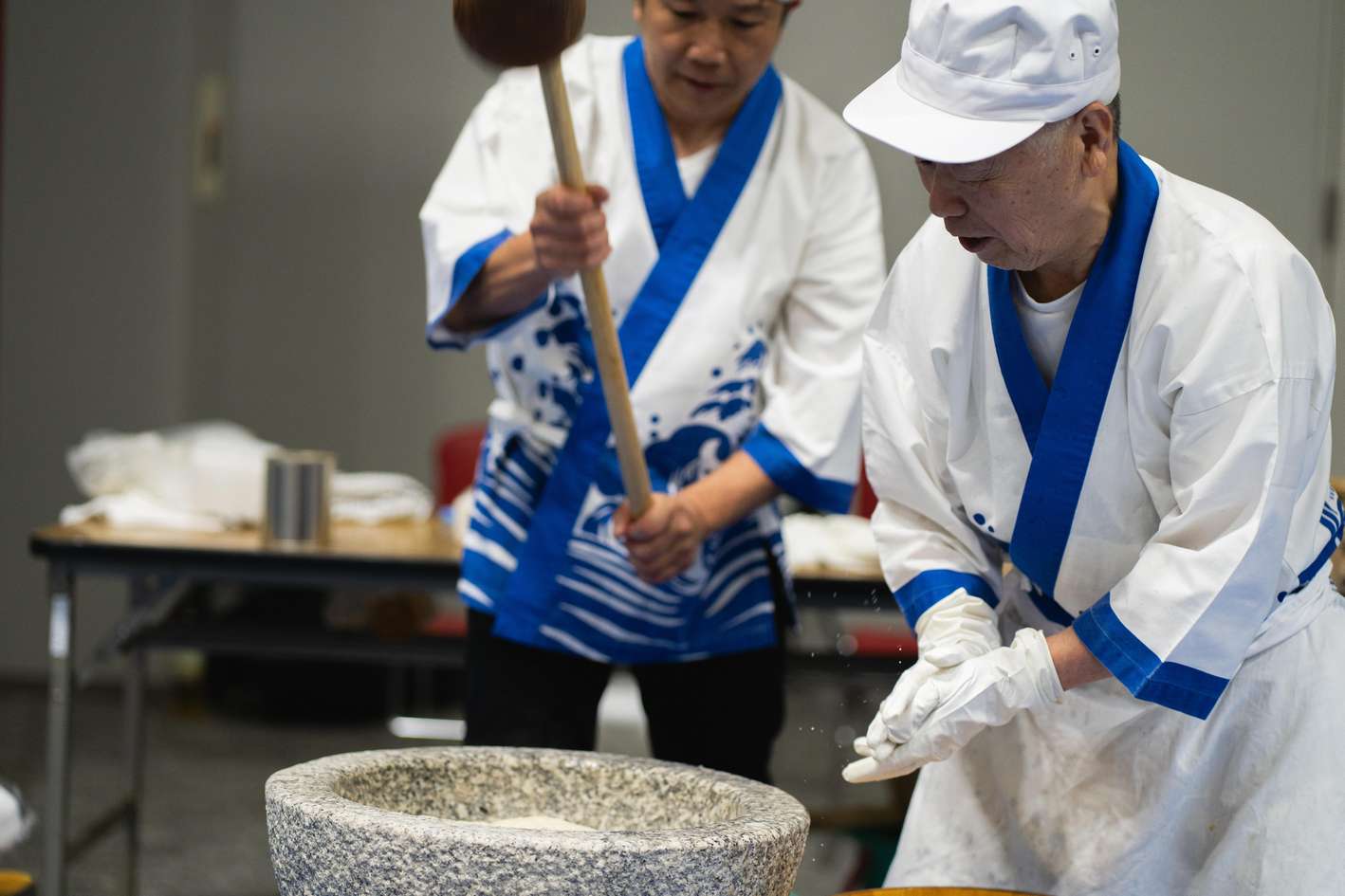
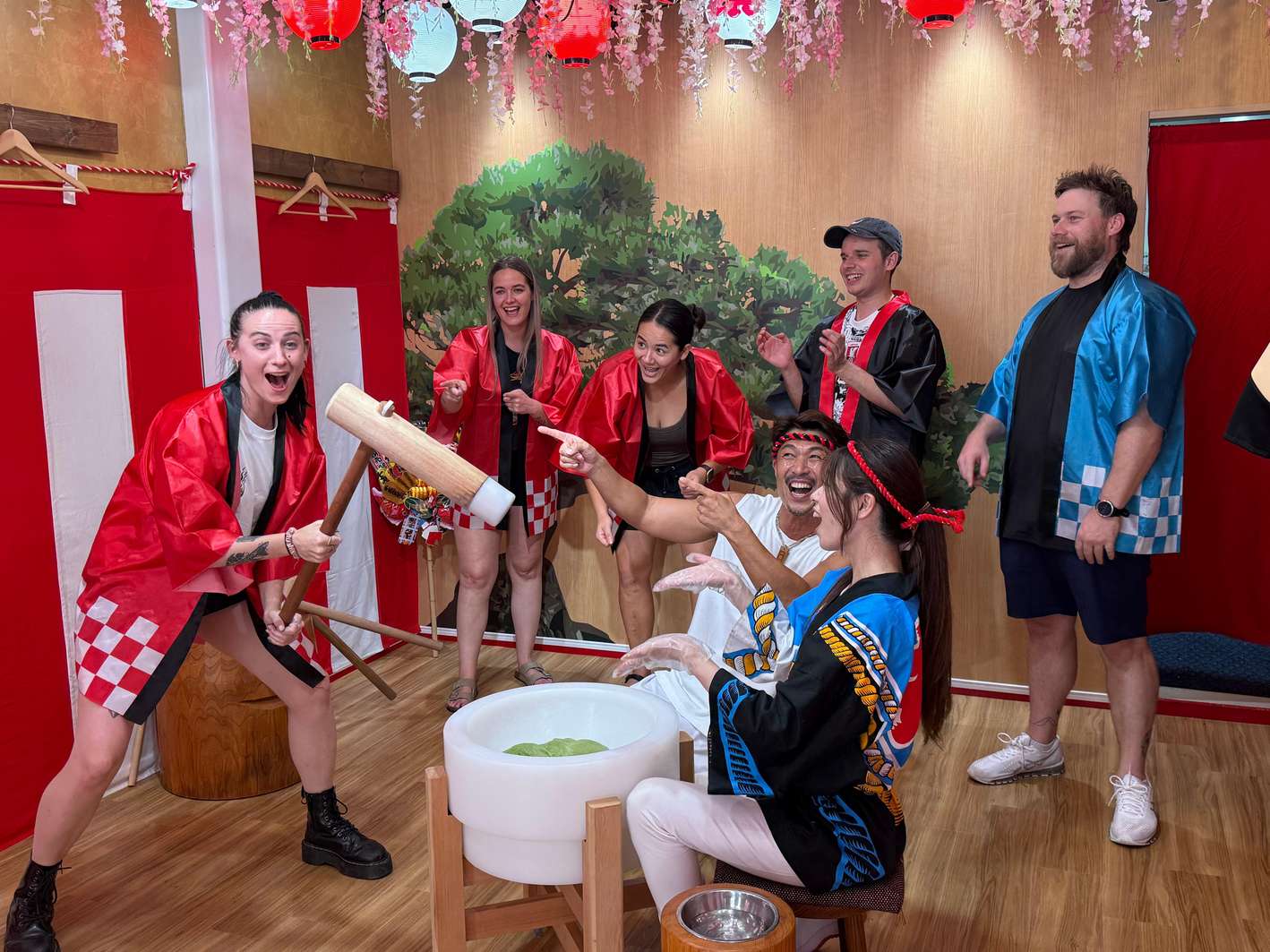
Tokyo workshops, Tokyo spectacles, and the Kansai shops that started it all, weighed against each other.
Reserve a one-hour session and swing the mallet yourself, in English.
The Asakusa studio sits five minutes on foot from Asakusa Station on the Ginza Line, so you can slot a class between Senso-ji and lunch.
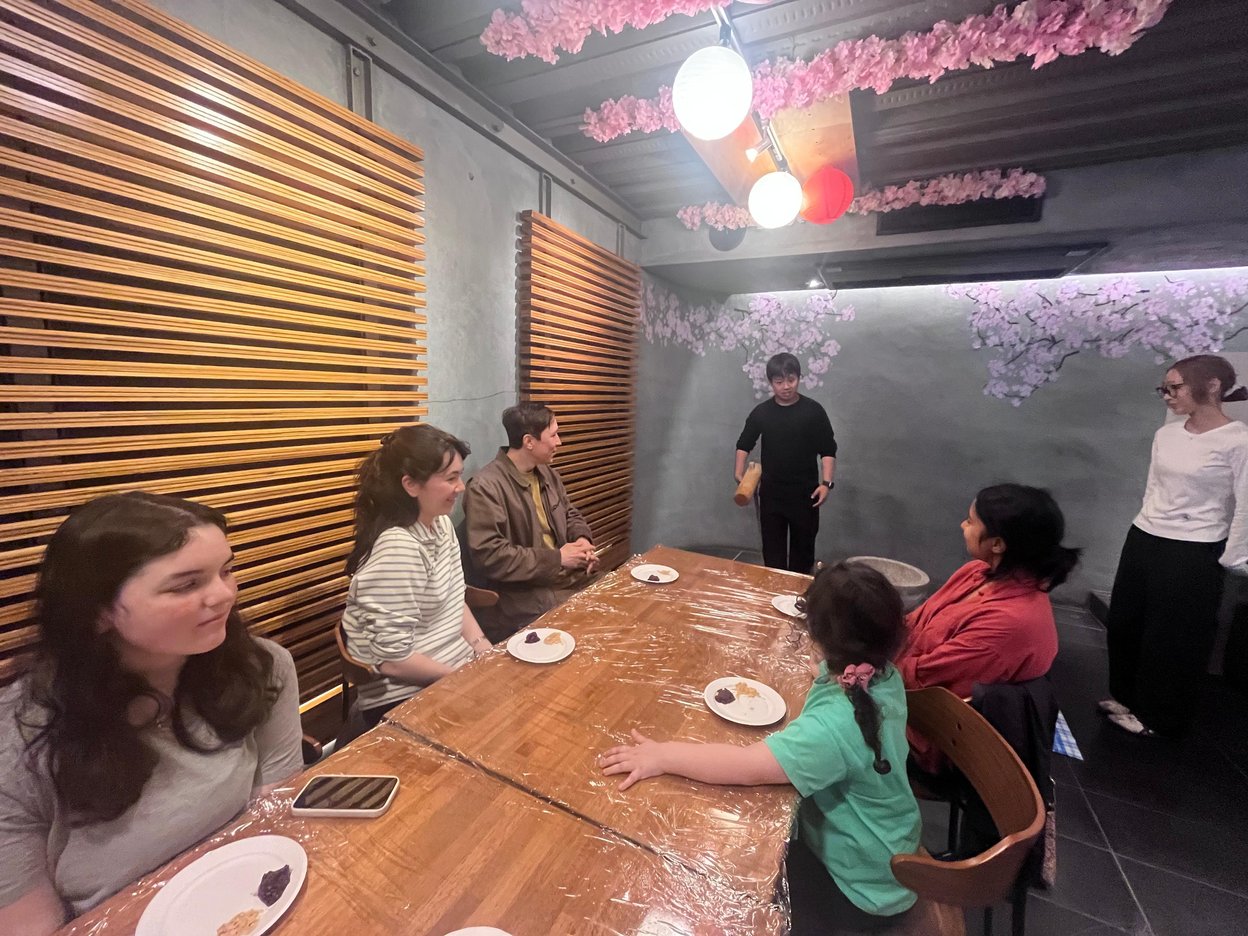
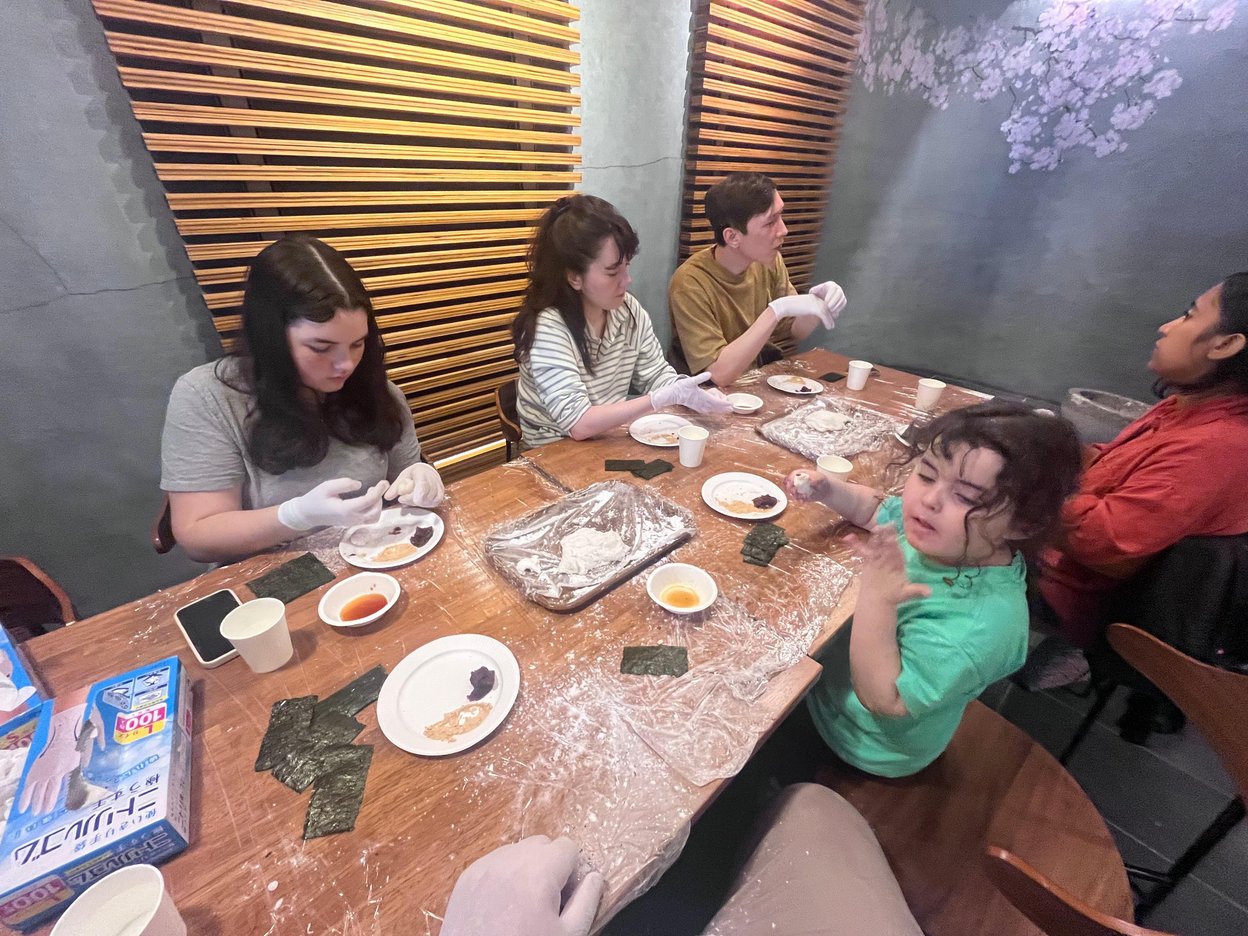
You knead the steamed glutinous rice by hand, pound it with the mallet, then cut and shape your own mochi. Nothing here is watched from the sidelines; observation-only entry is not allowed, so every person in the room signs up to join.
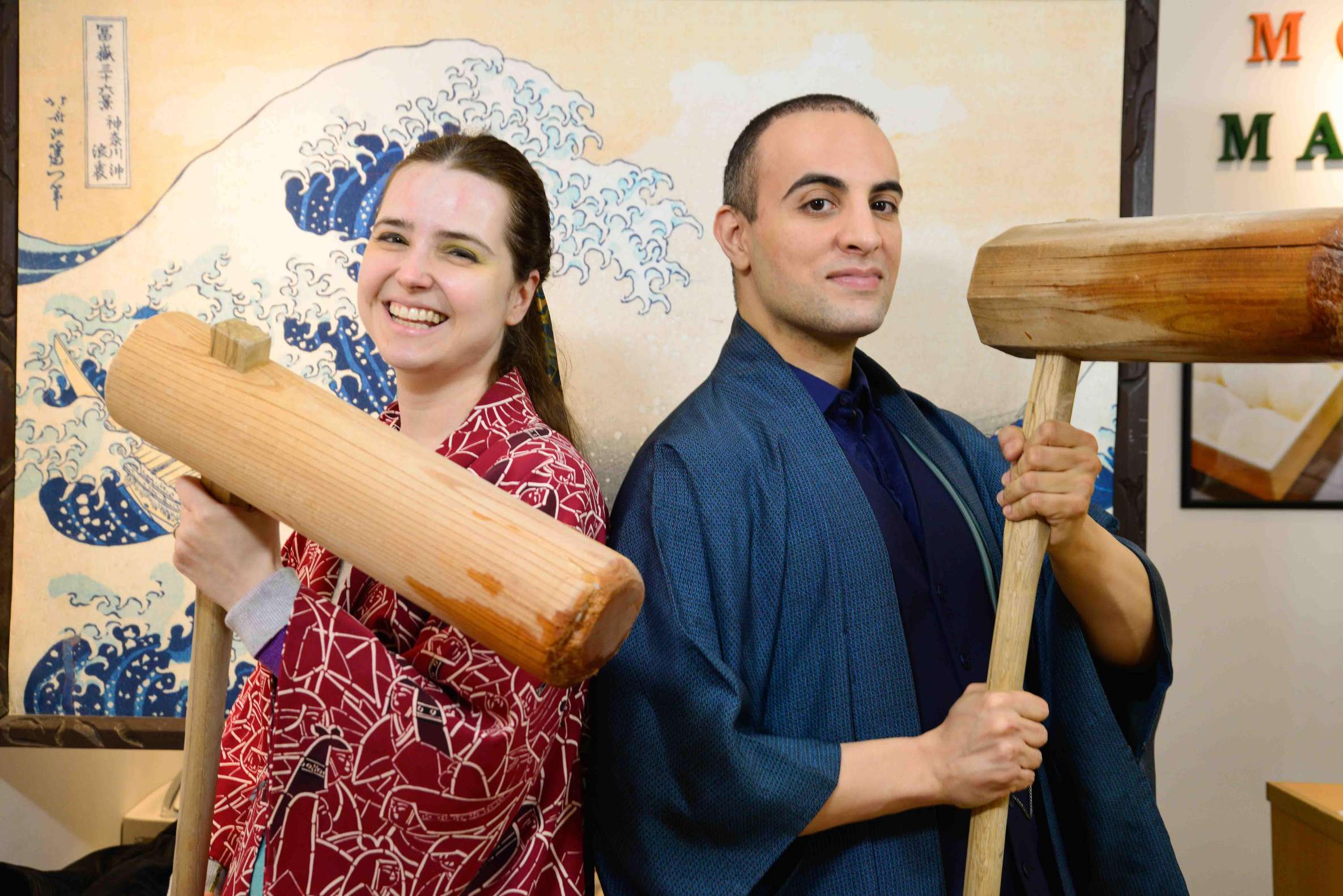
Plan on about an hour from start to tasting. Wear clothes you can move in and shoes you can slip off at the door, since indoor venues follow Japanese footwear etiquette. A happi coat usually goes over your clothes, and instructors explain each step in English for beginners.
Sumo wrestlers pound the mochi on a fixed daily schedule you can plan around.
The viral high-speed pounding you have seen online belongs to a Nara storefront, and Tokyo has nothing quite like it. What the city does have is schedule you can trust.
On the fifth floor of Tokyo Tower, a sumo entertainment show runs four times daily at 11 am, 2 pm, 5 pm and 8 pm, and the wrestlers pound mochi as part of it.
In Ryogoku, a sumo experience runs daily sessions from 11 am to 1 pm, 2:30 pm to 4:30 pm and 6 pm to 8 pm, with former wrestlers pounding and guests welcome to try.
Both venues hand you warm mochi to eat afterward. Book ahead for either; locals agree that an organized booking beats hunting for a street stall that is not there.
The high-speed storefront pounding from the viral videos stands in Nara. Tokyo plays the same tradition indoors, in booked studios, at sumo shows and at shops that sell out by mid-afternoon, and each route needs a different plan.
The famous high-speed street show is in Nara; Tokyo's mochi pounding happens in booked studio classes in Asakusa and Shibuya.
Hands-on workshops run about one hour and are the only way into most studios, since observation-only entry is not allowed.
Sumo wrestlers pound mochi on dependable schedules at Tokyo Tower and in Ryogoku, and winter shrine festivals often hand mochi out free.
Many artisan mochi shops are cash only and sell out by early afternoon, so go in the morning.
Eat freshly pounded mochi in small bites with tea nearby, and finish any takeaway the same day.
Book a workshop in advance, and if you have a food allergy, tell the studio when you reserve. A shared kitchen can carry traces of soy or sesame even when the menu itself is plant-based.
The storefront you have seen online, where a mallet blurs into a mortar and the crowd three rows deep can barely see, stands in Nara. Tokyo has no permanent equivalent, and travelers who go looking for one come back empty-handed.
Tokyo keeps the real thing behind closed doors. Studio classes in Asakusa and Shibuya let you knead steamed glutinous rice by hand, pound it with a wooden mallet in a stone mortar, then cut and shape what you made.
Sumo wrestlers pound mochi on stage at Tokyo Tower and in Ryogoku, and each January shrines and hotels hold mochitsuki events.
So the spectacle looks different here. Nobody wanders past a window and watches. You book, you join, and most people find that an upgrade: warm mochi you made yourself beats a two-minute show you watch from behind someone's phone.
It does not; travelers say the only reliable route is a booked workshop
Observation-only entry is not permitted, so every person in the room joins in
They keep the rhythm between partners and wet the dough so it does not stick
Those three beliefs send people wandering the wrong streets all afternoon. Drop them and the day works: one booking made ahead of your date, one morning for the shops, and the tradition is yours without a train ticket to Kansai.
Hands-on workshops come first, and not by sentiment. You knead the rice, swing the mallet, shout with every strike, then cut and shape the mochi you eat. Nothing else in the city comes close on participation, and the whole thing fits inside an hour.
Scheduled shows rank second. At Tokyo Tower and in Ryogoku, sumo wrestlers pound mochi as part of a show you can plan an afternoon around, and guests are usually welcome to try a swing.
Shrine festivals in winter add free mochi and a line to wait in. Both suit travelers who want to watch, maybe join in once, and move on.
Wagashi shops rank third as spectacle but first as shopping. Artisans work behind the counter; you buy, you do not pound. The trade-off is timing, because some shops close when the day's batch is gone.
| Swing the mallet | Booking vs walk-in | Neighborhood or venue | |
|---|---|---|---|
| Hands-on workshops | Yes, pound and shape | not known | Asakusa, Shibuya studios |
| Shows and festivals | Watch, may join in | Walk-in shows, fixed times | Tokyo Tower, Ryogoku, shrines |
| Wagashi shops | No, artisans behind counter | Walk in, sold out by 2 pm. | Asakusa, Bunkyo, Ueno |
Match the option to how much you want to lift: a mallet, a camera, or a paper bag of daifuku.
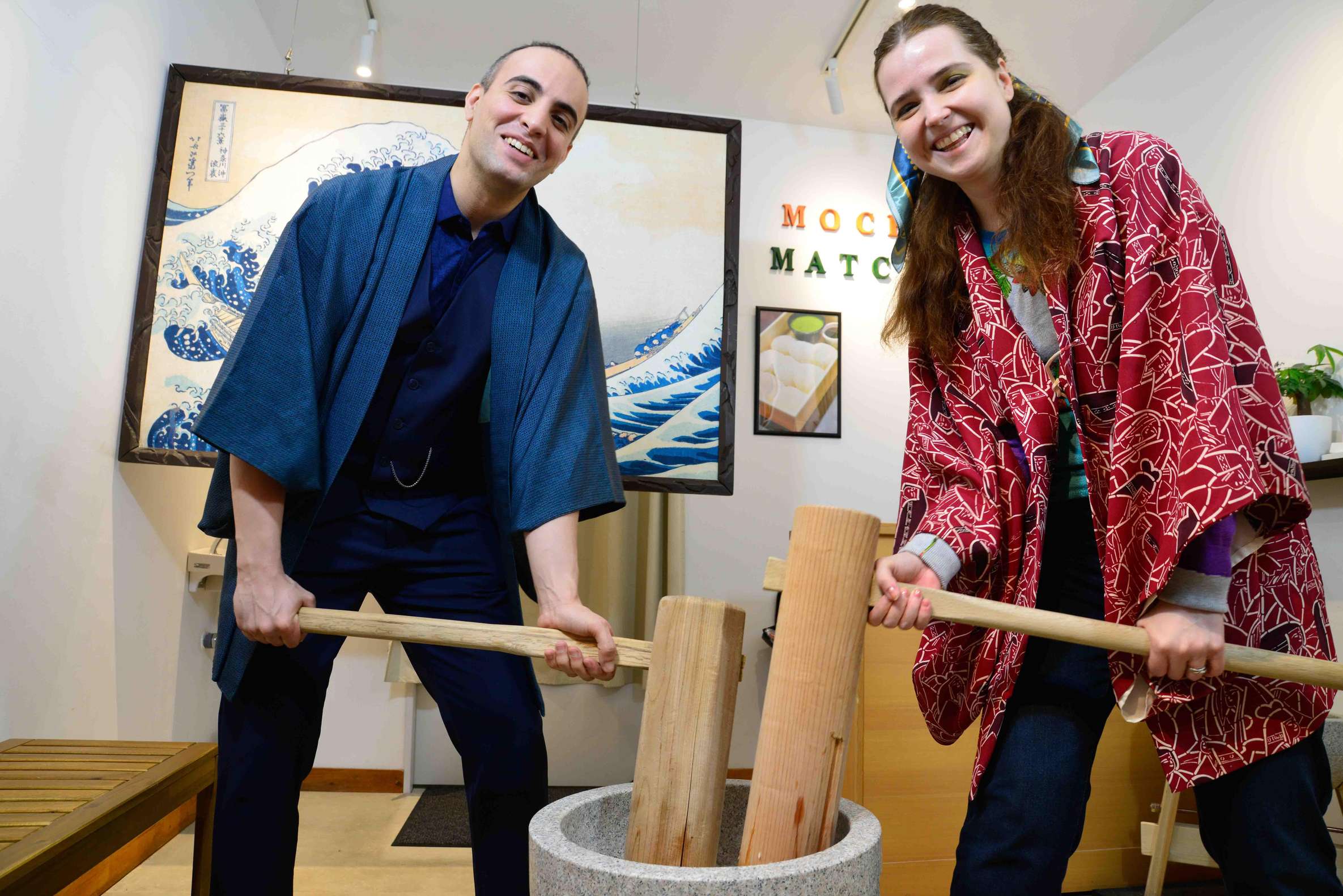
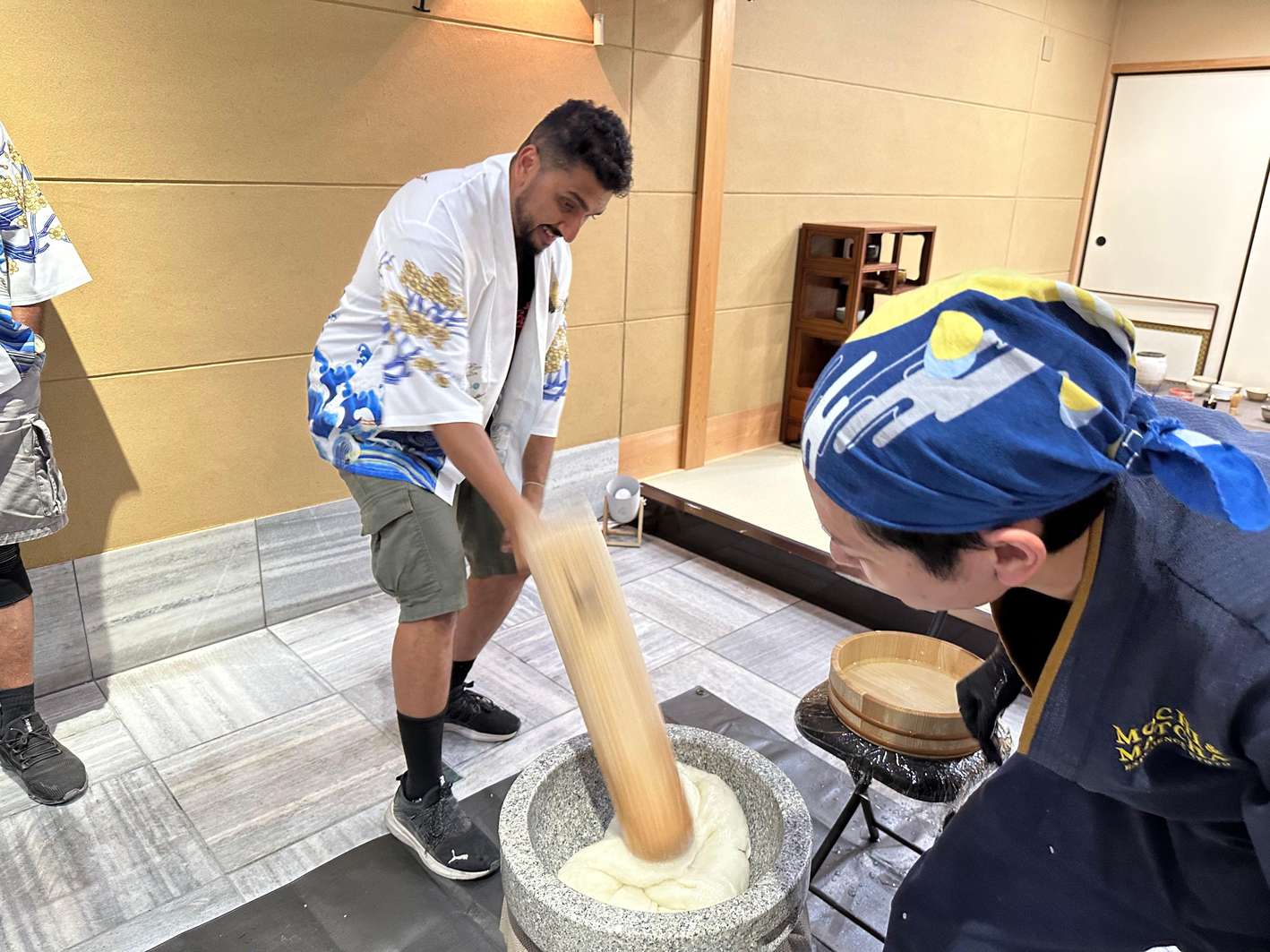
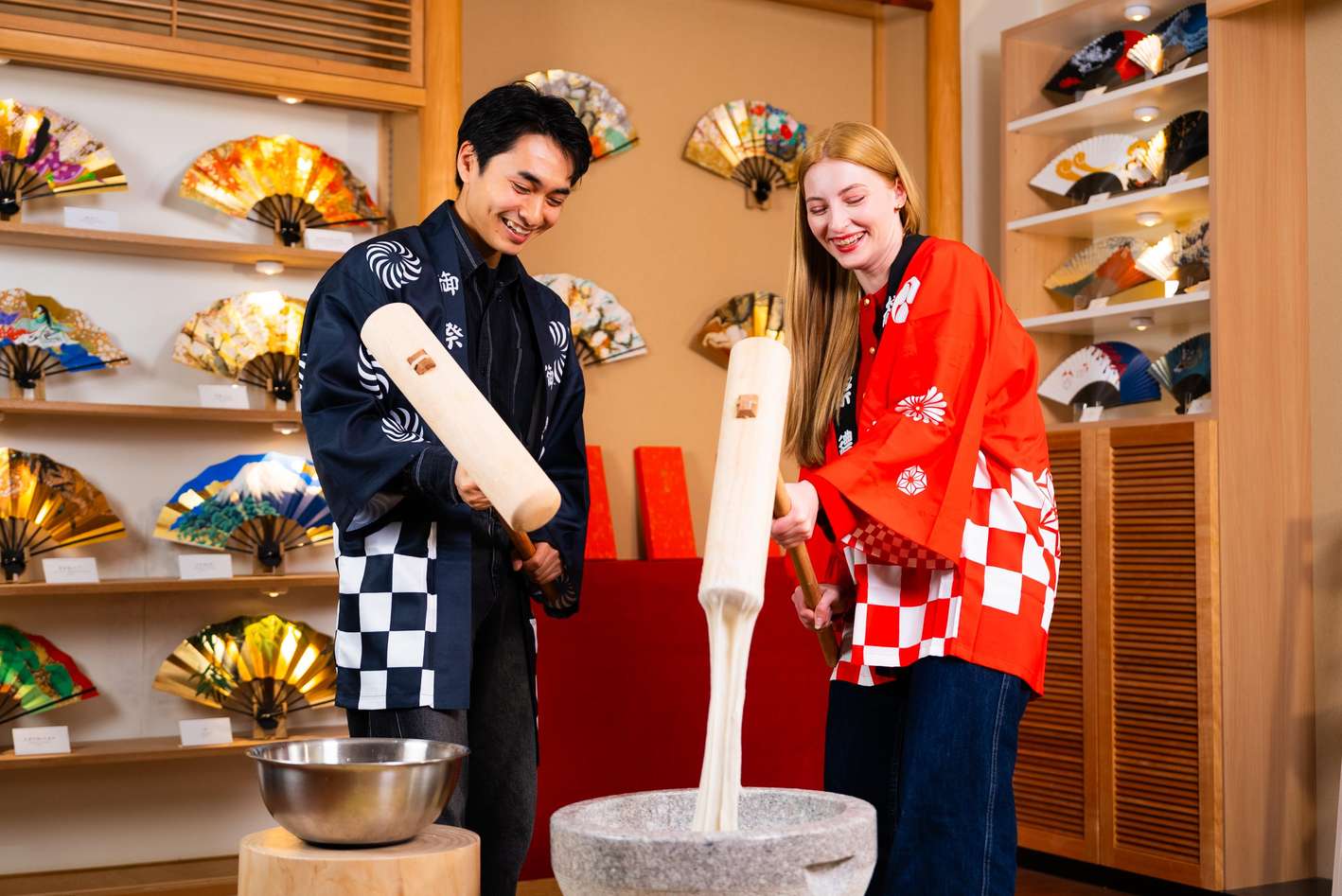
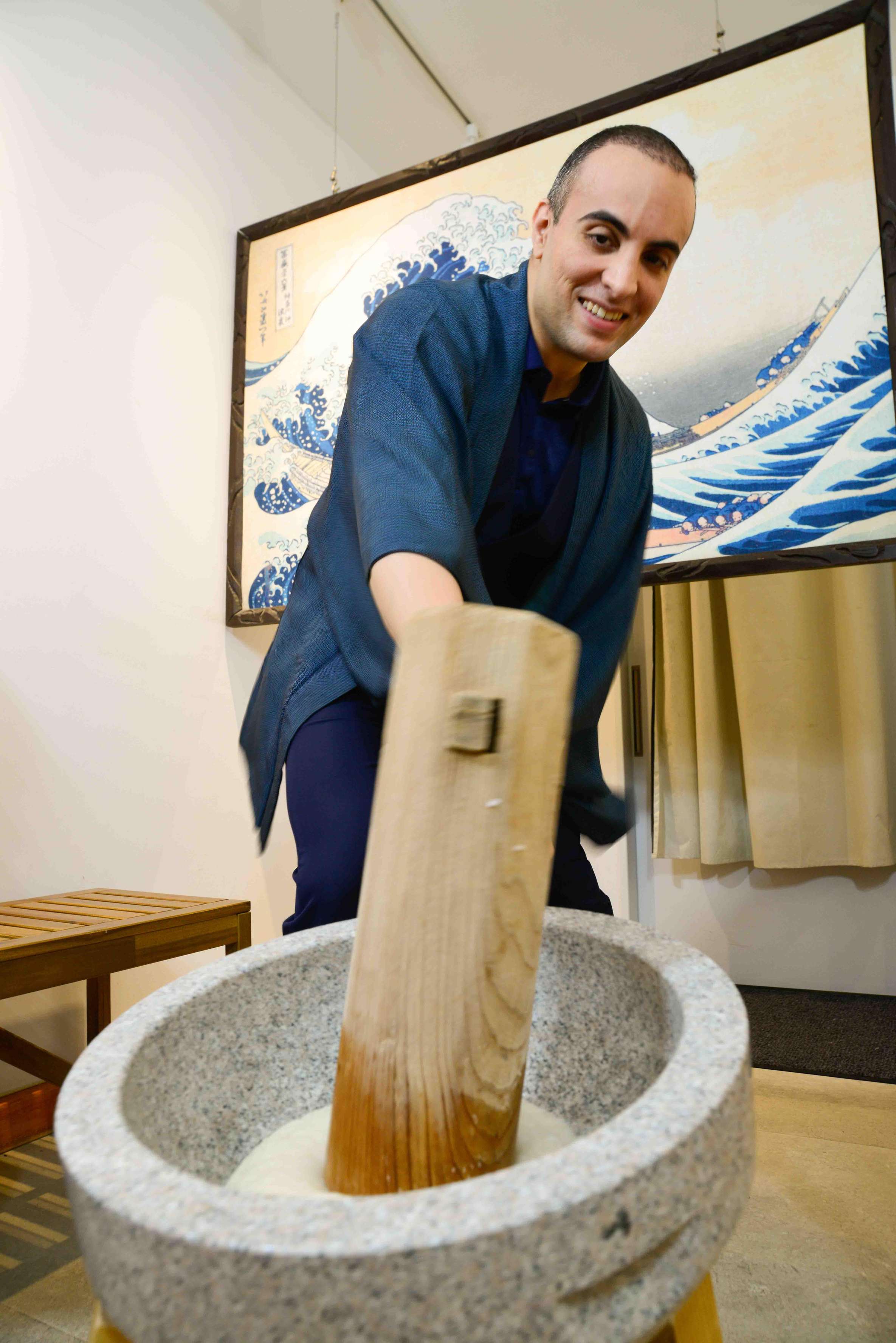
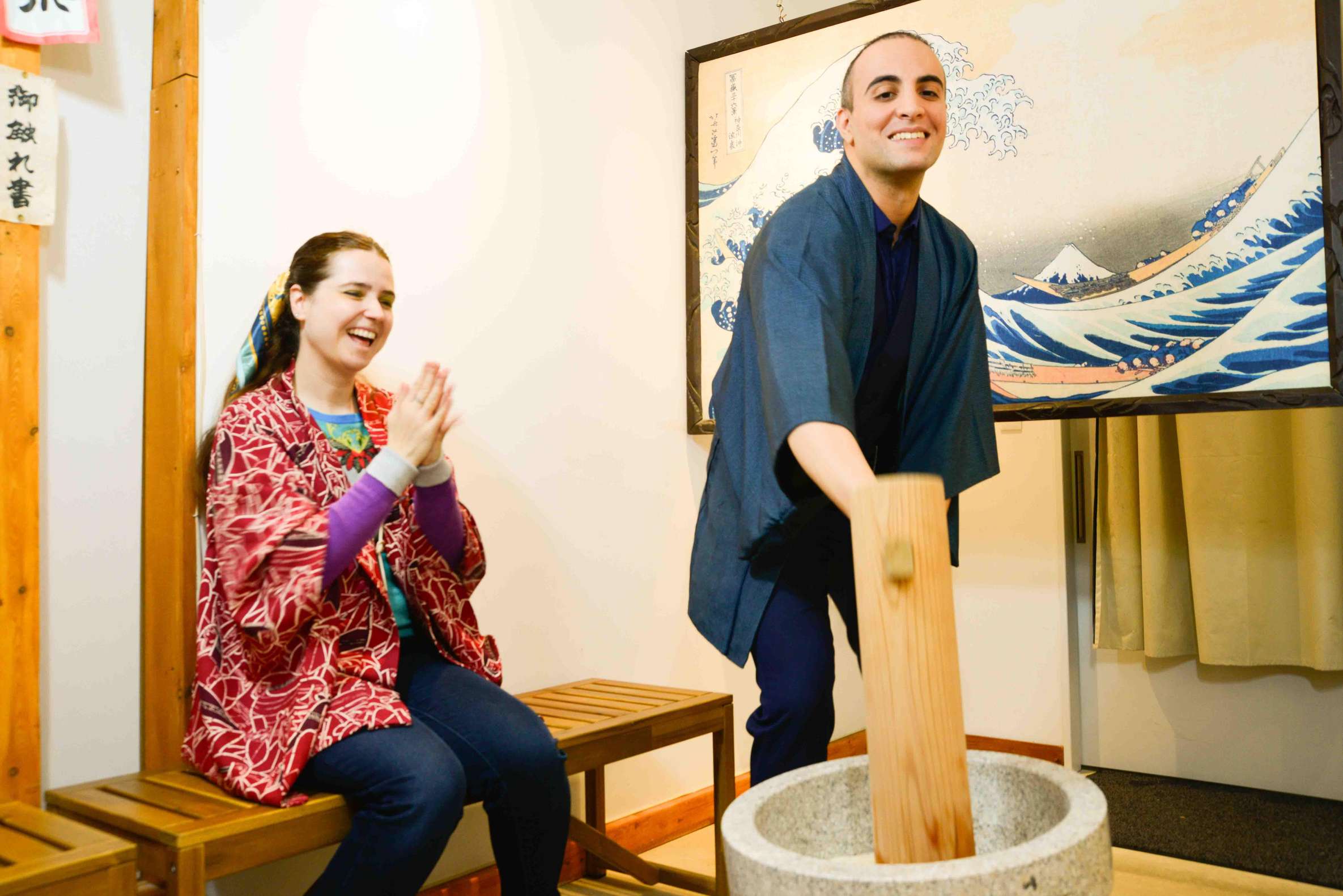
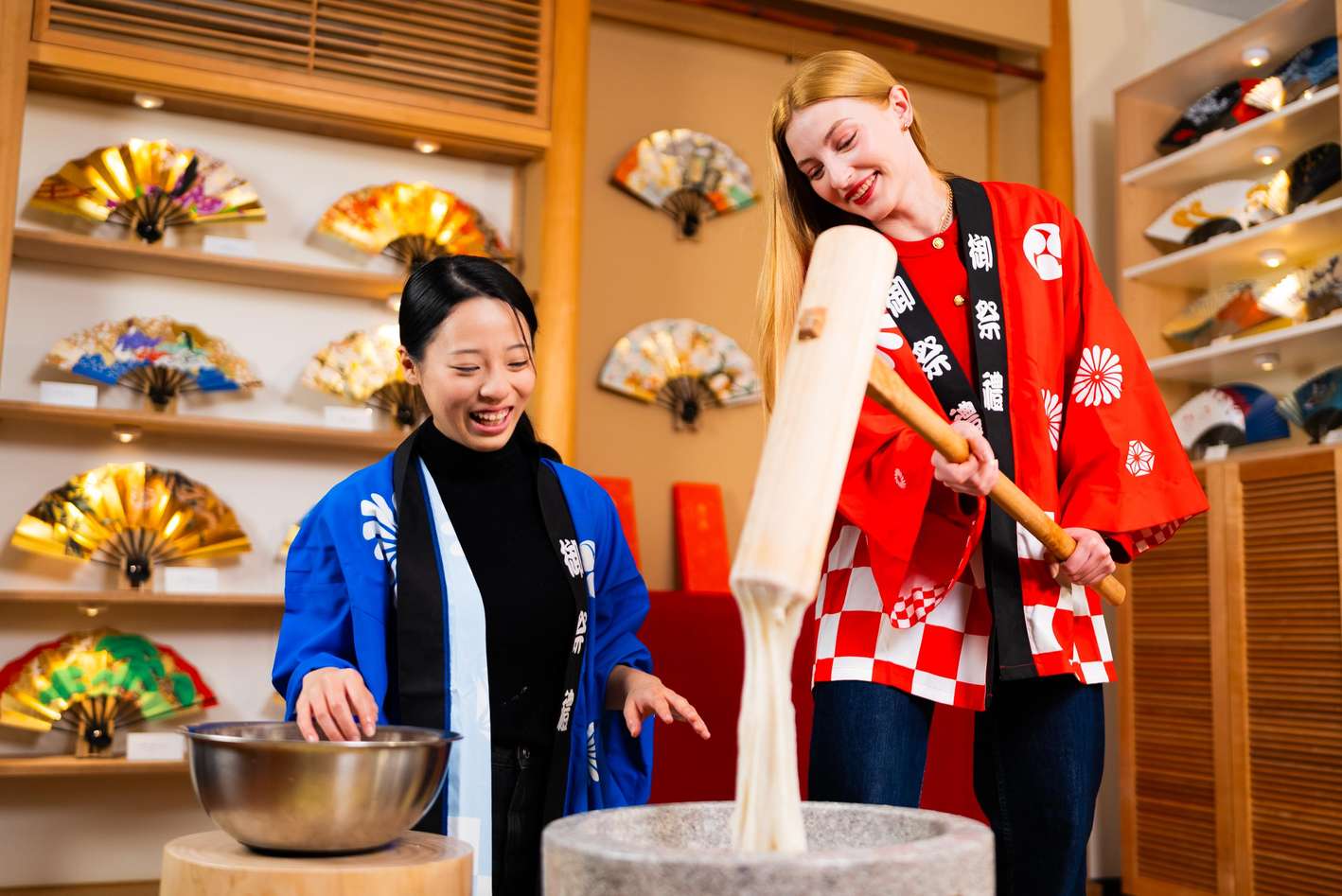
The mallet, called a kine, is heavier than it looks. The trick everyone learns in the first minutes: lift with your whole body, not your arms, and let gravity carry it down. Before any pounding starts, you press and knead the steamed rice in the stone usu until the grains begin to give.
The Tokyo Asakusa: Mochi Pounding and Tasting Experience covers the full arc in about an hour. Happi coat on, knead, pound, shout "Yoisho!" with each strike, then cut the fresh mochi yourself and sit down to taste it.
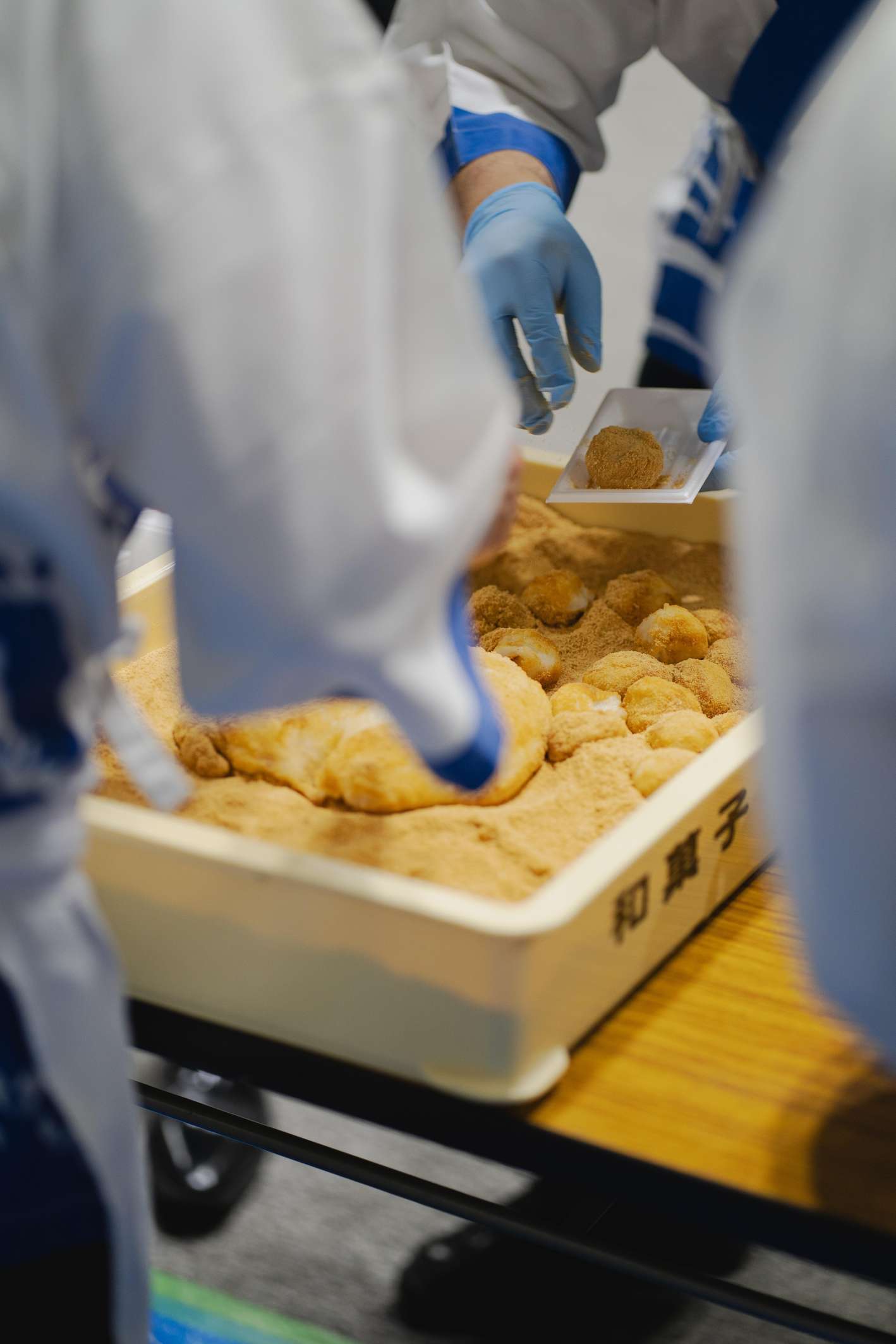
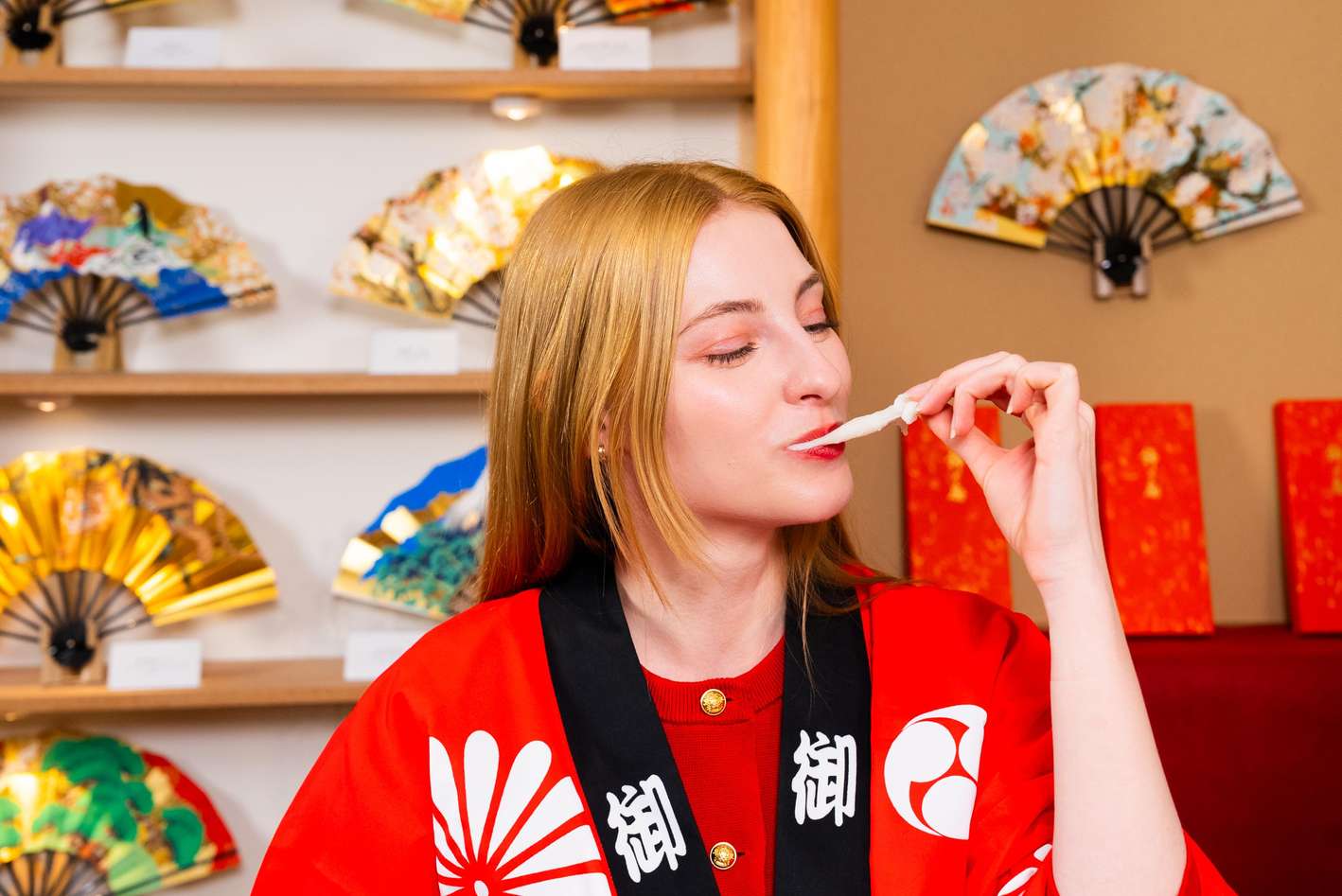
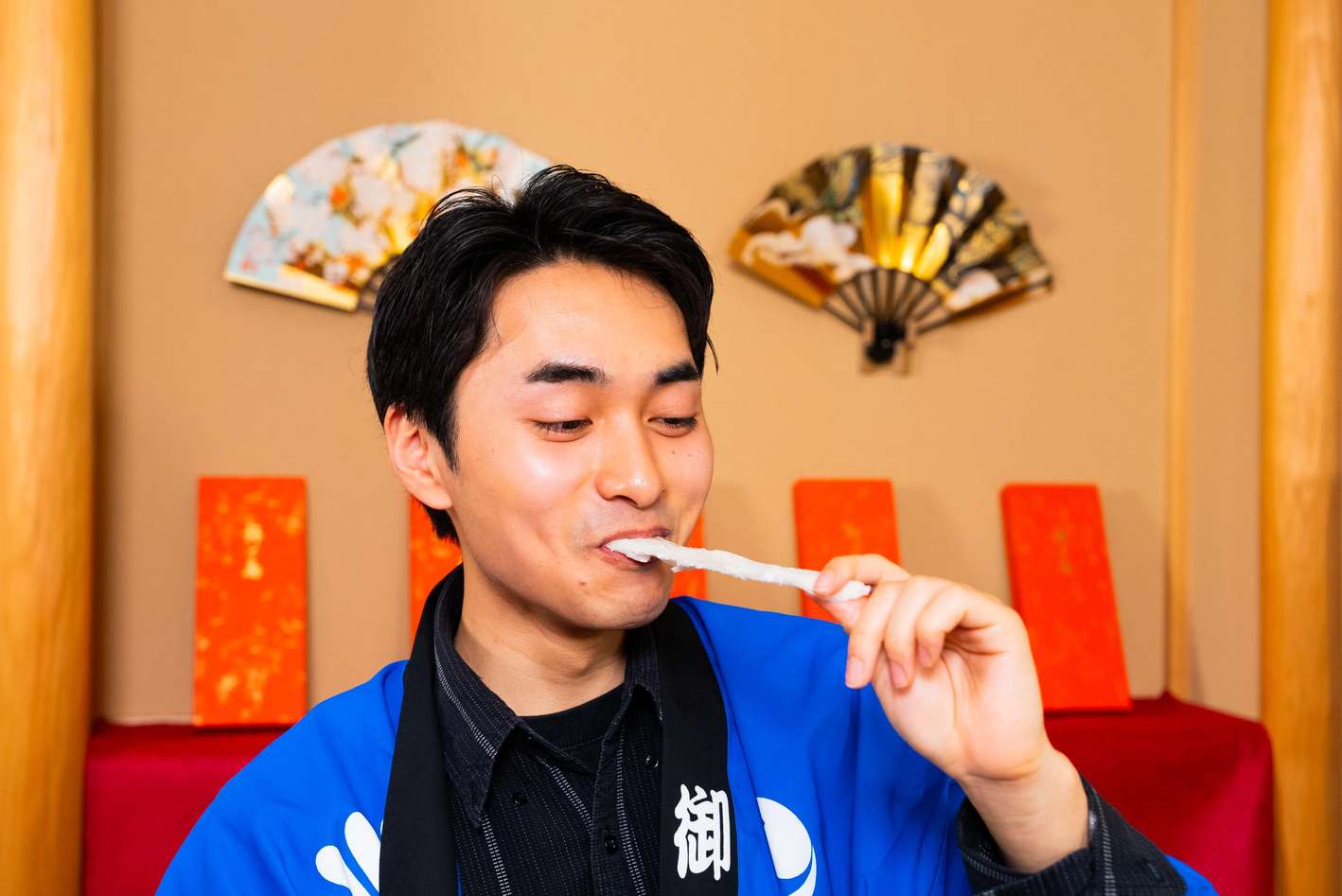
Up to ten toppings come with it, from kinako and black sugar syrup to grated radish with soy sauce, and you split your batch between eating now and taking away.
The Shibuya studios run the same shape of session in English, and instructors in both neighborhoods explain each step so beginners with no cooking background follow along fine. The Asakusa studio sits five minutes on foot from Asakusa Station on the Ginza Line, which makes it easy to slot between Senso-ji and lunch.
| Check | Why it matters | Our pick |
|---|---|---|
| Everyone must reserve | Most studios let nobody watch from the sidelines, so a non-pounding friend still books a seat | Yes, all participants sign up, no observers |
| Session length | A full hour covers kneading, pounding, shaping and tasting | About 1 hour start to finish |
| English instruction | Beginners follow only if the steps are explained plainly | English-speaking guide and staff support throughout |
| Distance from the subway | You want a class that fits between other stops | Five minutes on foot from Asakusa Station on the Ginza Line |
Whichever studio you pick, the arc is the same: knead, pound, shout, taste. Choose by neighborhood, since both deliver the full ritual and an hour is all it takes.
Sumo wrestlers pound mochi the way they do everything else, with weight and timing that make your one swing look polite. The Tokyo Tower show runs four times daily at 11 am, 2 pm, 5 pm and 8 pm, and walk-in guests get in when seats remain.
In Ryogoku, a sumo experience runs daily sessions from 11 am to 1 pm, 2:30 pm to 4:30 pm and 6 pm to 8 pm, with former wrestlers pounding and visitors welcome to try. Both hand you warm mochi to eat afterward.
The seasonal calendar matters more if shrines are your aim. Outdoor mochitsuki runs from late November through winter, usually around 10 am to 2 pm, and the pounded mochi often comes free. At Asakusa's Otori Shrine, it goes to the first 1,000 visitors.
Dates shift each year, check the current schedule
Pounding in the temple grounds
Two shows, at 10:30 am and 1 pm
Free mochi at some, first come first served
Roughly 10 am to 2 pm, with more into March
Book the sumo shows ahead; the walk-in window at Tokyo Tower closes the moment seats fill.
Asakusa keeps the craft closest to the surface. One shop pounds fresh mochi every morning with a wooden mallet and mortar, another prepares shiratama dango daily, and a daifuku stall in Nakamise closes its doors the moment the day's batch is gone.
Away from Asakusa, the daifuku masters cluster along the subway lines. One of the city's most famous sits a one-minute walk from Gokokuji Station on the Yurakucho Line; a mame daifuku specialist waits five minutes from Gaienmae on the Ginza Line; a warabi mochi maker stands near Myogadani on the Marunouchi Line.
The reason to arrive early is arithmetic. These batches carry no preservatives. One hand-pounded mochi shop can sell out around 2 pm on a busy day, and its limited items sometimes go to the morning's first customers. A mame daifuku master can be gone by mid-morning, another bean daifuku maker by afternoon.
Gekko, Usagiya and Ikkou An take no cards or IC payments; Tsuruya Yoshinobu in COREDO Muromachi does take Suica and cards
Without it you watch someone else buy the last daifuku
Not at posted hours, so a 3 pm arrival can find shutters down
Fresh mochi is made to be eaten the day it is made
Go in the morning, carry cash, and eat what you buy the same day.
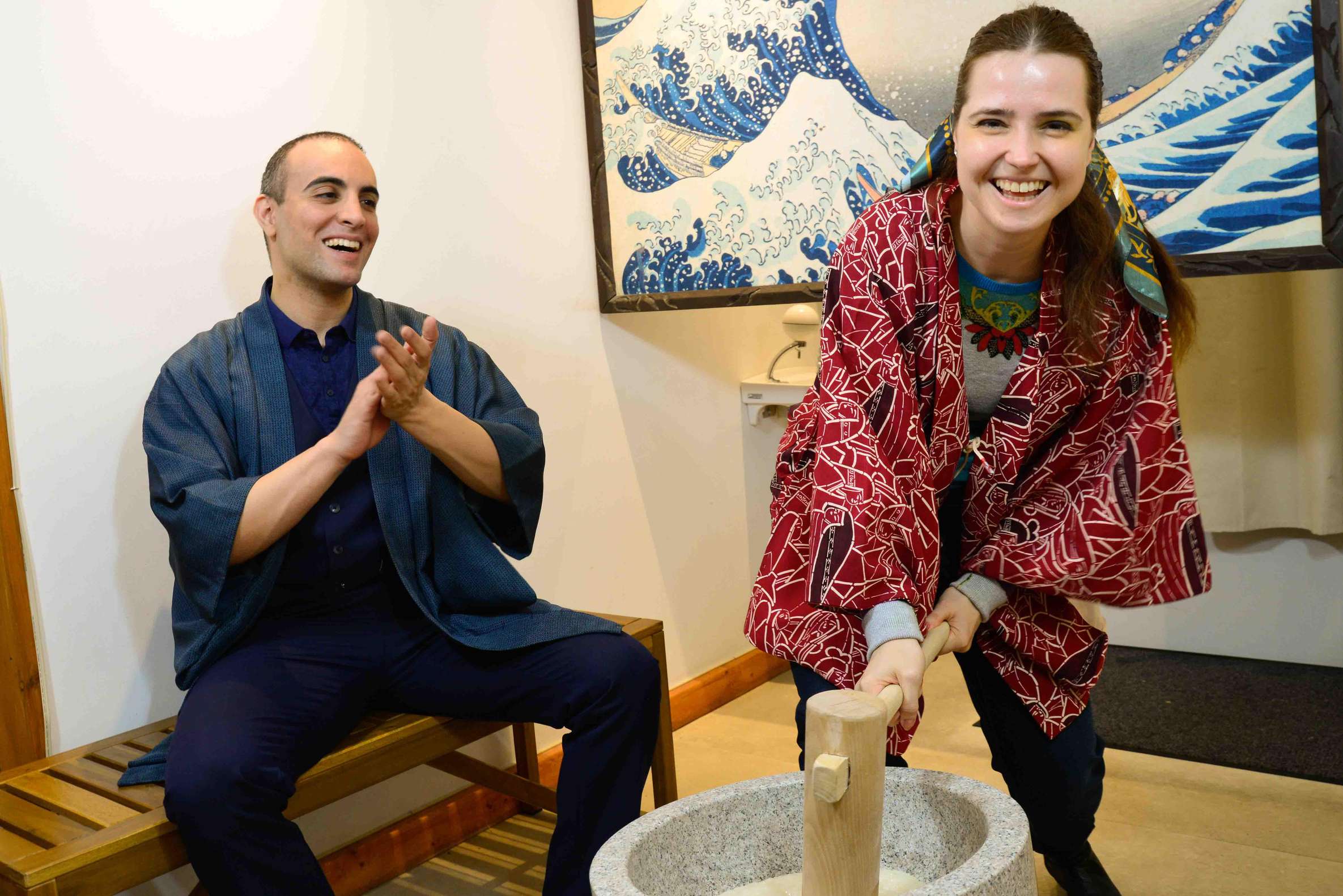
Studio classes take a reservation. One Asakusa studio asks for bookings at least two days ahead of the date, and every person entering registers as a participant because watching is not an option. Fix a date early in your trip planning and the mallet is yours.
Shows sit between the two. Tokyo Tower's sumo show accepts walk-ins when seats remain, but regulars say the organized booking wins, since four daily showings draw plenty of hotel guests on a rainy afternoon. Shrine festivals cost nothing to try: most are open to whoever queues, though a couple require sign-up in advance.
If your Tokyo days land in late December, expect competition for both classes and shows, since mochitsuki season peaks around the New Year.
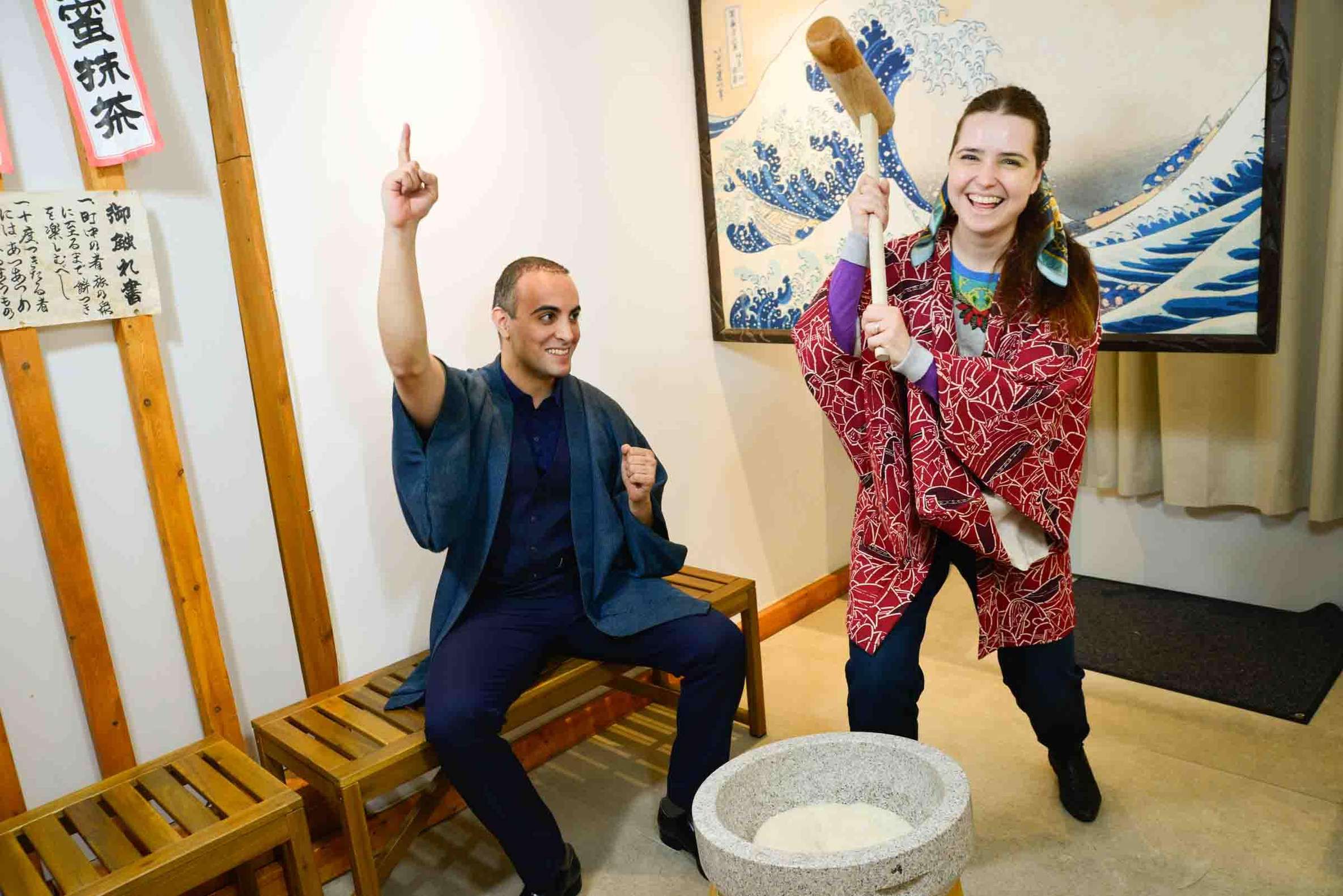
Start with the rice itself. Mochigome is entirely rice. The word glutinous comes from a Latin term for glue-like stickiness, and the stretch in the dough comes from its amylopectin starch, so plain mochi is naturally gluten-free. So is plain anko, the sweet red bean paste inside most of it.
The caveats live in the toppings and the kitchen. Soy sauce glaze can carry wheat, some sakura mochi styles use wheat flour, and kinako is roasted soybean.
For plant-based travelers, one Shibuya session builds its whole tasting set for you: plant-based toppings, wheat-free tamari, sweet anko, and a choice of matcha or hojicha. The Tokyo: Shibuya Vegan-Friendly Mochi Pounding Experience includes the full hour of pounding with all ingredients and a happi coat for photos.
The honest limit is cross-contact. That same studio works in a shared kitchen that is not a dedicated allergen-free facility, with soy present and sesame possible. For severe allergies, ask the operator about that shared kitchen before booking instead of reading the menu and assuming.
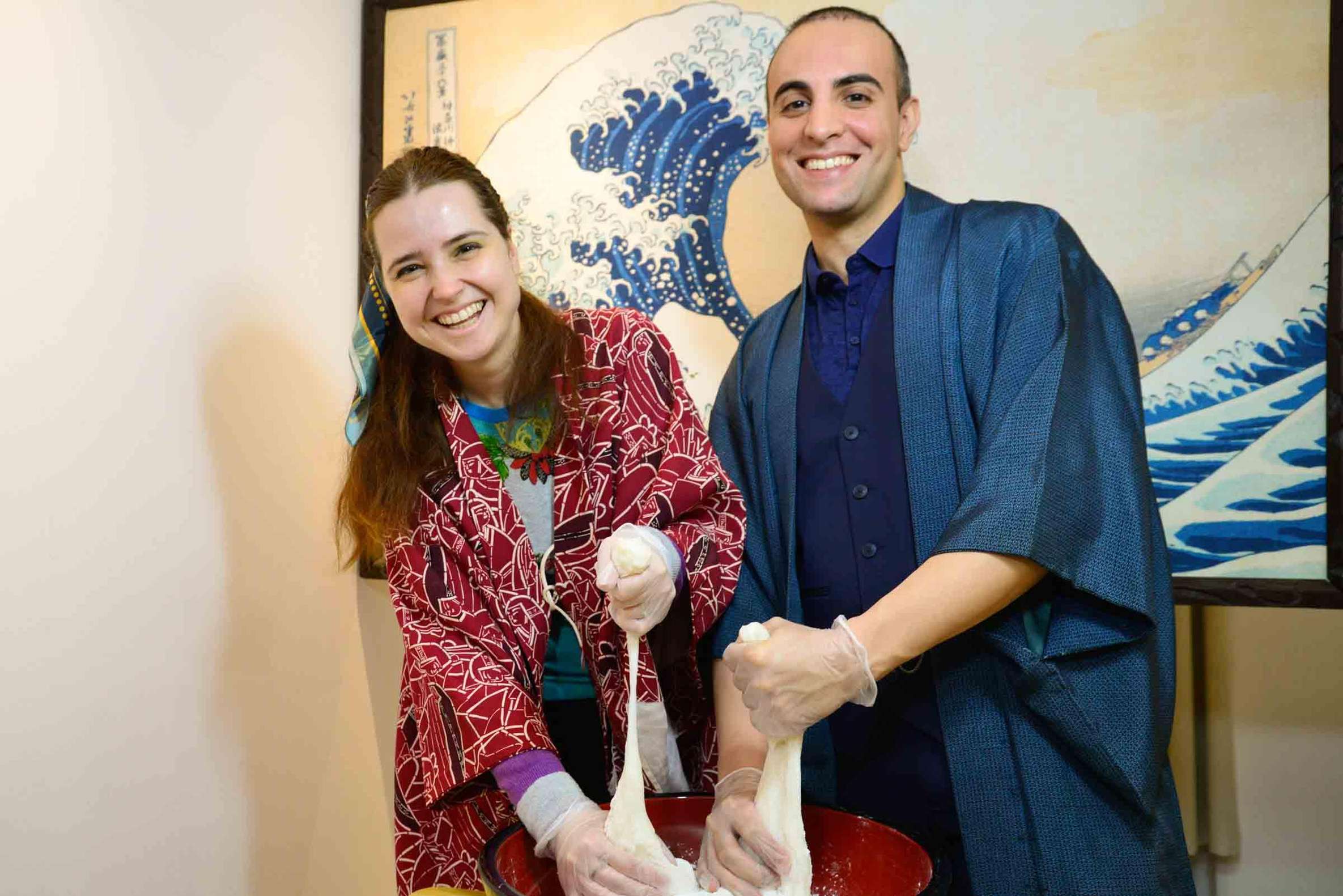
Mochitsuki was never just food preparation. Pounded rice cakes carried spiritual power in old rice-growing belief, because deities were thought to live in the rice itself, and each New Year the pounding prepared kagami-mochi, two stacked rounds shaped like a mirror, to welcome the deity of the coming year.
Edo knew the division of labor you still see. Merchant households pounded their own mochi, townhouse commoners bought from sweet shops, and professional pounders walked winter streets with portable stoves and steaming baskets.
Edo ate its New Year mochi savory, with soy sauce and grated daikon, which is why the savory toppings appear at your tasting too.
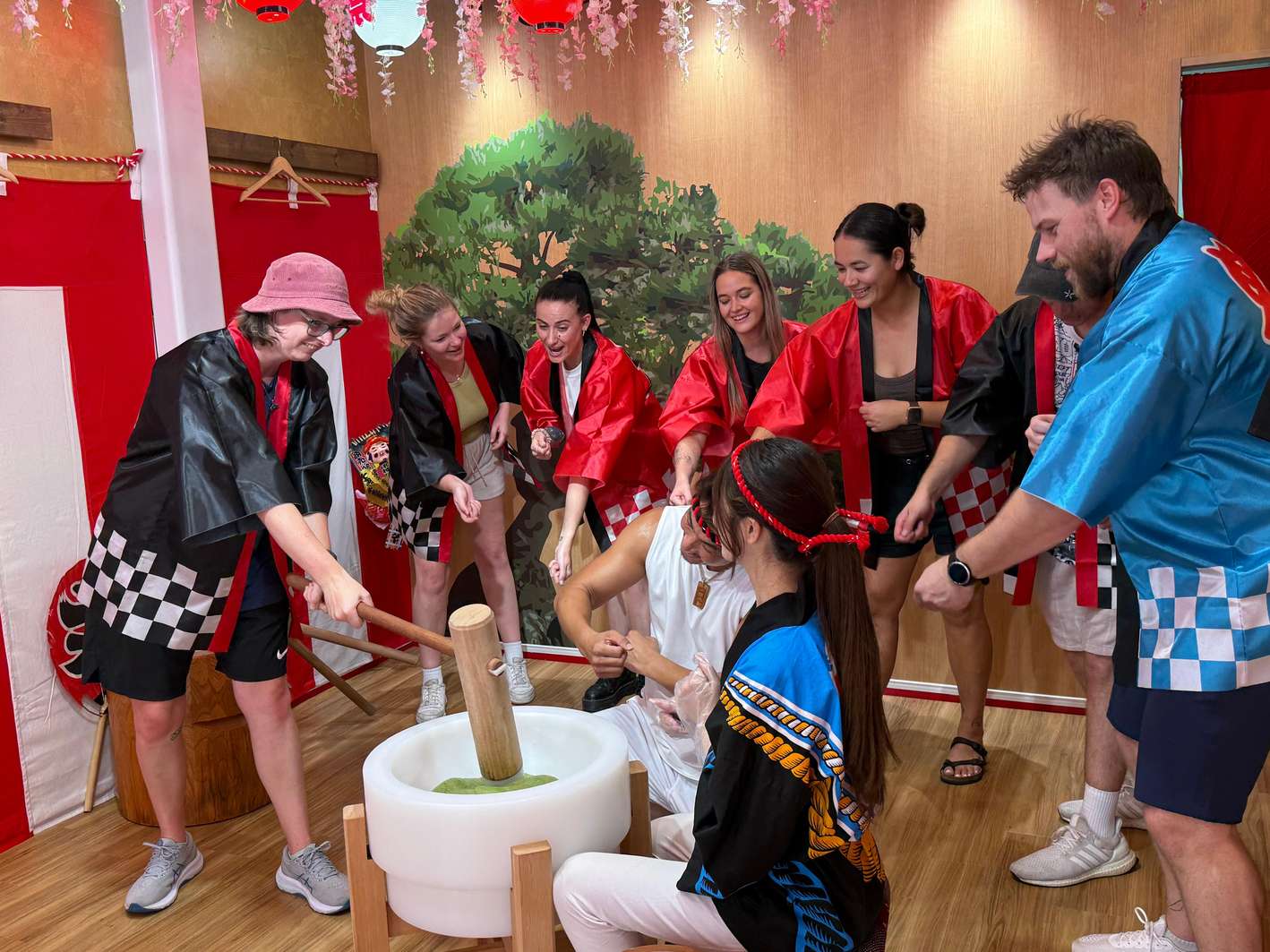
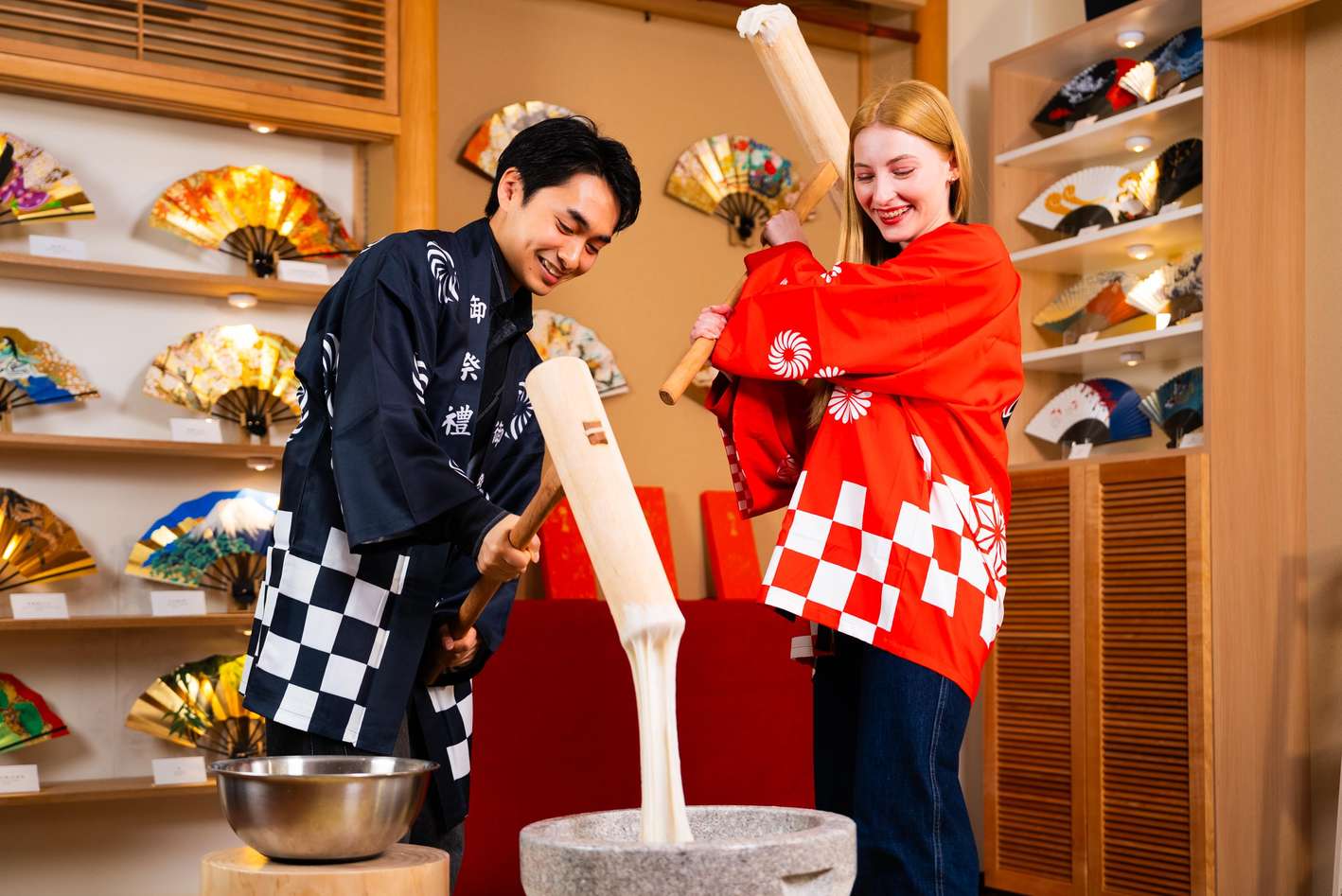
The chant is the safety system. The pounder calls "Yoisho!" and the turner answers "hai" between strikes, hands deep in the mortar folding the wet rice. Those calls time the rhythm so the mallet never lands on fingers. When your instructor starts the count, the shouting has a job.
In the studio those calls become yours. Shout with each strike and your partner's hands stay safe, which is exactly how the ritual has worked for centuries.
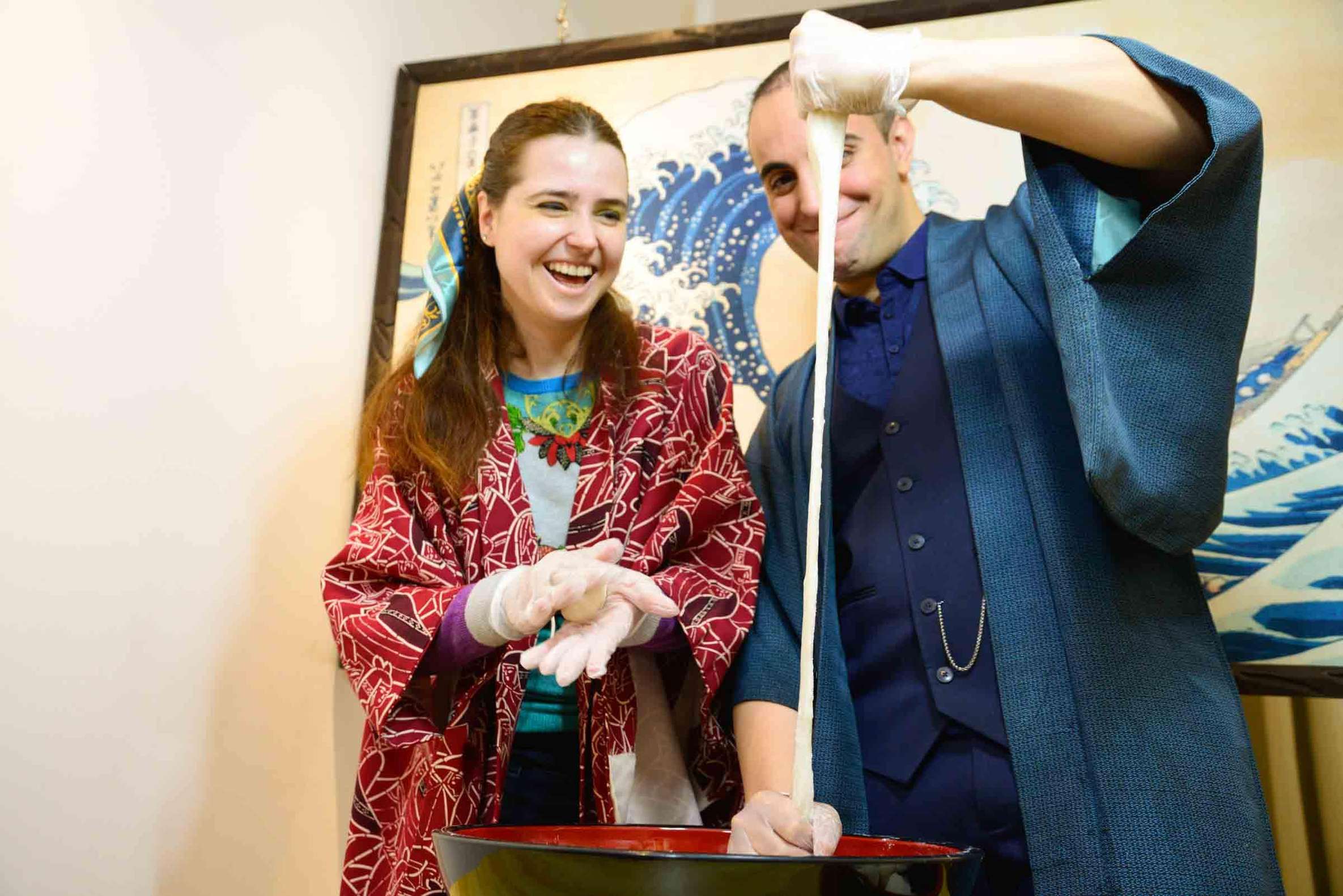
Fresh mochi has a sticky, elastic texture that catches in the throat if you swallow it in one go. Travelers who have done it say plainly that a swallowed-whole piece can block the airway. The etiquette that follows is simple and worth taking seriously.
Cut every piece small, and let the tea do its work. Sipping before you eat moistens the throat, and a cup alongside gives each bite something to wash down with. Chew slowly and thoroughly before swallowing.
Keep still while you eat, no walking around or talking with a mouthful, and sit children down with smaller portions than look polite. Cold mochi hardens further, which raises the risk for young children whose chewing is still learning.
The same stickiness explains why two of the listed experiences ask pregnant women and people with back problems to skip the pounding itself. Plain mochi itself is fine in pregnancy in small bites; the pounding is the physical part.
Warm, elastic mochi is a severe choking hazard if swallowed in a rush Cut each piece small, sip tea first, chew slowly, and never eat while walking or lying down
Follow that one line and mochi is simply lunch, the way millions of Japanese households eat it every New Year.
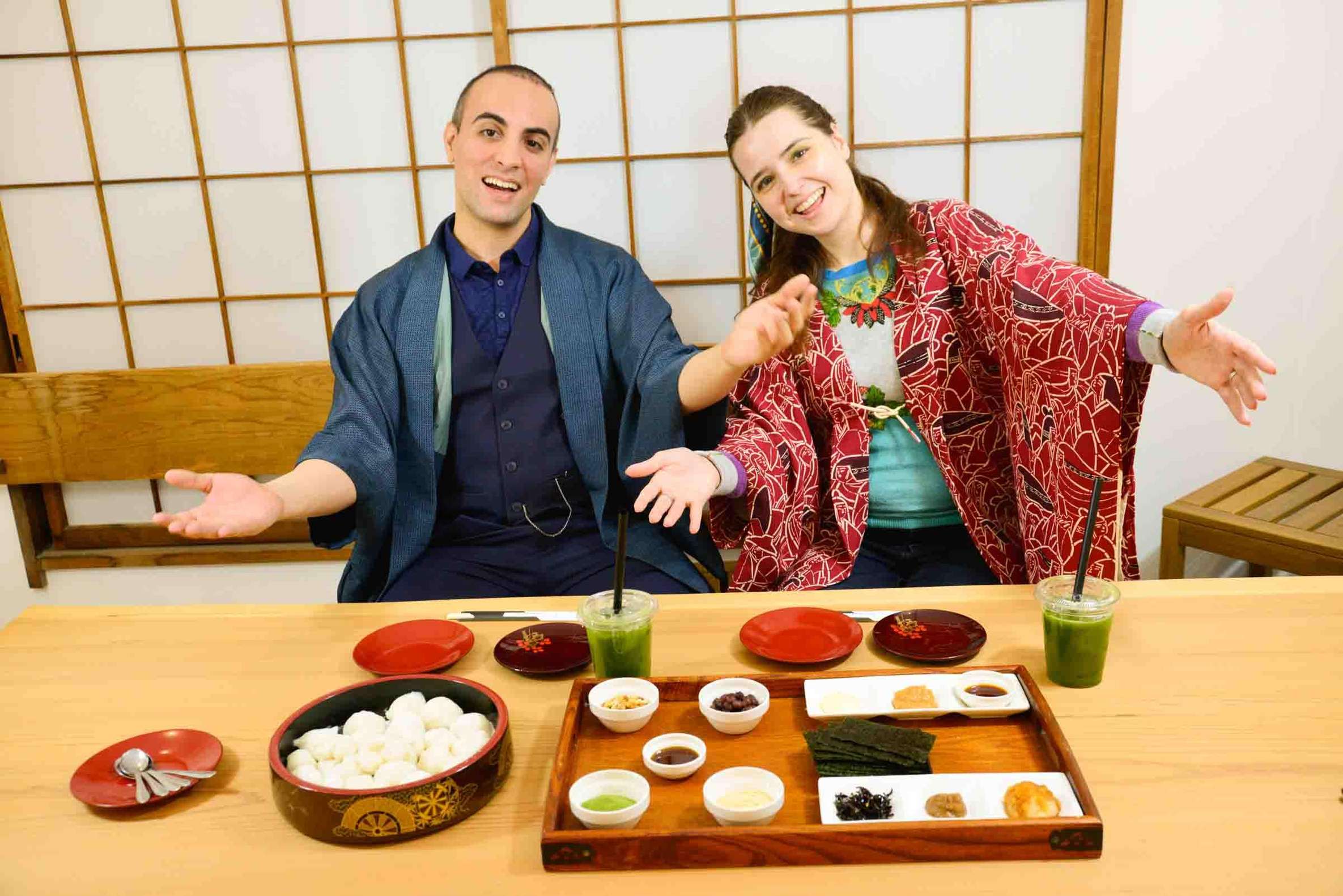
Yes, with a deadline attached. Shops sell multi-piece sets that travel well in an airtight container at room temperature, and you can carry them back and eat them that evening. What you cannot do is save them for tomorrow.
The starch in fresh mochi begins to recrystallize within hours, and the cake turns firm and dry. The fridge makes it worse: at refrigerator temperatures the hardening speeds up, and a night in there strips out the softness entirely.
Left out for a day or two, it grows mold. So eat it the evening you buy it, or grill, boil or microwave it to bring the texture back.
Filled sweets keep differently. Fruit daifuku is the most perishable of all, because the fruit's moisture works against the dough, and it is a same-day sweet by any measure.
Packaged wagashi carry dates that can run a day or two, so check the date before you gift it. A box carried to a friend's hotel room tonight beats a box left in your minibar until checkout.
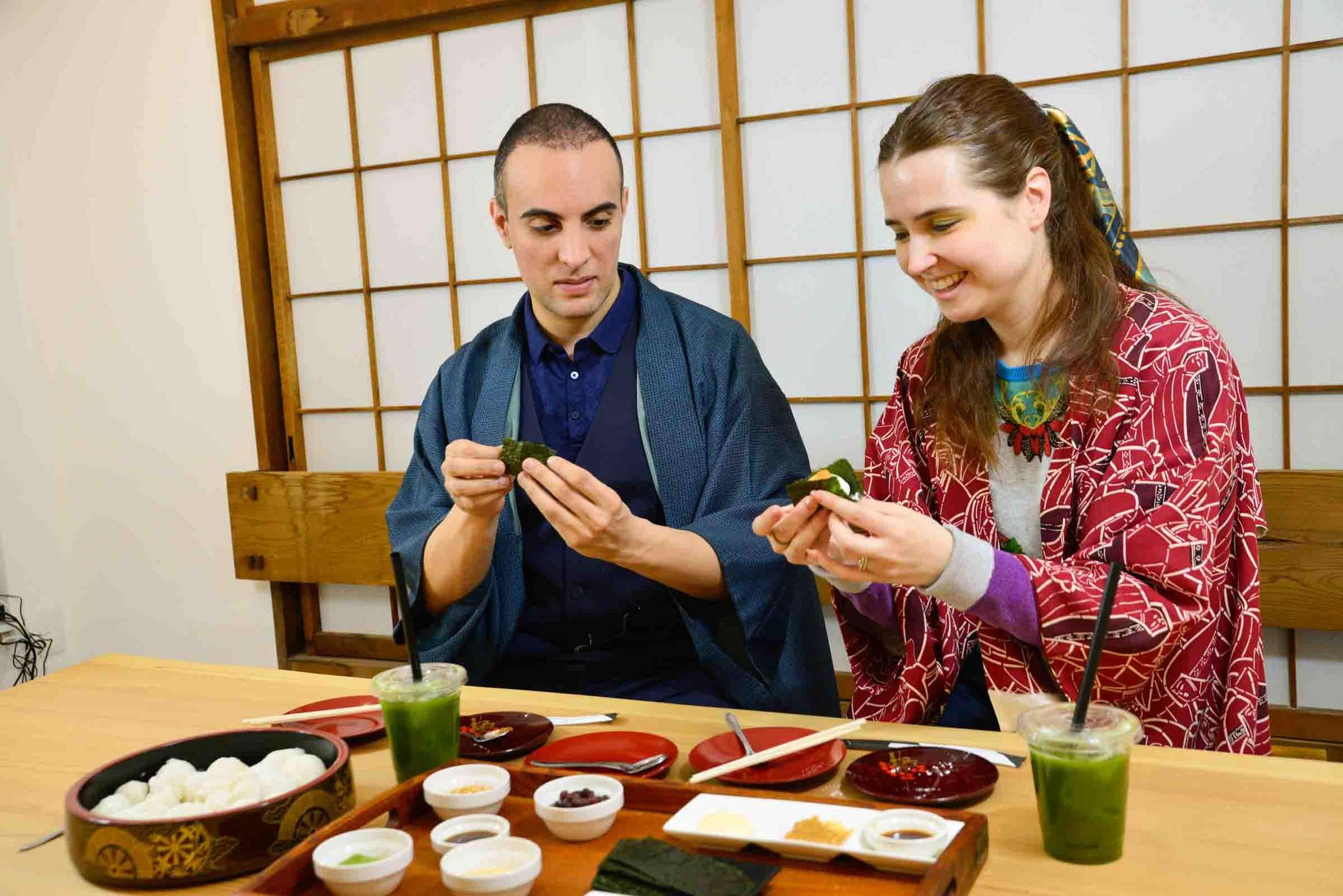
Tokyo rewards the traveler who plans one hour and one morning. Book a hands-on workshop in Asakusa or Shibuya for the mallet, time a sumo show if you would rather watch, and spend a morning among the shops while their batches are still whole.
Do that and you get the full ritual, warm mochi with ten toppings and a story to tell, without a ticket to Kansai.
Compare hands-on mochi making classes in Japan, from pounding workshops to wagashi shaping lessons.
Planning a Kyoto class? Get booking details, what a session feels like, and who each one suits.
Go deeper on Tokyo workshops: languages, session lengths, and how to reserve your mallet time.
Quick answers to what travelers ask before booking a mochi session in Tokyo.
 Tokyo2026
Tokyo has genuine hands-on mochi pounding workshops in Asakusa and Shibuya, where you knead steamed rice, swing a wooden mallet and eat the result warm. What the city lacks is a permanent street-front pounding show like the one in Nara, so book a workshop rather than hoping to stumble on one.
A few fixed-schedule options exist. Sumo wrestlers pound mochi at the Tokyo Tower club shows, at Sumoland in Ryogoku, and at seasonal events such as the Setsubun ceremony at Zojoji Temple and New Year performances at Hotel New Otani. For a guaranteed seat at a set time, a booked workshop is the surest bet.
Plan on about an hour from the start of the session through pounding, shaping and tasting. The Tokyo workshops are listed as one-hour experiences, which makes them easy to slot between other sightseeing.
Yes. The Tokyo workshops offer English-language instruction or an English-speaking host, and the hands-on part is structured for people with no cooking experience. Instructors explain each step plainly, so Japanese cooking terms never get in the way.
The wooden kine is heavy, so the lift comes from your whole body with your arms following, and gravity carries the mallet down. You start by pressing it into the rice to knead the grains before any real pounding. Most people find the rhythm after a few swings.
The Shibuya workshop serves a plant-based tasting set with wheat-free tamari and sweet anko, and its ingredients are prepared without wheat, dairy or eggs. The kitchen is shared, so soy is present and sesame may be present; travelers with severe allergies should take that into account.
It can be, because warm mochi is soft and very sticky. Cut it into small bites, chew slowly and keep tea nearby. Hosts in Tokyo say the same, so follow their pacing and you will be fine.
You can, but eat it the same day. Fresh mochi hardens within hours at room temperature, and the refrigerator speeds that up. Keep it in an airtight container at room temperature and finish it within a few hours.
Book ahead. The Asakusa workshop requires a reservation for everyone, since it does not allow entry just to watch. Winter around the Japanese New Year is mochitsuki season, so slots fill then.
Comfortable clothes and shoes you do not mind getting dusty with starch. The workshops hand you a happi coat to wear over your clothes, and traditional venues ask you to take off outdoor shoes at the entrance, so slip-ons and clean socks help.
Some do and some do not. Several artisan mochi shops in Tokyo, including ones in Ueno and Bunkyo-ku, accept cash only, while bigger confectioners in Nihonbashi and Muromachi take cards and IC cards like Suica. Carry yen for the small shops.
That rapid two-minute street show is in Nara, and Tokyo has very few street-front spectator shops like it. Tokyo's version is the workshop, where you do the pounding yourself, which many travelers end up preferring.
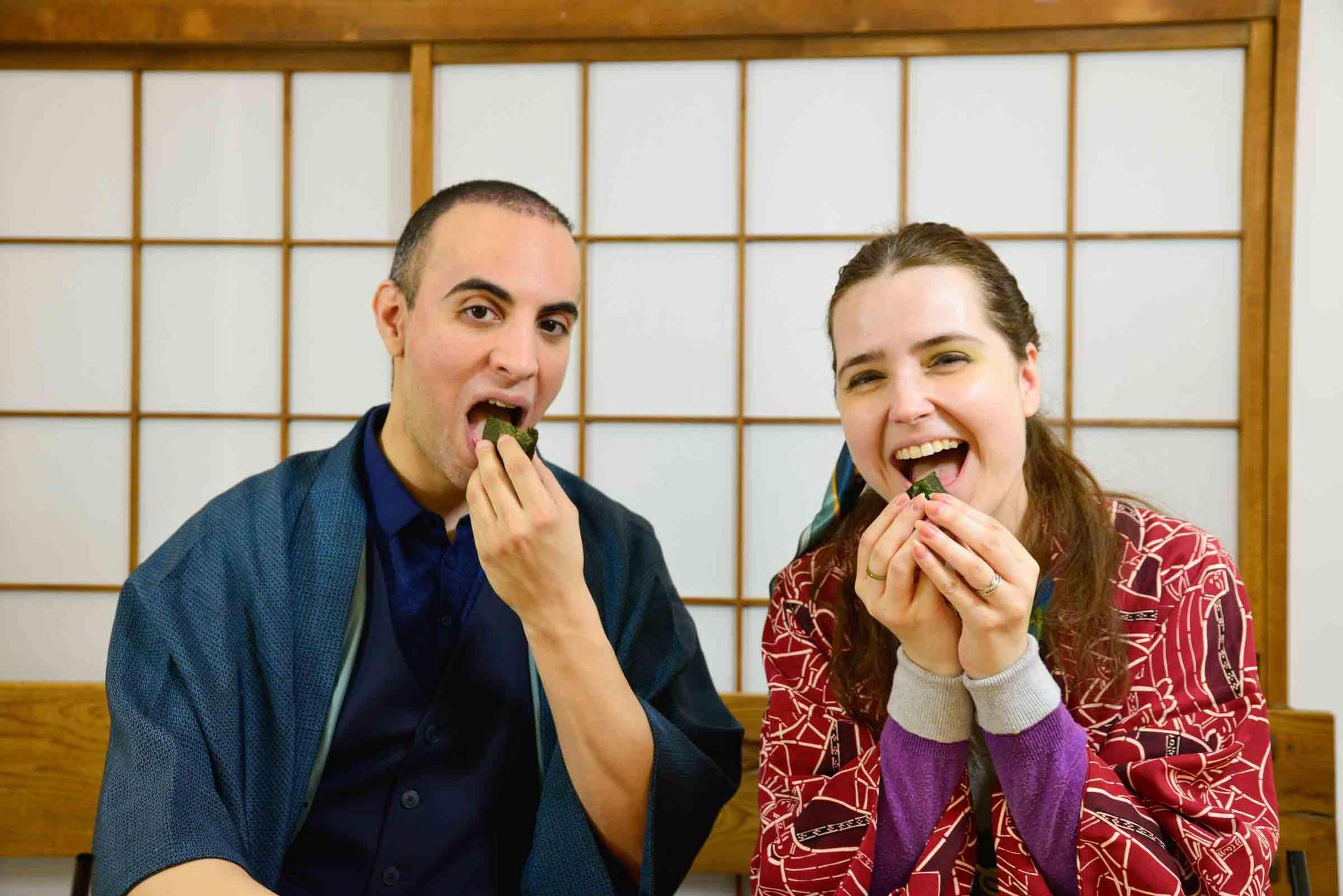
A one-hour Tokyo session where you knead, pound and taste your own mochi, with ten toppings to try. Cancel up to 24 hours ahead for a full refund.