2 hours·English
Kyoto: Mochi-Making Experience with Tasting
Free cancellationProfessional mochi-making performanceMochi-making experience
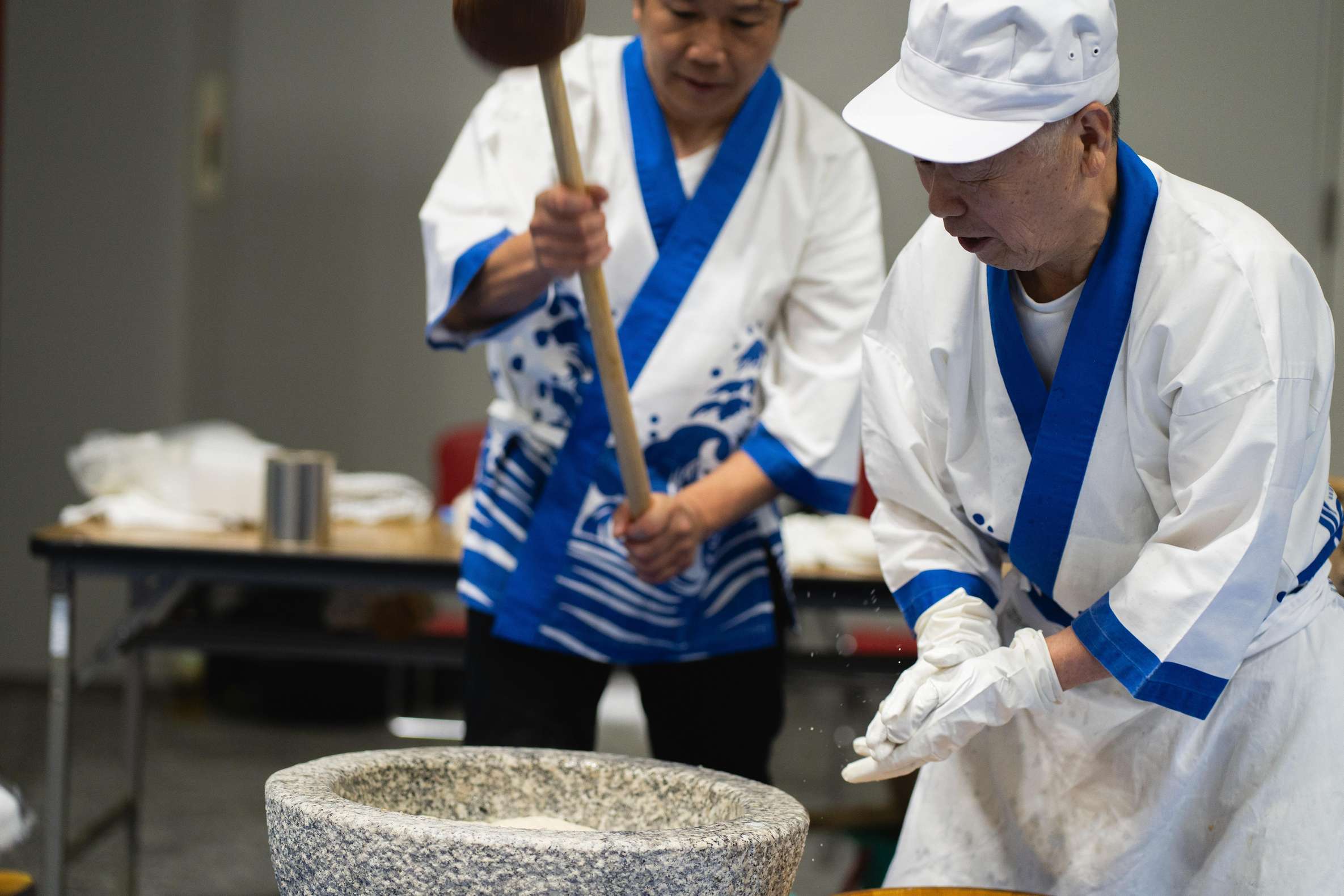
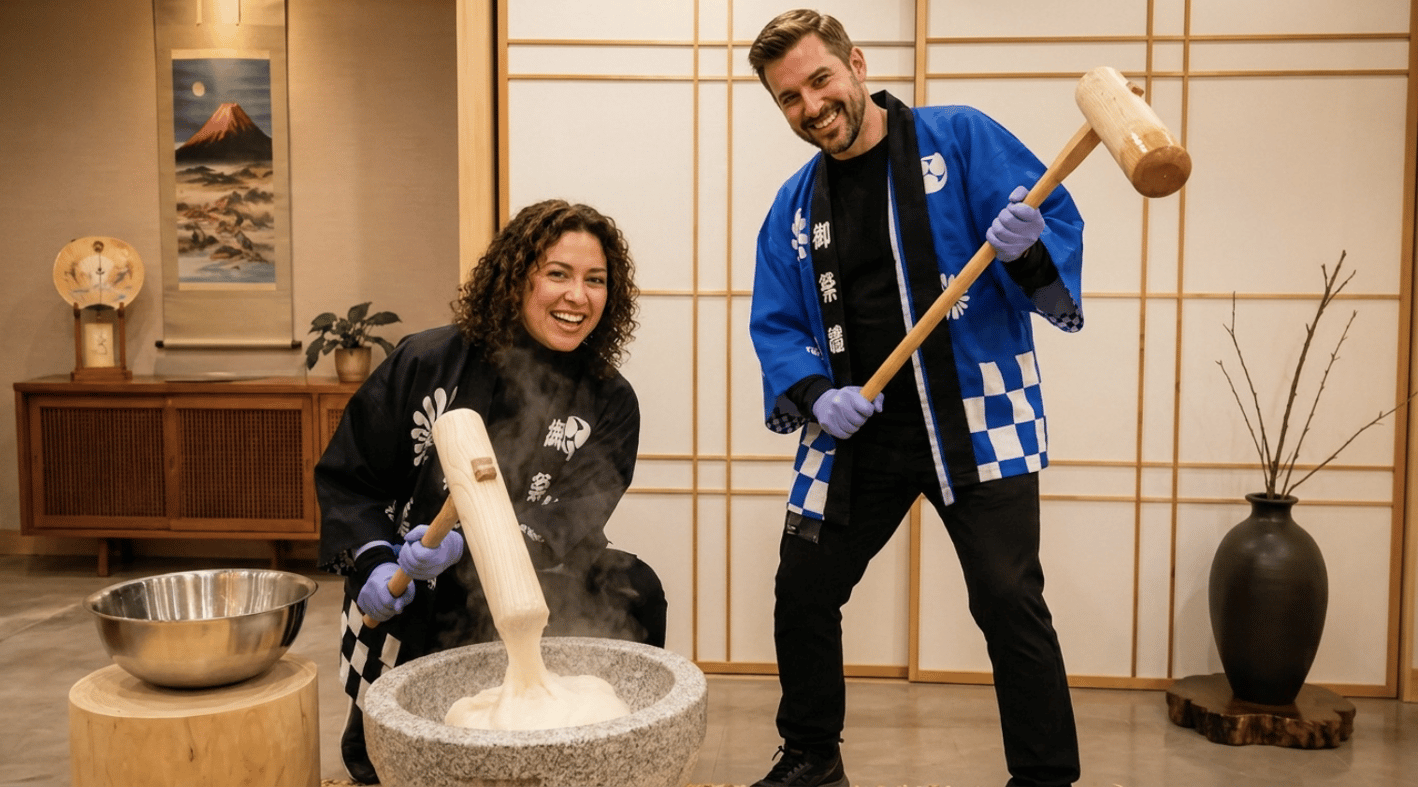
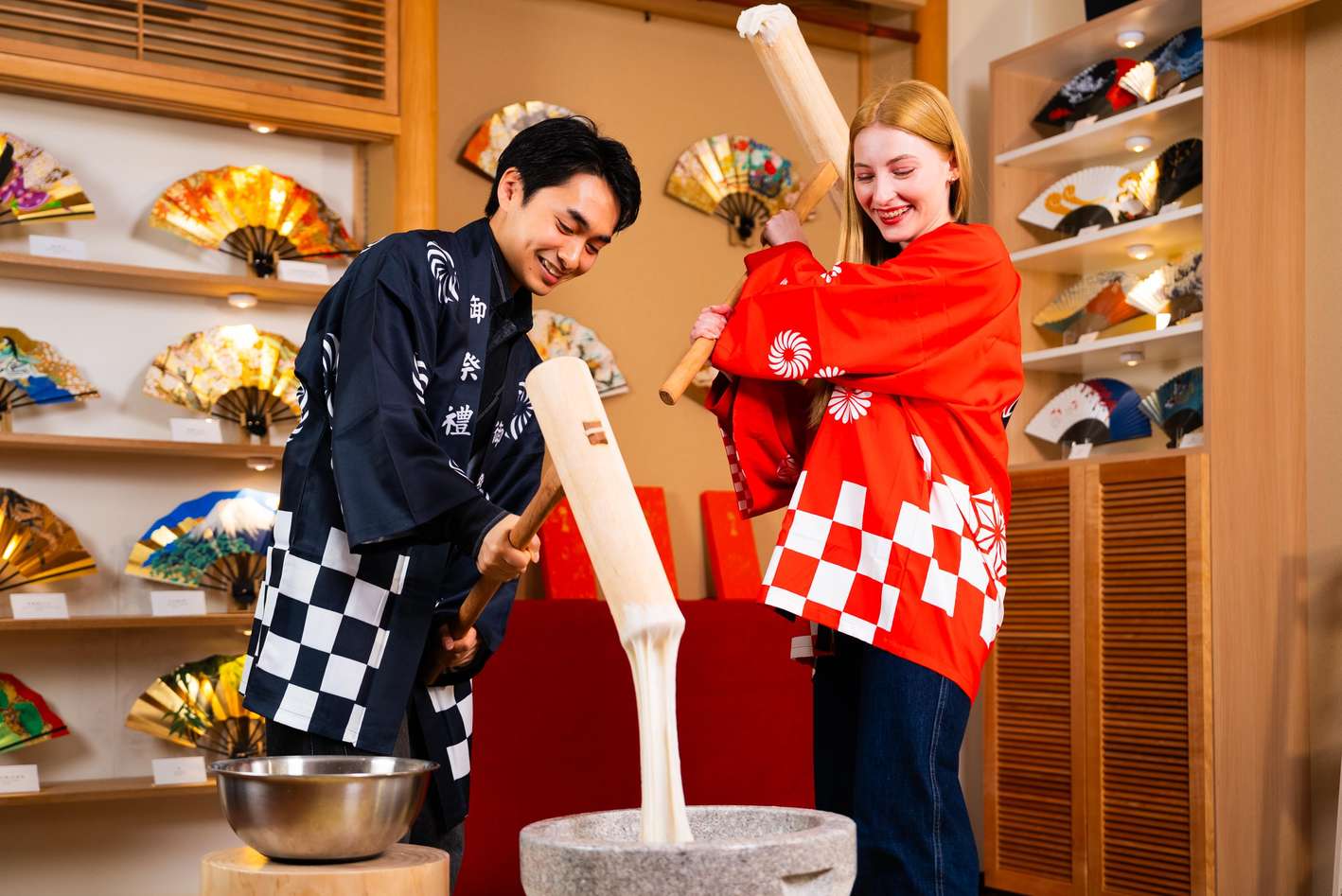
See mochi pounded live in Kyoto, not on a crowded sidewalk. Watch a professional maker work the wooden mallet, then take a turn yourself and taste the results with kinako and anko. Sessions run at set times you can reserve in advance, so your sightseeing day stays on schedule.
"The whole family had a great time. We learned mochi goes way beyond the ice cream we knew, and making it ourselves was fun. Thanks Momoka for being so friendly and knowing so much!"
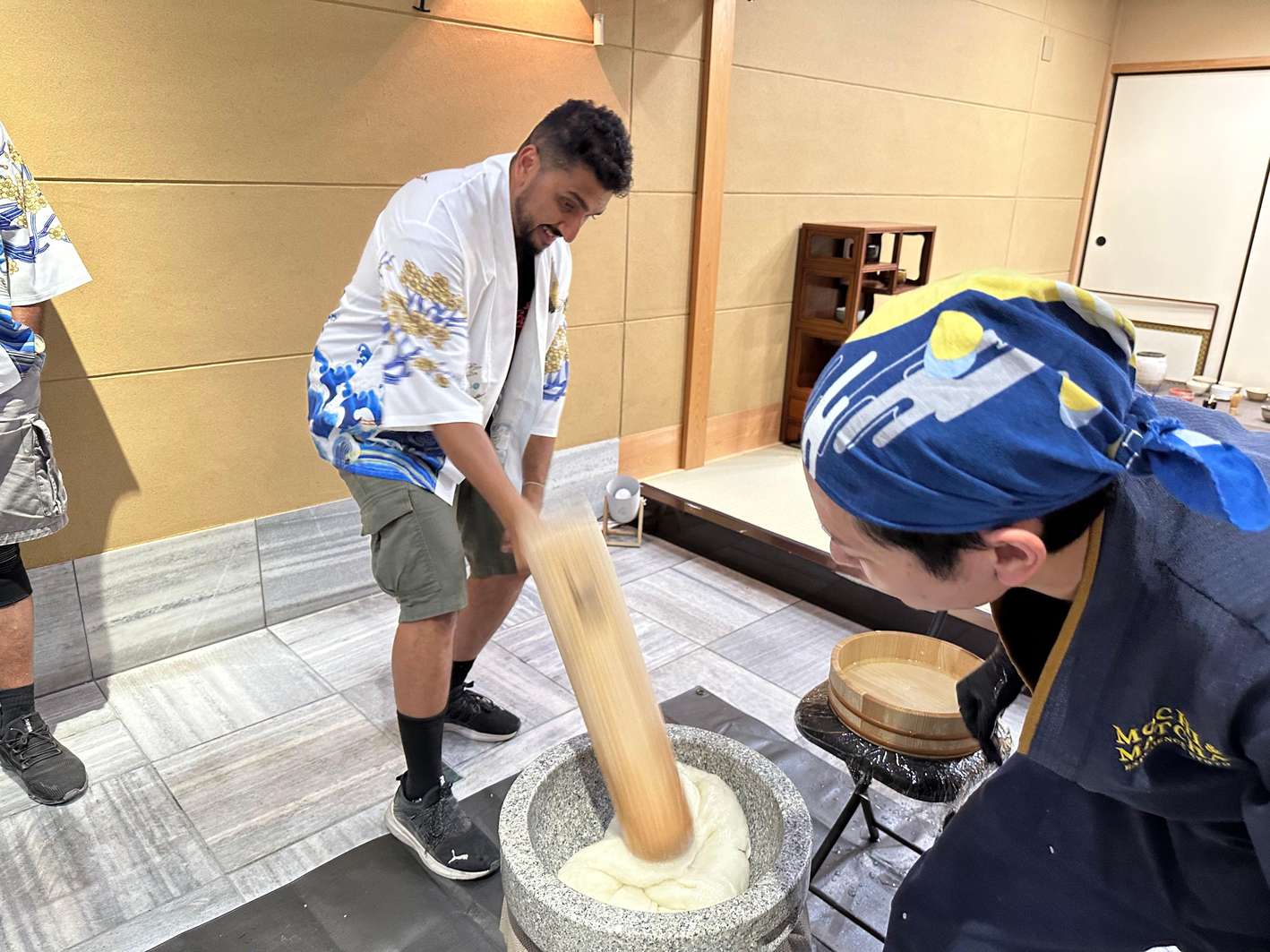
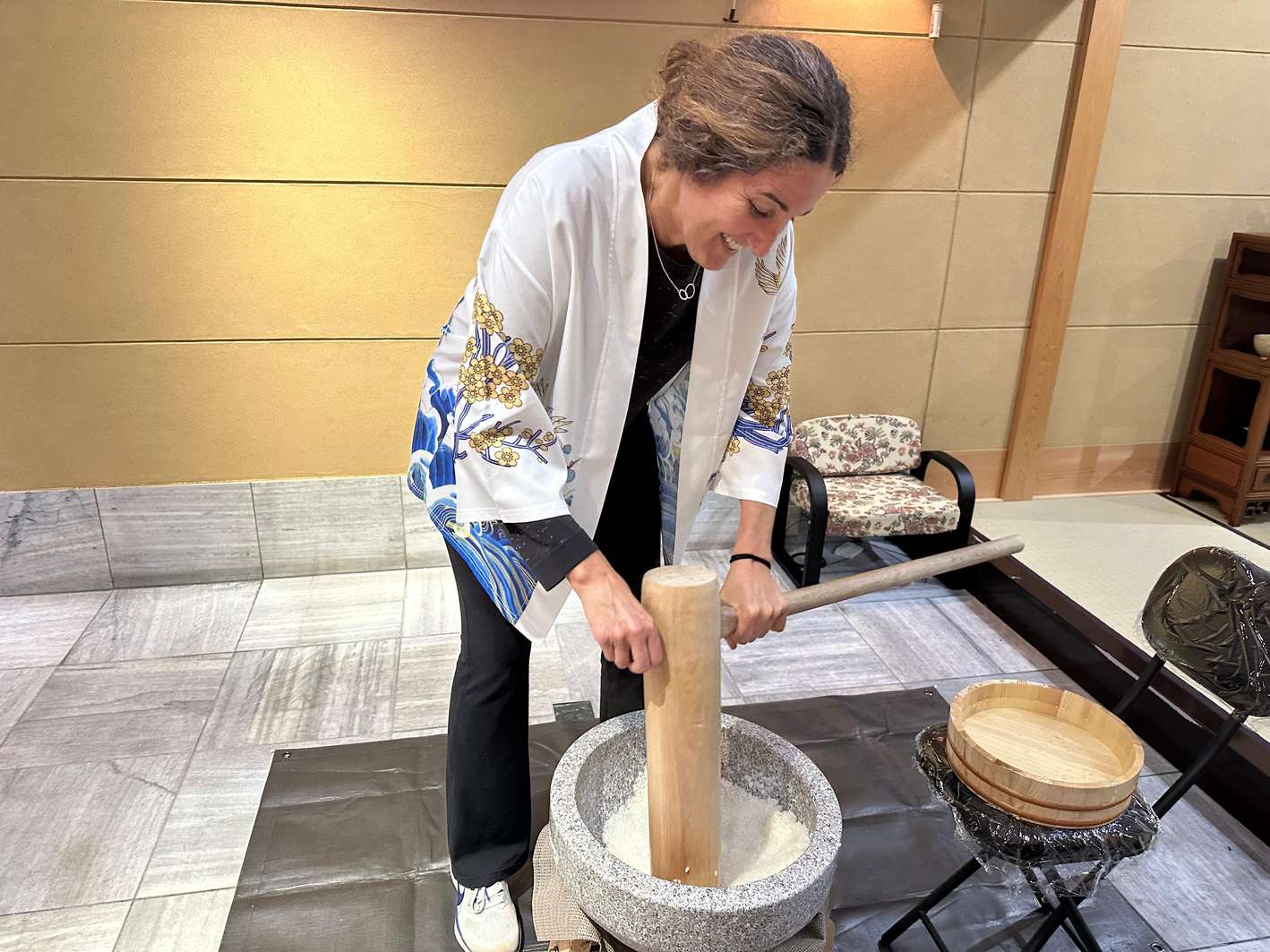
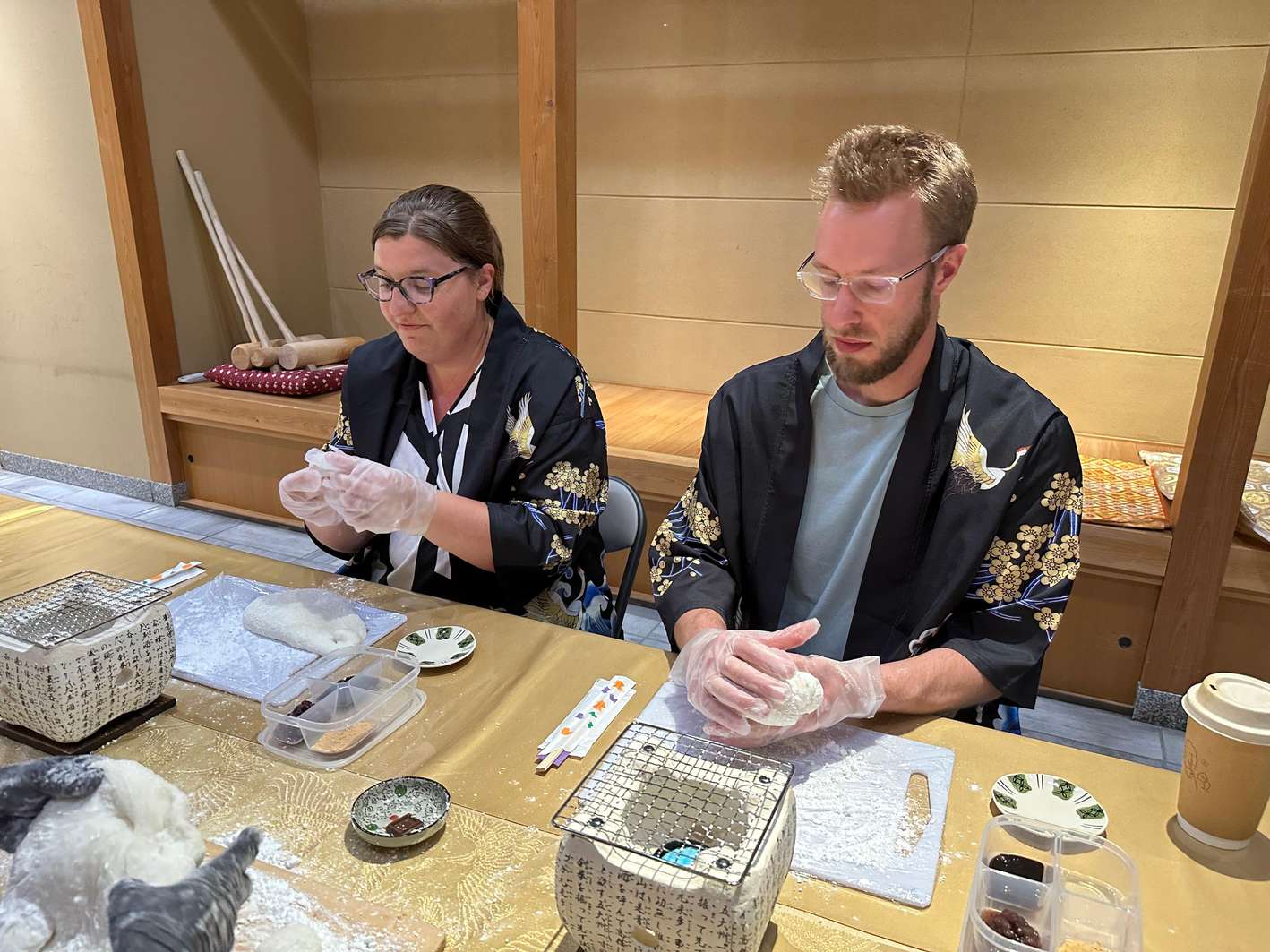
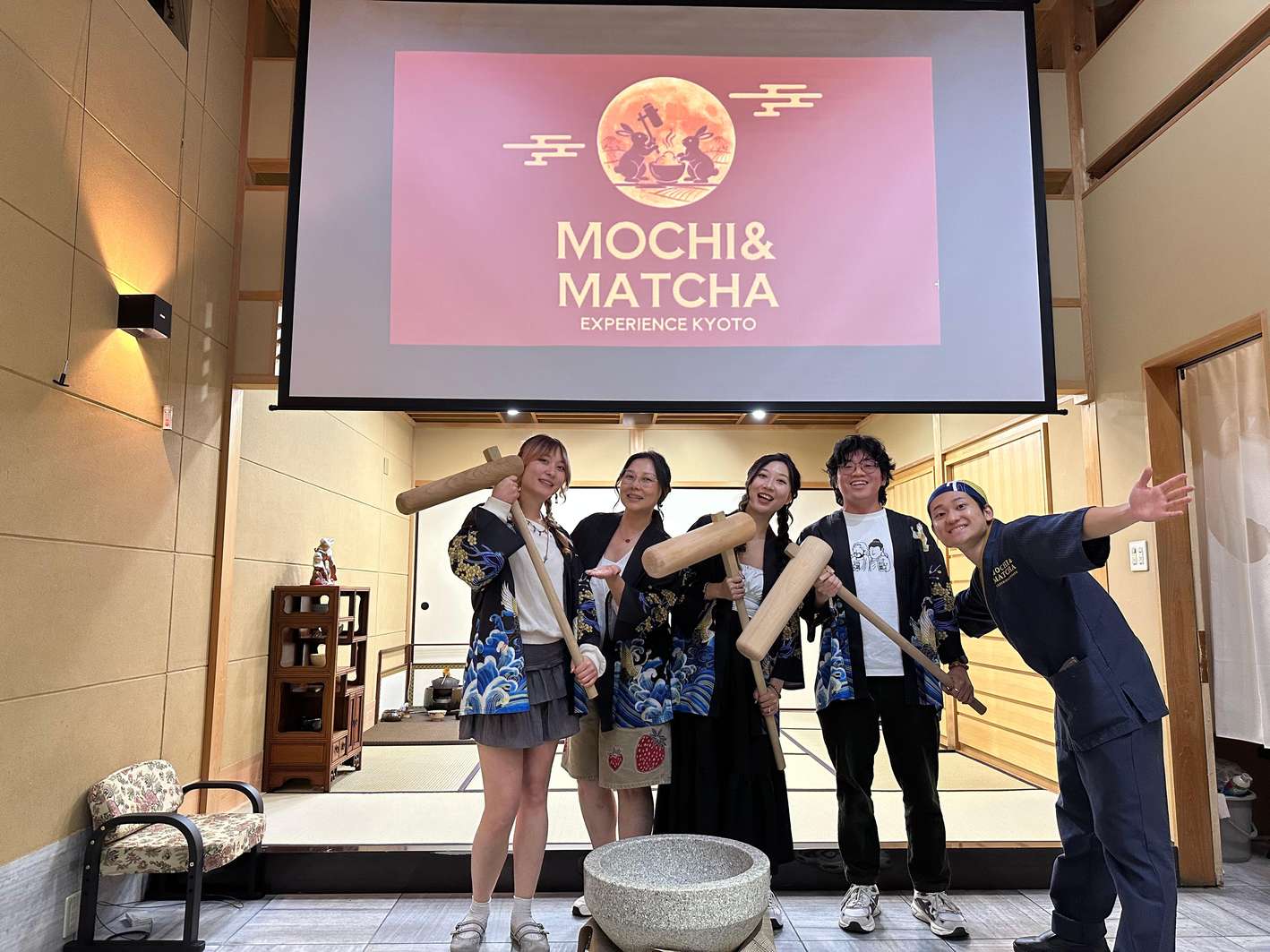
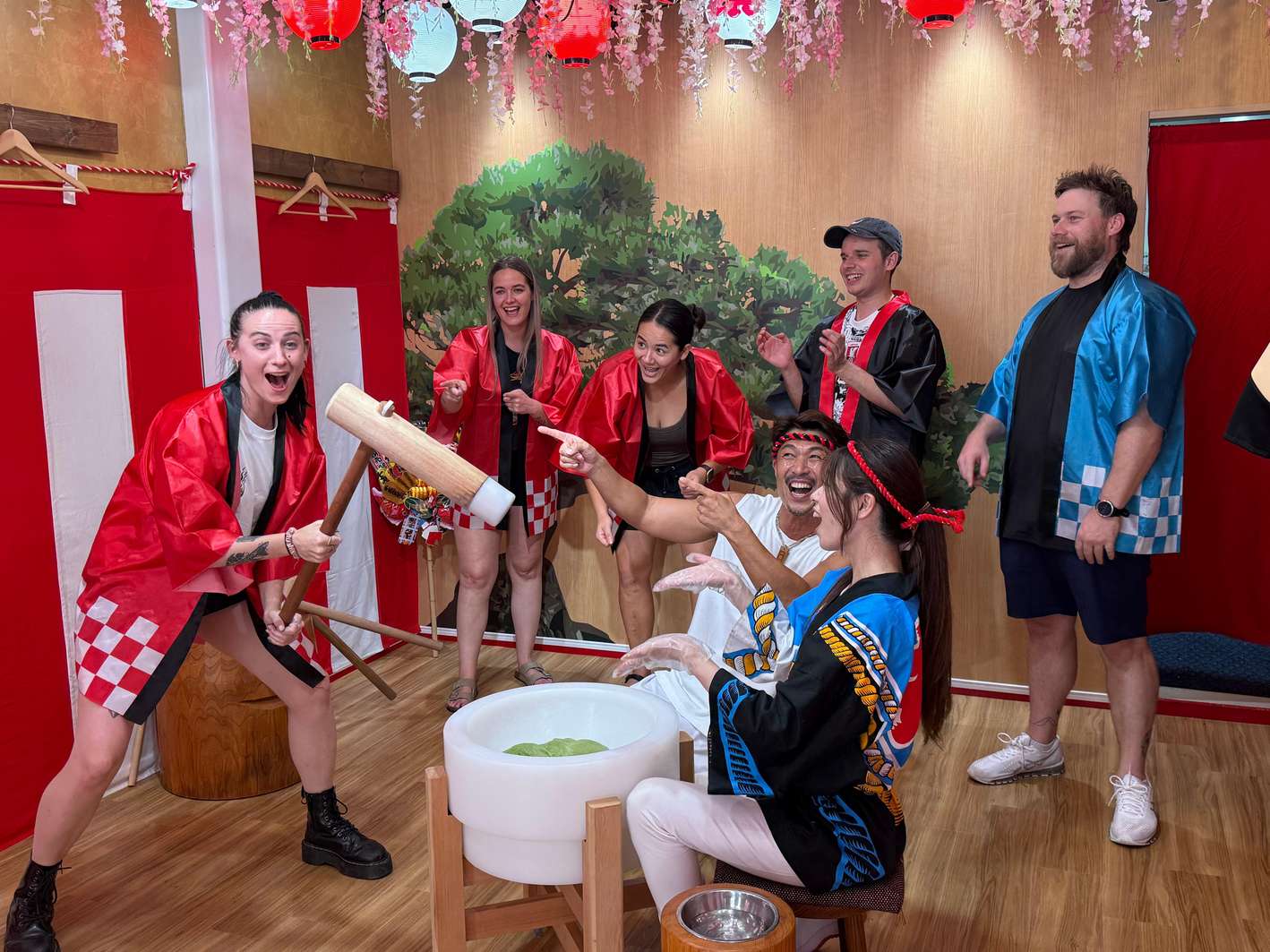
A 25-minute festival session near Kuromon Market where you grab the mallet while everyone cheers and chants around you.
Read the guide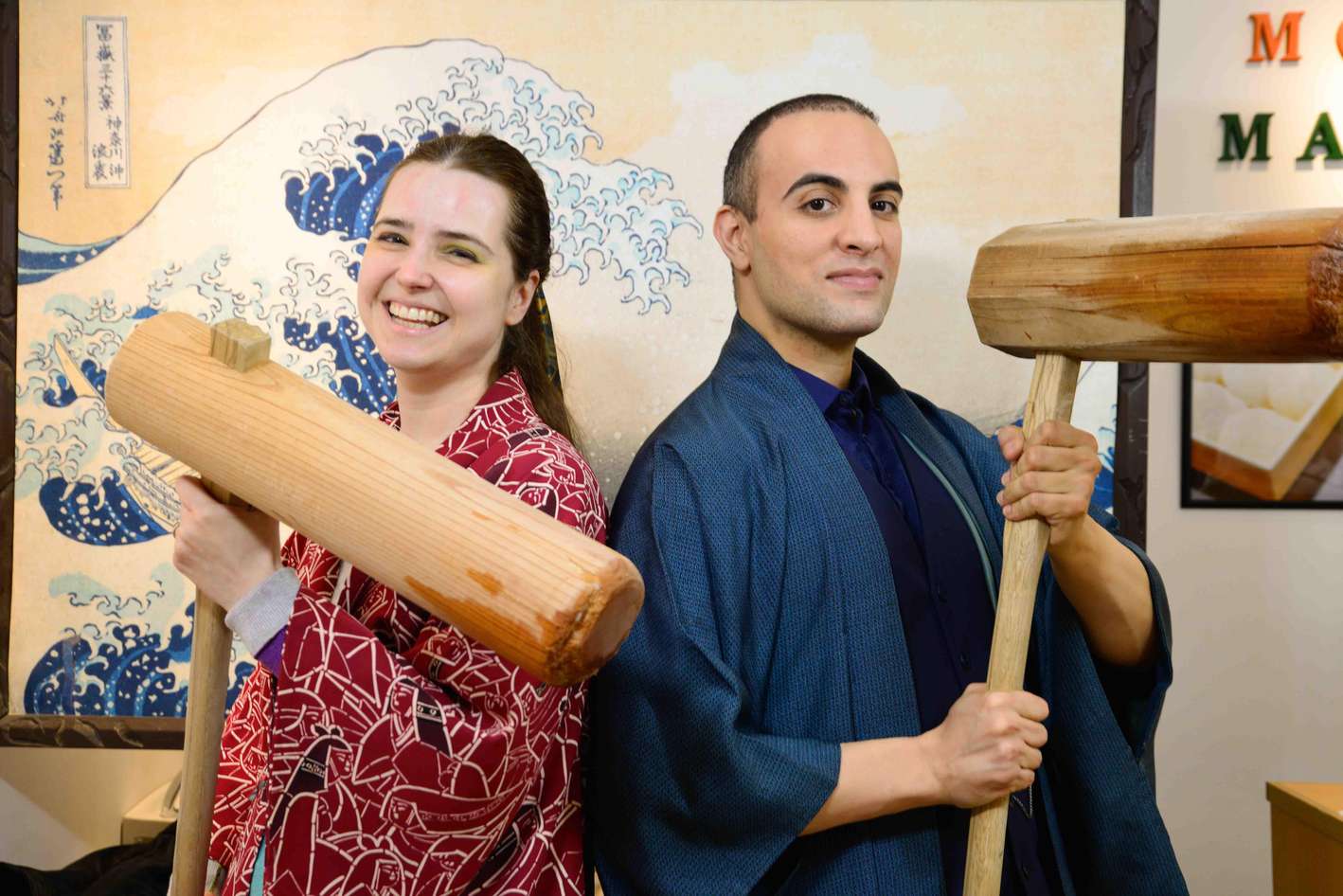
Tokyo pounds indoors: sumo wrestlers at Ryogoku and Tokyo Tower, plus hands-on workshops in Asakusa and Shibuya.
Read the guide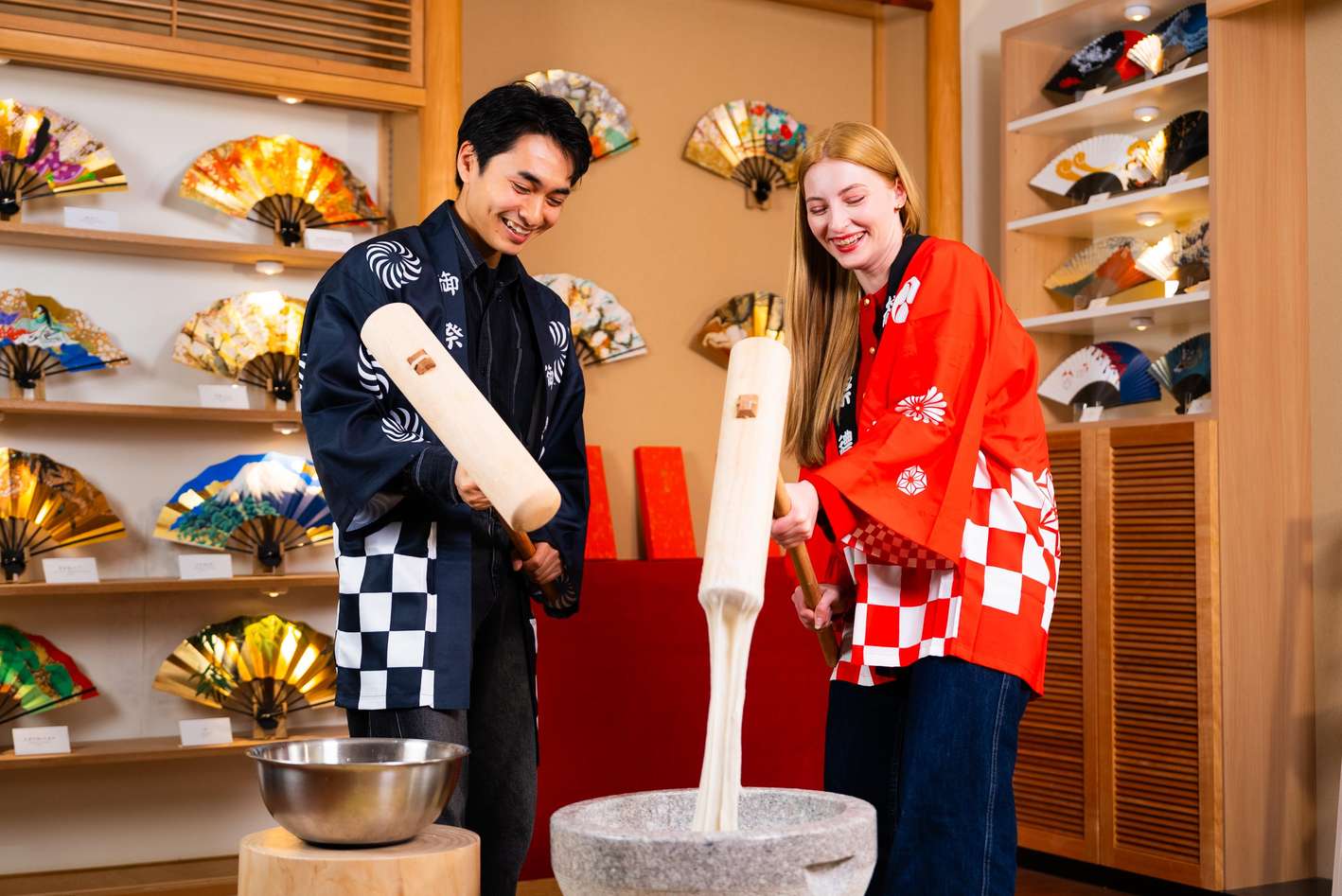
Kyoto is your base, and these two cities each stage live pounding with a different feel. Here is what sets them apart.
Festival pounding with a crowd cheering your swing
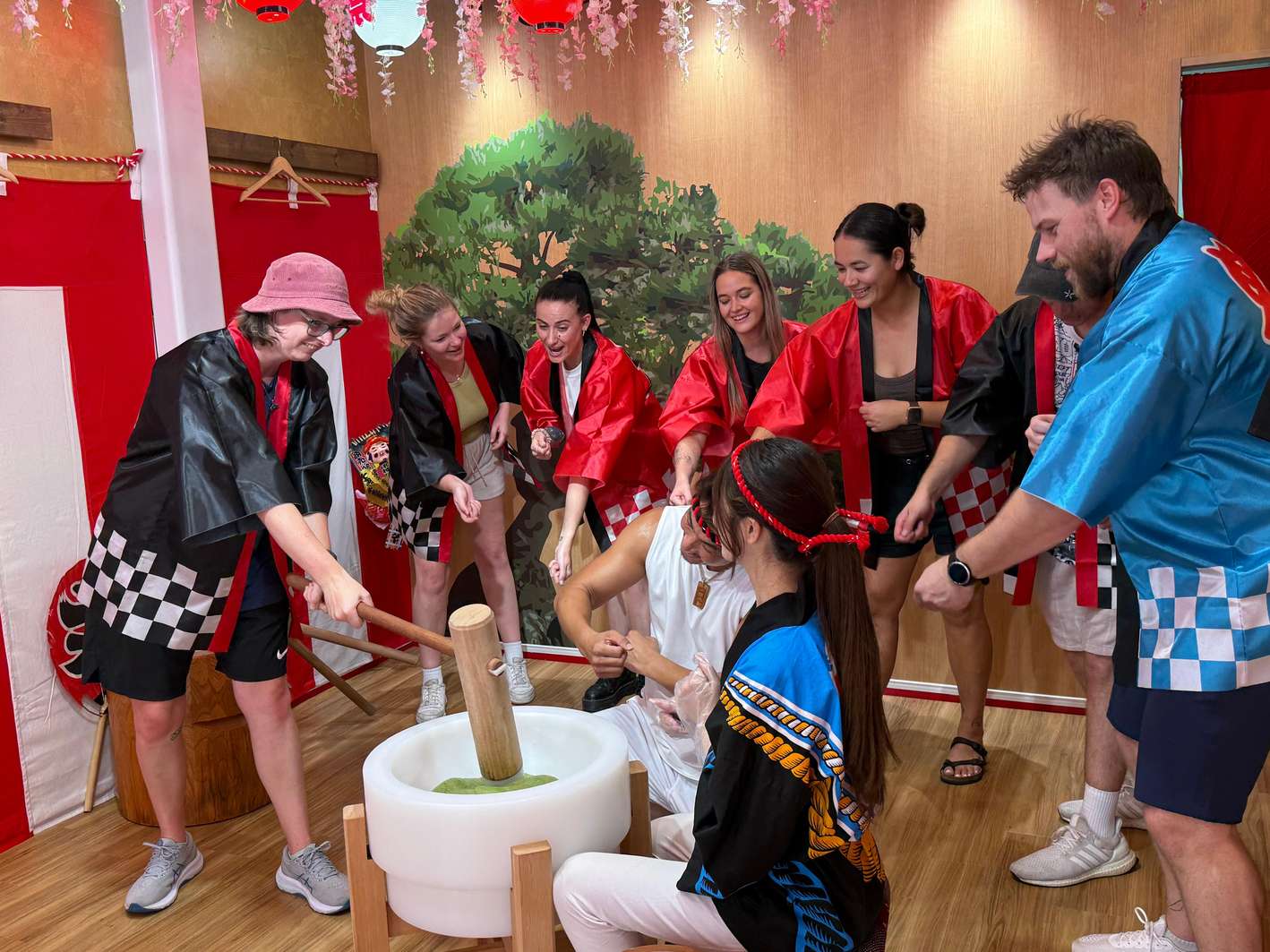
Kuromon Market sits a five-minute walk from Kintetsu Nippombashi Station, and the pounding there runs like a street festival.
You grab a giant mallet, chant with the crowd, and learn the cultural meaning behind the tradition while the rice goes into the mortar. The whole thing takes about 25 minutes, so it slots into a market morning easily.
Book ahead, because every person entering needs a reservation and there is no watching from the doorway. The session suits people aged 13 to 70, and the fresh mochi comes with kinako, sweet red bean paste, nori, and sweet soy sauce. Come hungry; the pieces add up.
Booked studio sessions with sumo wrestlers and master instructors
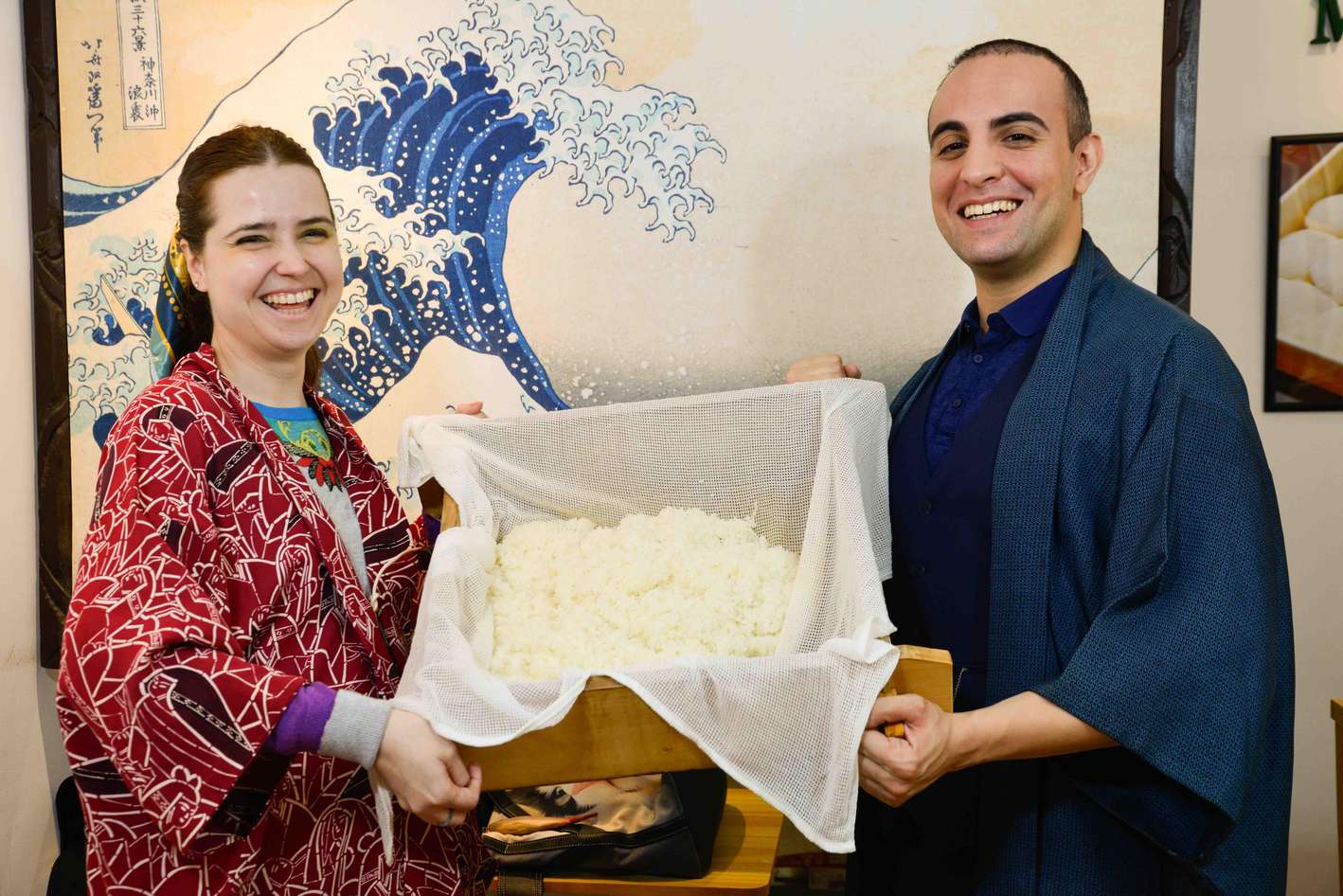
Tokyo has no famous street-front pounding shop, so the shows happen indoors on schedules you can plan around.
Sumo wrestlers pound mochi at Tokyo Tower four times a day, at 11 am, 2 pm, 5 pm, and 8 pm, and you can try a strike yourself. Sumoland in Ryogoku runs daily dining sessions alongside former wrestlers.
For something more personal, the Asakusa studio hands you a happi coat and a wooden mallet and asks you to shout a wish with every strike.
The Shibuya workshop goes plant-based, with tamari instead of soy sauce. Both run about an hour and take bookings in advance, which is the only reliable way to see pounding in Tokyo.
The lightning-fast pounding video you saved was shot in Nara. Kyoto runs its live sessions indoors, on booked times, and this guide walks you from the street gamble to a seat at the mortar.
The famous high-speed pounding video was shot in Nara, and the street show there lasts two to three minutes behind rows of spectators.
Kyoto street demos happen a few times a day at best, and traditional shops commonly close on Tuesdays or Wednesdays.
A booked session fixes everything: one operator runs daytime pounding at 11 am and 12:30 pm, plus evening tea-pairings at 6:30 pm and 8:30 pm.
The one-hour session needs about 75 minutes door to door; the tea-ceremony pairing runs 1.5 hours and the two-hour class adds more styles of mochi.
Eat the warm mochi in small bites with tea nearby, and take leftovers back the same day, never into the fridge.
If you want a live mochi making show with a time you can rely on, book a reserved session in advance. Operators run scheduled daytime and evening slots, and cancellation is free up to 24 hours before the start.
The clip that sent you here shows pounding fast enough to blur the mallet, rice slapped flat and gathered again in a blink. That shop sits in Nara, a 40-minute Kintetsu Limited Express ride from Kyoto Station, and the demonstration there is free to watch, with buying a piece optional.
The show itself runs two to three minutes. Crowds gather within seconds on the pavement outside the plate-glass window, several rows deep, and anyone arriving after the shouting starts sees nothing but backs and phones. An employee manages the crush because the sidewalk blocks the road.
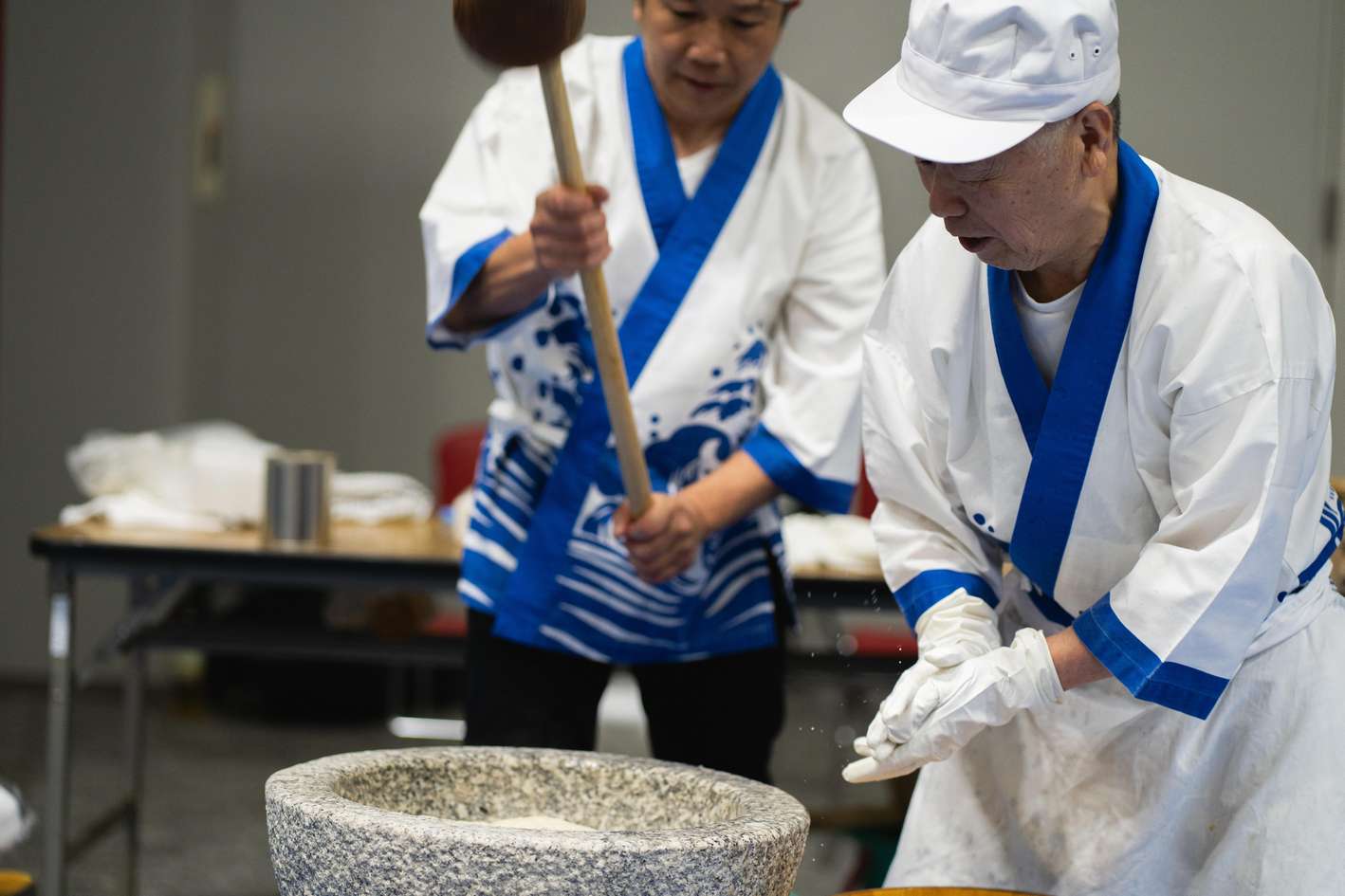
That speed is a modern televised spectacle; the old household pounding moved at a steadier beat. Kyoto answers with reserved indoor sessions, where a professional pounder works a stone mortar in front of a small group, and you watch every strike from a metre away.
| Nara street show | Kyoto street demos | Booked Kyoto session | |
|---|---|---|---|
| Schedule certainty | Roughly every 30 minutes, as demand allows | A few times a day, only if lucky | Set times you book in advance |
| Viewing | Rows deep on the pavement | Standing room, first come first served | Unobstructed, close to the mortar |
| Cost | Free to watch, cash for mochi | Free to watch | Paid, tasting included |
| Suits | Day-trippers who time it right | Walkers who accept the risk | Anyone with a fixed itinerary |
A booked session trades the crowds for the whole show: every strike seen from close up, a tasting straight after, and a start time you can plan around.
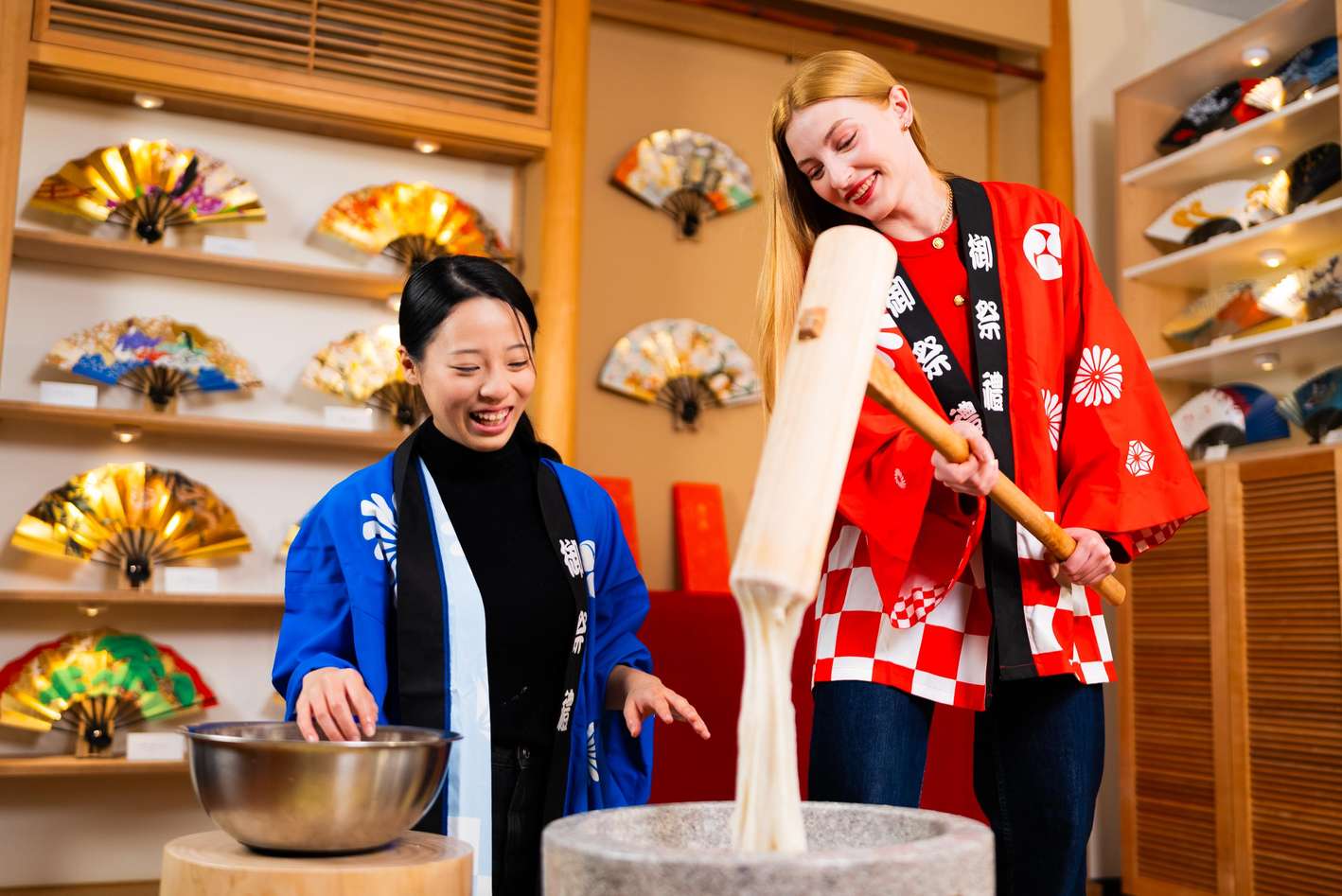
Osaka runs its own version, and it feels nothing like a quiet classroom. Near Kuromon Market, a festival-style session hands visitors a large wooden mallet and lets them pound to lively chants, with the cultural meaning of the tradition explained along the way. One operator there runs live performances with homemade daifuku.
The slots are fixed: daily sessions start at 10 am, 11:30 am, 2 pm, 3:30 pm and 5 pm, and each runs about an hour. Kuromon Market sits a five-minute walk from Kintetsu Nippombashi Station, so it slots into a market morning easily.
Two rules shape the visit. Every person entering needs an advance reservation, because there is no watching from the doorway. And the age window matters: one session there suits people aged 13 to 70, while another excludes anyone older than 76, so check which session you are booking before you promise the grandparents.
Children under 5 sit out the adult sessions but can join family plans with smaller mallets. Children never attend unaccompanied. Come hungry, because the finished mochi comes topped with kinako, sweet red bean paste, nori and sweet soy sauce, and the pieces add up.
If you are sleeping in Osaka, this page covers the details: Mochi pounding show in Osaka.
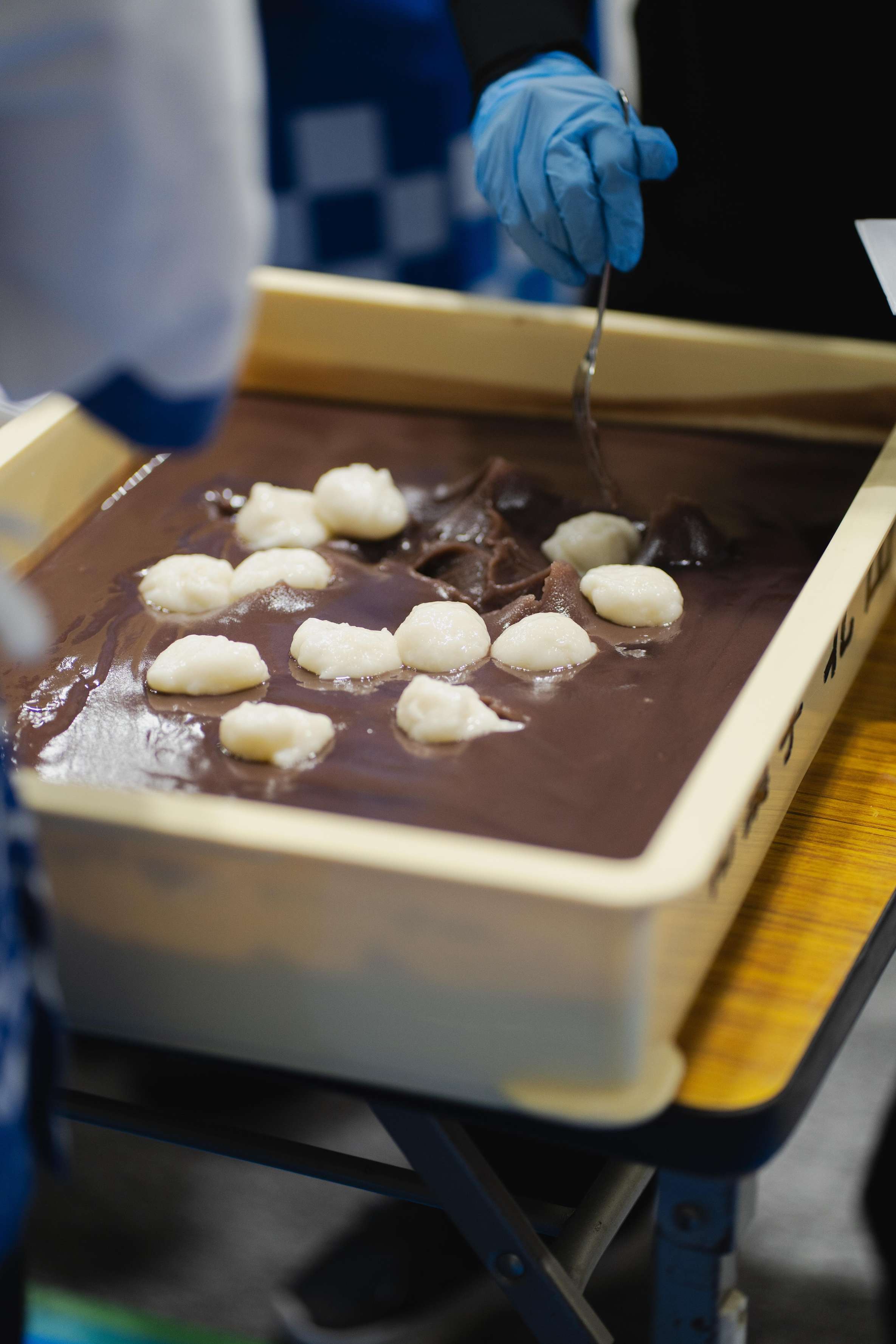
Tokyo plays a different game again. There is no famous storefront with a mortar behind the glass, so the pounding lives indoors, on schedules you book around. Travelers say the city offers mostly studio classes, and they advise reserving ahead.
The headline act is wrestlers. Sumo demonstrations happen at Tokyo Tower and at Sumoland in Ryogoku, where former wrestlers pound mochi alongside the dining. Walk-in guests can catch the Tokyo Tower restaurant show if seats are open.
Around New Year, temples and hotels stage their own performances, though some events sell paid tickets in advance with nothing sold on the day.
Studio rules are strict. One Asakusa shop asks for reservations at least two days ahead, and at its tasting session nobody enters just to observe, for hygiene reasons. Everyone registers as a participant.
English instruction is standard, built for beginners with no cooking background. One allergen note for celiac travelers: a Tokyo workshop there prepares ingredients without wheat, dairy or eggs, but soy is present and sesame may be, and the shared kitchen is not a dedicated allergen-free facility.
The full rundown lives here: Where to watch mochi pounding in Tokyo.
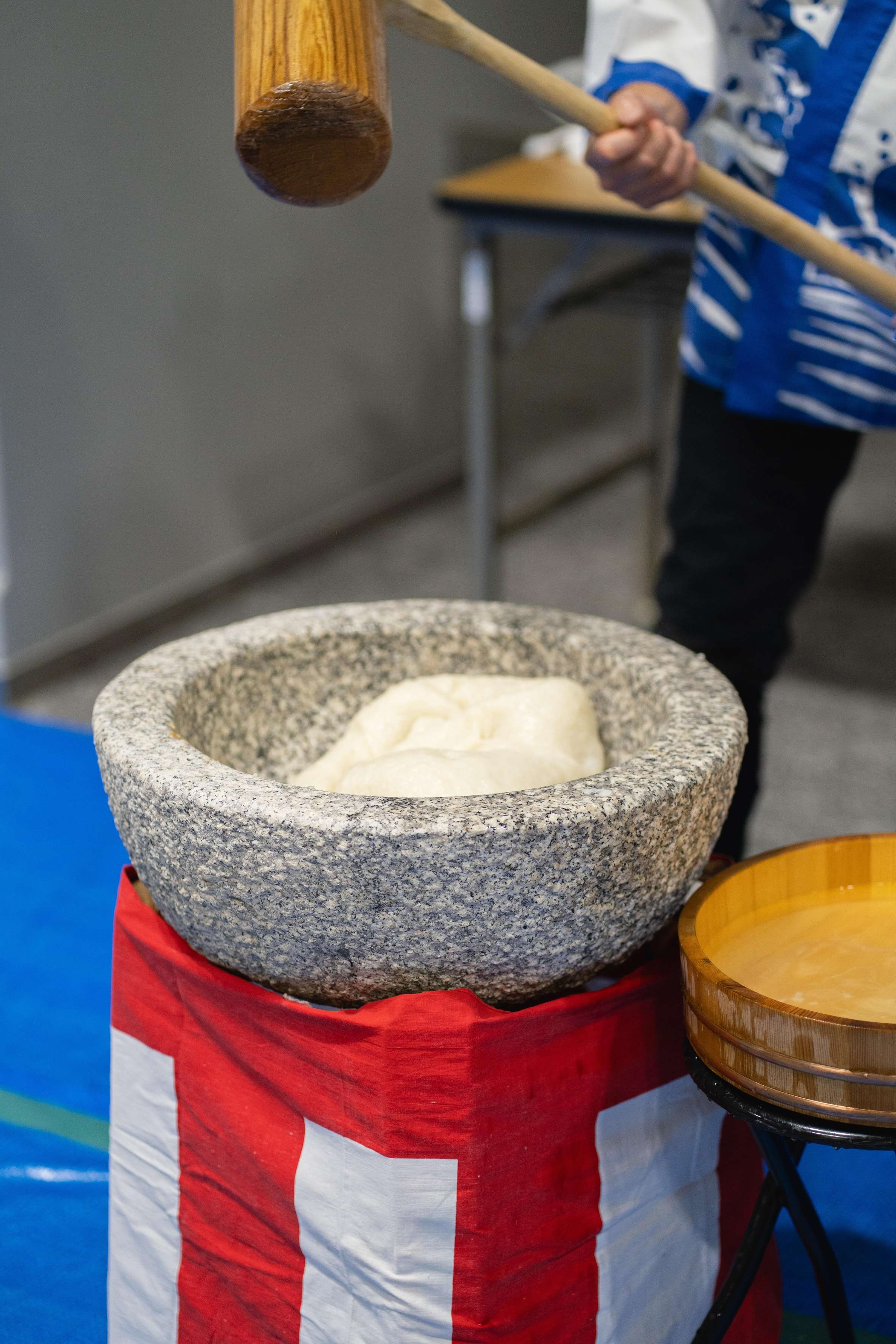
Within the city, one shop near Kiyomizu-dera in Higashiyama runs live mochi-pounding demonstrations you can catch as you walk the temple slope. For traditional shops with hand-pounded mochi, Arashiyama holds several specialists, and Gion keeps its own sweets traditions.
Now the honest part. The Nishiki Market shop that once drew travelers for its pounding demonstrations closed at the end of 2019.
Before it shut, reports disagreed about the schedule: one described a daily 1:30 pm session, another said demonstrations happened only a few times a day, and only if you were lucky. Both figures count how often the demo ran, and neither survives the closure, so there is nothing to time today.
The wider pattern is worth memorizing. Traditional Kyoto mochi shops close on a fixed weekday, most often a Tuesday or Wednesday, and when a national holiday lands on that day they open for the holiday and push the closure to the following weekday instead. Reservation-based workshops are the exception, running sessions across the whole week.
Kyoto mochi shops close on a fixed weekday, most often Tuesday or Wednesday Build your shop visits around Tue and Wed, or book a session that runs daily The famous Nishiki Market demo shop has closed outright Don't plan a morning around it; the live demos near Kiyomizu-dera are the walking option
One more detour for mochi pilgrims: near Imamiya Shrine, one of Japan's oldest continuously operating businesses has served roasted aburimochi for more than 1,000 years, skewered, dusted with kinako and finished with sweet white miso sauce.
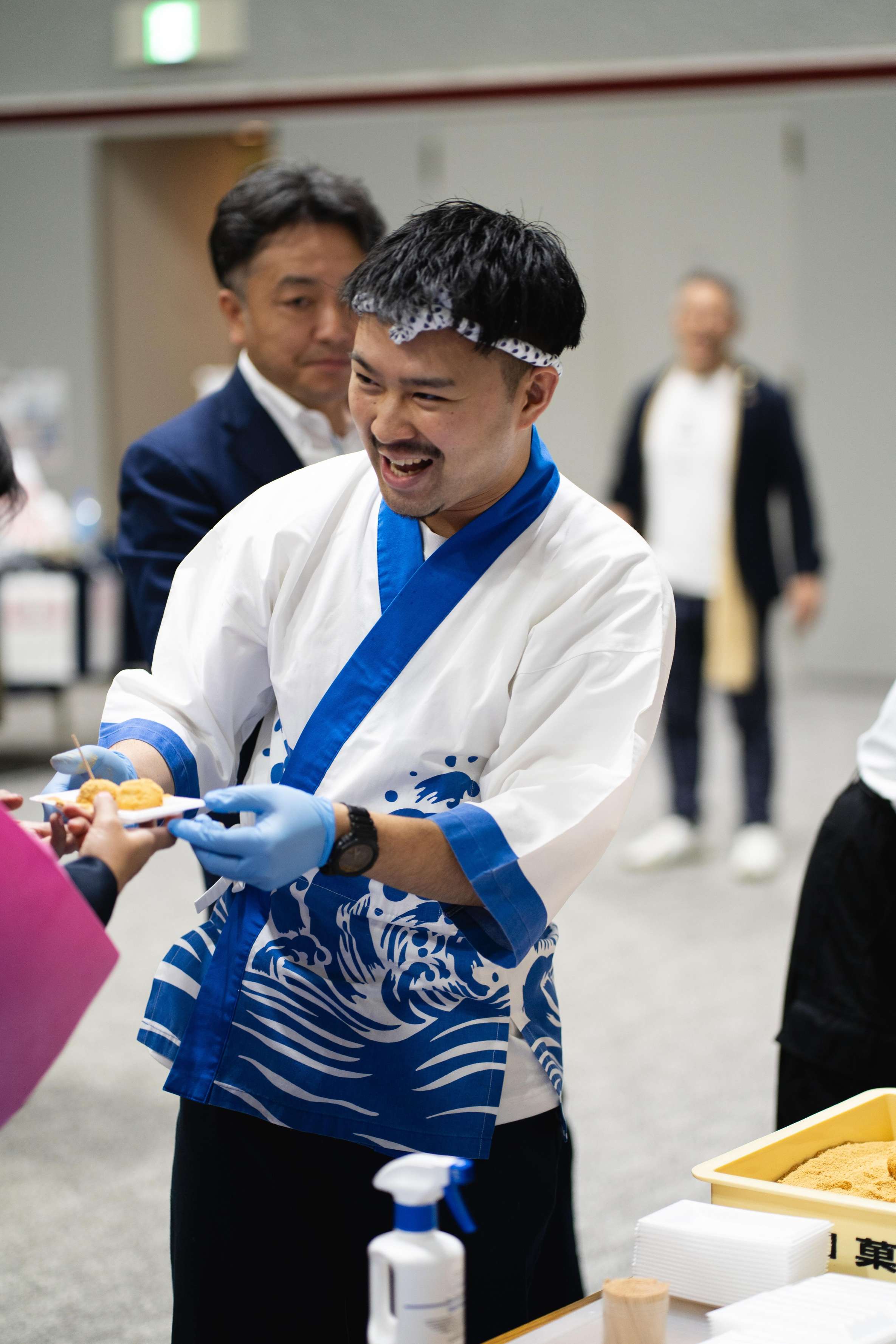
Booking fixes the whole problem. One operator in Kyoto runs regular daytime pounding sessions at 11 am and 12:30 pm, and pairs the pounding with a tea ceremony in the evening at 6:30 pm and 8:30 pm.
Private sessions can be arranged on request in the morning, afternoon or evening, which suits travelers whose temple day refuses to bend.
How long you need depends on which session you pick. The one-hour hands-on session takes about 75 minutes from early arrival to finished tasting: arrive 15 minutes before the start, then the session runs an hour.
The evening pairing that adds a full tea ceremony runs 1.5 hours, and the two-hour class spends the extra time on several styles of mochi and wagashi. Each suits a different gap in your day.
No experience is needed. A Kyoto mochi-pounding and tea ceremony session is described as suitable for beginners, and solo travelers are welcome, so there is no two-person minimum to worry about.
If the evening slot appeals, this is the one that pairs the mortar with whisked Uji matcha and a souvenir from the owner: Kyoto: Mochi Pounding Experience & Tea Ceremony Experience.
It runs 1.5 hours, the pounding is done with traditional tools, the mochi is grilled and eaten warm on the spot, and every explanation comes in English.
Fresh mochi with tea at a traditional counter costs only a few dollars or pounds a portion, so a second taste later that afternoon is an easy yes.
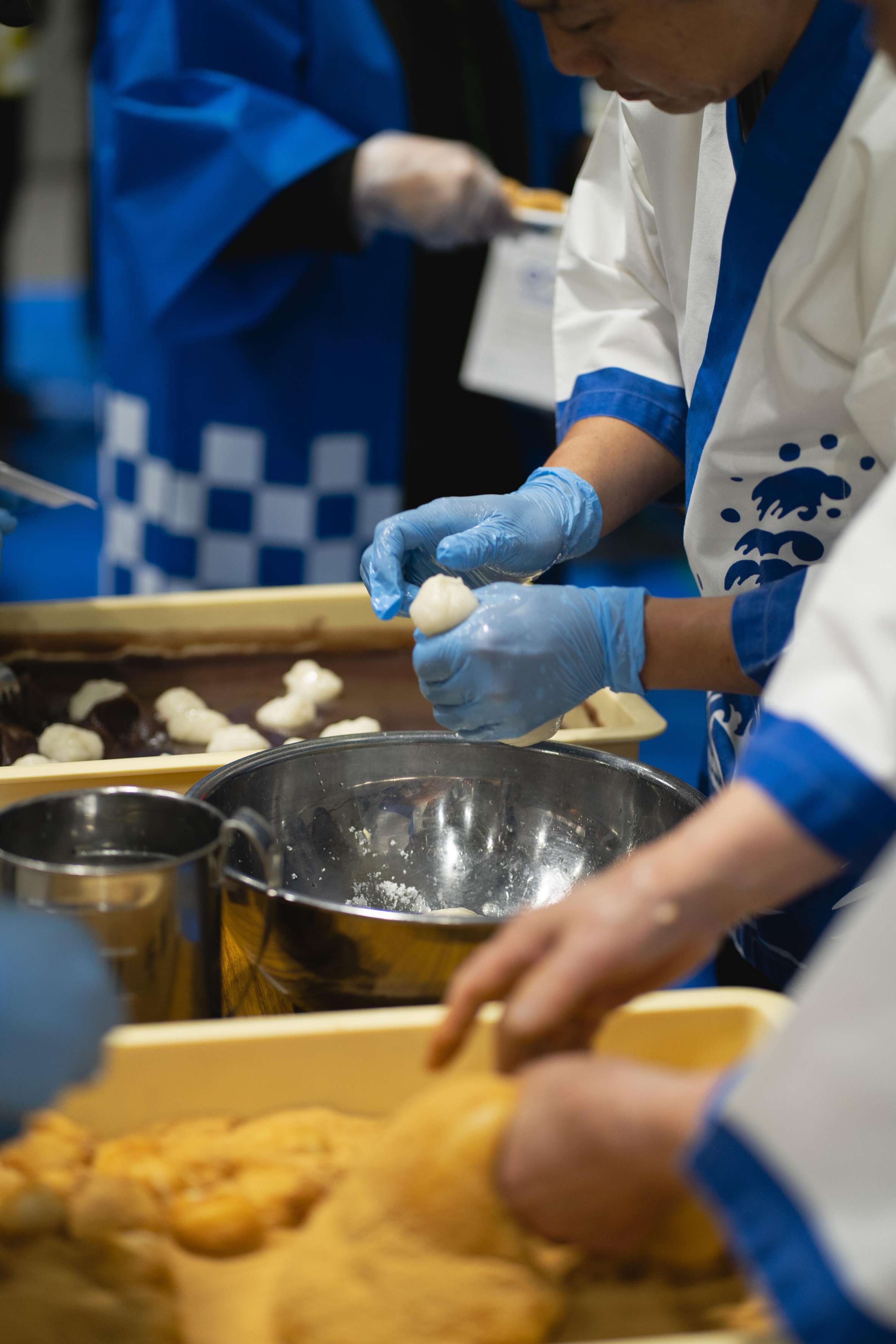
The rice started the night before. Glutinous mochigome soaks overnight, then steams in a bamboo seiro, because steaming keeps each grain intact and avoids the waterlogged, gummy outside that boiling would give it. Cedar steamers lend a faint wood smell you will notice when the lid lifts.
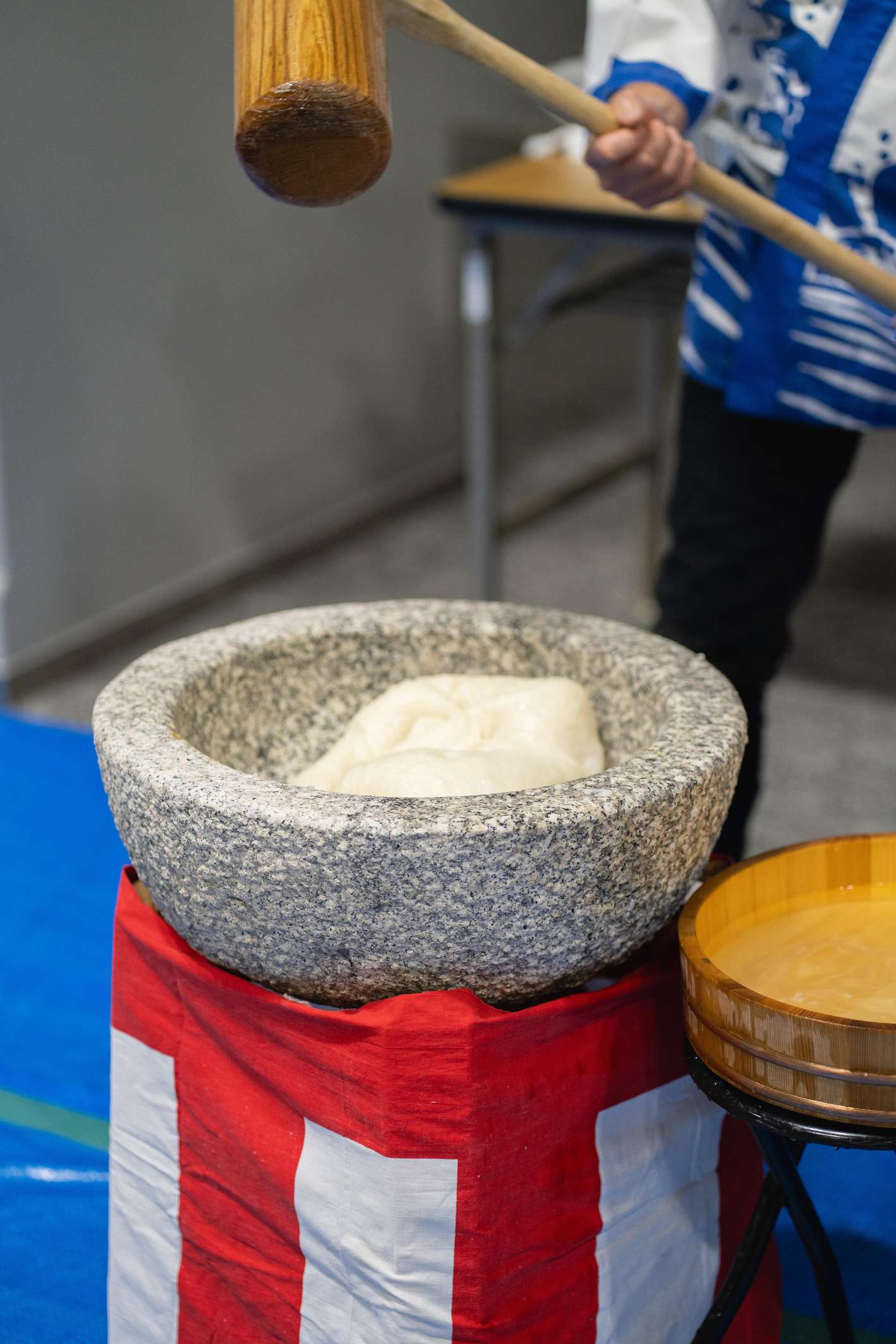
Hot rice lands in the usu, a mortar carved from zelkova, a wood chosen for its hardness and resistance to chipping. Before any real pounding, the mallet tip crushes and gathers the grains into a mass. Then the rhythm begins.
At full pace, the mallet falls three times a second. Between strikes, the turner reaches in with wet hands to flip and fold the dough. The chants you heard in the video, the Yoisho calls, are the safety system: they mark the beat so the pounder and turner never misjudge a swing.
Soaked since the day before
Pounding proper hasn't started yet
Timed on Yoisho chants
The turner keeps kneading in between
Straight to the toppings
The stretch itself is chemistry: glutinous rice carries almost no amylose, so its starch molecules entangle into a network that stretches without breaking. No wheat anywhere in it.
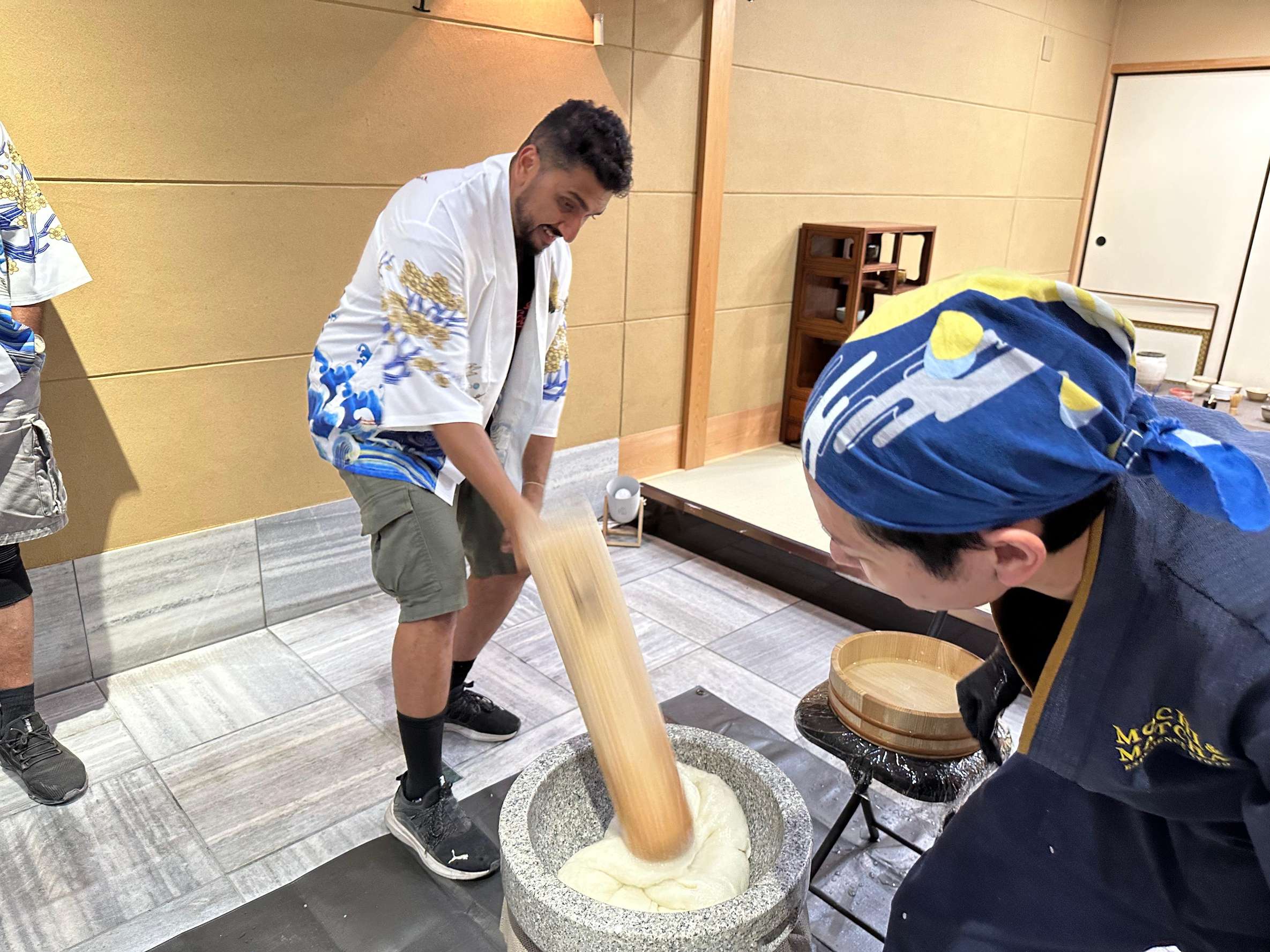
Stand at the mortar's edge and the first thing to learn is where the danger sits. The turner's role stays off-limits to visitors: wet hands flip the dough between mallet strikes, and one mistimed movement meets a heavy wooden mallet.
That is why the role takes practice and trust, and why nobody hands it to a first-timer.
When your own turn comes, the technique is simpler than it looks. Land the mallet flat, square to the dough, so the head strikes cleanly and never chips the mortar's rim into splinters. A wide stance, a straight drop, let the weight do the work.
Bring your phone. Hosts are usually happy to step back and film your group's turn, and many sessions include a photo and video service anyway, with the shots sent to you afterwards. Group photos beside the traditional tools are part of the ritual now.
The wooden kine and stone usu survive for a reason beyond nostalgia: pounding has always been a communal act, as much a gathering as a food process, and the demonstration keeps that purpose. A machine would make the mochi faster and the session hollow.
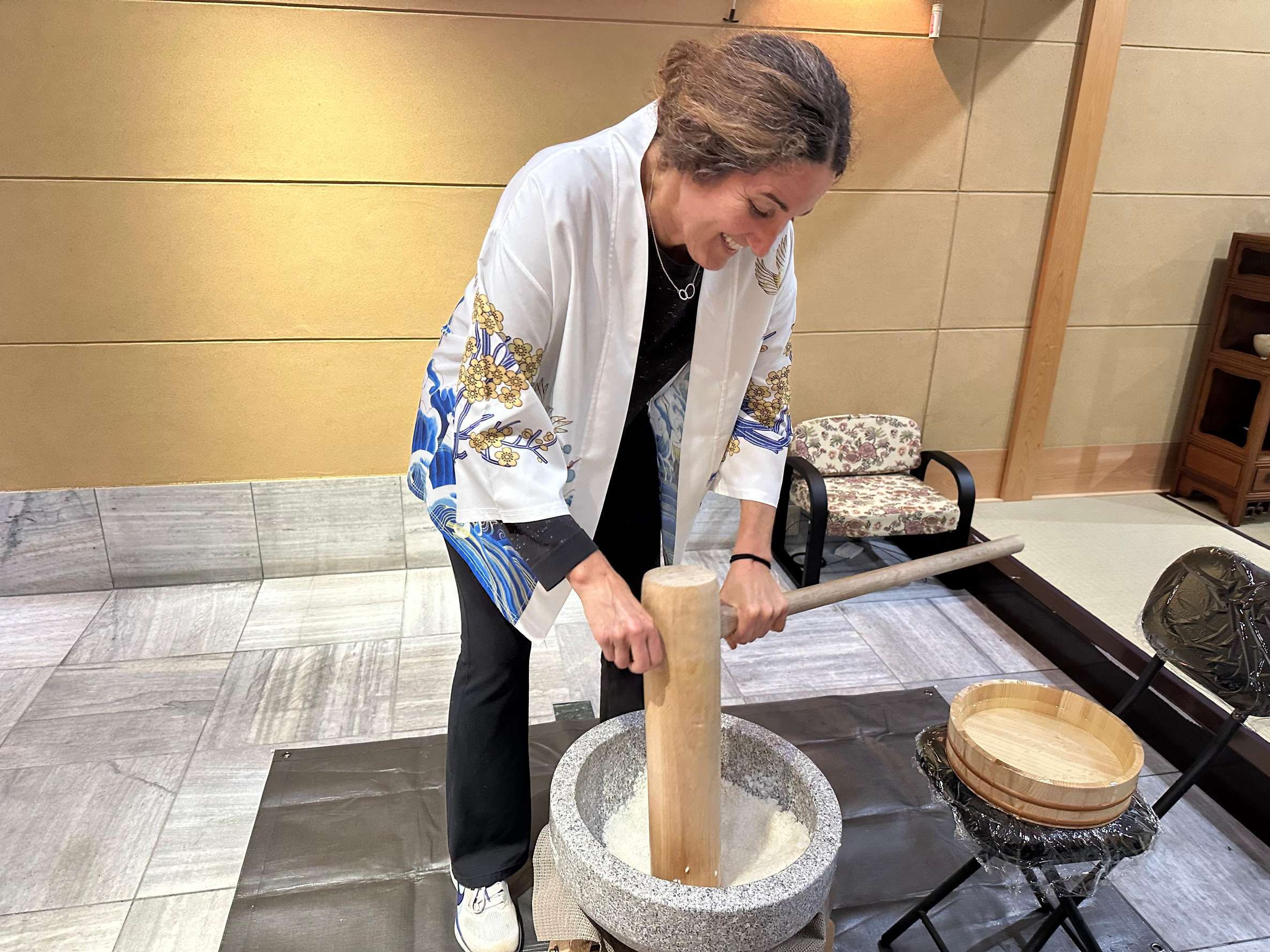
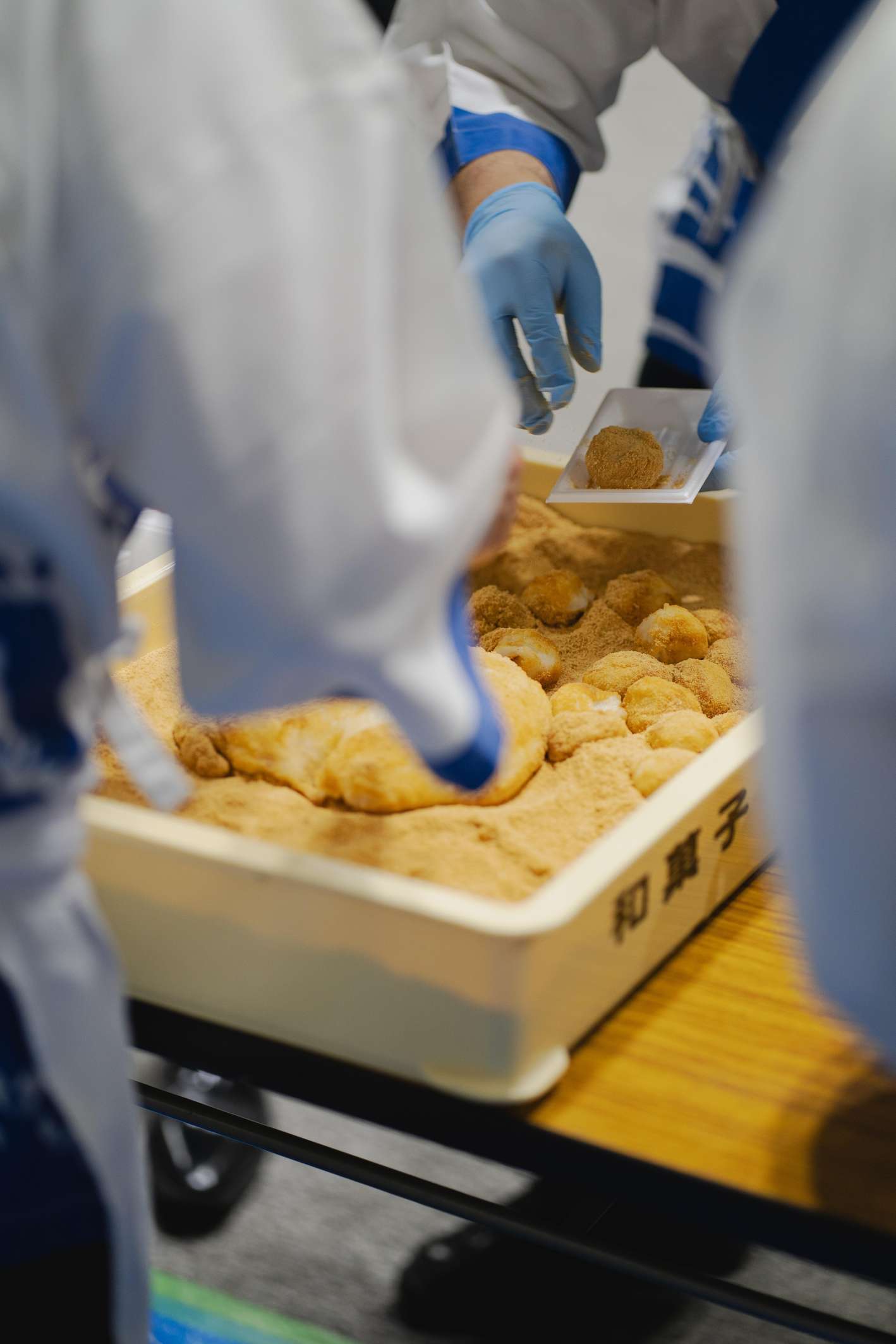
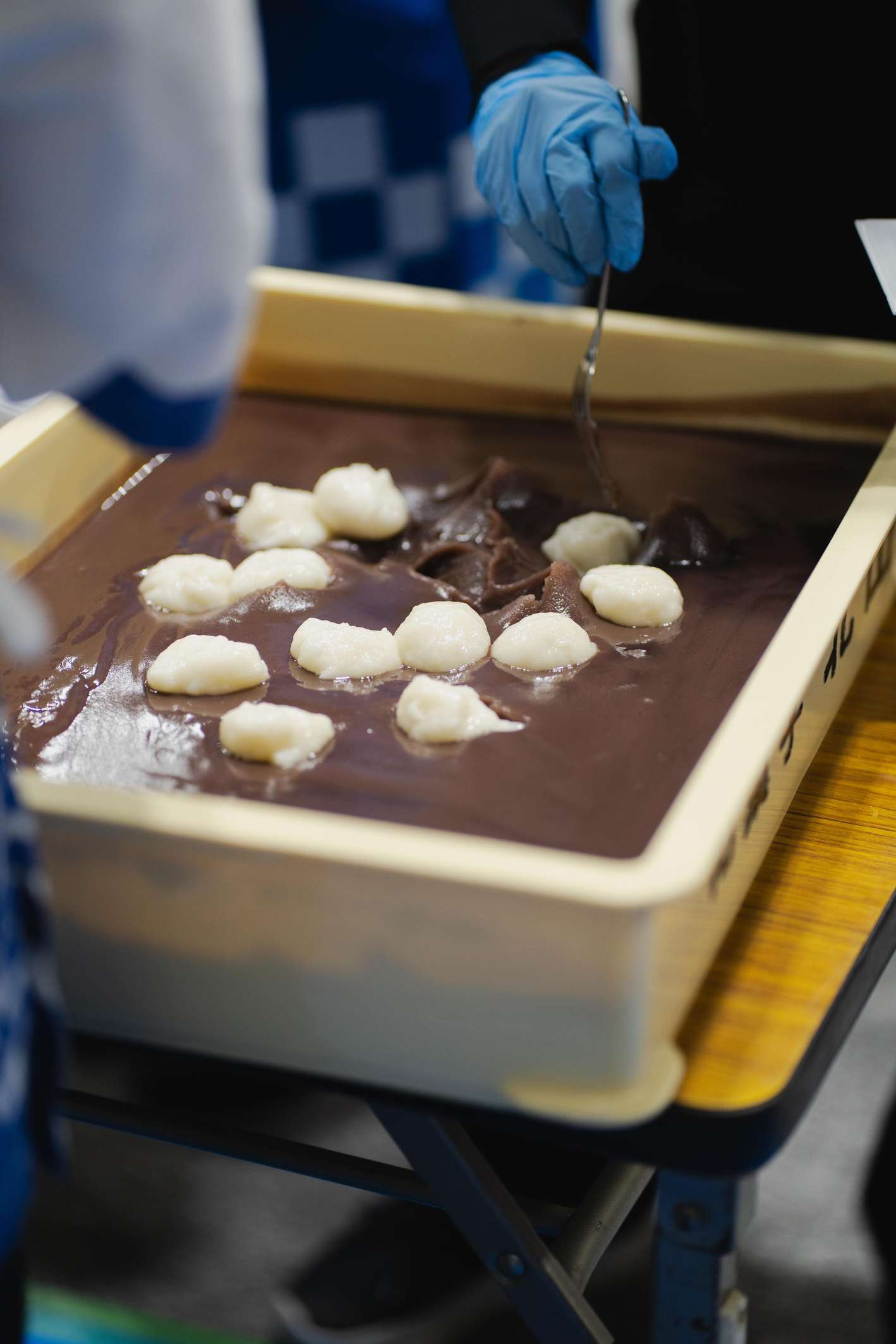
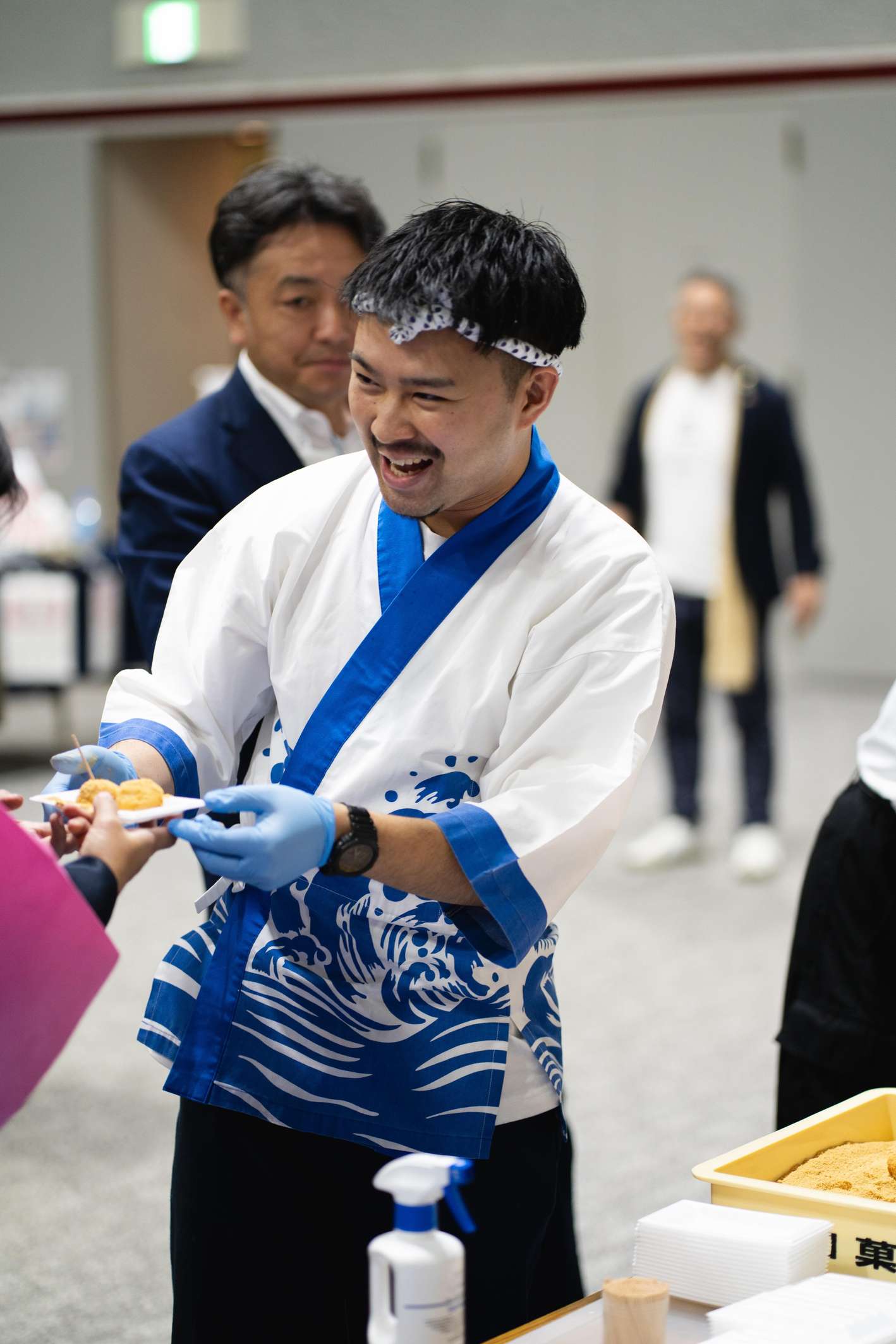
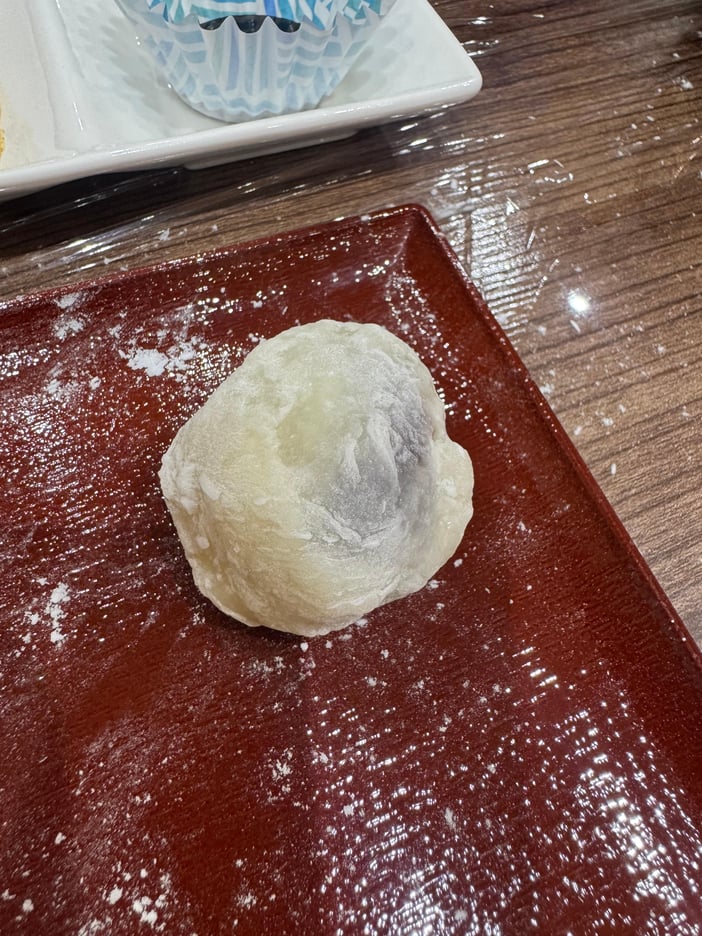
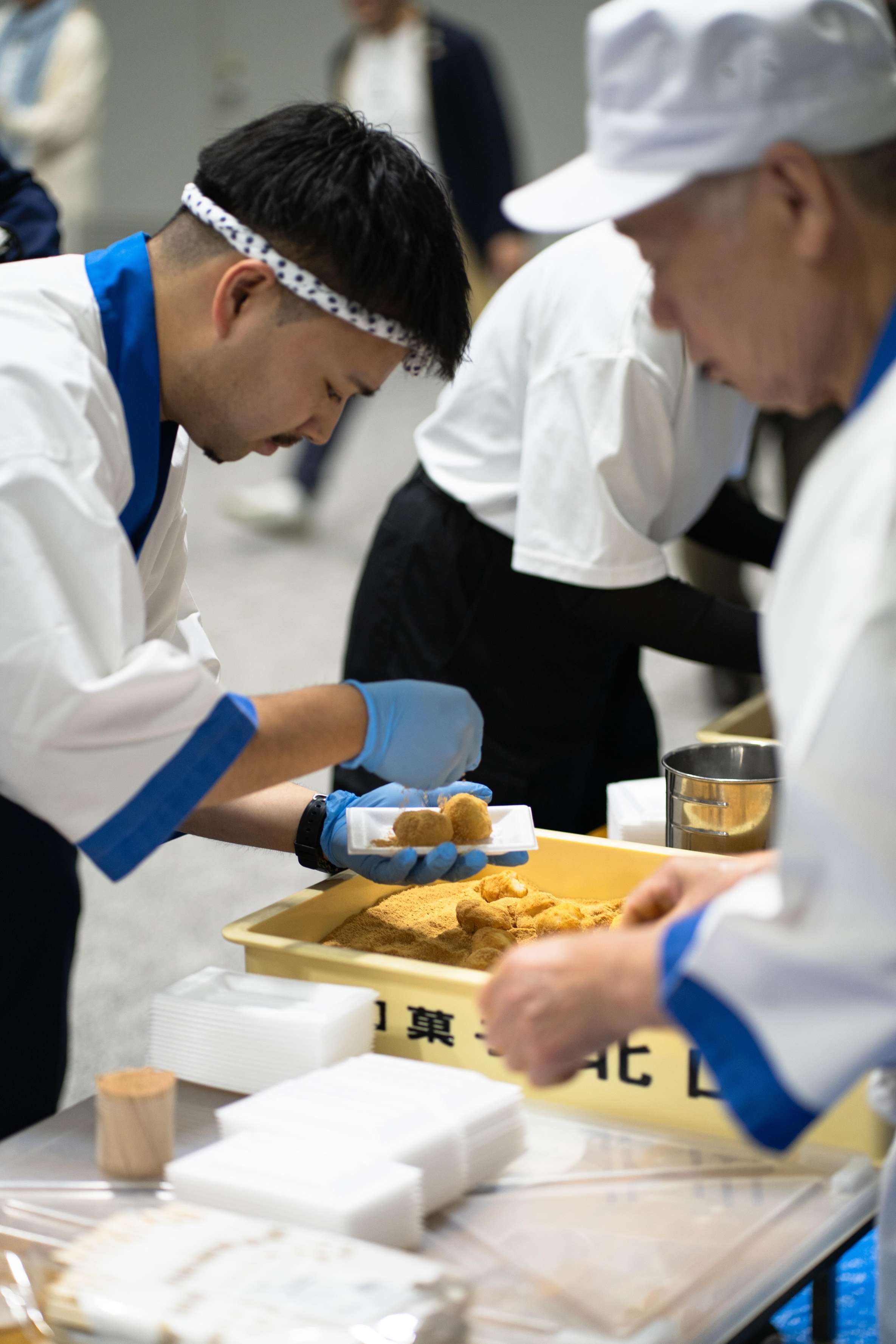
Fresh off the mallet, the mochi lands in your hands soft, warm and faintly sweet, tasting mostly of rice. Kinako, roasted soybean flour, dusts one piece; anko, sweet red bean paste, fills another.
Savory versions exist too, torn into bites and dressed with soy sauce and grated daikon, the way Edo ate its New Year mochi.
Cut it small and chew slowly. Warm, elastic mochi is a genuine choking hazard swallowed whole, and the same sticky quality sits heavy in the stomach if you rush.
Have tea or soup alongside, sip it to wet the throat, and stay seated while you eat. This matters most for children, whose chewing is still developing, and it hardens further as it cools.
Plain mochi is unfilled and chewy; daifuku wraps the same dough around sweet azuki paste for a soft shell with a dense center. Both suit pregnant travelers when the fillings are safe ones, so skip anything with raw egg custard or unpasteurized cream.
Leftovers travel, with rules. Kept covered at room temperature, mochi holds a few hours and should be eaten the same day.
The hotel fridge is the worst place for it: cold recrystallizes the starch and turns it hard and grainy within a night. Grill, boil or microwave it to bring the softness back, or finish it before bed.
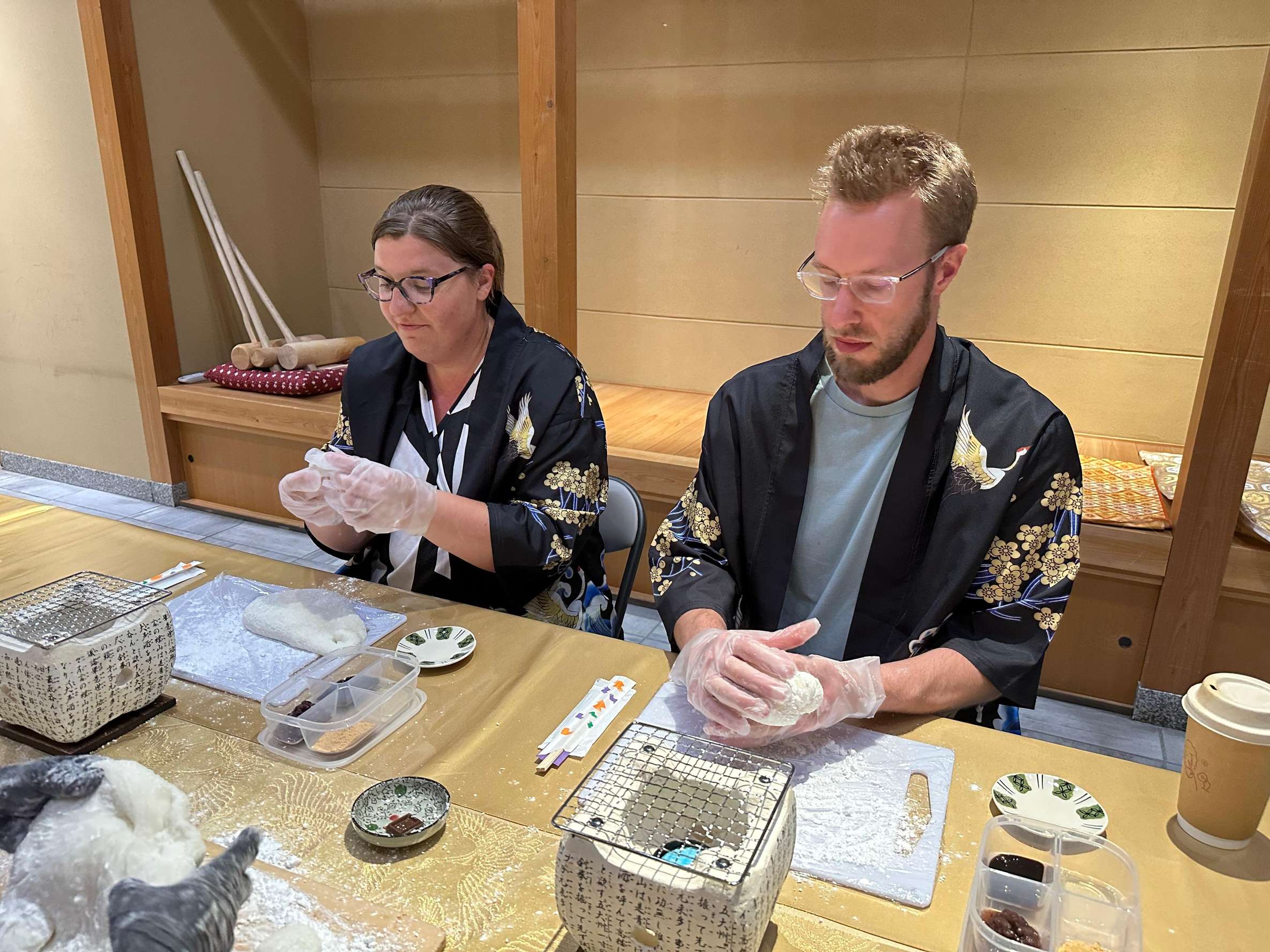
Shoes come off at the entrance. Japanese venues have you leave outdoor footwear at the door before you step onto the tatami, so slip-on shoes and clean dark socks save you the fumbling laces moment in front of the group.
Starch flies. Fine potato starch and soybean flour drift onto sleeves, trousers and feet while you shape the dough, so wear loose, washable clothes with sleeves that roll up, and leave the dry-clean-only fabrics at the hotel. The workshop hands out a happi coat to wear over your clothes, which catches most of it.
Who can join varies by session. Kyoto minimum ages on offer run from 5 and up to 13 and up, and children can pound with smaller mallets. Wheelchair access splits too: one Kyoto experience is accessible, another is not, so match the venue to your group before booking.
Two of the listed experiences say they are not suitable for pregnant women or people with back problems, and pounding is honest physical work, a wide stance and vigorous swings that can leave you sweating. Watching the craftsman remains an excellent consolation, and the tasting comes either way.
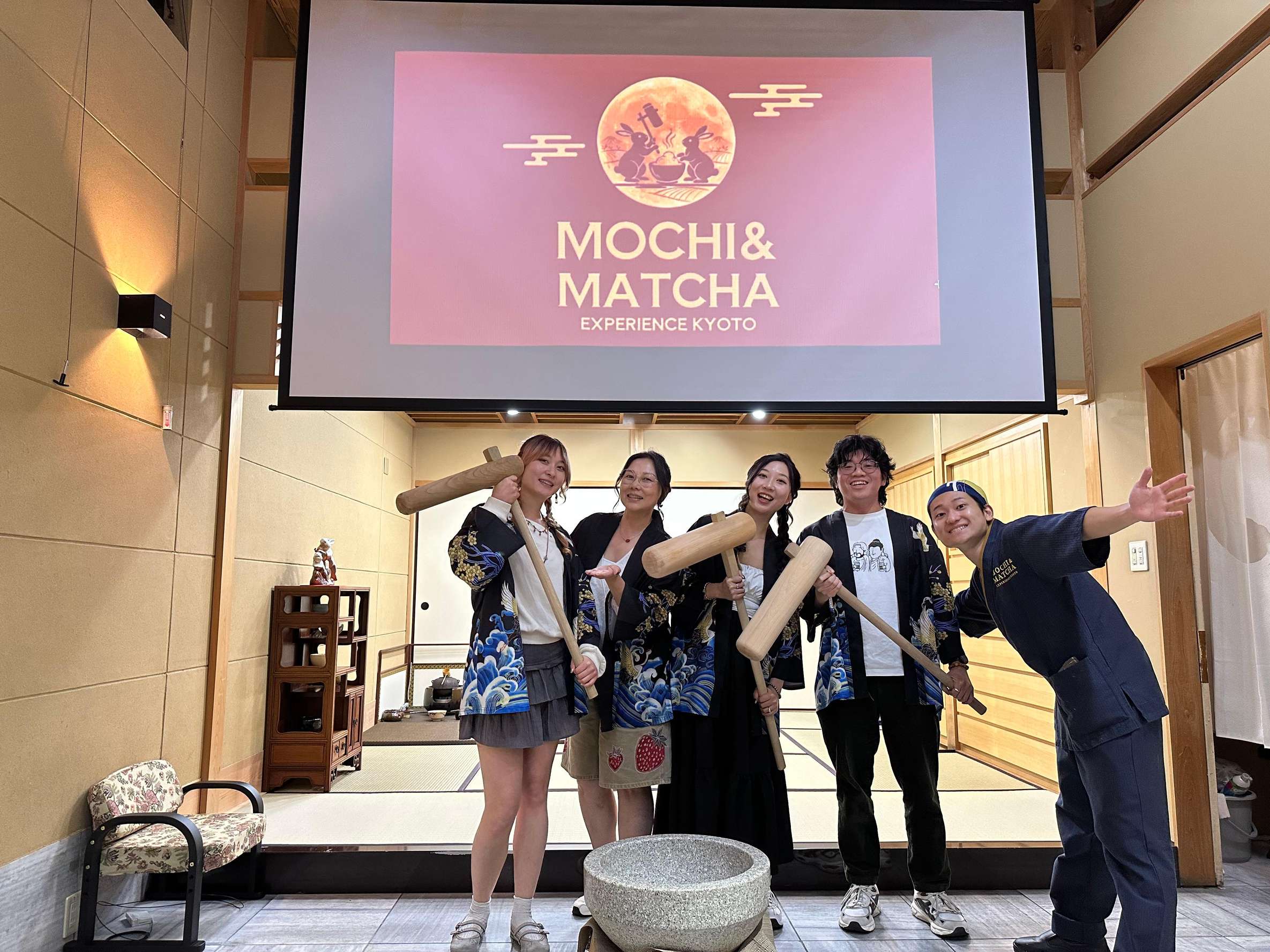
Everything fragile about the street hunt disappears with a reservation: no short-notice time changes, no crowds standing six deep in front of you, no gamble on whether the mortar is even warm. Travelers report that popular shops shift demonstration times on little warning, which is exactly the risk a booked session removes.
Two sessions cover most itineraries. The two-hour Kyoto: Mochi-Making Experience with Tasting gives you the professional demonstration first, then your own turn with the wooden mallet, and a tasting of your mochi with kinako and anko, photos included. The one-hour sessions trim that to the essentials if your temple day is tight.
| Check | Why it matters | Our pick |
|---|---|---|
| Session length | Two hours is a real block in a temple day; one hour fits a gap | Runs 2 hours, demo plus hands-on plus tasting |
| Watching a pro first | You see the master's technique before your own attempt | Professional performance included |
| Hands-on mallet time | The part people remember, and worth the sweat | You pound with the wooden mallet yourself |
| Tasting included | Kinako and anko on fresh mochi beats any shop purchase | Tasting with kinako and anko included |
| Photos | Phone cameras and a live mortar don't mix well | Photo opportunities built in |
Whichever you pick, the terms stay generous: cancel up to 24 hours in advance for a full refund, so booking early costs you nothing if the plan moves.
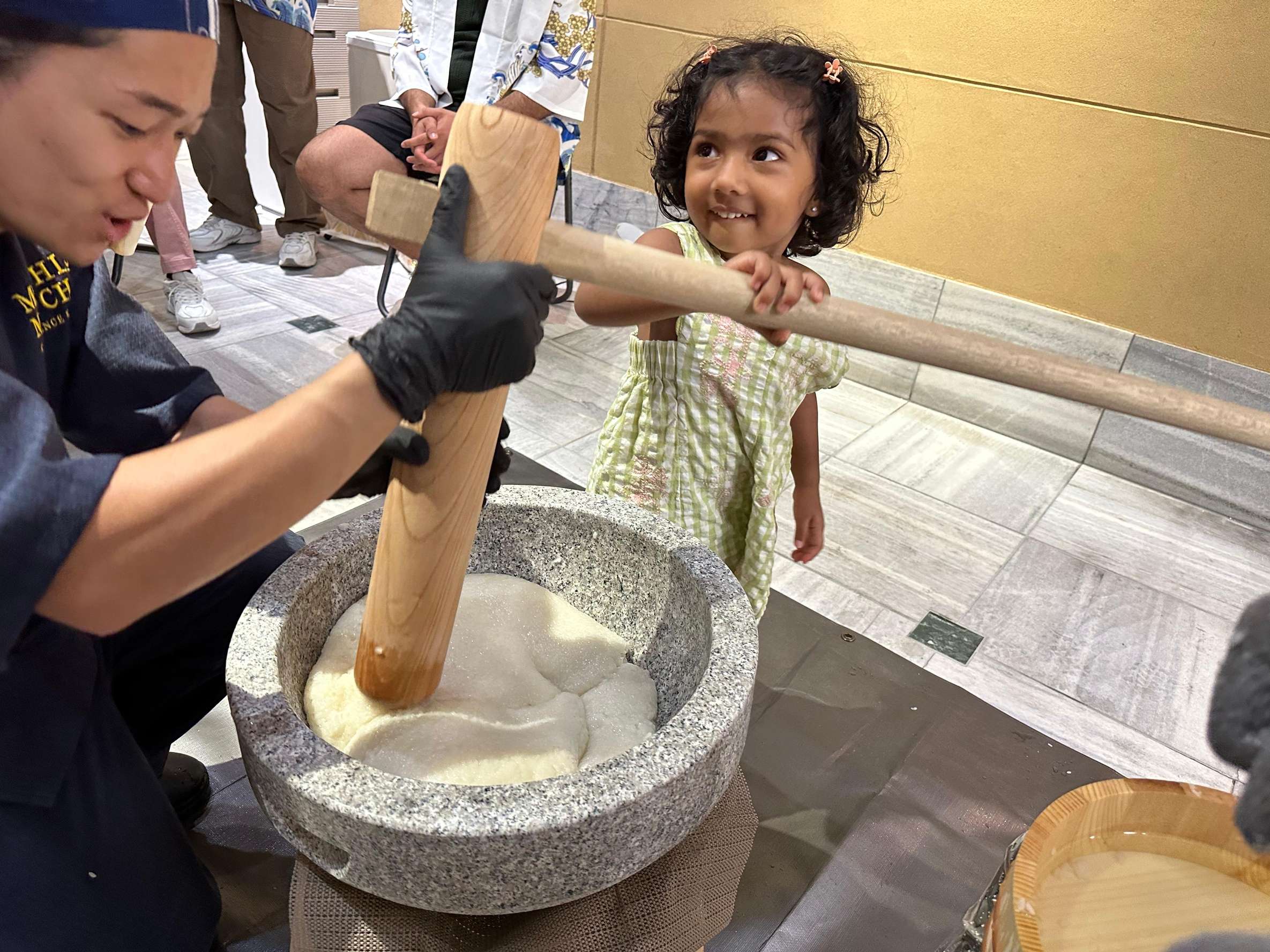
The session's neighborhood rewards an unhurried afternoon. Within a short walk sit Honnō-ji and the Museum of Kyoto, and Maruyama Park closes the list nicely at about 19 minutes on foot.
Kyoto's mochi follows the calendar, which gives you a second hunt after the tasting. Strawberry and mandarin orange daifuku appear from winter into spring, alongside sakura mochi wrapped in salted cherry leaves and fresh mugwort mochi in March and April.
Kashiwa mochi wrapped in oak leaves arrives in May, minazuki with azuki tops the early-summer list, autumn brings chestnut mochi, and January opens with celebratory hanabira mochi finished in sweet miso paste and candied burdock.
Fruit daifuku deserves its own errand. Near the major shrines such as Fushimi Inari, shops wrap whole fresh strawberries in soft, subtly sweet rice dough, and the moisture from the fruit makes these the most perishable of the lot, best eaten within hours.
At the old tea shops serving roasted mochi, complimentary hot tea comes with the wait, so you can sit, sip and watch the counter work while your order is finished. It costs nothing, and it is the calmest mochi experience in the city.
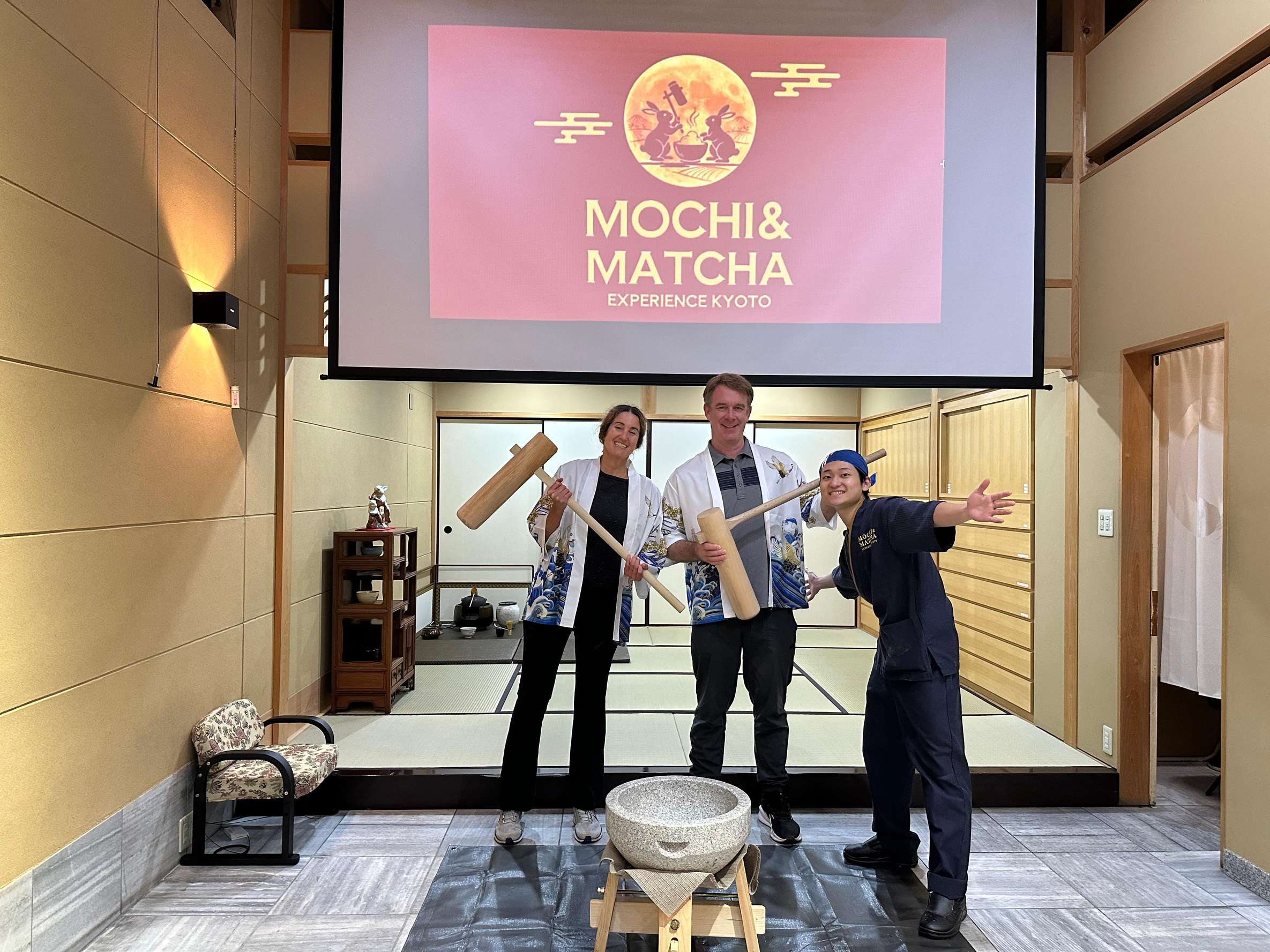
A reserved session is the reliable way to see the pounding up close in Kyoto, and the two-hour class with the professional demonstration is the one to lead with. The street hunt costs nothing but offers no guarantee of a view, so treat it as a bonus alongside a booked session.
If watching is not enough, this guide walks you through booking a hands-on pounding class of your own.
Everything on reserving a mochi class in Kyoto itself, from session length to what you will make and eat.
Heading to the capital? Here is how Tokyo's workshops run, including English instruction and what to bring.
Short answers to the questions travelers ask before booking a live mochi demonstration in Kyoto.
Kyoto2026Two places cover it. A shop in Higashiyama Ward near Kiyomizu-dera runs live mochi pounding for passersby, and a hands-on venue in Kyoto stages scheduled sessions where you watch a professional pounder, then grab the mallet yourself. Between the two, you can see a demonstration any day without leaving the city.
The famous high-speed shop from the viral videos sits in Nara, about 40 minutes from Kyoto Station by Kintetsu Limited Express. Kyoto has its own live demonstrations, though, and booking one here means a guaranteed time slot instead of a street crowd.
Book ahead. One Kyoto operator runs daytime pounding sessions at 11 am and 12:30 pm, evening sessions with a tea ceremony at 6:30 pm and 8:30 pm, and private sessions on request at any of those times. A reservation fixes the schedule; spontaneous shop demonstrations can shift at short notice.
Shops with live pounding tend to hold a few sessions a day, often around midday on weekdays, and the times are not always announced in advance. That is why reserved sessions work better for a packed sightseeing day: the start time is fixed before you leave your hotel.
At Kyoto's booked experiences, yes. Watching a professional come first, then participants take turns with the wooden mallet while chanting "Yoisho" to keep the rhythm. Wear clothes you can move in; the venue lends you a happi coat over the top.
Fresh mochi with classic toppings: kinako roasted soybean flour and sweet anko red bean paste at most sessions. One Kyoto class adds chocolate and honey, another serves yours warm off the charcoal grill, and the tea ceremony session pairs it with matcha whisked from Uji tea.
Yes. The Kyoto sessions run in English from start to finish, with instructors explaining each step of the pounding and shaping. No cooking experience is needed; the hands-on parts are built for first-timers, and staff coach you through the mallet work before you swing.
Plan about an hour for most sessions, an hour and a half if a tea ceremony is included, and up to two hours for the full craftsman performance with grilling and tasting. That fits easily between temple visits in the same part of town.
Watch a professional craftsman pound steamed rice, chant Yoisho as you take a turn, then taste it with kinako and anko. Cancel up to 24 hours ahead for a full refund.