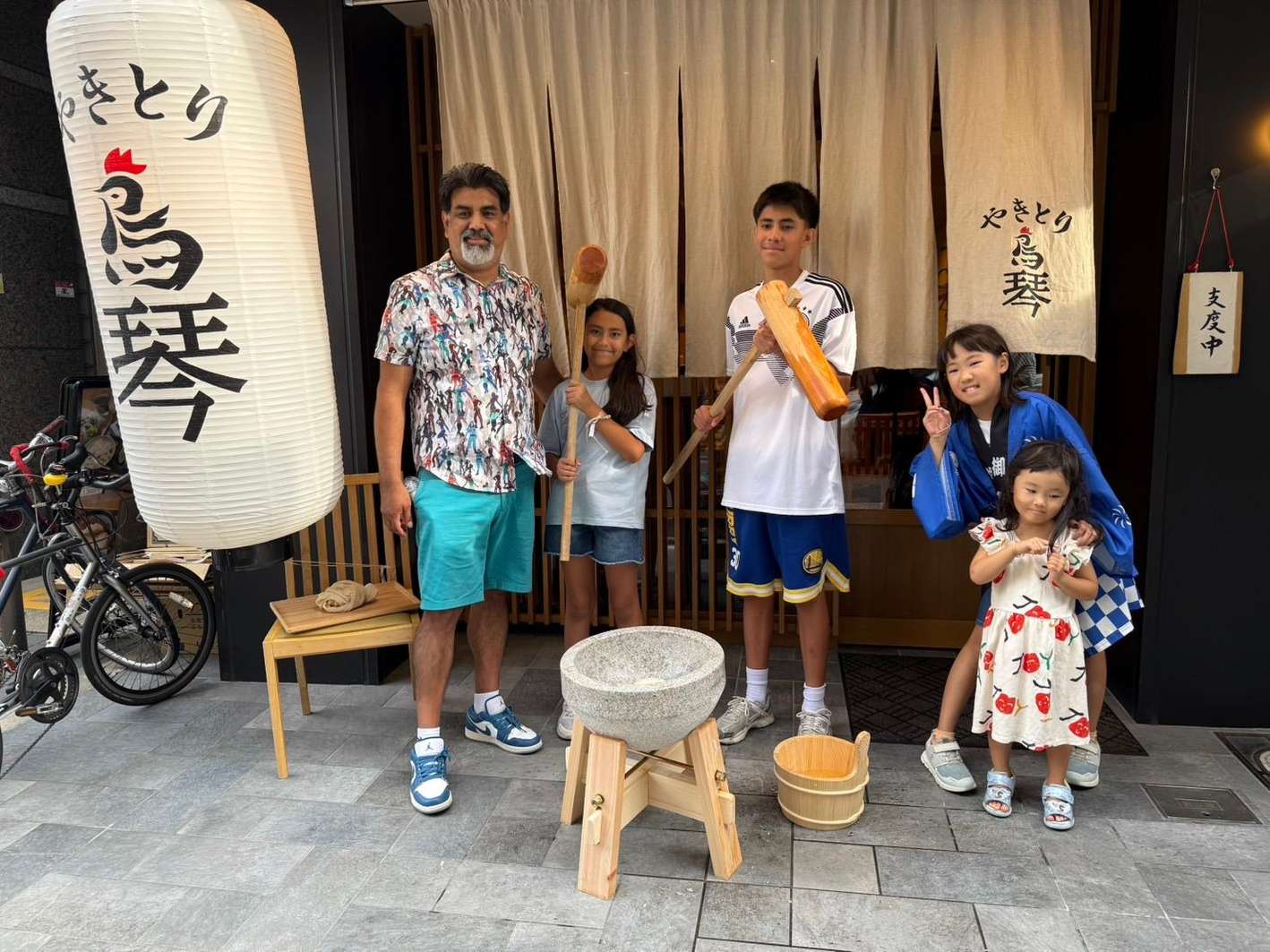
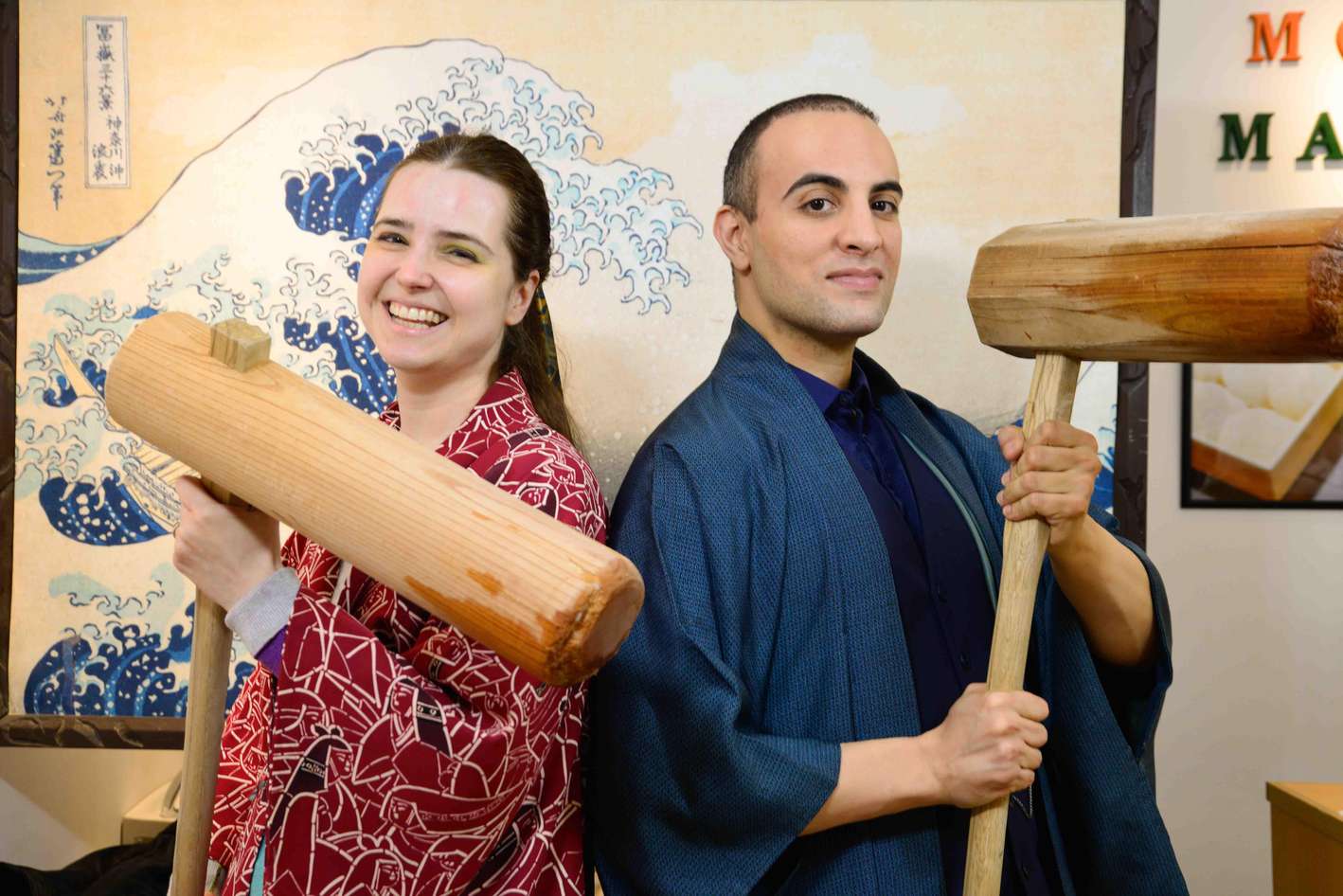
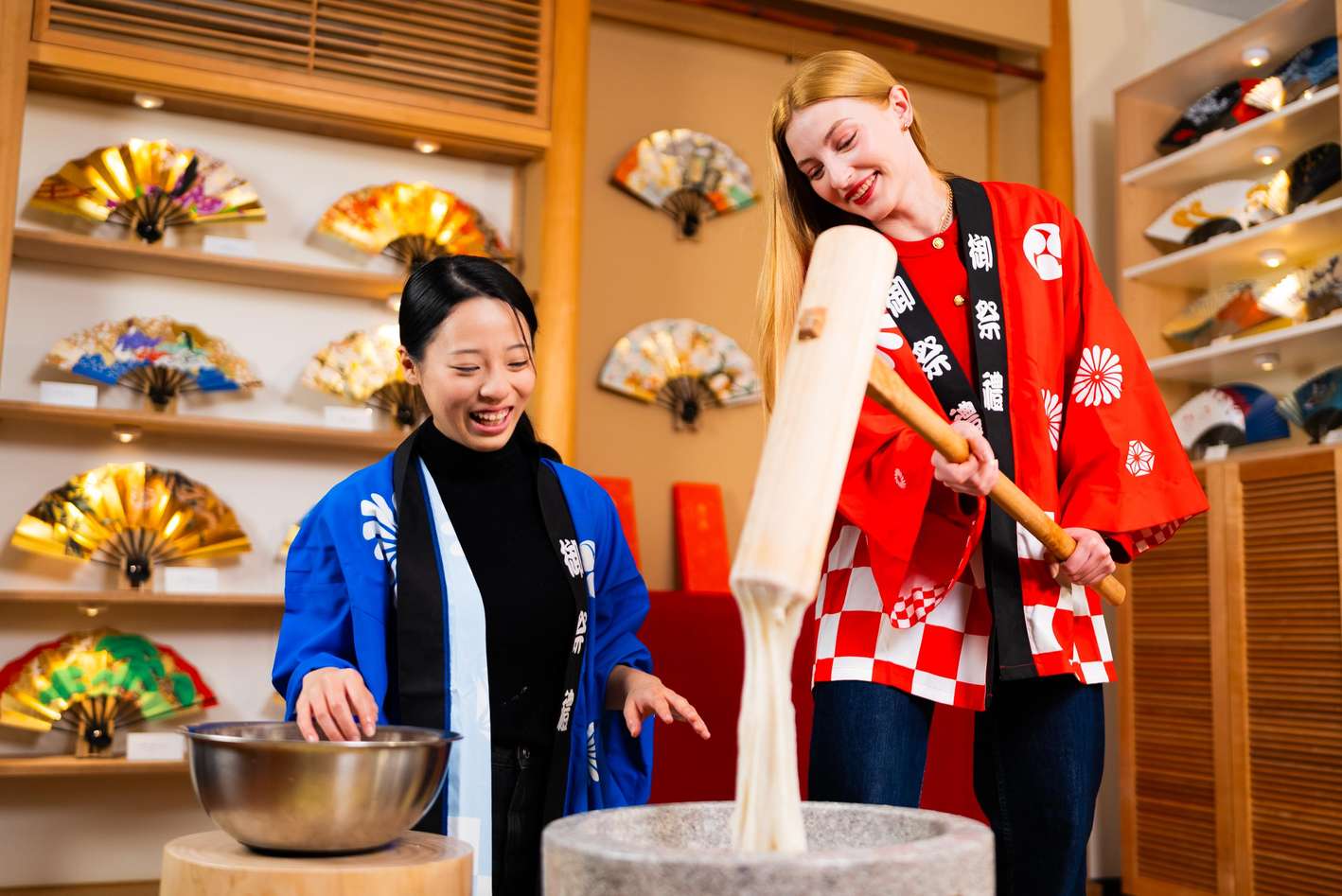
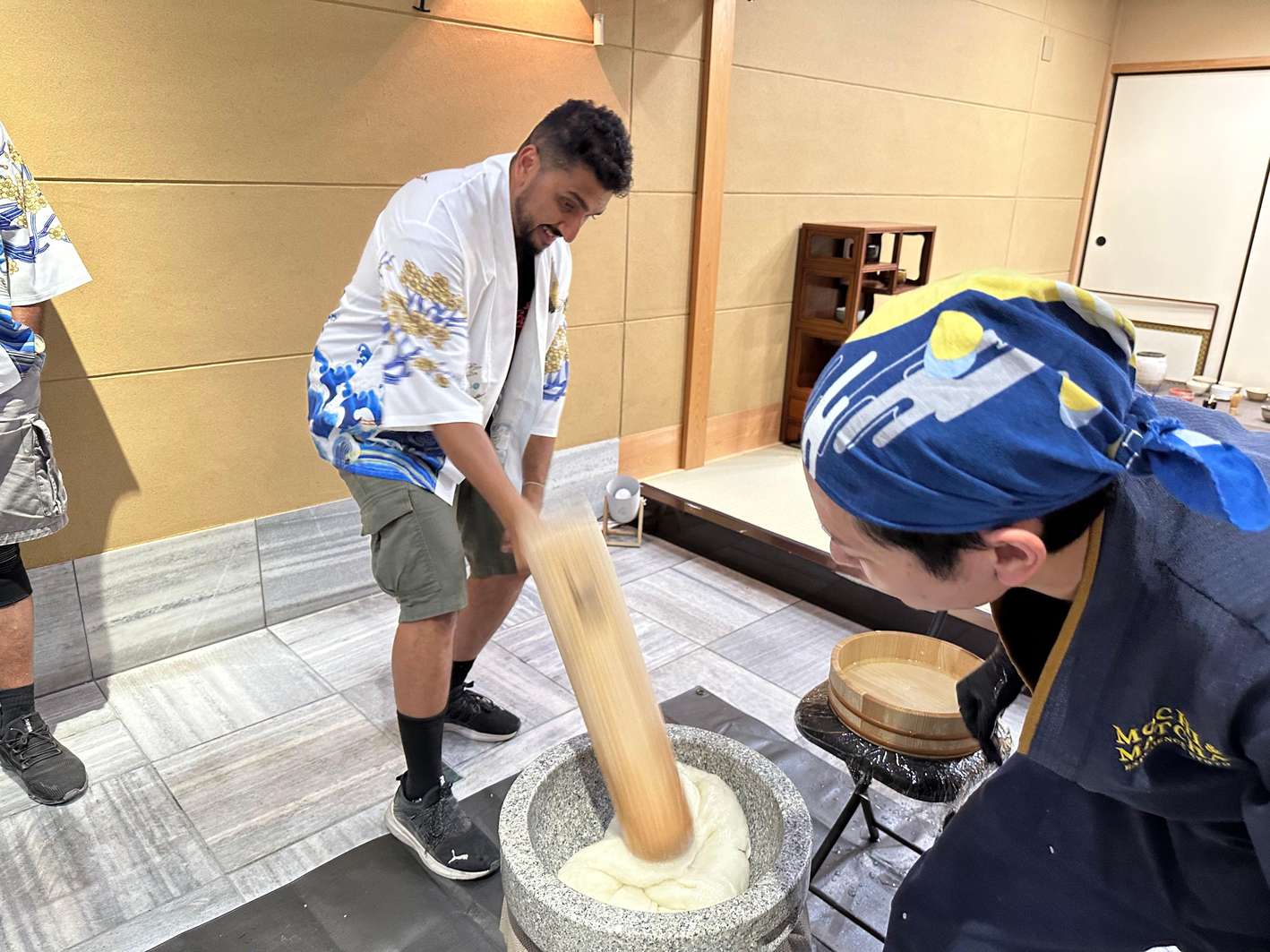
Mochi Making Classes and Experiences Workshop and Pounding Class Options
Book a hands-on mochi making class and lift the mallet yourself. Small-group sessions with English-speaking local chefs, from pounding steamed rice to tasting your own warm mochi with matcha, in about an hour. Pick your city, pick a morning or afternoon slot, and lock in a spot.
"A lovely, authentic experience. The guide was enthusiastic and friendly, and the artist so capable. I learned so much about the techniques. Any art or anime lover visiting Kyoto should add this workshop!"
4.9★average rating719traveler reviews100%free cancellation30countries travelers came from
Making classes - a quick start
Every mochi making class here ends the same way, with warm rice cakes you pounded yourself and eat on the spot. The real choice is what wraps around the pounding: a family session with toppings, a daifuku-making stroll through a shopping street, or a tea ceremony on the side.
BookingReserve ahead; some hands-on venues require every person through the door to hold a booking, and watching only is not allowed.
AgesMinimum ages vary by class, with some welcoming children as young as 4 or 5 and others starting at 13, so pick a family plan if you have younger kids.
ChewingCut freshly pounded mochi into small bites and eat it slowly with tea; it is soft, stretchy and a real choking risk if swallowed whole.
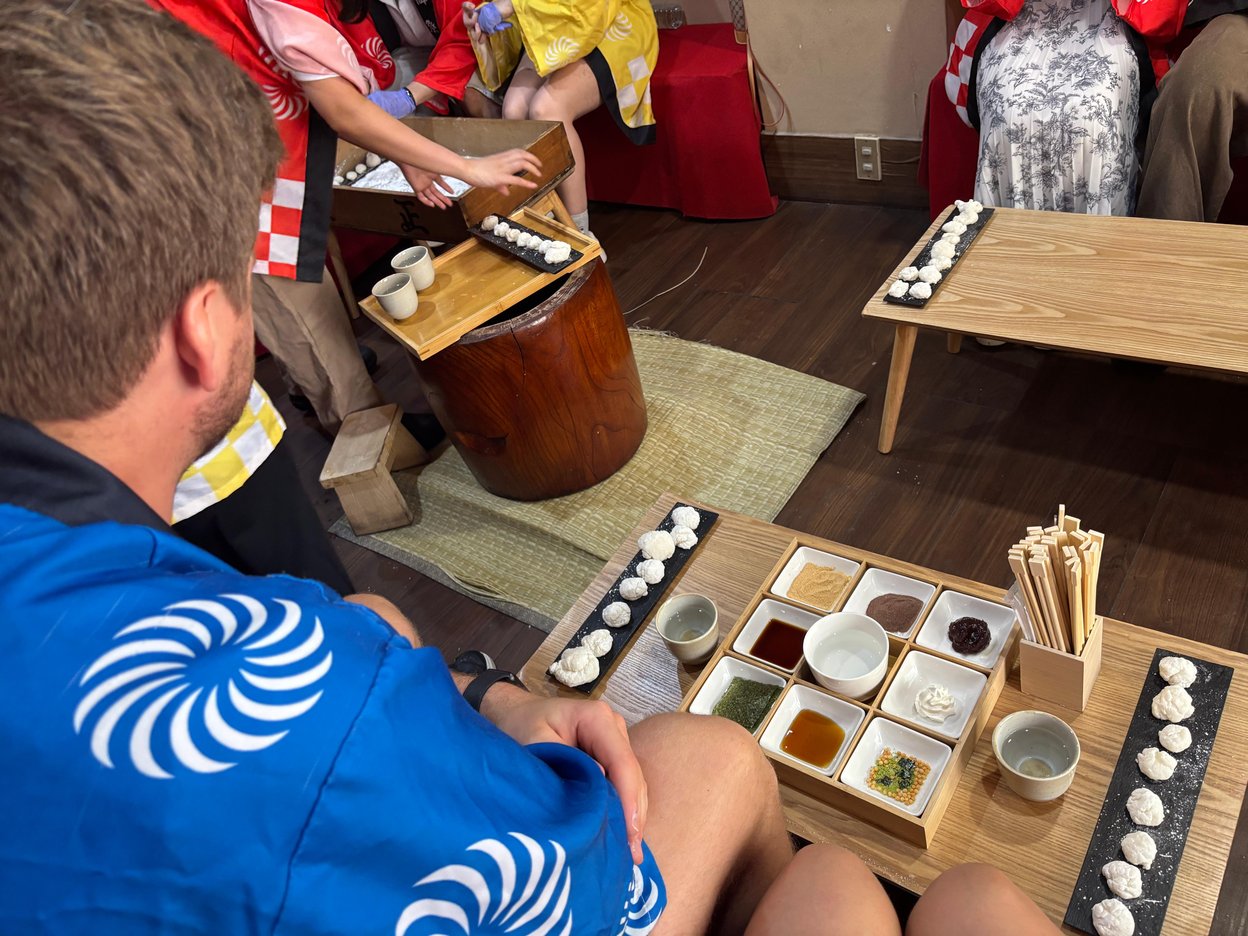
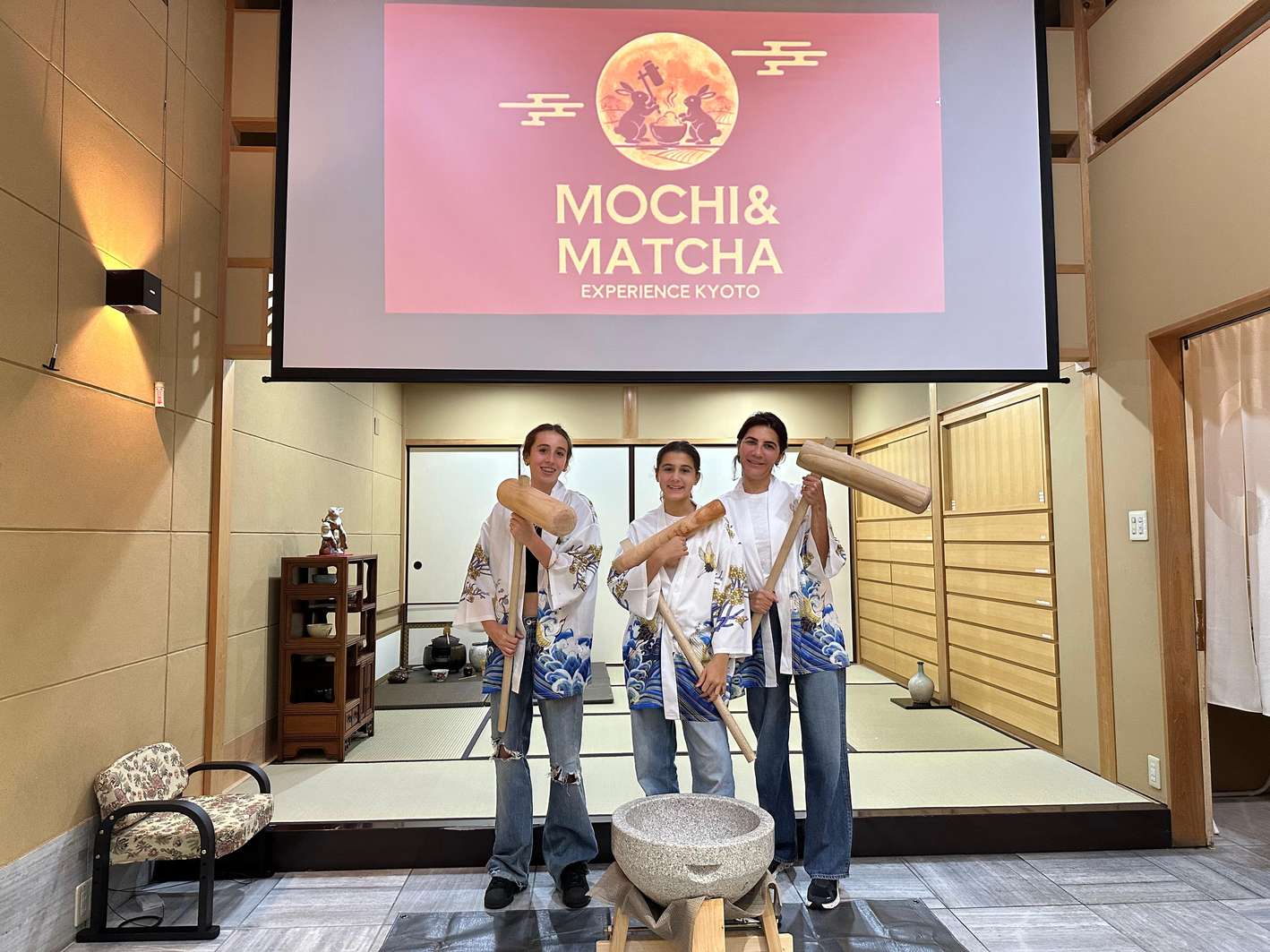
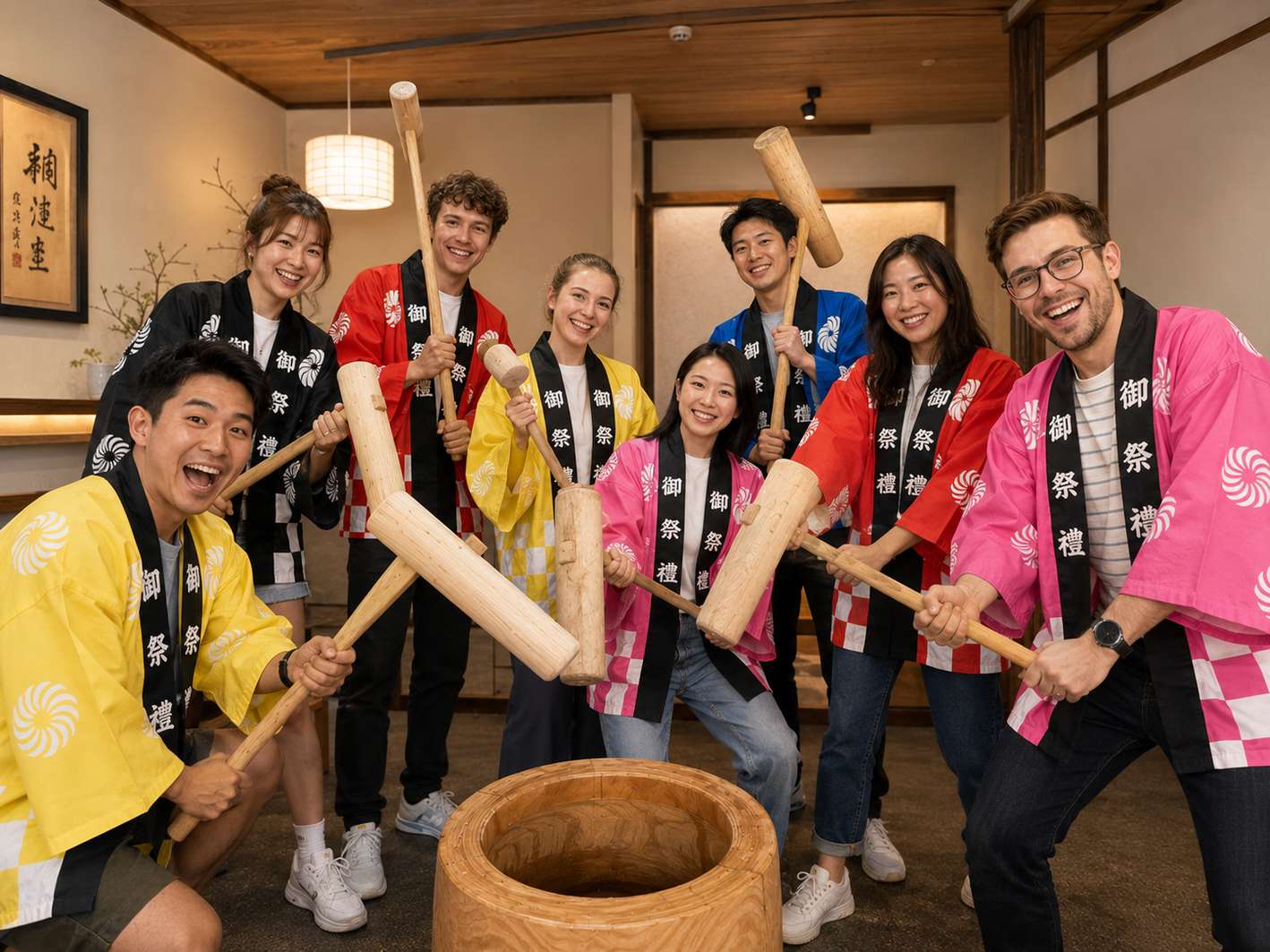
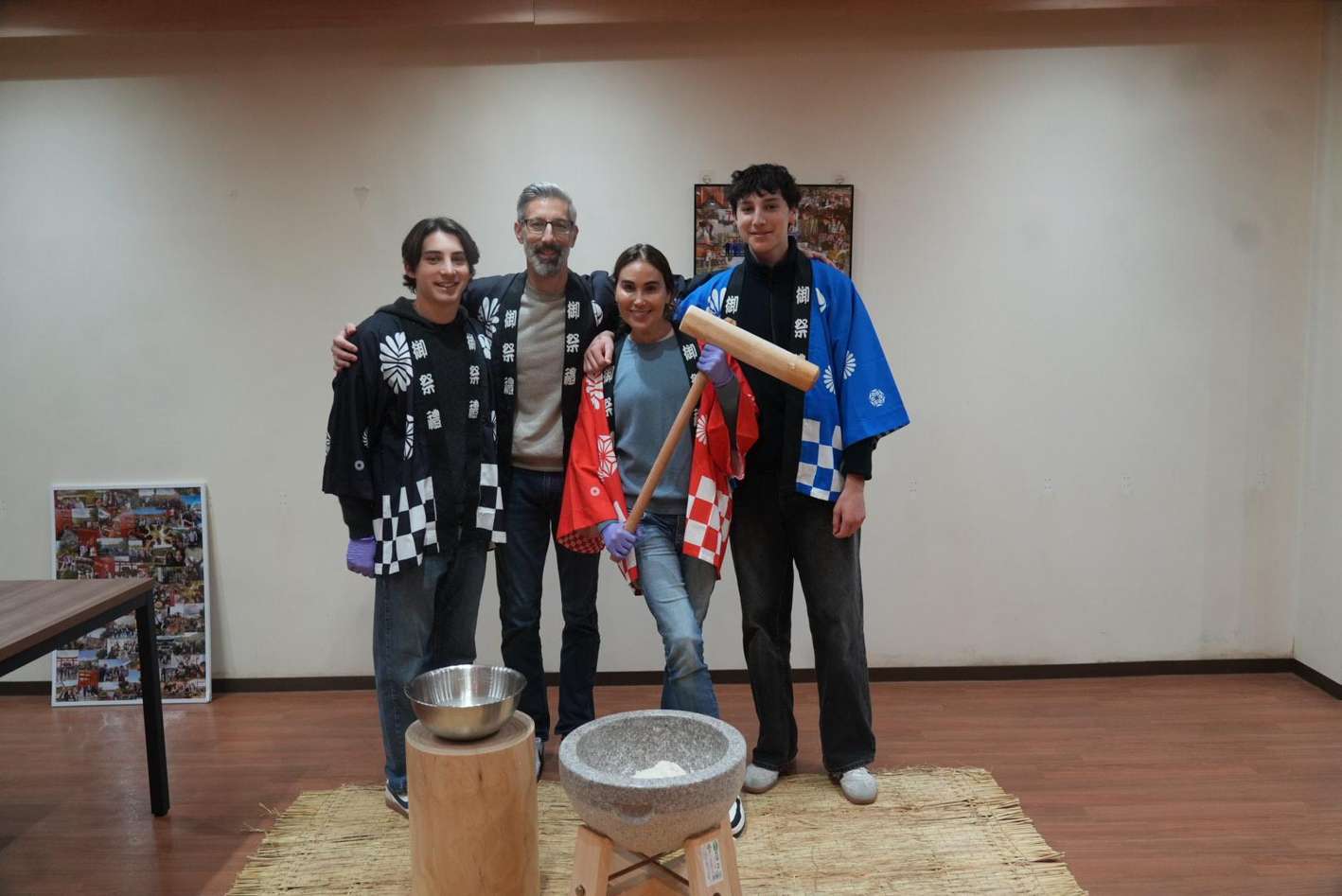
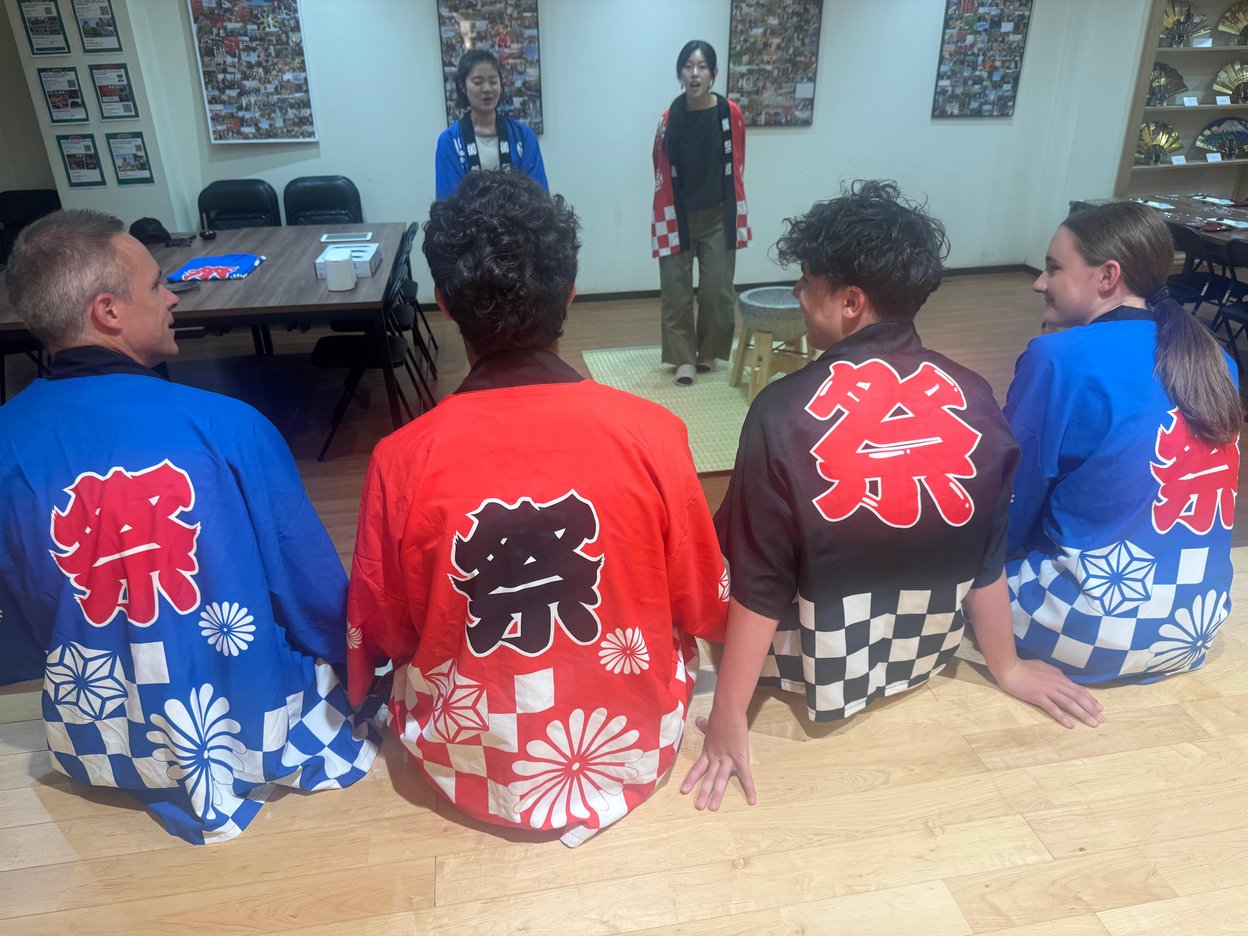
ClothingWear comfortable clothes and slip-on shoes you do not mind getting dirty; you remove outdoor shoes at the entrance and a happi coat goes over your clothes.
StarchFine potato starch and soybean flour drift onto sleeves and trousers during shaping, so leave delicate or dry-clean-only fabrics at your hotel.
HealthSeveral classes list pregnant women and people with back or heart problems as unable to take part, since pounding is active physical work.
WheelchairsAccessibility differs by venue, with one Kyoto class wheelchair accessible and one Tokyo class not, so check the listing that matches your city.
AllergiesIngredients can include soy (kinako, tamari) and possibly sesame in a shared kitchen, so tell your host about dietary restrictions before the class.
TimingA standard hands-on session runs about an hour, and one Kyoto listing suggests arriving 15 minutes early, so it fits between temple visits.
PhotosBring your phone for videos of your group taking turns with the mallet, and hosts are often happy to take them for you.
Mochi making classes and experiences fit which trip?
Answer a few quick questions and the best class for you turns up.
1Where are you starting from?
2Who's coming?
3What's your budget?
4What kind of trip?
Your best match
match
Osaka: Traditional Mochi Pounding Experience with Tasting★ 4.9 (540) · 1 minute · Classic tasting experience
Popular with families with kids or teens and solo travelers. 100% of families and 99% of solo travelers gave it 4 or 5 stars.
Booked 28 times last week
Plans for all ages, so kids and adults pound and taste together.
importantMinimum ages for mochi making classes vary, with some hands-on workshops welcoming children as young as 4 or 5 and others starting at 13.
Read the age details on each workshop before you book, and pick a family plan if you are traveling with younger children, since younger kids cannot join classes that start at 13.
Which of the mochi making classes fits your trip
Most popular in Kyoto
1 hour·English
4.5(66)
Kyoto: Traditional Mochi Pounding Experience with Tasting
Rated 4.5 by 66 travelers, this one-hour small-group class runs morning or afternoon with a local home chef.
Free cancellationVarious Types of MochiYoung English-Speaking Instructor
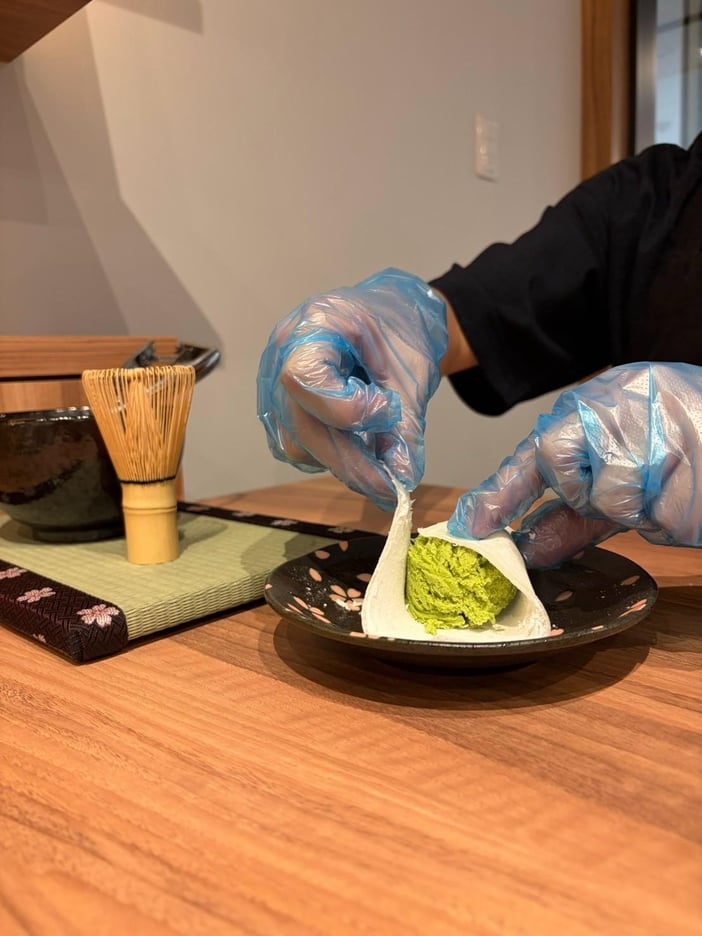
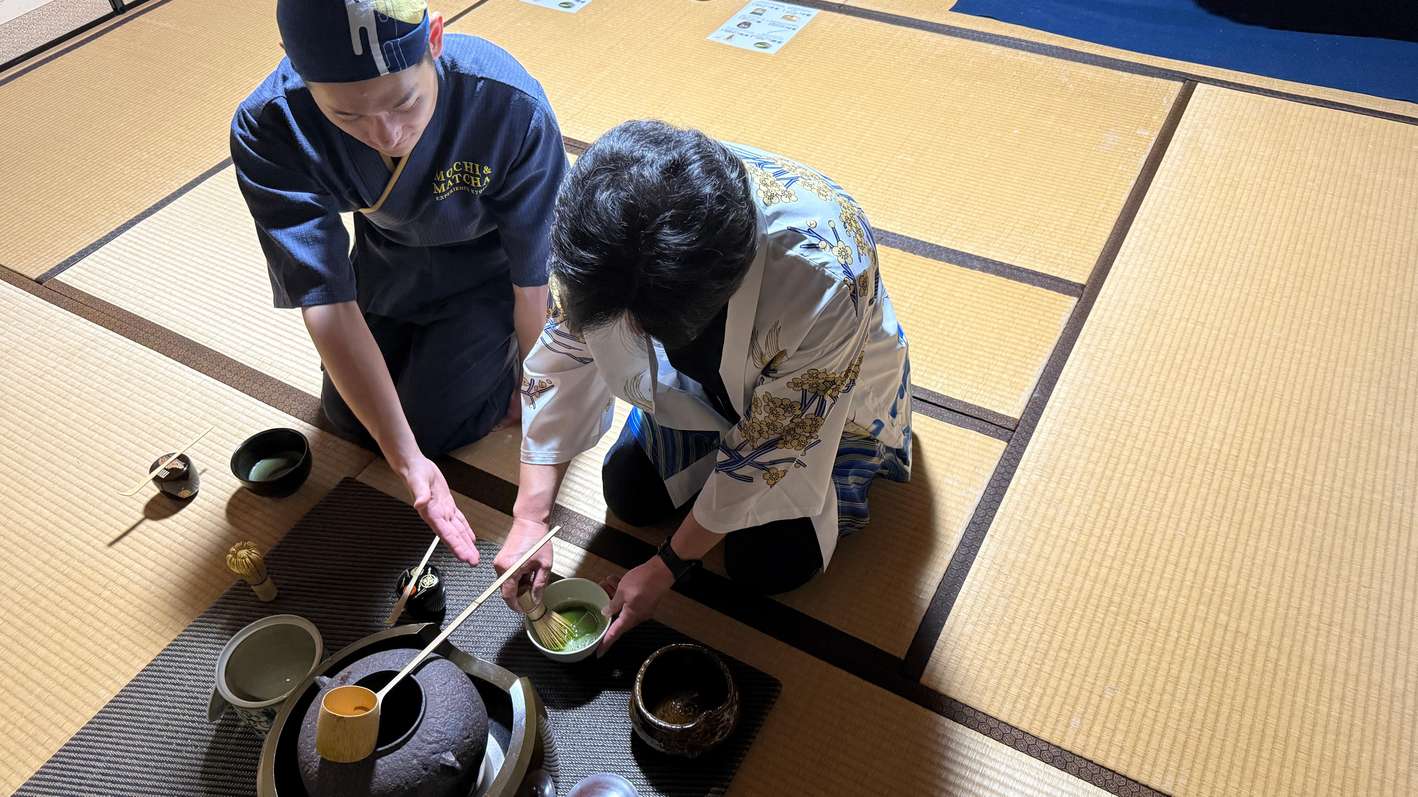
A Kyoto class puts the wooden mallet in your hands, then moves on to shaping, filling and grilling your own mochi before you eat it warm with matcha.
Sessions run about an hour, instructors guide you in English, and small groups mean more personal attention. Solo travelers are welcome, and one operator pairs the pounding with a full tea ceremony if you want the longer version.
Tokyo workshops follow the same hands-on format: you knead the steamed rice, pound it in a stone mortar with a real wooden mallet, then cut and taste it with a long list of sweet and savory toppings.
Classes take about an hour, suit beginners with no cooking experience, and include mochi to eat on the spot plus pieces to take with you. Asakusa is the classic setting.
Inside these mochi making classes - what you'll see
about 1 h
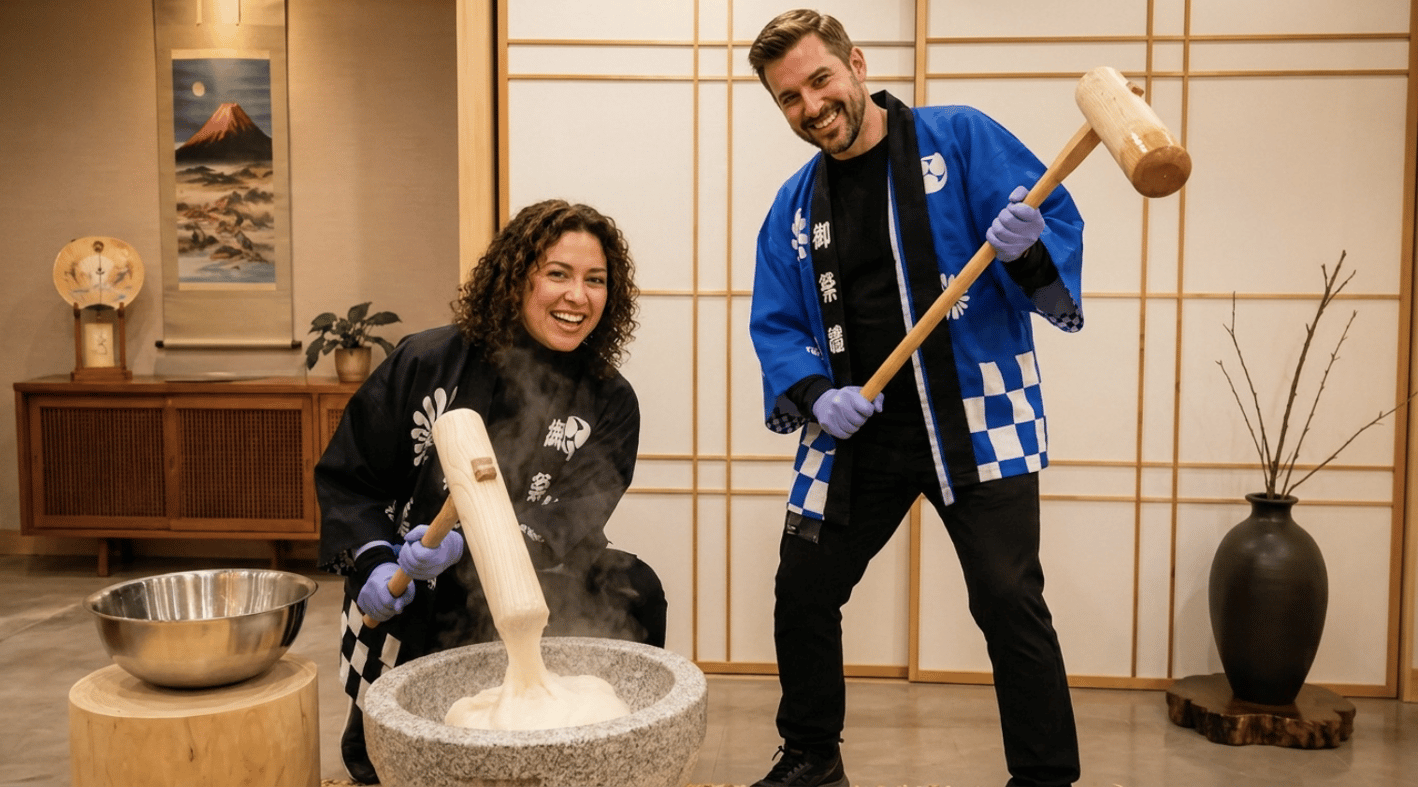
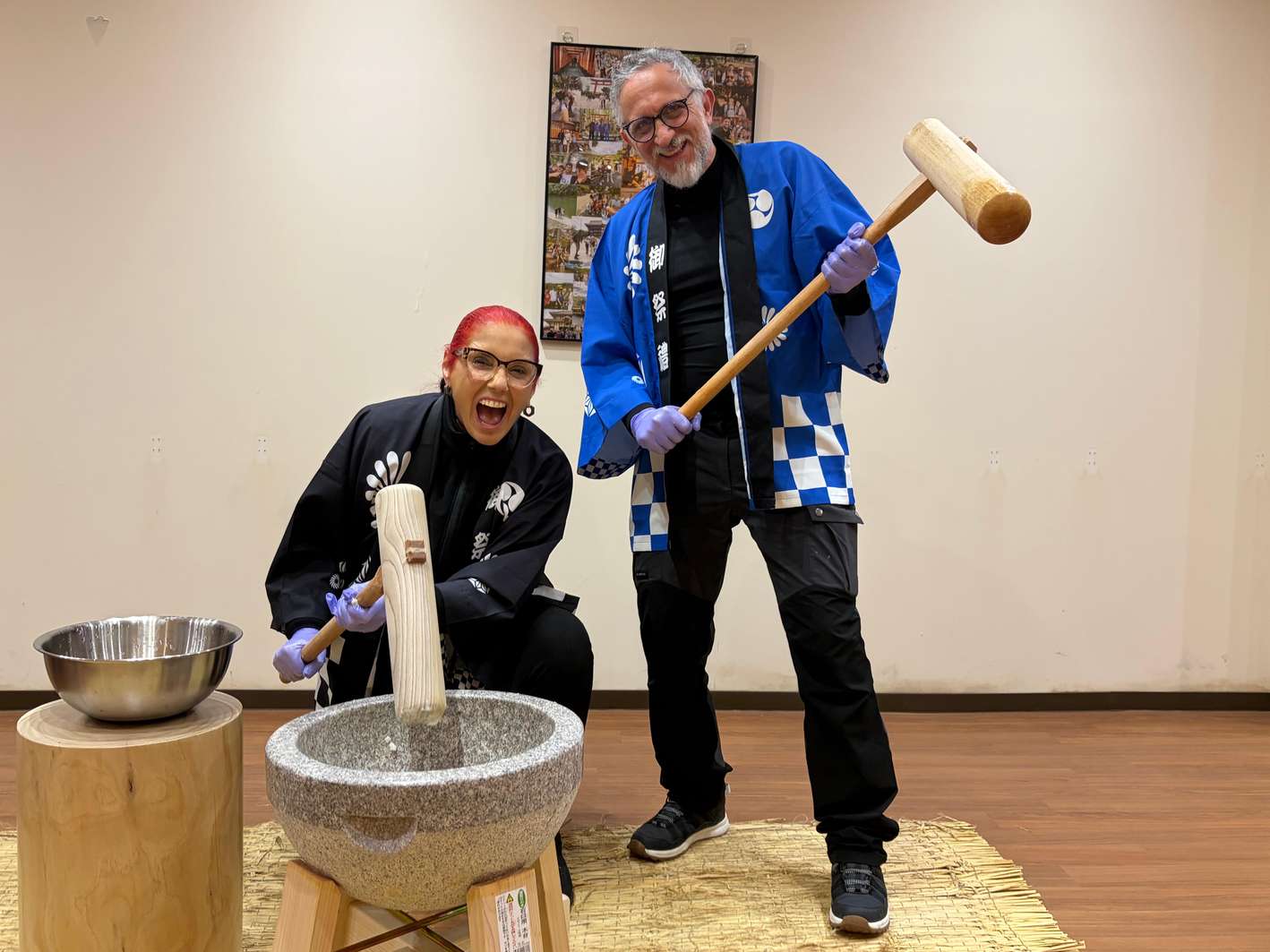
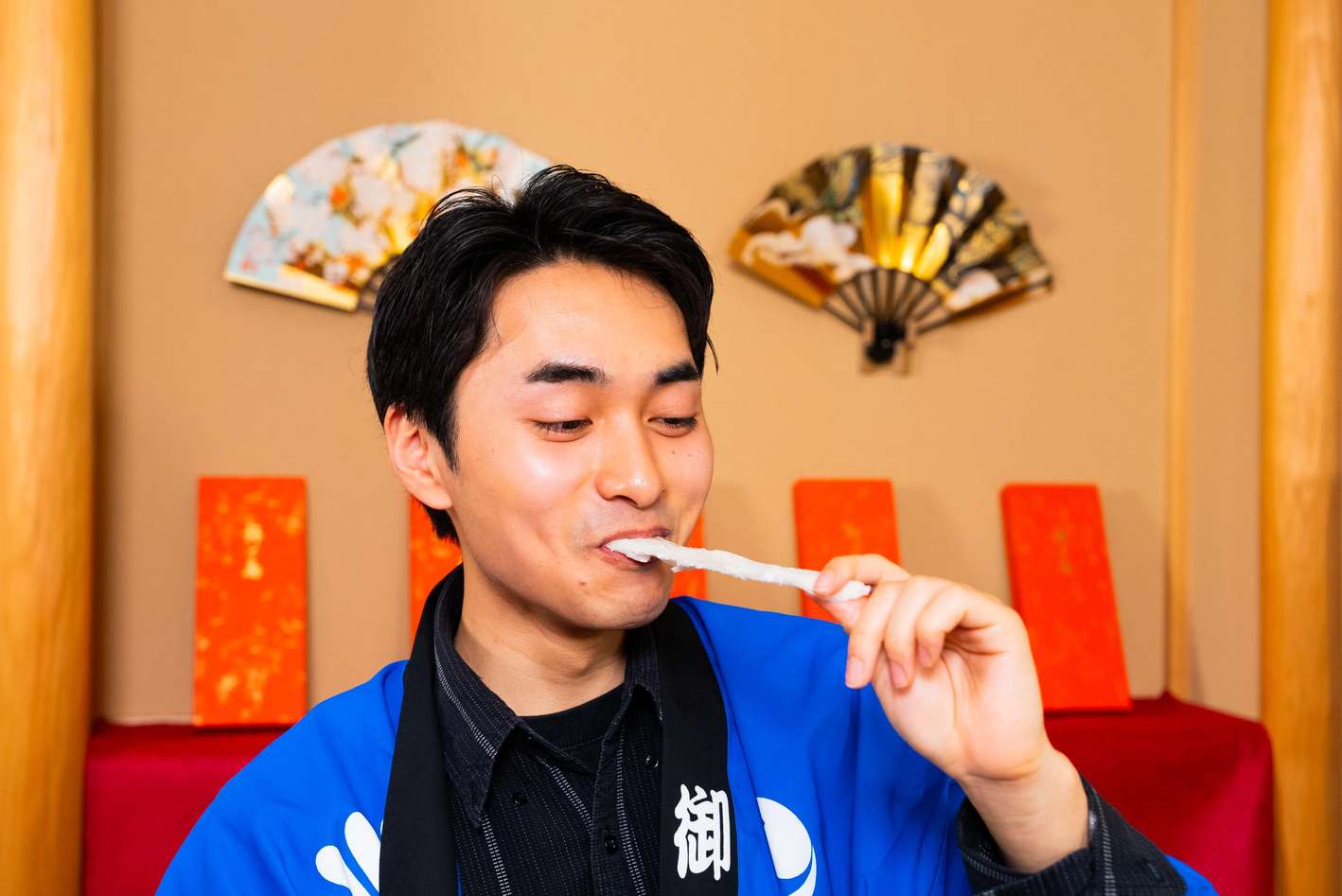
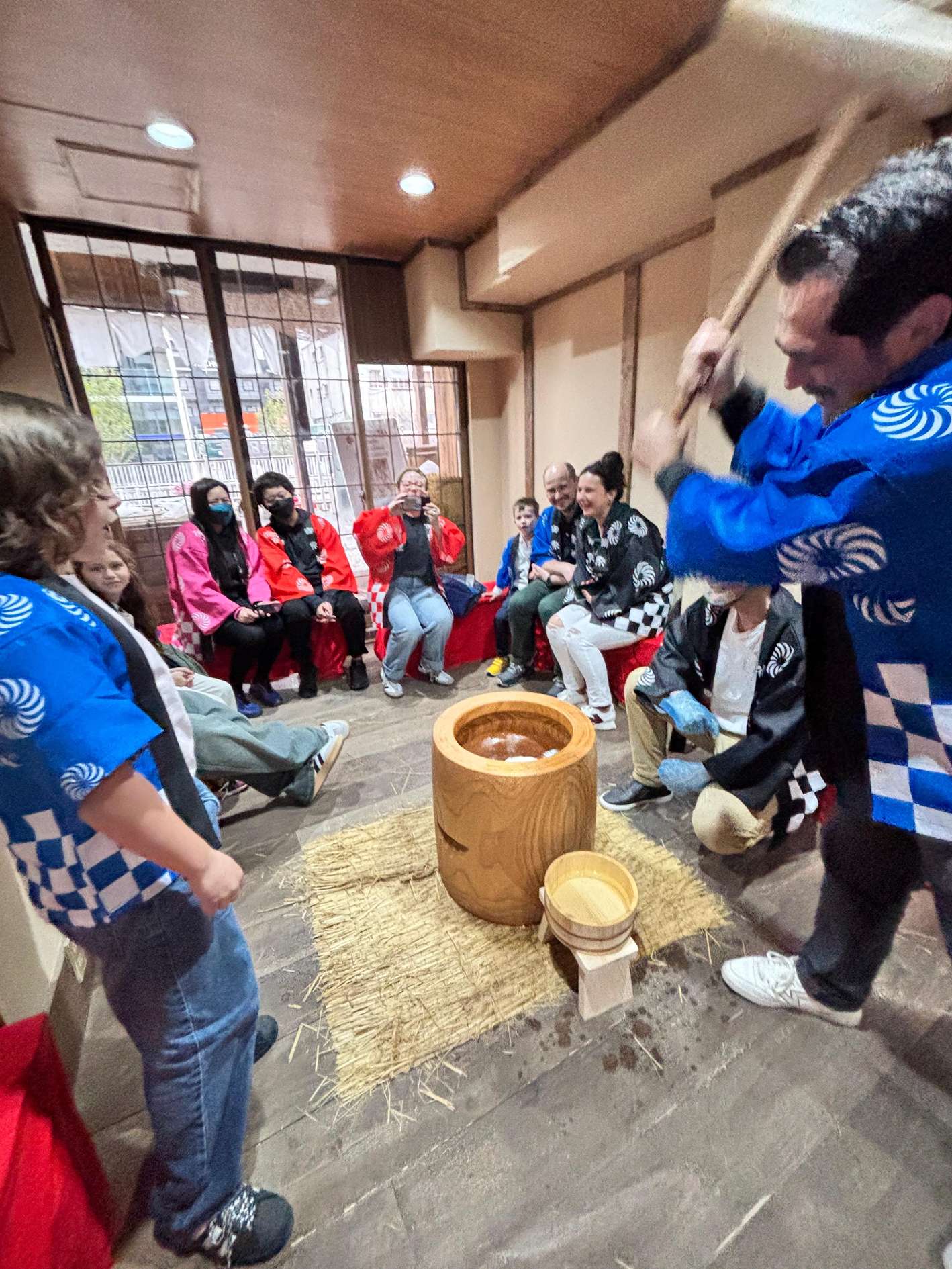
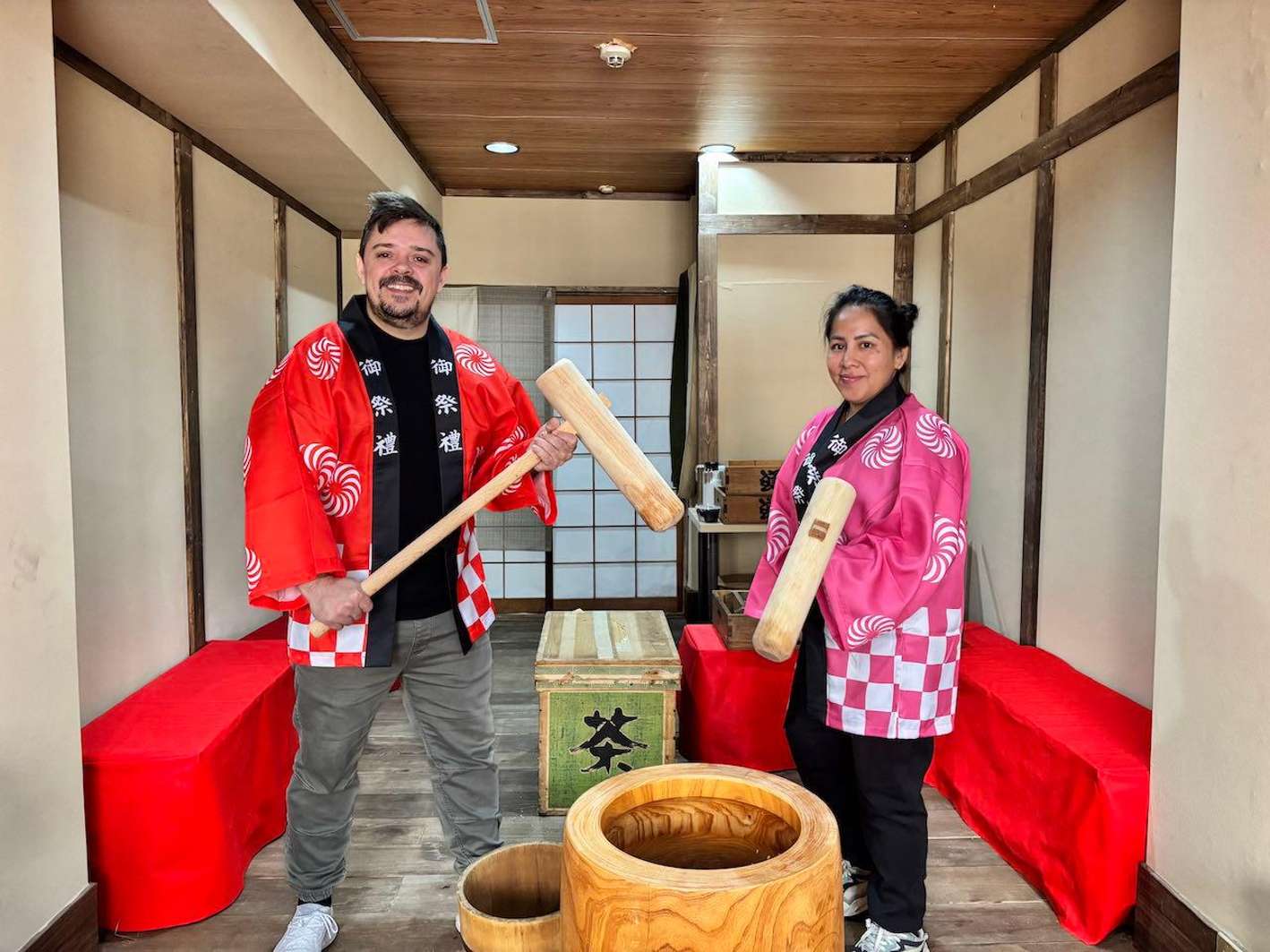
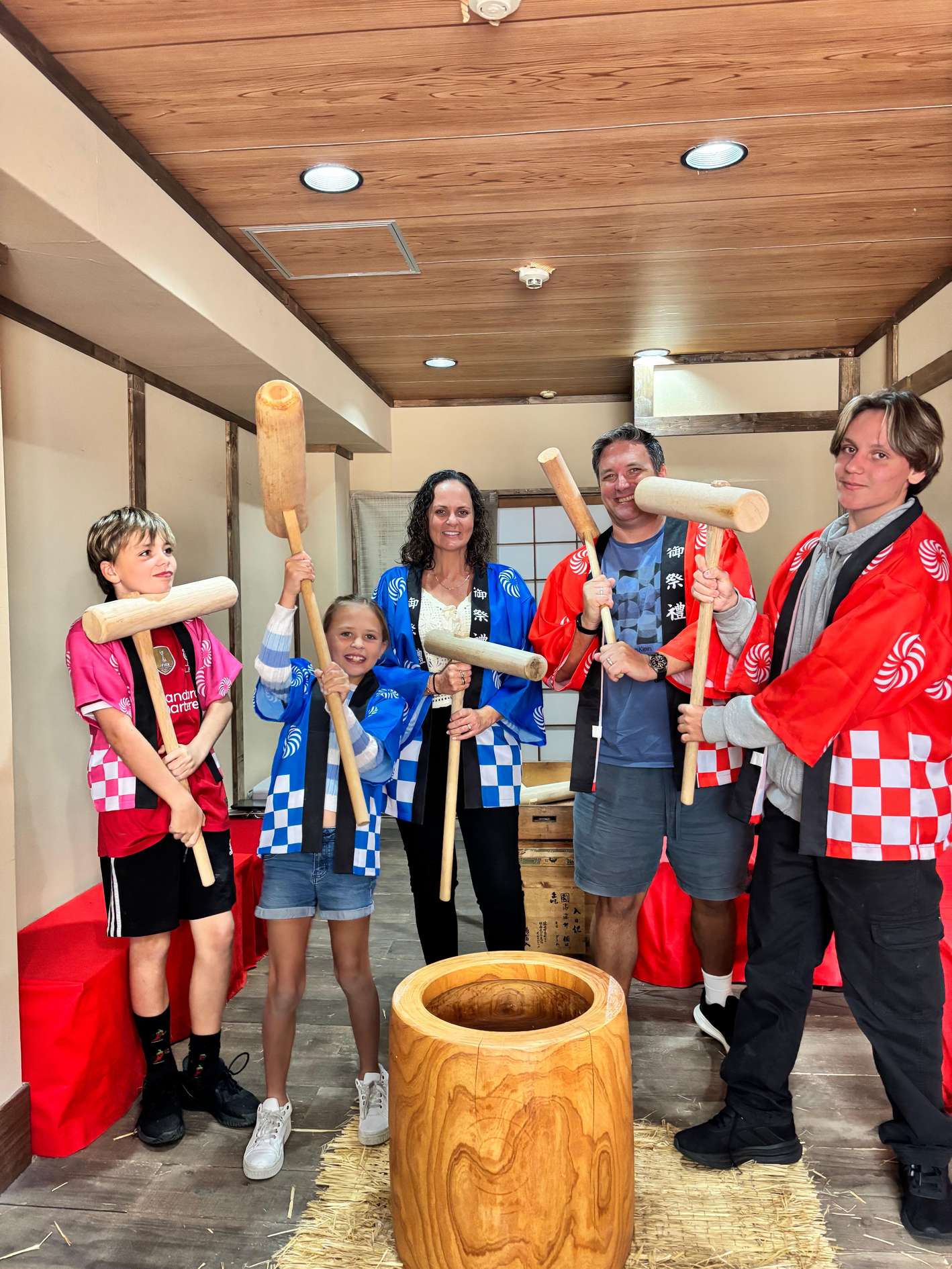
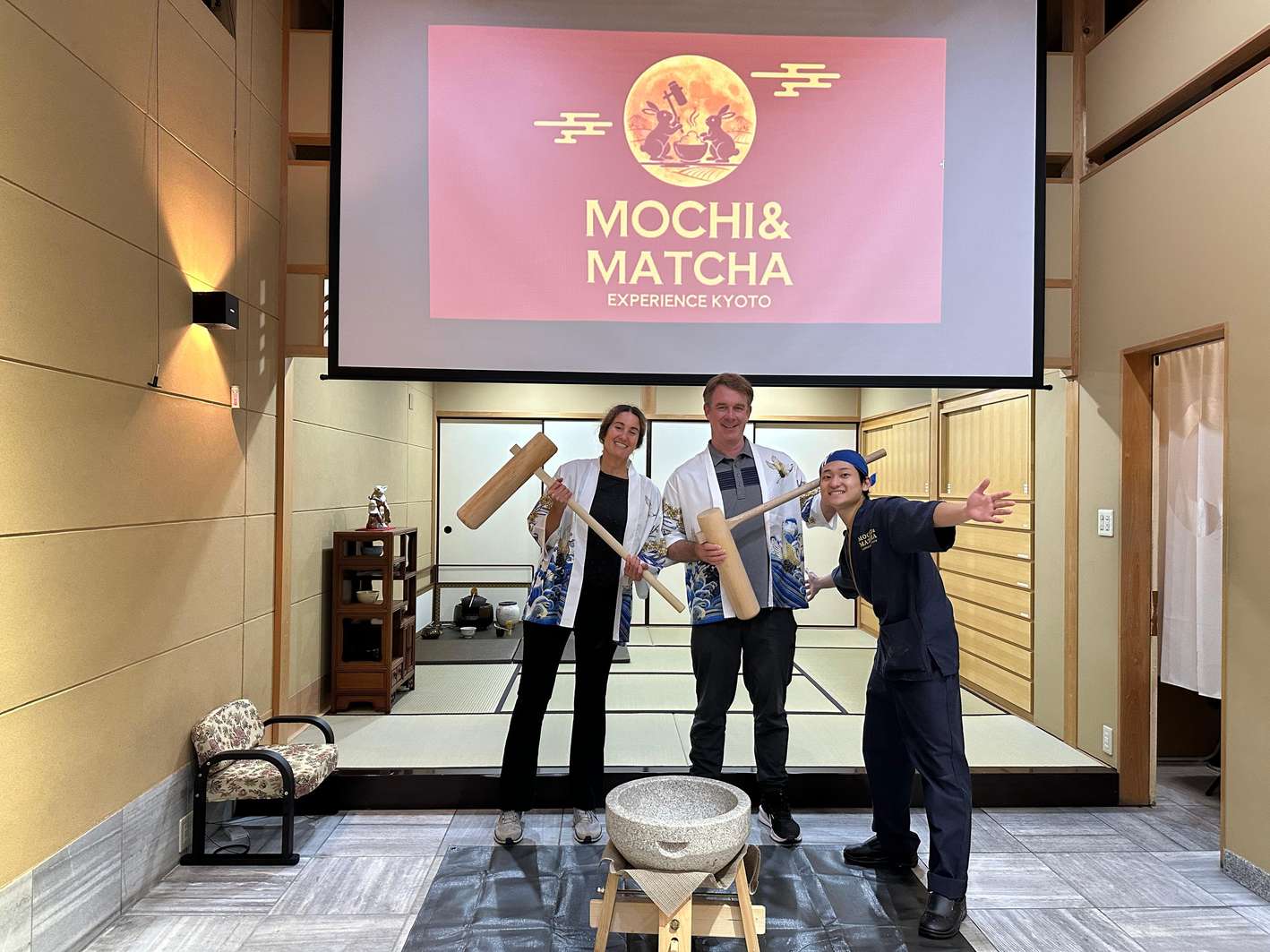
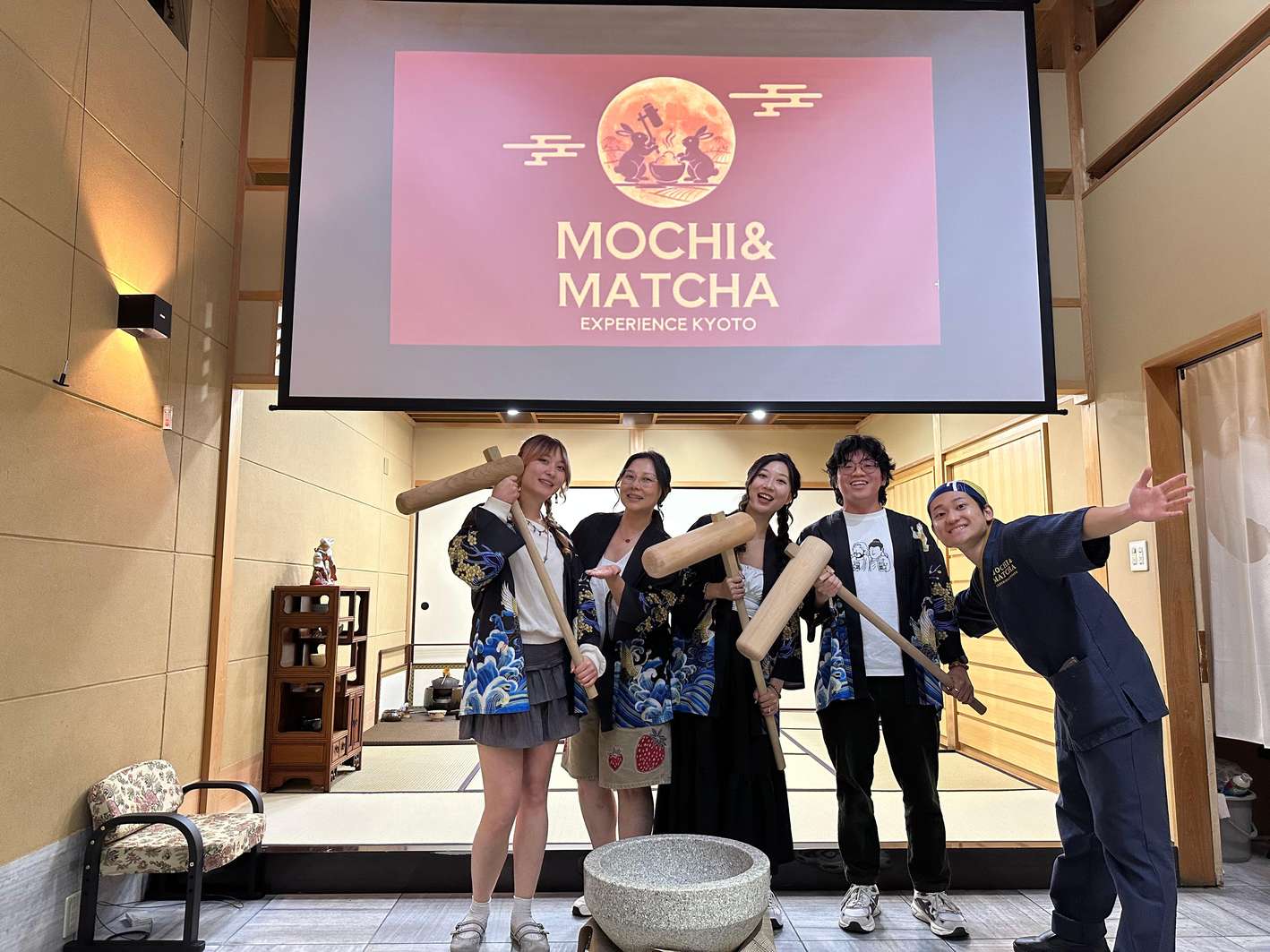
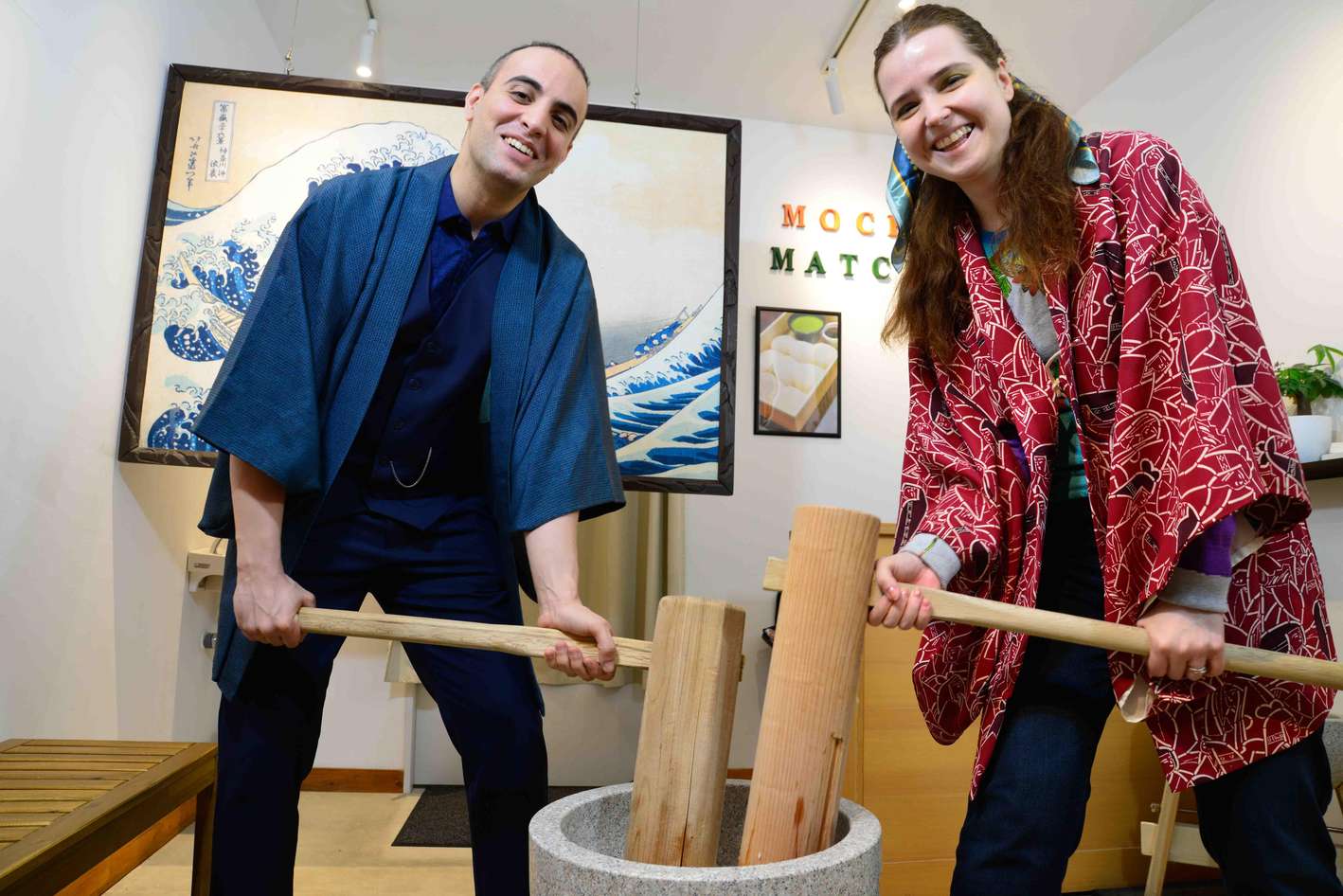
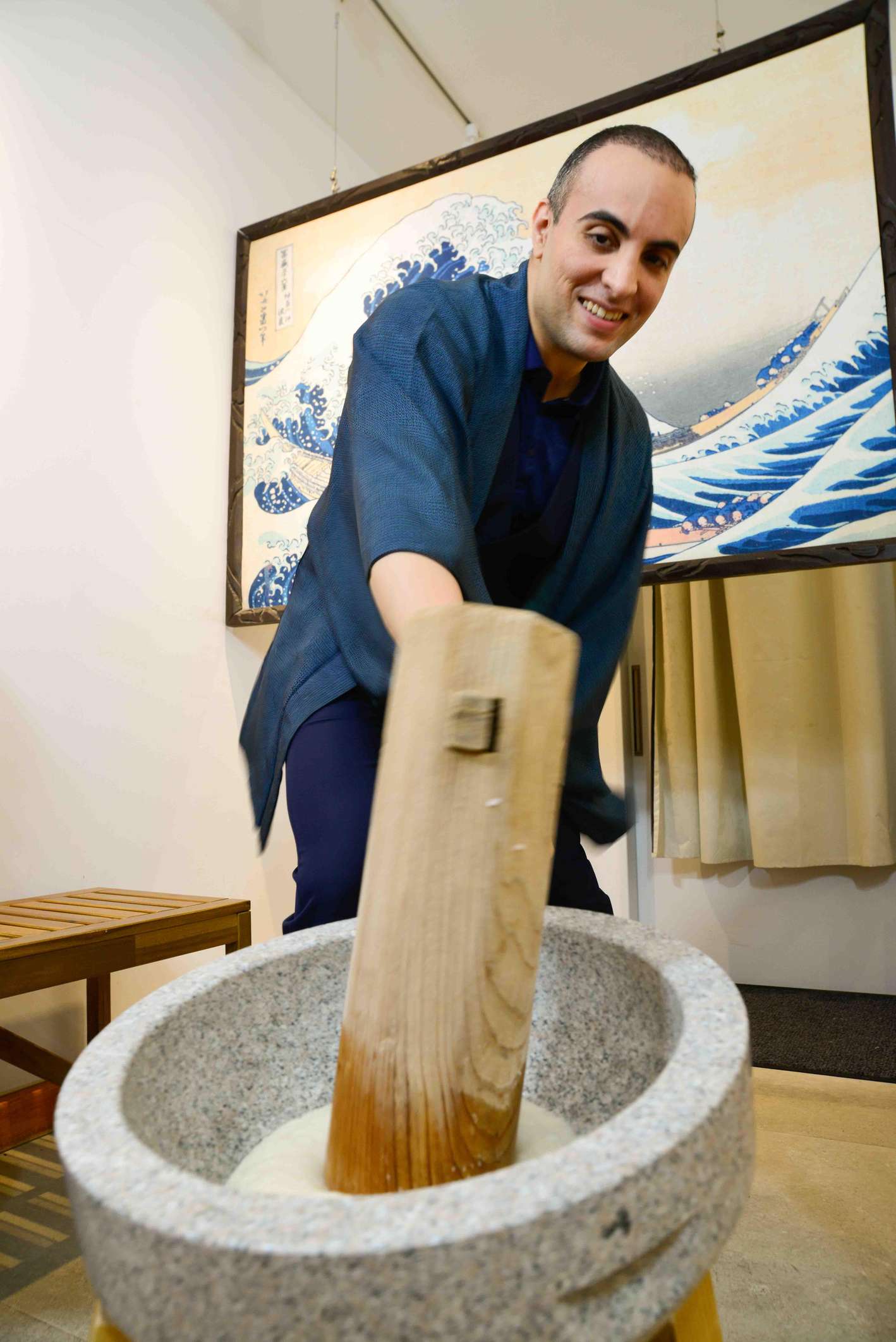
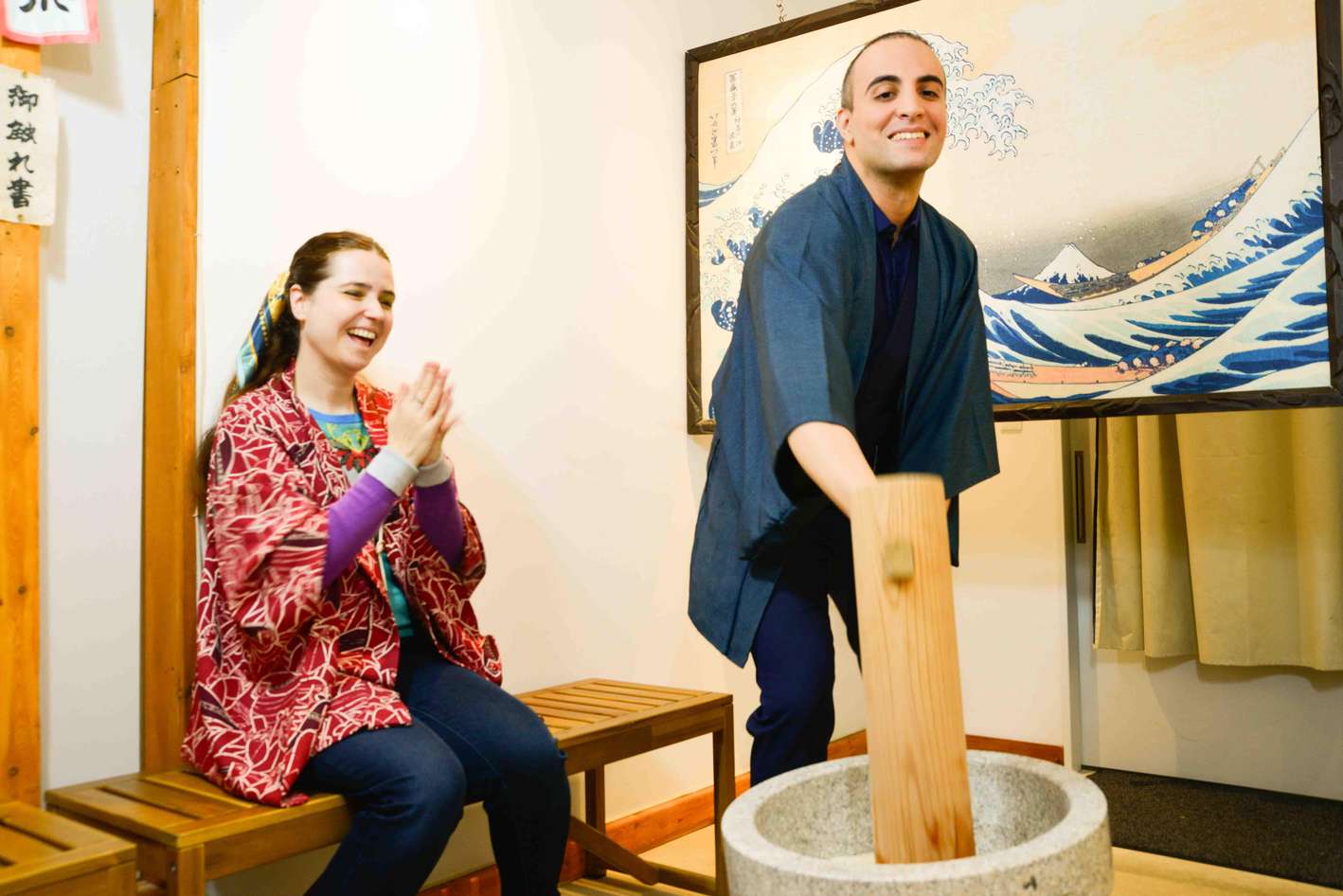
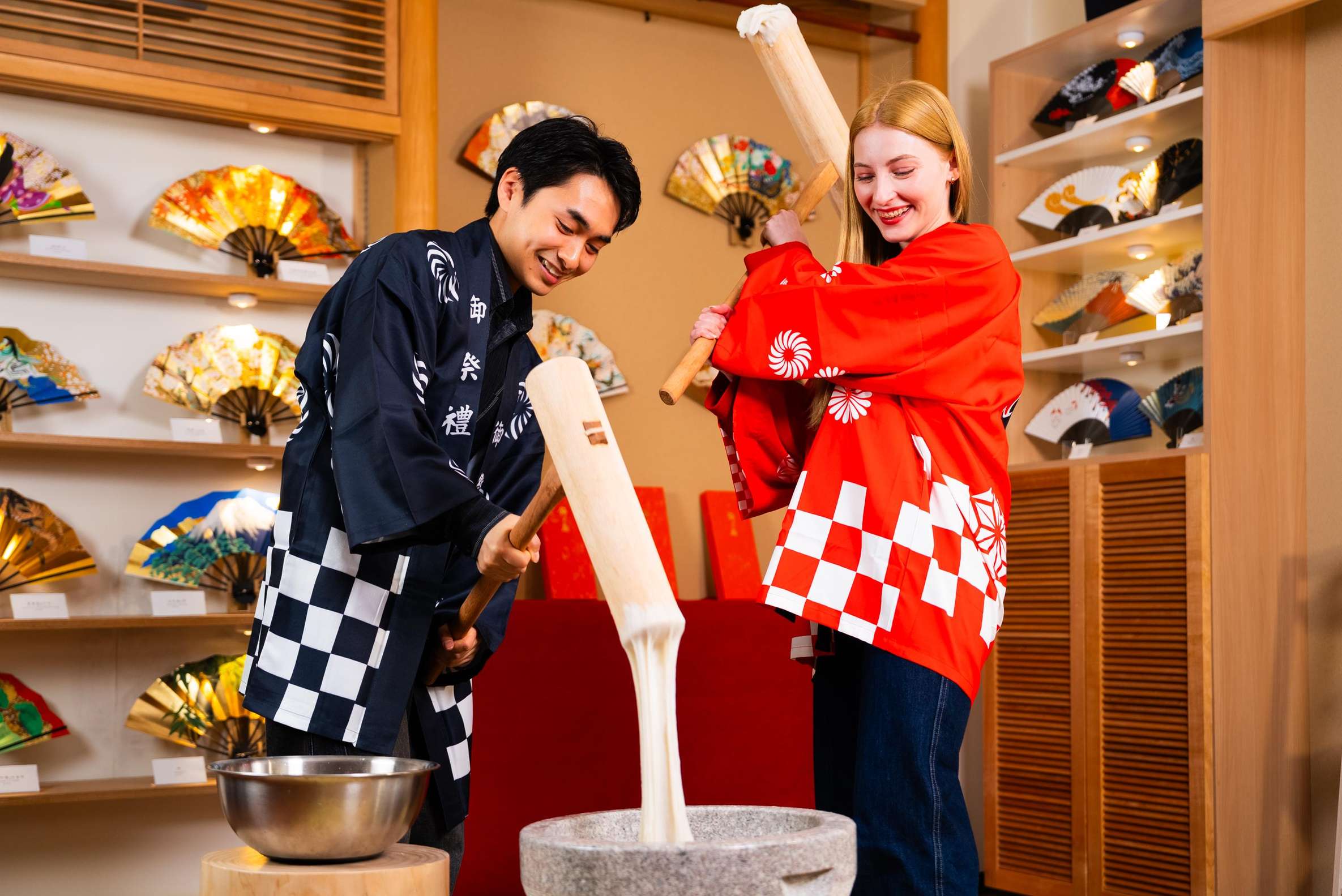
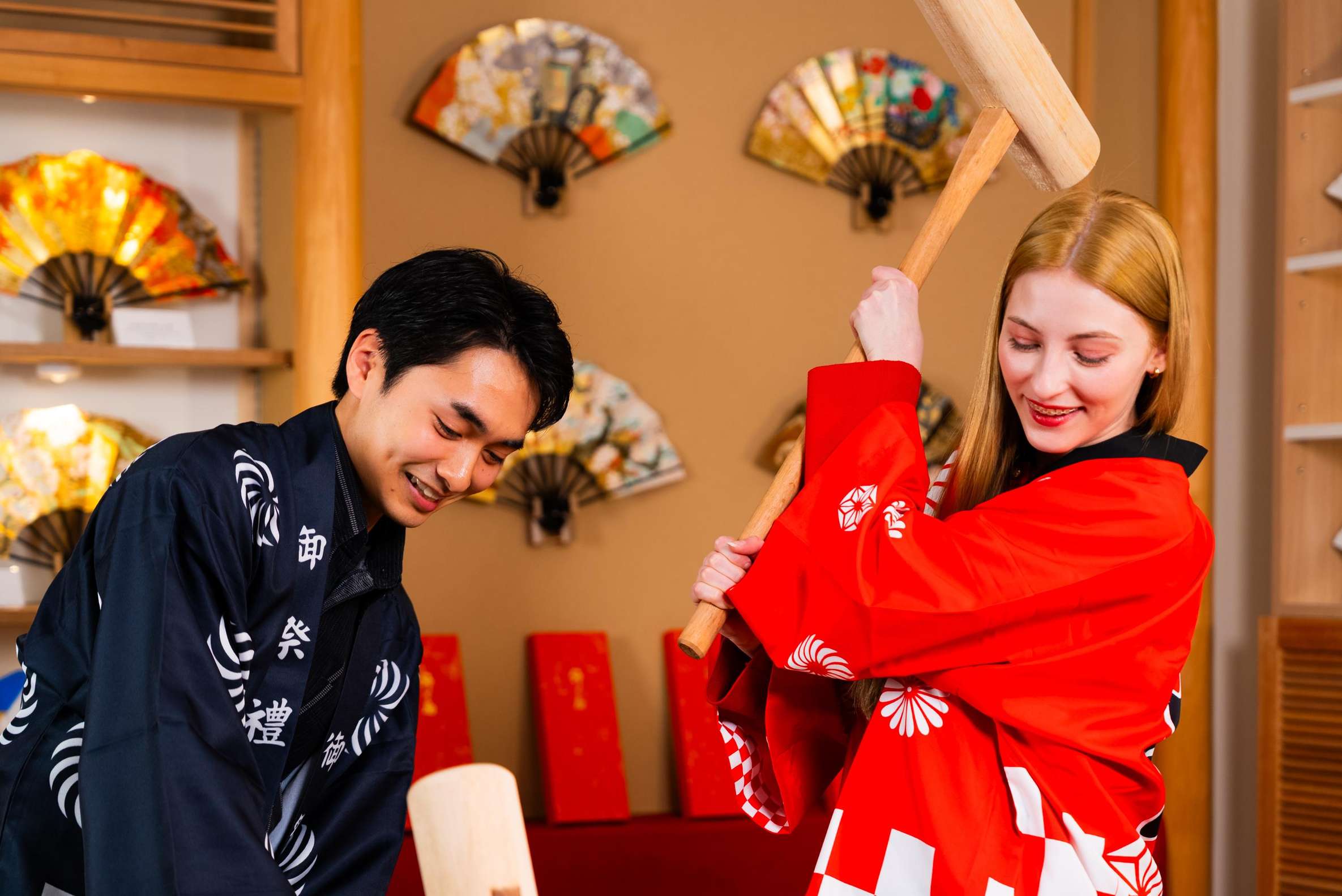
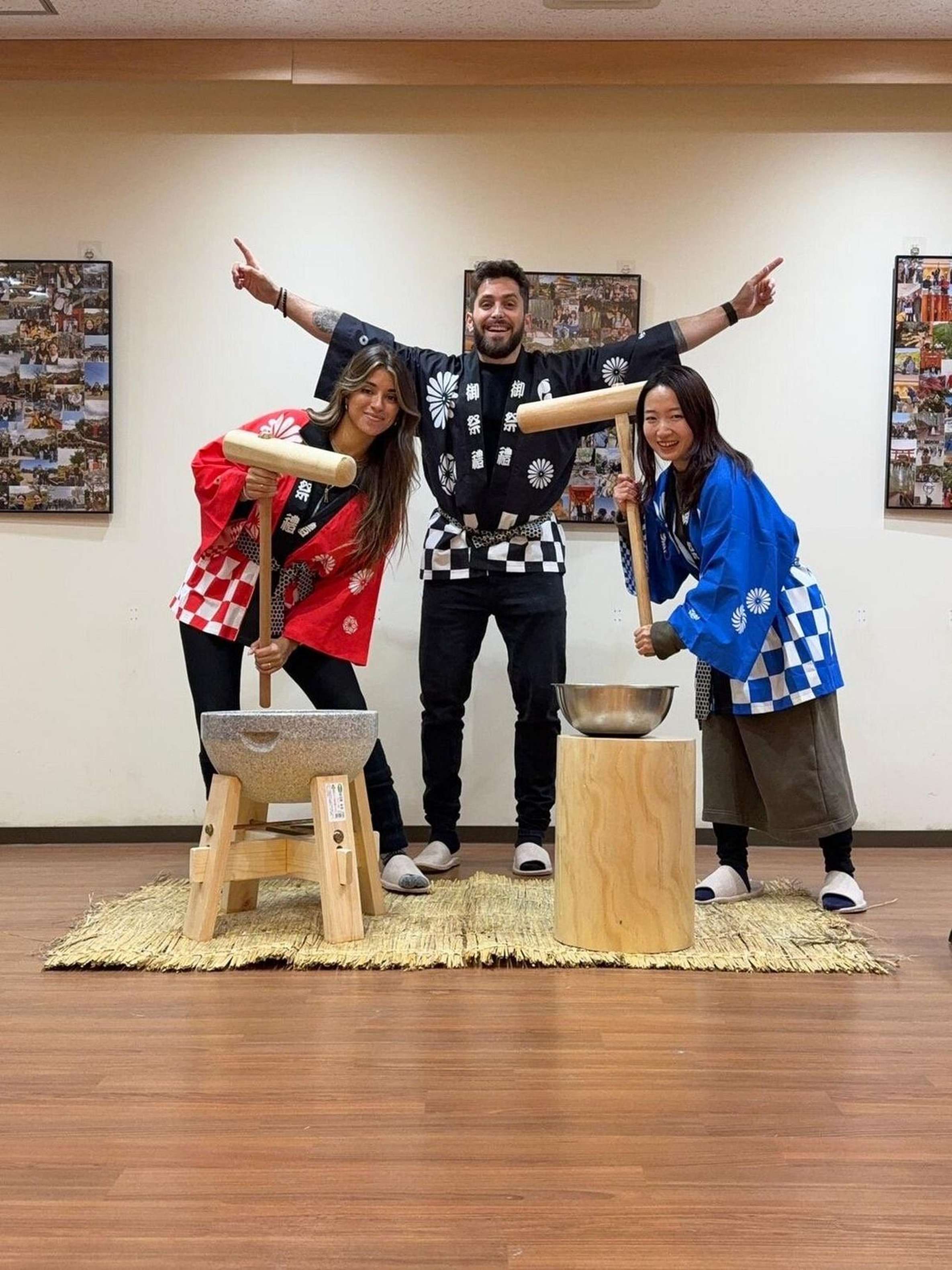
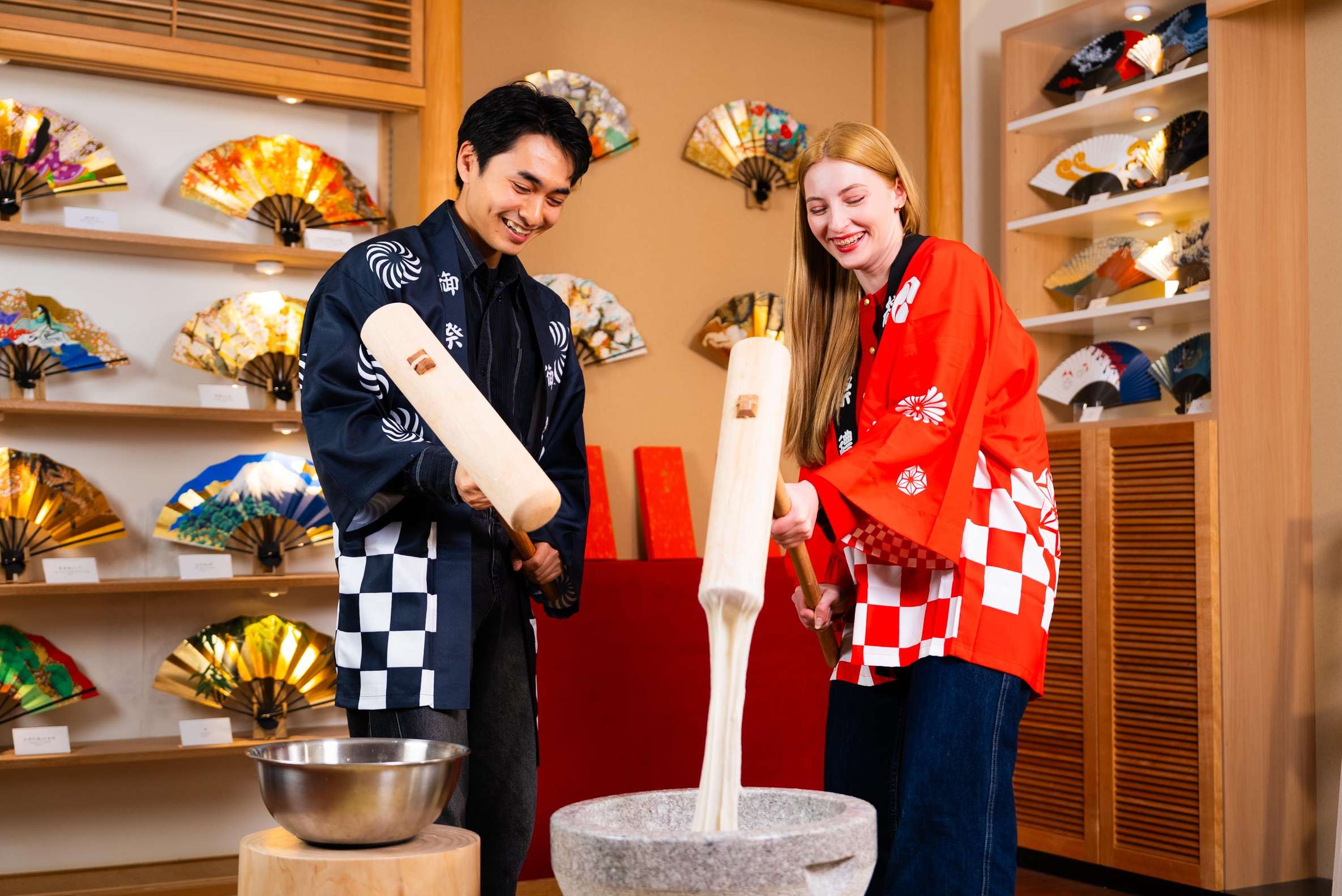
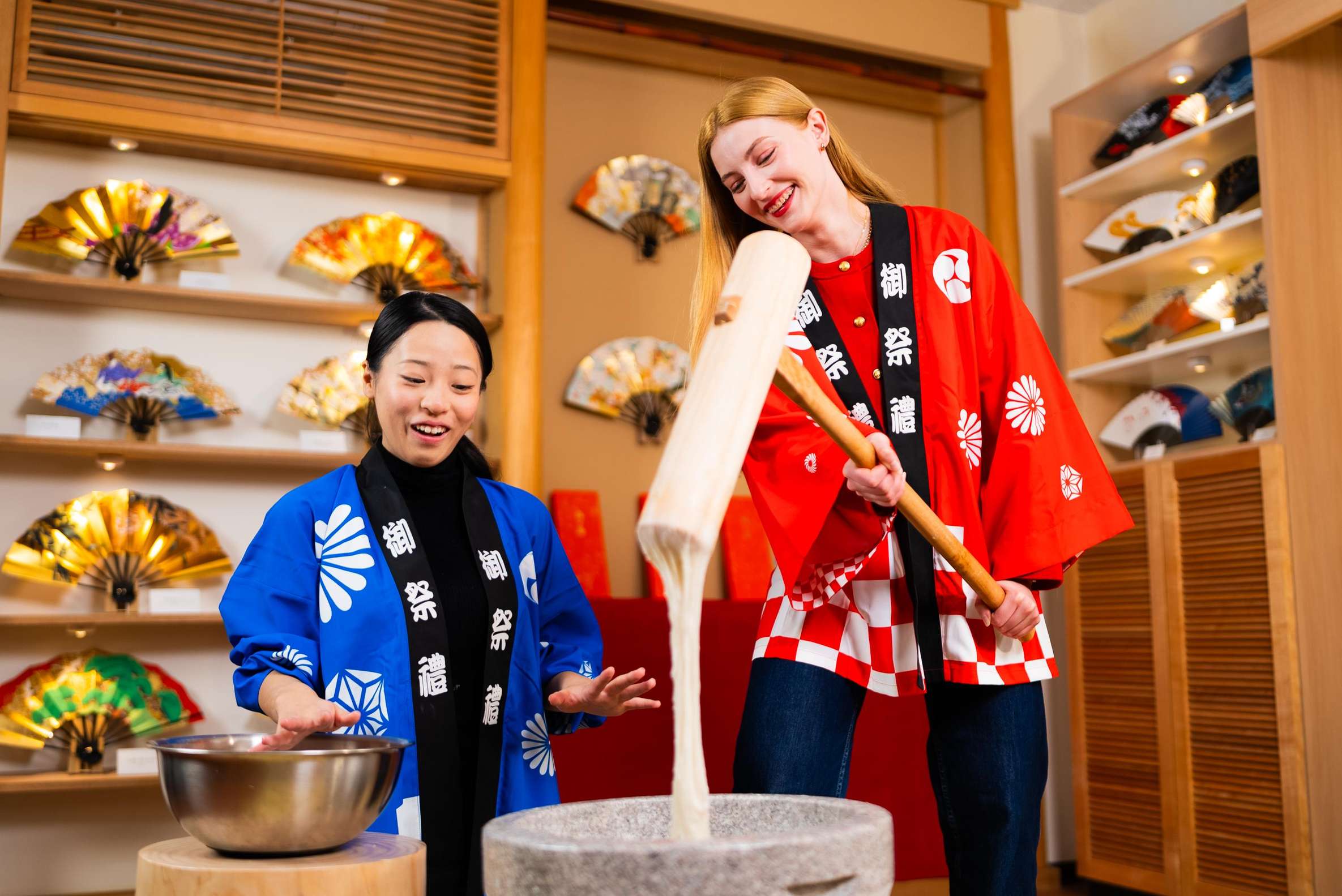
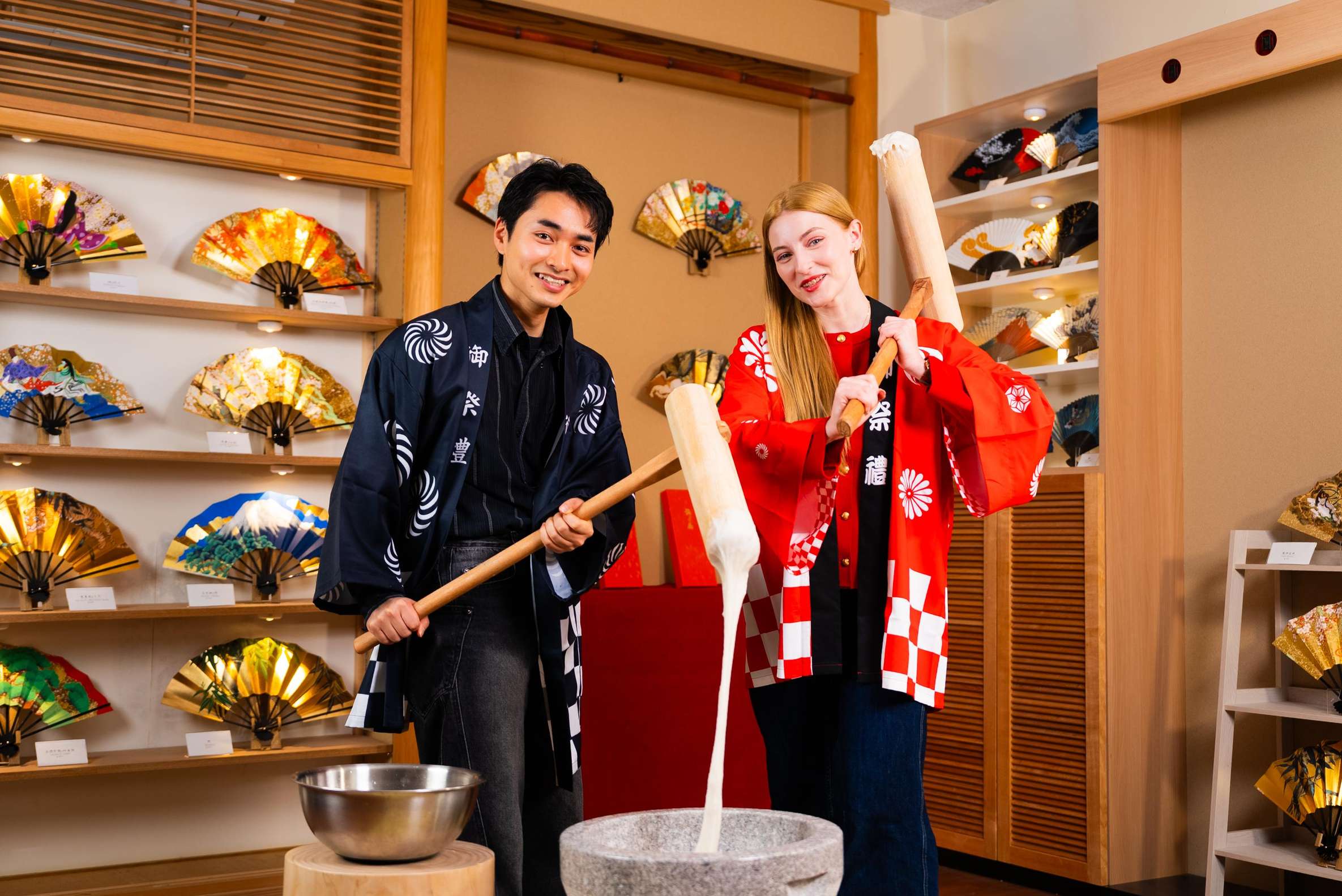
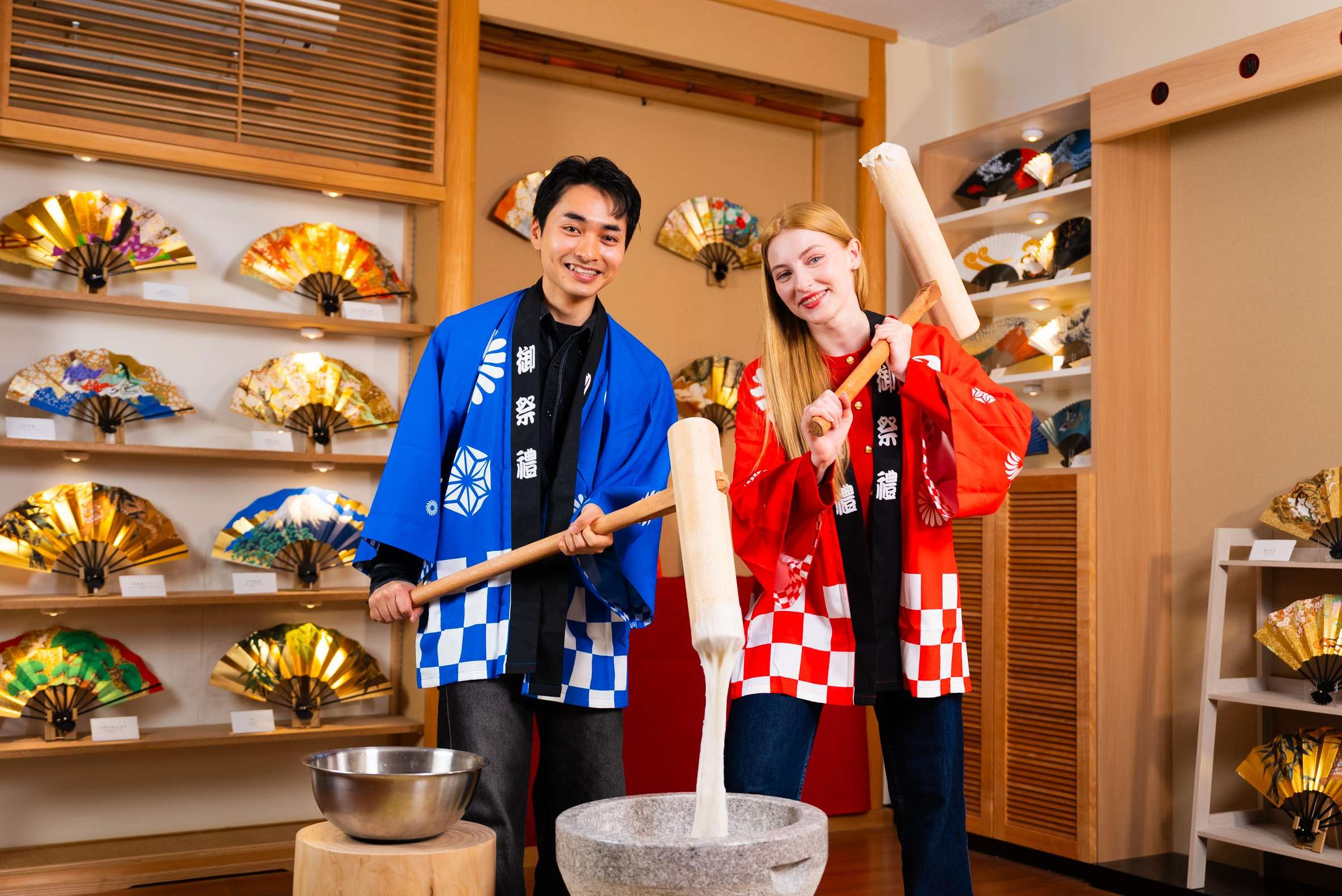
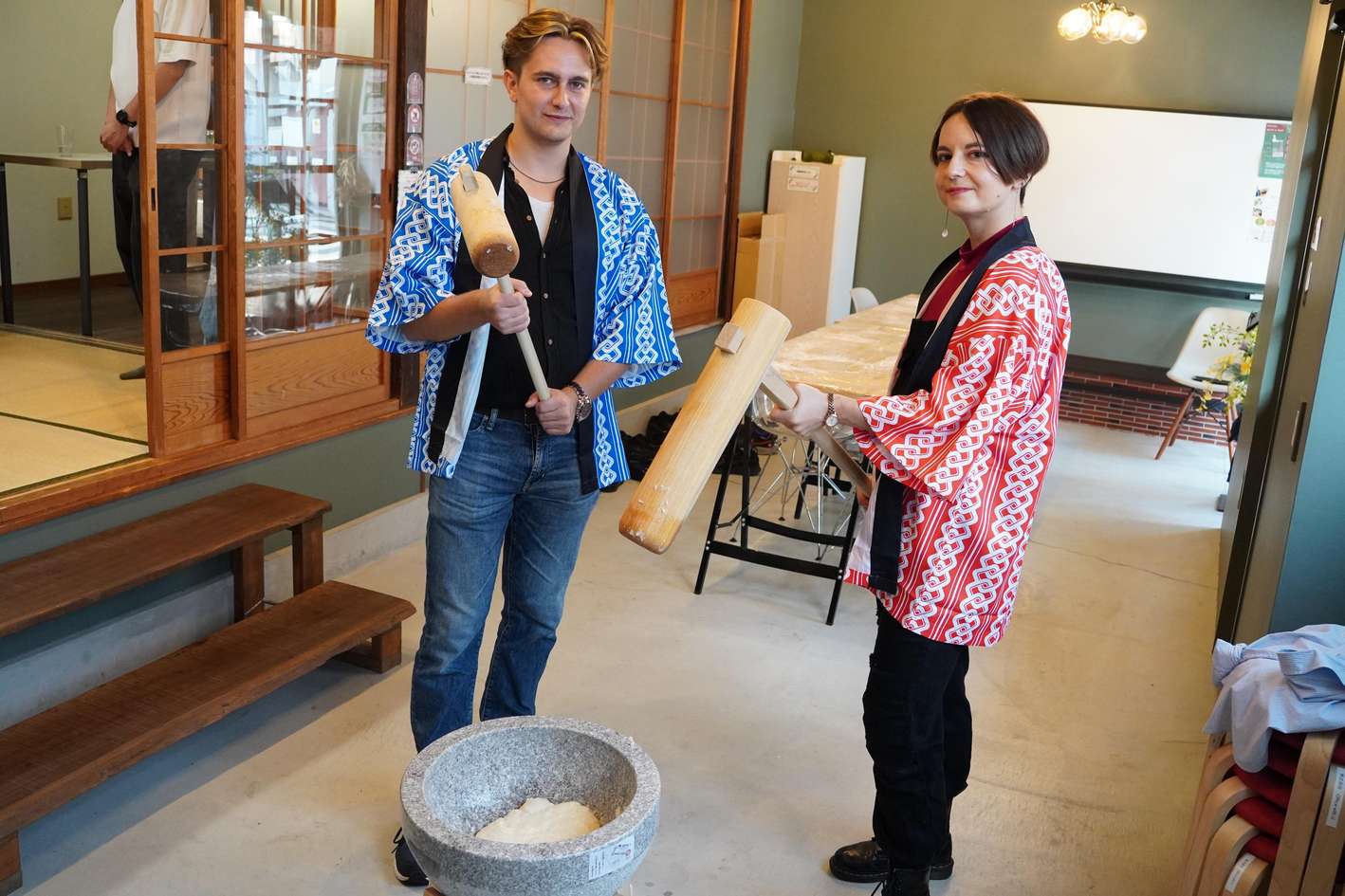
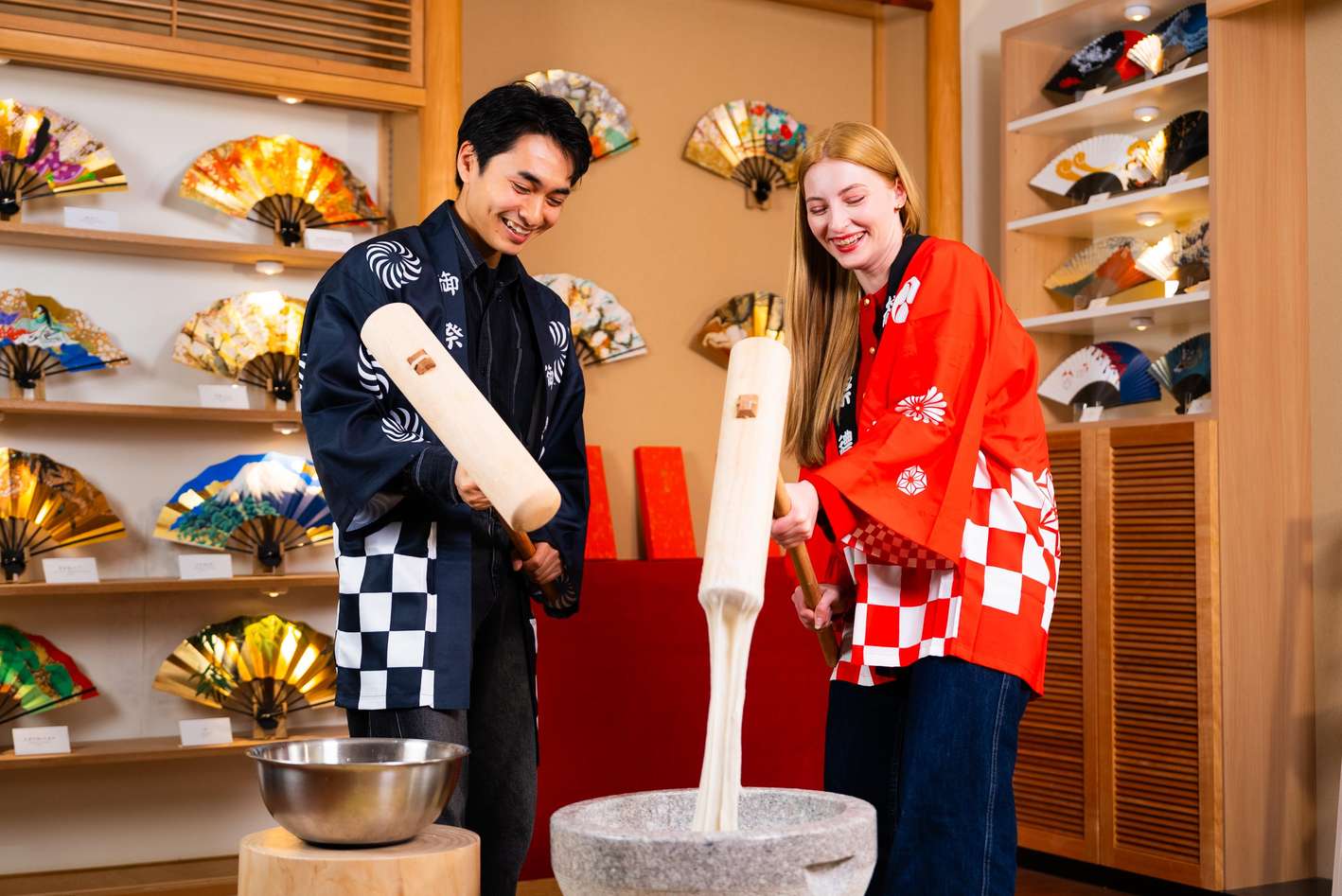
The first thing you do is pick up the mallet.
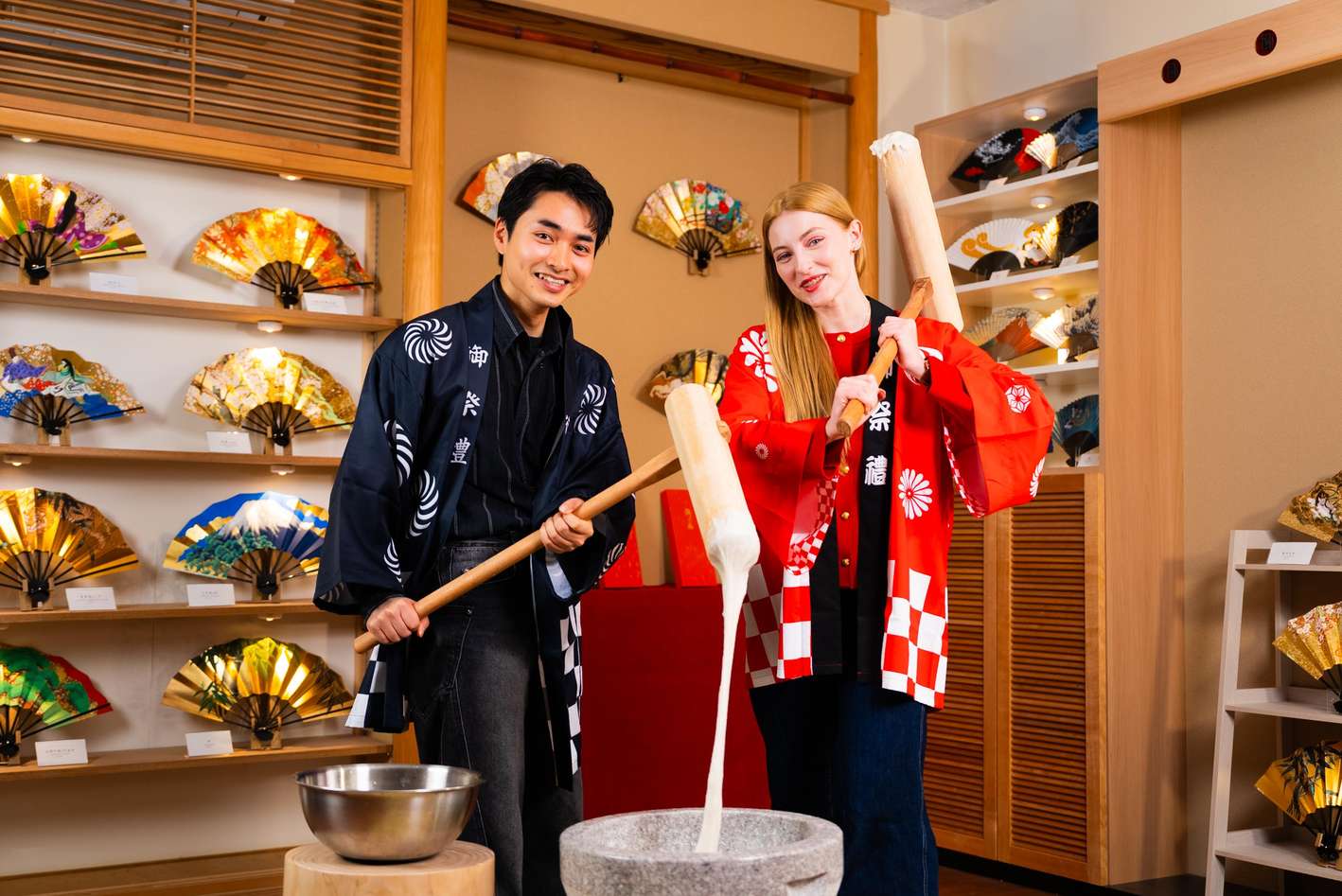
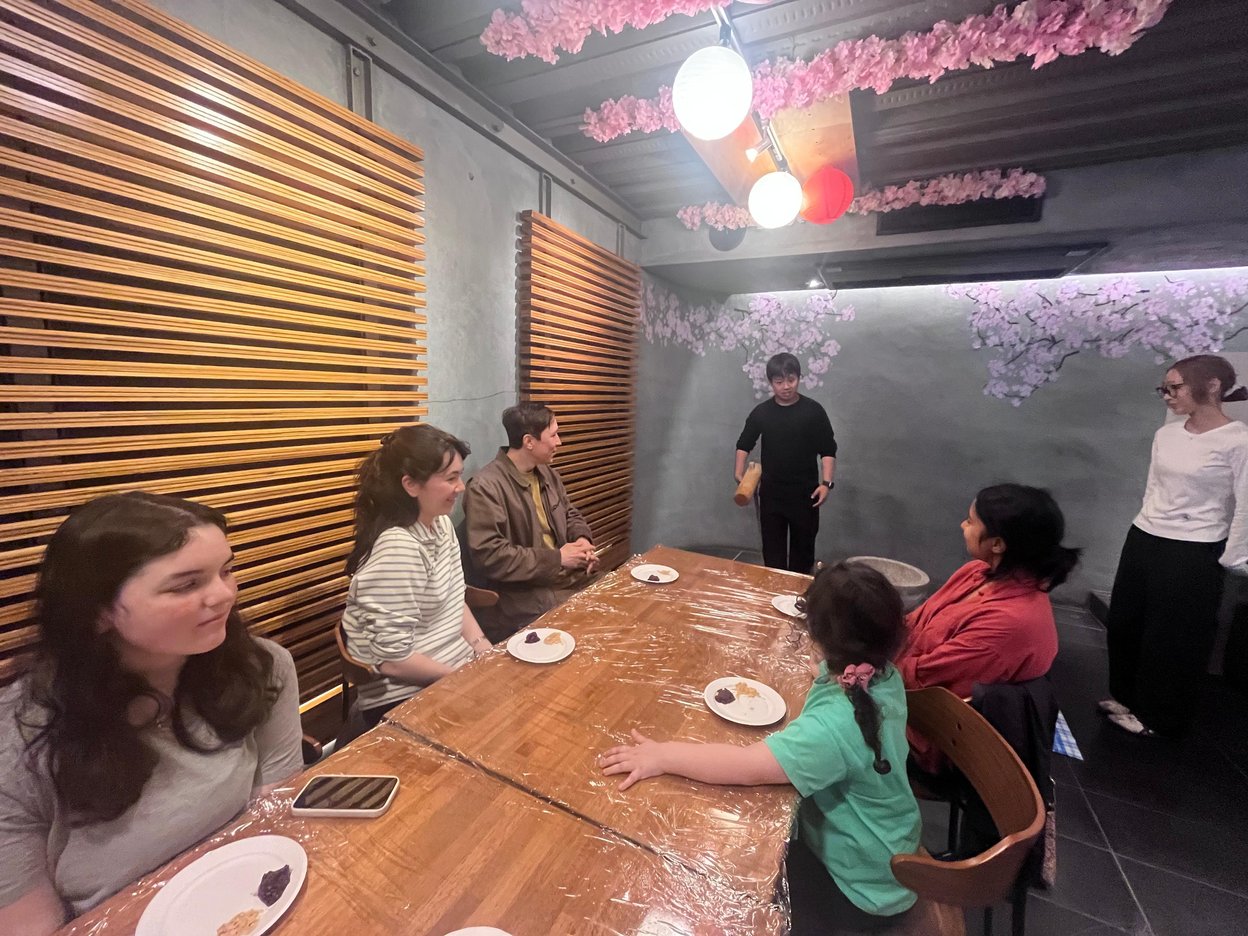
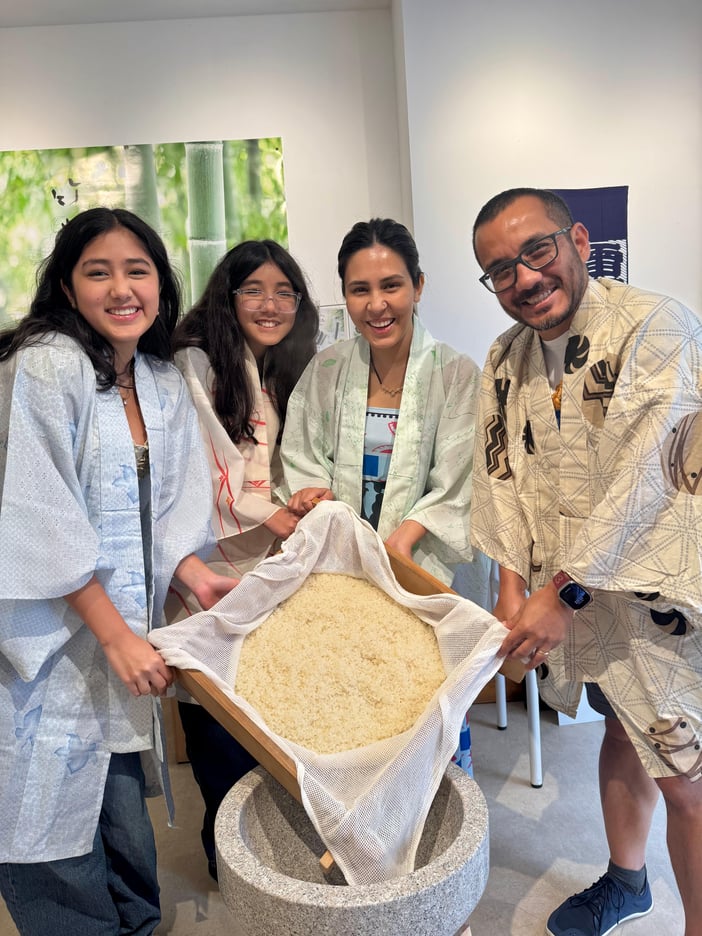
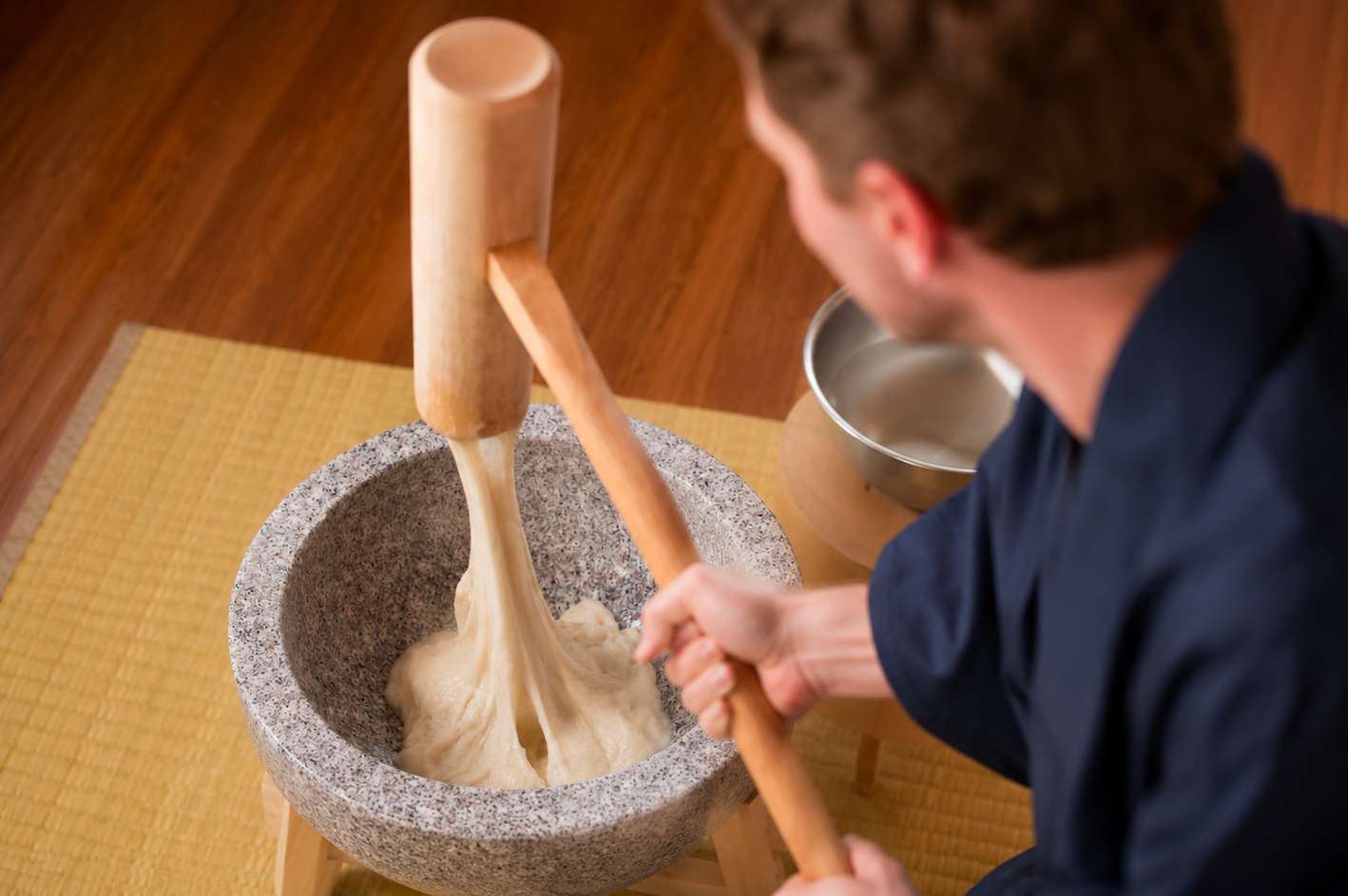
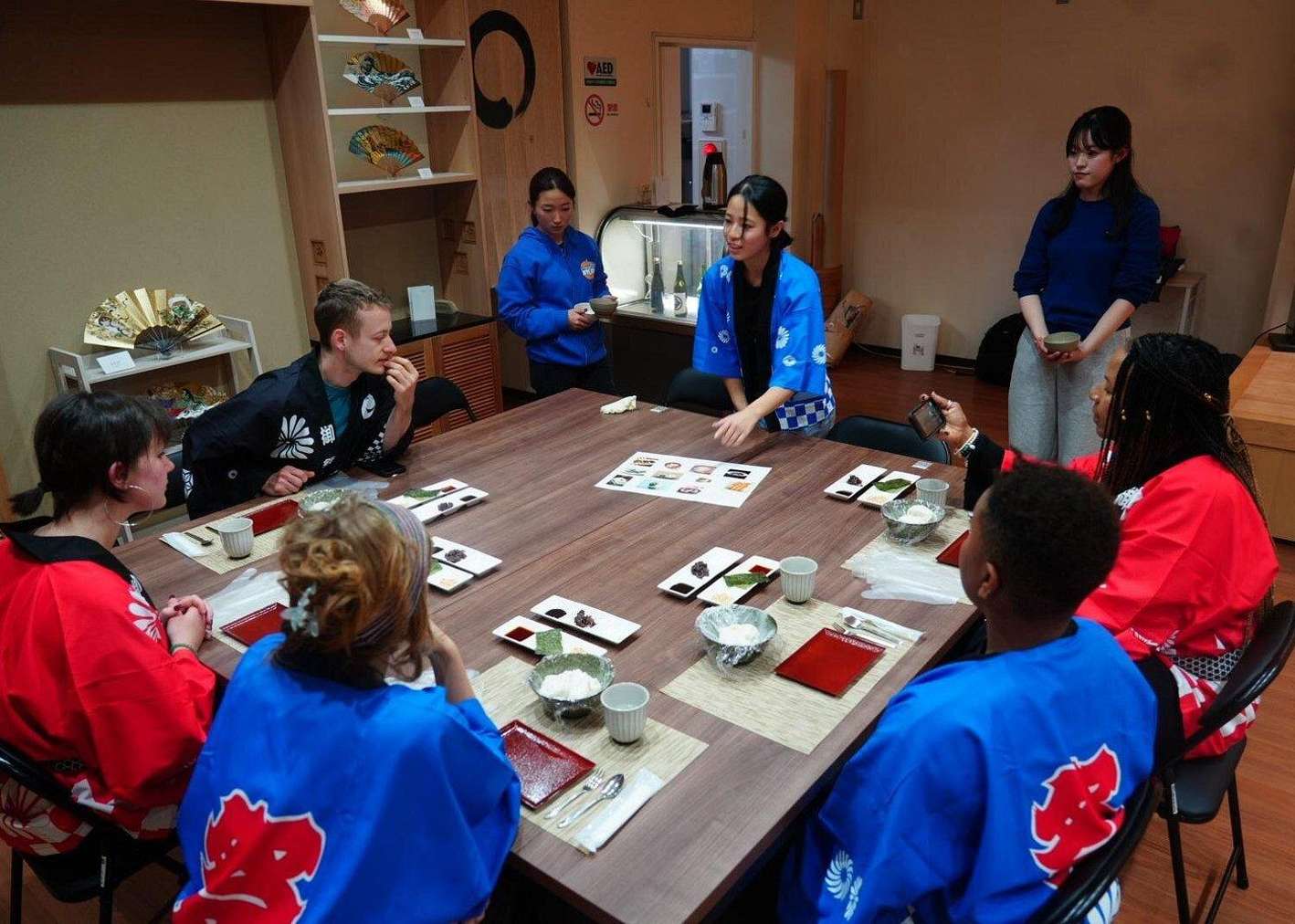
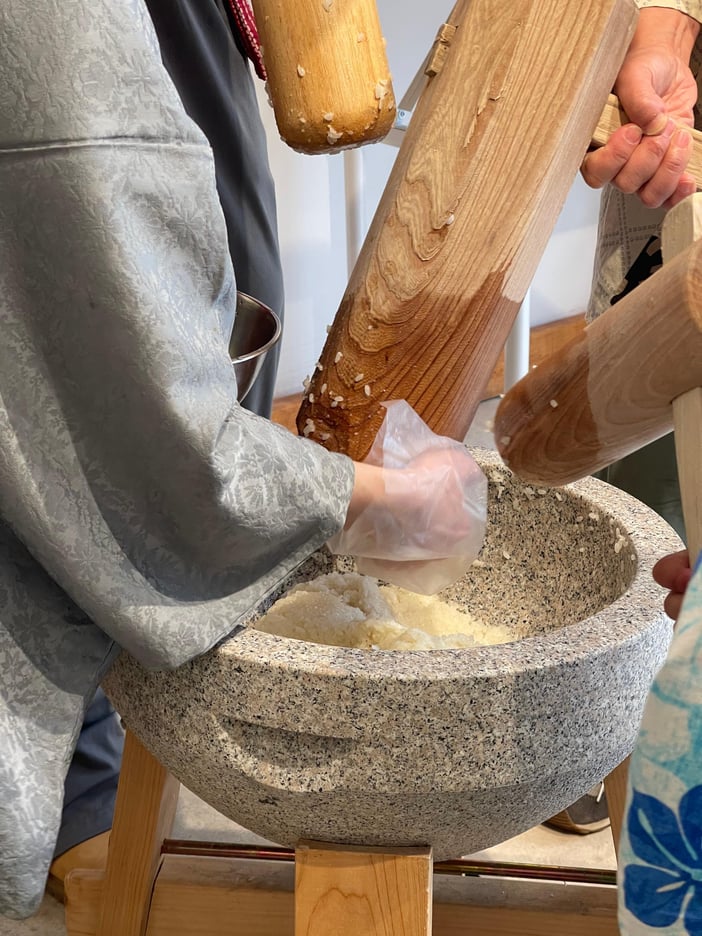
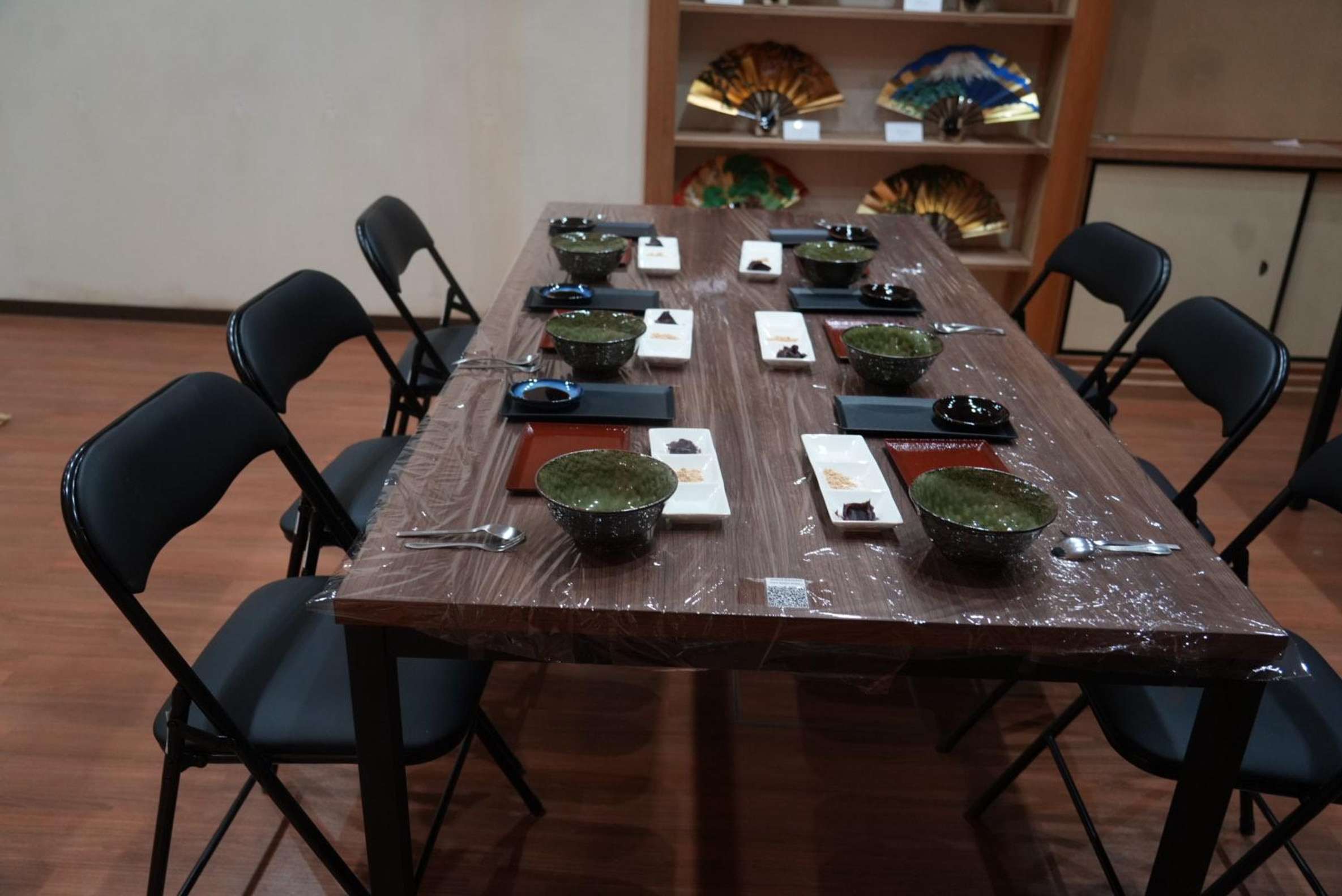
In this one-hour Kyoto class, a local home chef walks a group of no more than eight through the whole craft: steamed glutinous rice goes into the mortar, you pound it into a smooth, stretchy dough, and the chef explains each step in English as you go.
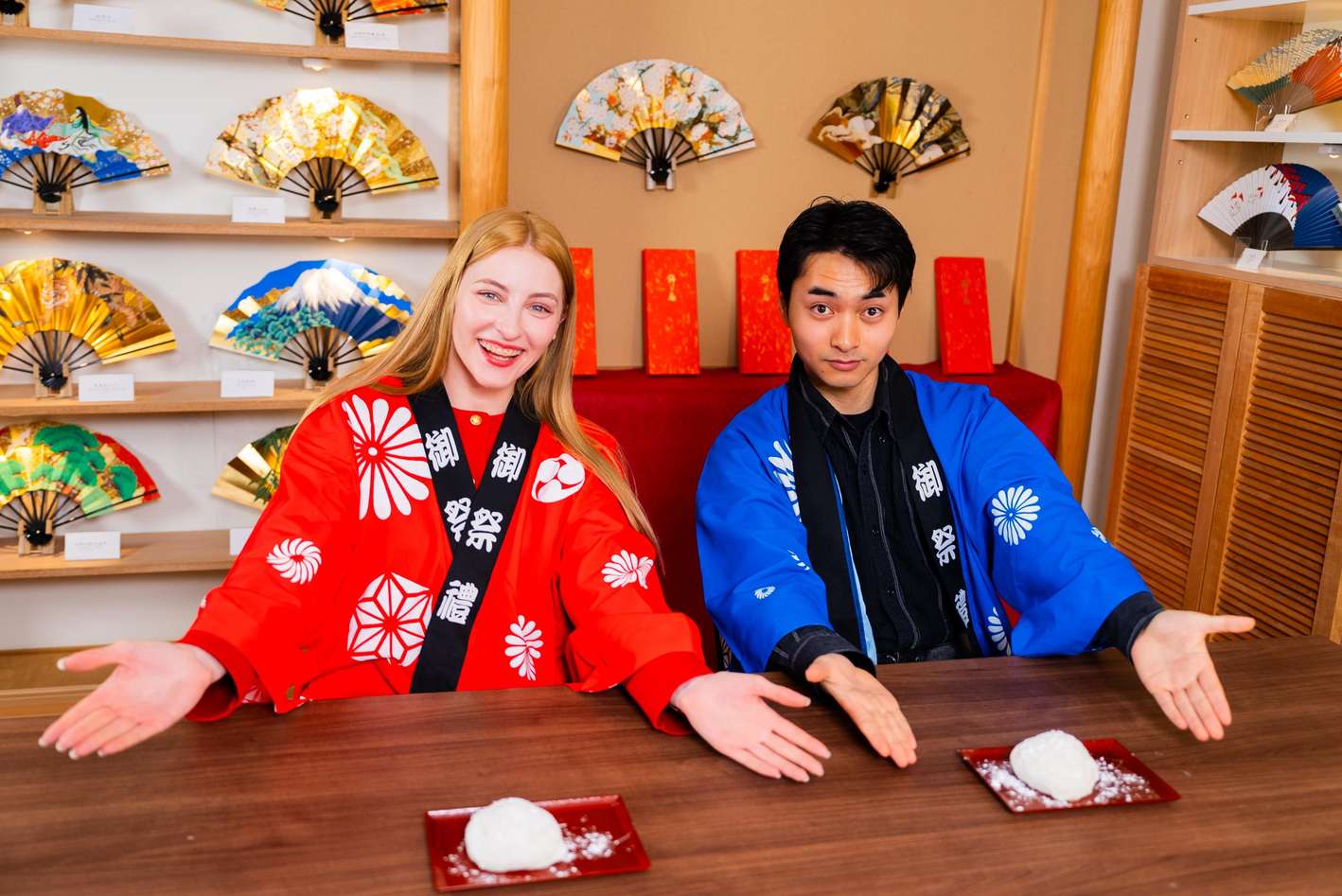
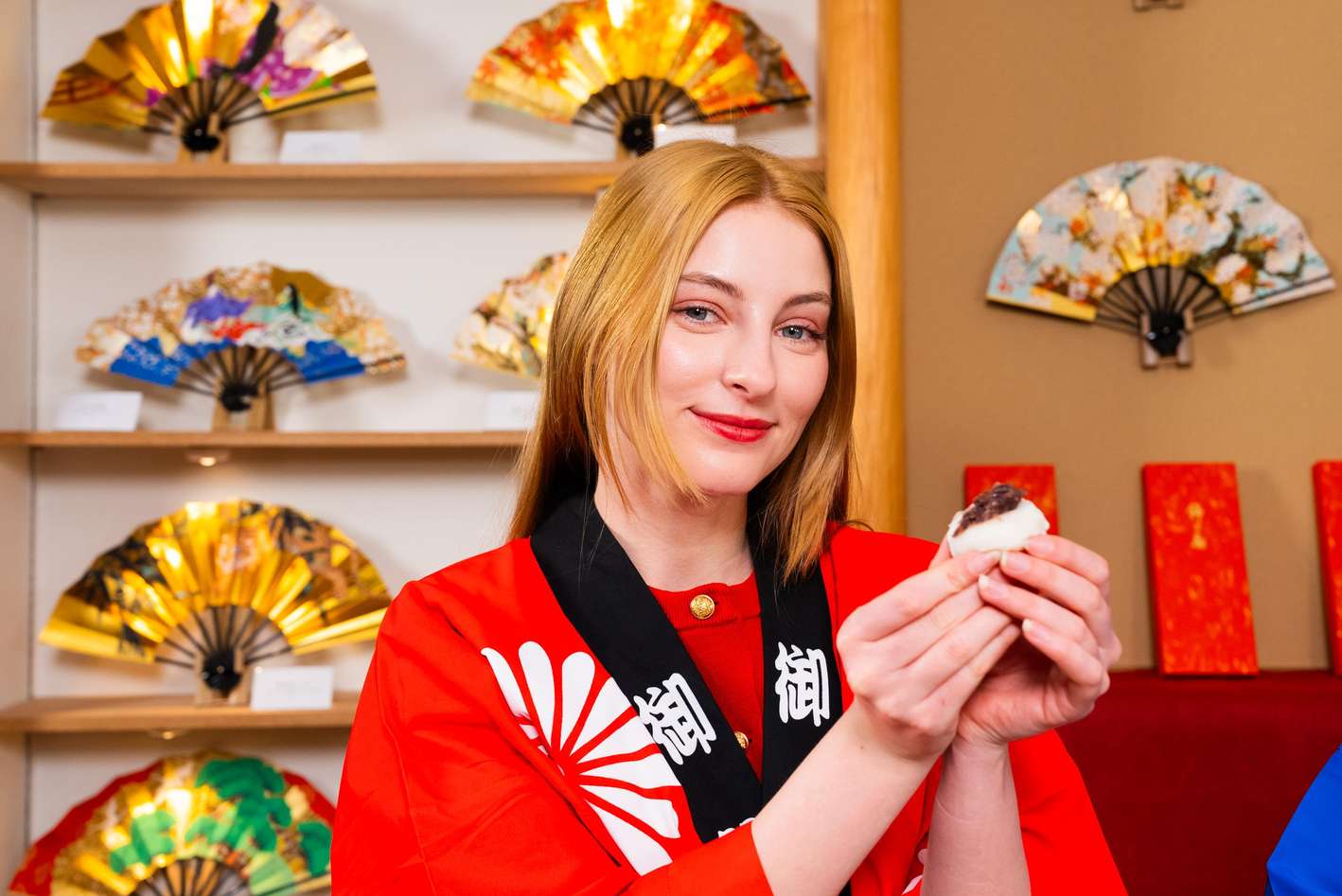
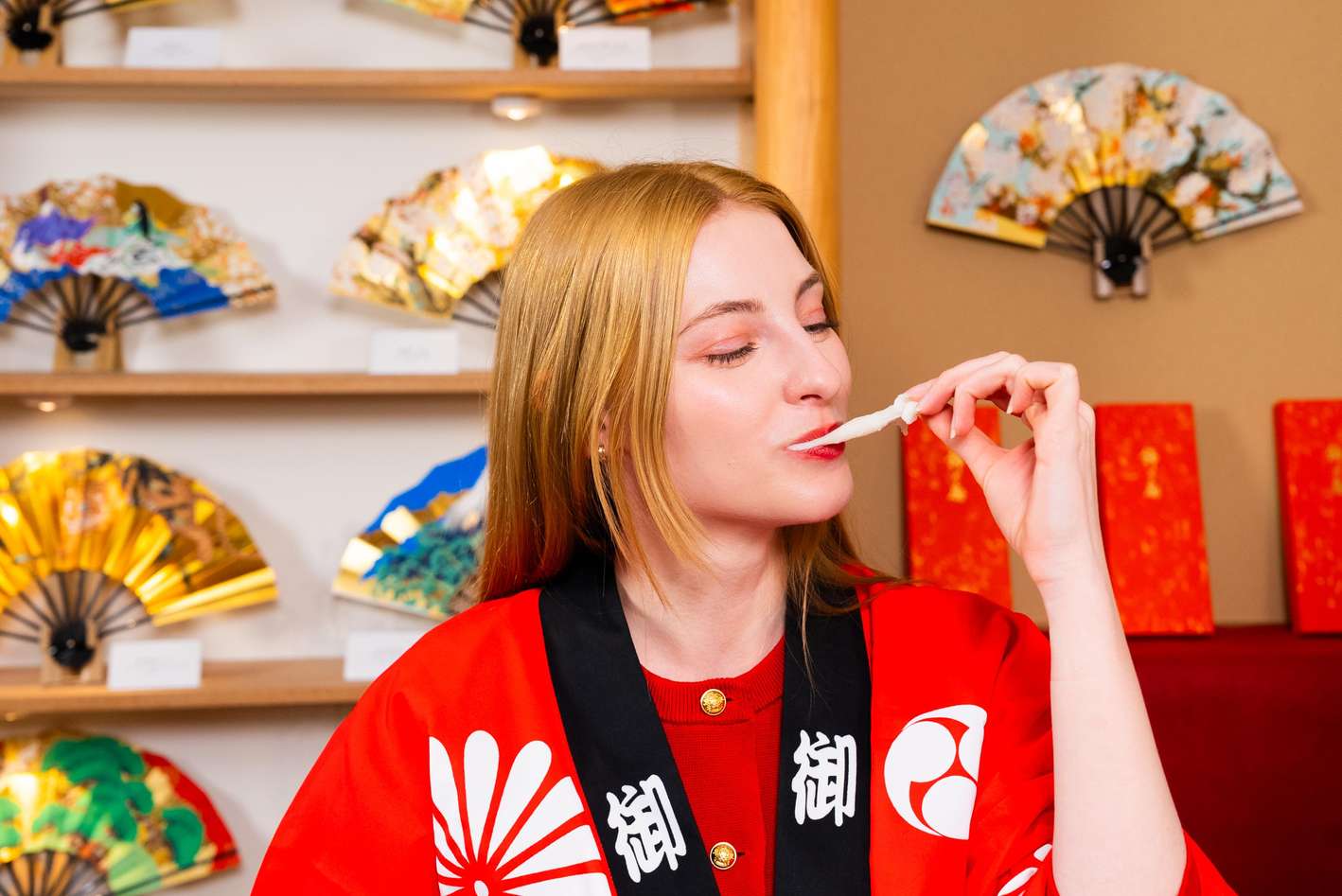
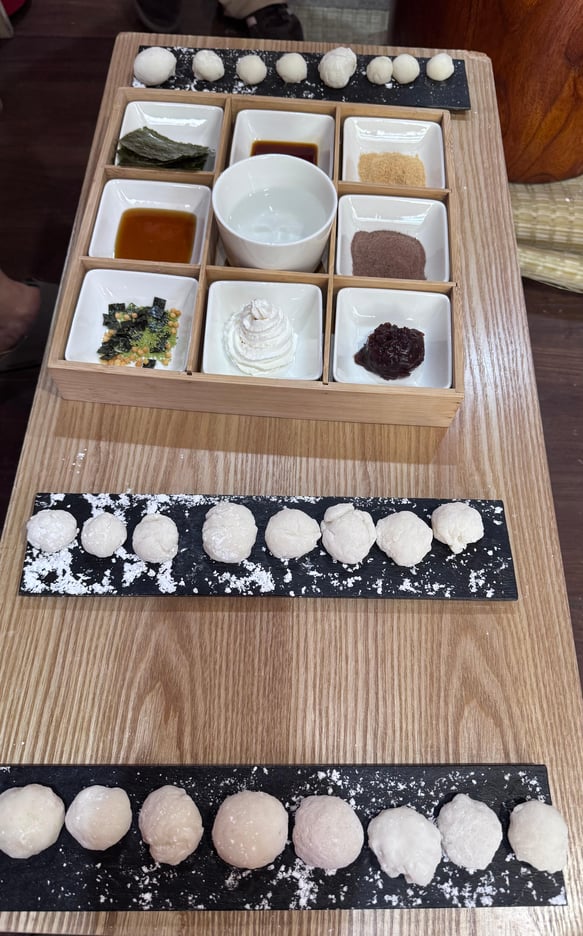
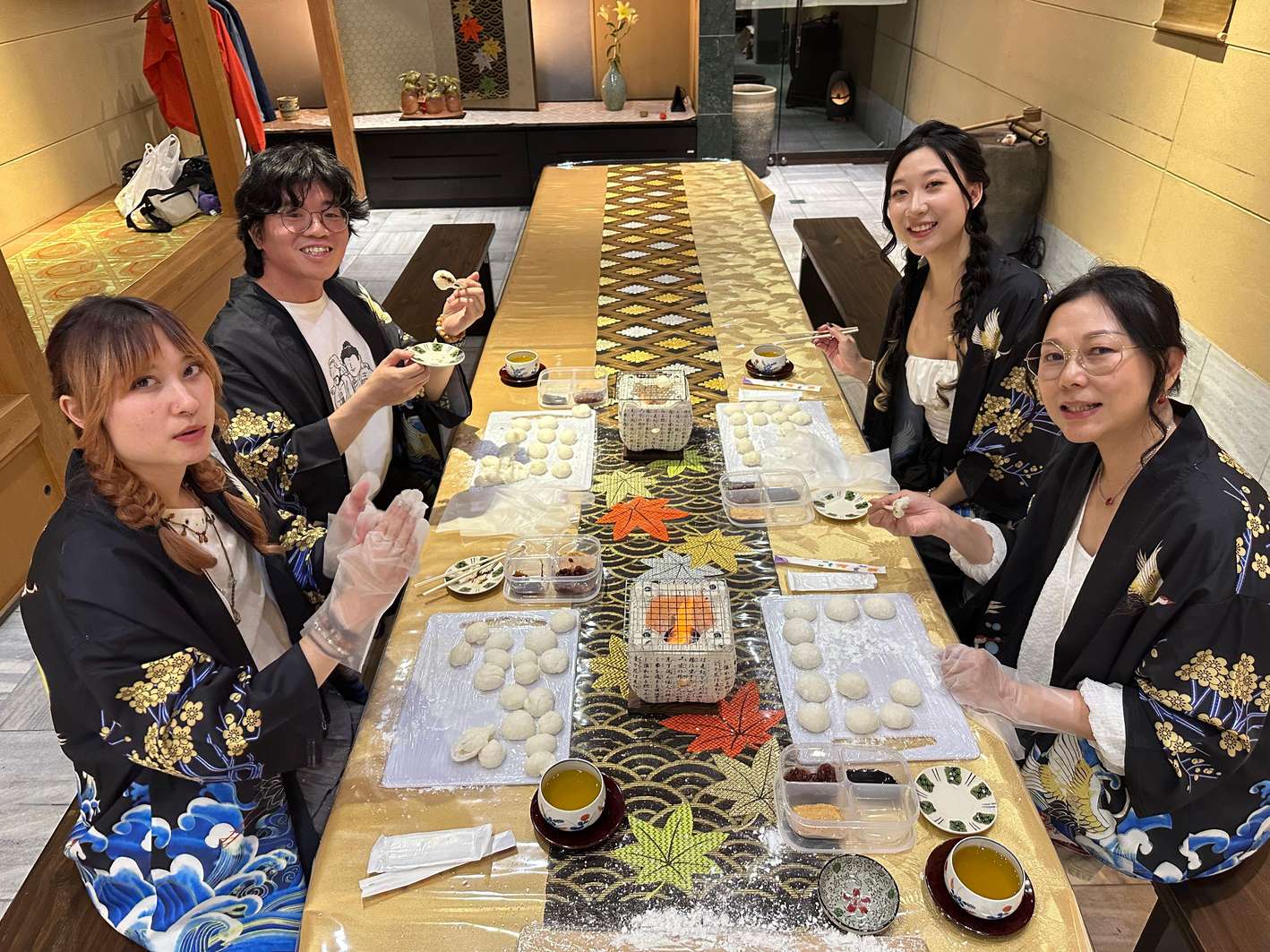
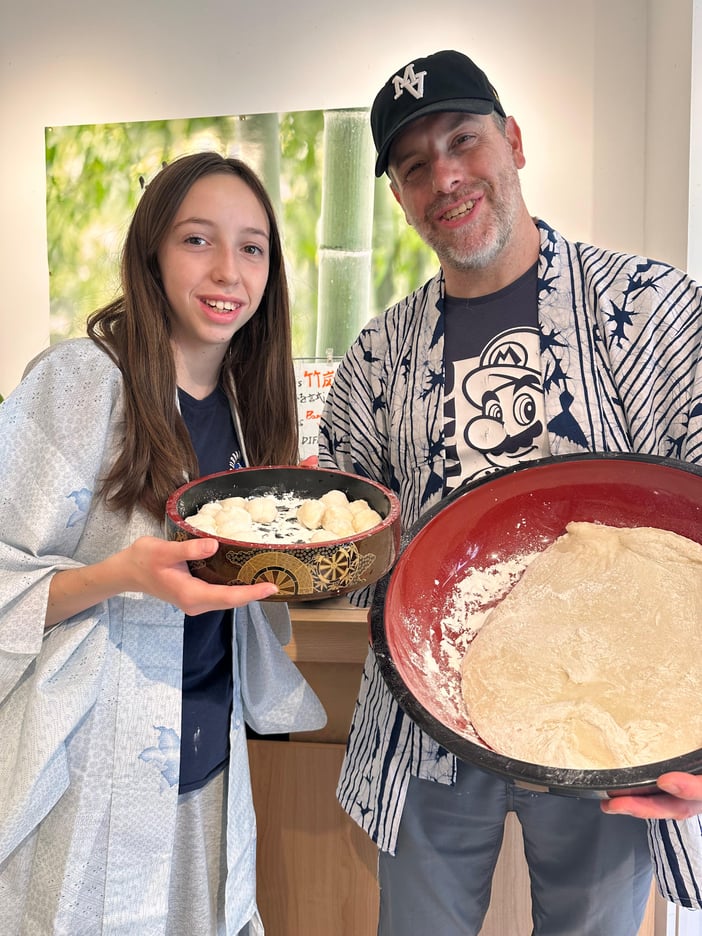
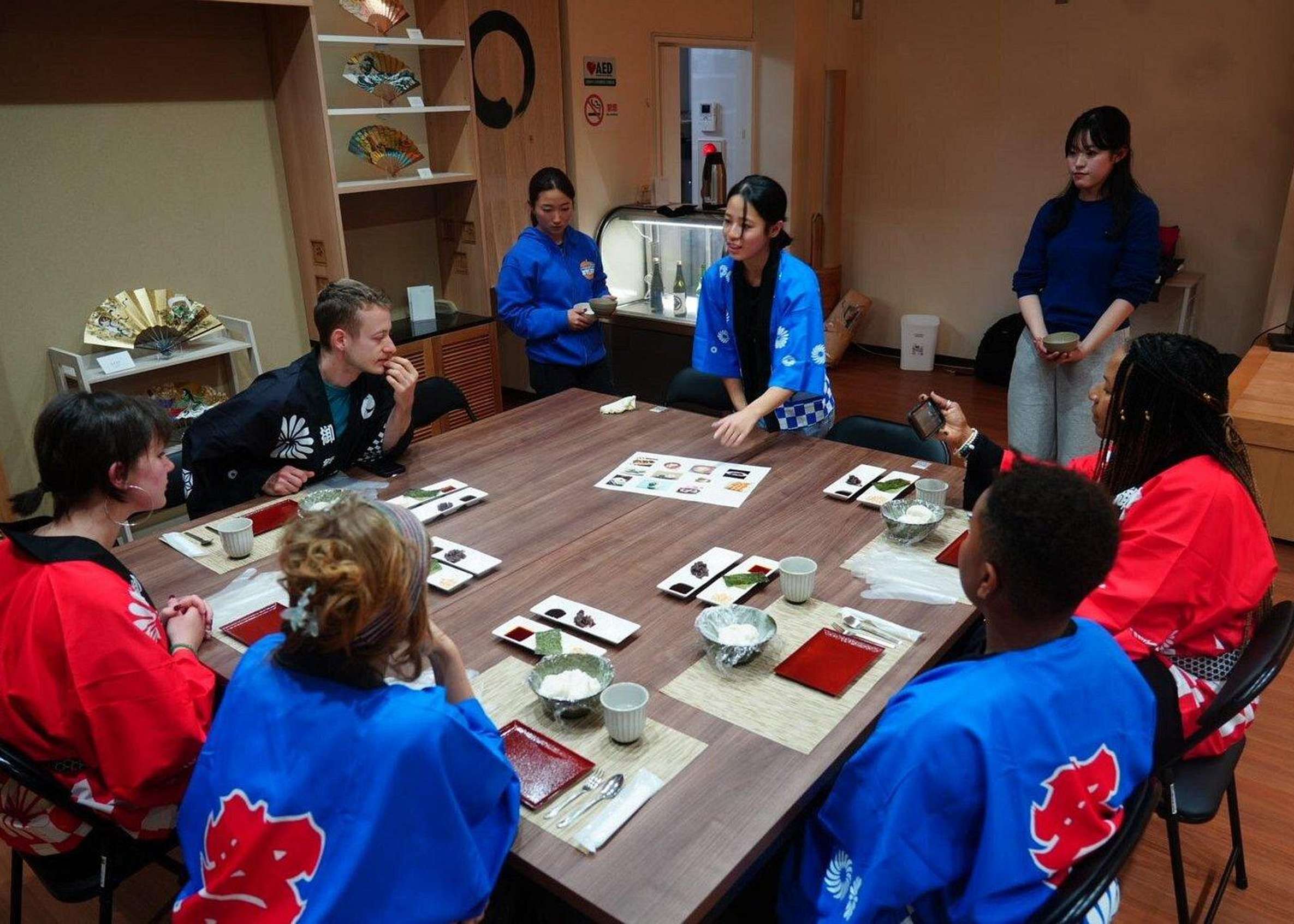
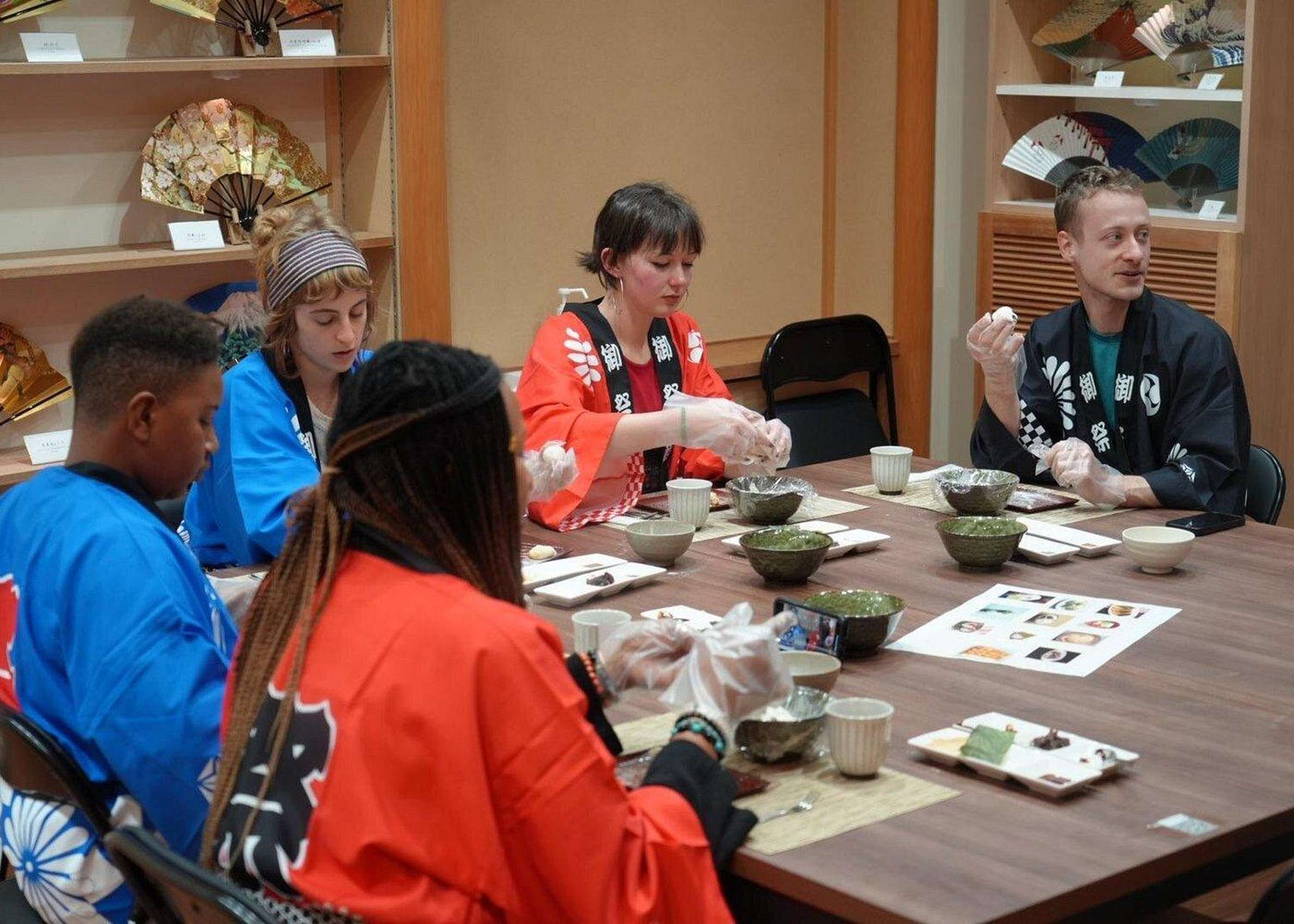
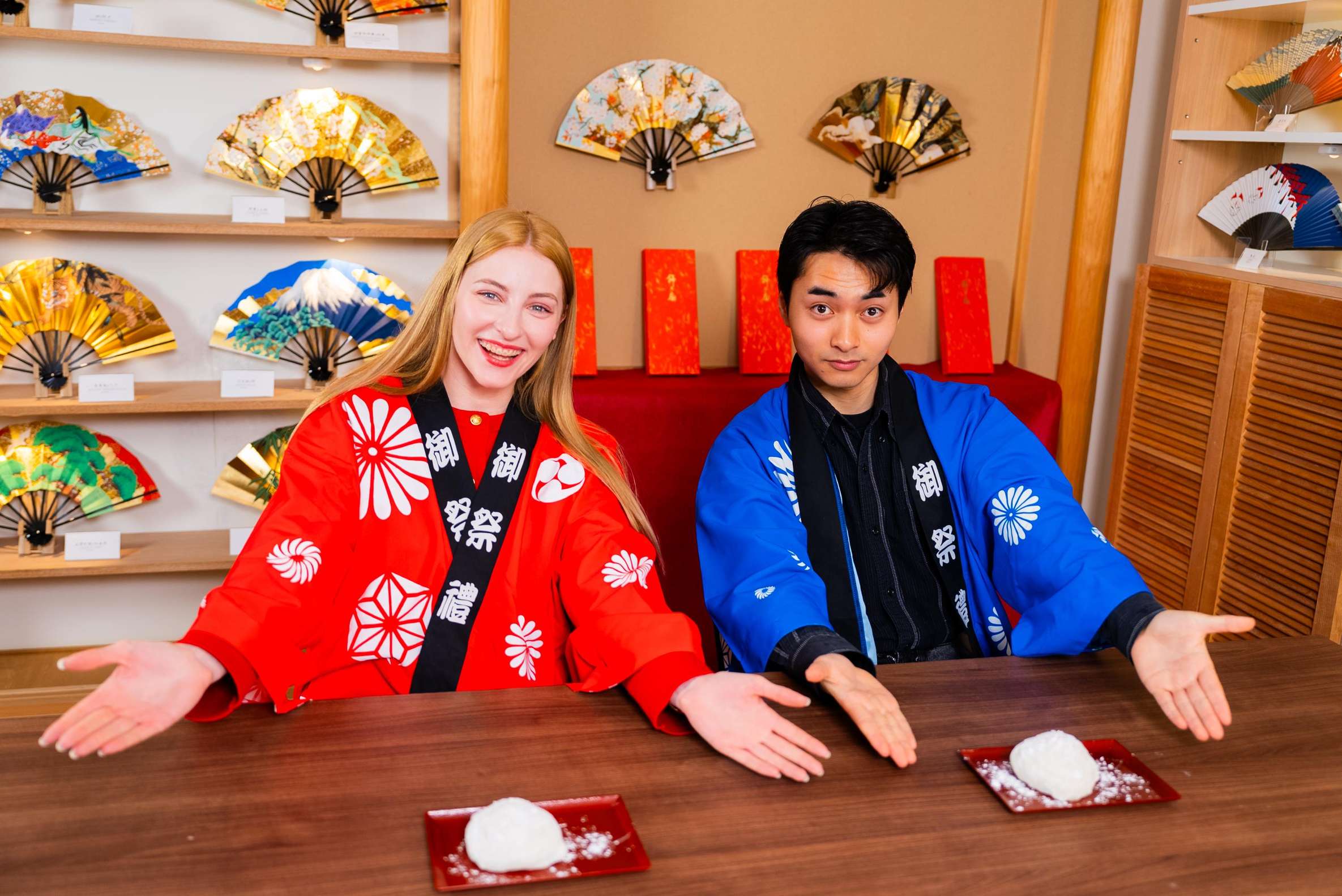
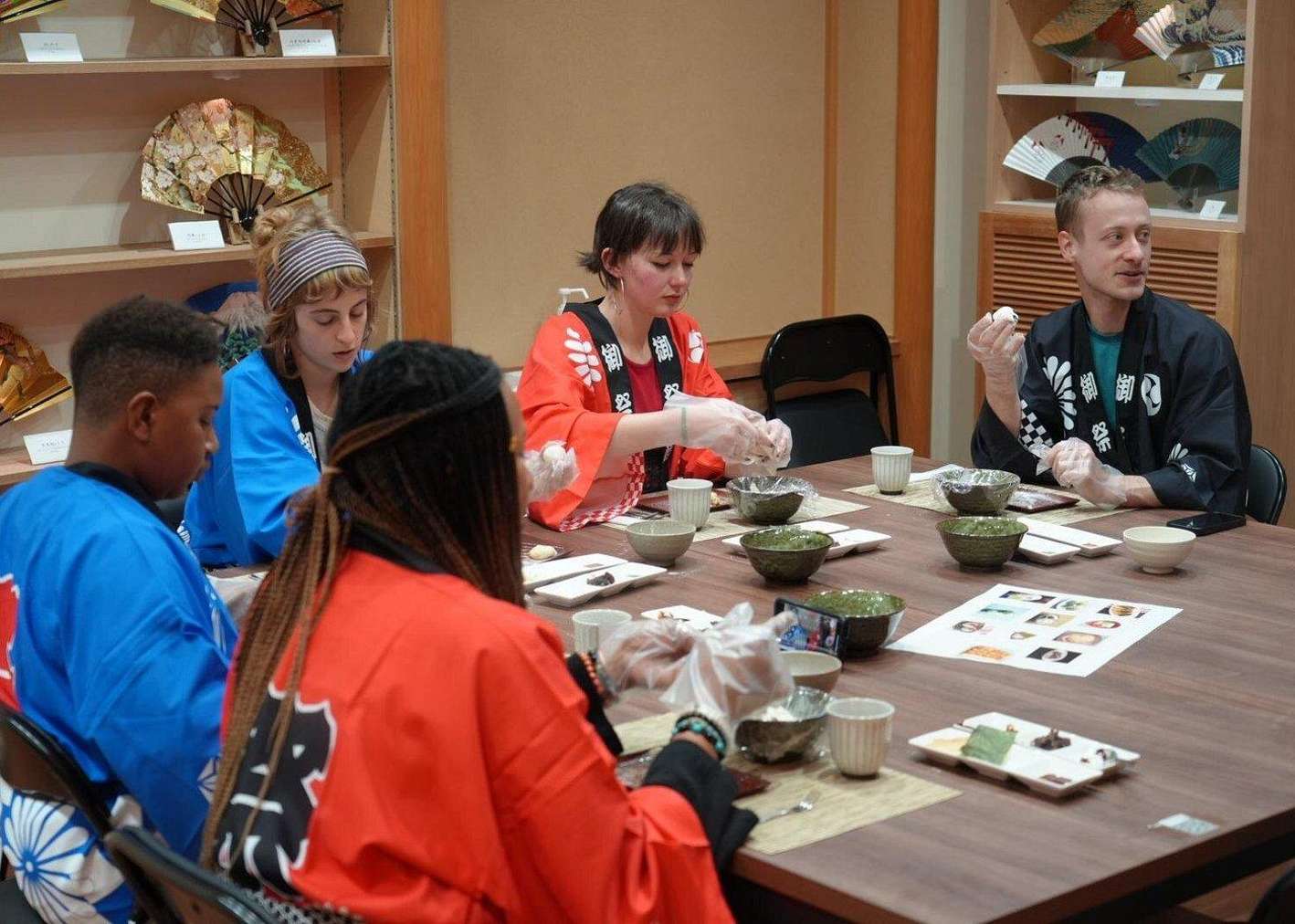
The session runs small on purpose, so there is time to try several styles, from red bean mochi and mochi ice cream to mitarashi dango and shaped wagashi. You finish seated with a cup of matcha, eating the pieces you made while they are still warm.
1Meet the chef· about 5 minA young English-speaking instructor greets the group of eight or fewer and introduces the mochi you will make together.2Pound the rice· about 15 minSteamed glutinous rice goes into the mortar. You swing the mallet and work the rice into a smooth, stretchy dough.3Shape several styles· about 20 minHands-on time with red bean mochi, mochi ice cream, mitarashi dango on the grill, and decorated wagashi.4Taste with matcha· about 15 minYou sit down with the mochi you made and a cup of traditional matcha tea, sweet and savory pieces still warm.5Drinks to go· about 5 minThe class sends you off with a drink to pair with any pieces you saved, plus everything you learned.
Included
Various Types of MochiYoung English-Speaking InstructorDrinks to go with your Mochi
How the making classes compare, city by city
Green marks the lowest price. Each price says whether it is per person or per group.
Tour
Price
Duration
Languages
Best for
Our pick
Kyoto: Traditional Mochi Pounding Experience with Tasting
4.5★ (66)
from $44per person
1 hour
English
small-group learners who want a local home chef and max 8 participants
Most reviewers loved the friendly, English-speaking guides who explained every step of the pounding clearly.
Best surprise
Several families were surprised to discover mochi flavors far beyond the ice cream style they knew back home.
Most common wish
A few wished the tasting could keep going, having happily eaten far more mochi than they expected.
Reserve your chosen mochi making classes today
01
Pick your date and session
Choose a day that leaves room around your temple plans. Kyoto classes run in the morning or afternoon, and the session itself takes about an hour, so it slots neatly into a sightseeing day.
Pro tipPick a slot the day before or after your busiest sightseeing day, since pounding steamed rice is a workout and you will work up a sweat
RecommendedBook a morning session if you travel in summer, before the afternoon heat sets in
02
Choose the right option
Read the options carefully, because they change who can join. Osaka listings split into an adult plan for ages 13 and up and a family plan open to all ages, and some Kyoto classes pair the pounding with a tea ceremony and run about 90 minutes.
ImportantChildren under 13 go on the family plan in Osaka, so book the adult plan only when everyone in your group is 13 or older
Common mistakeFirst-timers book the shortest version and then ask for the tea ceremony on the day; the combined session is its own option
03
Pay and check your confirmation
After payment the booking platform sends a confirmation by email with the meeting details. The listed experiences have no hotel pickup, so you make your own way to the venue, usually close to public transport.
Pro tipScreenshot the confirmation before you set out, since meeting points are often inside shopping arcades or upstairs in small studios where signage is thin
ImportantCancellation is free up to 24 hours before the class for a full refund, so lock in a slot early and adjust later if your plans shift
04
Prepare for the day
Wear comfortable clothes you can move in and shoes that slip off easily, since you take outdoor shoes off at the door. The venue lends a happi coat, but starch and soybean flour still drift onto sleeves and trousers.
Common mistakeShowing up in dry-clean-only fabrics; fine potato starch lands on your clothes no matter how careful you are
ImportantTwo of the listed experiences are unsuitable for pregnant women and people with back or heart problems, so check before you book
05
Arrive and start pounding
Get there about 15 minutes before the start so you can settle in, meet the instructor and put on the happi coat. Small groups mean the guide walks everyone through each step in English, from kneading the steamed rice to eating your mochi with matcha.
RecommendedBring your phone for photos of your group taking turns with the mallet, and ask the host, who will often take pictures for you
Pro tipCome hungry, the tasting is generous and you will try several pieces with different sweet and savory toppings
Essential details regarding your mochi making classes experience
Can stop the dayGood to knowGood news
01
ChoosingWhat it is, who it suits, when to go
5
Language
You need no Japanese. Instructors give step-by-step guidance in English, and some speak both English and Japanese, so beginners can follow every stage without knowing cooking terms.
Tasting
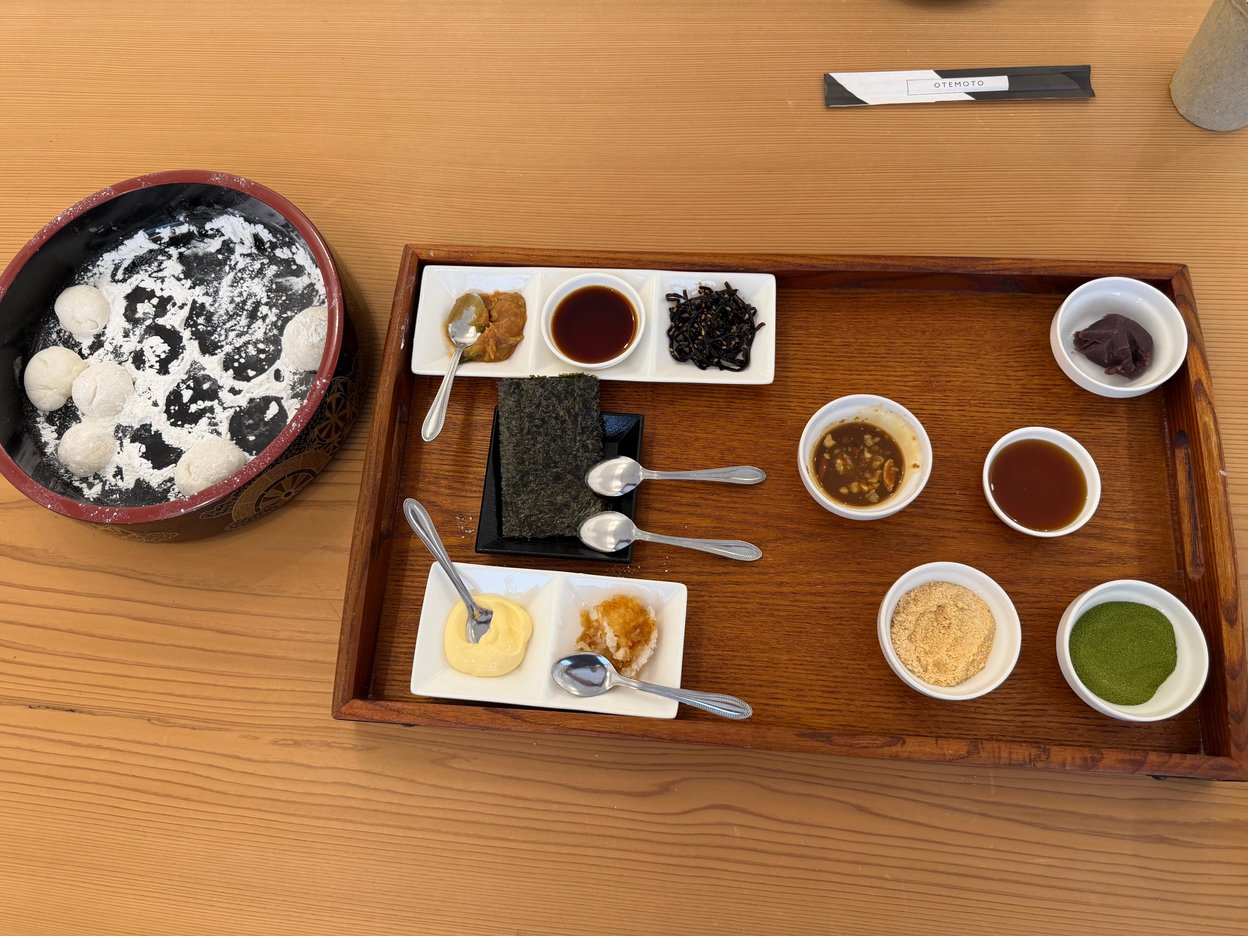
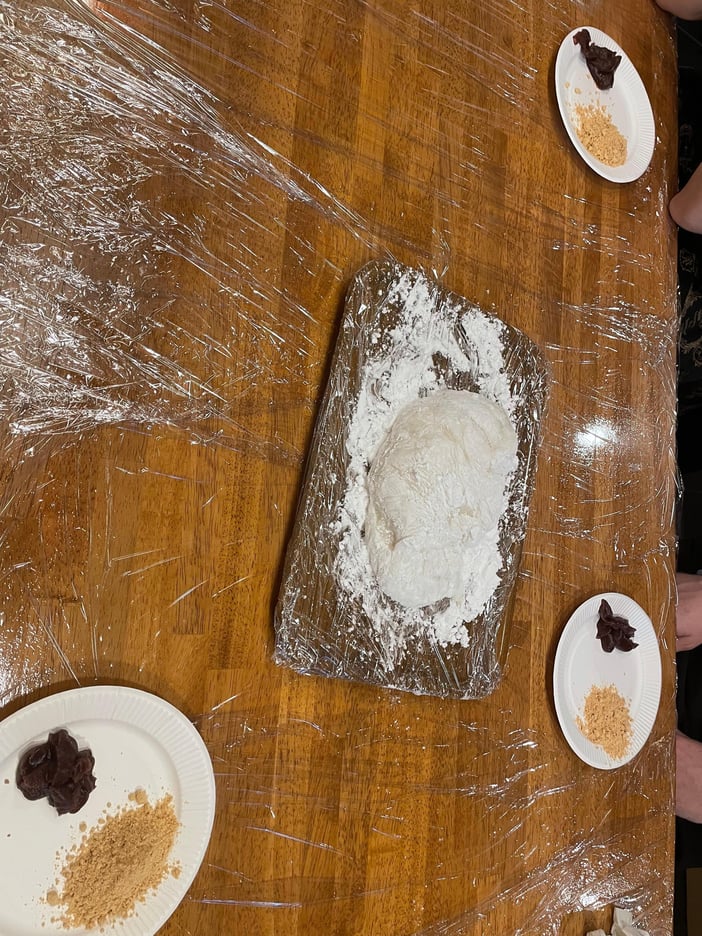
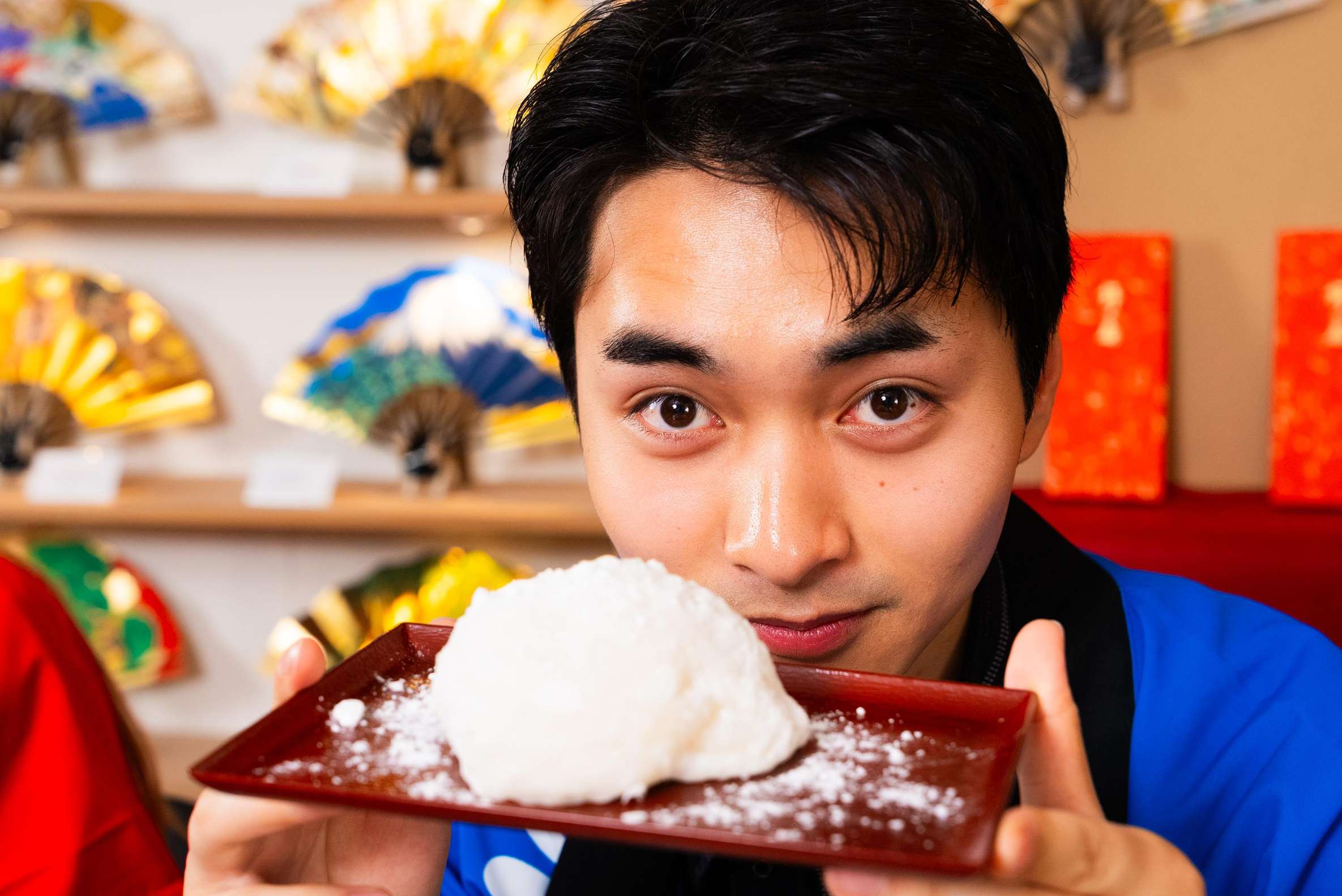
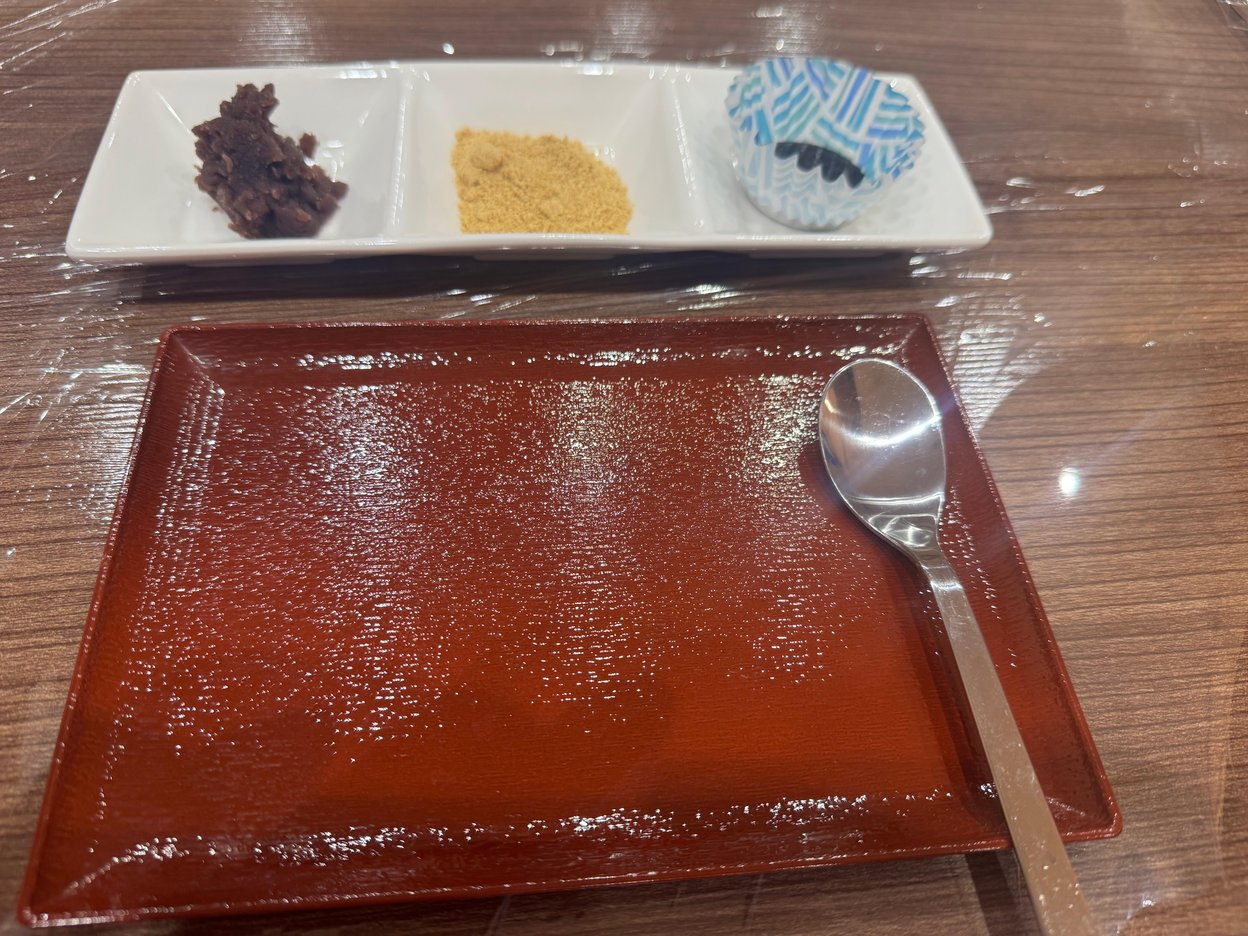
Every class ends with eating your own mochi, and the tasting runs generous. Expect sweet toppings like kinako and red bean paste, chocolate and honey, plus savory ones like soy sauce and grated daikon, often with matcha or tea alongside.
Timing
A standard hands-on session takes about an hour from arrival to the last bite, and a version paired with a tea ceremony runs about 90 minutes. That fits neatly between temples in a sightseeing day.
Photos
Bring your phone if you want footage of your group pounding; hosts are usually glad to shoot for you. One Kyoto class goes further and sends every guest photos and videos by email afterwards at no cost.
Shaping
Sticky hands are the classic beginner problem. Dust your hands with starch and keep them dry, and twist pieces off with a pinch rather than pulling them, which keeps fresh sticky surfaces from clinging to your fingers.
02
BookingHow far ahead, and what happens if plans change
2
BookingCan stop the day
Reserve your spot ahead of time. Classes run with small groups, and one Kyoto workshop caps the session at 8 participants, so dates can fill.
Cancellation
Plans change, and every class here works the same way: cancel up to 24 hours before the start and you get a full refund. That makes it easy to hold a slot while your itinerary settles.
03
Before you goPapers, health, what to bring
3
Health limitsCan stop the day
Two of the classes list pregnant women and people with back or heart problems as unsuitable, because pounding is genuine physical work. One Kyoto venue is wheelchair accessible, another is not, so check accessibility before you pick.
Children
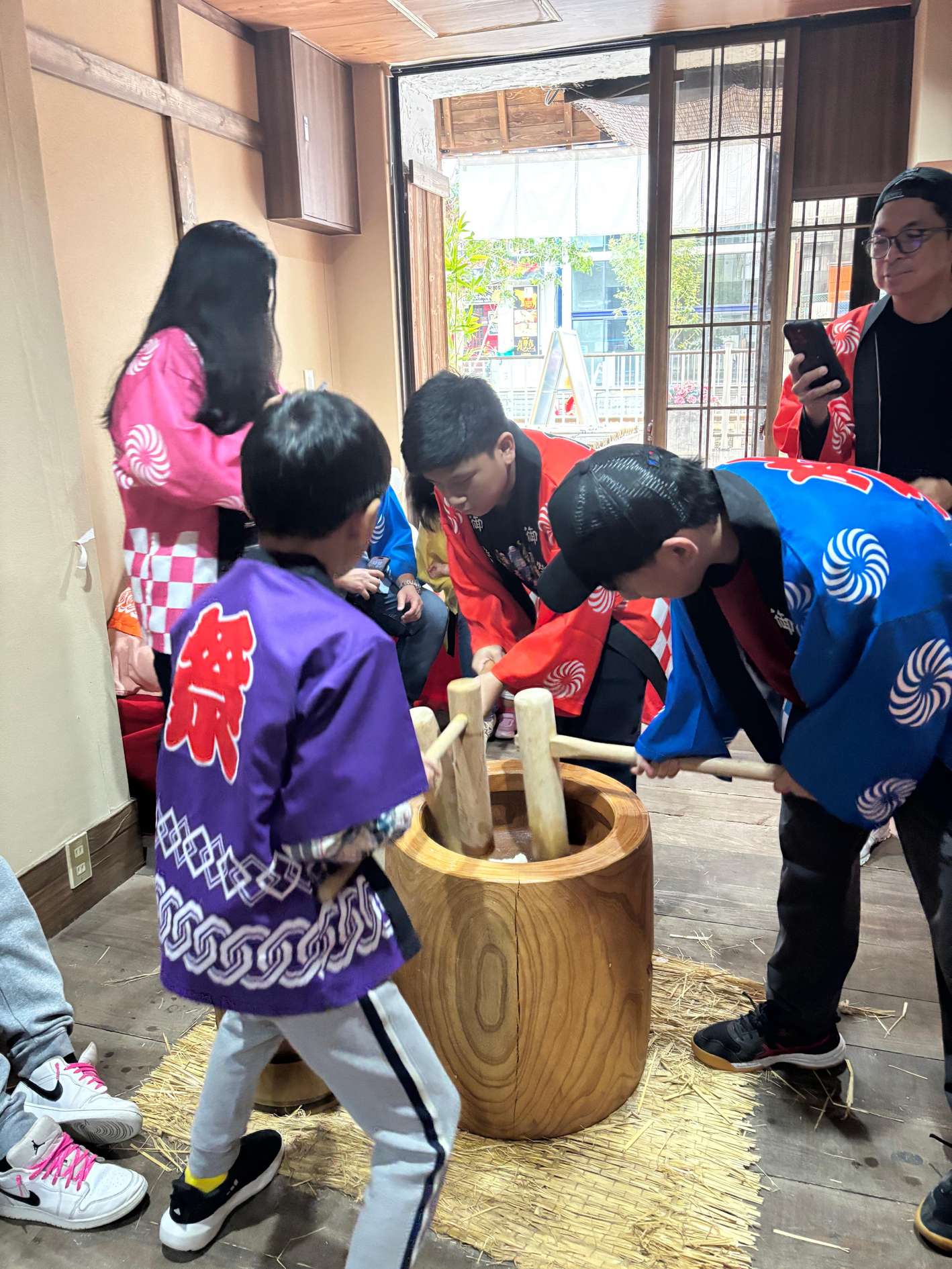
Kids join through family plans, which welcome all ages, while adult plans start at 13. Children never attend without an adult, and smaller mallets let them pound for real.
What to wear
There is no dress code, just wear comfortable clothes and shoes you can move in and do not mind getting dirty. You take your shoes off at the door, so slip-ons and clean socks help. Most venues lend you a happi coat.
04
On the dayWhere to be, when, and how you get there
1
Meeting
Nobody collects you from your hotel. You make your own way to the venue, and all of them sit close to public transport. Aim to arrive about 15 minutes early so the session starts on time.
05
During the tourWhat is expected of you
1
Leftovers
Fresh mochi hardens within hours, and a hotel refrigerator speeds that up. If you carry pieces back, keep them covered at room temperature and eat them the same day, never chilled.
Inside the mochi making classes of japan, city by city
Pound the rice yourself and the mallet becomes the story of the day. Which city suits you, which class to book, and how the hour unfolds: those answers decide whether it becomes the memory of the trip.
Kyoto· 34.67° N, 135.50° E
If you only remember three things
1
Plan about 75 minutes door to door for a standard class: one hour of making and tasting, plus arriving 15 minutes early.
2
Book where you are already sleeping; most operators run the same format in Kyoto, Osaka and Tokyo.
3
Oh Mochi in Osaka takes no walk-ins and no spectators, so everyone through the door needs a reservation.
Making classes or street shows - is pounding your own mochi worth it?
The mortar sits a metre behind the plate glass, and within seconds of the first shout the pavement outside is several rows deep. The famous high-speed show in Nara lasts two to three minutes. Arrive after the crowd forms and you are watching the back of someone's head.
A mochi making class turns that same rice and mallet into an hour of your own work. It is an active, indoor session that can leave you sweating, and it ends with toppings you chose yourself. The show gives you a souvenir video. The class gives you the memory.
Worth knowing before you weigh the two: watching the Nara storefront costs nothing, and buying mochi afterwards is optional. Class prices swing widely from one workshop to the next, so weigh what a booking includes against what you want from the hour.
A traveler's note
Great instructor, talented and personable. We both pounded mochi, rolled balls, and tasted ten toppings. Warm instructors helped with everything since my daughter used it for a school assignment.
What happens in a mochi making class, from steamed rice to first bite
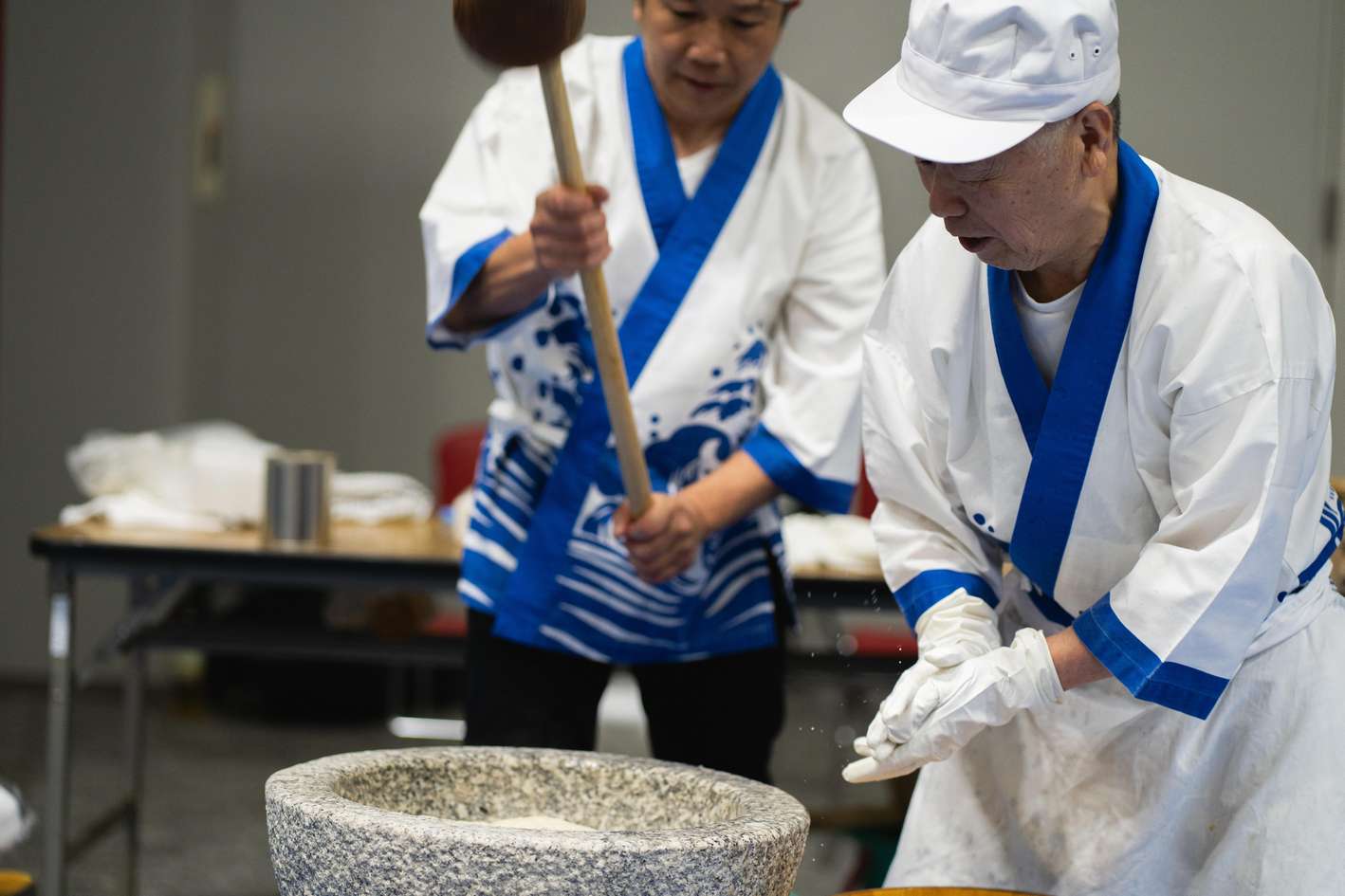
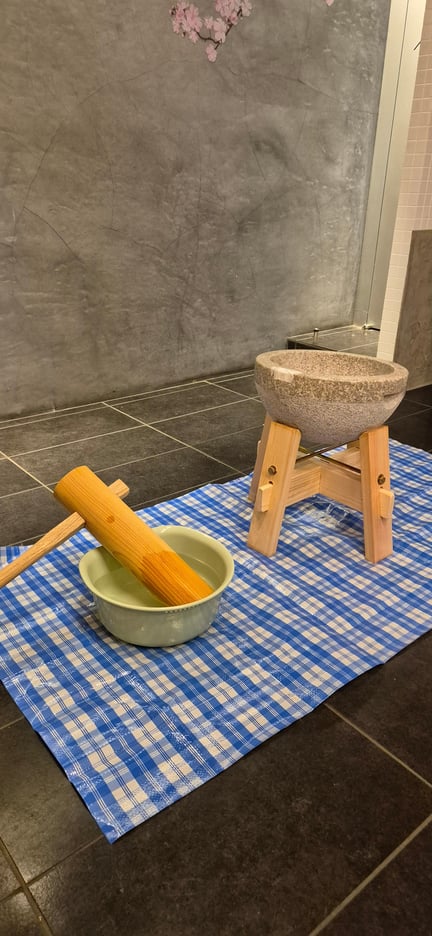
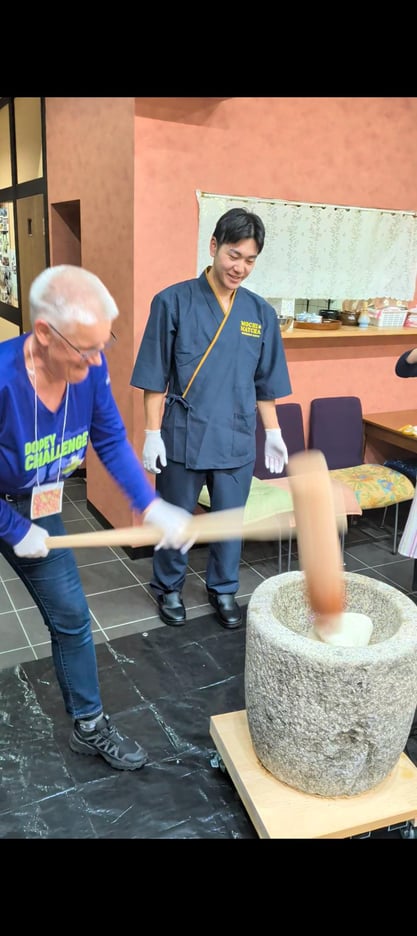
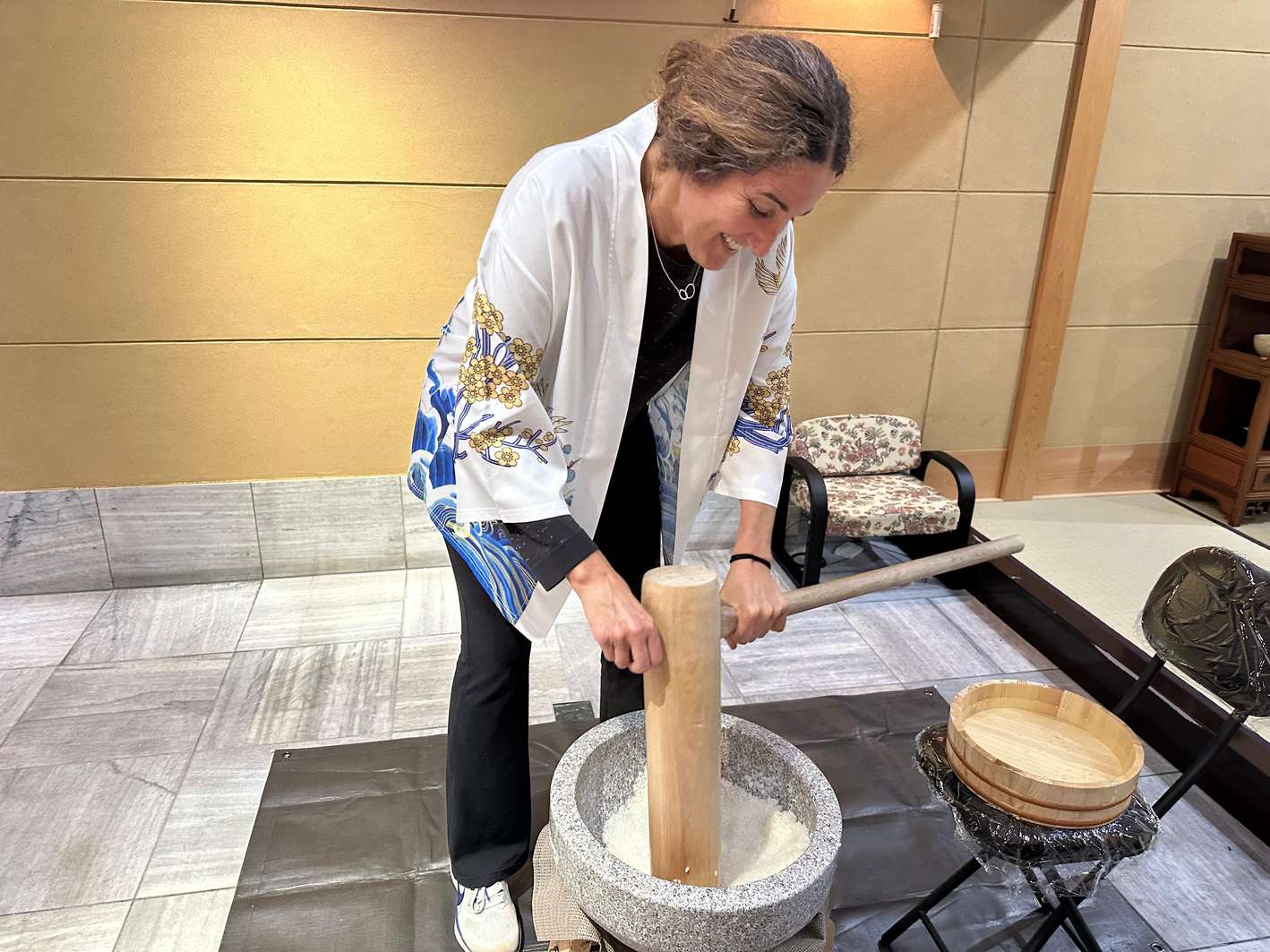
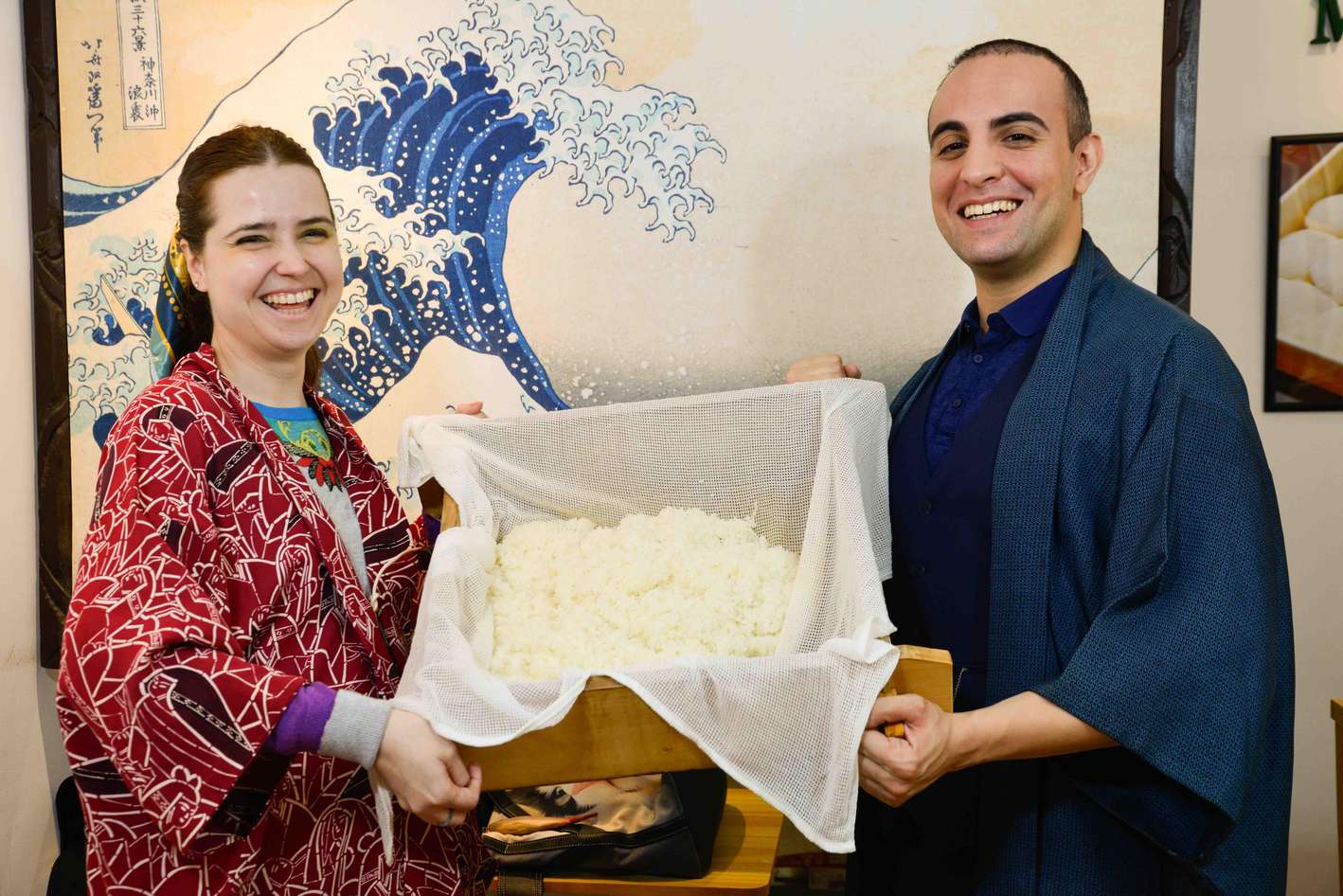
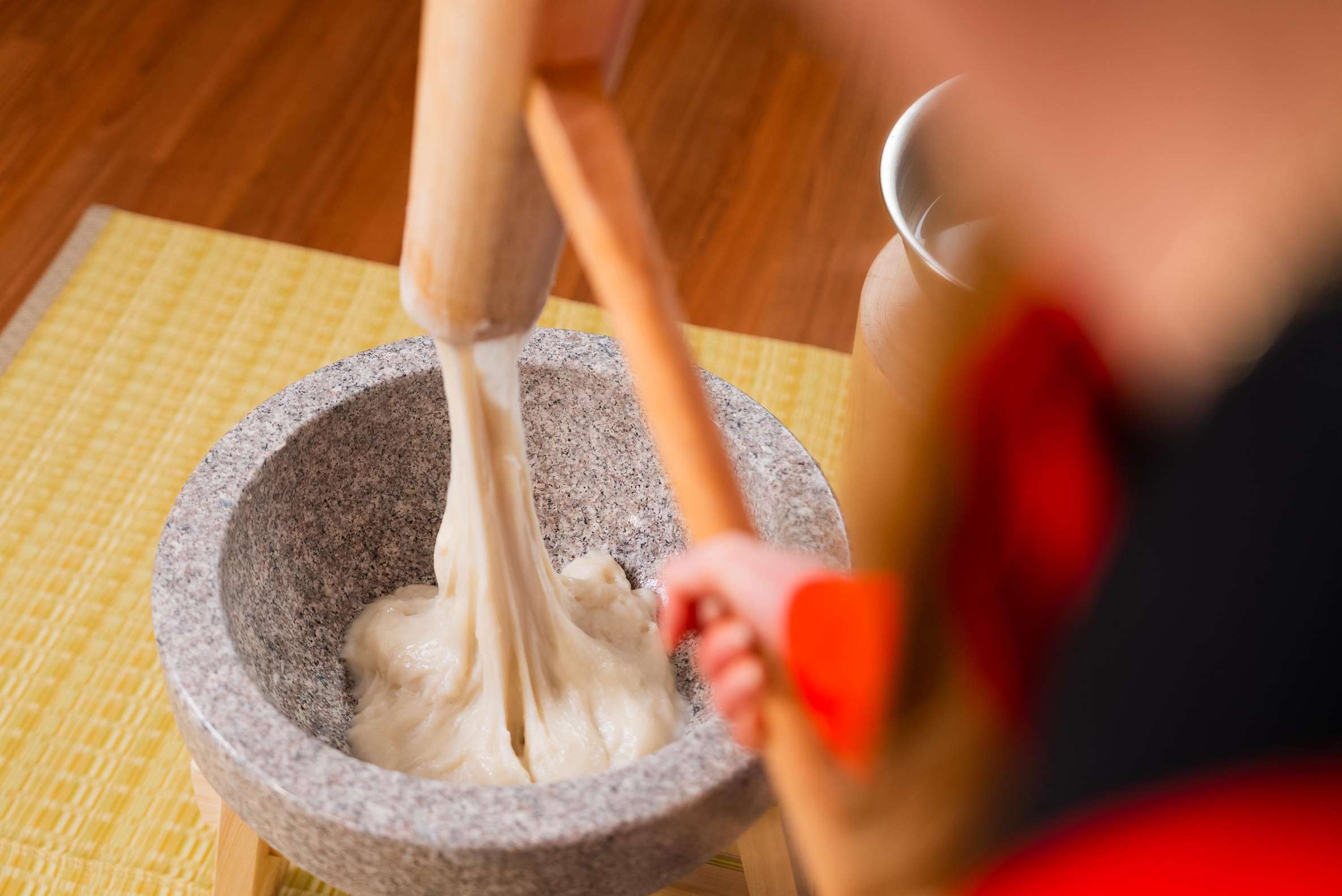
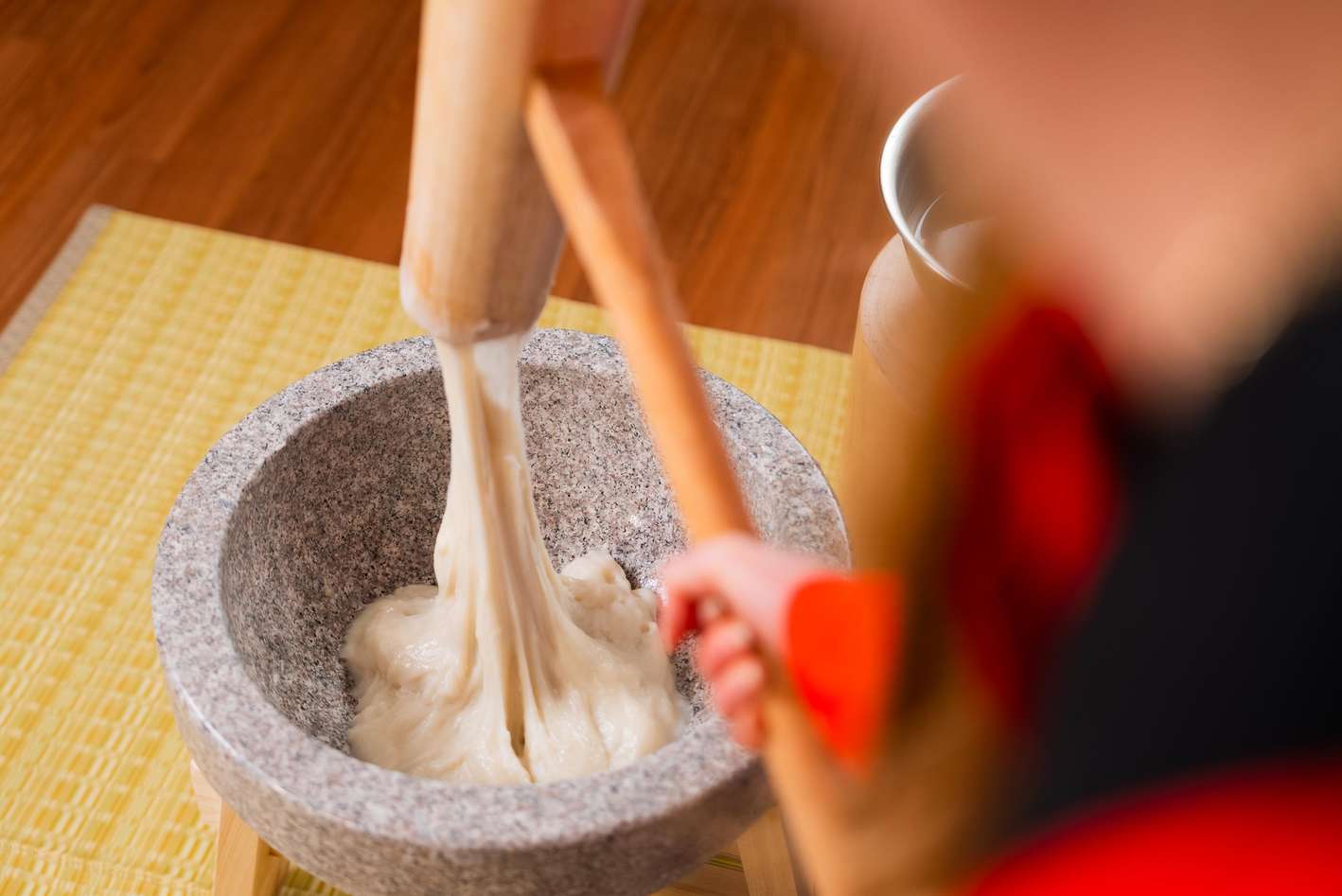
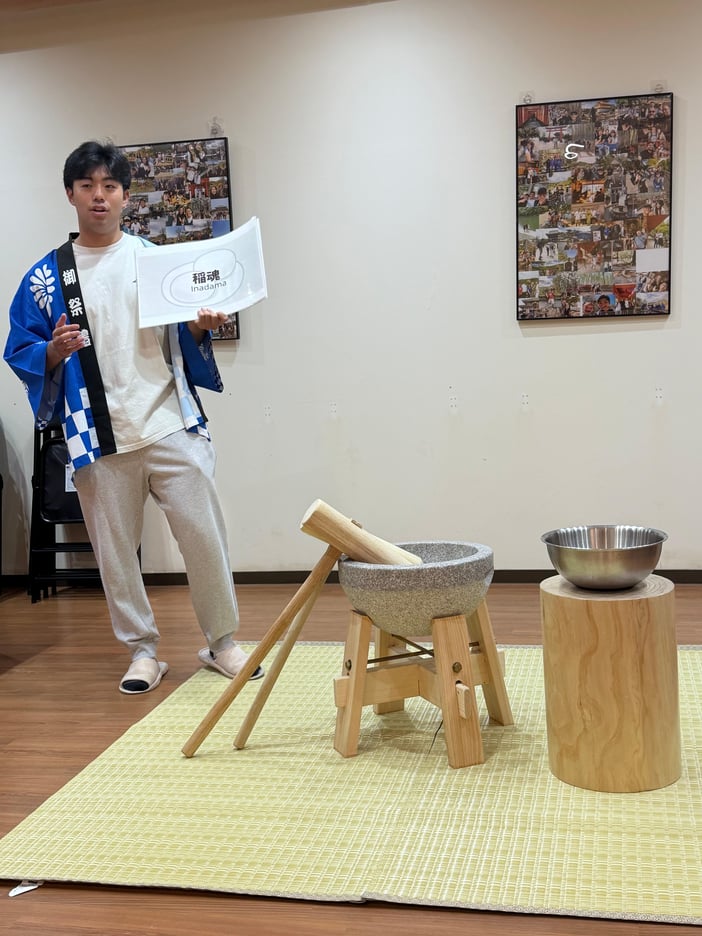
The rice has been washed, soaked overnight and steamed in a bamboo basket before you arrive, and in most classes it is already waiting hot in the usu mortar. You start by crushing and gathering it with the mallet tip, then the real pounding begins.
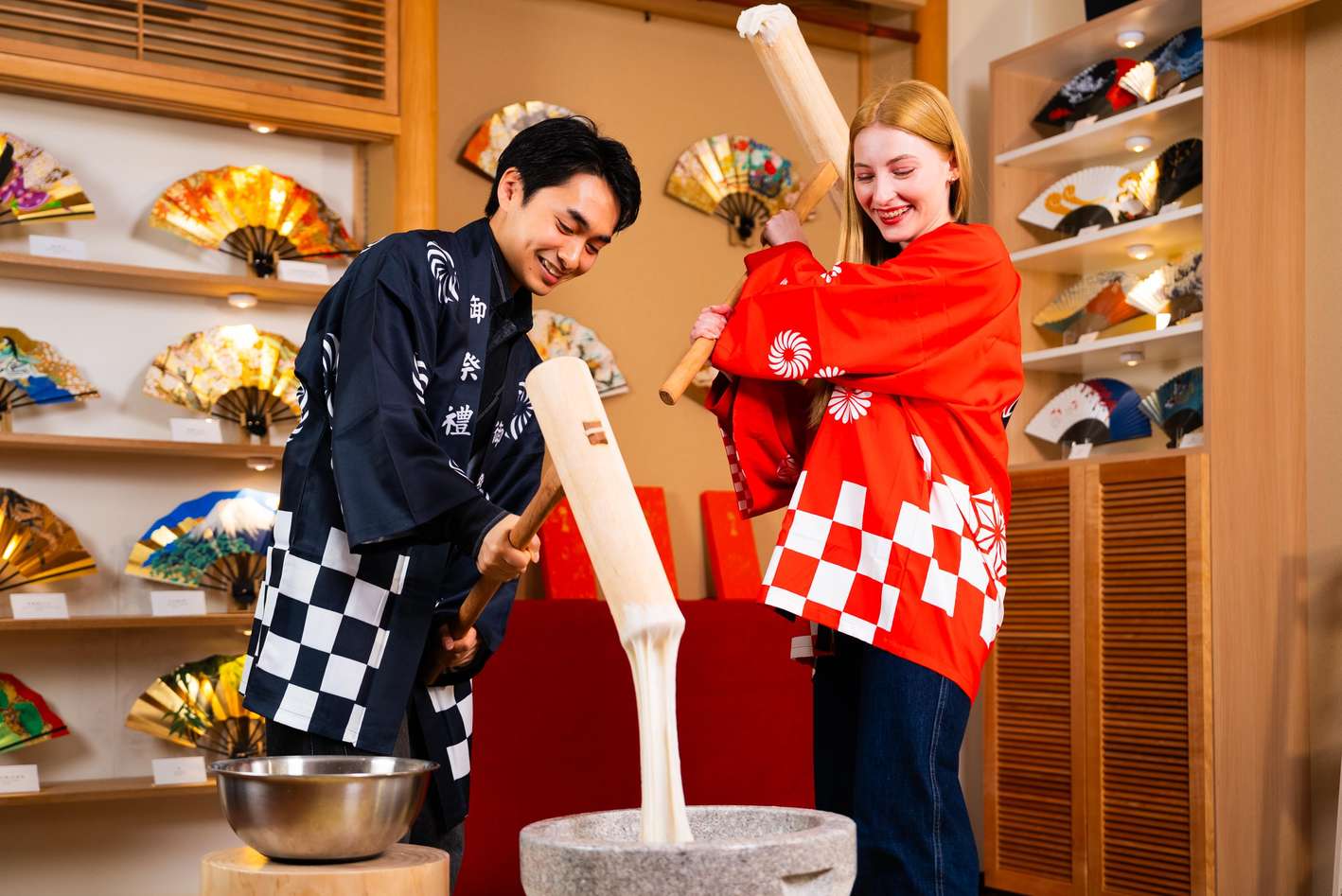
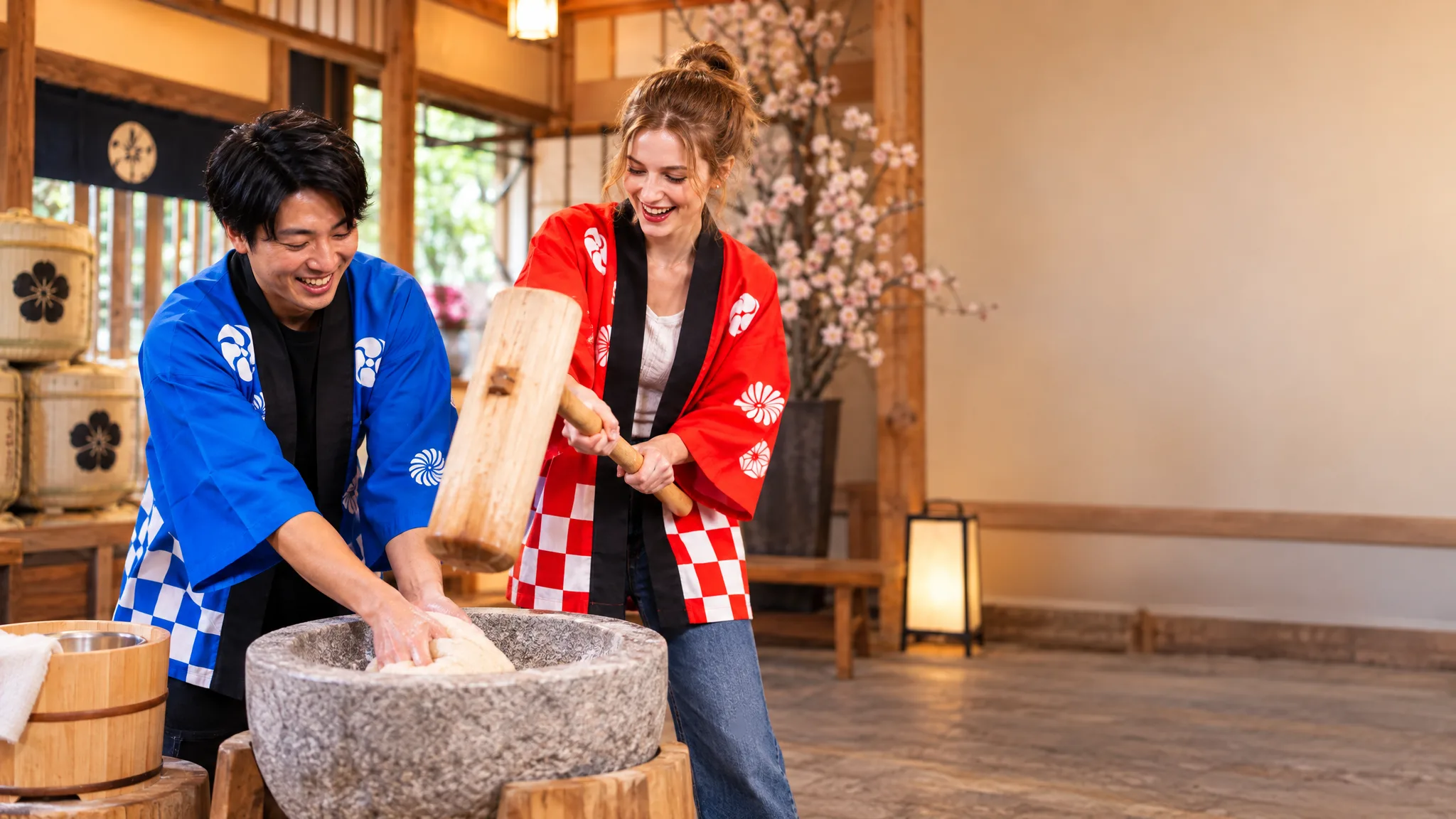
Every strike comes with a shout: "Yoisho!" marks the rhythm between you and your partner. The chant does real work.
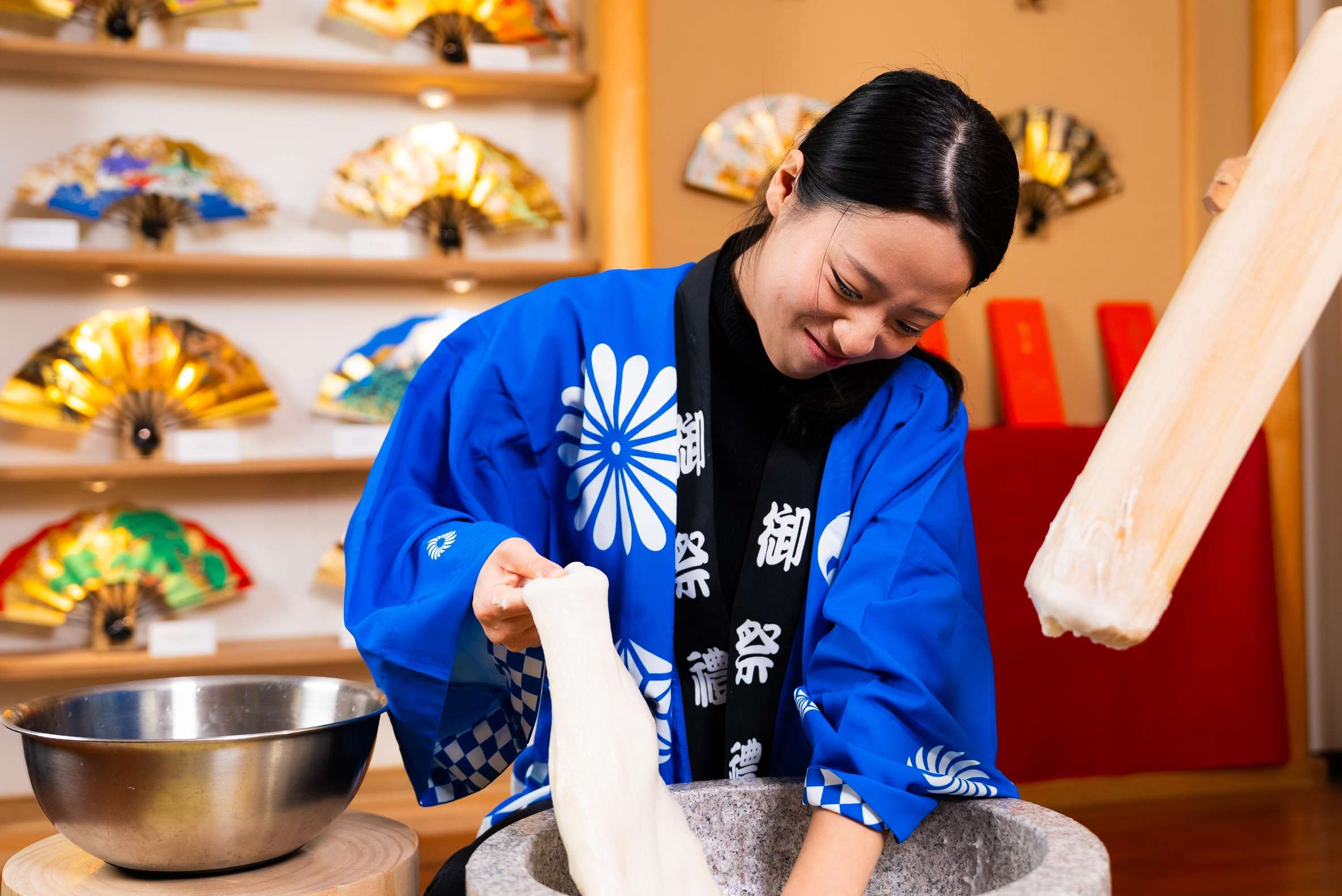
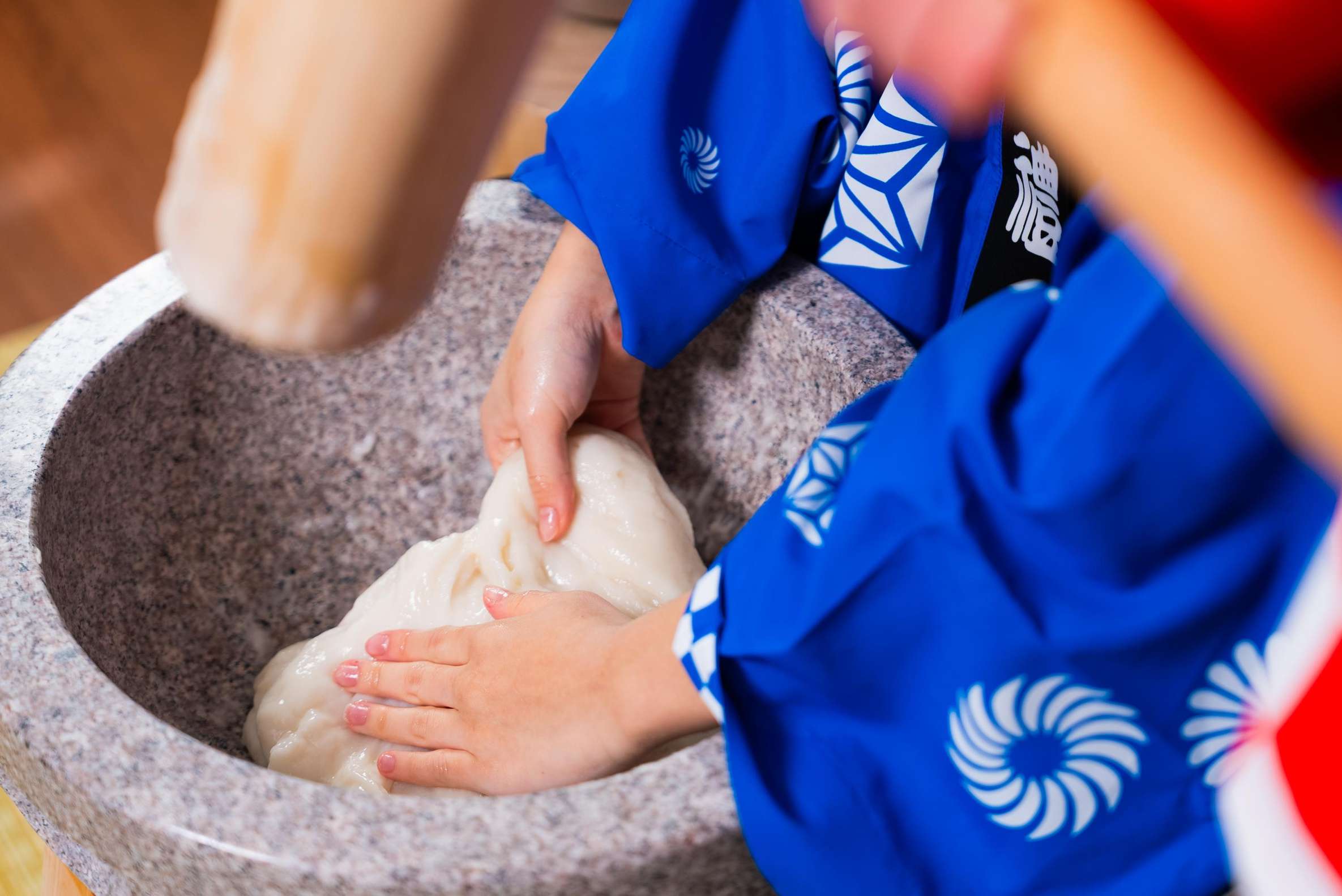
It is how the pounder and the turner keep time, because between mallet swings a second person reaches in with wet hands to flip and fold the dough. A mistimed move against a heavy mallet costs fingers.
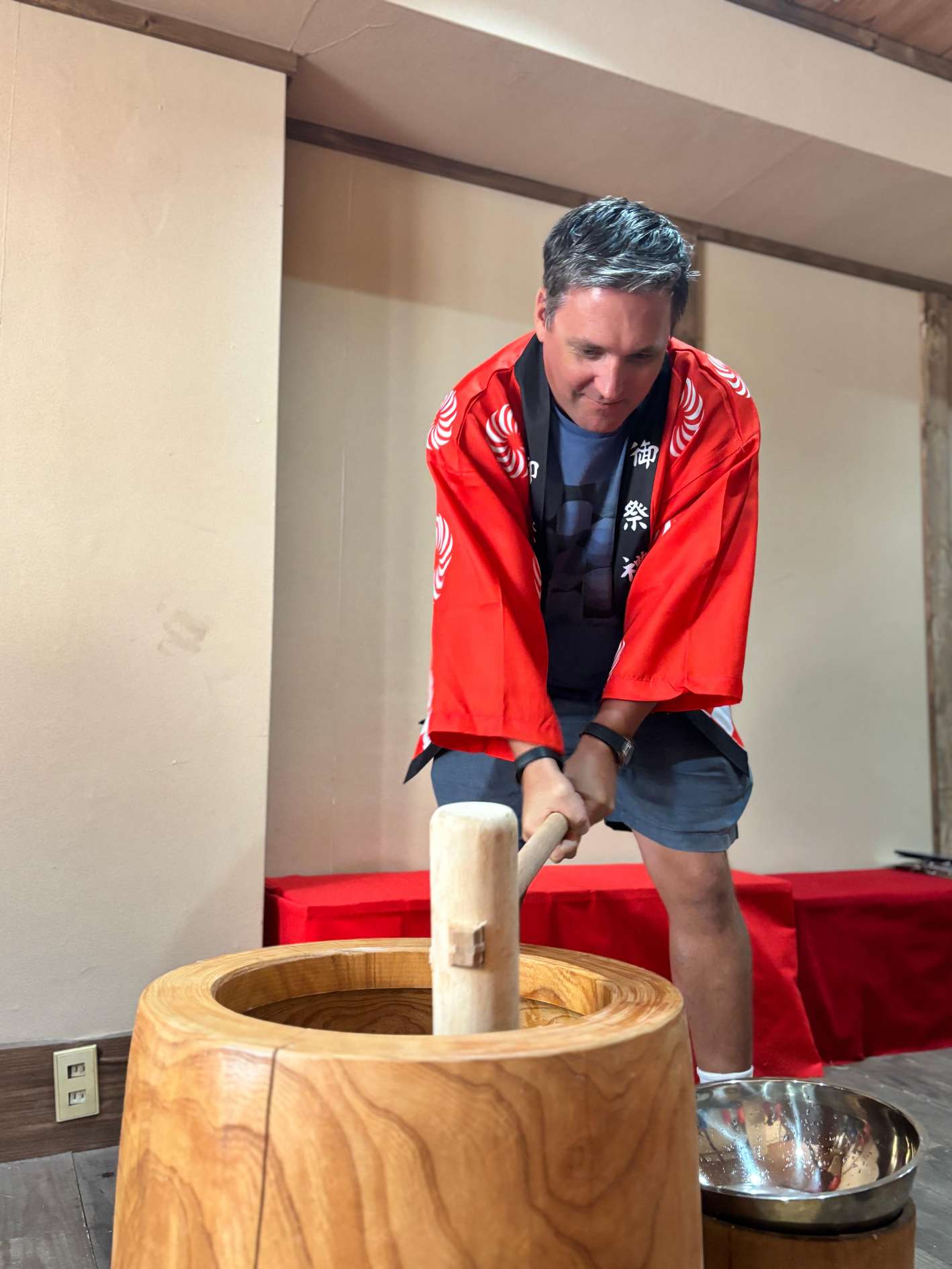
Two habits save you later. Land the mallet flat, so the wooden rim does not chip. And when shaping, keep your hands dry and dusted with starch, pinching and twisting portions off instead of pulling.
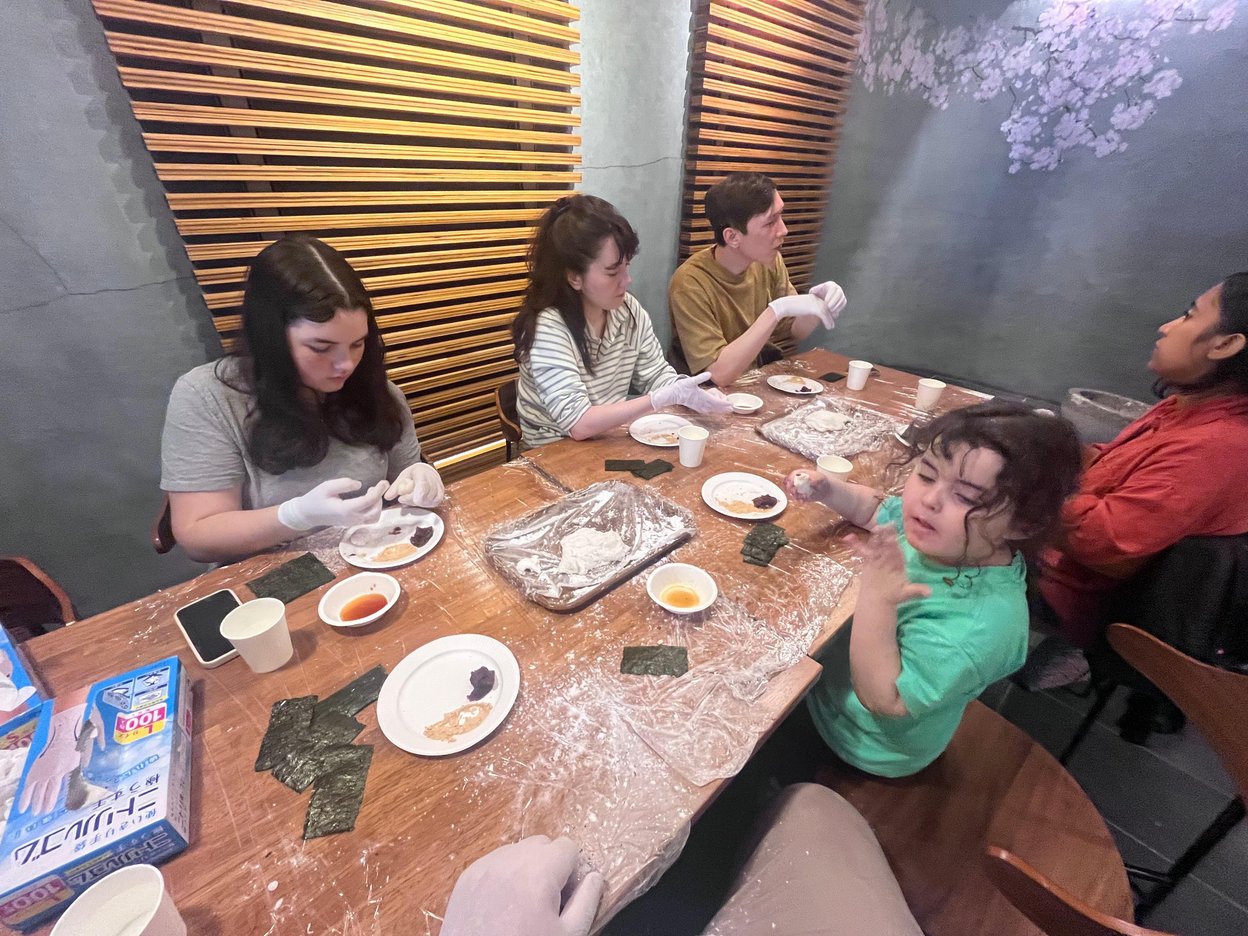
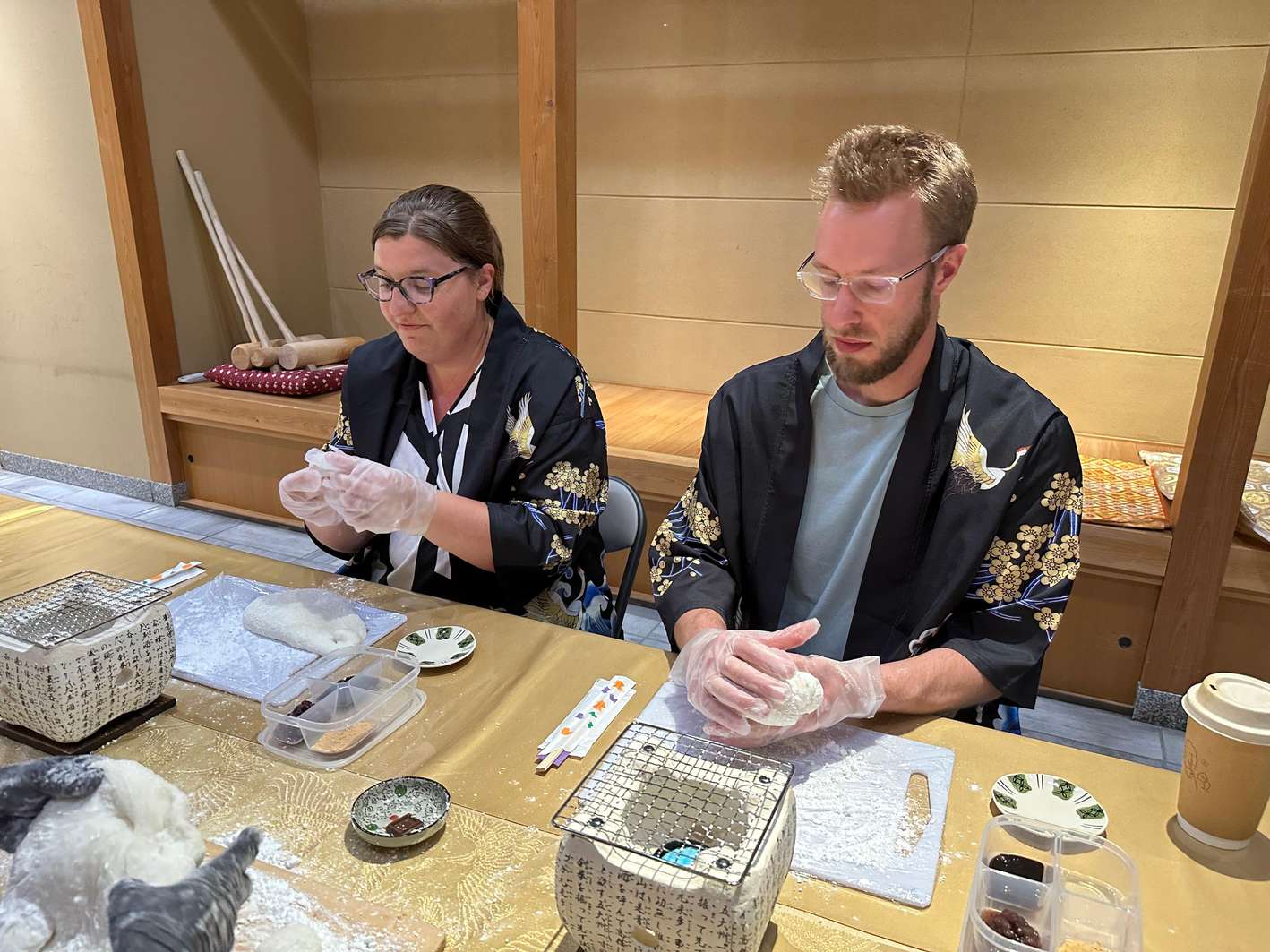
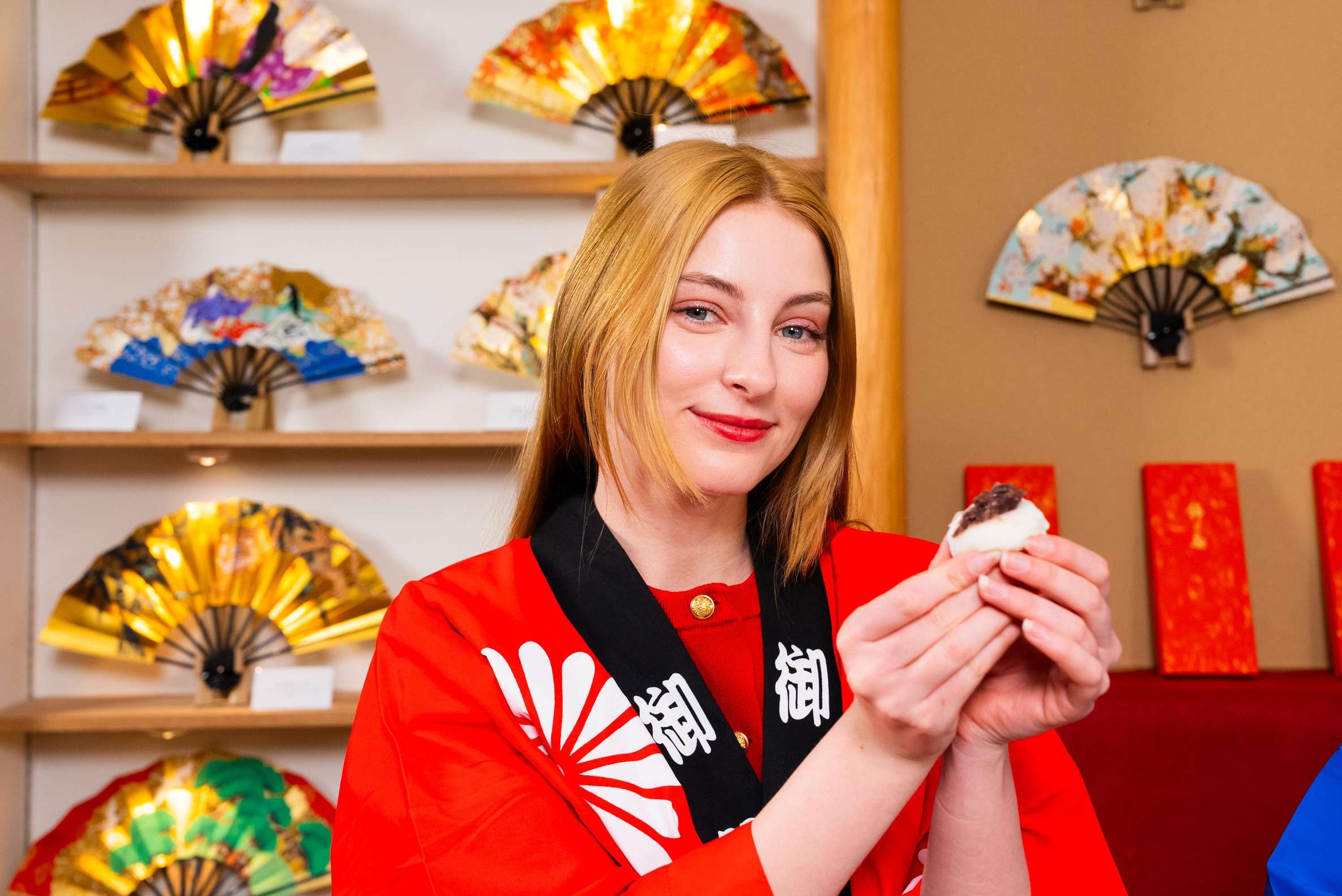
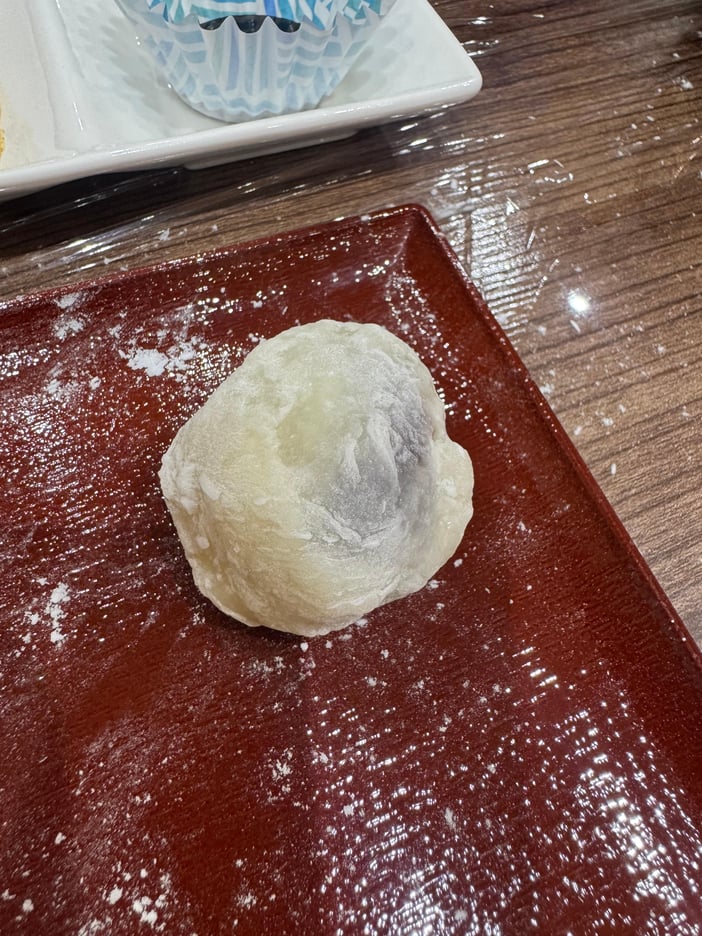
Then the table. You shape bite-sized pieces while the mochi is still warm, rolling some plain, dusting them in kinako, dipping them in sweet soy sauce or filling them with anko.
How the session unfolds
1
Arrival
Happi coat on, instructor explains the tools and the history
The rice has usually been steamed ahead of time
2
Kneading
You work the steamed rice with the mallet before pounding
Hands stay dry and starch-dusted
3
Pounding
Take turns with the wooden kine, shouting Yoisho on each strike
The turner flips the dough between swings, never a beginner
4
Shaping and tasting
Pinch off pieces, top with kinako, anko or soy sauce
Eaten warm, the same hour it was pounded
By the end you have made it, shaped it and eaten it, all inside the hour.
Tour for this
Osaka: Traditional Mochi Pounding Experience with Tasting4.9★ (540) · 1 minute · Free cancellation
Each city runs the same rice through a different mood. Kyoto pairs pounding with the tea table: classes there lean toward refined sweets, and one option teaches yatsuhashi, the local mochi-and-bean-paste sweet, while another combines the workshop with a full tea ceremony using Uji matcha.
Osaka plays it loud. Sessions in Namba and Tenjinbashisuji centre on taking turns with a mortar and pestle among a group, one venue near Kuromon Market builds a live festival performance around it, and Dotonbori classes let you watch steamed rice pounded while you wait your turn.
Tokyo is studio country. Hands-on workshops run in Asakusa and Shibuya, but travelers report street-front spectator pounding is practically non-existent there, so a booked class is the main way in.
The simplest rule is to book the class in the city where you are already sleeping. Most operators run the same format in all three cities, so traveling across the country for a supposedly better venue buys you train time and little else.
Classes side by side
Kyoto
Osaka
Tokyo
Vibe
Tea table and refined sweets, yatsuhashi classes
Shared, playful, live performances near Kuromon Market
Studio sessions in Asakusa and Shibuya
Session length
About 60 minutes, 90 with a tea ceremony
About an hour at the Dotonbori venue
About 60 minutes
Extras
Tea ceremony with Uji matcha
Street walks, daifuku making, takoyaki and river cruise
Souvenir mochi and ten toppings to try
How you get in
Reservation
Reservation at most venues, none at some events
Reservation, walk-in spectator spots are rare
Kyoto
Vibe
Tea table and refined sweets, yatsuhashi classes
Session length
About 60 minutes, 90 with a tea ceremony
Extras
Tea ceremony with Uji matcha
How you get in
Reservation
Osaka
Vibe
Shared, playful, live performances near Kuromon Market
Session length
About an hour at the Dotonbori venue
Extras
Street walks, daifuku making, takoyaki and river cruise
How you get in
Reservation at most venues, none at some events
Tokyo
Vibe
Studio sessions in Asakusa and Shibuya
Session length
About 60 minutes
Extras
Souvenir mochi and ten toppings to try
How you get in
Reservation, walk-in spectator spots are rare
Read the rows that matter to your trip and the city usually decides itself; the extras column tells you whether the pounding stands alone or anchors a whole evening.
Tour for this
Osaka: Traditional Mochi Pounding & Japanese Daifuku Making5.0★ (2) · 2 hours · Free cancellation
How to pick between the classes once you know the city
Once the city is fixed, the shortlist comes down to four questions. Can beginners follow along, is instruction really in English, how big is the group, and what does the booking include beyond the pounding?
No cooking experience is needed: the mochi-pounding and tea ceremony experience in Kyoto is built for first-timers, and solo travelers are welcome there too. Private classes elsewhere take from one to nine participants, so couples and groups of friends are covered either way.
The extras decide the shape of your afternoon. In Kyoto you can bolt a traditional tea ceremony onto the pounding. In Osaka the same rice can lead into a yakitori course meal, or a workshop with takoyaki tasting and a Dotonbori river cruise.
Run any listing against the checklist below before you commit. The Kyoto: Mochi Pounding Experience & Tea Ceremony Experience scores well on every line, which is why it sits at the top of the shortlist for most first-time visitors.
How to choose a mochi making class
Check
Why it matters
Our pick
English instruction
Without it you are guessing at timing around a heavy mallet
Confirmed: cultural explanations in English by friendly staff
Session length
Decides whether the class fits between temples or eats a half-day
1.5 hours, pounding plus a full tea ceremony
Group size
Small groups mean more individual guidance at the mortar
Guided hands-on session, instructor works with each guest
What's included
Tea, sweets or souvenirs change what you carry and pay for
Uji matcha tea ceremony and a souvenir to take home
Anything short on those four lines, and another listing probably serves you better.
Tour for this
Kyoto: Traditional Mochi Pounding Experience with Tasting4.5★ (66) · 1 hour · Free cancellation
When to book making classes, and how long a session really takes
The standard hands-on session runs 60 minutes from arrival to finish, and versions with a tea ceremony take 90. In Kyoto, add arriving 15 minutes early and you are planning about 75 minutes door to door, enough to slot between two nearby temples if you allow for travel between them.
Session time from arrival to finish
60 minStandard pounding and tasting
90 minCombined with tea ceremony
The two figures count different bookings: the 60 minutes is the plain pounding and tasting class, and the extra half hour is what the tea ceremony adds. Pick by what you want included, and the clock follows.
On timing within the week, reservation-based workshops in Kyoto run sessions every day, unlike the traditional mochi shops that close on fixed weekdays, most often Tuesdays or Wednesdays. When a public holiday lands on a shop's closing day, the shop stays open and moves the closure to the next weekday instead.
In Osaka, the Dotonbori venue runs fixed daily slots at 10 am, 11:30 am, 2 pm, 3:30 pm and 5 pm, each about an hour, so you can build the rest of the day around a known start time.
Demand for workshops peaks in late December and early January, when mochitsuki season puts pounding on everyone's mind; the rest of the year booking pressure is lighter.
Booking making classes - reserve ahead or walk in?
This is the one mistake that ends the plan before the mallet comes out. At Oh Mochi in Osaka, advance reservations are required for everyone, participants and companions alike, and entry for viewing only is not permitted. Every person through the door holds a booking.
Tokyo studios run the same way. The Asakusa workshops ask for reservations at least two days ahead for some courses, and for hygiene reasons none of them let spectators watch without joining. Turn up hoping to observe and you are standing back on the street.
Genuinely free walk-ins exist, just elsewhere. The Senbon Mochi-tsuki event each January at Suiken-ji Temple in Kaizuka City, Osaka needs no reservation, the Edo Takanawa mochi event in Tokyo needs none, and the Tokyo Tower restaurant show takes walk-in guests when seats are open.
Before you go
At Oh Mochi in Osaka, advance reservations are required and viewing-only entry is not permitted Book for every person in your group, including anyone who only wanted to watch
Ten seconds of checking that rule saves the whole afternoon.
Getting to your making class, and the Nara show worth a side trip
Osaka's classes run inside Tenjinbashisuji Shopping Street and around Dotonbori and Kuromon Market, so the workshop starts where your evening was already headed. Kyoto's sessions sit near the temple districts, which is what makes the 75-minute slot between shrines realistic.
The famous Nara pounding shop is a short side trip from Kyoto Station: about 40 minutes by Kintetsu Limited Express, 35 of them on the train, or roughly 55 minutes by the JR Miyakoji Rapid. Demonstrations there fire up roughly every half hour, as demand and stock allow, so you rarely wait long.
One thing to get right before the train: the shop is cash only. No credit cards, no IC cards, no QR codes. Pull the yen out in Kyoto.
How hard each way of getting there is
Class in your own cityThe workshop sits inside the streets you are already sightseeing on
Easy
Kyoto to Nara by Kintetsu Limited ExpressAbout 40 minutes from Kyoto Station, train plus a 5-minute walk
Easy
Kyoto to Nara by JR Miyakoji RapidAbout 55 minutes door to door, plus a 10-minute walk
Moderate
Watching the Nara showFree to watch, but bring cash, the shop takes nothing else
Easy
However you reach the mortar, the yen question stays the same: pull cash before the day starts.
There is no dress code, only physics. Pounding steamed rice means vigorous arm movement and a wide stance, and fine potato starch drifts onto sleeves, trousers and feet no matter how careful you are. Wear loose, washable clothes with sleeves that roll up, and leave the dry-clean-only fabric at the hotel.
Shoes come off at the door. Traditional venues step you onto tatami, so flat closed-toe slip-on shoes and clean, dark socks are the pair that works. Most workshops hand you a happi coat over your clothes, which catches some of the flour and looks the part in photos.
What to wear for mochi pounding
Comfortable, flexible clothingWorkshops have no formal dress code but ask participants to wear comfortable clothing they can move in freely while swinging the mallet.
Clothes you don't mind getting dirtyRice flour and steamed rice can splatter or dust your outfit, so operators advise wearing clothes you do not mind getting dirty.
Clean socksTraditional indoor venues and tatami rooms require removing outdoor shoes, so wear or pack clean socks for walking inside.
Flat, supportive shoesWorkshops recommend practical shoes you do not mind getting dirty that provide solid footing when lifting the heavy wooden mallet.
One more thing goes in the bag before you leave: your phone. The pounding is the photo your group will want, and hosts are usually happy to take pictures and videos of everyone mid-swing.
Who can join making classes - kids, allergies and pregnancy
The fine print varies more than travelers expect. Minimum ages for Kyoto experiences range from 5 upward, with some sessions starting at 13 or 18, and adult-only plans sit alongside family plans that take all ages. Children pound with smaller mallets but never attend without an adult.
Age cuts at the other end exist too: one Osaka experience excludes people older than 76, another is not suitable for anyone over 70.
Two of the listed classes flag themselves as unsuitable for pregnant women and people with back problems, and one venue asks participants to take responsibility for their own safety with the equipment.
On allergies, the honest position is that a shared kitchen is rarely allergen-free. One Tokyo studio prepares its ingredients without wheat, dairy or eggs but uses soy and may have sesame. Plain mochi and plain anko are naturally gluten-free, though soy sauce toppings and wheat dusting flour can change that.
For anyone who needs the guarantee, the Tokyo: Shibuya Vegan-Friendly Mochi Pounding Experience runs a plant-based tasting set with wheat-free tamari and sweet anko.
And eat slowly. Fresh mochi is a serious choking hazard in big bites; cut small, chew thoroughly, keep tea nearby.
If the day changes
If this happens
What happens then
Plans fall through
Cancel up to 24 hours in advance for a full refund
You miss the start
Arrive 15 minutes early; sessions start on their fixed slot
Ingredients concern you
Tell the host your dietary restrictions before the tour date
Read the cancellation line twice when you book. Twenty-four hours is the cutoff for a full refund on most of these classes, so a same-day change of heart costs the booking.
Can you take your making class mochi home, and will it survive?
Yes, and the clock starts the moment you stop pounding. Fresh mochi has no preservatives, and it begins hardening within a few hours at room temperature as the starch recrystallizes.
The refrigerator is the one place you must not put it. Cold makes mochi harden faster, and it strips the moisture out of the sweets within a single night. Left out past a day or two, mold moves in instead.
So the play is simple: keep your leftovers covered at room temperature, away from heat and direct sunlight, and eat them the same day.
Wrapped like that, mochi holds for a few hours, which is exactly enough time for a second tasting back at the hotel. If it has already gone firm, grilling, boiling or a quick microwave reheat brings it back.
Fruit daifuku is the exception to pack loosely: moisture from the fruit works into the dough, so it wants to be eaten even sooner than plain mochi.
Why making classes matter - the culture behind the mallet
The chant and the shared mortar are the point, and they are old. Mochitsuki has gathered families and communities for centuries, a New Year ritual in which pounded rice cakes carry spiritual power because deities were believed to live in the rice.
In traditional belief, every grain of the rice carries a soul, and the pounding becomes a shared act of purification. The stretchy mochi eaten at New Year stands for longevity.
The science explains the texture. Glutinous rice contains no wheat gluten at all; the word comes from Latin for glue.
Its starch is almost entirely bran-chain amylopectin, which entangles into a stretchy network when worked, which is also why the rice is steamed, never boiled. Boiling would waterlog the grains and leave a gummy exterior before the inside cooks.
Even the tools have a reason. The usu and kine are cut from keyaki, Japanese zelkova, a hardwood that survives the pounding. The rapid-fire hand-slapping spectacle on social media is a modern invention built for television; historical mochitsuki was slower communal work.
What people get wrong
Myth"Glutinous means it has gluten"
Reality
It is pure rice; the name refers to glue-like stickiness, and plain mochi is naturally gluten-free
Myth"The shouting is just for show"
Reality
The chant of Yoisho keeps pounder and turner in time so nobody's hands meet the mallet
Myth"The high-speed street show is the traditional form"
Reality
Rapid continuous pounding is a modern spectacle; historical mochitsuki is slower, communal work
Carry those three corrections and you can explain the whole ritual over dinner, which is more than most people take home from the show.
A 60-minute class leaves most of a half-day, and the venues sit where the sightseeing already is. In Osaka, sessions inside Tenjinbashisuji put you on Japan's longest shopping street with shop staff who know it, and the Kuromon Market venue puts the city's food stalls at the door.
One tour strings the pounding together with Hozenji Yokocho, a photo with the Glico Running Man and a Tombori river cruise.
Kyoto spreads its mochi landscape differently. Arashiyama holds several traditional shops, some specializing in hand-pounded mochi, and Gion carries its share of mochi sweets. In Higashiyama, near Kiyomizu-dera, a shop called Mochi Mochi runs live pounding demonstrations you can catch between temple stops.
The shape of a good afternoon writes itself: class before lunch, temples after, and the mochi you made becoming part of the story of the day.
Watching the street show costs nothing and lasts two minutes. Making it yourself costs an hour and follows you home in your arms. Book a mochi making class in the city you are sleeping in, arrive 15 minutes early, and go hungry.
The tasting is generous, and the chant of Yoisho on your own strike is the part you will still be talking about at dinner.
Go ifYou want to swing the mallet yourself, not watch from the back of a street crowdYou have a spare hour between temples or before dinnerYou are traveling with children who can join a family plan
Skip ifYou are pregnant or have back problems; two of the listed classes exclude youYou cannot book ahead and were counting on walking in at Oh Mochi in OsakaYou only want to watch; the free Nara show does that in two minutes
Our pick to book
Kyoto: Traditional Mochi Pounding Experience with Tasting4.5★ (66) · 1 hour · Free cancellation
My arms ache and the mochi was gone in minutes. Book a morning slot, wear old clothes and come hungry.
Do I need cooking experience to join a mochi making class?
No. The hands-on sessions are set up for beginners with no prior cooking experience, and instructors explain each step clearly. You start by kneading or pounding steamed rice under guidance, so nobody expects you to arrive knowing the technique.
Will I understand the instructor if I only speak English?
Yes. The Kyoto and Tokyo classes on this page run in English, and some instructors give step-by-step guidance in both English and Japanese. Follow along and you will not need any Japanese cooking terms.
How long does a mochi making session take?
A standard hands-on pounding and tasting session runs about 60 minutes from arrival to finish. Sessions combined with a traditional tea ceremony take about 90 minutes, and one listing recommends arriving 15 minutes early.
Can children join the mochi pounding?
Mostly yes, but the minimum age varies by class. Some hands-on experiences welcome children as young as 4 or 5 and offer smaller mallets, while others start at 13.
The Osaka class has a family plan for all ages and an adult plan for ages 13 and up, and children always need an adult with them.
What should I wear to a mochi making workshop?
Wear loose, washable clothes with sleeves that roll up, plus flat closed-toe slip-on shoes and clean dark socks, since you remove outdoor shoes at the entrance. You will usually get a happi coat to wear over your clothes, but potato starch still drifts onto sleeves and trousers, so skip anything dry-clean-only.
Is mochi safe to eat for someone with celiac disease?
Traditional plain mochi is made from glutinous rice, which is naturally gluten-free despite the name, and plain anko is too. Gluten can sneak in through soy sauce toppings or shared equipment, though, so check the added ingredients and cross-contact before assuming a serving is safe.
Is mochi pounding safe during pregnancy?
Plain rice mochi itself is safe in pregnancy. Watch the fillings: sweetened red bean, sesame or peanut paste are fine, while raw egg custard or unpasteurized dairy fillings are not. Cut everything into small bites and eat with tea.
Can I take freshly pounded mochi back to my hotel?
You can, but eat it the same day. Fresh mochi starts hardening within hours at room temperature, and the hotel refrigerator makes that faster, so keep it covered at room temperature and finish it before bed.
Is the tasting generous enough to count as lunch?
Come hungry. Several classes serve the mochi you made with a range of sweet and savory toppings, from kinako and red bean paste to mitarashi glaze, and people who go often say the tasting runs to several pieces each.
Should I book a mochi making class in Kyoto, Osaka or Tokyo?
Book where you are already staying. Most operators run the same class format across all three cities, so there is little reason to travel between them for one session.
Is mochi pounding physically demanding?
It is an active session: you swing a heavy wooden mallet, stand wide and work the sticky rice, and people who go often say they work up a sweat. Two of the listed experiences are not suitable for pregnant women or people with back problems.
Can I bring a camera to a mochi making class?
Bring your phone. Photos and videos of your group taking turns with the mallet work well, and hosts are often happy to take pictures for you. One Kyoto class includes a photo and video service at no extra cost.
Mochi making classes in Kyoto with a local home chef
Join a small group, make several styles of mochi and taste them with matcha tea, and cancel up to 24 hours ahead for a full refund.

 Your best match