Where to Watch Mochi Pounding in Tokyo Where to See Mochi Pounding
See real mochi pounding in Tokyo without chasing street festivals or the famous Nara shop. Book a reserved Asakusa or Shibuya workshop, watch a live demonstration up close, then taste warm, freshly pounded mochi minutes after it leaves the mortar.
"Fun and instructional. Pounding mochi with the wooden hammer is genuinely tough work! Afterwards we ate it upstairs with several flavour options, I loved the caramelised nuts and brown sugar. Great experience."
Temple-side demonstrations with set session times, day and evening.
Best forTravelers who want to fold a live pounding into a Kyoto temple day
A shop in Higashiyama Ward pounds mochi live within a short walk of Kiyomizu-dera, so you can catch the mallet between temples. Watching is the easy part; timing is the catch, because popular shops can shift demonstration times on short notice.
A booked session takes the guesswork out. Daytime pounding runs at 11 am and 12:30 pm, and if you want a full Kyoto evening, a combined pounding and tea ceremony sits at 6:30 pm and 8:30 pm.
The daytime pounding sessions themselves run about an hour to ninety minutes, while the evening pairing with the tea ceremony runs longer, closer to two hours. Either way, the time holds once you have reserved it.
Session lengthAbout an hour to ninety minutes; the evening tea ceremony combos run longer
Session timesDaytime at 11 am and 12:30 pm; tea ceremony evenings at 6:30 pm and 8:30 pm
SettingHigashiyama Ward, a short walk from Kiyomizu-dera
BookingAn advance reservation is the reliable way in
How it scoresvs. the other shows
SpectacleGood
Schedule certaintyVery good
Fresh tastingVery good
Ease from TokyoGood
Choose it ifYou want a calm, master-led demonstration you can fold into a Kyoto temple day
Skip it ifYou want a loud festival crowd and a stage-style show
A festival-style show with chants, cheers, and your turn on the mallet.
Best forTravelers who want the loudest, most theatrical pounding around
Kuromon Market hides one of Kansai's loudest mochi parties: a live pounding performance set to chants, followed by your own turn swinging a giant mallet while the crowd cheers. The market venue sits a five-minute walk from Kintetsu Nippombashi Station, so it slots into an Osaka food day without effort.
Another operator runs Dotonbori sessions daily at 10 am, 11:30 am, 2 pm, 3:30 pm and 5 pm, each about an hour. Everyone needs a booking; entry just to watch is not allowed, so reserve even if some of your group only wants to look on.
Session lengthAbout 25 minutes at the market show; the Dotonbori sessions run about an hour
Session timesDaily at 10 am, 11:30 am, 2 pm, 3:30 pm and 5 pm in Dotonbori
SettingKuromon Market and Dotonbori, central Osaka
BookingReservations required, and viewing-only entry is not permitted
How it scoresvs. the other shows
SpectacleBest
Schedule certaintyVery good
Fresh tastingVery good
Ease from TokyoFair
Choose it ifYou want the closest thing to a festival spectacle, with cheers and your own turn at the mallet
Skip it ifYou would rather watch a quiet artisan demonstration than join a cheering crowd
Your guide to watching mochi pounding in Tokyo, live
The pounding in the viral clips happens at a storefront in Nara; Tokyo plays a different game. Here is what the capital does have, four real ways to see the mallet fall, and the bookings that guarantee your spot.
If you only remember five things
1
Tokyo has no permanent street-front pounding spectacle like Nakatanidou in Nara; booked workshop classes are the main way to see it.
2
The Asakusa pounding and tasting experience runs about an hour and lets every guest take the mallet; observation-only entry is not allowed.
3
Tokyo Tower holds sumo-wrestler pounding shows four times daily, at 11 am, 2 pm, 5 pm and 8 pm.
4
Shrine mochitsuki runs from late November through winter, often around 10 am to 2 pm, with free mochi at some shrines.
5
Eat freshly pounded mochi the same day; it hardens within hours and never goes in the fridge.
importantYou cannot watch mochi pounding in Tokyo by walking in off the street; the main experiences, including the Asakusa workshop, do not allow observation-only entry.
Reserve a spot in a hands-on session in advance, ideally two or more days ahead for the most popular venues, so you are registered as a participant and not turned away at the door.
Watching pounding live in Kyoto, minutes from Kiyomizu-dera
If Kansai is on your route at all, Kyoto deserves a look before Tokyo. A shop in Higashiyama Ward pounds mochi live within a short walk of Kiyomizu-dera, so you can catch the mallet between temples.
Pro tipReserve the Kyoto slot ahead; popular shops can move their demonstration times on short notice.
Daytime pounding runs at 11 am and 12:30 pm, and if you want a full Kyoto evening, a combined pounding and tea ceremony sits at 6:30 pm and 8:30 pm.
Watching is the easy part there; timing is the catch. Popular shops can shift their demonstration times on short notice, which is exactly why a reserved session is worth it: the time holds once you have booked it. Our Kyoto demonstrations guide walks through the session times and what each pairing includes.
Tokyo-bound readers, stay with the next chapter: your answer starts at home.
Tour for this
Tokyo Asakusa: Mochi Pounding and Tasting Experience4.9★ (88) · 1 hour · Free cancellation
If Osaka is on your route, the loudest pounding in Kansai
Osaka holds the theatrical version Tokyo cannot match. Near Kuromon Market, a festival-style show sets live pounding to chants and cheers, then hands you a giant mallet for your own turn while the crowd applauds.
Pro tipReserve even if some of your group only wants to watch, because entry just for viewing is not allowed at either Osaka venue.
The market venue sits a five-minute walk from Kintetsu Nippombashi Station, so it slots into an Osaka food day without effort.
Another operator runs Dotonbori sessions daily at 10 am, 11:30 am, 2 pm, 3:30 pm and 5 pm, each about an hour. That timetable makes planning simple, which is the one thing Osaka does better than anywhere else on this subject.
The full picture, including where the sessions sit in the market, is in our Osaka show guide. Tokyo may not have this volume of noise, but what it has, it delivers on a schedule.
The honest answer first: it does not. Tokyo has no permanent storefront pounding spectacle like Nakatanidou in Nara, the shop behind most of the viral clips. Travelers say the city has very few street-front spectator shops for rapid pounding, and that booked workshop classes are the primary way to experience the craft there.
Pro tipDo not budget an afternoon for hunting an open-air show; Tokyo does not have one, and the walk is better spent at a booked session.
So reframe the day. Instead of hunting a sidewalk show that does not exist, you reserve a seat at a real mortar, where steamed rice is in front of you and a wooden mallet is in your hands.
Tokyo has four distinct ways to do that, from studio workshops to sumo-wrestler demonstrations, and each suits a different kind of traveler.
Three beliefs send people wandering the wrong streets. Sort them out now and the rest of the day falls into place.
What people get wrong about watching pounding in Tokyo
MythTokyo has a free daily street spectacle like Nara's
Reality
The famous high-speed shop is in Nara; Tokyo has no permanent storefront pounding and booked workshops are the main route
MythYou can watch from the pavement outside a shop
Reality
In Tokyo, most venues let only paying participants in; the Asakusa studio allows no observation-only entry
MythShrine demonstrations pound at high speed
Reality
Shrine mochitsuki runs at a slow communal rhythm; three-strikes-a-second speed is a Nara specialty
Picture the day as four doors. The first is a studio workshop, in Asakusa or Shibuya, where you stand at the mortar yourself.
Pro tipRank the four ways by what you came for, because no single Tokyo option wins spectacle, speed, schedule and taste at once.
Asakusa runs vigorous, full-force pounding and serves the result with up to ten toppings; Shibuya runs the same craft with a plant-based tasting set. These give the closest view of the rice that exists, because you are the one holding the mallet.
Second comes spectacle on a timetable. At Tokyo Tower, sumo wrestlers demonstrate mochi pounding during shows held four times daily, and in Ryogoku, scheduled dining sessions pair sumo wrestlers with a mochi-pounding experience where you may join in.
Third, in winter, shrine mochitsuki gives open-air communal pounding, slow and coordinated, often with free mochi handed out. Fourth, the wagashi shops: behind-counter artisans, no pounding to watch, but fresh same-day sweets.
For someone who wants to watch and taste in one sitting, the studios rank first. The choice comes down to view, booking, speed, toppings and mallet access.
Four ways to watch pounding in Tokyo
Asakusa studios
Shibuya workshops
Shrine festivals
Demonstration view
You stand at the mortar
Indoor hands-on class
Open-air courtyard
Booking
Reserved; no observation-only entry
Reserved class
None needed
Pounding speed
Vigorous full-force
Guided rhythm
Slow communal
Toppings
Up to ten
Plant-based, wheat-free tamari
Often free with amazake
Mallet participation
You pound
You pound
Queue to try
Asakusa studios
Demonstration view
You stand at the mortar
Booking
Reserved; no observation-only entry
Pounding speed
Vigorous full-force
Toppings
Up to ten
Mallet participation
You pound
Shibuya workshops
Demonstration view
Indoor hands-on class
Booking
Reserved class
Pounding speed
Guided rhythm
Toppings
Plant-based, wheat-free tamari
Mallet participation
You pound
Shrine festivals
Demonstration view
Open-air courtyard
Booking
None needed
Pounding speed
Slow communal
Toppings
Often free with amazake
Mallet participation
Queue to try
Rank the four by what you actually came for: spectacle, speed, schedule, or taste. No single Tokyo option wins all four, and that is the whole decision.
The closest thing to a spectacle you can actually stand inside
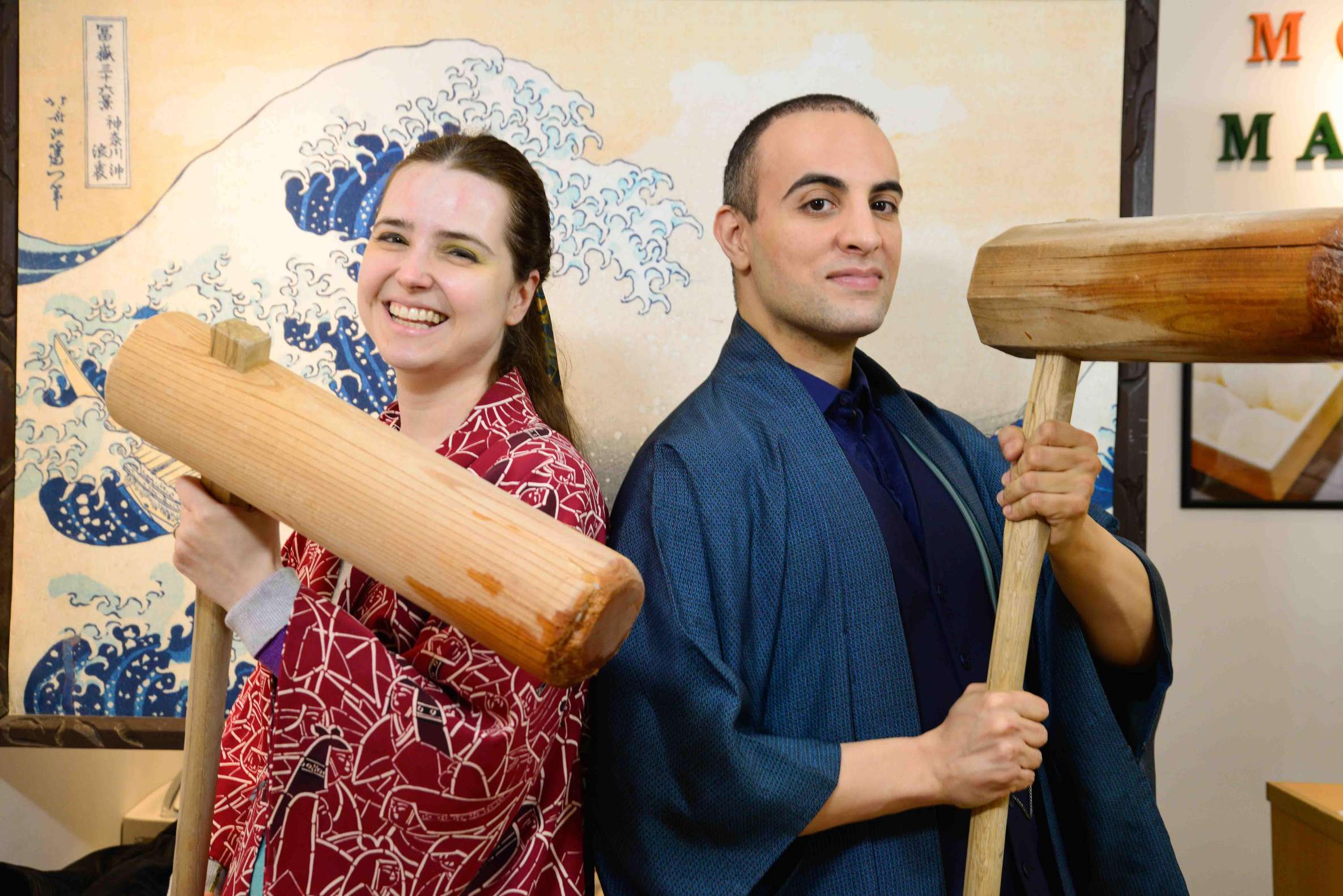
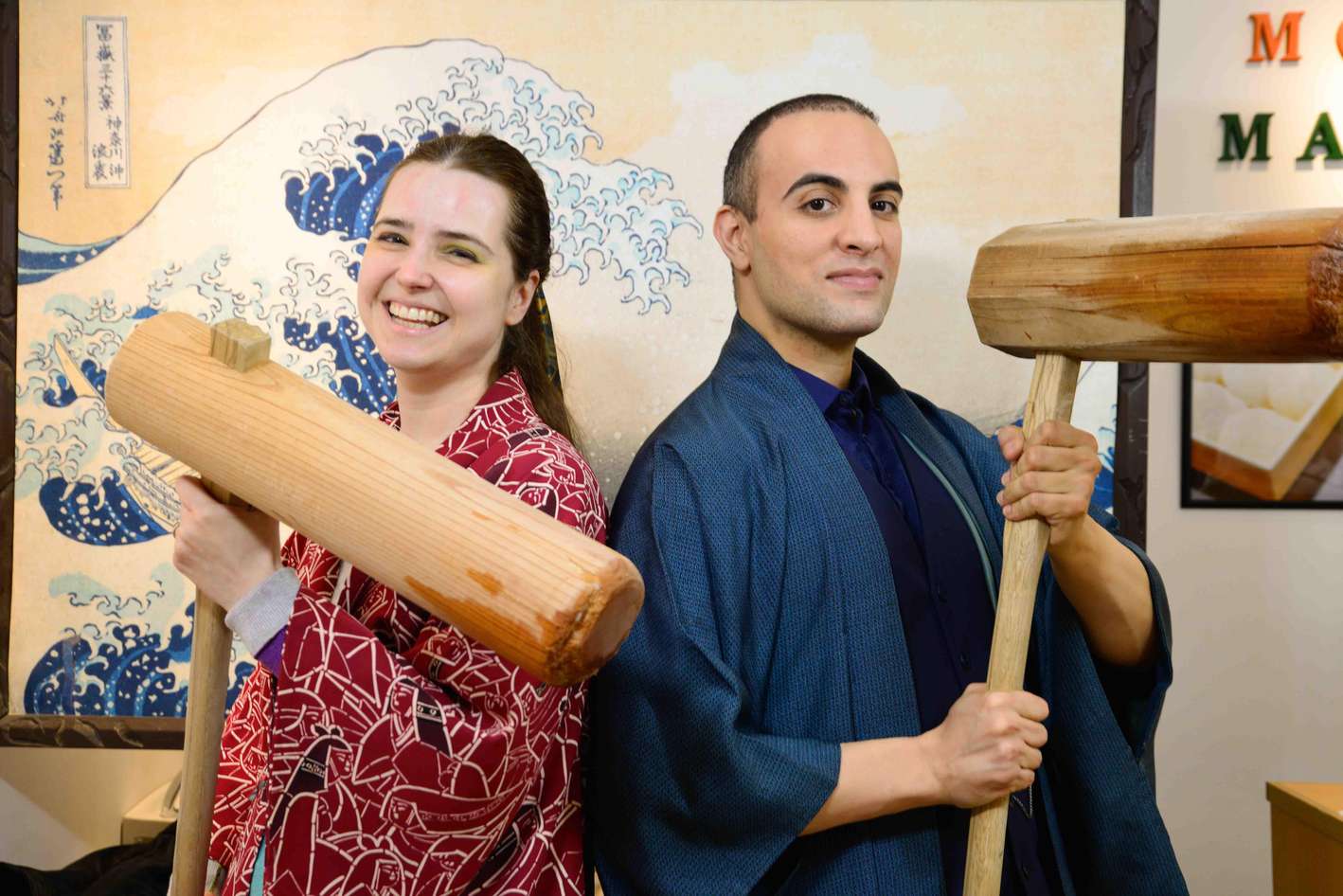
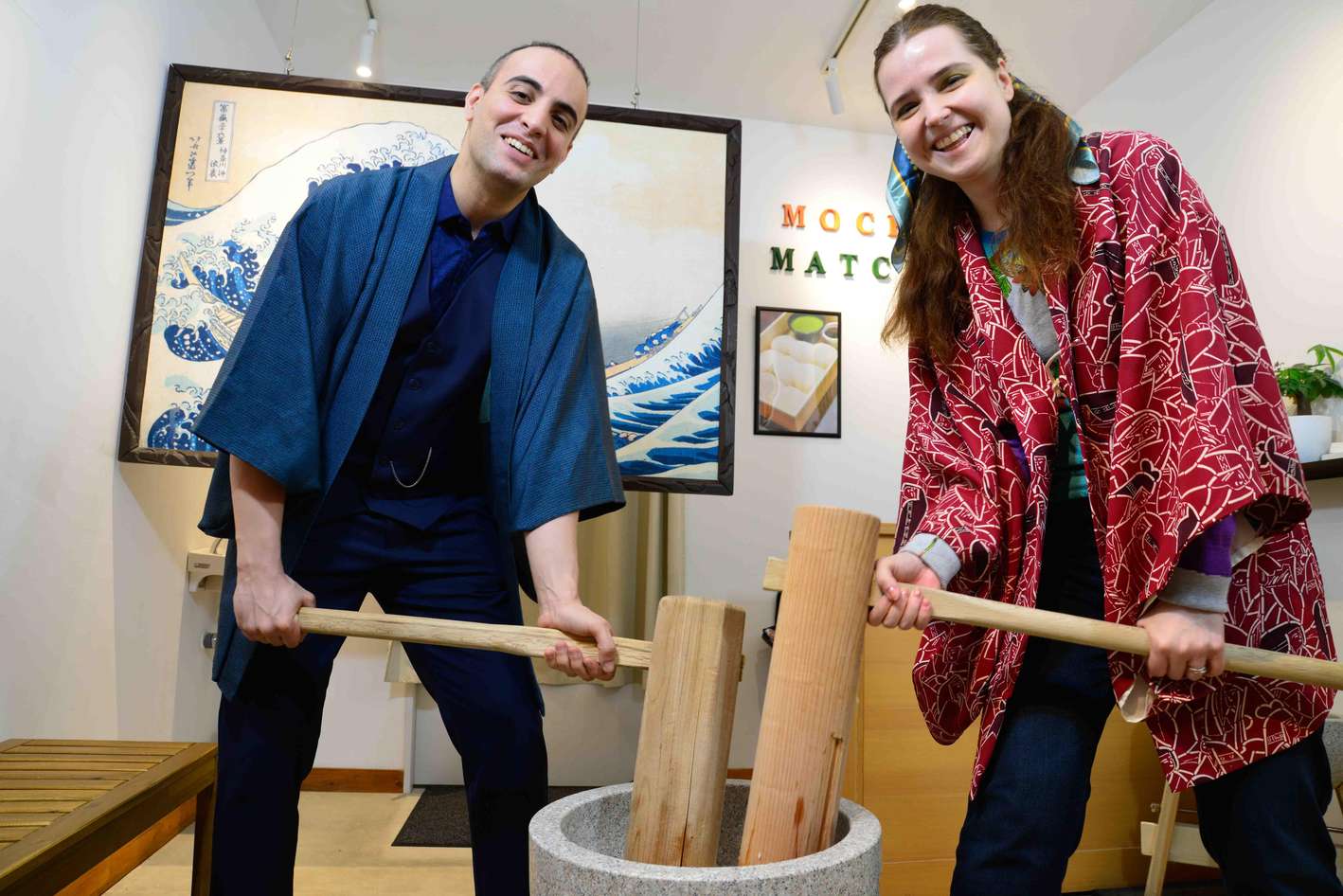
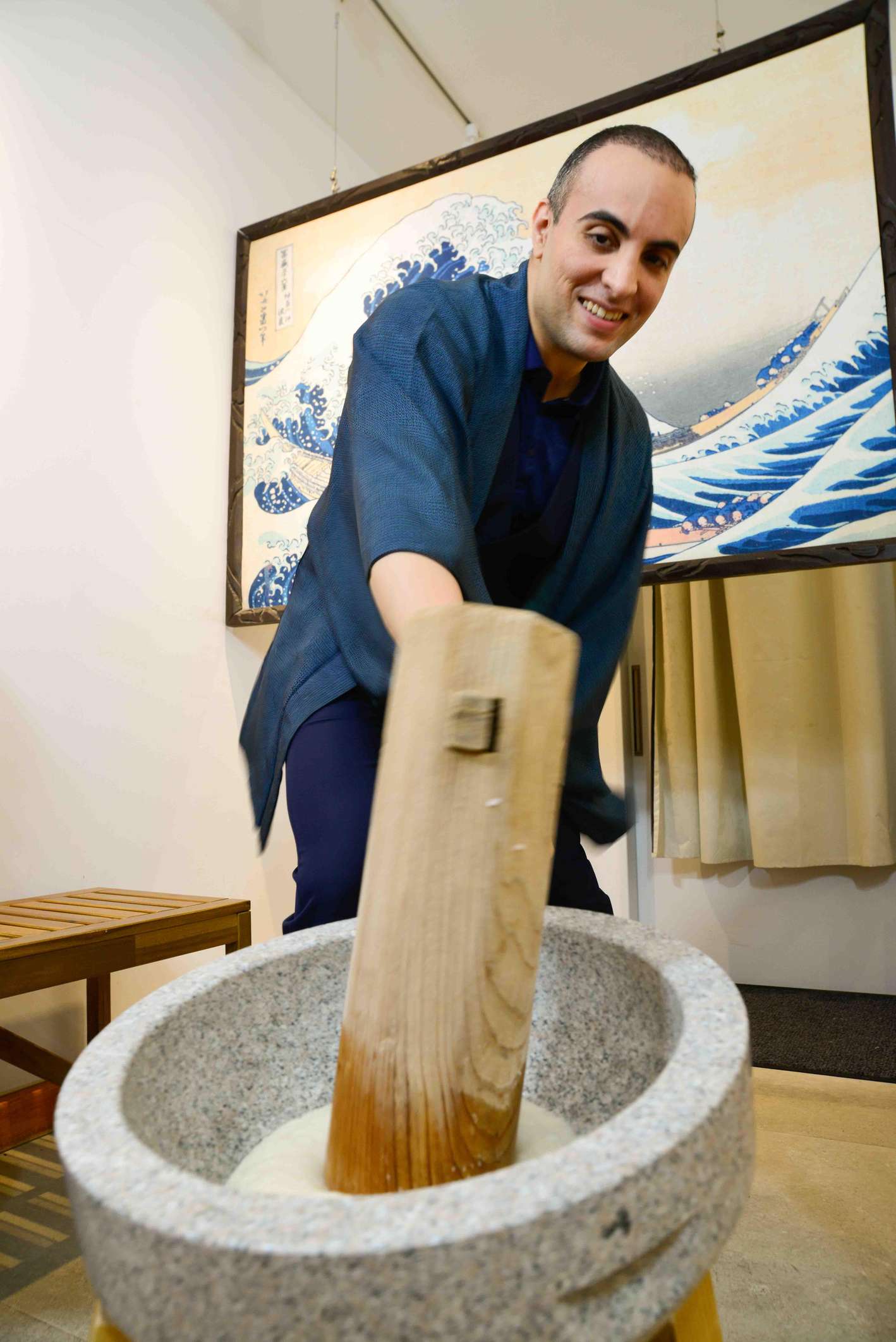
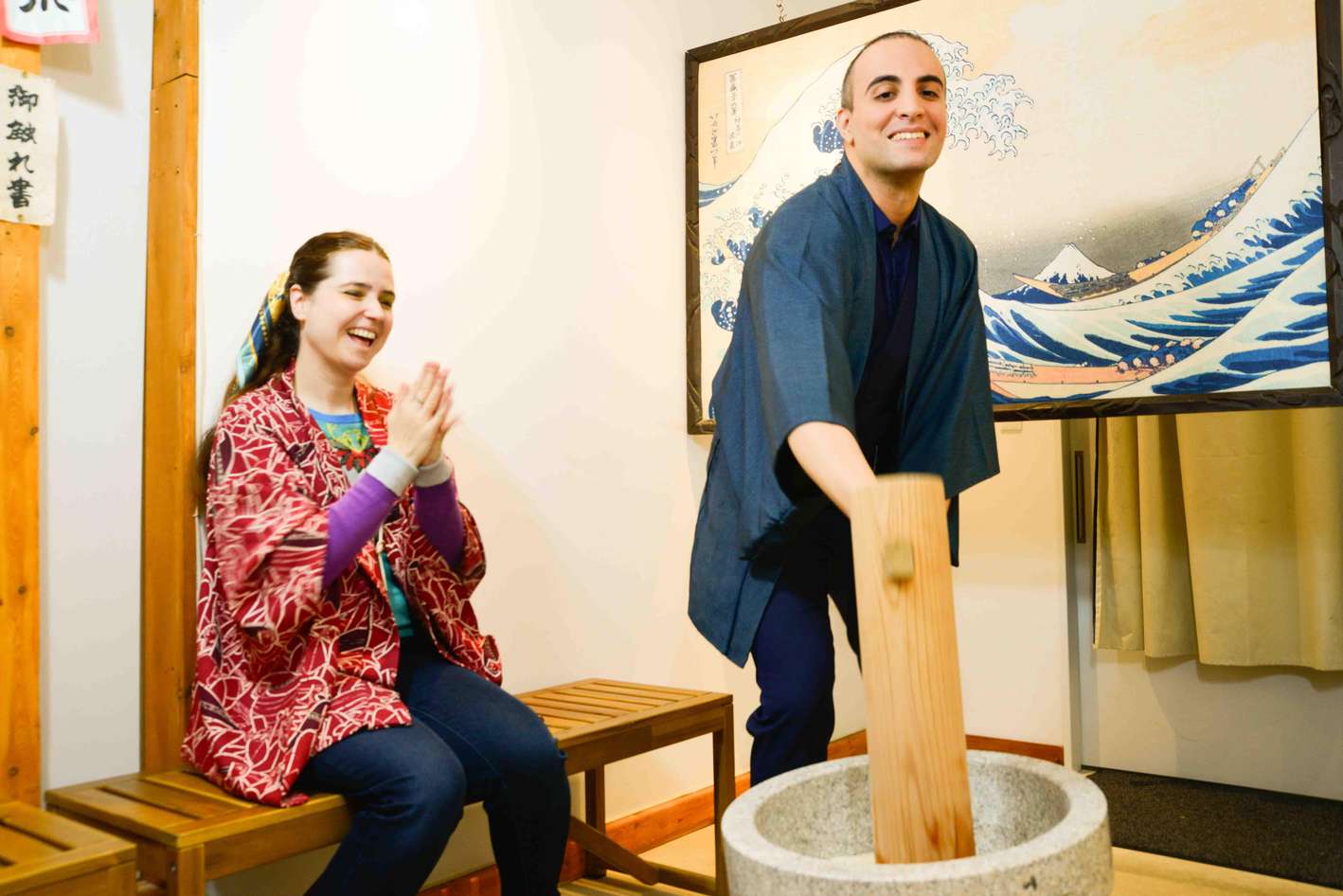
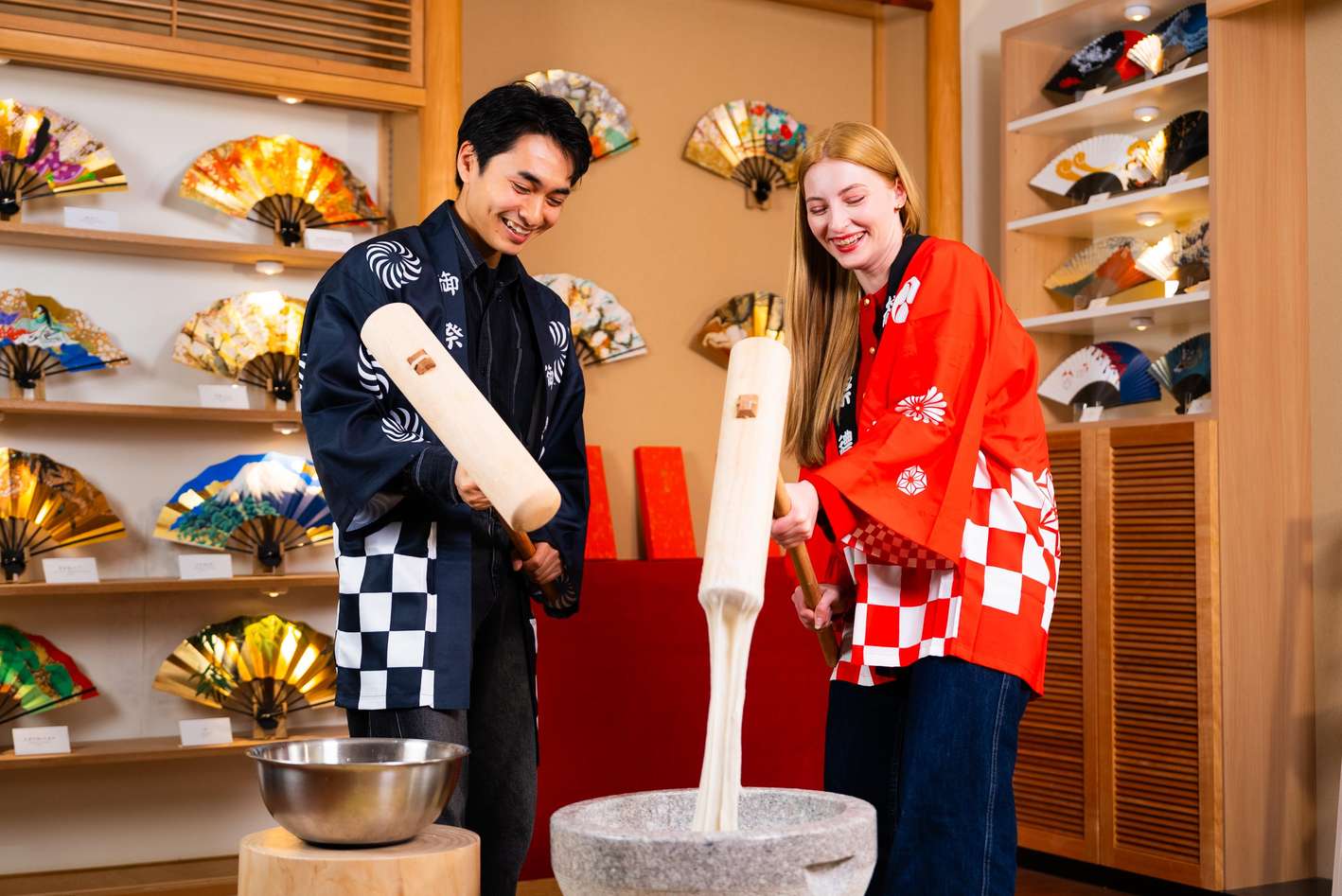
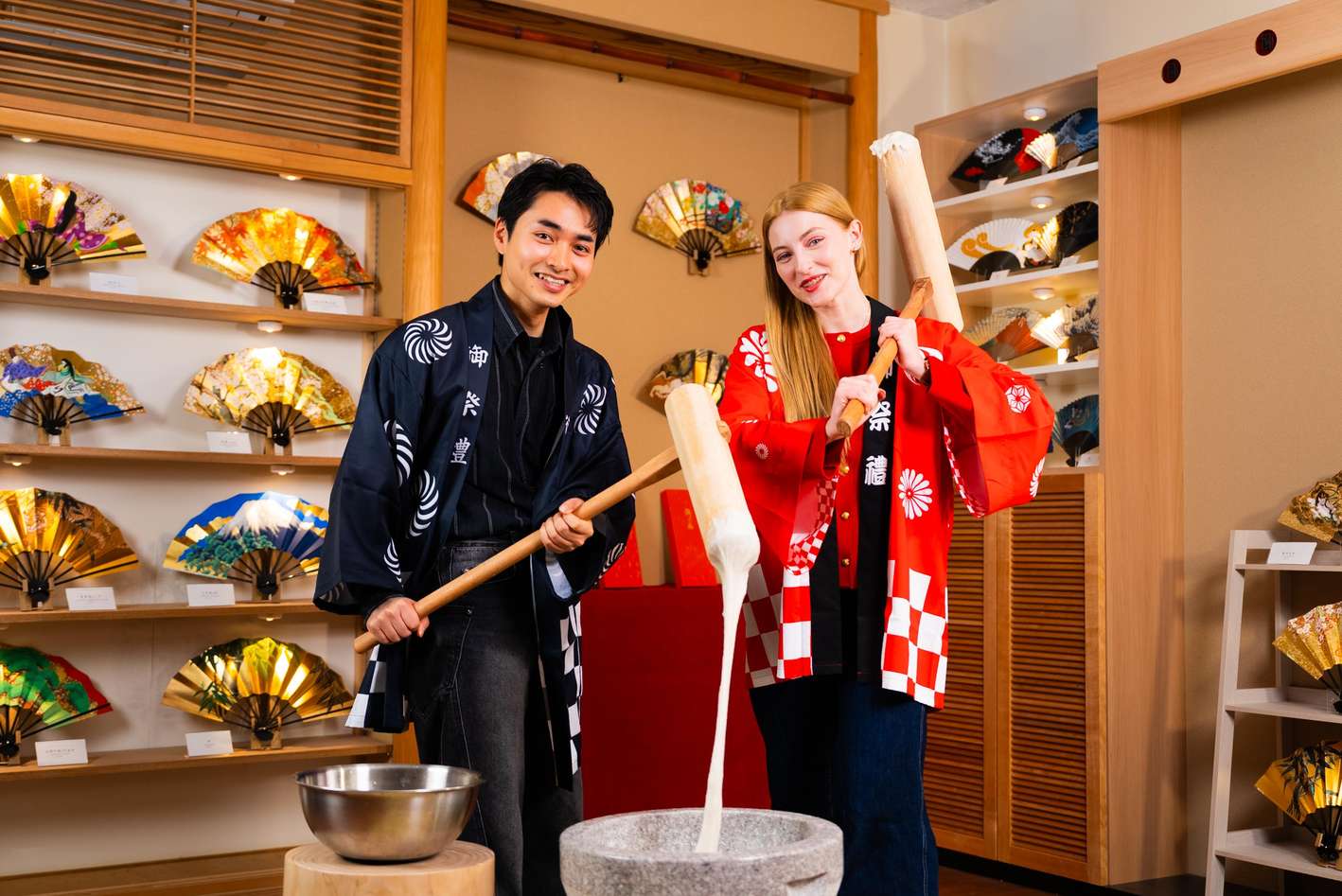
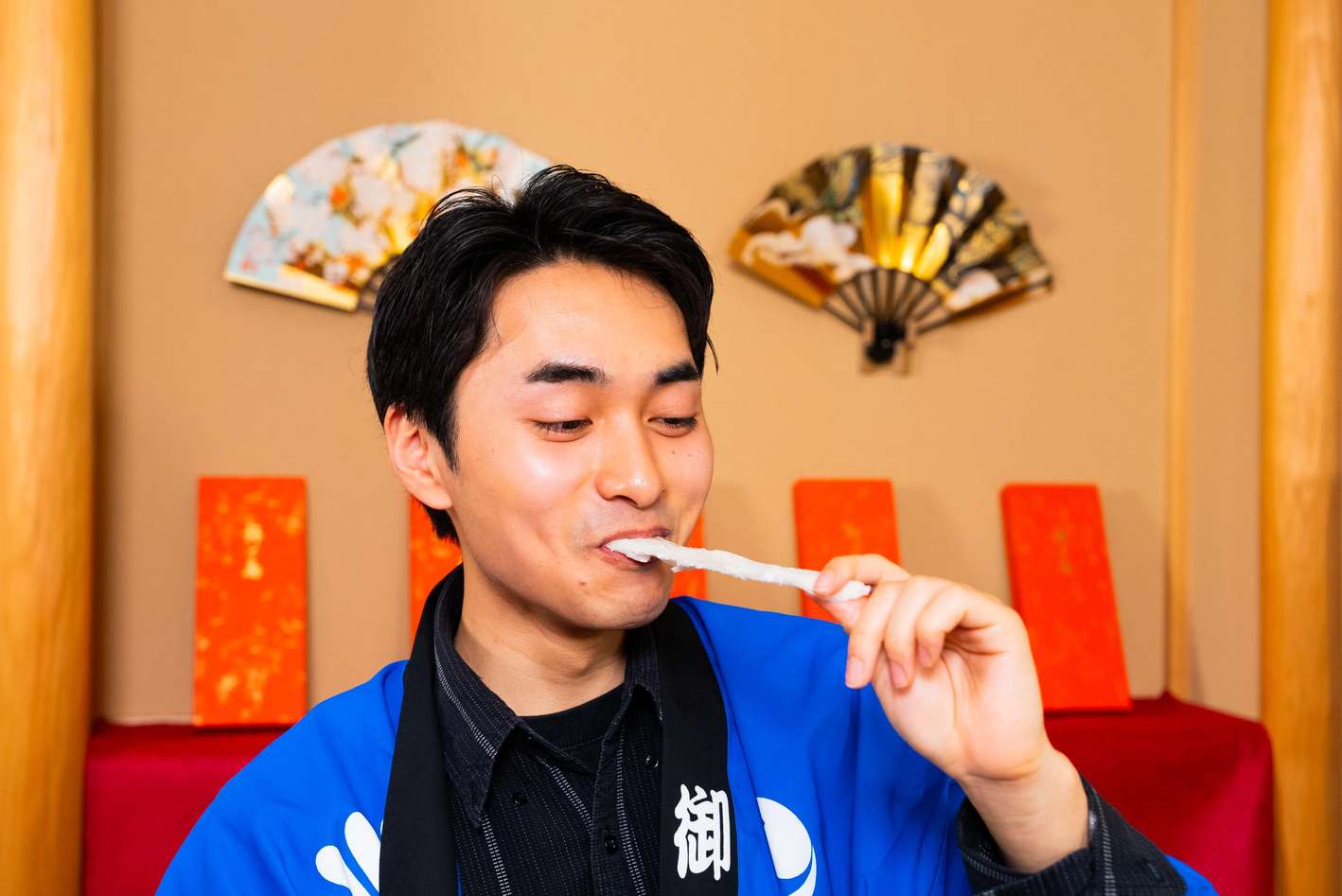
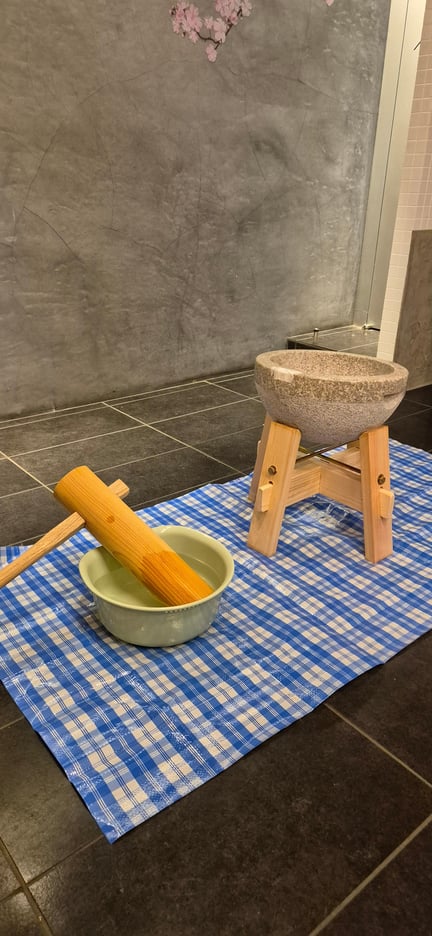
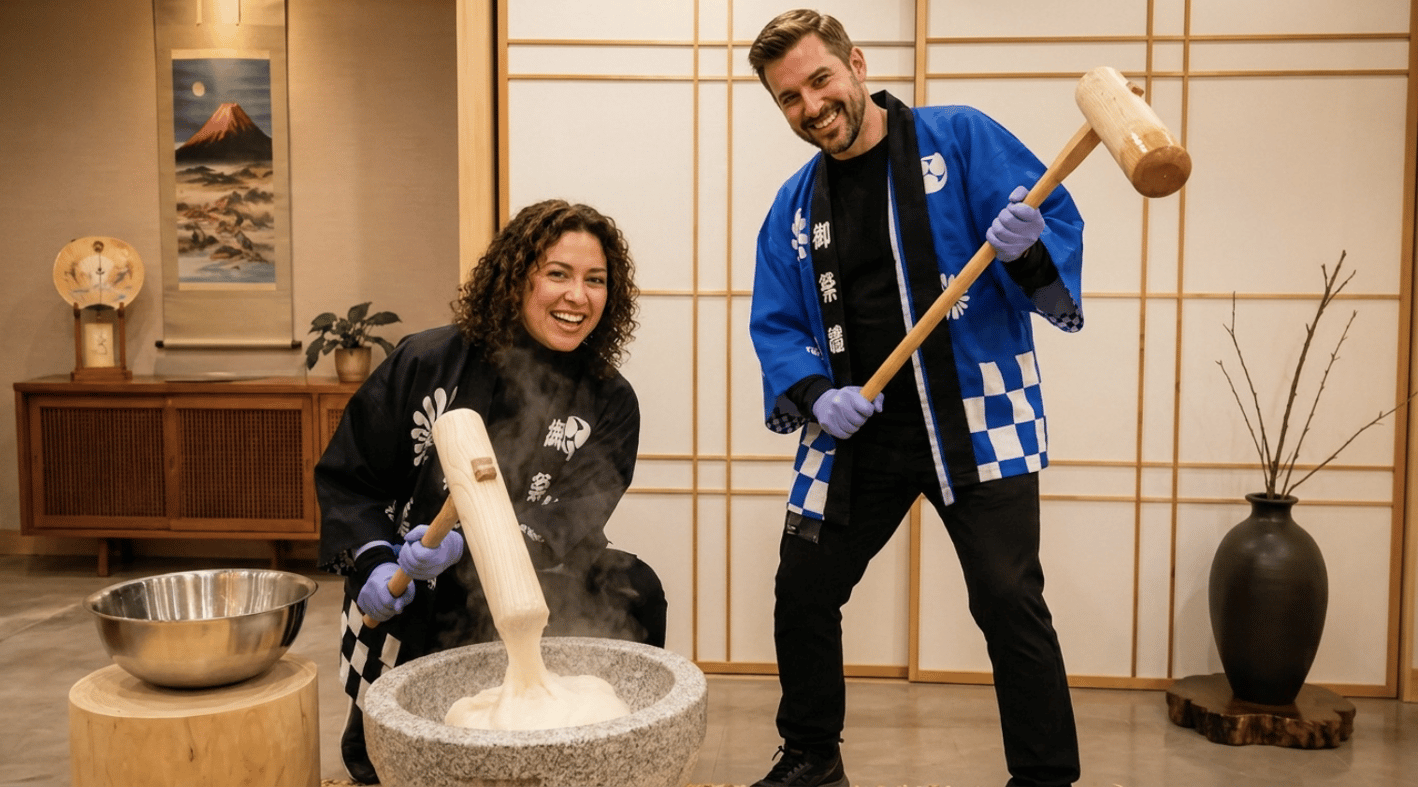
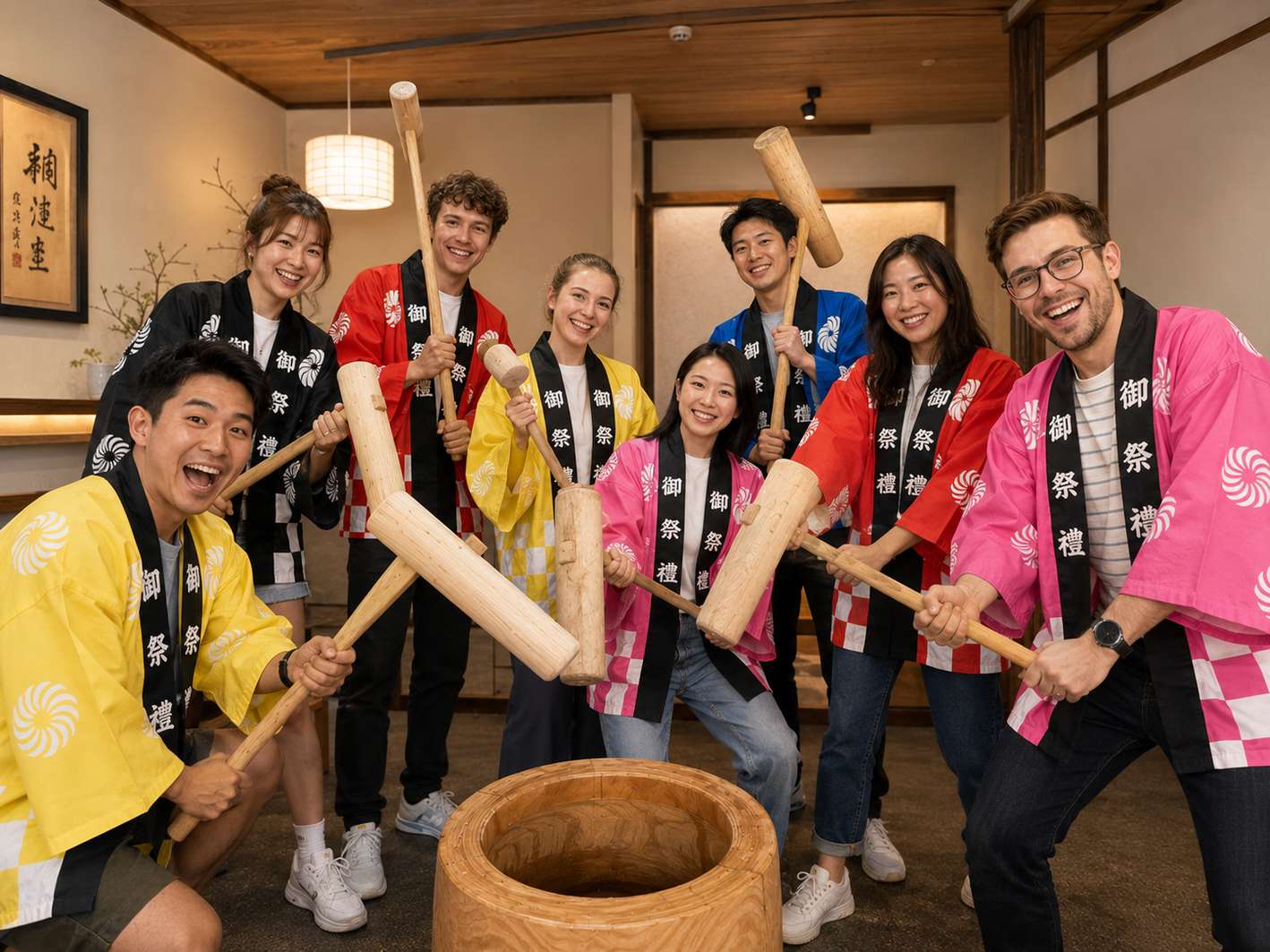
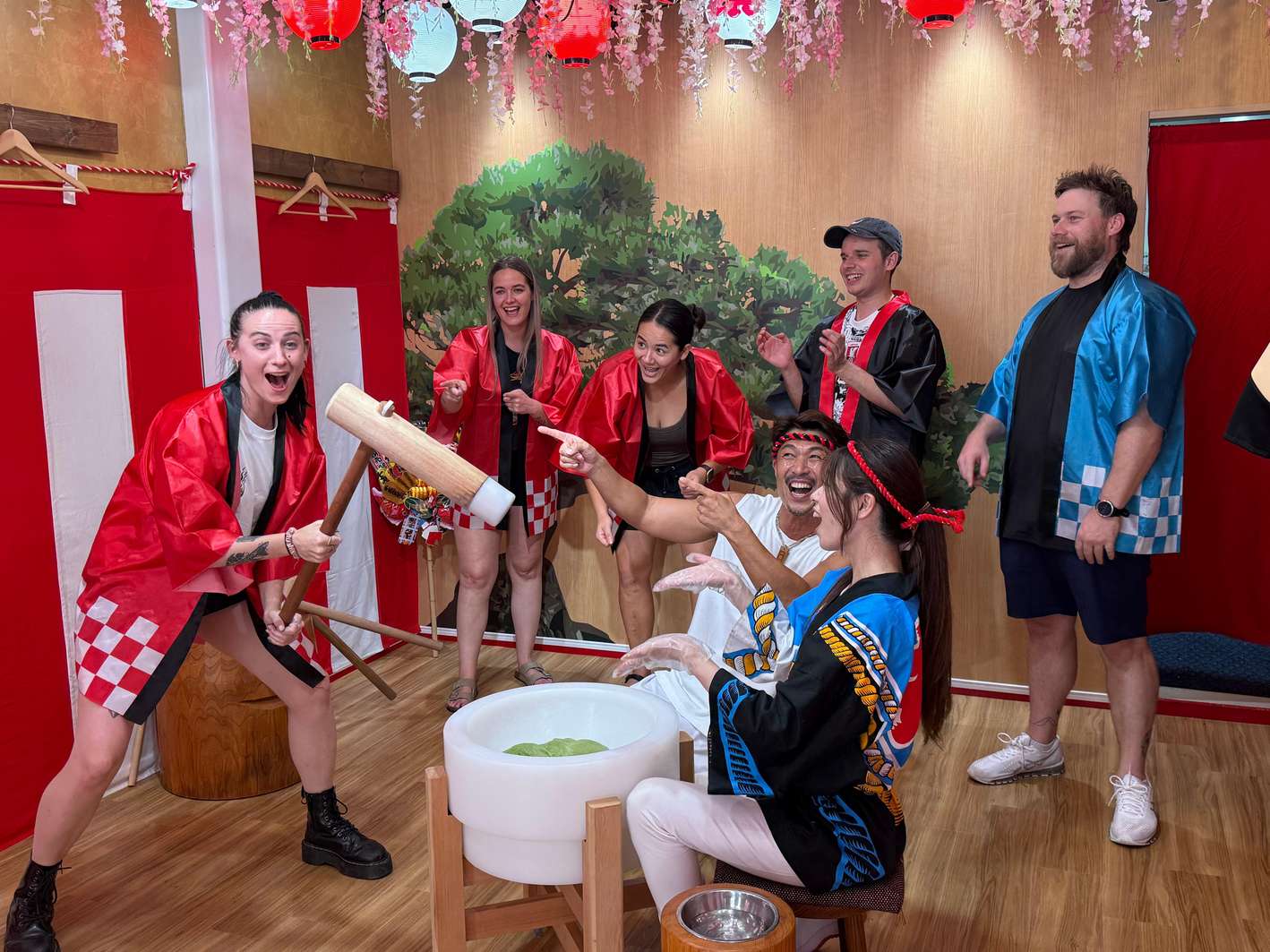
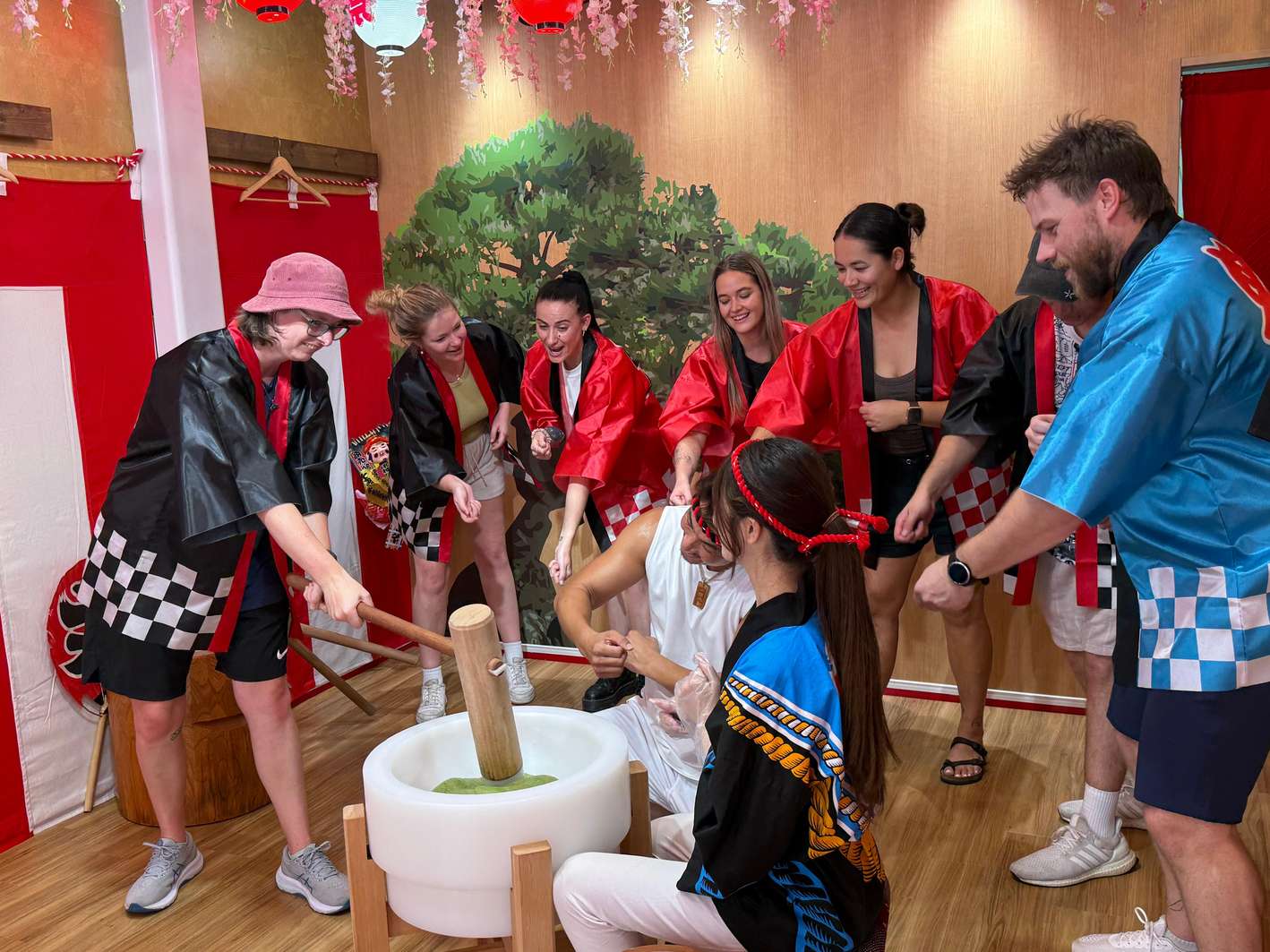
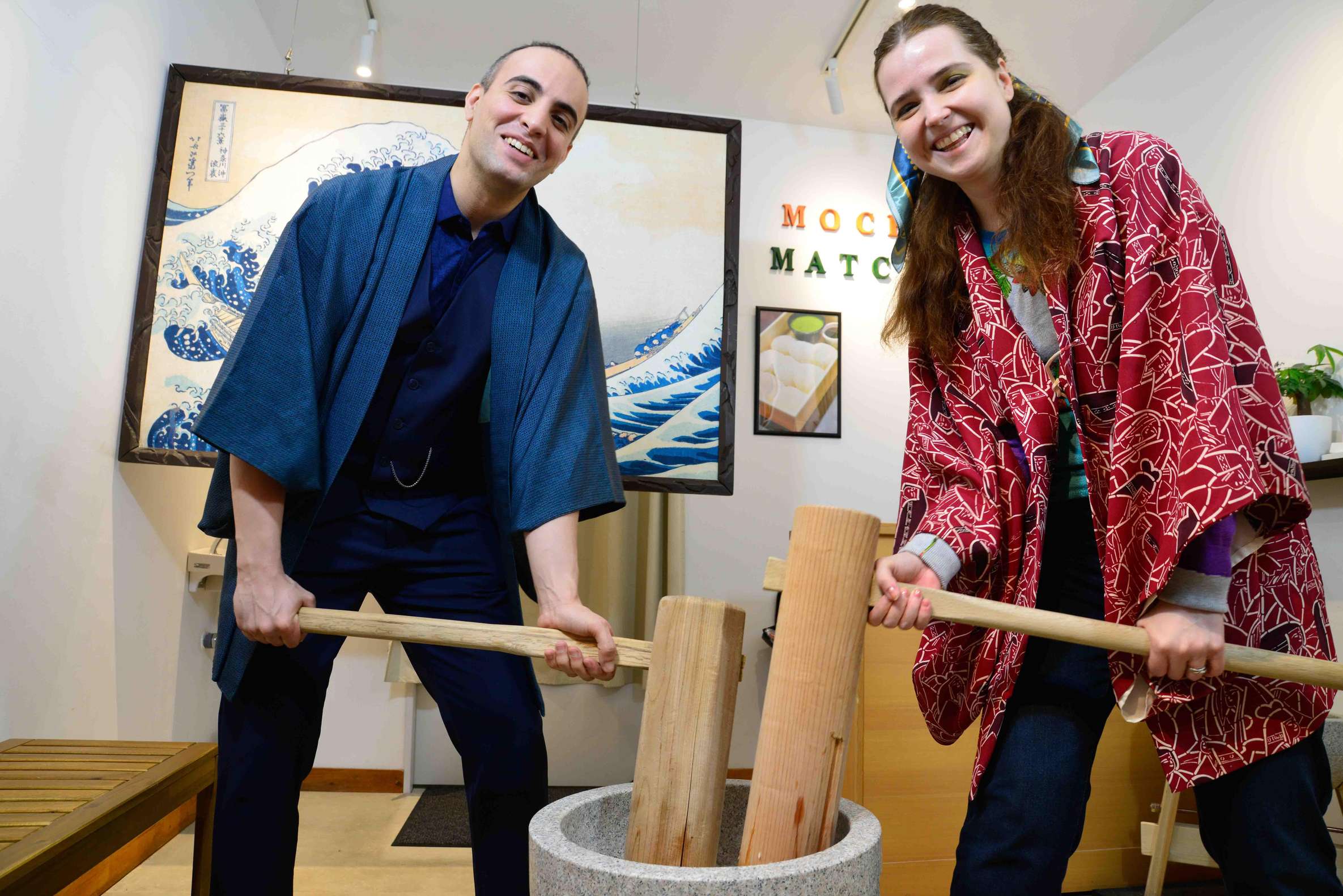
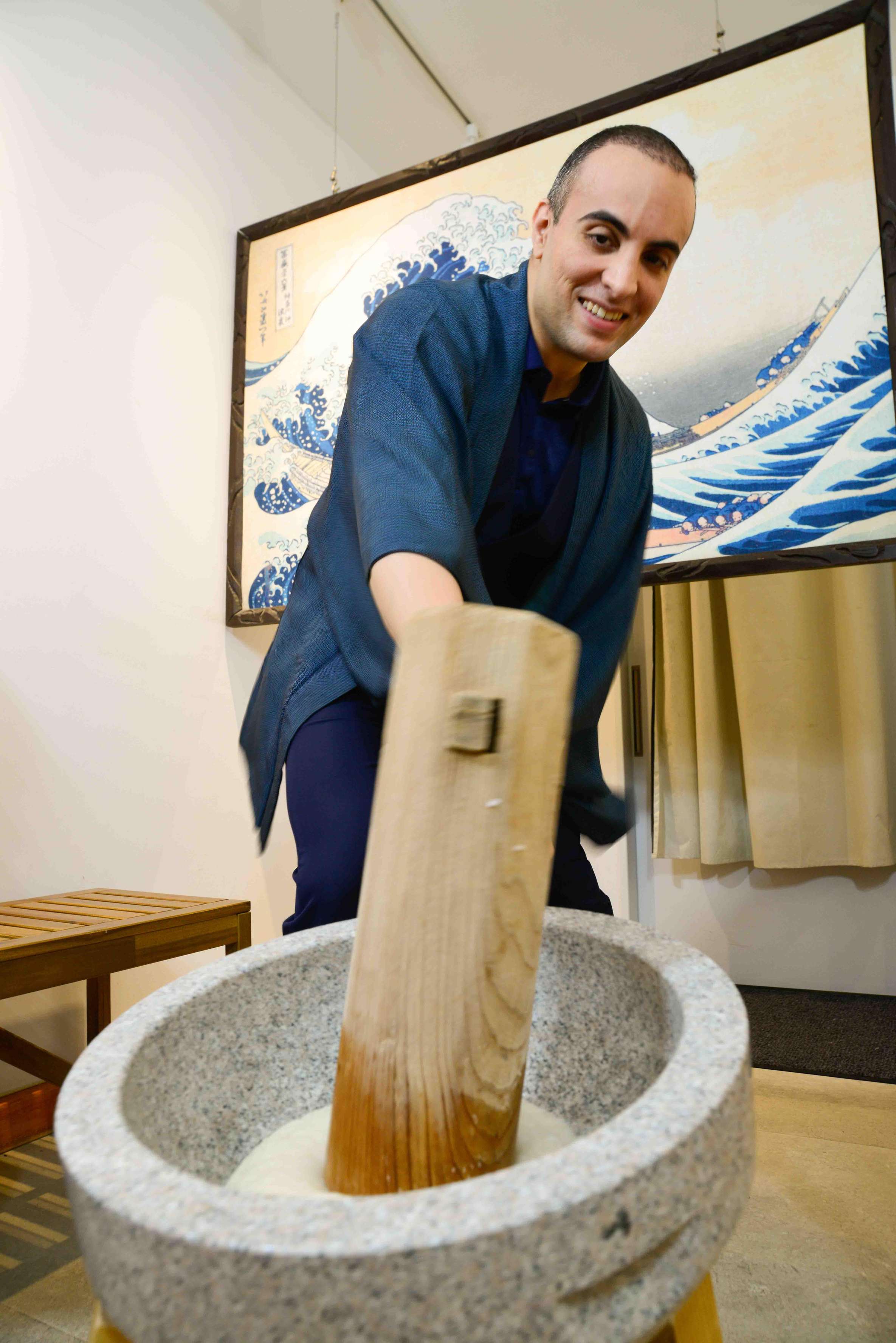
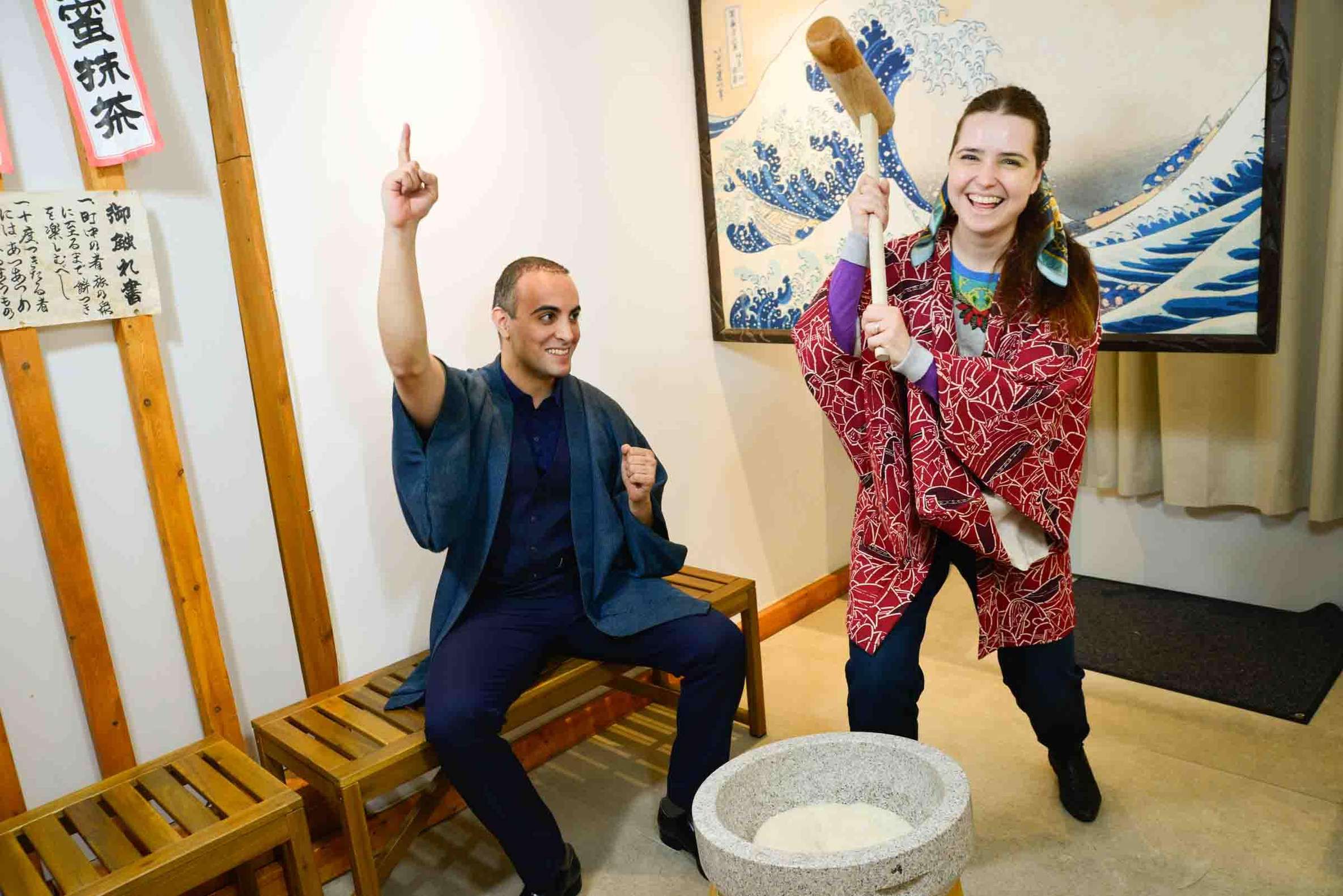
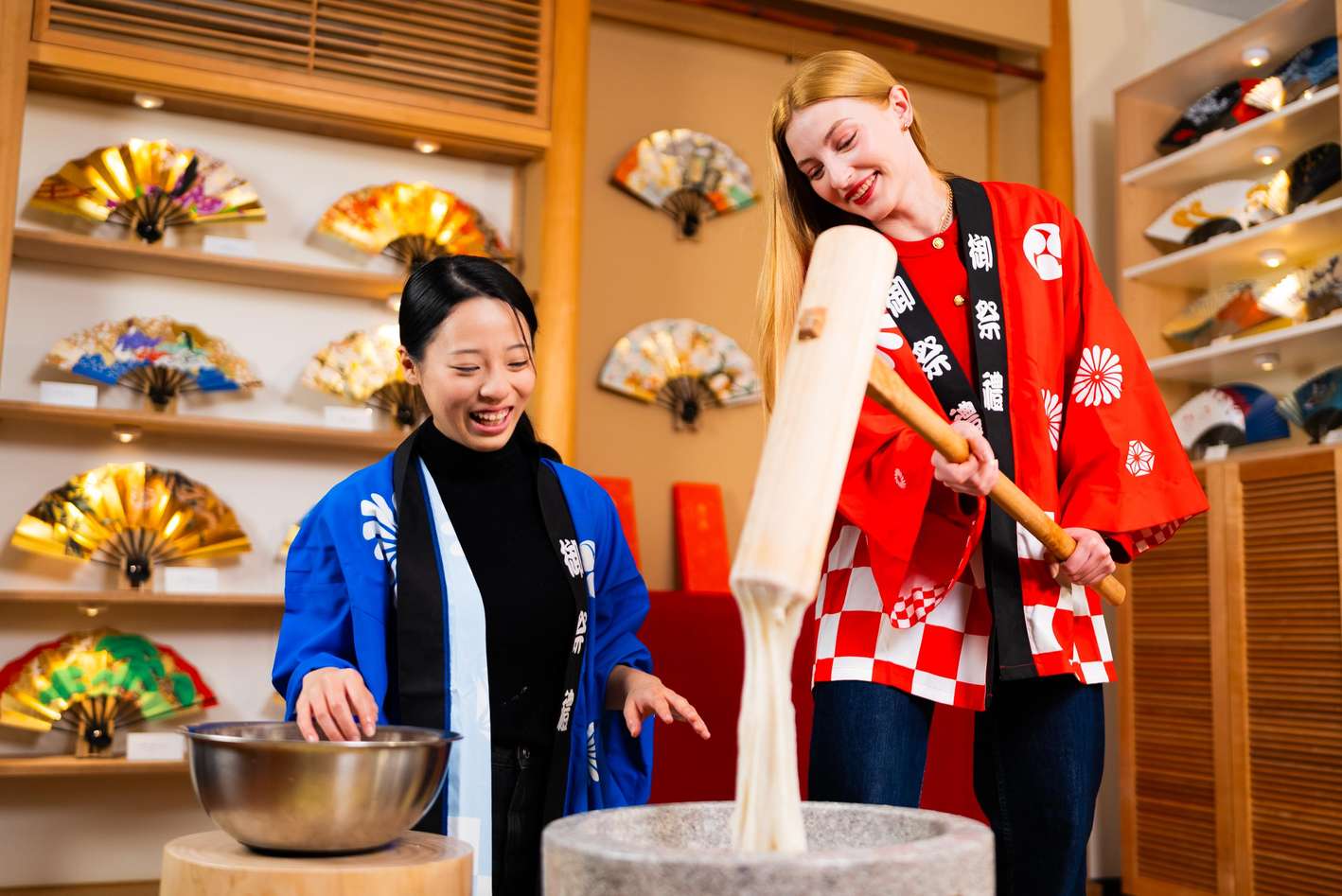
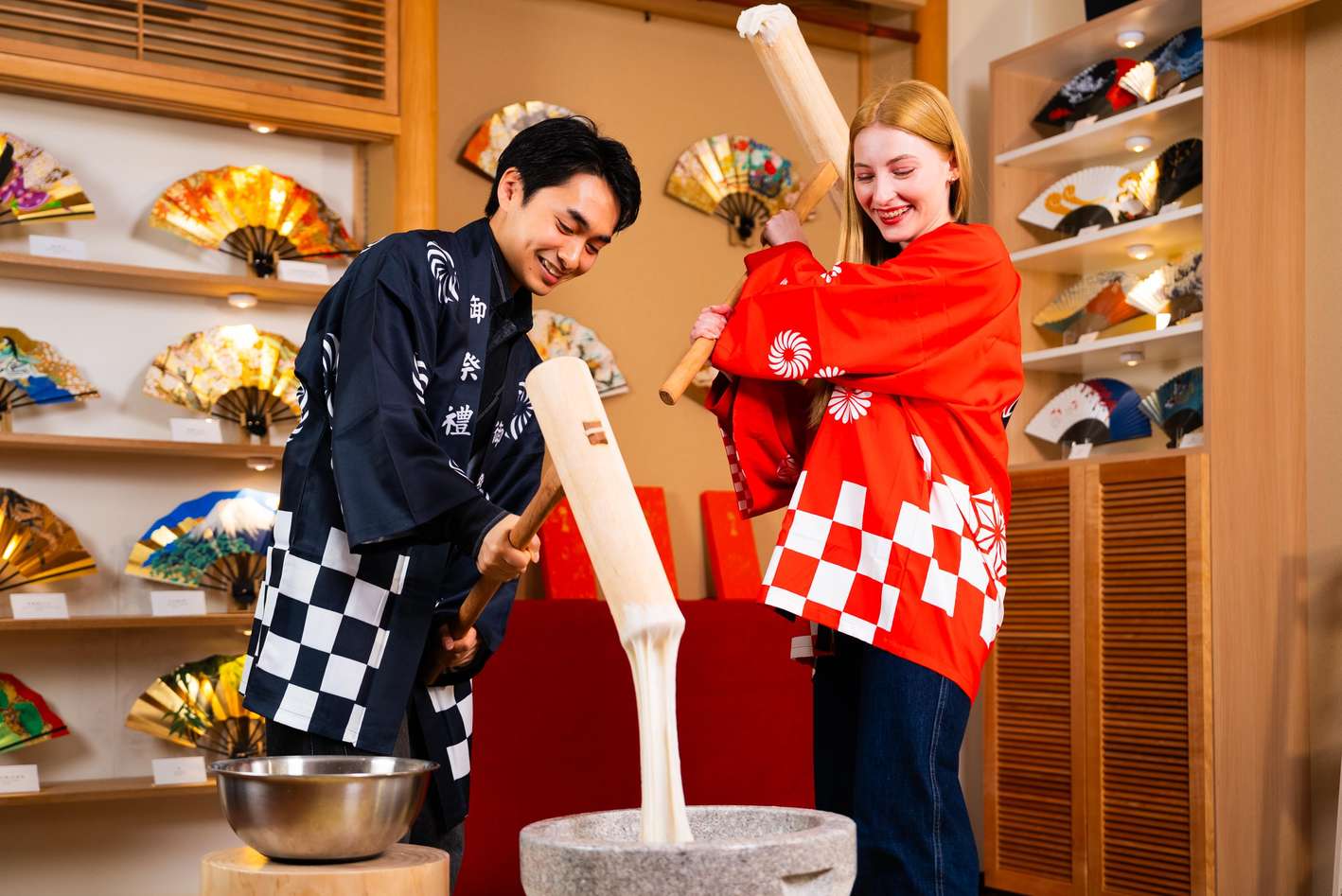
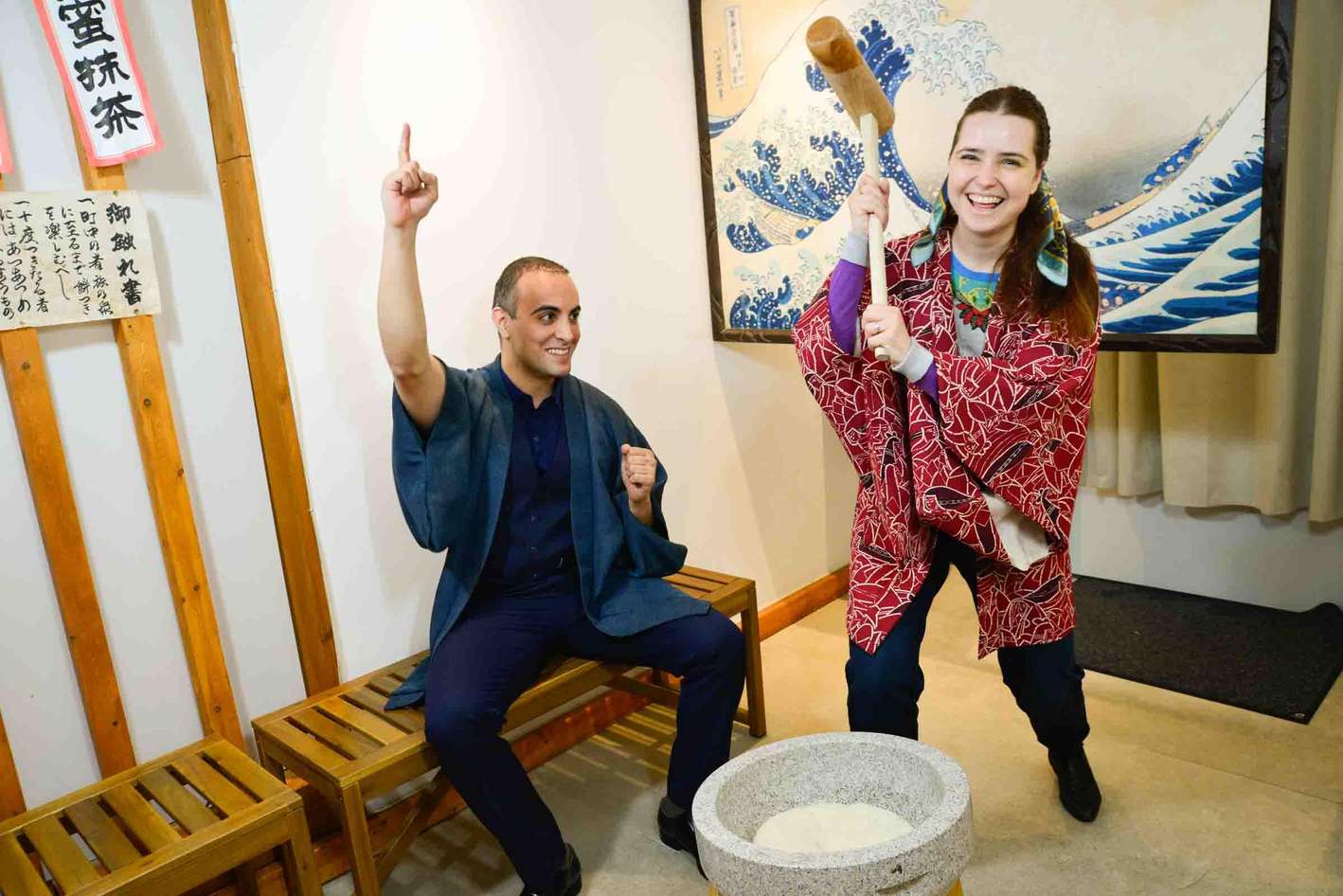
The wish that brought you here fits a bit of fabric and a heavy mallet. The Tokyo Asakusa: Mochi Pounding and Tasting Experience puts you at a stone mortar with a wooden mallet, a happi coat over your clothes, and a shout of "Yoisho!" with every strike.
Pro tipThere is no observation-only entry in Asakusa, so reserve for your whole group, even the ones who only wanted to watch.
It runs about an hour, which means it slots between Senso-ji and the Nakamise stalls without eating a day.
Here is the part to know before you book: this is a hands-on session, and nobody just watches. For hygiene reasons, entry for observation only is not permitted. Everyone in the room pounds, and that rule cuts both ways, since no one in your group can come along just to look on.
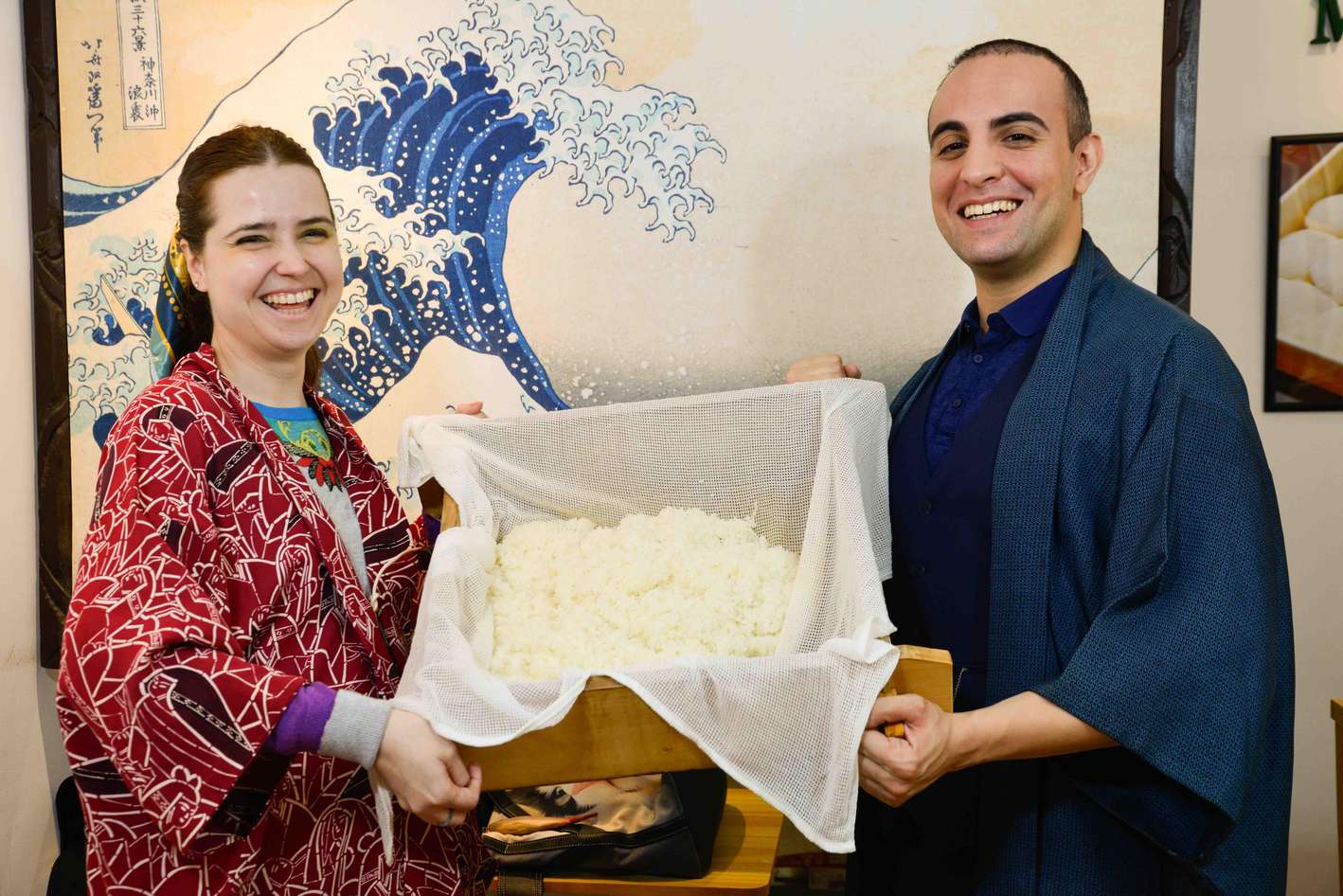
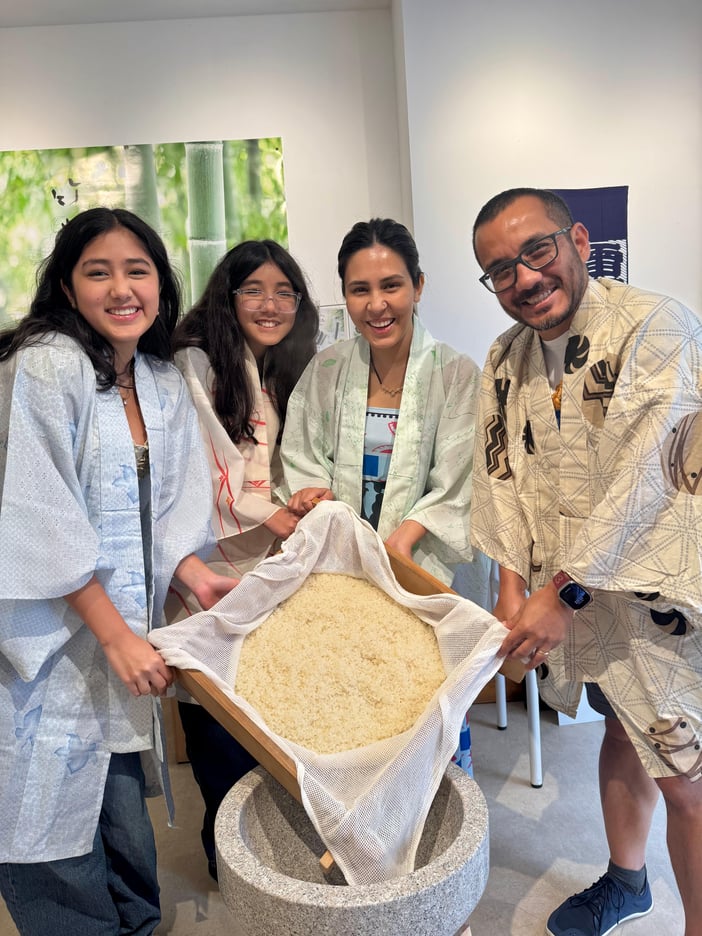
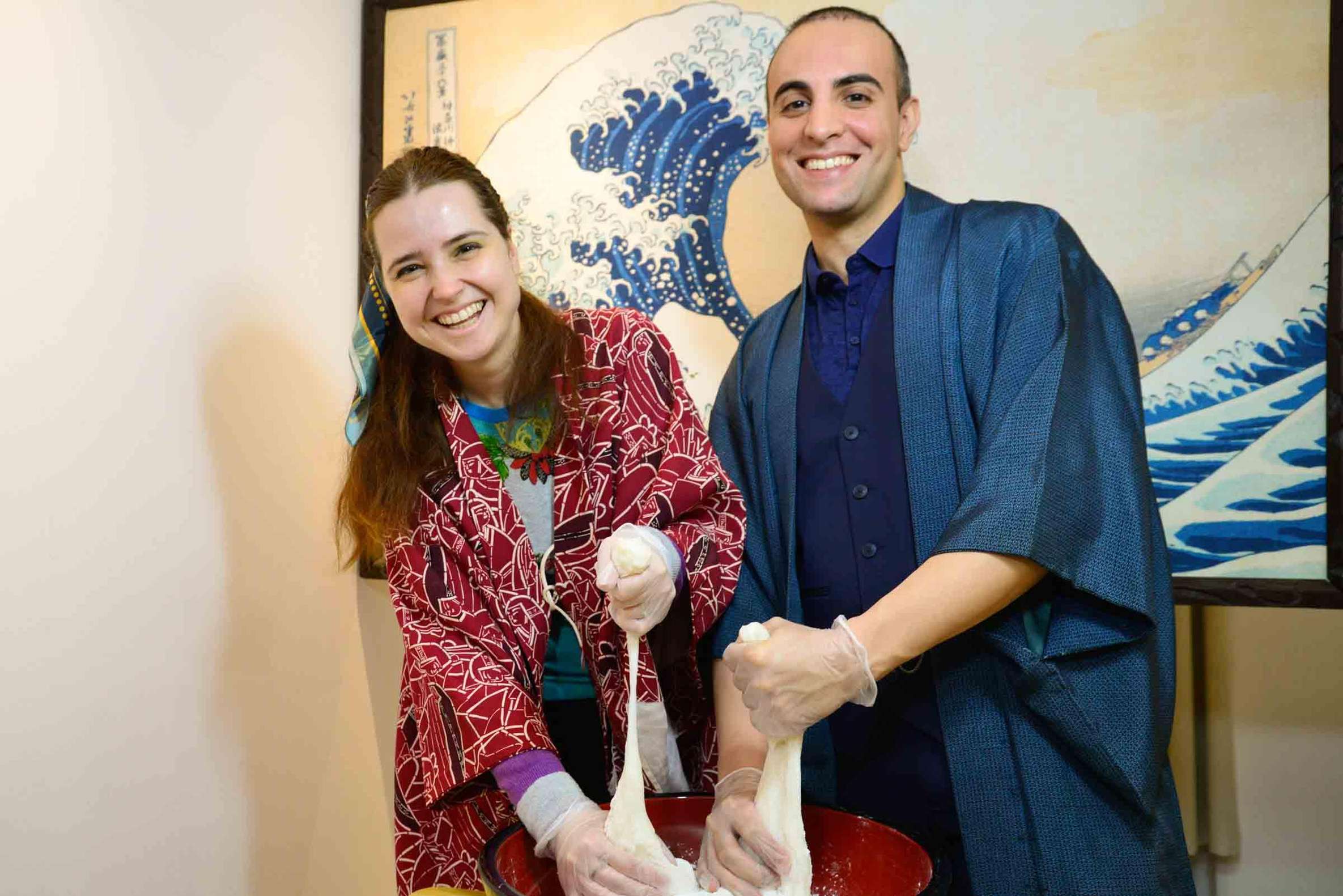
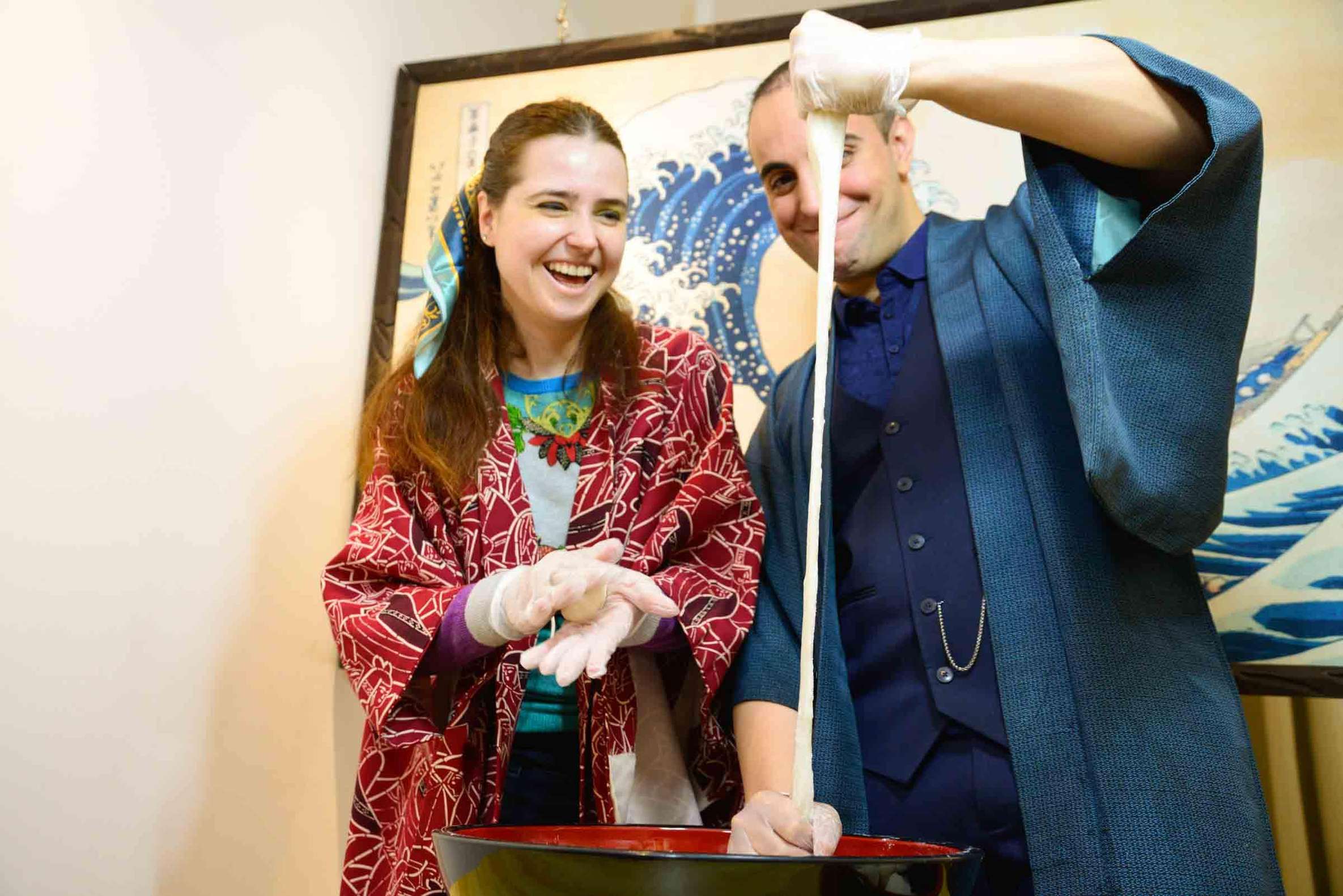
What you get for it is the fullest version of the ritual in the city: kneading, pounding, cutting and shaping, with warm mochi and souvenirs to take away. Standing at the mortar yourself is as close to the craft as Tokyo sells.
Tour for this
Tokyo Asakusa: Mochi Pounding and Tasting Experience4.9★ (88) · 1 hour · Free cancellation
Will you see the fast, coordinated technique from the videos?
Partly, and the honest version is worth hearing. Asakusa's courses feature vigorous, full-force mallet work; slow ceremony this is not, so the energy in the videos is present. What the studios do not stage is a professional's three-strikes-per-second Nara-style run, where the mallet never seems to pause. In Tokyo, guests take turns.
Pro tipWatch the host's turner work between strikes before you lift the mallet; mistiming a reach into the mortar is how hands get hurt.
The technique itself is still there to see up close.
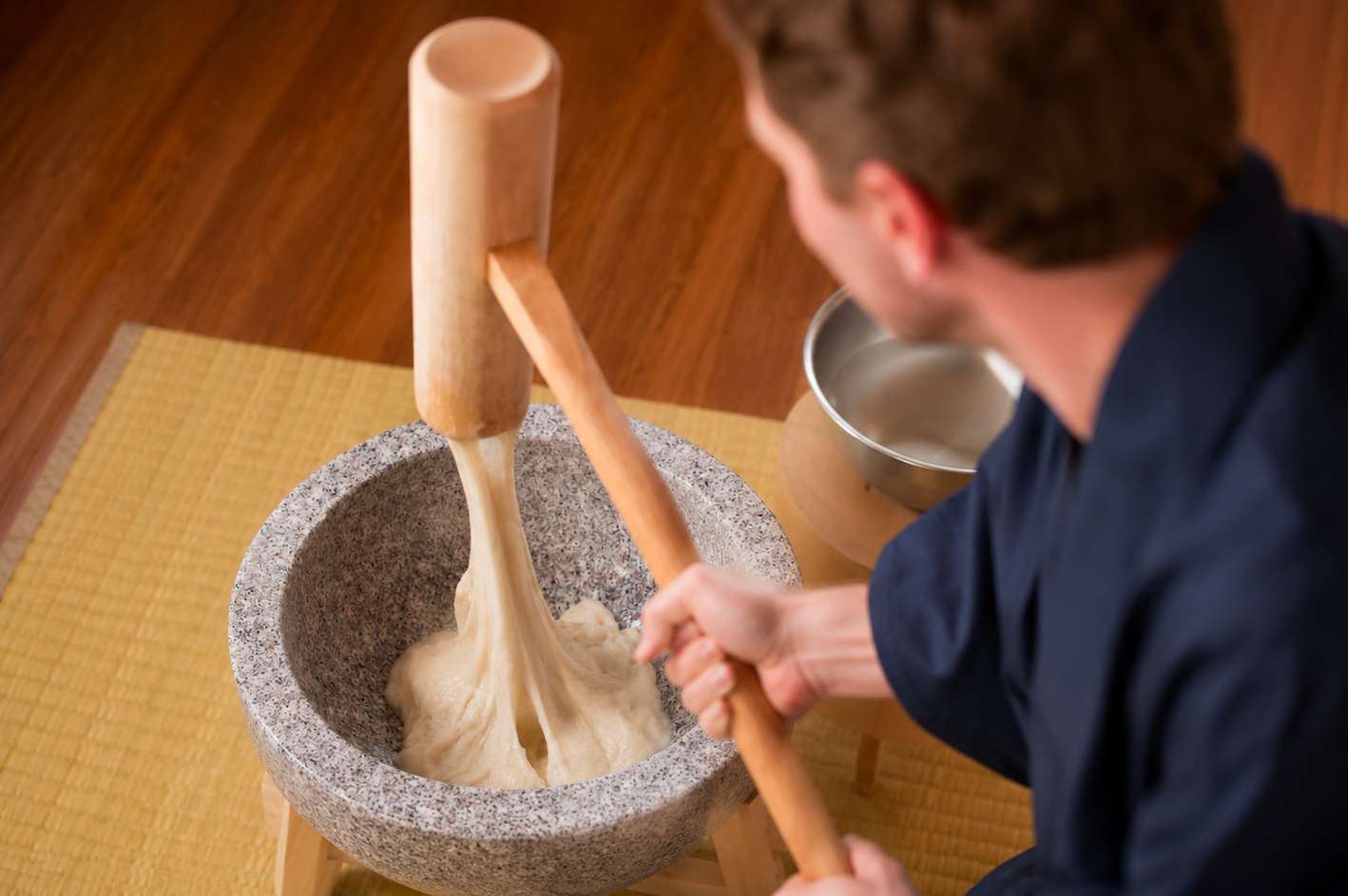
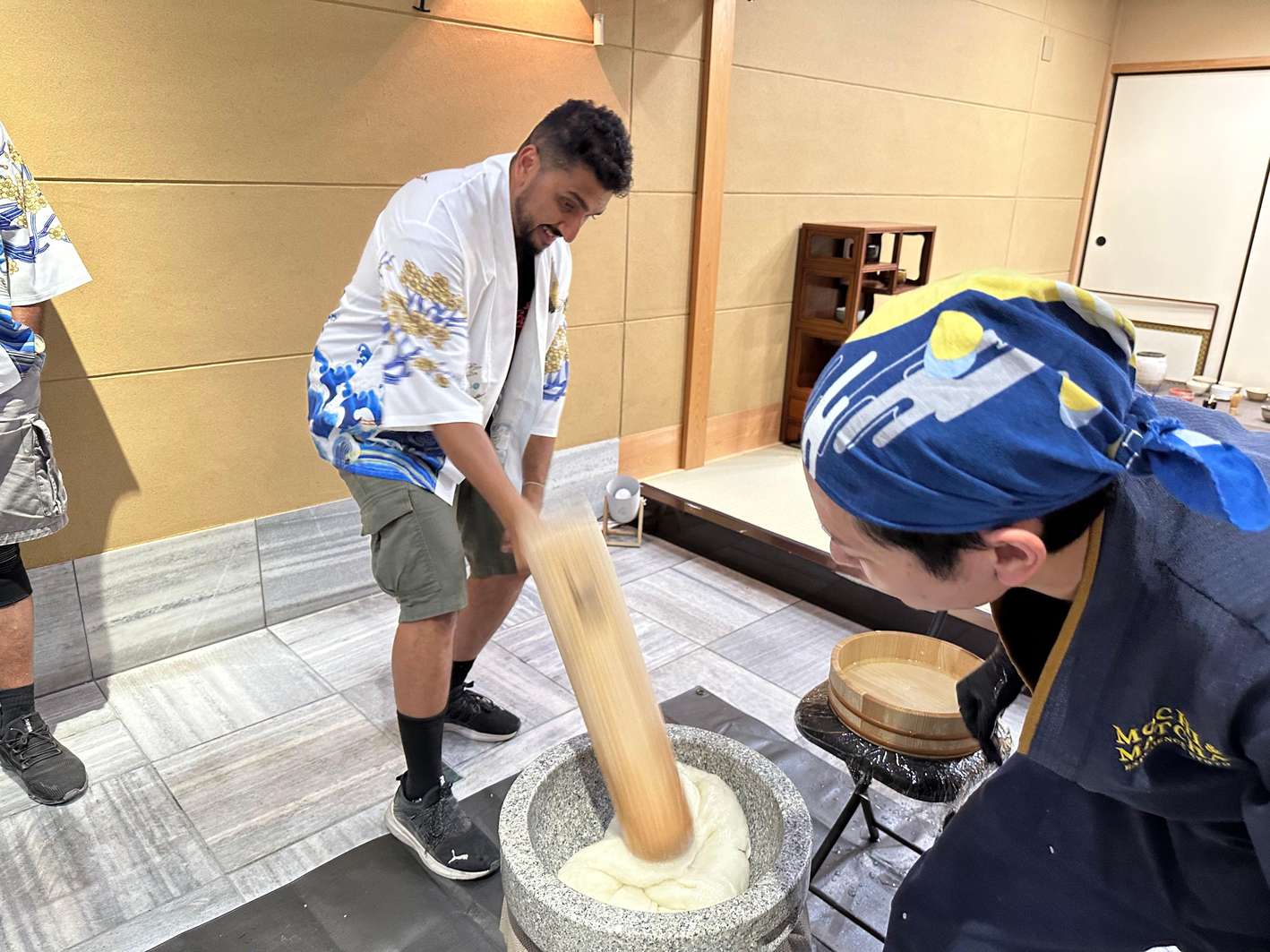
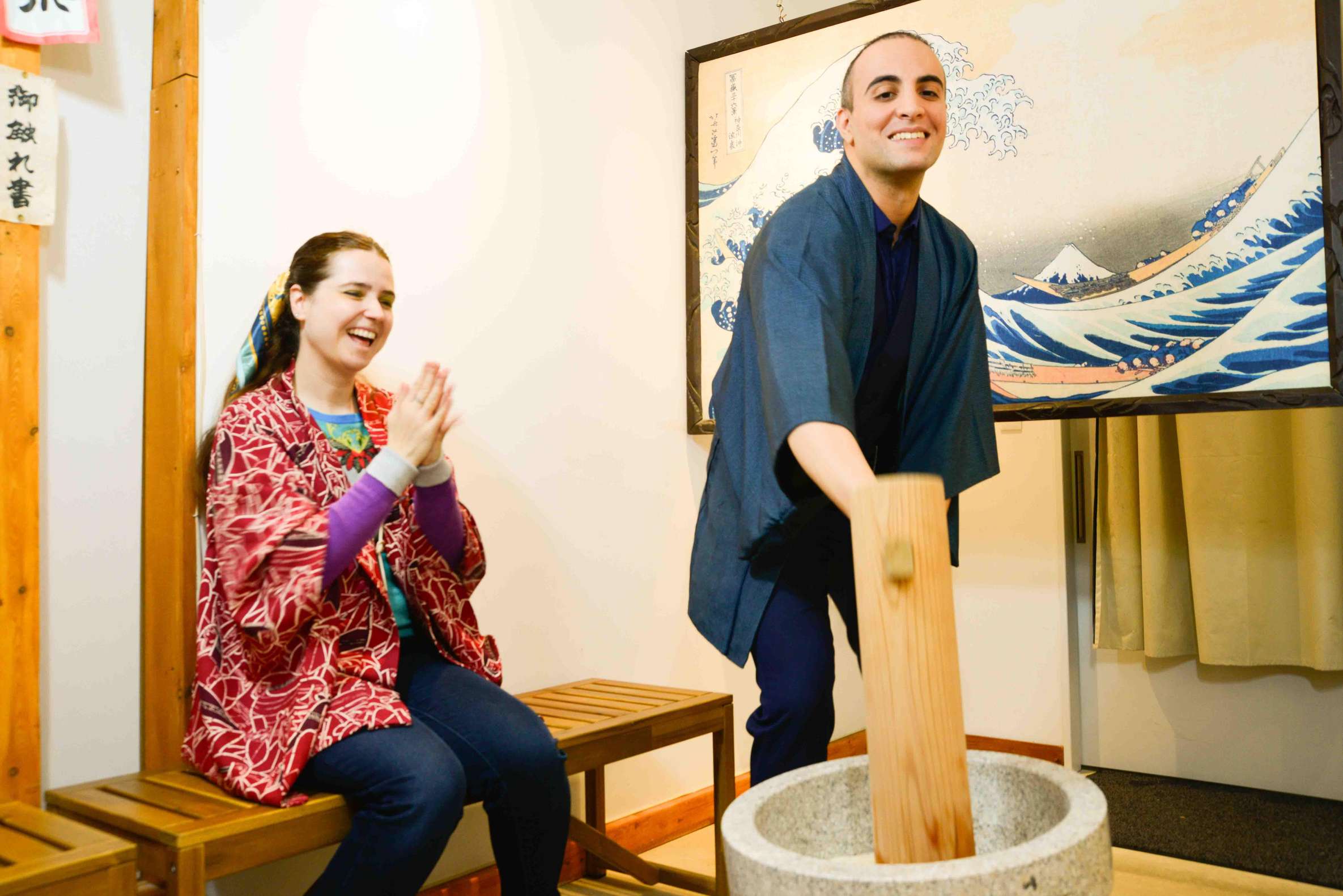
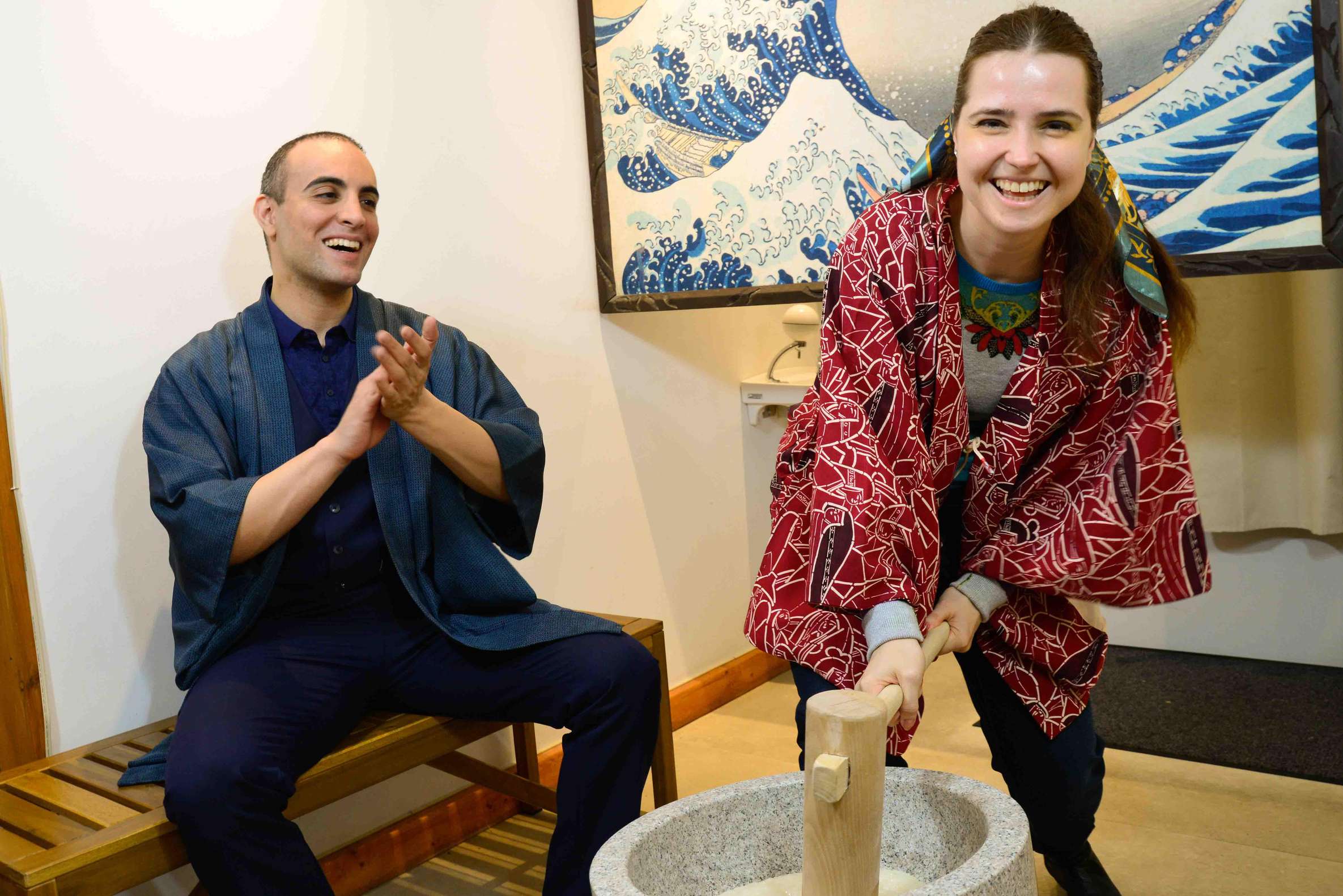
The Tokyo: Shibuya Vegan-Friendly Mochi Pounding Experience walks you through the two-person rhythm before anyone lifts a mallet: one person pounds, the other turns and moistens the rice by hand between strikes, and the two stay timed by chants like "Yoisho!" because a mistimed reach is how hands get hurt.
Your host calls the rhythm, you find it after a few swings, and you feel the rice stop being rice.
Watch the turner work between strikes before your turn comes. That hand, wet and quick, is the real skill in the mortar, and you will never see it that clearly at a street show three rows back.
Can you be sure the pounding happens when you're there?
This is the anxiety the whole page answers, and it has a real solution.
Pro tipBuild the pounding around the timetable; Tokyo Tower's shows run at the same four times every day.
The fixed timetables in Tokyo belong to the sumo venues: Tokyo Tower holds its pounding shows four times daily at 11 am, 2 pm, 5 pm and 8 pm, and the Ryogoku sessions run daily at 11 am to 1 pm, 2:30 to 4:30 pm and 6 to 8 pm.
Walk-in guests can attend the Tokyo Tower show provided seats are available.
Studio workshops work the other way: the reservation is the guarantee. Fixed session times are rare at the studios, so the booking you make is what puts the pounding in front of you.
Some venues ask for notice, with reservations required at least two days ahead for one traditional Asakusa course, while its walk-in challenge course takes guests on the day. Book a workshop in advance and the question disappears.
What to check before booking a Tokyo pounding session
Check
Why it matters
Our pick
Fixed session times or by reservation
Decides whether your day can be planned to the hour
By reservation; the booking is the guarantee
Observation-only entry allowed
Matters if some of your group only wants to watch
No, every guest participates
How far in advance to book
Late bookings can lose the session entirely
Reserve ahead; some Asakusa courses ask for two days
Three checks, one habit: build the pounding around the timetable, and Tokyo Tower's shows run at the same four times every day.
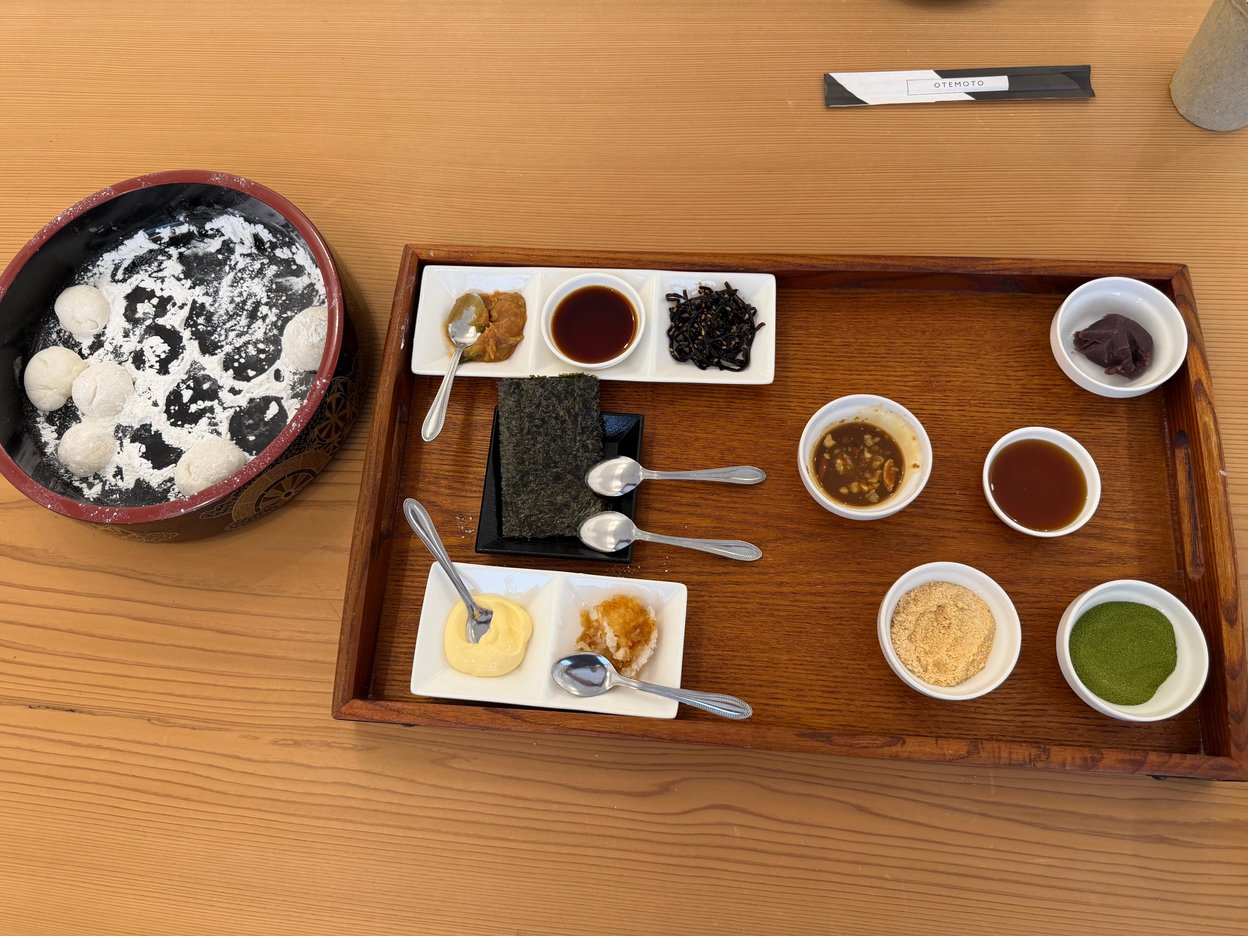
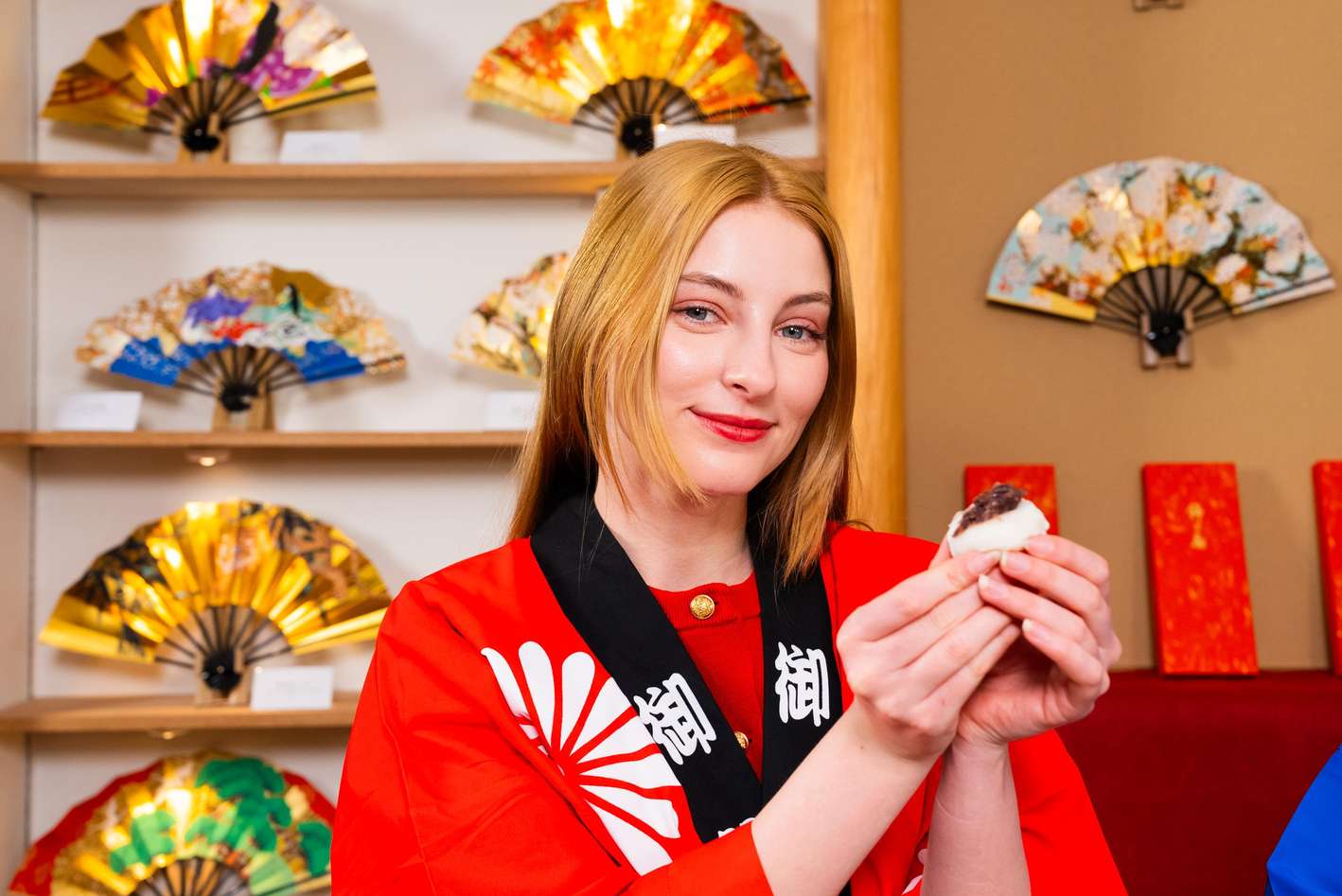
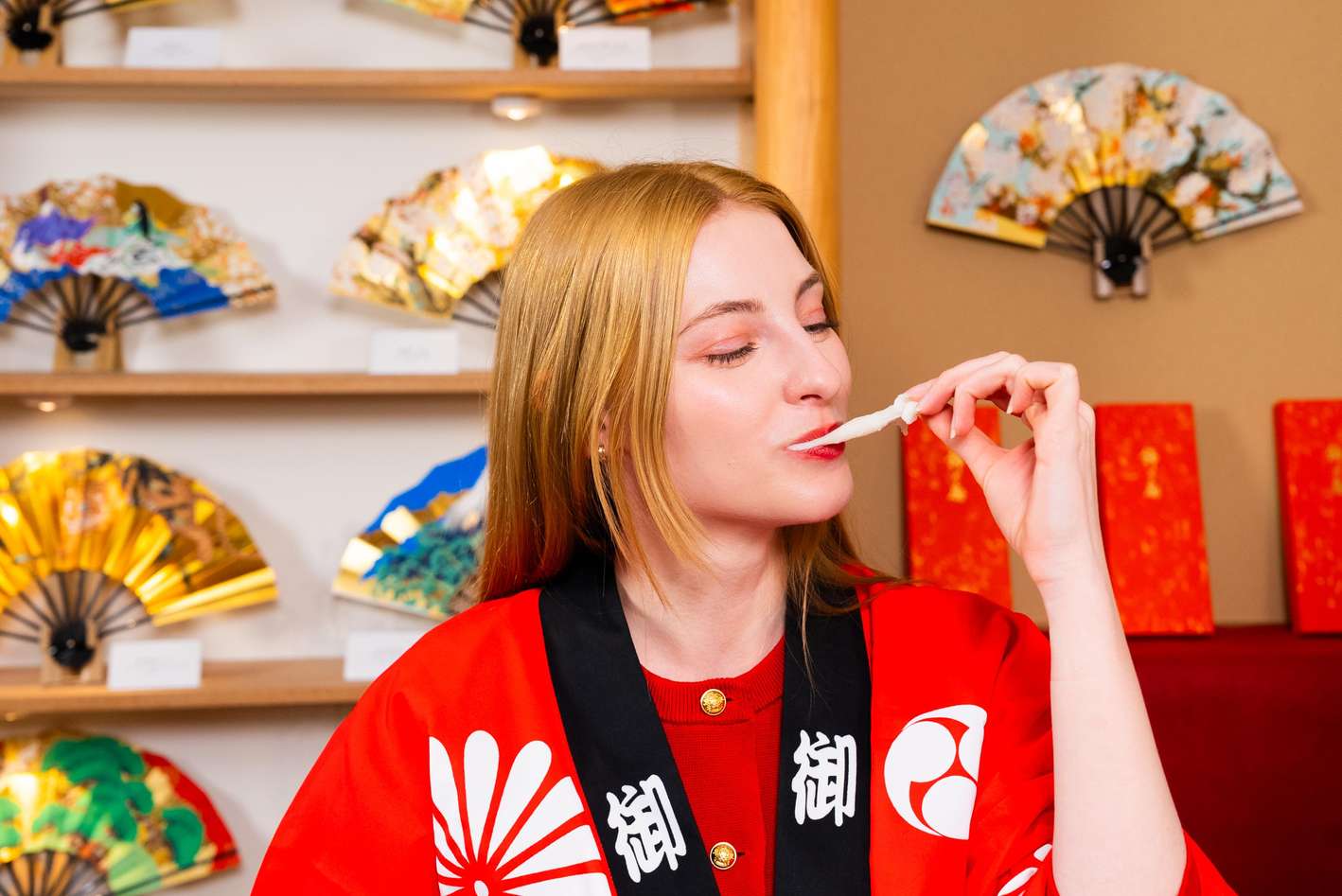
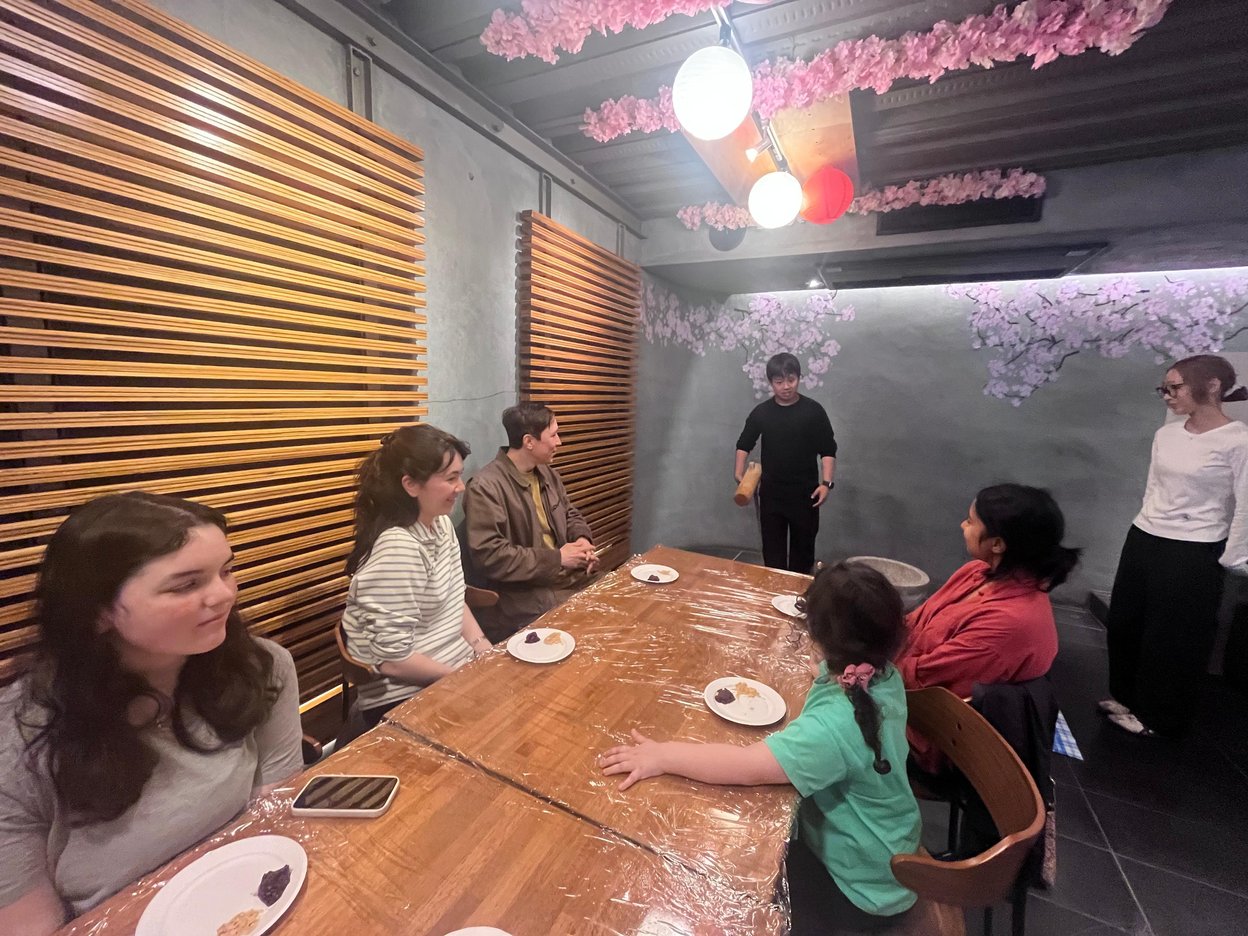
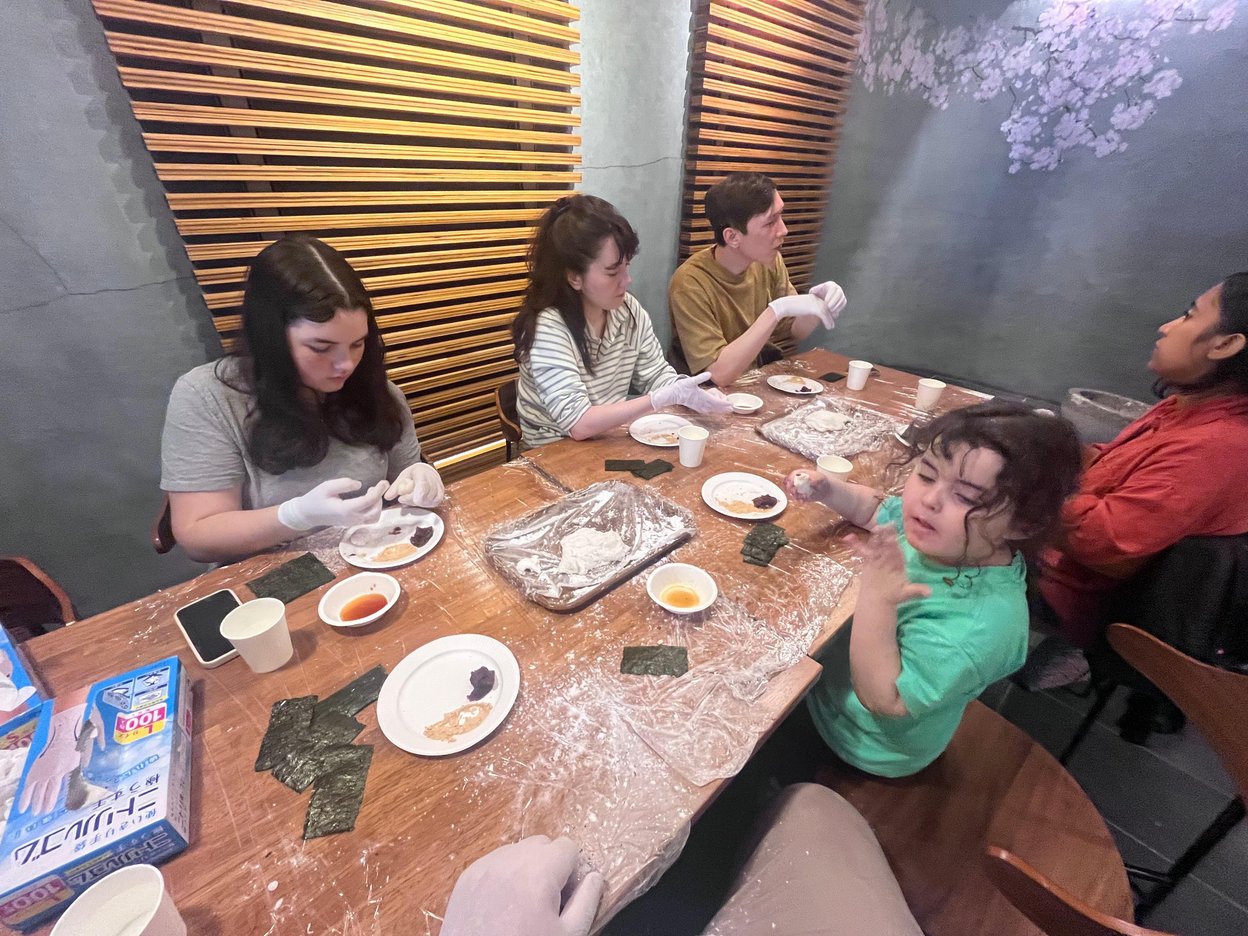
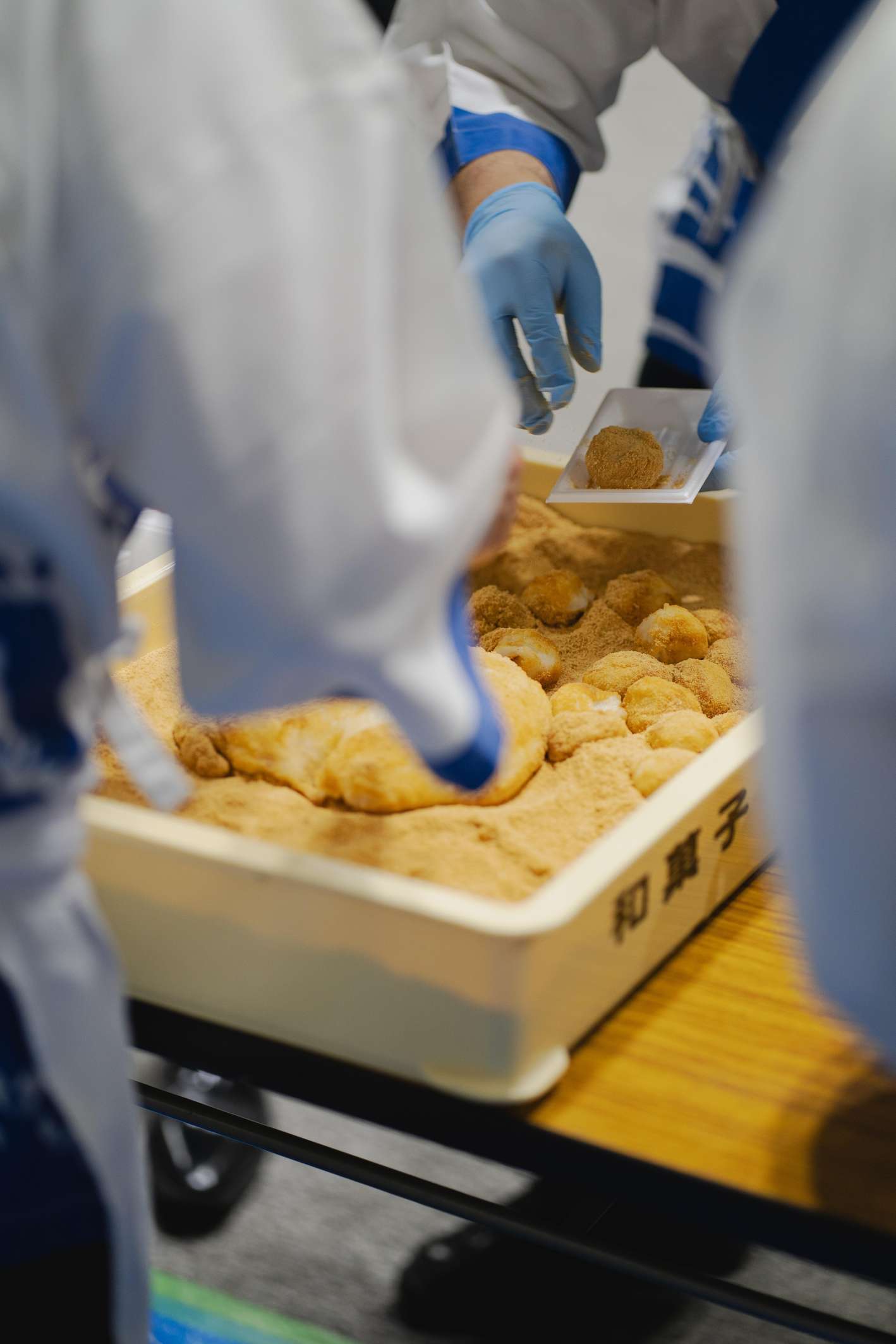
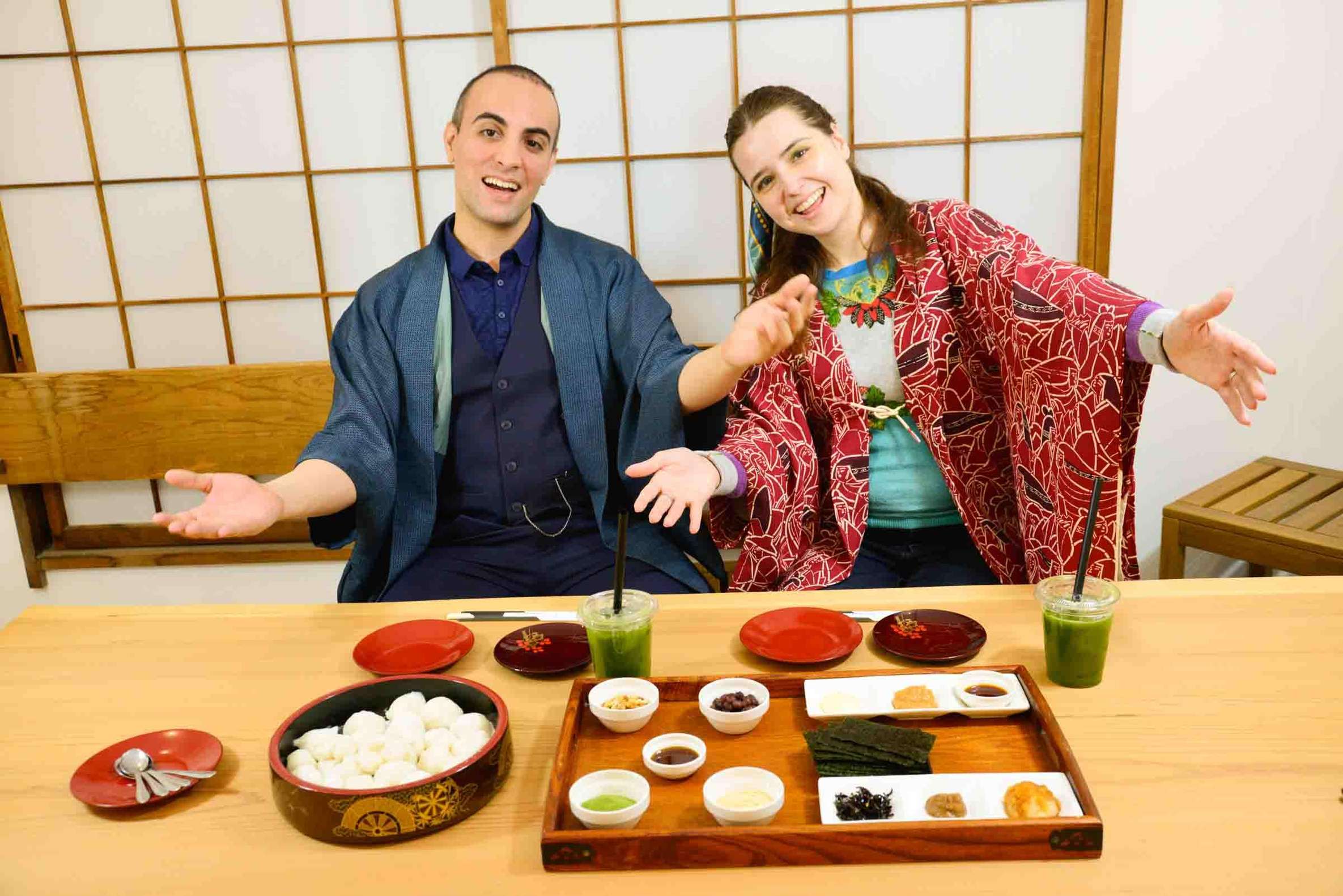
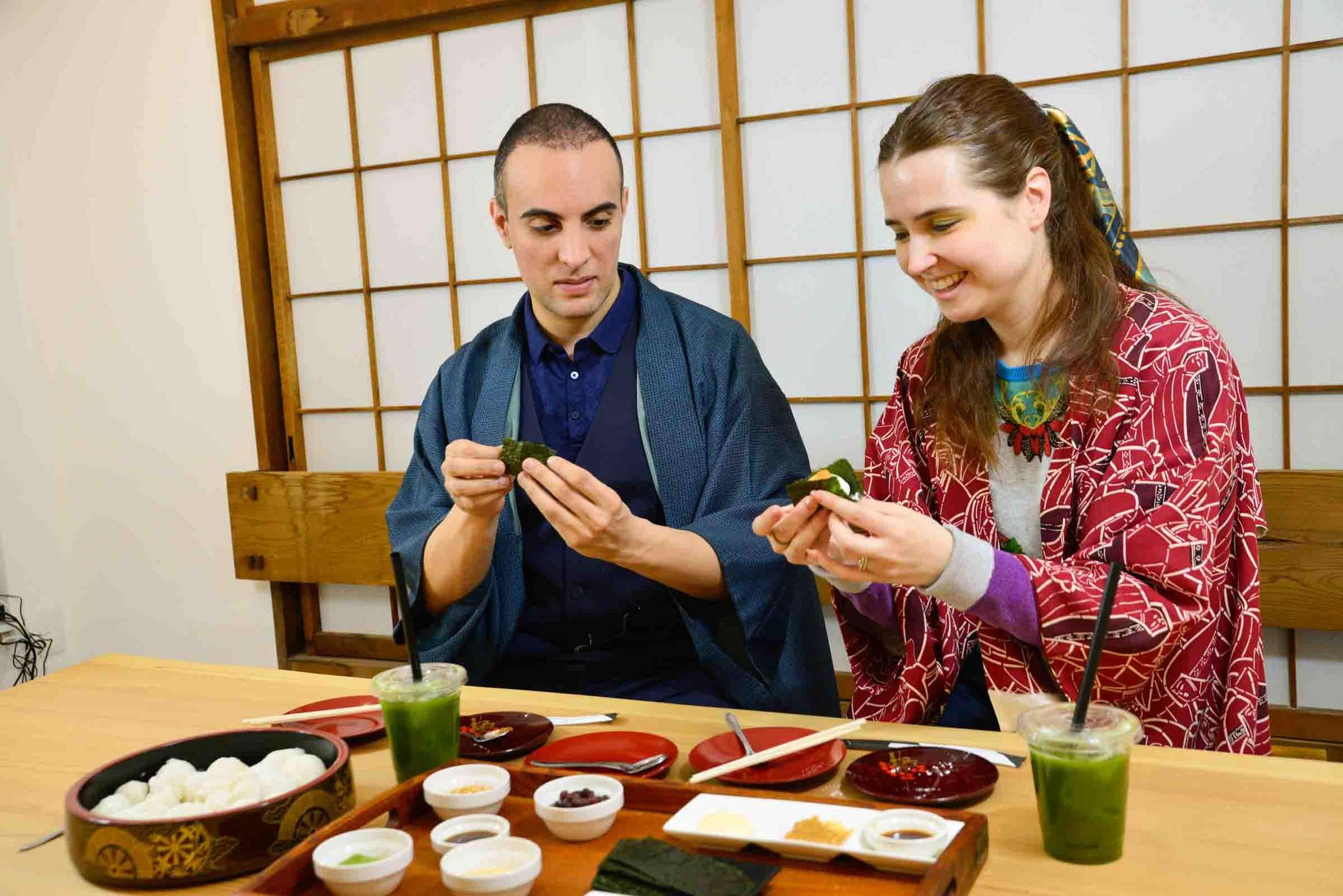
The tasting is why you do the whole hour. In Asakusa, you cut the freshly made rice cakes yourself, sit at reserved seats on the second floor, and work through up to ten flavors: kinako roasted soybean flour, matcha, black sugar syrup, grated daikon with soy sauce, and savory surprises beyond them.
Pro tipCome hungry; travelers describe the tasting as generous, with several pieces of what you made and plenty of toppings to try.
It ends with a cup of matcha, which is the correct way to finish anything in this city.
The Shibuya session runs its tasting plant-based for every guest: kinako, sweet anko made without animal ingredients, grated daikon, and wheat-free tamari in place of ordinary soy sauce, with a choice of matcha or hojicha.
The Tokyo: Traditional Mochi Pounding Experience & Tasting takes the same idea further into the kitchen, with a friendly local chef guiding you through red bean mochi, mochi ice cream and grilled mitarashi dango before you eat them with green tea.
One gap, said plainly: you made it, so the tasting is yours instead of a sample of a master's work. Come hungry. Travelers describe the spread as generous, several pieces of what you pounded and plenty of toppings to try, often flavors you have never met.
If your trip falls in December or January - shrine mochitsuki
Winter visitors get an option the studios cannot offer: pounding outdoors, in a shrine courtyard, the way households did it for centuries. Tokyo's outdoor mochitsuki runs from late November through winter.
Pro tipCheck the current year's shrine schedule before you go, because neighborhood event dates shift and some also run in March.
Known dates include a neighborhood event on November 30, Asakusa Shrine on December 27, New Year poundings on January 2 and 7, and Yoyogi Hachimangu's annual event on February 1, usually around 10 am to 2 pm.
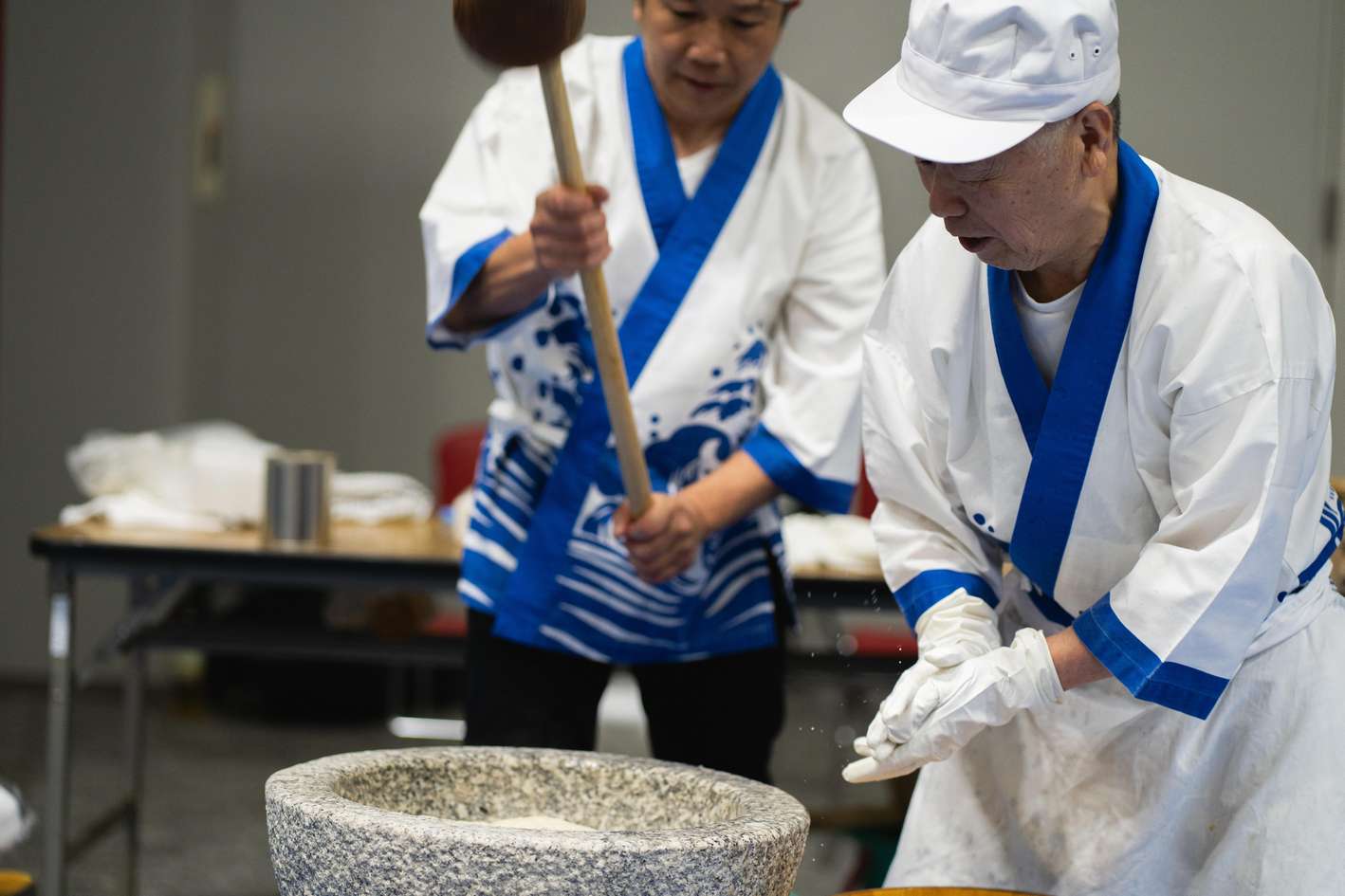
The rhythm here is communal rather than theatrical. One person pounds, another turns the rice between strikes, and the crowd watches in slow coordination.
At some festivals, the public gets a turn by waiting in line; at Asakusa's Otori Shrine, pounded mochi is distributed free to the first 1,000 visitors alongside nanakusa-gayu from 11 am, and at Mabashi Inari-jinja the mochi is served to visitors at 3 pm with amazake.
A couple of events need prior sign-up, and one New Year sumo mochitsuki requires paid tickets in advance with no on-site sales. Shrine mochitsuki runs from late November into February, and some neighborhood events also appear in March, so check the current year's shrine schedule before you go. Dates shift; the season does not.
Just want to taste it? Tokyo's wagashi shops, and when they sell out
The fourth door suits travelers who want the eating without the mallet. Tokyo's wagashi shops run counter service, artisans working behind the glass, not classes.
Pro tipGo in the morning; Gekko Mochi and Okano Eisen can sell out of the day's batch by early afternoon and close early.
Miyabian in Nakameguro sells kinako mochi, warabi mochi and mame-daifuku; Aoyama Beniya is known for its mame daifuku; in Asakusa itself, Kikuya in Nakamise sells red bean daifuku and packs selections as gifts, and fresh mochi is pounded every morning near Hanbei.
Set expectations honestly here: there is nothing to watch at most of these counters, only sweets to buy. What you get instead is freshness. Fresh mochi from traditional Tokyo shops is meant to be eaten the day it is made, and the best shops run out.
Gekko Mochi often sells out to customers arriving around 2 pm, Okano Eisen's mame-daifuku can go in the morning, and shops typically close as soon as the day's supply is gone.
Go in the morning and eat the same day. Fresh mochi hardens within hours, and refrigeration only speeds that up.
What's true wherever you go - toppings, cameras, and eating safely
A few things hold no matter which door you choose. Tokyo's classic seasonings are the same across venues: sweet with kinako roasted soybean flour or anko red bean paste, savory with soy sauce or grated daikon.
Common mistakeSwallowing a big mouthful quickly; mochi must be chewed thoroughly and mixed with saliva before it goes down.
Bring your phone for photos and videos of your group pounding; hosts are often happy to take them for you, and the Shibuya session sends photos afterwards.
The one thing to take seriously is eating. Freshly pounded mochi is sticky and stretchy, and swallowing a big mouthful quickly is how people choke. Cut the mochi into small bites, chew slowly, and keep tea nearby.
Drink tea or soup beforehand to moisten the throat, stay focused while eating, and never eat mochi while walking or lying down. Watch children and older eaters closely: as mochi cools, it hardens, which makes it harder to chew.
Mochi itself carries a long cultural weight, an offering since the early Heian period and a symbol of longevity at New Year. Knowing that while you chew slowly makes the first bite better.
Getting ready - what to wear, book, and do with your hands
Last practical scene, and it starts with your feet. Indoor venues follow Japanese etiquette and ask you to remove outdoor shoes at the entrance, so wear flat, closed-toe slip-on shoes and clean, dark socks.
Pro tipPinch and twist the mochi to cut portions instead of pulling it, because a fresh torn surface is what sticks to your hands.
Comfortable clothes with sleeves that roll up easily matter more than style: pounding is vigorous arm work in a wide stance, and fine potato starch drifts onto sleeves and trousers. A happi coat is handed out over your clothing, and it does not cover everything.
Beginners are the intended audience. English-speaking hosts explain every step without assuming you know Japanese cooking terms, and the hands-on portion is structured for people with no kitchen experience at all.
Two techniques make you look practiced on your first attempt. Let gravity carry the heavy kine downward, using your whole body rather than your arms, and land it flat inside the mortar instead of at an angle, which chips the rim into splinters. When shaping, keep your hands dry and dusted with starch.
Common mistake: pulling the mochi apart when cutting portions. Pinch and twist instead; a fresh torn surface is what sticks uncontrollably to your hands.
More to book around Tokyo
Live dates and prices
Reserve a mallet, skip the hunt
Tokyo will not give you a Nara street show, and looking for one wastes a day. What it gives instead is closer: your own hands on the mallet, warm mochi minutes off the mortar, and sumo-wrestler spectacle on a timetable you can plan around.
Book the Asakusa session, add a shrine festival if winter brings you here, and eat small bites.
Go ifGo if you want the pounding inside your Tokyo itinerary, not a day trip to KansaiGo if you want to eat warm mochi minutes after it leaves the mortarGo if your trip falls between late November and February, when shrine mochitsuki adds a free, open-air version
Skip ifSkip if you only want to sit and watch a professional pound at high speed; that show lives in NaraSkip if your group includes members who refuse to participate, since the Asakusa studio allows no observation-only entrySkip if you need a strictly allergen-free kitchen; the Shibuya workshop uses soy, may have sesame, and shares its kitchen
Our pick to book
Tokyo Asakusa: Mochi Pounding and Tasting Experience4.9★ (88) · 1 hour · Free cancellation
Watch mochi pounding in Tokyo - your questions answered
Short answers to what travelers ask before booking a Tokyo mochi pounding experience.
Tokyo2026
The mallet comes down, everyone yells Yoisho, and the rice turns to mochi under your hands. Book ahead, Tokyo's best pounding happens indoors.
Is there a permanent street-front mochi pounding shop in Tokyo like the one in Nara?
No. Tokyo has no permanent storefront pounding spectacle, so travelers say the workshop classes are the primary way to experience mochi pounding here. Book one in advance and the show comes to you.
Do I have to travel to Nara or Kyoto to see the real thing?
You can get the full ritual inside Tokyo. In Asakusa you can knead, pound, cut and shape the mochi yourself, and in Shibuya a studio class puts a wooden mallet in your hand over a stone mortar. No Shinkansen ticket needed.
Can I walk in off the street to watch a demonstration?
Usually no. Most Tokyo sessions are hands-on studio classes you reserve in advance, and at least one requires booking two days ahead. Walk-in spots do exist: the Tokyo Tower restaurant show admits walk-up guests when seats are free, and one Takanawa event needs no reservation at all.
Where can I watch sumo wrestlers pound mochi in Tokyo?
Two places stage it on a fixed schedule. A Tokyo Tower restaurant show runs four times daily at 11 am, 2 pm, 5 pm and 8 pm, and a Ryogoku venue near the sumo district holds daily sessions from 11 am to 1 pm, 2:30 to 4:30 pm and 6 to 8 pm.
At the Ryogoku sessions you may even get a turn with the mallet, though a busy day can mean one representative per group or a lottery.
When do shrine festivals with outdoor mochitsuki happen in Tokyo?
Late November through winter is the window: a neighborhood event on November 30, Asakusa Shrine on December 27, New Year events on January 2 and 7, and an annual event at Yoyogi Hachimangu on February 1, usually from 10 am to 2 pm.
Some events also appear in March, so check the current year's schedule before you plan around one.
Do any Tokyo classes let me watch without pounding?
Very few. At the Asakusa experience, observation-only entry is not allowed for hygiene reasons, so everyone who enters books as an active participant. If you want to sit back and watch, the sumo shows at Tokyo Tower and in Ryogoku are the spectator-friendly picks.
What does a Tokyo workshop session actually involve?
You knead the steamed glutinous rice, then lift the kine, a heavy wooden mallet, and bring it down into the stone usu mortar while a partner or host keeps the rhythm.
The Asakusa courses go for vigorous, full-force mallet work, and everyone takes a turn. Afterwards the warm mochi is cut and served, often with a cup of matcha.
Where can I eat freshly pounded mochi warm, right after it is made?
The Asakusa experience includes mochi to eat on the spot, with up to ten toppings to try, from kinako and black sugar syrup to grated radish. At the Ryogoku sumo venue, which sits at 4-32-19 Takashima Ryogoku Mansion in Sumida City, mochi is part of the dining session itself.
Reserve your spot and watch mochi pounding in Tokyo
Book the Asakusa mochi pounding experience and eat your fresh mochi with ten toppings on the spot, with free cancellation up to 24 hours ahead.